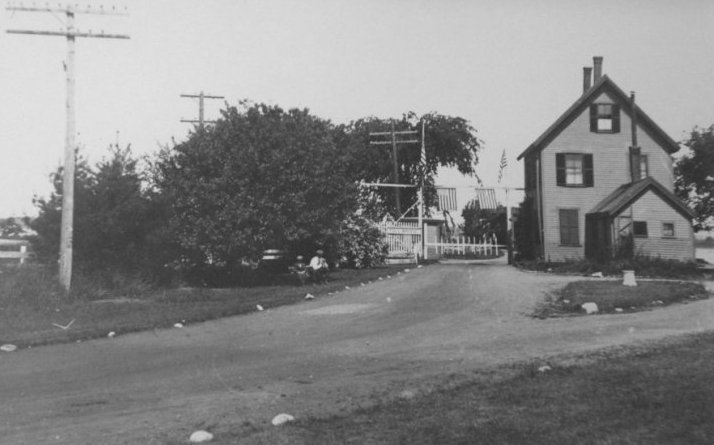
Wayland Railroad Depot // 1881

The Wayland Railroad depot in Wayland, Massachusetts, was built in 1881 by the Massachusetts Central Railroad, which was later absorbed as part of the Boston and Maine Railroad. The line operated both passenger and freight service, with this structure serving as the passenger station and freight at the nearby structure, also built in 1881. Regular train service helped develop Wayland Center into a more prosperous Boston suburb, but industry and larger developments did not occur like in other communities. In its heyday, the Wayland station was manned by an agent with a small office in the building. The station agent was responsible for nearly all aspects of the operations from selling tickets; handling mail, baggage, and freight; keeping financial and operating records; and even maintaining the grounds. After WWII, car ownership and highway expansion harmed the rail industry and trains ceased to run in Wayland. To save the building from eventual demolition, the Town of Wayland purchased the old depots, which since the 1980s, has been leased to “The Wayland Depot“, a charitable women’s consignment craft shop with retail space in the station. The former rail line has largely been converted to a rail trail for pedestrians and bicyclists to traverse the old railroad right-of-way.
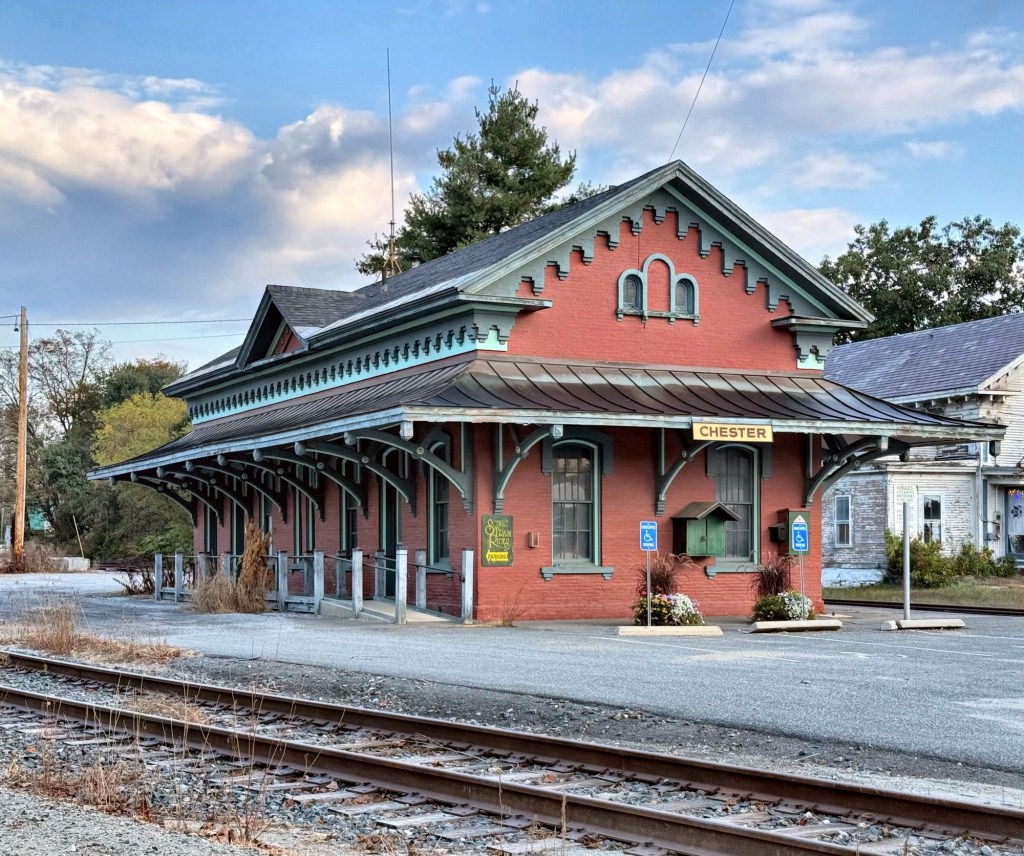
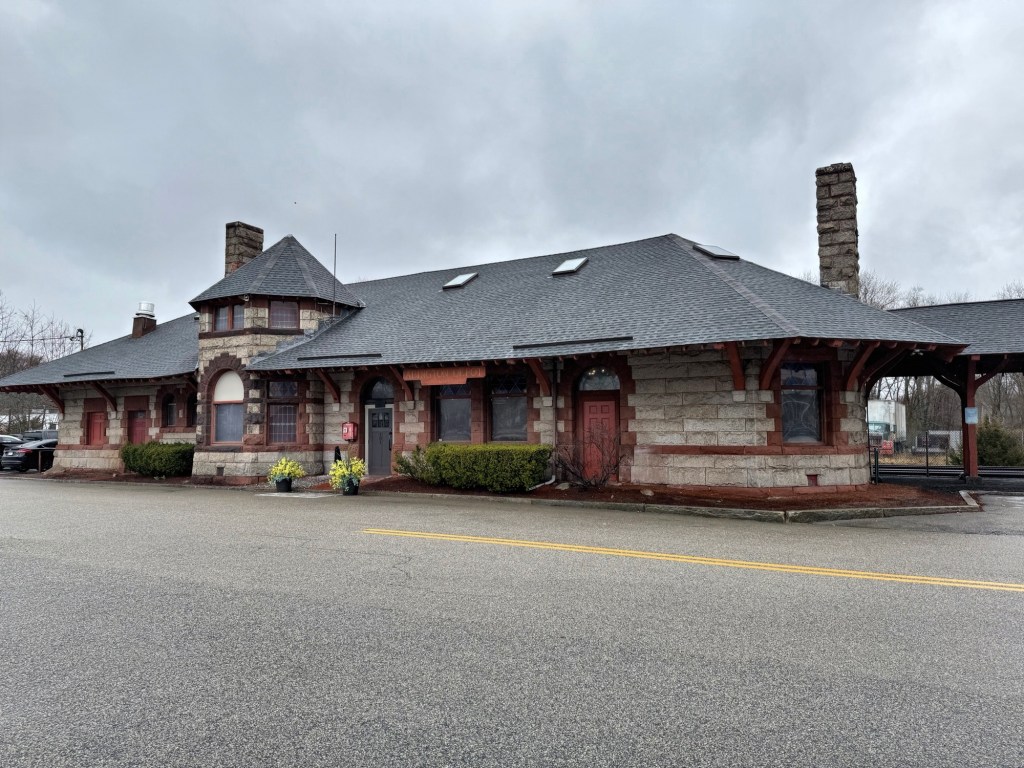
Chester Depot // 1872

The first public train arrived in Chester, Vermont, on July 18, 1849, and in December, the Rutland & Burlington Railroad opened the first rail line across Vermont linking the Connecticut River valley at Bellows Falls and Lake Champlain at Burlington. A fire destroyed the first station in 1871, and the Vermont Central Railroad built the current station within a year. The State of Vermont purchased the line in 1963, leasing it in part to the Green Mountain Railroad. Exceptional in Vermont, this brick station retains its high-style Italianate design and continues in railroad use. The station can be classified as Italianate/Romanesque in style and has a corbeled cornice, windows capped by brick hood moldings, and a projecting trackside awning. It appears that the station is not in active use, does anyone know more?

North Abington Depot // 1894

The North Abington Depot was built in 1894 from plans by notable architect Bradford Lee Gilbert in the Richardsonian Romanesque style, a design that typified many regional train stations following Henry Hobson Richardson’s commission by the Boston and Lowell Railroad. Construction on the depot began soon after the “North Abington Riot”, in which railroad laborers and local townspeople fought over the town’s right to allow a grade-level streetcar crossing over the train tracks. The railroad executives filed an injunction before the state supreme court, and Justice Marcus Perrin Knowlton, at a hearing, dismissed the bill, saying that since the Selectmen had acted within their right as representatives of the townspeople who owned the public highway, the Supreme Court had no reason to become involved. This decision was disputed by the railroad’s attorney, who advised them that this decision was not binding, which ultimately would be deemed incorrect. On August 15, 1893, fifteen local men (many of whom were sworn in as special police for the occasion) with the aid of fire hoses, withstood the onslaughts of more than 200 railroad laborers, armed wit h picks, shovels, and paving stones. After many were injured, the brawl ended. In the aftermath, the full bench of five Justices of the Massachusetts Supreme Court upheld the validity of the position taken by a single Justice, saying that any one member was in position to adequately interpret the law. This decision still stands and is quoted in similar cases in the field of jurisprudence. This depot was completed in 1894 by the New York, New Haven and Hartford Railroad as a peace offering following the North Abington train riot and a visual reminder that no corporation, no matter how powerful, is superior to the right of the people and the laws of the land. 

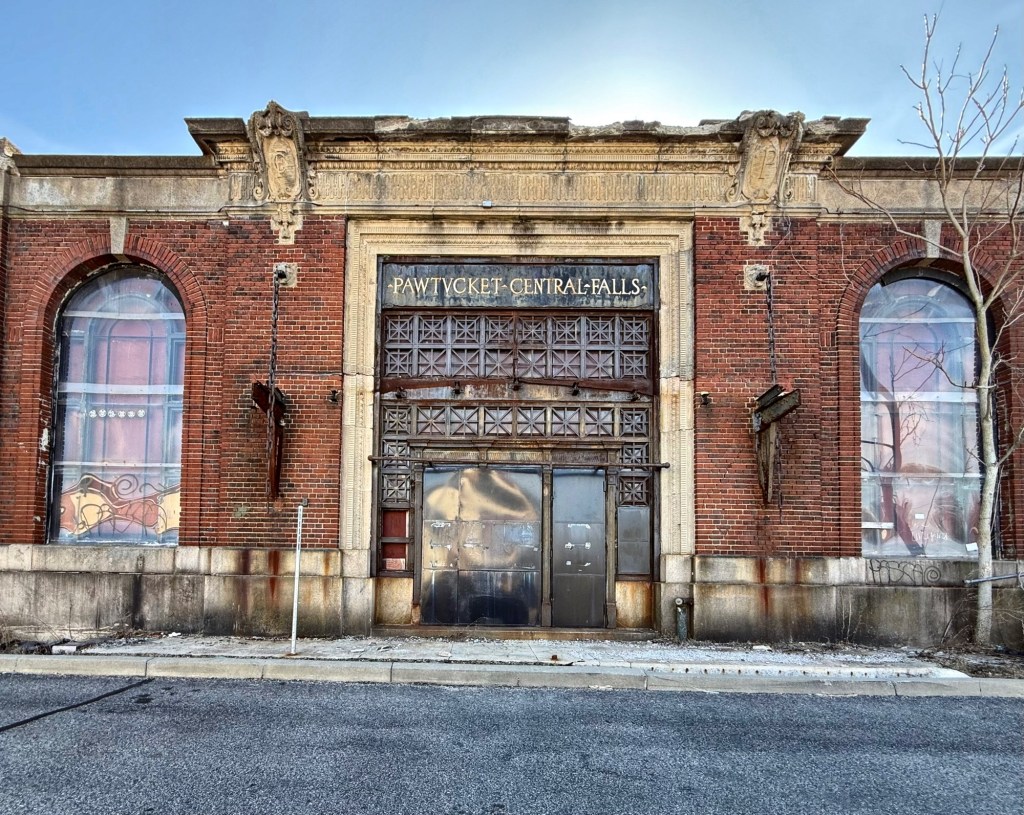
Pawtucket-Central Falls Station // 1916

The Pawtucket-Central Falls Railroad Station is a crumbling relic of a time once dominated by rail travel. This architectural landmark spans the border of the cities of Pawtucket and Central Falls, along with the tracks of the former New York, New Haven and Hartford Railroad and is one of the more unique buildings in Rhode Island. The station opened in 1916 to replace separate stations in the two cities from plans by F.W. Mellor, architect for the New Haven Railroad with Norcross Brothers of Worcester facilitating the construction over a structural steel base spanning the tracks. As many as 140 trains per day once passed under this station, but in 1959, it closed. The building was purchased by a private owner and plans failed to materialize for decades, leaving us with a crumbling masterpiece in architecture and engineering. In 2007, the lot was partially developed with the addition of a suburban, soulless CVS store and parking lot, which today, directly abuts the station. In 2023, a new Pawtucket/Central Falls station opened nearby, which has brought new calls to demolish this building, with people actively seeking grants to fund the estimated $10 Million dollar demolition.

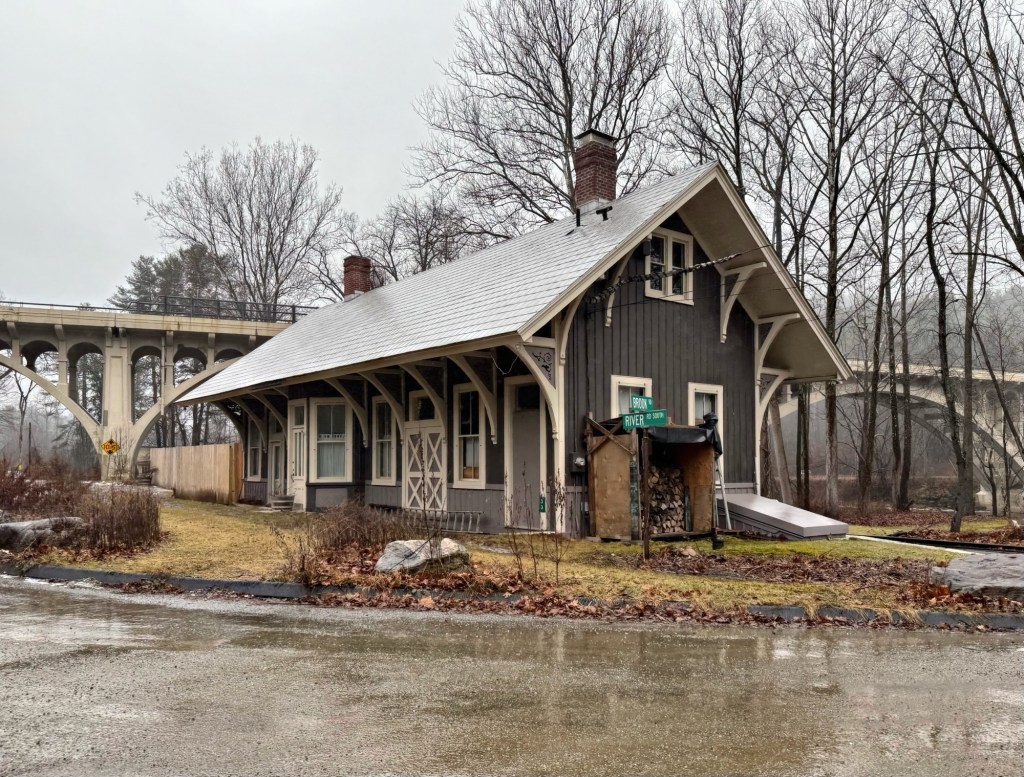
Cornwall Bridge Railroad Station // 1886

One of the most attractive railroad depots in Connecticut, the Cornwall Bridge Railroad Station exists in almost complete originality. Its siding is board and batten and its slate roof with a wide overhang supported by the original brackets, showcases the attention to detail railroad companies paid to design and appoint these important landmarks. Built in 1886, the building can be classified as Stick Style and is one of a few buildings in town of the style, adding to its significance. The station was built by the Housatonic Railroad to replace an earlier station on the site. The Housatonic line was acquired by the New York, New Haven and Hartford Railroad in 1892 and later by the Penn Central Railroad in 1969, which went bankrupt by 1970. This station was subsequently sold to private ownership and listed on the National Register of Historic Places as a tool to bring awareness to its significance and threatened status. Luckily, the building was preserved and has been converted to a private residence.

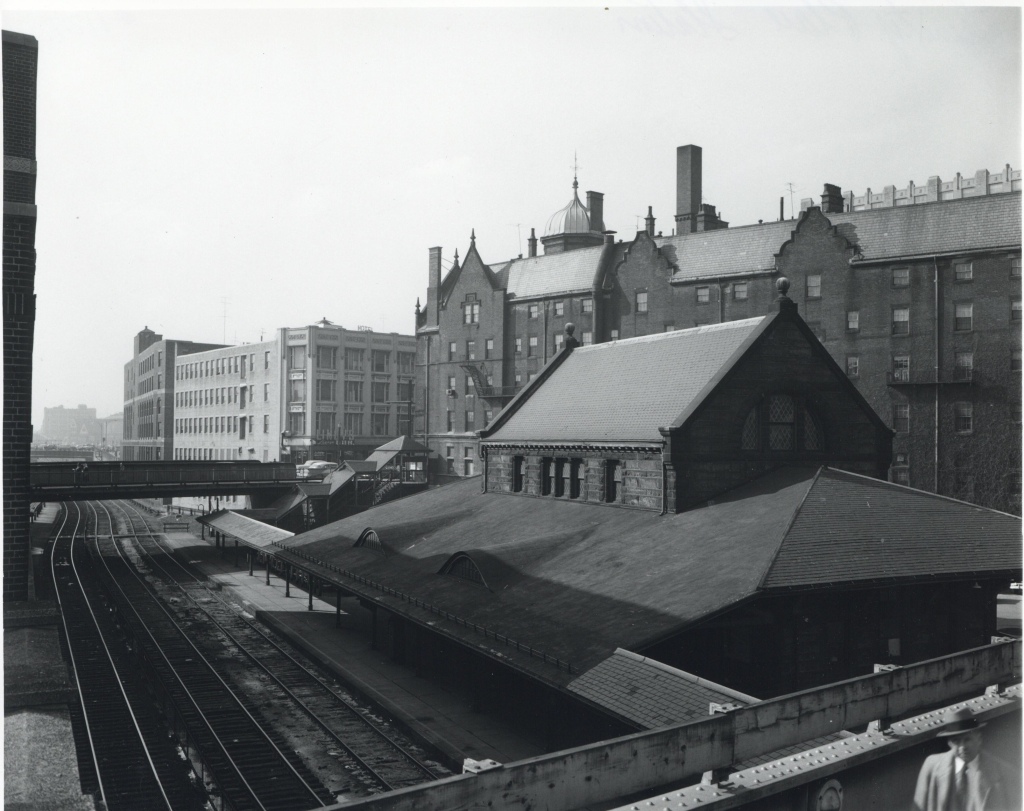
Trinity Place Station // 1900-1964

Trinity Place Station was the Boston & Albany Railroad’s second depot for trains running outbound from its newly completed South Station. The depot was designed by Alexander Wadsworth “Waddy” Longfellow, Jr., who from Harvard University in 1876, later studying architecture at the Massachusetts Institute of Technology and the École des Beaux-Arts in Paris, and then worked as senior draftsman in Henry Hobson Richardson‘s office upon his return to the United States. A. W. Longfellow was also the nephew of poet Henry Wadsworth Longfellow. He designed the station of pink granite with a covered platform 375 feet in length. The building long served train commuters leaving the ever-changing Back Bay neighborhood. Consolidated lines led to the station being deemed obsolete, and it was scheduled for demolition. Much of the old line route would be cleared for the right-of-way for the Mass Pike Expansion into Boston. The demolition on Trinity Place was postponed until early 1964 to allow for scenes of the movie, “The Cardinal” to be filmed there.

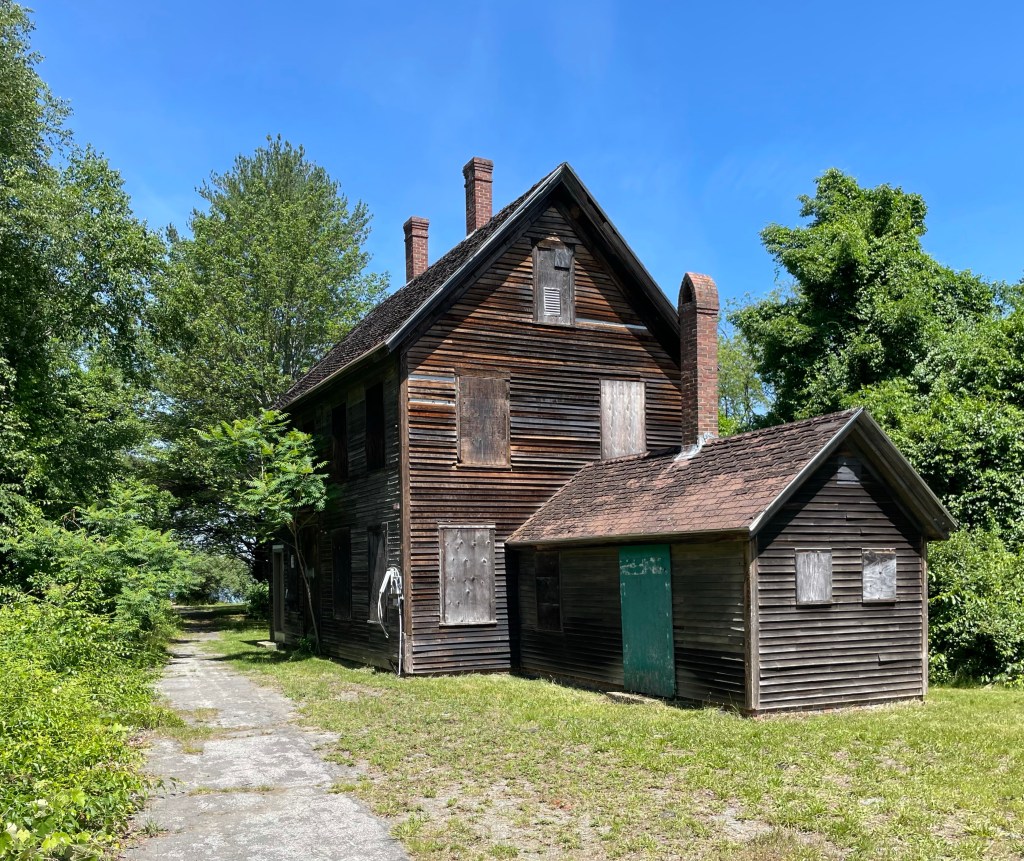
Newington Railroad Depot // 1873

The Newington Railroad Depot was built in 1873 at the narrowest point at the Piscataqua River as part of the Portsmouth and Dover Railroad. The Portsmouth and Dover Railroad Company was chartered in 1866 in order to provide a link between the eastern and western divisions of the Boston and Maine Railroad and also included the means to cross Great Bay. The rail line was completed in 1874 and included this railroad depot which included a residence for the stationmaster while he collected tolls for pedestrians and carriages crossing the bridge nearby, and operated the swing section of the bridge to permit boat traffic to pass. By 1915, the one story wing was constructed which served as a 10’x20′ waiting room and ticket office. The offshoot rail line remained in service until the completion of the General Sullivan Bridge in 1934, due to the popularity of the automobile. The rail line was subsequently abandoned, and the nearby tracks were taken up in 1940. Elmer Brooks, the longtime stationkeeper was allowed to remain in the old depot, renting the building from the State of New Hampshire, who acquired the site in 1940. He lived here until his death in 1971. After which, the building has decayed. The State of New Hampshire should restore this valuable piece of history and has an amazing opportunity for a park in the surrounding area. Hopefully something is done to preserve the building!

Kneeland Street Station // 1847-1918

All Aboard!! The Kneeland Street Station was built at the southern edge of Downtown Boston in 1847 for the newly established Old Colony Railroad Company. By the early 1840s, the city of Boston had six major rail lines connecting it with other places including Lowell, Maine, Fitchburg, and Salem to the north, Worcester to the west and Providence to the southwest. The southeastern part of Massachusetts had yet to be served by a rail link to Boston. On March 16, 1844 the Old Colony Railroad Corporation was formed to provide a rail connection between Boston and Plymouth. Construction of the line began in South Boston in 1844 and the line opened to Plymouth in 1845. The company needed a more accessible station to the residents and businessmen of Downtown Boston, so they acquired a large parcel of land on Kneeland Street to extend the line. The corporation hired architect Gridley James Fox Bryant, who designed this stunning railroad station constructed of brick with strong stone trimmings. As was common, a large clock was affixed to the building to allow waiting passengers to know how long they would be waiting. From 1845 to 1893, the Old Colony railroad network grew extensively through a series of mergers and acquisitions with other established railroads, serving lines to Providence, Newport, Fall River, New Bedford and down the Cape. The railroad was acquired in 1893 by the New York, New Haven and Hartford Railroad, and sought to consolidate the many local stations into a larger building. They soon after began construction on Boston’s South Station, re-routing lines to that new building. They sold off the excess stations, including this one on Kneeland Street, and it was eventually demolished in 1918.

Hoosac Tunnel // 1877

It is impossible to overstate the significance of the railroad in the 19th century to the industrial growth and economy of New England and American cities. In order to connect Boston and its ports to the Hudson Valley in New York, a western rail line was constructed in the southern part of Massachusetts but was not an ideal route. In response, businessmen and politicians began to envision a more direct rail line across Massachusetts, but with one problem: trains hate climbing mountains! Instead of going around Hoosac Mountain, a massive detour, engineers thought they could tunnel through it, and that’s what they did, creating the Hoosac Tunnel. The tunnel through Hoosac Mountain is just under 5 miles long. Its active construction period consumed roughly a quarter-century and cost at least $17 million in 1870s dollars – an enormous sum. The cost was paid in dollars and the lives of nearly 200 miners (many of whom suffered terrible deaths as you can imagine). The first train passed through the tunnel in 1875, with the eastern portal wall constructed in 1877 (seen here). By 1895, roughly 60% of Boston’s exports traveled through the tunnel. Since then, some small collapses and deferred maintenance have left their mark on the tunnel, though it is still in operation today!