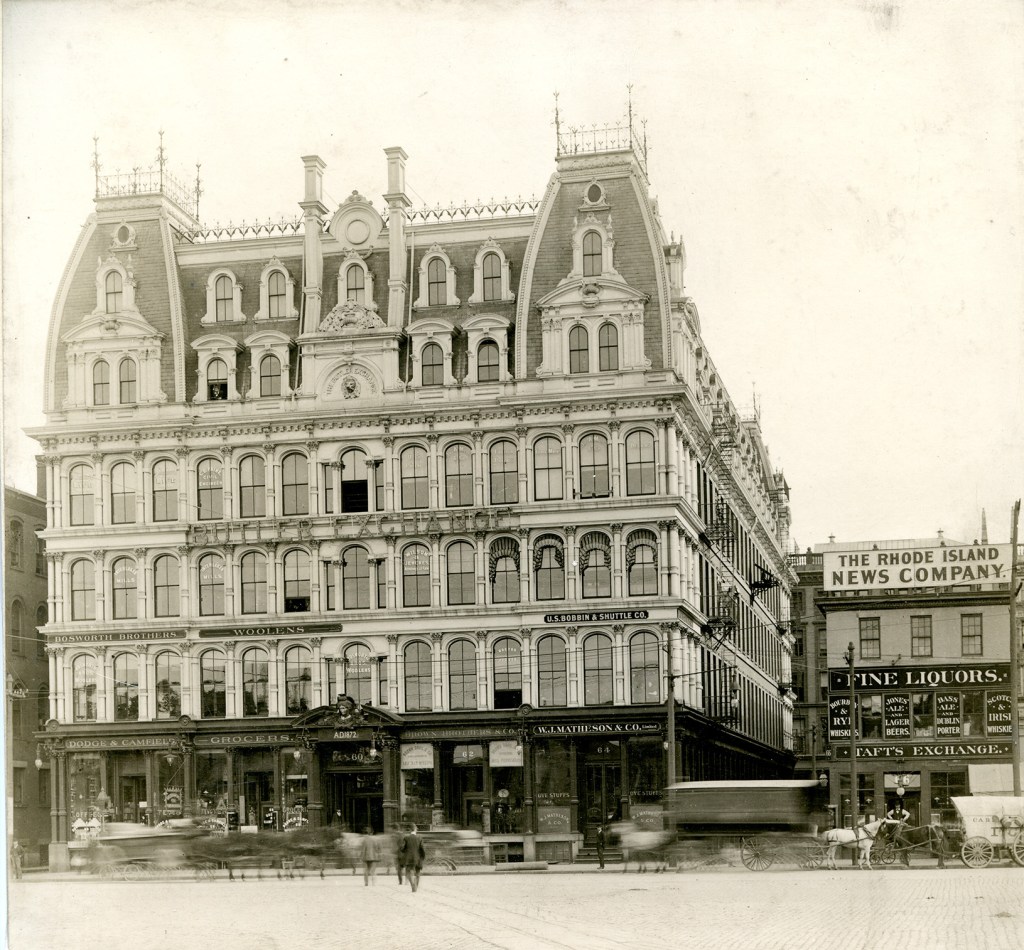
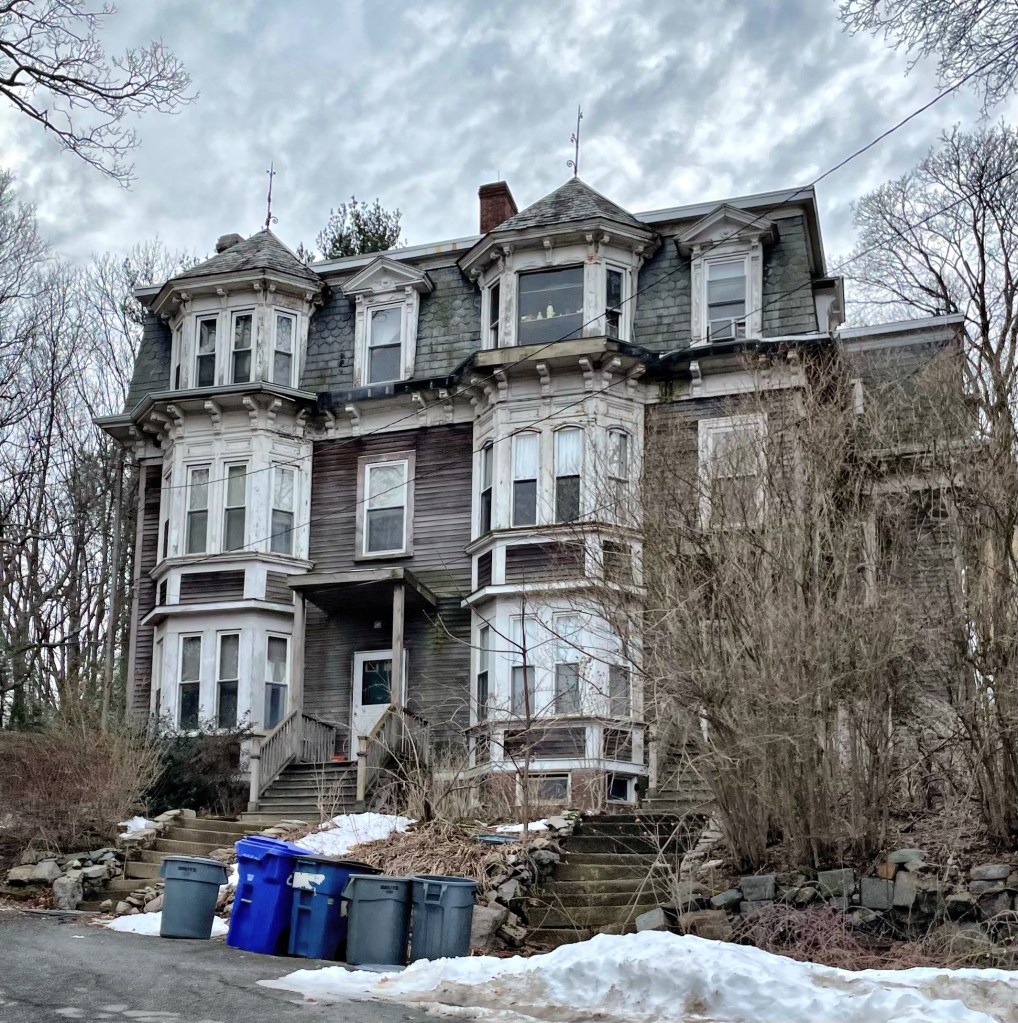
Susanna Cary Rental Property // c.1884

Isaac Harris Cary’s land holdings adjacent to Forest Hills Cemetery in Jamaica Plain, Boston, saw a surge in value when the cemetery and Forest Hills Station were constructed, opening up the area for development. After Isaac’s death in 1881, his unmarried daughter Susanna, built this large Second Empire style building contributes to the varied 19th century architecture of the street. This double-house was constructed around 1884, seemingly as a rental property which provided Susanna income while residing nearby. The two units suffer from some deferred maintenance, but are excellent examples of the Second Empire style in a double-house form.

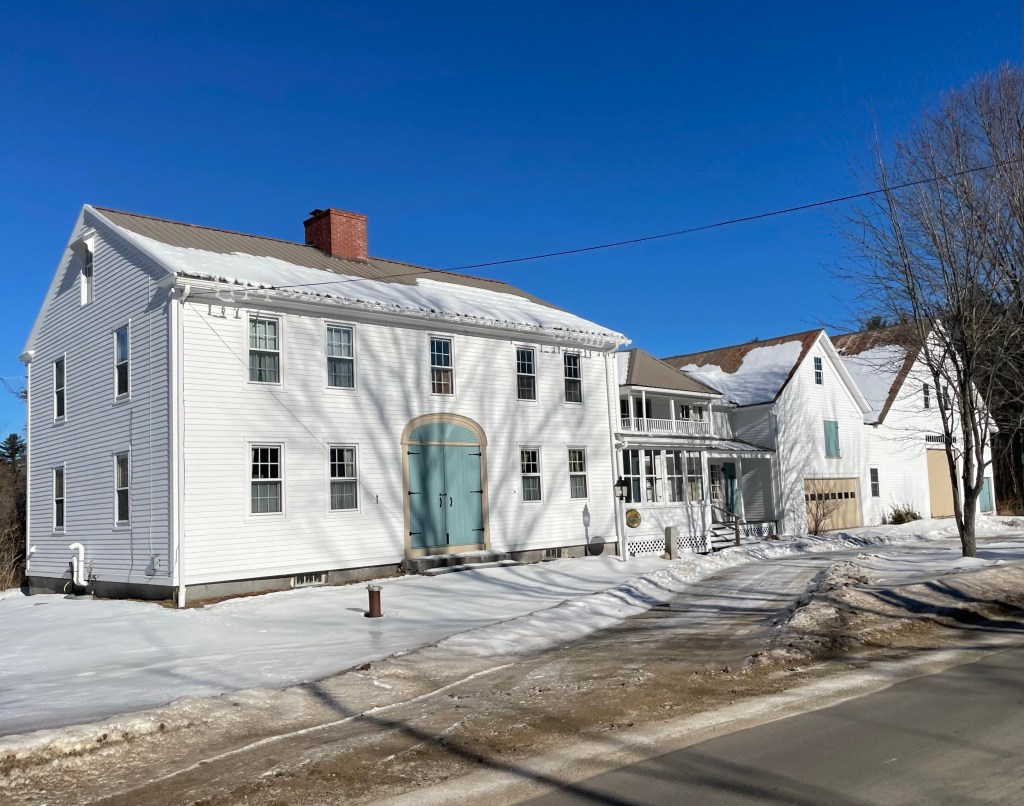
Captain Lawton House // c.1850

Captain Job Lawton (1795-1860) was a sea captain and wharfmaster in Assonet Village, in Freetown, Mass. I could not locate much on him other than a note about his skill on the sea, highlighted in a history of the town of Freetown. “Captain Job Lawton, on one of his many voyages across the ocean, lost his rudder at sea. With commendable ingenuity, he made a temporary one from old ropes, hung and managed it by chains passed over the stern and either side of the ship, and by his cool determination and never tiring perseverance brought his sloop safely into port. For this remarkable feat, he received high public commendation, and a substantial recognition from the insurance companies interested in his vessel and her cargo. Several models of this rudder are now in existence, one being on exhibition at the National Museum in Washington. He married Polly, daughter of Captain Charles Strange.” Lawton, in the later years of his short life, appears to have built this home, which elegantly blends both Gothic and Greek Revival styles.

Freetown Village School // 1794

The Freetown Village School was originally built in 1794 as a lawyer’s office. At that time, it was half as wide as its current configuration. Around 1800, the office became a private academy for children of sea captains and ship-builders in Assonet. In 1858, the Town of Freetown purchased the building and turned it into a public school. By 1906, the school was enlarged and given the Colonial Revival detailing we see today. Like many smaller schools in New England, this school building was outgrown after WWII, and converted to other uses for the town, with uses from committee meeting space to storage. The schoolhouse was finally abandoned at the end of the 20th century, and stood empty. The roof developed leaks and water infiltration became a serious problem. In 2011, the Town approached the Massachusetts Historical Commission for an Emergency Grant, and was granted $30,000 for the preservation and restoration of the decaying building. The roof has been replaced and structurally repaired, but more work is to be done. I can’t wait to come back and check up on this beauty.

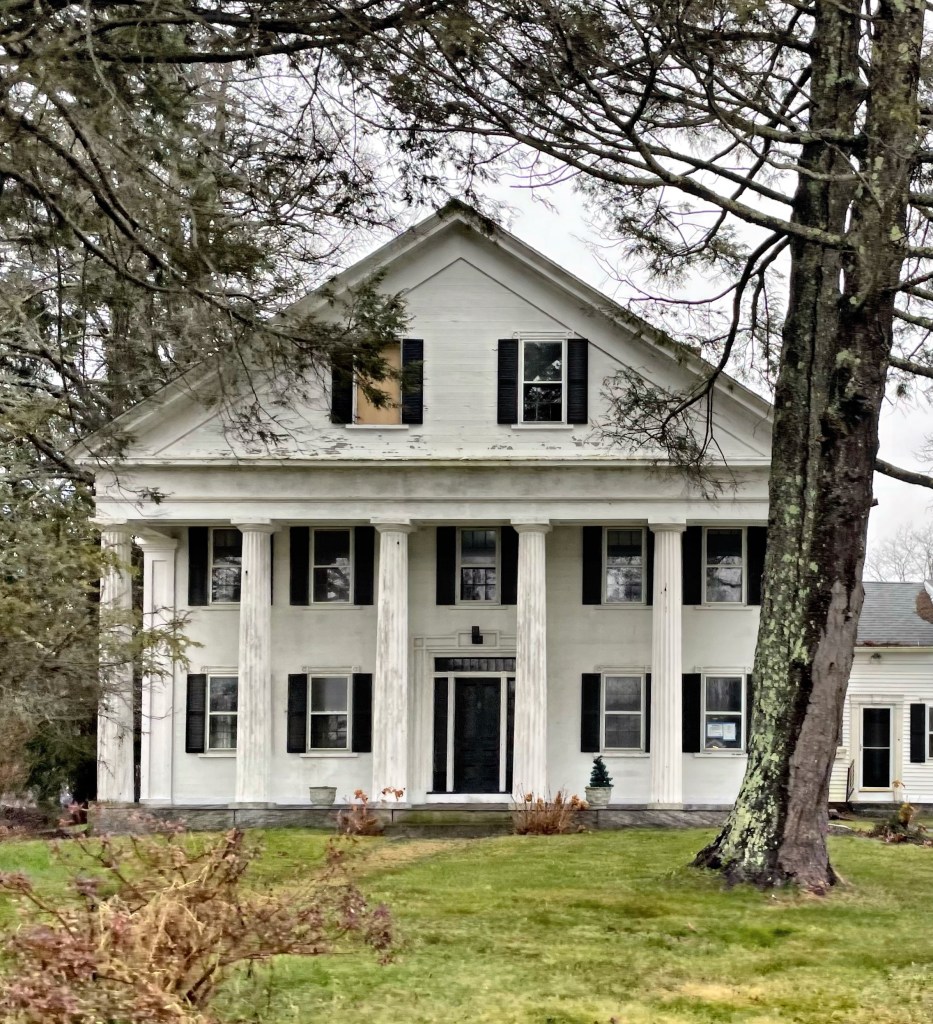
High Street House // c.1810

This house in Freetown, MA literally made me turn the car around to get a photo (it’s a sickness, they need a rehab for old house addicts). The house was built in the early 1800s and is a stellar example of the Federal style, which took over architecture in New England after the Revolutionary War until the 1830s. The style often features intricate designs and complex geometry, which previously would have been too difficult for the majority of builders or designers to accomplish. From pattern books by influential architects like Asher Benjamin, the style was built in forms and places from urban townhomes in Boston and New York, to rural, rambling farmhouses in Vermont and Maine. Publications by Asher Benjamin including The Country Builder’s Assistant and The American Builder’s Companion opened up high-quality, architectural landmark designs to the masses, and is a significant reason New England architecture is so iconic. Benjamin included drawings and diagrams which builders could copy, from column styles and dimensions to chimney and moulding details.

Freetown Town Hall // 1888

Welcome to Freetown, Massachusetts, a town I had not really heard about until recently (don’t come after me)! The land here was originally occupied by the Wampanoag Tribe, who lived off the earth well before colonization. In 1659, twenty-six Plymouth Bay settlers bought from the local native leaders the large tract of upland meadow thereafter called the Freeman’s Purchase, which includes much of Freetown and parts of adjacent towns. The land was divided into lots the following year, but settlement did not occur in earnest until the 1680s. Fall River used to once be a part of Freetown until it separated in the early 19th century, believe it or not! Freetown today is divided into two villages, which historically developed almost entirely independent from one another: Assonet and East Freetown. Assonet became the major “downtown” or populated area of the town and it is named after the River upon which is straddles. East Freetown was always more rural and today retains that charm. Due to Assonet’s location, a new town hall building was proposed in the last decades of the 19th century there. This structure was built and designed in 1888 by Charles C. Marble from Fall River, who combined the Queen Anne style with elements of the Colonial Revival style. The building contained the town offices as well as the fire station. Its wide double doors originally opened onto North Main Street have been replaced with windows, with flared eaves.

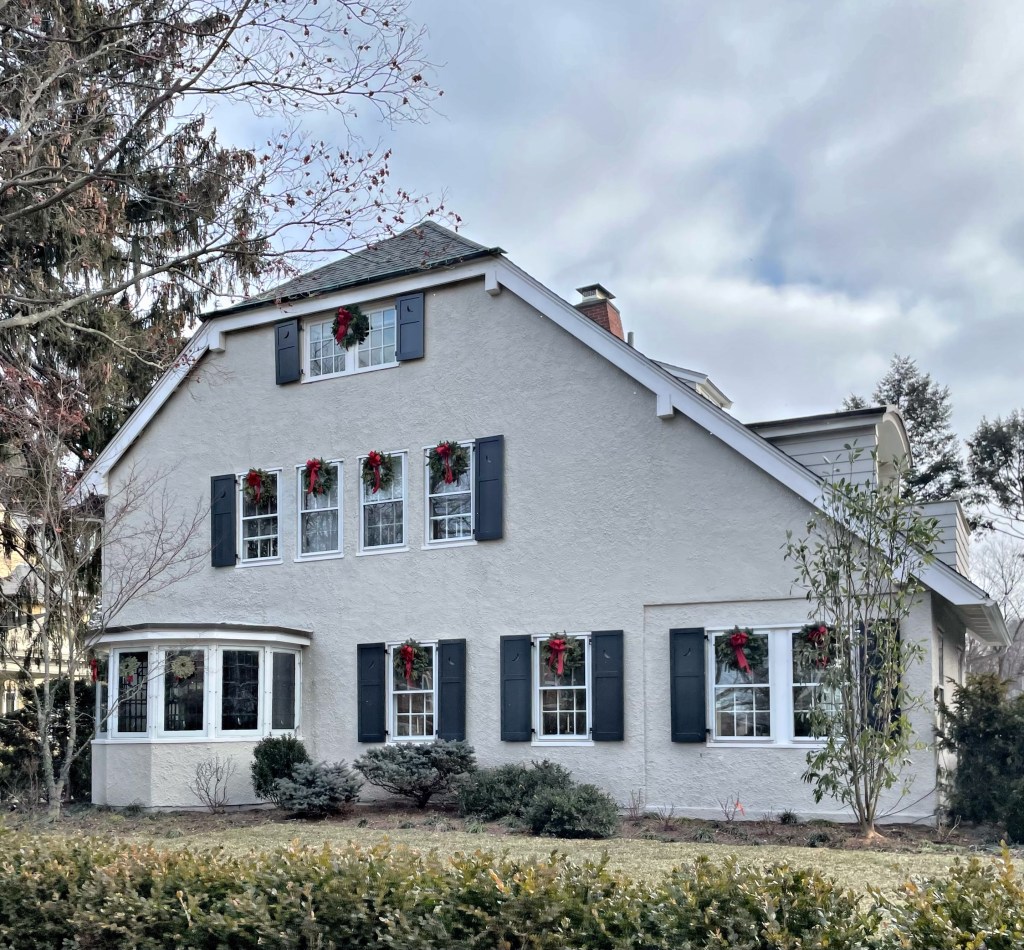
William C. Strong House // 1907

In 1875, William C. Strong, a nurseryman from Brighton, MA, purchased the 93-acre Staples-Craft farm in Newton. He established a large nursery on the grounds and promoted construction of the Circuit Railroad, which connected the rural section of Newton to the Boston and Albany rail line in 1886, thus establishing the village of Waban. Due in great measure to the efforts of Strong and other developers, Newton’s youngest village grew rapidly as the once isolated farm area gave way to a vibrant suburban community. He built commercial structures and people began to flock to the village, for the new housing and easy-access into Boston by rail. Strong had a house built by architect Herbert Langford Warren in 1896 and lived there for years before having this house built in 1907, when William was 83 years old. The house was occupied by Strong for just a couple years until he moved away to Manhattan. The Arts and Crafts style home was purchased by Esther Saville Davis.

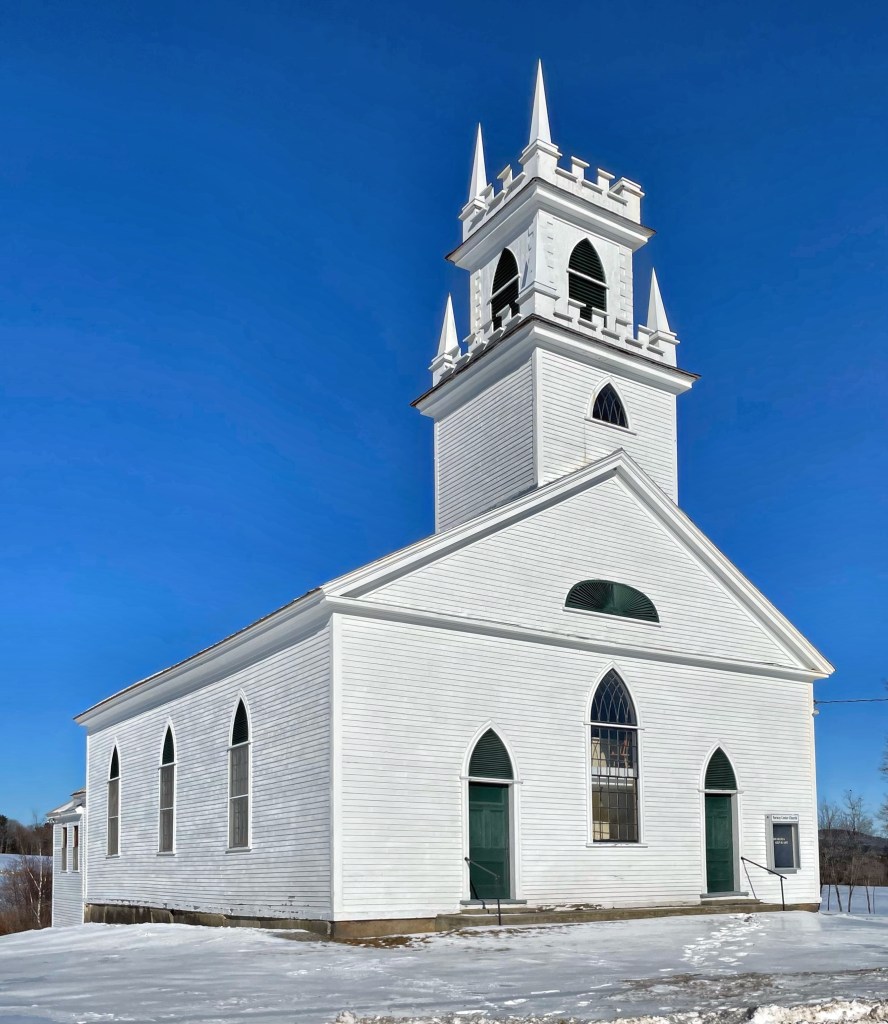
First Congregational Church, Norway // 1840

This beautiful, bucolic church in Norway Center was built in 1840 to replace an earlier meeting built in 1808-09 on the site. The present building is Gothic Revival in style with louvered panels making the windows appear lancet in shape and the amazing lancet window centered on the facade. The two-tiered tower is ornamented with crenellation and a wooden spire at each corner (besides one missing). The church features a louvered fan and strong pediment, which are nods to other prominent styles of the early-mid 19th century, Federal and Greek Revival respectively. This church quickly saw membership drop as Norway Village became the population center of town, with Norway Center becoming more agricultural and rural.

Nevers-Bennett Farmhouse // c.1820+

In 1820, just seven years after the incorporation of Sweden Maine, a homesteader, Amos Parker purchased fifty acres of land and began to erect a two-story, Federal house with a center chimney and a detached store beside it. Plagued by debt, Parker sold the unfinished house to Samuel Nevers circa 1833–1835, who purchased the property with the store for his recently married son, Benjamin. By 1860, Benjamin Nevers had a successful store and prospering farmstead. Benjamin died in 1883, and in the next two years, their daughter Charlotte, and her husband, Charles Bennett, dramatically remodeled and modernized the farmstead, adding a connected two-story ell building outward from the main house toward the old 1840 barn, connecting the entire property. I believe that the property remains in the Nevers-Bennett Family, as recently, Steve and Judy Bennett, recently negotiated an easement with the Maine Farmland Trust to protect their hay, beef, and maple sugaring acreage as farmland into the future.

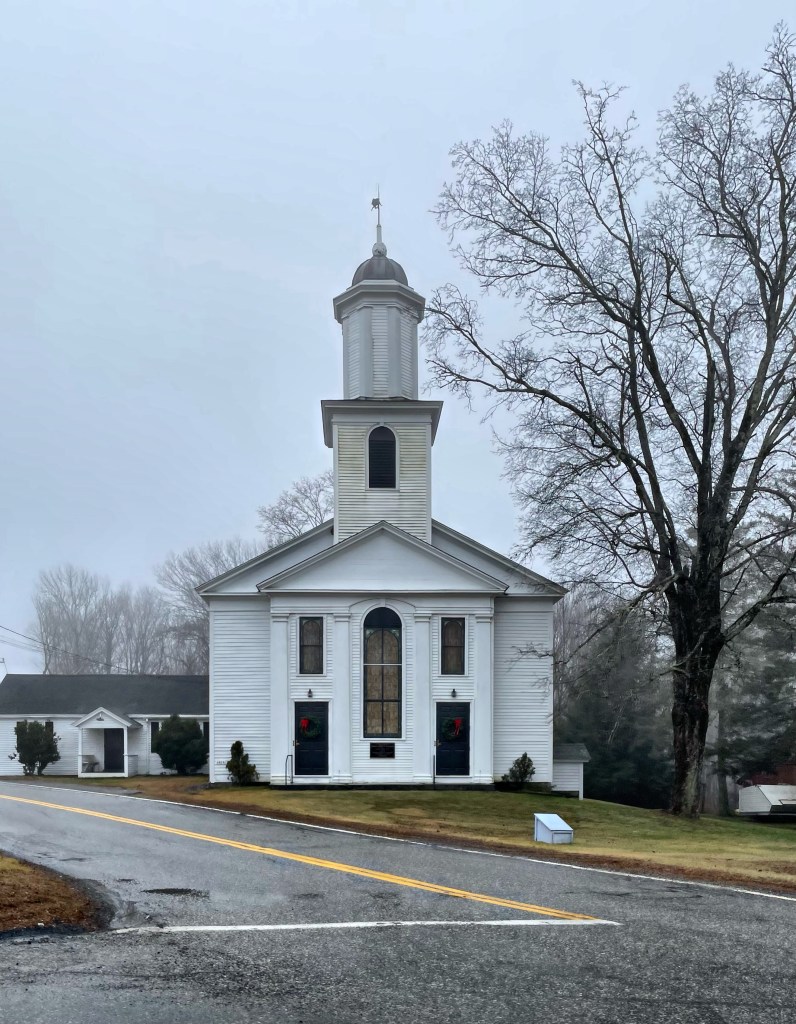
Old Baptist Meetinghouse, Willington // 1829

The Baptist Meetinghouse in Willington was built in 1829 by a local carpenter Albert Sharp, in a transitional Federal/Greek Revival style, common for the period. Its clapboarded facade has a projecting pavilion with two entrances flanking a two-story round-arched window. Four pilasters are surmounted by a wide entablature and the flushboarded pediment of the pavilion. Round-arched windows are repeated on the side elevations and the belfry, which is topped by an octagonal drum and a small dome. The Willington Baptist Church was organized in 1828, started by Rev. Hubbell Loomis, the fourth pastor of the Congregational Church across the common. Rev. Loomis was prominent both as a minister and an educator, and founder of Shurtleff College of Illinois. During his pastorate at the Willington Congregational Church, Mr. Loomis had strong tendencies toward Baptist sentiments. From this, membership of the congregational church split, some leaving for a new Baptist belief and others remained at the congregational church. The two congregations were split until 1911, when they again worshiped under the same roof, as the Federated Church of Willington, meeting in this building.

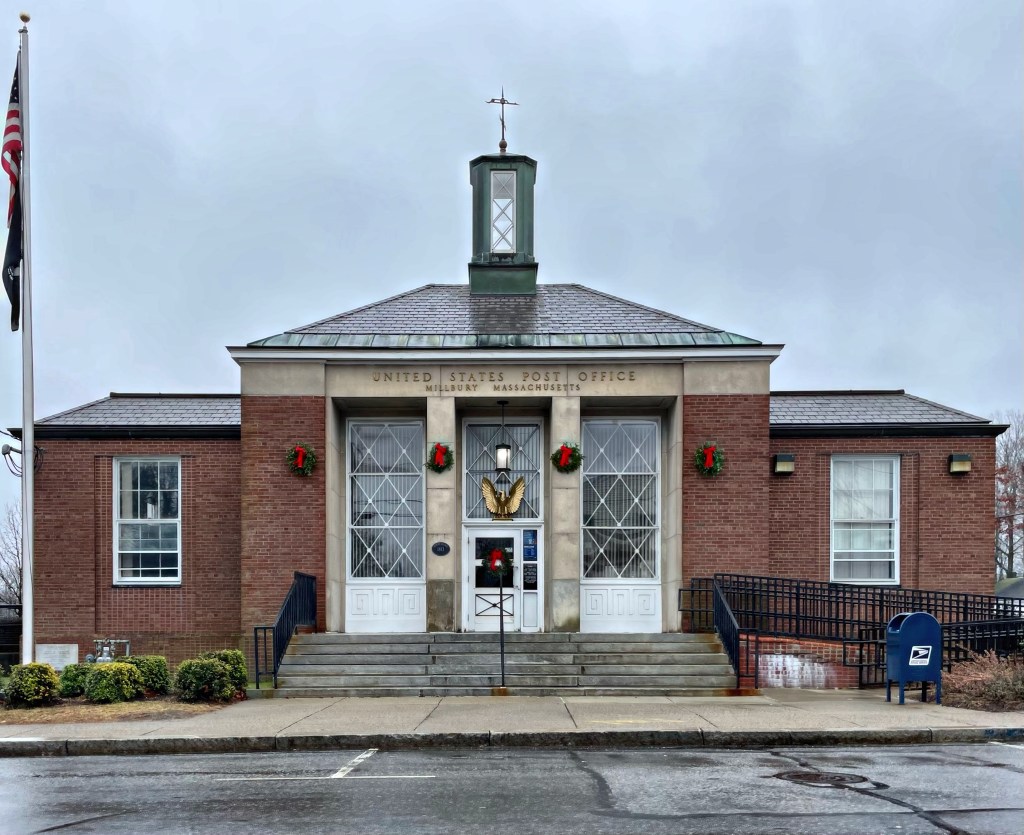
Millbury Post Office // 1940

Located in downtown Millbury, MA, the town’s local post office stands as a great example of Art Deco and Colonial Revival architecture styles, showing how well different styles can be incorporated into a single, complimentary design. The Millbury Post Office building was constructed in 1940 from plans by Louis Adolph Simon, who served as Supervising Architect in the Office of the Supervising Architect for the U.S. Treasury from 1933 until 1939, when the office was moved to the Public Works Administration / Works Progress Administration. The post office was designed at the tail end of the New Deal programs to help stimulate local economies by building infrastructure and providing jobs to locals. Inside, a mural “An Incident in the King Philip’s War, 1670” was painted by Joe Lasker and installed in 1941 and was “revivified” in 1991.