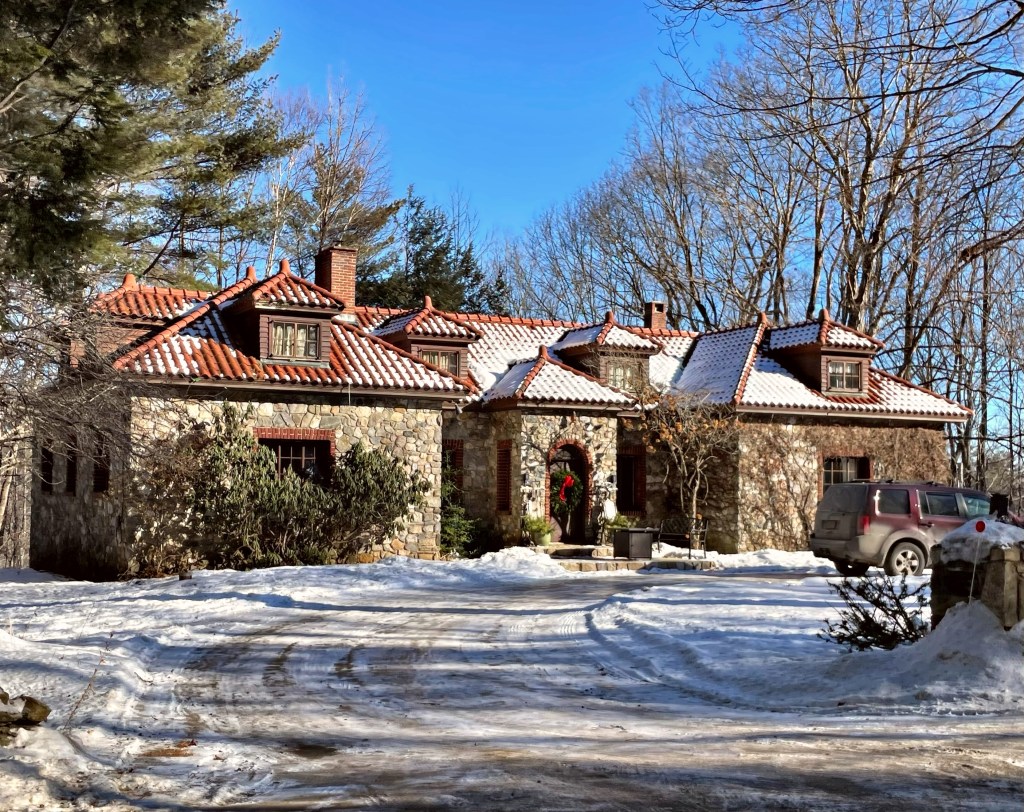
Harry Gregg House // c.1910

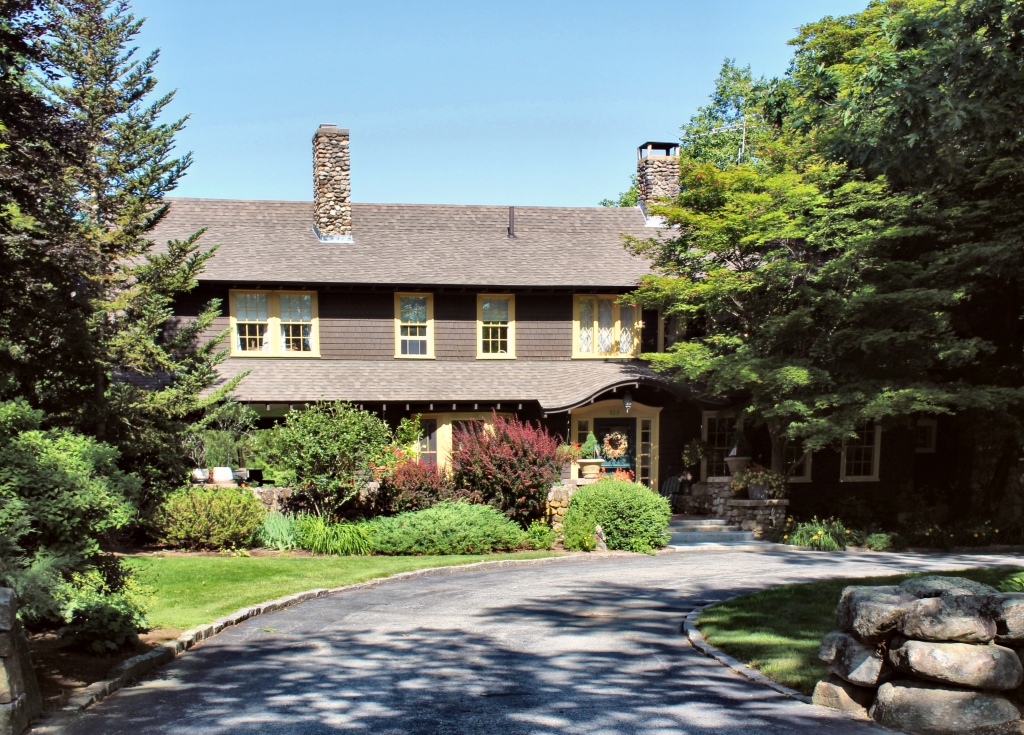
Harry A. Gregg, was the son of David Gregg, a lumber dealer and wooden goods manufacturer who built a mansion in Wilton’s East Village. Harry followed in his father’s footsteps, running the day-to-day business out of their Nashua, NH offices. With a lot of spare money, Gregg purchased pastoral land in Wilton Center and built a summer residence which may have also served as a gentleman’s farm. The Arts and Crafts style home showcases the best in the style with rubblestone, shingles, organic forms and exposed rafters. The house is pretty perfect!

Union Church of Waban // 1912

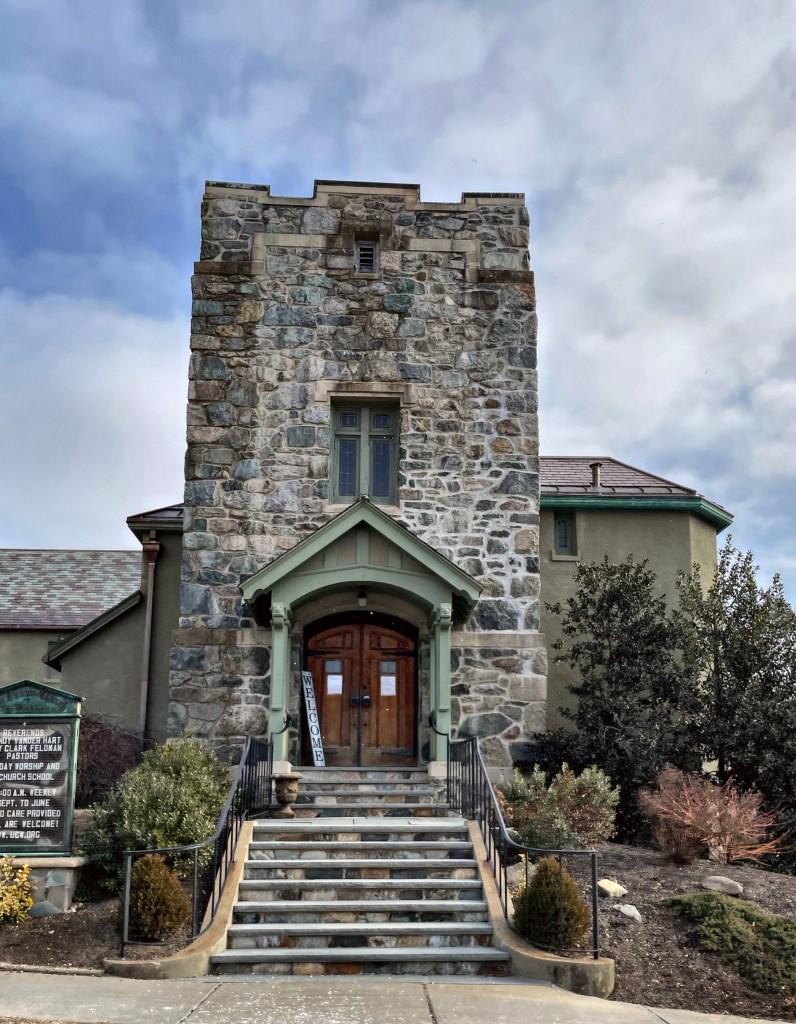
In 1904, residents of the newly established village of Waban in Newton, Mass., began meeting with the hope to establish a non-denominational church there. As the population of the village grew rapidly in the first decade of the 20th century, funding surged and it was determined that a place of worship was necessary. William C. Strong, a Waban resident and well-known horticulturist, donated the land from his large holdings, many of which was already being developed for house lots. The church building, designed by Boston architect James H. Ritchie, had its cornerstone laid in November 1911. Construction followed rapidly and the building was formally dedicated in September, 1912. The building follows the Arts and Crafts movement, especially Ralph Adams Cram’s revival of the English parish church.

William C. Strong House // 1907

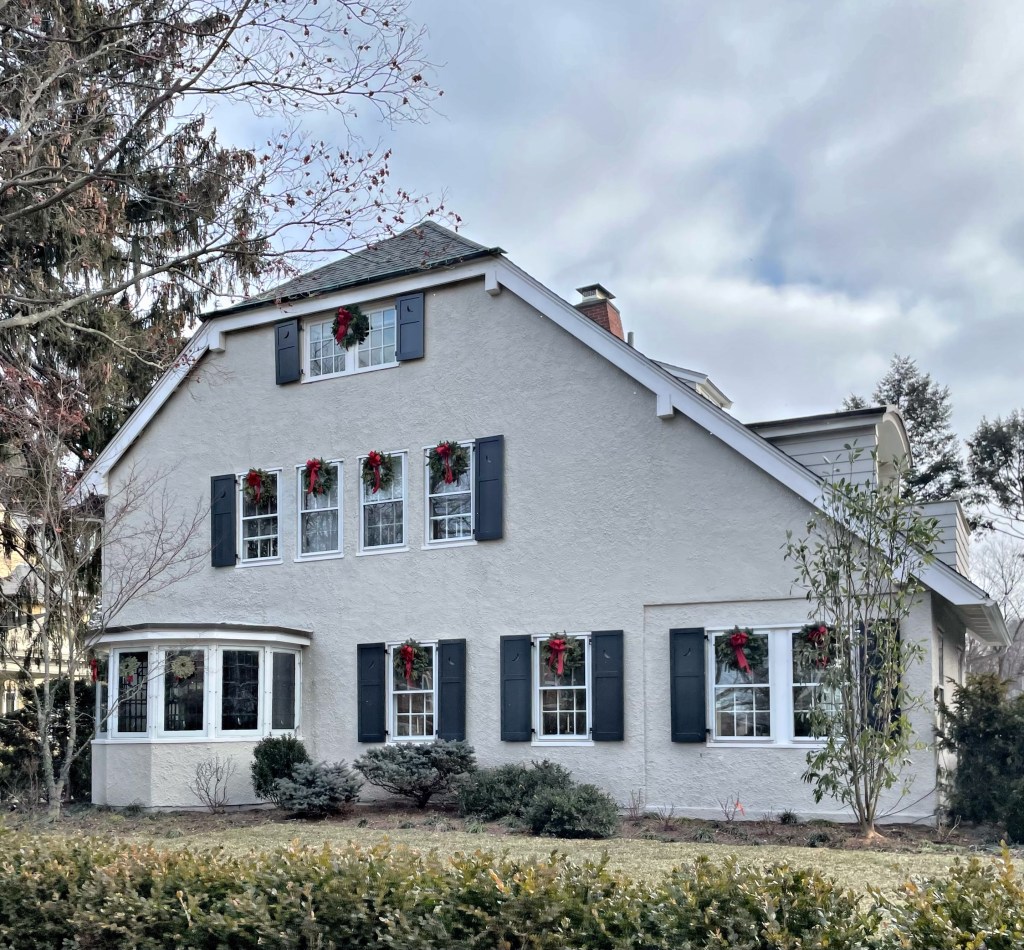
In 1875, William C. Strong, a nurseryman from Brighton, MA, purchased the 93-acre Staples-Craft farm in Newton. He established a large nursery on the grounds and promoted construction of the Circuit Railroad, which connected the rural section of Newton to the Boston and Albany rail line in 1886, thus establishing the village of Waban. Due in great measure to the efforts of Strong and other developers, Newton’s youngest village grew rapidly as the once isolated farm area gave way to a vibrant suburban community. He built commercial structures and people began to flock to the village, for the new housing and easy-access into Boston by rail. Strong had a house built by architect Herbert Langford Warren in 1896 and lived there for years before having this house built in 1907, when William was 83 years old. The house was occupied by Strong for just a couple years until he moved away to Manhattan. The Arts and Crafts style home was purchased by Esther Saville Davis.

Wrightstone // 1925

In the early 20th century, Norway, Maine and the surrounding towns were sought-after for their natural beauty with large lakes and rivers with untouched expanses of forest. Upper-middle class residents of Portland, Boston and other larger cities in New England built more rustic summer homes, compared to the elaborate “White Elephants” in Newport, Rhode Island. This home in Norway was named Wrightstone and was built in 1925 for the Wright Family. The U-shaped home is constructed from rubblestone, likely gathered from the land on which it sits. The house blends the Arts and Crafts movement with the uncommon (in Maine) Spanish Colonial Revival style, with the terracotta roof! I bet the interior is so cozy!

Oakes Ames Shooting Lodge // c.1905

Located near the banks of Leach Pond in Borderlands State Park, this handsome stone structure set the style for one of the most iconic and beautiful buildings in Easton, the Ames Mansion. The one-story concrete and stone structure was designed and constructed under the supervision of Blanche Ames, and may have been a prototype for the construction technique used in the Ames Mansion, built just years later. Blanche was an amazing woman. She was an artist, political activist, inventor, writer, and prominent supporter of women’s suffrage and birth control. In 1900, she married Harvard University botany professor Oakes Ames (no relation). She took the married name Blanche Ames Ames. She illustrated her husband’s botanical research on orchids, and later got involved in designing the family’s country retreat. Originally designed as a warming hut during hunting season, this lodge was originally minimally designed with exposed stone walls. In the 1930s, the lodge was renovated to contain a living space, a kitchen, and a bedroom. When the Commonwealth of Massachusetts acquired the Ames Estate in the 1970s for a state park, the Lodge was restored to its original condition. The hunting lodge is open to the elements and the public, who can warm themselves in one of the two six-foot fireplaces.

Rochester Grange Hall // 1924

The Grange, officially named The National Grange of the Order of Patrons of Husbandry, is a social organization that encourages families to band together to promote the economic and political well-being of the community and agriculture. Grange Halls can be found in rural towns and villages all over New England, and historically served as a gathering place to discuss agriculture-based business, crops, trade, and issues faced in the community. The Rochester Grange Hall was constructed in 1924 to the designs of architects Brown and Poole of New Bedford, MA and is of the Craftsman style. The National Grange has sharply declined in membership since the late 19th century. In 2013, the Grange signed on to a letter to Congress calling for the doubling of legal immigration and legalization for undocumented immigrants currently in the United States. The Grange now emphasizes an expansion in the H-2A visa program to increase legal immigration and address the crisis-level labor shortage in agriculture.

Charles Dexter House // c.1910

Craftsman bungalows are a rarity in New England. The Craftsman style surged in the early 1900s, which coincided with the ever-popular Colonial Revival styles reign as most commonly built house style. Many of the Craftsmans that were built are less “ornate” than the West Coast counterparts, lacking deep exposed rafters, sweeping porches, and low-pitched roofs, but they are out there. This bungalow in Rochester was built around 1910 and has some Colonial qualities, including the Tuscan columns, boxed eaves, and shingle siding. I do love that full-length porch and hipped roof with a cute centered dormer! Do you wish we had more Craftsmans in New England?

Sippican Tennis Club // 1908

The Sippican Tennis Club in Marion, Massachusetts, was established in 1908 for the purpose of athletic exercise and a place for social gatherings in town. Historically, the town’s population surged in the summer months when wealthy city residents would flock here and stay in their waterfront mansions for a few months a year. The large hipped roof rectangular building was constructed just before the club opened in 1908, and it is flanked by eight tennis courts. Charles Allerton Coolidge, a principal in the well known firm, Shepley Rutan and Coolidge, was one of the original shareholders as well as the architect for the building. He also was a summer resident himself (his home was previously featured). The building is constructed of concrete and features paired, tapered columns which run the perimeter of the structure, supporting a deep porch. The broad elliptical arch and exposed rafters add to the Craftsman style flair of the building.

St. Rita’s Roman Catholic Church // 1916

A Roman Catholic parish was established in the South Coast/Cape Cod area by 1830 in Sandwich, where a large glass company employed a number of Irish immigrants. Over the course of the 19th century, several mission churches were established, and eventually a second parish, St. Patrick’s, was established in Wareham in 1911. Soon after, a mission was established in nearby Marion to serve the summertime Catholic community there. A parcel of land was acquired by the Roman Catholic Bishop of Fall River and they hired architect Matthew Sullivan to furnish plans for the small church. Matthew Sullivan (1868–1948) trained in the office of Edmund M. Wheelwright, Boston City Architect (1891-1894). Sullivan succeeded Wheelwright as City Architect and served in that position from 1895 to 1901, when he became a junior partner in the firm of Maginnis, Walsh and Sullivan, which was widely known for its ecclesiastical work, where he too specialized in religious buildings. St. Rita’s Roman Catholic Church is an example of an early 20th century chapel in the Craftsman style, characterized by eaves marked by long projecting rafter tails and a bold entry framed by Tuscan columns.

Rye Beach Club // 1925

The Rye Beach Club is located right on Rye Beach, one of New Hampshire’s most upscale seaside communities, one whose history as a fashionable summer resort dates back to the 1840s. The Beach Club was established in 1925 in the decade after the First World War as the nation was experiencing a social transformation fueled by the postwar boom of the “Roaring Twenties”. As automobile ownership rates increased by the 1920s, the average motorist was no longer dependent upon schedules and the fixed routes of streetcars, railroads and steamboats. As one early historian of American recreation noted tongue-in-cheek, “The wealthy could make the fashionable tour in 1825, the well-to-do built up summer resorts of the 1890s, but every Tom, Dick and Harry toured the country in the 1930s.” As a result, many wealthy communities created private, exclusive recreation and social clubs where they would not be forced to mingle with the “average” American. Rye Beach residents formed the Rye Beach Club in 1925, which comprises of a rubblestone building with various wood-frame additions.

Oak Hill Evangelical Chapel // 1903

On a busy road in Oak Hill Village in Newton, Massachusetts, I saw this house which appeared as if it was built for a different use. After searching historic maps, I found it was originally home to the Oak Hill Evangelical Society, as a rural chapel. The chapel served as a local religious gathering place for the handful of families who lived around this section of Oak Hill and did not desire to travel to nearby villages to worship. The practitioners had money, and hired the Boston architectural firm of Cooper and Bailey, who designed many stunning civic and institutional buildings in New England. With the proliferation of the personal automobile, locals would later be able to travel to nearby churches easier, and this building was sold to a member, who converted it to residential use, which it has been used as to this day. The building is an excellent example of the Arts and Crafts architectural style with the raised rubblestone foundation, flared eaves with exposed rafters, and shingle siding which flares where it meets the foundation.

Colt Dairy Barn // 1917

Samuel Pomeroy Colt (1855-1921), a Bristol industrialist, purchased three farms on Poppasquash Neck, in Bristol, Rhode Island in 1905. One of the farms he aquired, Coggeshall Farm, was featured in my last post. On the newly consolidated farmland, just outside the hustle-and-bustle of Bristol’s downtown core, Colt built a large summer dwelling called ‘The Casino’. He lived at his family estate in town a majority of the year, but used ‘The Casino’ as a gentleman’s farm and a space to raise his prize-winning Jersey cattle and Berkshire sows. Colt wished that the citizens of town share his enjoyment of the property and had an open invitation carved onto the marble piers at the estate entrance which reads, “Private Property, Public Welcome”; access was freely allowed at the farm and shoreline. The two marble piers at the entrance to the estate are topped with massive bronze bulls modeled after two of Colt’s bulls, and were cast in Paris by Val d’Onse Company. Colt died in 1921. His will specified that Colt Farm not be sold and that it remain accessible to the public. Though he left a sum to operate the farm, it ran a deficit. The Casino was demolished in the 1960s as it was consistently destroyed by vandals, and became a public safety concern. The lasting cow barn was built in 1917, from designs by architect Wallis E. Howe. The barn utilized field stone from existing stone walls on the property and is capped with a red tile roof. The barn is unlike anything I have ever seen, and now is park offices. In 1965, after approval by Bristol voters, the State of Rhode Island purchased 466 acres of the Colt estate and created the largest public park in the Bristol County, known as Colt State Park.

Nantasket Beach Waiting Room // 1903

The area of Nantasket Beach in Hull was in the late 19th century, a hotbed of taverns, thievery, and brothels. To counter this, the Metropolitan Park Commission of Greater Boston acquired about 25 acres at Nantasket, which included roughly one mile of shoreline extending north from Atlantic Hill in 1900. The initial appropriations provided for only minimal facilities, such as a bathhouse and a few incidental buildings, one of which was a waiting room for those arriving or departing from the new railroad station (since demolished) at the beach. The MPC hired the Olmsted Brothers landscape architects to design the paths and landscaping for the new park, and they worked with architects Stickney & Austin who designed many of the early buildings. Stickney & Austin designed this stucco-clad building with clock tower to provide shelter from the elements and summer sun for visitors of the reservation. The building is a blending of the Arts and Crafts and Spanish Revival styles, both common at the beginning of the 20th century. The building now houses the Paragon Park Museum, after they relocated the Paragon Park Carousel next door to this building.

Marion Nichols Summer Home // 1935

This summer estate in Hollis, NH epitomizes the hidden architectural splendor that can be found off the beaten path in many small New England towns. Hollis began serving as a summer destination in the late 1880s and the trend continued until WWII. In many cases, old family homesteads became summer residences for descendants who had moved to the city but desired to return to their “roots” periodically. The Nichols Home is unique in Hollis as it was designed to be a summer retreat for a well-to-do widow and her considerable servant staff, combining all the comforts available with the advantages of a rural retreat. The design of the main house offers separate living spaces for the family and the servants, including a library, living room and dining room for the use of the family. The servants’ wing was designed to include a two-car garage, a butler’s pantry, a manual dumbwaiter connecting the basement and first floor used to transport fireplace wood and a receiving unit for the delivery of milk, groceries and other goods. Sleeping porches, capitalizing on the benefits of the fresh country air, are an integral component of the house design and are included in both the family and servant wings. The home was designed by the Boston architectural firm of Densmore, LeClear & Robbins, who were hired by the 52 year old widow’s children for their mothers’ summer home. It is said that Ms. Nichols never liked the home and decided to summer instead at the old family summer home down the street.

Wheeler House // 1914

The Wheeler House is a 1-1/2-story, Craftsman bungalow home in Hollis, New Hampshire, with near full-length shed dormers at the front and rear sloping roofs. This home was preceded on the site by several earlier buildings including an ice house and a garage. The garage burned in 1912 during a fire which also destroyed the adjacent store. After the fire, a temporary store was erected by Will Gates in 1914, the temporary store was bought by Almond A. Wheeler who remodeled it into the present house for his family. Wheeler occupied the house until his death in 1936 and it was later occupied by his widow, Ruth Hills Wheeler. Mrs. Wheeler died in 1979 and according to the terms of her will, the house became the property of the Hollis Historical Society, which it remains to this day.