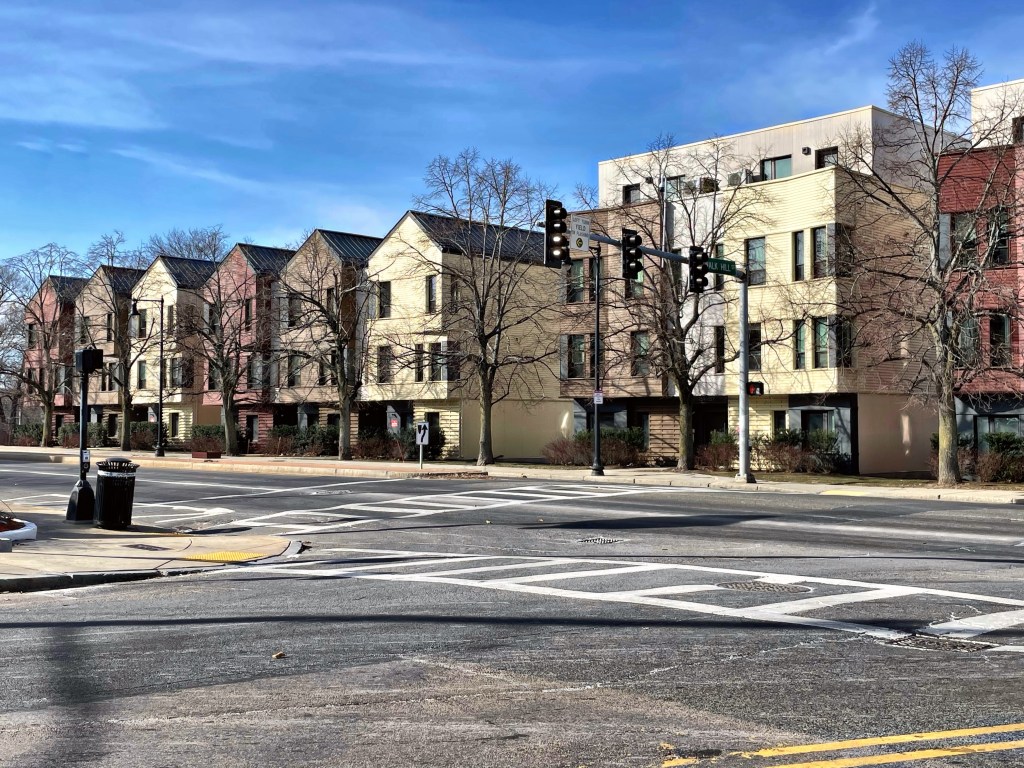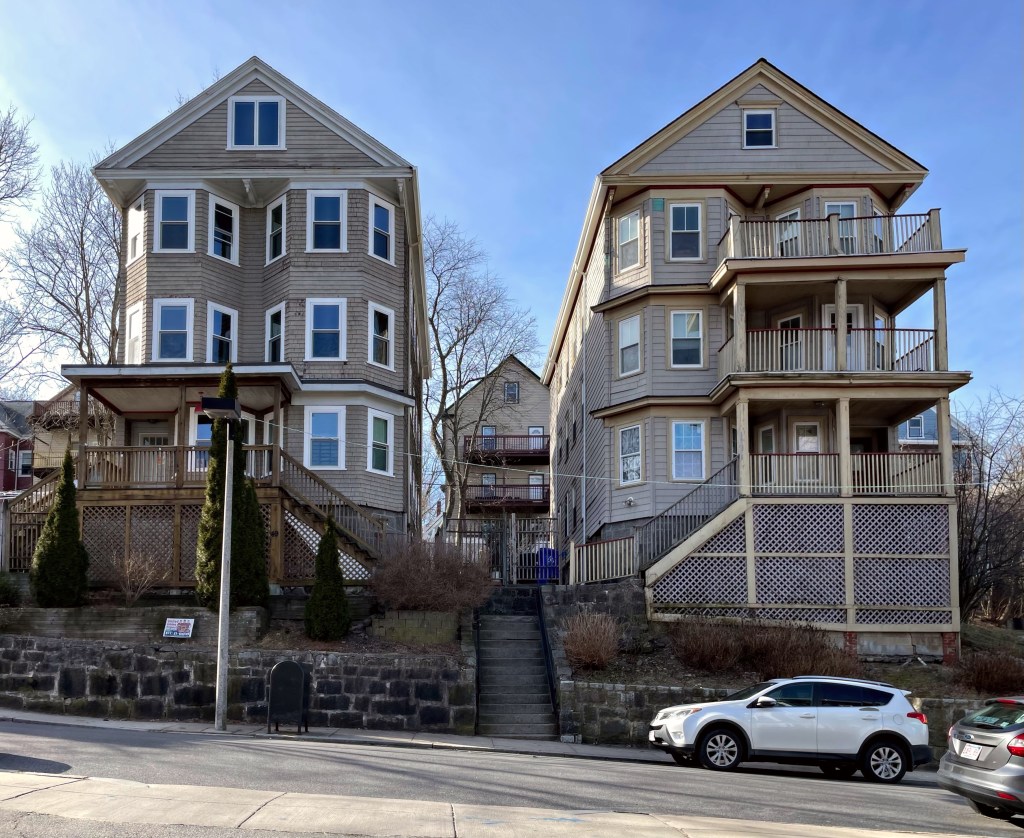
Tilia Jamaica Plain // 2020

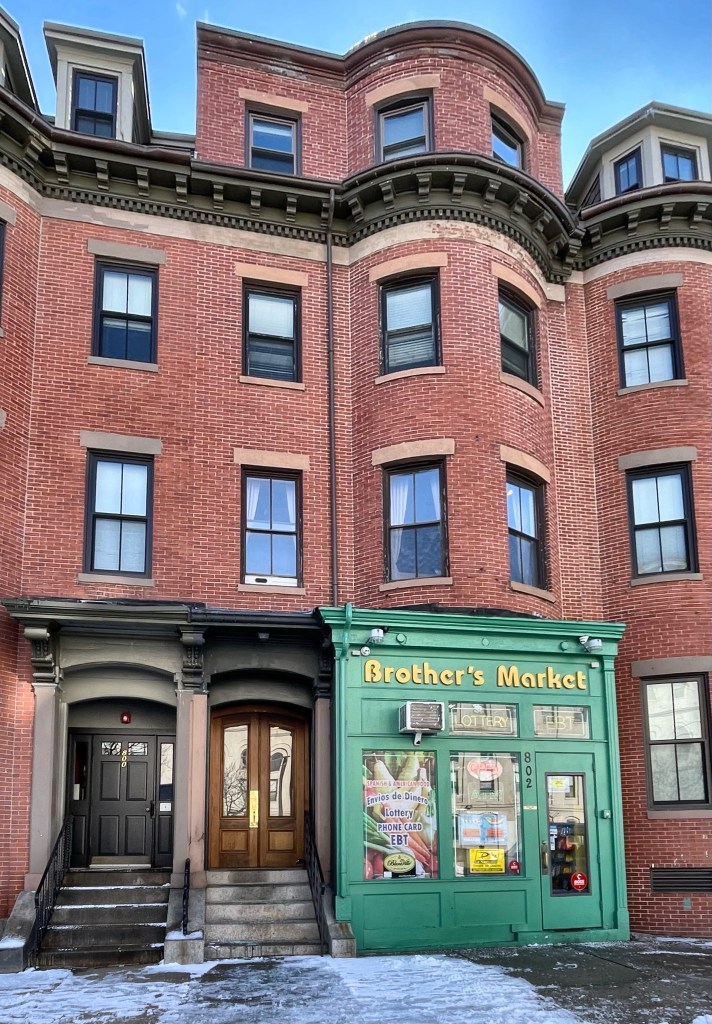
As many of you likely agree with me, most contemporary architecture and buildings in Boston (and in many U.S. cities) is bland and mundane, but there are some projects that really stand out for creative and contextual designs. Tilia in Jamaica Plain is one of the latter! When the Massachusetts Bay Transportation Authority (MBTA) began accepting bids for the development of an undeveloped linear parcel along Washington Street just south of the Forest Hills T-stop, developers jumped at the opportunity. Urbanica Inc., a local design/development group had the winning proposal which consists of approximately 110‐120 residential units in buildings of varied density ranging from a larger apartment building to more human-scaled townhouses. Led by architect Stephen Chung with Kamran Zahedi as developer, the design for the townhouses specifically is a contemporary nod to the triple-decker form we see so much in the surrounding area. The varied color and recessed sections provide a lot of depth and character to the development along the streetwall.

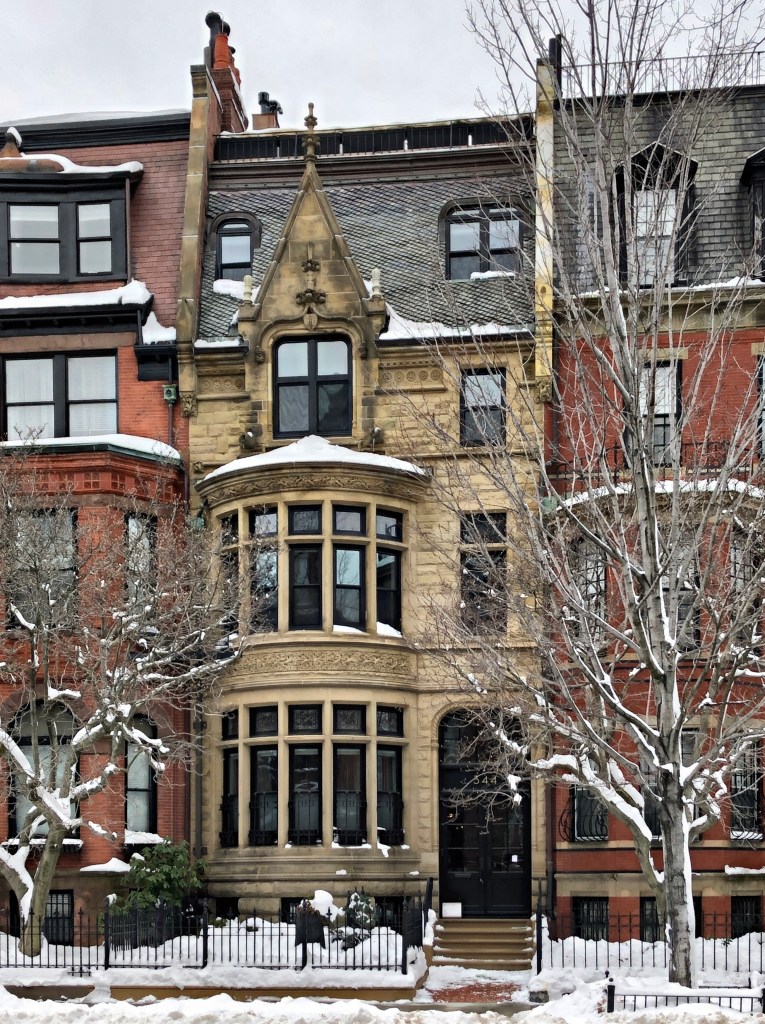
Daniel and Mary Knowlton House // 1880

Another of my favorite townhouses in the Back Bay neighborhood of Boston is this Victorian Gothic mansion on Beacon Street, built for Daniel and Mary Knowlton. The residence was designed by the firm of Allen and Kenway and built in 1880 and stands out architecturally for its use of style and use of material amongst a sea of brick. A former cotton merchant, Daniel Knowlton was treasurer of the Flexible Shoe Nail Company and later worked as a stockbroker. The large single-family dwelling was converted into four condominium units in 1989, but has since been switched back to a single-family residence. It sold for $11.2 million dollars as a five bedroom, six full and two half bath home in 2017. Yikes!

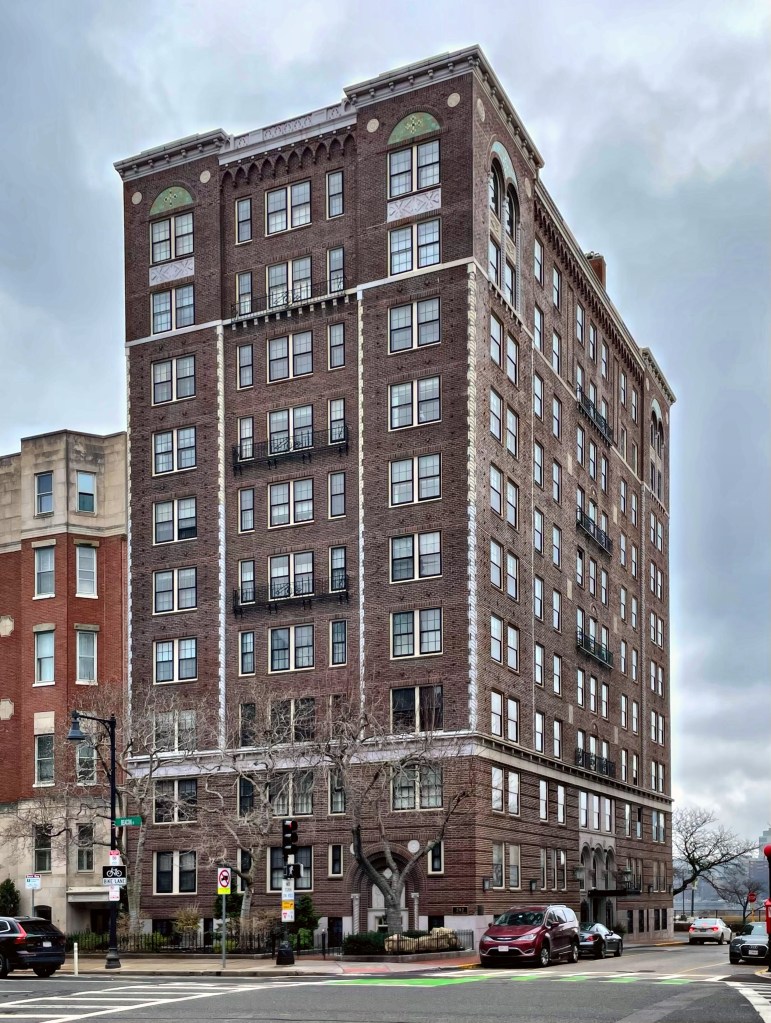
282 Beacon Street // 1927

One of the finest apartment-houses in Boston is this towering building at the corner of Beacon and Exeter streets in the Back Bay neighborhood. In 1926, real estate dealers Elliott Henderson and Roger B. Tyler purchased two townhouses on small lots and demolished them for the present structure. They hired the architectural firm of Blackall and Elwell furnished the plans for the 11-story Renaissance Revival style residence which included ten large apartments. The design is unique to the Back Bay with amazing cast stone details at the entries with rounded arch windows, fanciful brickwork, and spiral columns!

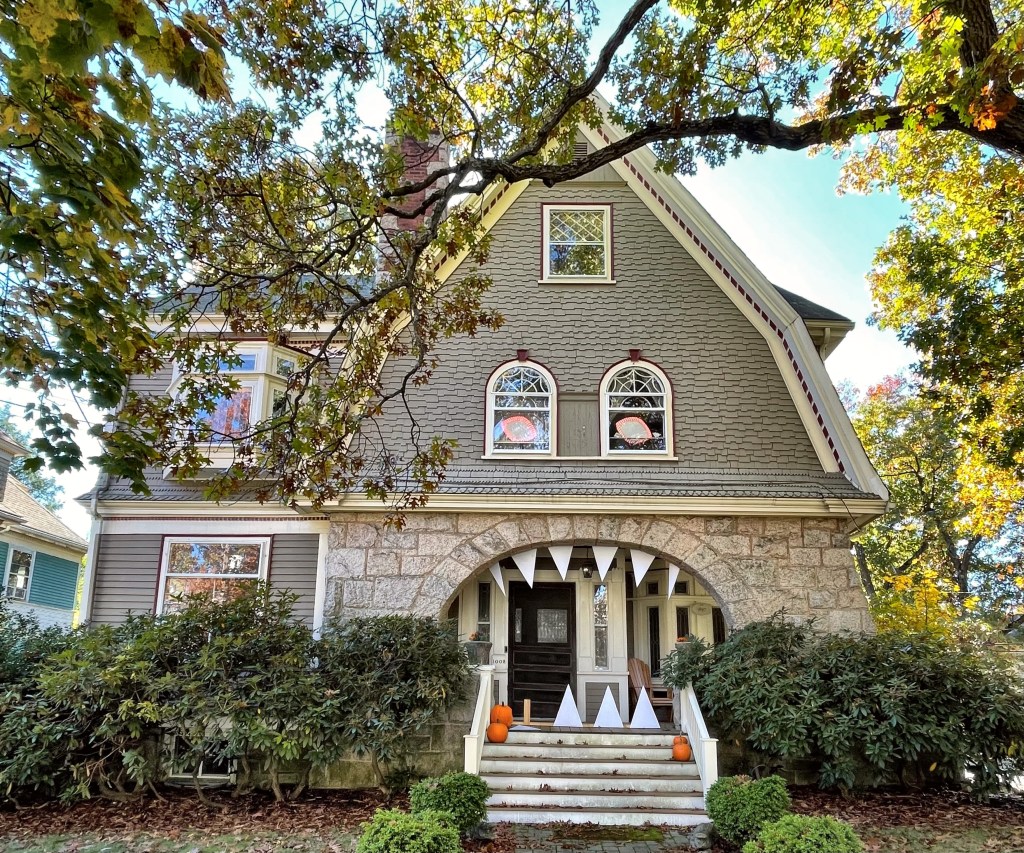
Barrows-Goddard House // 1898

Happy Halloween! To celebrate I wanted to feature one of the more creatively decorated houses in the Boston area, which blends spookiness with architecture! This is the Barrows-Goddard House, so named after its first two owners. The house is located in Newton and was built in 1898 as an eclectic Queen Anne/Shingle style home. The original owner was Joseph Barrows, who developed the property and sold it within a year, relocating to a new home on a less busy street. The property was owned next by Christopher Goddard, an insurance agent with offices in Boston. Architecturally, the gable roof of the main block is intersected by an over-scaled gambrel cross-gable clad in patterned cut wood shingles. The focal point of the design is the Syrian-arched entrance porch of coursed, dressed fieldstone which this time of year, eats trick-o-treaters!

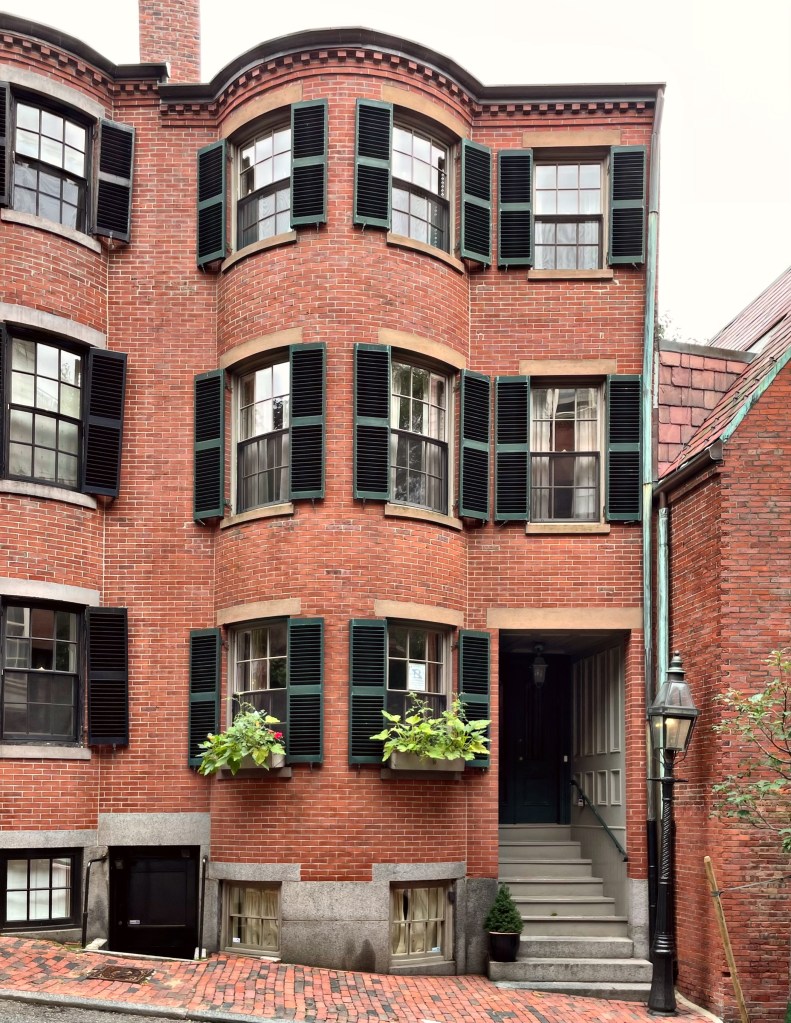
Joshua Bennett Townhouse // 1834

Just steps from the iconic Louisburg Square in Boston’s exclusive Beacon Hill neighborhood, a man named Joshua Bennett in 1834, purchased two recently completed townhouses built by housewrights Samuel H. Mitchell and Loring Dunbar. Joshua Holden Bennett (1792-1865) was born in Billerica, Massachusetts and split his time between his hometown and Boston. Bennett and his family owned the two identical bowfront houses until about 1930, likely renting them out to middle-upper class families. The home on the right (pictured) was later purchased by Benjamin B. Gillette an organist at a local church. After WWII, property values in Beacon Hill began to falter and this property and its neighbor became lodging houses of rented rooms to a more wealthy clientele than those on the North Slope of the hill. The home last sold in 1989 for $753,000 and is estimated at a value today at over $4,000,000!

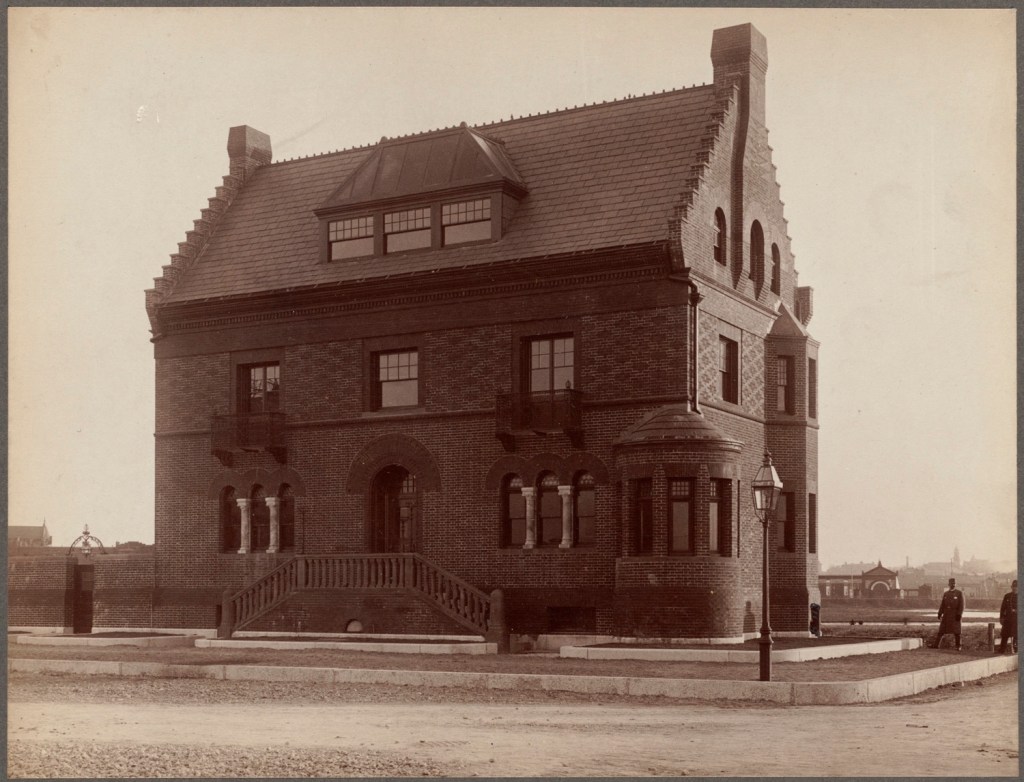
Kate and Charles Page House // 1888-2001

C.1888 photo courtesy of BPL collections

In 1888, Kate and Charles Page purchased a house lot in the sparsely developed Fenway section of Boston. The corner lot at Westland and Parker (renamed Hemenway) provided views to natural scenery and access to many Boston amenities. The couple worked with architect Herbert Langford Warren, who had previously apprenticed under the great H. H. Richardson. Warren took many of the common motifs seen in Richardson’s own style, but he was also a fan of the Arts and Crafts Movement, with its love of fine handicraft. You can see that in the elaborate diaper-patterned brick and in the stepped gables. The gables were a revival of a motif from old Flemish, Dutch, and Scottish architecture, sometimes called corbie-step gables, because corbies (crows) liked to stand on the steps. The interior was just as stunning, with massive brick arches, fanciful woodwork, and a prominent stairhall at the entrance. The couple was likely inspired to hire Warren by their son, Walter Gilman Page, a young artist who maintained a studio space in the home for some time. The home was sold out of the family by 1912. In 1917, the whole house was lifted up one story and a strip of retail stores was inserted beneath it. The original arched entryway then became a second-floor window. It was replaced with a taller building by 2003. Interestingly, upon the opening, the Commissioner of the Boston Parks and Recreation Department and long-time Boston Preservation Alliance Executive Director stated that the 1888 house “looked like a missing front tooth” and was happy to see it demolished.

Thomas M. James House // c.1900

When the Waban section of Newton got a rail line connecting it to Boston, development boomed! Architects who lived in other parts of the Boston area saw an immense opportunity, not only for work, but for a bucolic setting where they could also reside. One of these architects that lived and worked in Waban was Thomas Marriott James, who in the early 20th century, designed and moved into this house on Pine Ridge Road. James was also born in Cambridge but received no academic architectural training. By 1893, Boston directories record that he was a draftsman at the office of Eugene L. Clark, a prolific designer of suburban homes. His residence in Waban blends the Shingle and Colonial Revival styles under a broad gambrel roof. The verandah is inset and has segmental bays with shingle posts as supports. The kneewall is also shingled, adding to the composition.

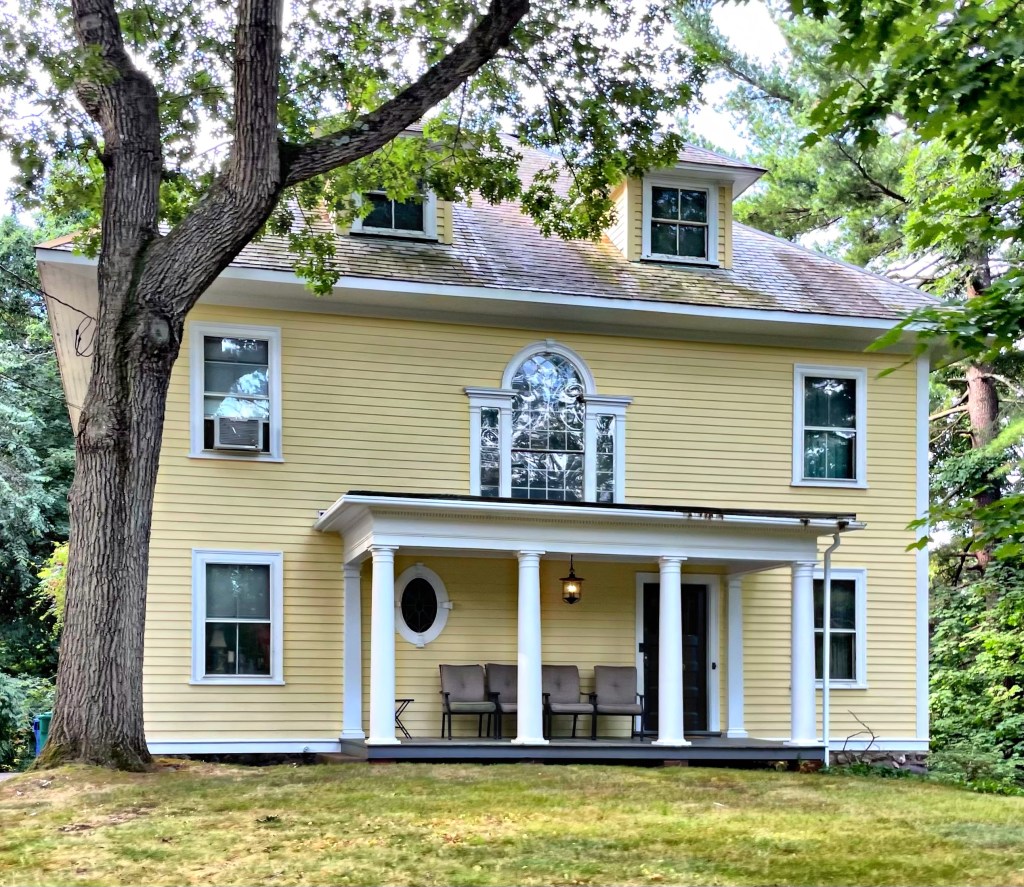
Eva Southwick House // 1898

Okay, there is just something about this house that is so intriguing and unique and stands out among all the other (thousands) of Colonial Revival style houses I have seen. I just can’t quite put my finger on it! This late 19th century beauty was built in 1898 for Eva Bailey and Francis Southwick eight years after their marriage and after the birth of their children. It is unclear who the young family hired as an architect to design the home, but they definitely went with a loose adaptation of the Colonial Revival style in an American Foursquare form. The house has a large Palladian window and a minimal front portico supported by Doric columns.

Ernest Zeiss House // 1897

Another eclectic house in Waban is this beauty, a blending of Queen Anne and Colonial Revival styles under an impressive gambrel roof. The home was occupied by Ernest L. Zeiss, a salesman. Waban, which was once a neighborhood within the reach of the middle-class, has since become one of the most desirable neighborhoods in one of the most exclusive towns in the Boston metro. It is safe to say an ordinary 9-5 salesman would not be able to afford a house like this today!

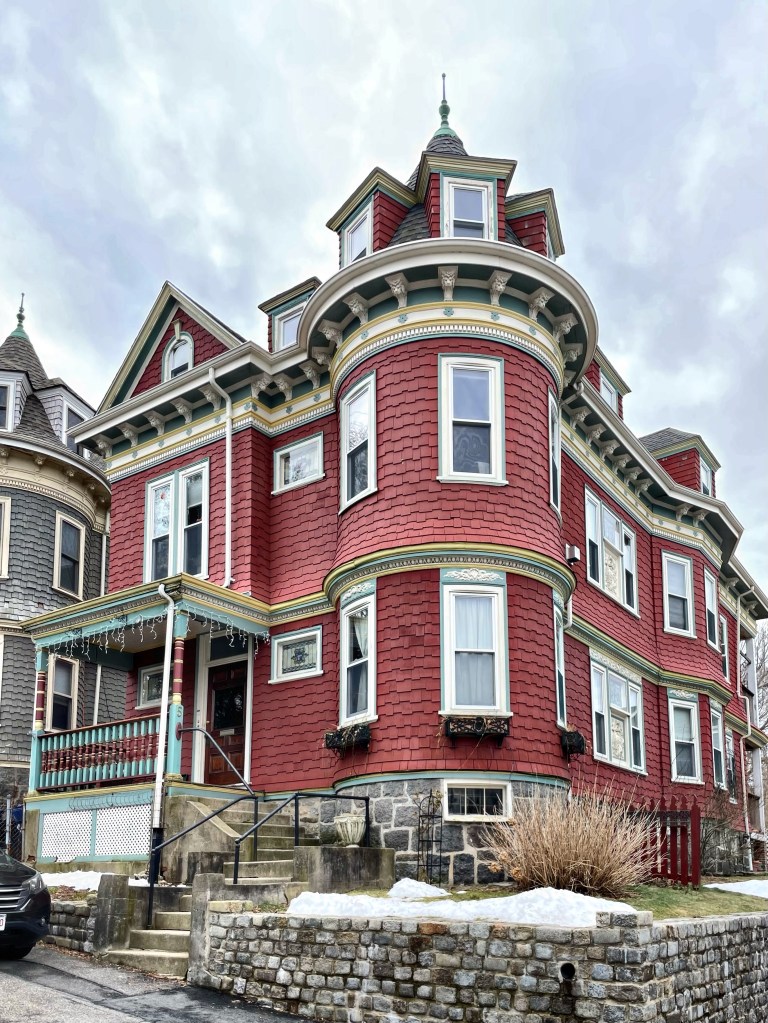
Emmel Rental Houses // 1896

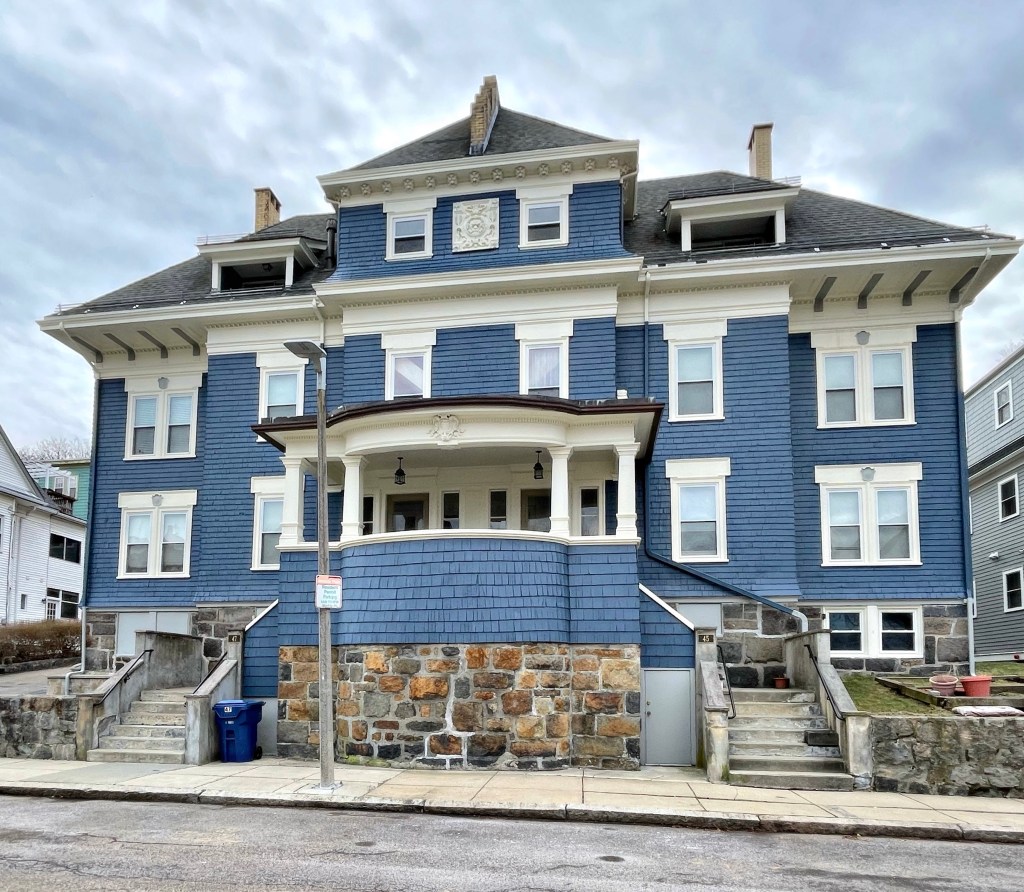
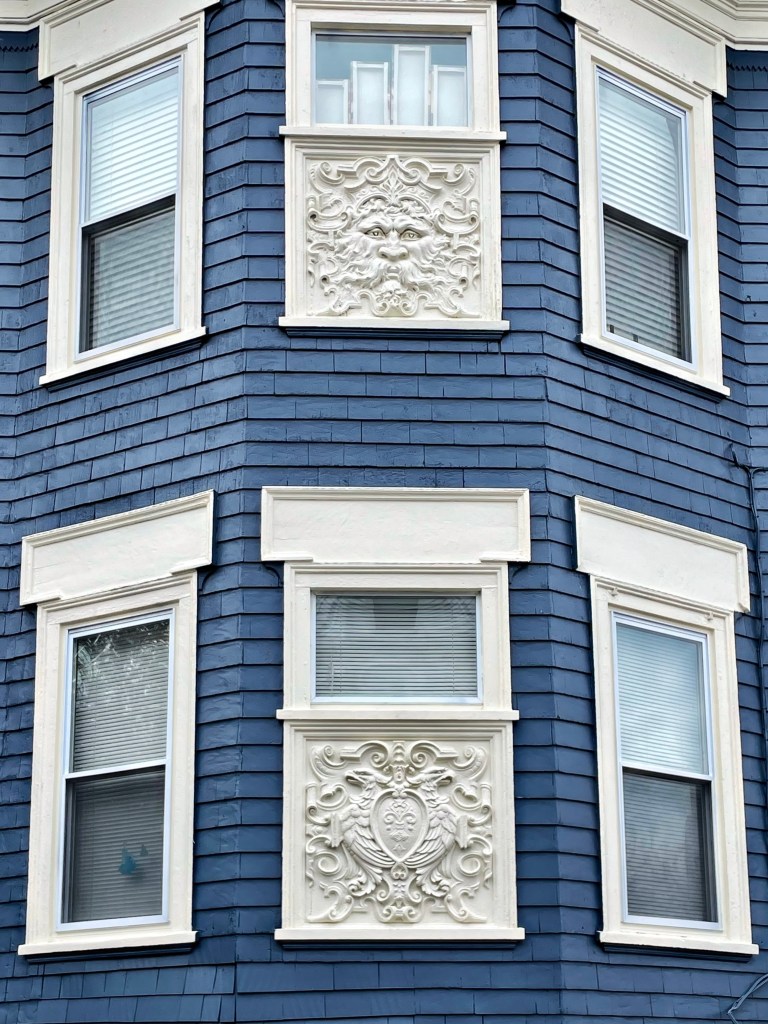
Tucked behind the massive Emmel Building (last post), you will find these two charming houses on the dead-end street in Jamaica Plain, Boston. Like the Emmel Building, these two homes were built by Charles Emmel, an architectural sculptor and real estate investor, who hired local architect George Zimmer to furnish plans for the buildings. The two transitional Queen Anne houses feature some of Emmel’s architectural decoration, from the lion’s head corbels to the decorative lintels above the windows, these homes really stand out!

Emmel Building // 1896

In 1896, architectural sculptor Charles Emmel purchased land in the rapidly developing Forest Hills section of Jamaica Plain, Boston. He hired local architect George Zimmer, to design a massive double-house which would serve as an income-producing investment, and could also be a sort of advertisement for his sculpture work. The result is this massive Colonial Revival style property, perched atop a puddingstone foundation. Architectural ornament has been lovingly preserved, a testament to the owners of the building today and the amazing work of the original owner, Mr. Emmel. I found myself staring at the building for a while when walking by, looking at all the hidden detail and architectural ornament which adds so much to the building.

Forest Hills Station // 1987

Photo courtesy of Cambridge Seven

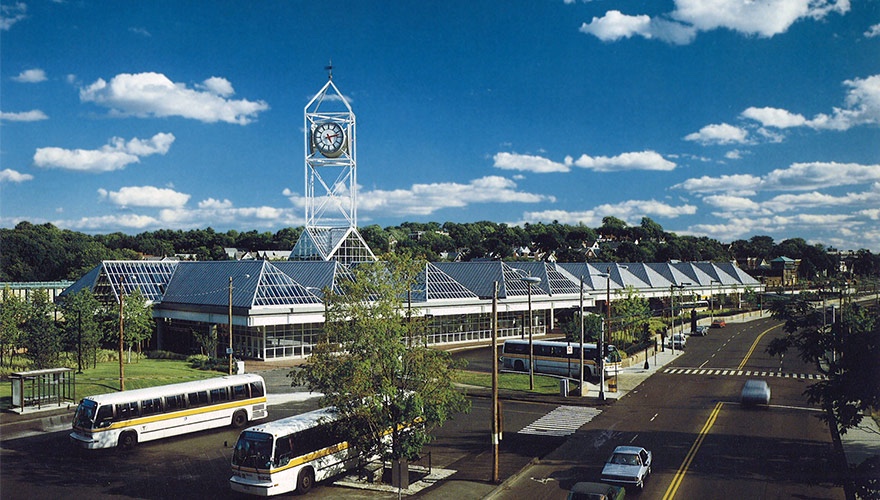
While the demolition of the 1909 Forest Hills Station in Jamaica Plain (last post) was a huge architectural and historic loss for the city of Boston, the present building is a landmark in its own right. The present building was built in 1987 as a pivotal project in the MBTA’s Southwest Corridor Improvement Program, which was largely unfinished (thanks to neighborhood pushback and protests against the proposed highway to cut through the neighborhoods). The existing station, designed by local firm Cambridge Seven, is situated between two important points in Boston’s “Emerald Necklace” park system, and thus was given the appearance of a greenhouse by the architects. The distinctive clock tower, rising 120 feet above the station, signals the station location and is a nod to the days when stations once had prominent clocks to help passengers keep tabs on the time, before the days of cellphones!

Women’s Service Club of Boston // c.1860

This historic rowhouse in the South End of Boston was home to the Women’s Service Club, a social and volunteer organization made up of Black women to uplift Black Bostonians of varied backgrounds, including soldiers, students, migrants and mothers. “464,” as some locals admiringly called it, was formed in the early 20th century as Boston. The city, once known as “Freedom’s Birthplace” and the “Athens of America” as a hub of abolitionist activity leading up to the Civil War, saw extreme segregation in housing and education for its Black residents by the early 20th century. From this, local activist Mary Evans Wilson organized a knitting group in 1917 to support soldiers of color fighting in World War I. An estimated 350 women joined the group, donating their talents to produce scarves and gloves for servicemen. Humanitarianism guided the activity of the Women’s Service Club’s over the next half century. This building was purchased in 1919 and operated as part-meeting space and part-settlement house. “A Home Away from Home,” as some described it, the building offered affordable shelter to female workers, migrants, and college students barred from on-campus housing due to racist policies. One of the club’s most prominent members was Melnea Cass (1896–1978), who served as its President for more than fifteen years. Cass initiated the Homemakers Training Program which certified domestic workers so they would be assured a liveable minimum wage, social security and other benefits. The club continues to do great work, but could use funding to restore the landmark building!

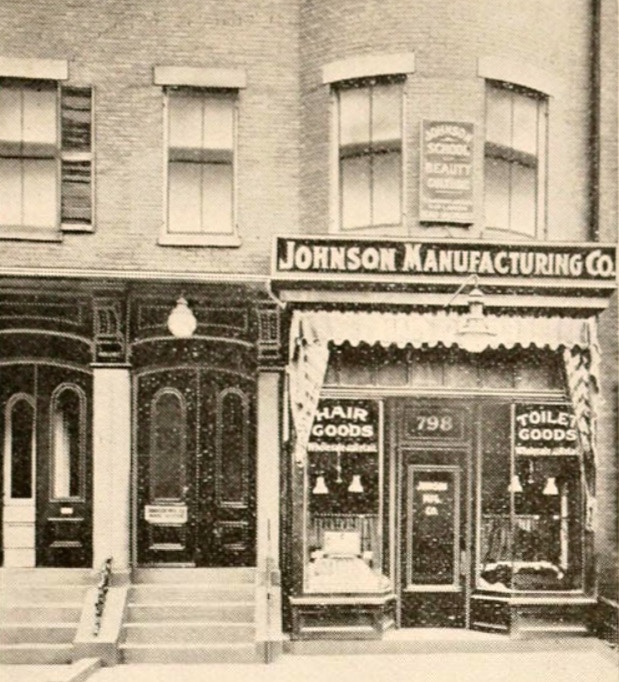
Johnson’s School of Beauty Culture // c.1865

Boston’s South End neighborhood has so much history that NEEDS to be showcased. From the repetitive architecture of beautiful brick and stone bowfronts, to the history of African American activism, enterprise, and stories, the neighborhood is a gem of Boston. This building was constructed around 1865 for Thomas H. Snow (1833-1908) as his home. Snow was a wine and spirit merchant who had a store in Faneuil Hall Square. While that is interesting, Mr. Snow is not the highlight of this building, that comes later in 1899, when the building was rented to Madame Mary L. Johnson, a wig maker, scientific scalp specialist, and hair culturist. Mary Johnson and her husband, Dr. W. Alexander Johnson, were Black and ran one of just 200 Black-owned businesses in the city of Boston by the beginning of the 20th century. At their storefront, they sold hair goods at Johnson’s Hair Store. Sold all over the United States since 1900, their famous “Johnson Hair Food” was “the most scientific pomade yet discovered for growing, beautifying and softening the hair,” they claimed. In connection with their hair product outfit, Madame Johnson operated Johnson’s School of Beauty Culture, where a variety of services including manicuring, shampooing, scalp massage, facial massage, hairdressing, and scalp treatment were offered. The school provided young Black women in Boston technical training and skills, which there were limited options at the time. Mr. Johnson also was President of the Boston Negro Business League, which helped bolster Black businesses at the turn of the century.

Burdett Building // 1928

In 1921, Stuart Street was widened and extended between Boston’s Back Bay and Bay Village neighborhoods, which necessitated razing of all buildings along the route. From this, new lots were platted along the street where once thriving businesses were. Some relocated and others rebuilt. In 1927, the Park Square Corporation purchased seven contiguous lots at the corner of Stuart and Charles Streets and began construction of a large office building with storefronts on the ground floor. The Burdett Building opened in 1928. The building was built for Burdett College, which was founded in 1879 and focused on business and shorthand courses for students as a junior college. Architect Thomas H. James wanted the building to be like the new buildings at Princeton and Yale. The design featured Gothic inspired entrances and stone carvings of books and lions. Burdett College occupied the building until the 1950s and it was subsequently sold. By 1980, the building was acquired by the New England School of Law, who occupy it to this day as a place of learning.