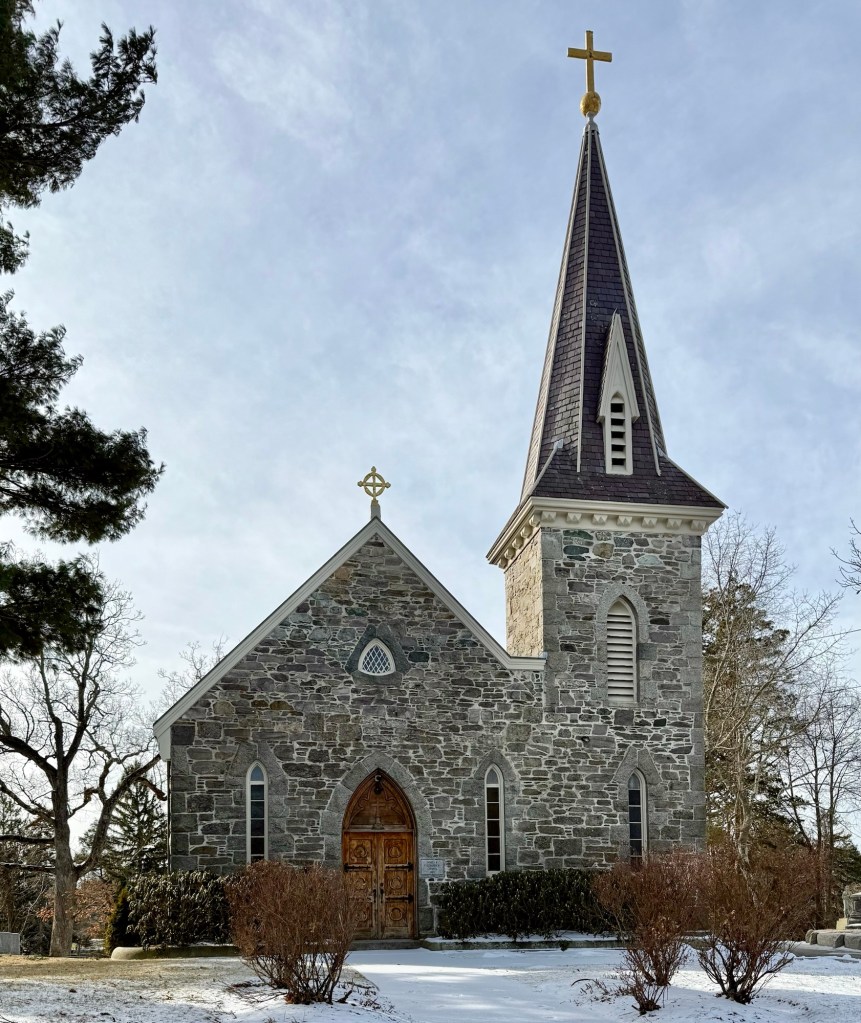
Holyhood Cemetery Chapel // 1857

Holyhood Cemetery in Brookline, Massachusetts, was laid out in 1857 under the direction of Father Joseph M. Finotti, pastor of Assumption Parish , which included Brookline and Brighton. The cemetery reflects the mid-19th century influence of the Rural Cemetery movement and the romantic landscape cemetery planning begun at Cambridge’s Mount Auburn Cemetery in the 1830’s. A plan of the cemetery was drawn up by Shedd & Edson and published in August 1857. It shows curvilinear avenues and paths named after former bishops of Boston and Biblical figures. All were welcome to be buried except those who “died in a state of Drunkenness, Duel, or by self-destruction, unbaptized, non-Catholic, or otherwise opposed to the Catholic Church.” In the 1857 Shedd & Edson plan for Holyhood Catholic Cemetery, a chapel was located at the center on the hill shown in a small drawing on the edge of the plan. Known as St. Joseph’s Chapel, the stone building was designed by Patrick Keely, the successful and influential New York architect of many mid-19th century Catholic churches. The chapel would be dedicated in 1862. Decades later, a cemetery office was planned and built across Heath Street from the cemetery gates, but was demolished sometime in the 20th century. The cemetery grew and it along with the mid-19th century chapel, has been lovingly maintained to this day.  

John G. Wright Mansion // 1907-1967

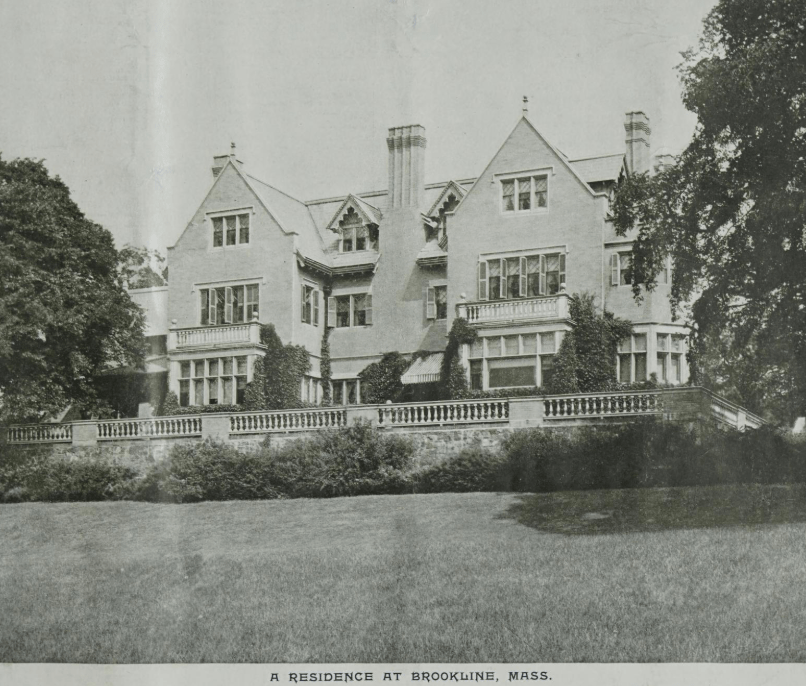
John Gordon Wright (1843-1912), was a Boston wool merchant who purchased farmland on this site in the 1890s and hired architects Chapman & Frazer, to design this stone mansion as an estate house. He previously moved into an earlier wood-frame home on the site and a decade earlier, had the architects design his carriage house and stable, which survive today as the Soule Recreation Center. The stone Tudor Revival style mansion house was massive and featured in national periodicals when completed. The estate was beautified by landscaping designed and laid-out by the Olmsted firm. In 1942, the property was purchased by the Rivers School (now located in Weston) and converted into classrooms and administrative offices for the private school. When the school moved to Weston, the Town of Brookline in 1961 bought property for recreational purposes. Sadly, in 1967, the mansion house burned down, but the carriage house and gate lodge remain as lasting remnants of a once great Brookline estate.

Wright Carriage House – Soule Recreation Center // 1897

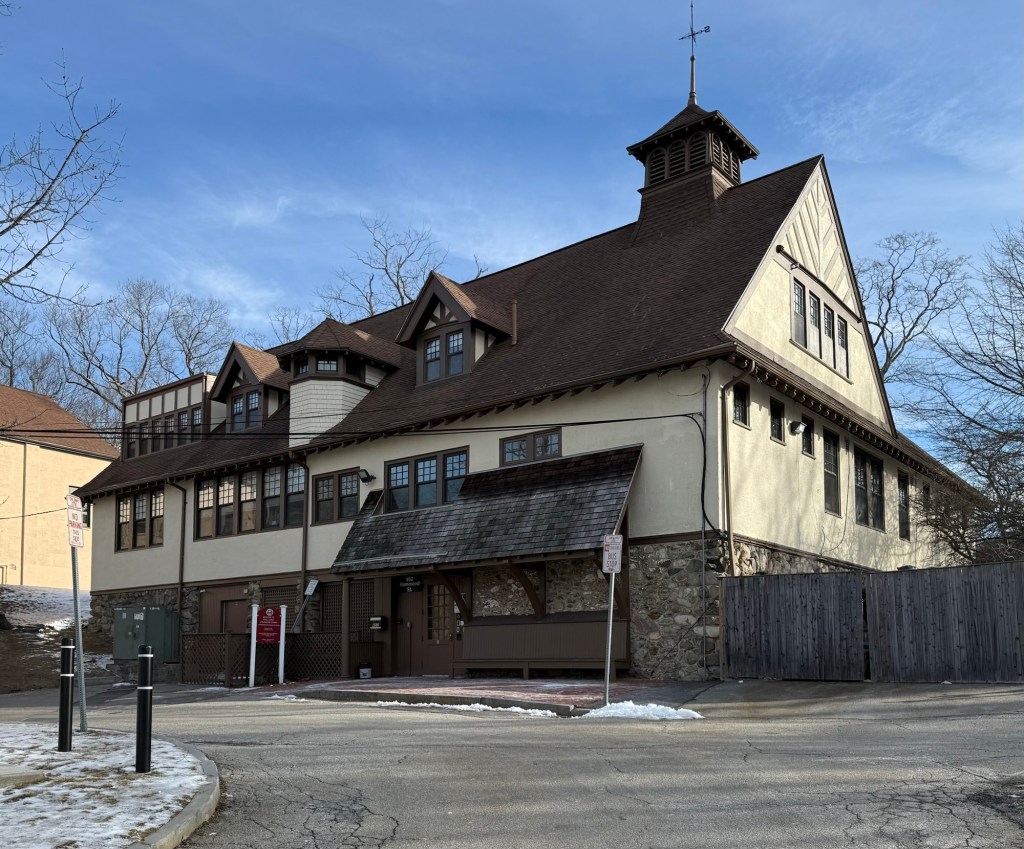
The Soule Recreation Center in Brookline, Massachusetts, was originally the stable and carriage house on the John G. Wright estate. John Gordon Wright (1843-1912), was a Boston wool merchant who purchased farmland on this site in the 1890s and hired architects Chapman & Frazer , to design an estate house (since demolished), and this building to serve as a carriage house and stable for horses. The stone Tudor Revival style mansion house was complemented by the earlier wood-frame Tudor carriage house, resembling an English manor with grounds designed and laid-out by the Olmsted firm. In 1942, the property was purchased by the Rivers School (now located in Weston) and converted into classrooms and administrative offices for the private school. When the school moved to Weston, the Town of Brookline in 1961 bought property for recreational purposes. Sadly, in 1967, the mansion house burned down, but the carriage house and gate lodge remain as lasting remnants of a once great Brookline estate.

Barnard Gordon House // c.1928

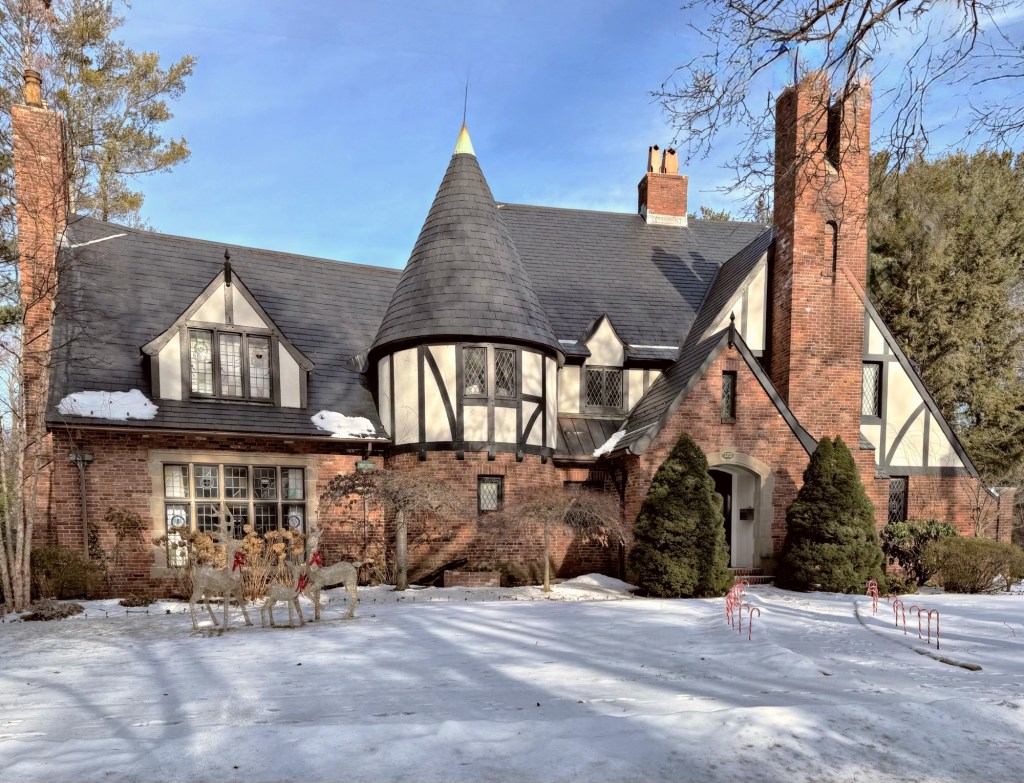
Found on Woodland Road in Southern Brookline, Massachusetts, this brick dwelling is one of a dozen-or-so whimsical Tudor cottages built there in the1920s and 1930s. The Barnard Gordon House, built around 1928, utilizes brick and stucco cladding with ornamental half-timbering, diamond pane leaded glass casement windows on the second story, and decorative half-timbering. The main attraction is the round tower with conical roof also serving as the entrance, resembling more of Rapunzel’s tower than a normal suburban home. We need more unique houses today like they built 100 years ago. Everything today feels so sterile and unwelcoming, maximizing interior layout at the loss to street presence.

Arthur B. Bernard House // 1928

A playful interpretation of a medieval English cottage, with its stucco cladding, half-timbering, weatherboards in the gable ends and ornamental well enclosure in the front yard, can be found on Woodland Road in Brookline. The whimsical cottage was built in 1928 for Arthur B. Bernard, the son of the president of the New England Leather Company in Boston’s Leather District. Arthur would follow his father’s footsteps and join the business himself. Architect and builder, Fred S. Wells of Newton designed and constructed the house (and others in the area in the same style). What’s your favorite part of this house?

Dr. Miner House // 1928

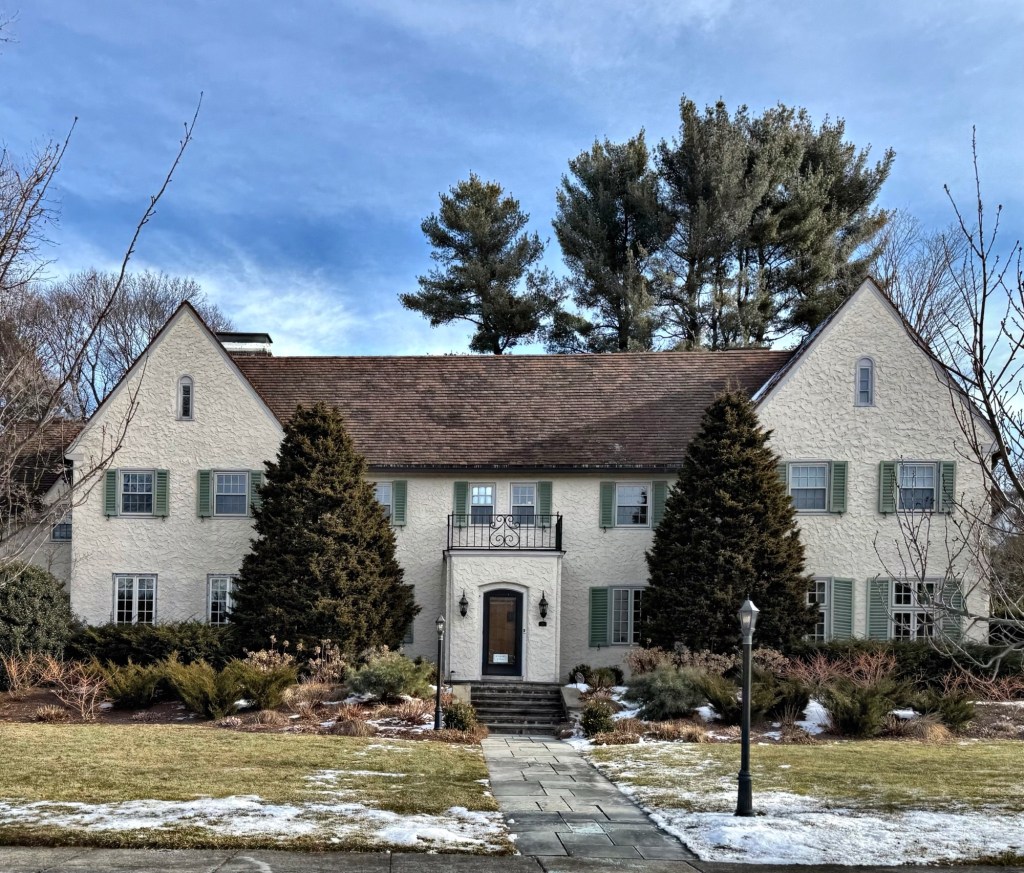
The early decades of the 20th century were the golden years for suburban development in the Boston area. With personal automobiles better-connecting the city to lesser developed areas like Milton, Newton and Brookline, middle-upper class residents were able to relocate to the suburbs and build stately homes, typically in one of three architectural styles: Colonial Revival (most common), Tudor Revival, or Arts and Crafts (least common). This large house is located on Randolph Road in the Woodland/Heath area of Southern Brookline, and dates to 1928. The residence was constructed for Dr. Walter C. Miner, an orthopedic dentist, and his wife, Ethel and designed by the firm of Strickland, Blodgett & Law. The large house sits on a double-lot, and is notable for its symmetry, slate tile roof, and rough-faced stucco walls.

Frederick & Arabella Holden House // 1893

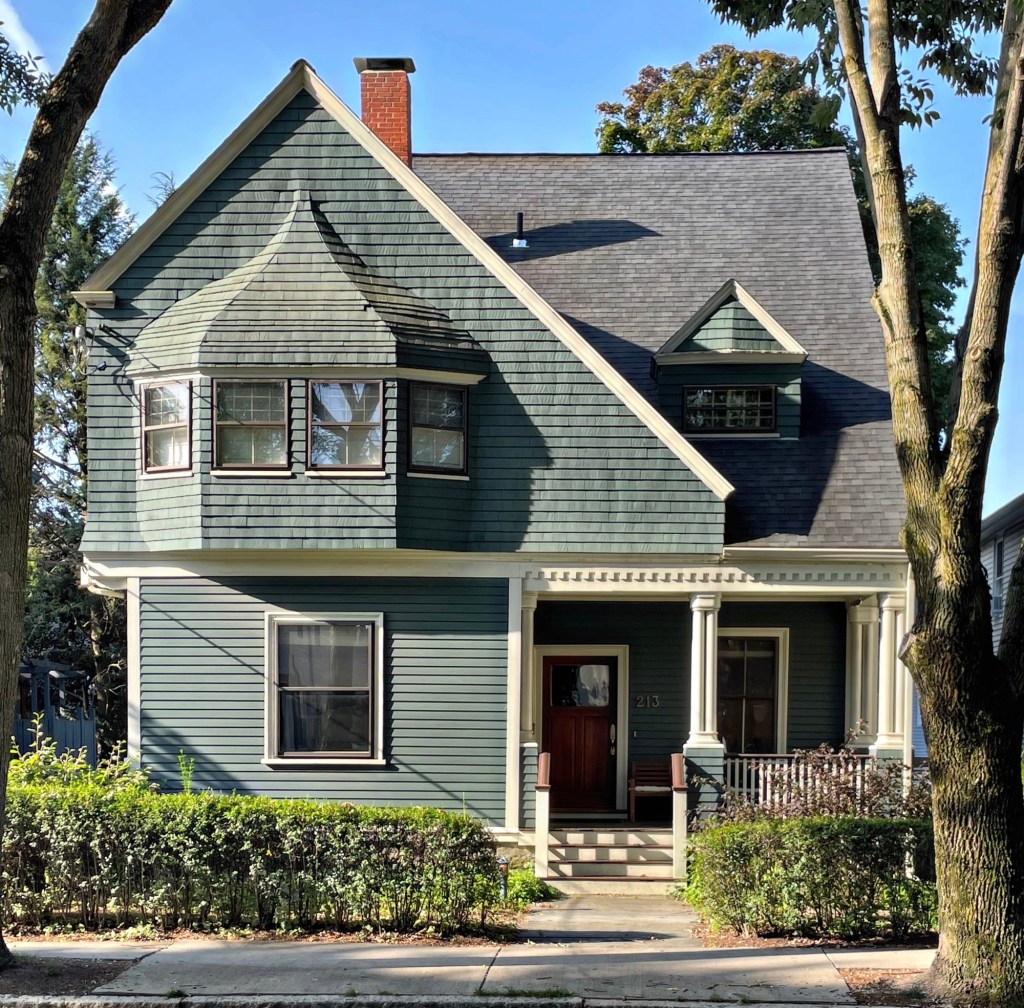
The Frederick & Arabella Holden House sits on Aspinwall Avenue in the Brookline Village neighborhood of Brookline, Massachusetts. Built in 1893, the excellently designed Shingle style dwelling was actually built on speculation by developers, and sold upon completion to the couple. Fred G. Holden (1858-1927) was a marble dealer who managed the Boston Marble Company and had connections in his home state, Vermont for the highest quality marble to sell around Boston, largely for building products and grave memorials. Arabella Proctor Holden (1859-1905) was born in Cavendish, Vermont, as the eldest daughter of Redfield Proctor, 37th Governor of Vermont and the founder of the Vermont Marble Company, the largest such company in the world. I could not find the architect of the house, so any more information, let me know. I’d love to solve the mystery!

St. Paul’s Episcopal Church, Brookline // 1852

The St. Paul’s Episcopal Church of Brookline, Massachusetts is an architecturally and historically significant landmark to the area. The congregation was established in 1849, and within months, in May 1850, the corporation, which was made up of wealthy Boston-area residents, accepted an offer from Augustus Aspinwall of a building lot to erect a church. Esteemed ecclesiastical architect, Richard Upjohn, the architect of Trinity Church in New York, was hired to design the church in Brookline of the same, Gothic style. The wealth of the congregation was evident by the consistent expansions of the complex, to include a chapel, rectory, parish house, and other expansions to those buildings. St. Paul’s Church is the oldest religious structure in Brookline, and almost was lost when the sanctuary was devastated by fire in 1976, leaving only its exterior walls and two stained glass windows. The congregation rebuilt the interiors and the building remains well-preserved at its exterior, built of Roxbury Puddingstone.

Temple Ohabei Shalom // 1927

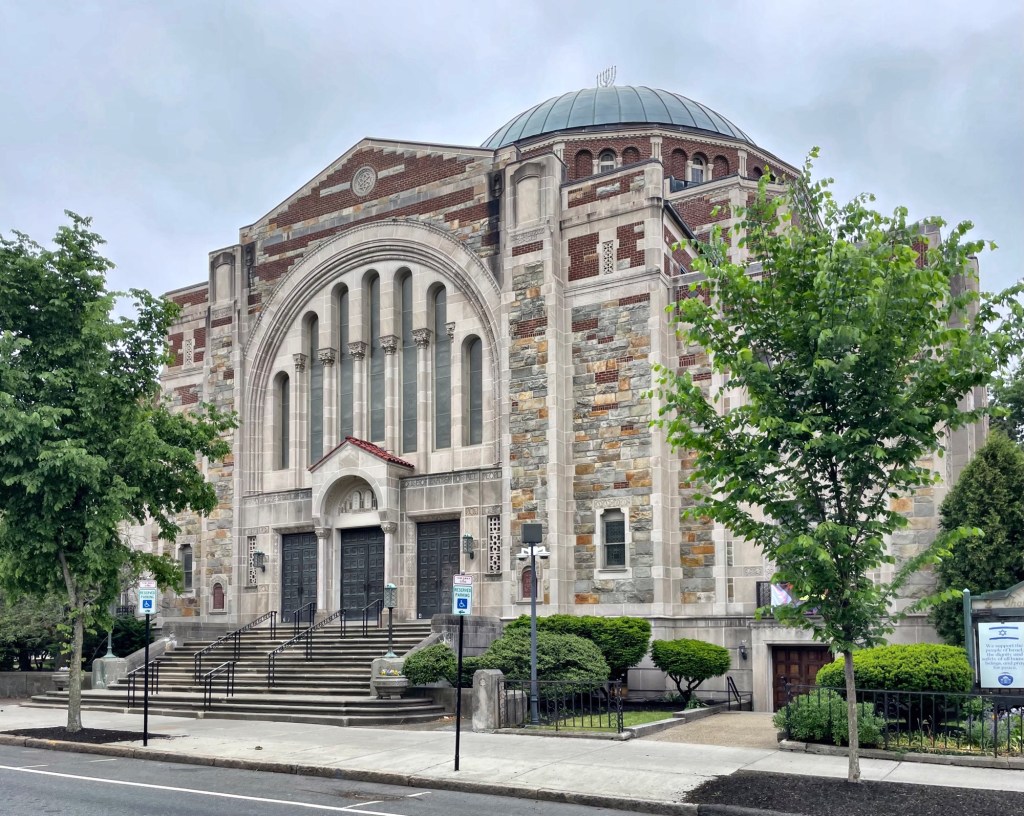
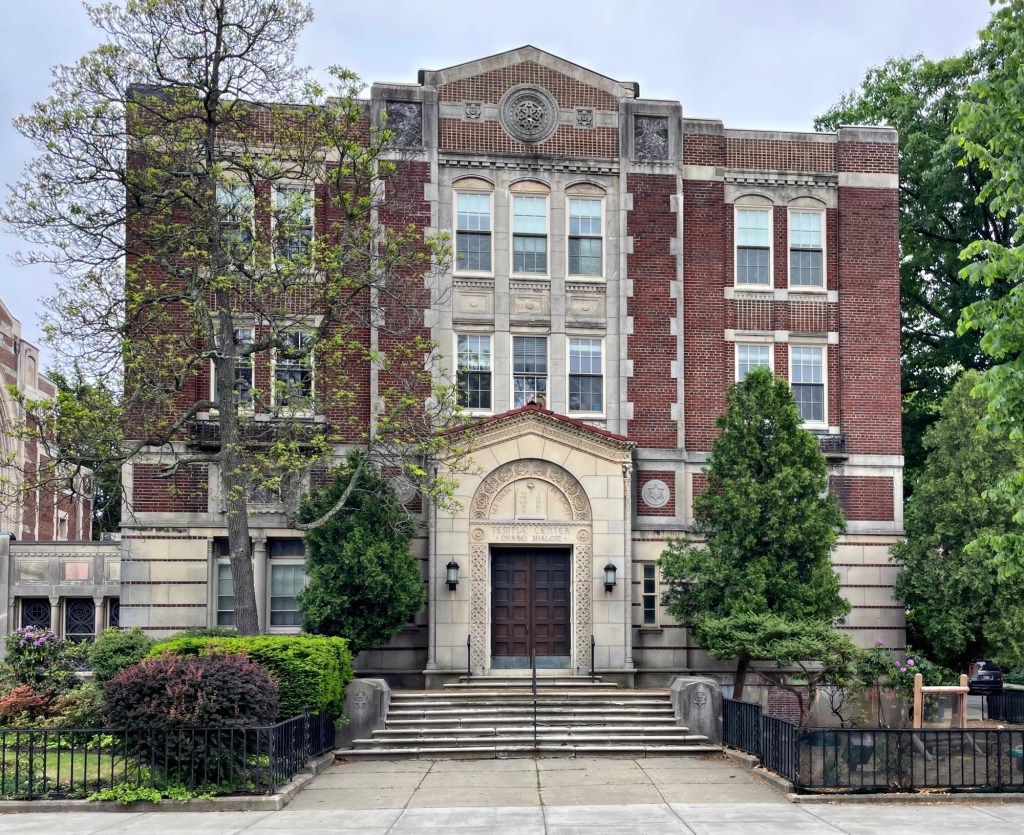
The congregation of Ohabei Shalom is the oldest jewish congregation in the greater Boston area and the second oldest in New England. It was formed in 1843 and was the first formal congregation in Boston. After a smaller space, they purchased the former South Congregational Unitarian Church on Union Park Street in the South End of Boston. The congregation split over ideological differences and the decision was made for one half of the congregation to build a new temple in Brookline, where many of the members began to move to. Land on Beacon Street, just west of the Longwood section of Brookline was purchased in 1921, and it would be four years until a temple center (now the hebrew school) was built in 1925. The larger temple was built just after on the corner of Beacon and Kent streets in Brookline from plans by Clarence Blackall, a noted architect in the area. With its lively use of polychromatic masonry and Byzantine ornament, all surmounted by a great copper dome, the congregation boasts the most architecturally outstanding synagogue in the Boston region and it has been maintained well for the almost 100 years since it was built.

School Building


Richmond Court // 1898

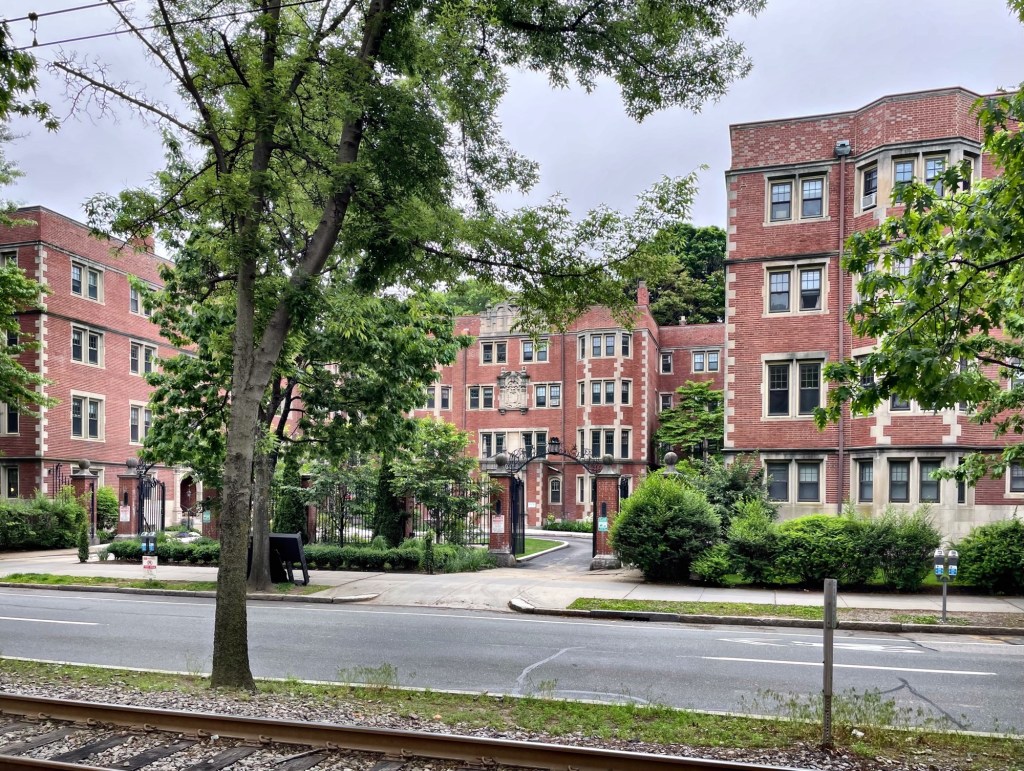
Believe it or not, but this apartment building on Beacon Street in Brookline, Massachusetts is one of the most significant buildings of the type in the Boston area! This is Richmond Court, which is one of the oldest (if not the first) apartment house built in the northeastern United States that resembled an English Tudor manor house. The apartment building was constructed in 1898 from plans by architect Ralph Adams Cram, one of the best American architects of the late 19th and 20th centuries. Cram even moved into the building briefly before moving into a townhouse in the Back Bay neighborhood of Boston. The building set the tone architecturally for later apartment buildings in the Boston area, with many architects attempting (largely not as effectively) to design Tudor-influenced apartment buildings regionally. The development is also significant in that at a time when most Boston-area developers were building apartment houses that maximized the buildable square footage, as they do to this day, Richmond Court included a landscaped courtyard to provide residents with more light and air circulation. The development also included two separate town houses on either side of the apartment block.