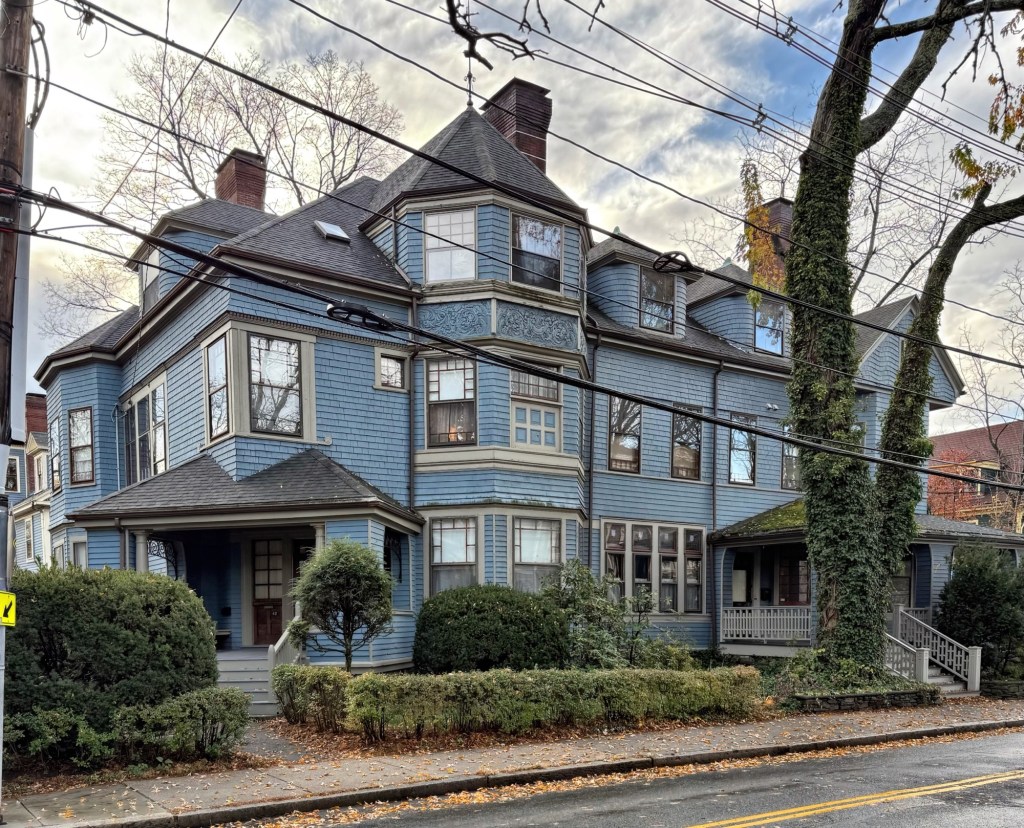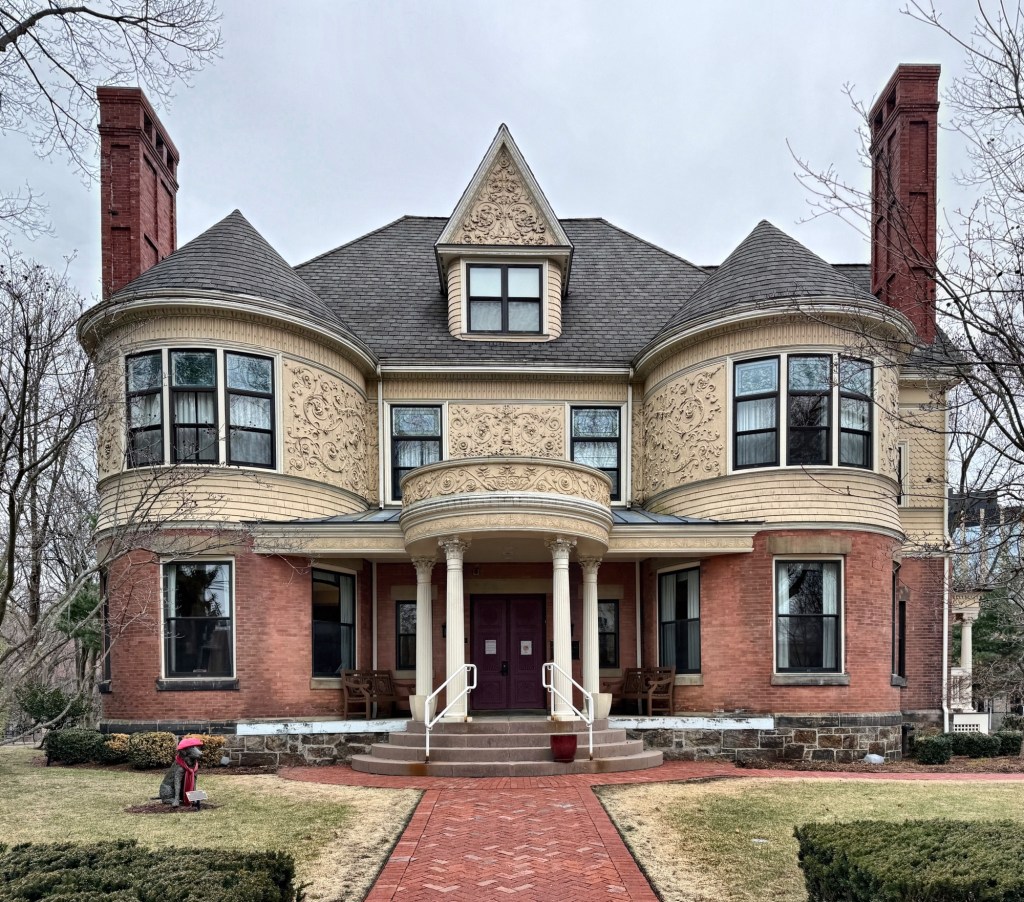
Webber-Bouve Mansion // 1885

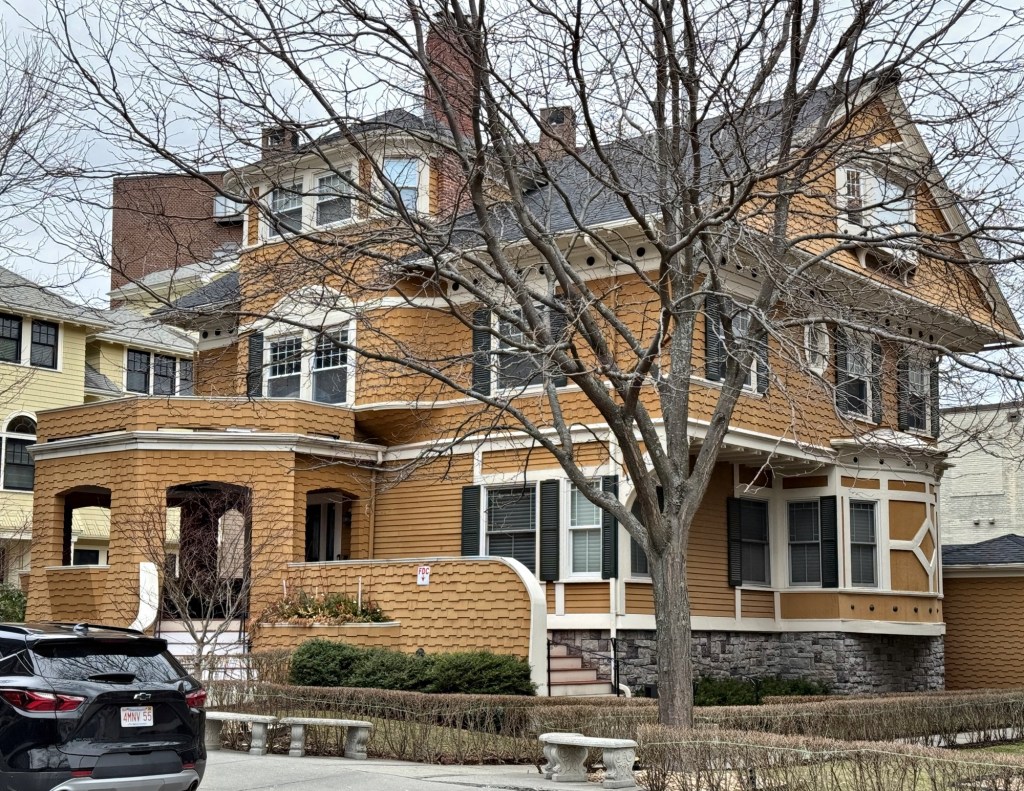
One of the most unique and truly great Victorian-era residences in Brookline, Massachusetts, can be found on Kent Street, an eclectic and fairly hidden mansion built of stucco, stone and terracotta. Built in 1885 by John Prescott Webber, a Maine lumber baron who moved to the Boston area and became a real estate magnate, the handsome residence was designed by architect, S. Edwin Tobey. The most important element of the structure is its surfacing material, with random and quarry-faced ashlar used on the first floor with roughcast stucco on the second level. Additional detailing includes the large brackets, irregular form and fenestration, massive bays, gables, stone porte-cochere, and carved terracotta details. The house was likely sold to George F. Bouve shortly after it was completed, and he remained the owner until his death in 1898. Mr. Bouve was a shoe and leather dealer and shoe manufacturer. The Webber-Bouve Mansion is one of those houses that the more you look at it, the more detail and unique features you notice. The historic stable was demolished in 1995 in exchange for a preservation restriction on the main house by the owners.

Amory-Richards House // 1865

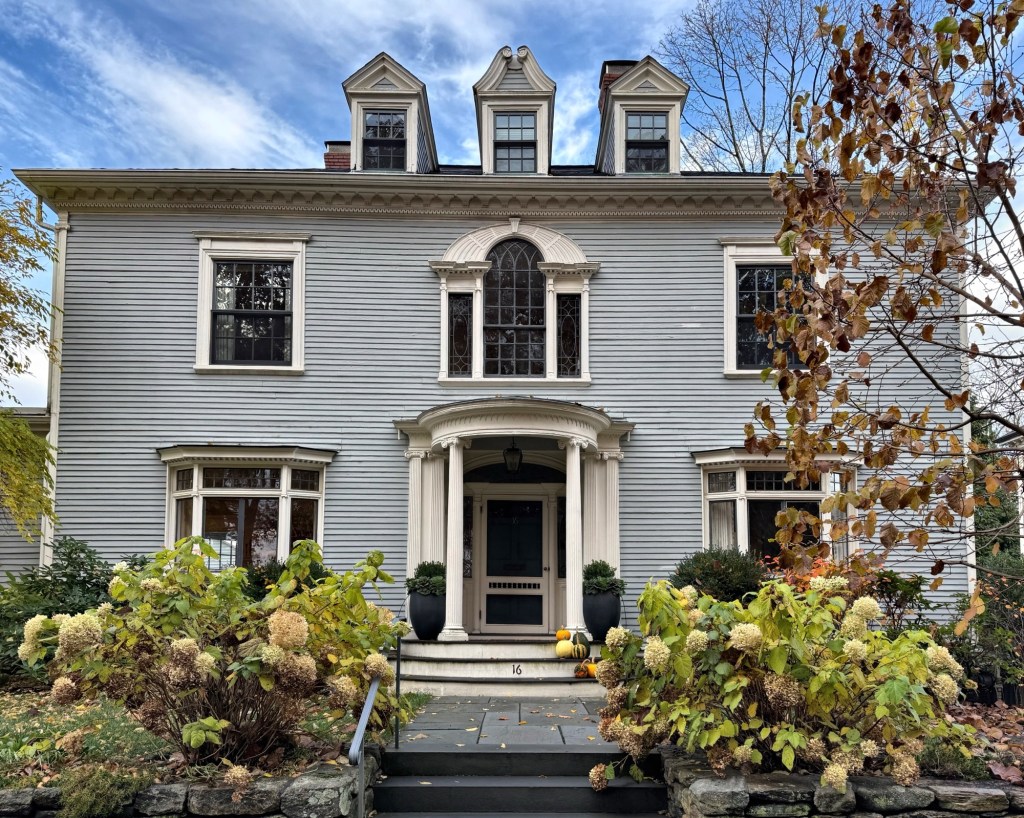
Built in 1865 along with its neighbor and later renovated in the Colonial Revival style, the Amory-Buckingham House on Colchester Street stands as an altered, yet historically significant residence in Brookline’s important Longwood neighborhood. A large lot on Colchester Street was purchased by Dr. Robert Amory (1842-1910), who in 1864, married Marianne Appleton Lawrence (1843–1882), daughter of Amos Adams Lawrence, a major developer of the nearby Cottage Farm neighborhood of Brookline. This stone cottage, one of two neighboring homes built at the same time for Dr. Amory was likely his main residence when not residing at his Boston townhouse or summer residence in Bar Harbor, Maine. The property was sold by the end of the 19th century to Edwin Buckingham and in 1902 to George L. Richards, who had the home expanded with an additional floor added with gambrel roof. A detached stable was also constructed around this time.

Amory-Boit House // 1865

Built in 1865, the Amory-Boit House on Colchester Street in Brookline‘s exclusive Longwood neighborhood, is a stunning Second Empire style home with connections to prominent local families. The residence has a one-story stone base which meets the slate mansard roof providing two-and-a-half stories above which are crowned by iron cresting at the peak of the roof. The property was one of the early homes built in the area, developed by David Sears, one of the wealthiest property owners in Boston, who recognized the potential for development of this marshy area of Brookline due to its close proximity to the city. A large lot on Colchester Street was purchased by Dr. Robert Amory (1842-1910), who in 1864, married Marianne Appleton Lawrence (1843–1882), daughter of Amos Adams Lawrence, a major developer of the nearby Cottage Farm neighborhood of Brookline. This stone cottage, one of two neighboring homes built at the same time for Dr. Amory, was likely rented to friends and family with the other as his primary country house. This home was later sold to real estate and insurance businessman and author Robert Apthorp Boit (1846-1919). Robert Boit published the novel, Eustis in 1884 and his family history, Chronicles of the Boit Family and Their Descendants, in 1915. The home and its neighbor had been undergoing renovations for a while and are located within a local historic district.

Max Katz House // 1947

Built in 1947, the Max Katz House on Kent Street in Brookline, Massachusetts, is one of the area’s best examples of Mid-Century Modern residential architecture. The main block of the house has an angle roof line with its facade dominated by a massive stone chimney. The residence was designed by architect Samuel Glaser, one of the earliest practitioners of Modern architecture in the Boston area, for Max Katz (1895-1996). Katz was born in Lithuania and came to Boston with his mother when he was nine years old. He founded the Merchant Tire Company in 1922 and was also one of the original organizers of Brandeis University. He and his wife, Augusta, lived in this Modern home for much of their lives. The Katz residence retains much of its architectural integrity and is an excellent and well-preserved example of 1940s Modernism.


Sears-Amster Cottage // c.1865

Prior to 1850, the area today known as the Longwood neighborhood of Brookline remained largely farmland on the banks of the Muddy River. In the first half of the 19th century David Sears (1787-1871) and Amos Lawrence (1814-1886), both prominent Boston businessmen, bought up large tracts of what had been Judge Sewall’s estate. The arrival of the Brookline Branch Railroad (now the MBTA Green Line D branch) served as an impetus to develop the area more fully. David Sears and Amos Lawrence developed houses in present-day Longwood and Cottage Farm and rented the homes to friends and family. One of the rented houses built and rented by David Sears is this Second Empire cottage which dates to the 1860s. The house was long-rented to wealthy families until the Sears heirs sold the house to Nathan Leo Amster and his wife, Estelle Dreyfus. Nathan L. Amster was a railroad executive who eventually became president of the Manhattan Railway Company. When the purchased the cottage, the Amster’s hired Boston architect Clarence Blackall to renovate and “modernize” the home, which added the Classically inspired elements. The couple did not appear to live in the house long, as they spent most of their years in their Fifth Avenue NYC residence. The Sears-Amster Cottage remains an important early house in the Longwood development of Brookline.

Houghton House – Yawkey Family Inn // 1890

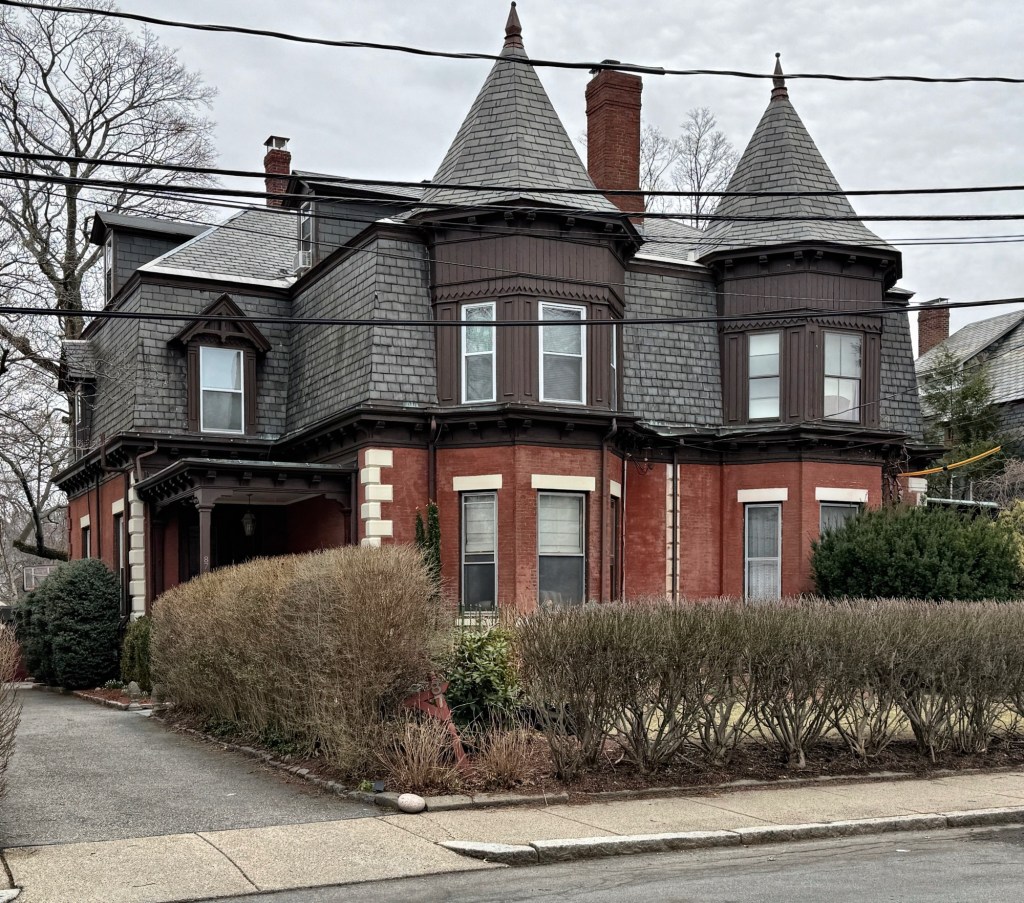
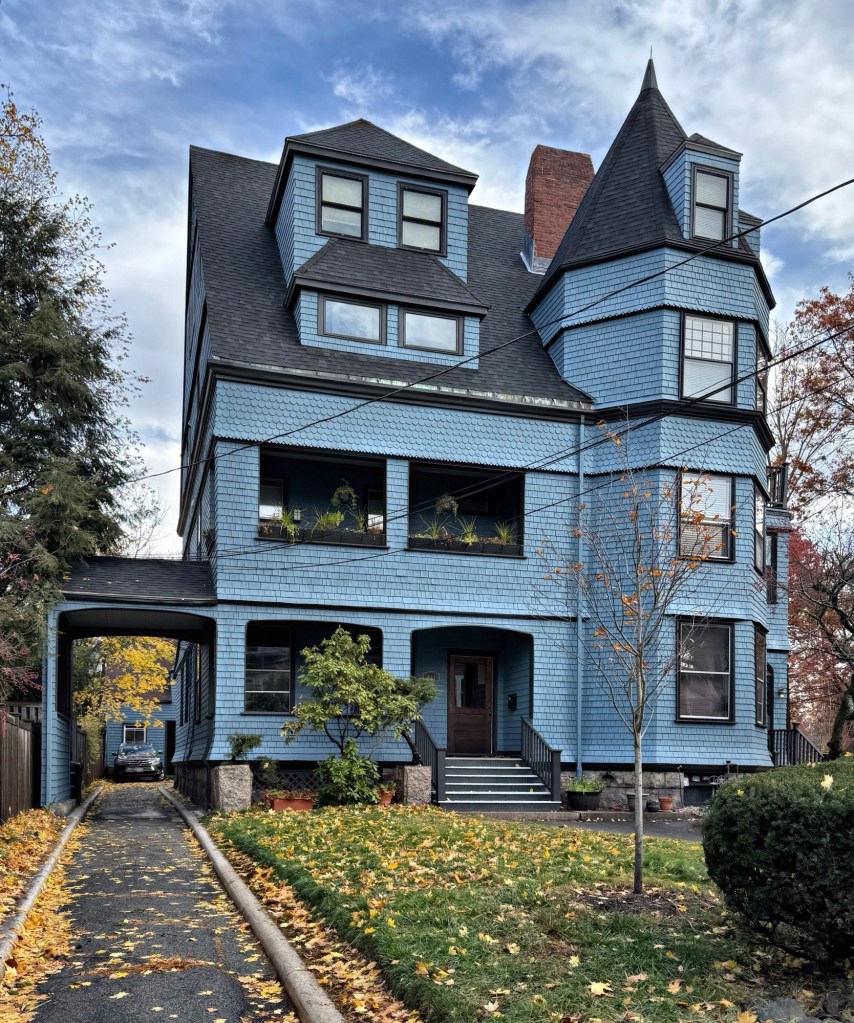
Built on the site of an earlier house at 241 Kent Street in Brookline, this grand, Queen Anne style house has seen a life as a single-family home, fraternity house, and ultimately, the Yawkey Family Inn, a temporary residence for patient families undergoing procedures and treatments at Boston Children’s Hospital. A landmark example of the Queen Anne architectural style, the handsome near-symmetrical residence has paired conical towers at the facade, a brick first floor, paneled chimneys, and elaborate carvings in the entry portico, second-story bays, wall surfaces and gabled dormer. Planning for the new mansion began in 1889 when owners, Harriet and Andrew Jackson Houghton, owner of the Vienna Brewery in Boston, hired architect, James Templeton Kelley, to furnish plans for their new suburban mansion. Sadly, Andrew Houghton died in 1892, shortly after the house was completed, and Harriet remained here until her death in 1925. After this, the property was sold to the Beta Upsilon Association for use as a Fraternity House for the Beta Theta Pi Fraternity of MIT and later as a fraternity house for a Northeastern University frat. In 2009, the property was purchased, renovated and expanded to the rear as the Yawkey Family Inn, ensuring its preservation and remaining as a quieter neighbor to the surrounding residents than its previous use.
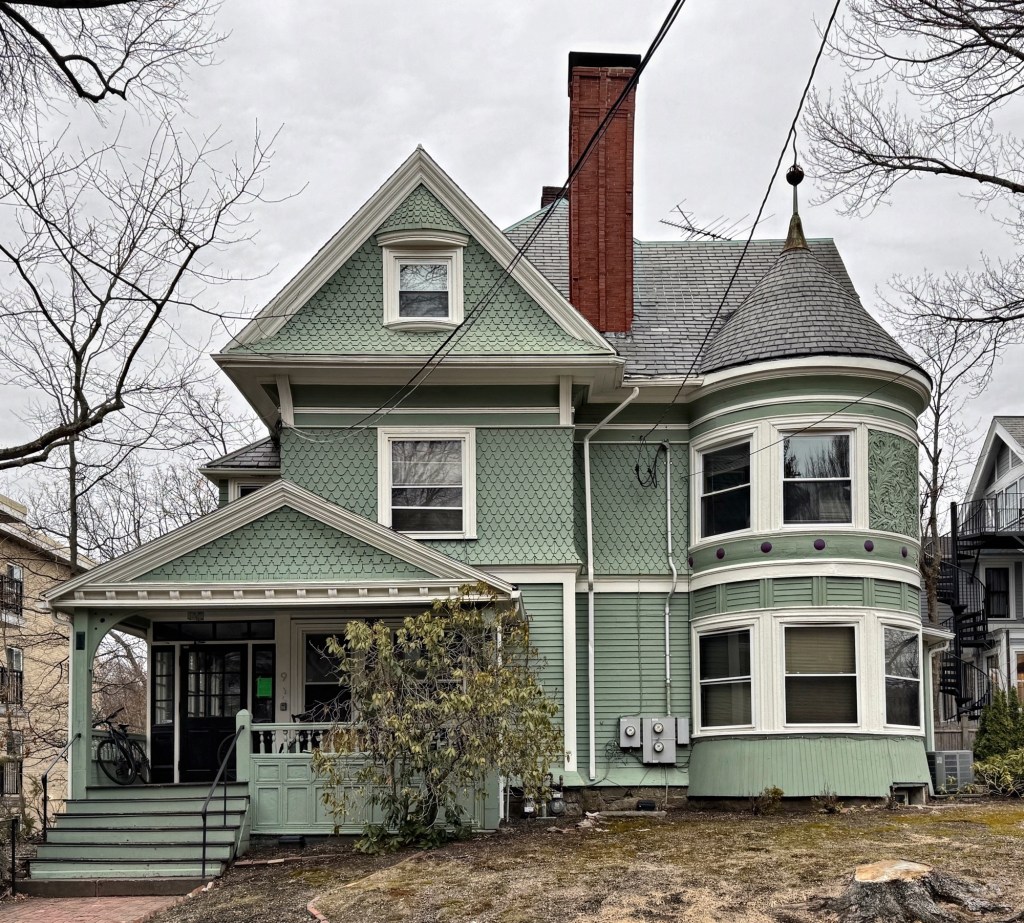
George and Alice May House // 1883

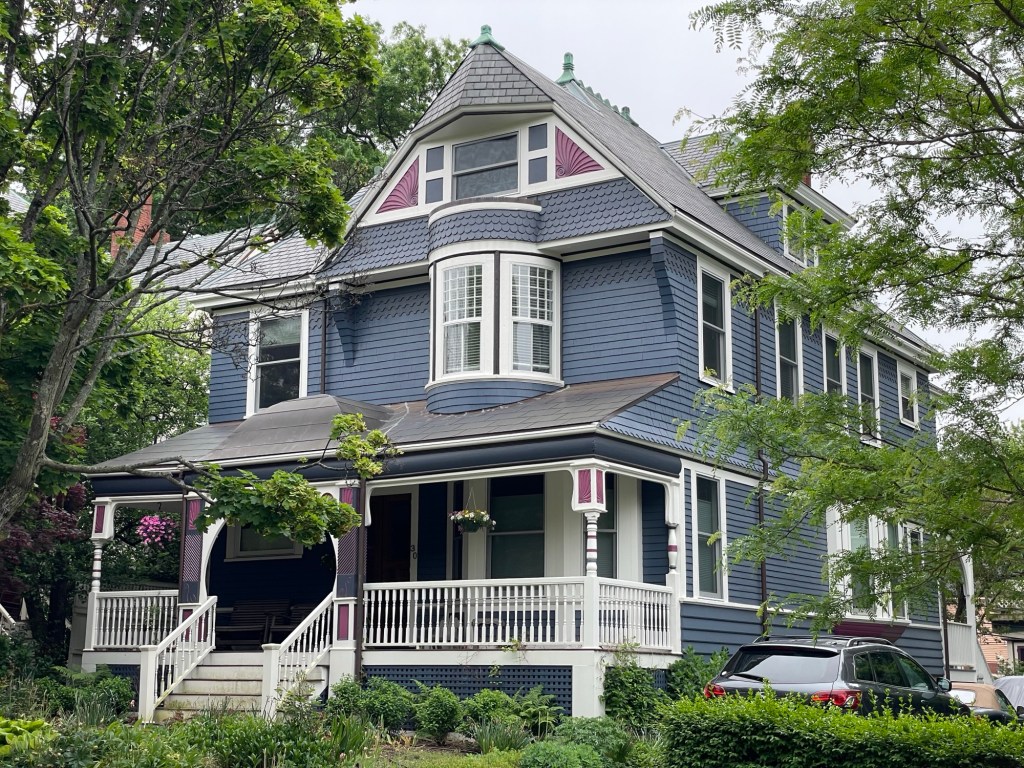
Built in 1883 for George Putnam May and his wife, Alice (Walworth) May, this Queen Anne style residence on Francis Street in Brookline, Massachusetts, contains all of the traits of the architectural style. George P. May was employed at the Walworth Manufacturing Company a plumbing pipes and equipment manufacturer founded by James J. Walworth, who was Alice May’s uncle. The property was subdivided on Alice’s fathers estate which fronts Kent Street nextdoor. I wonder if George wanted to live in the rear yard of his father-in-law! For their Brookline residence, the couple hired architect, S. Edwin Tobey, who paid great attention to detail. The May House features an asymmetrical plan, varied siding types, complex rooflines, and a corner tower with conical roof.

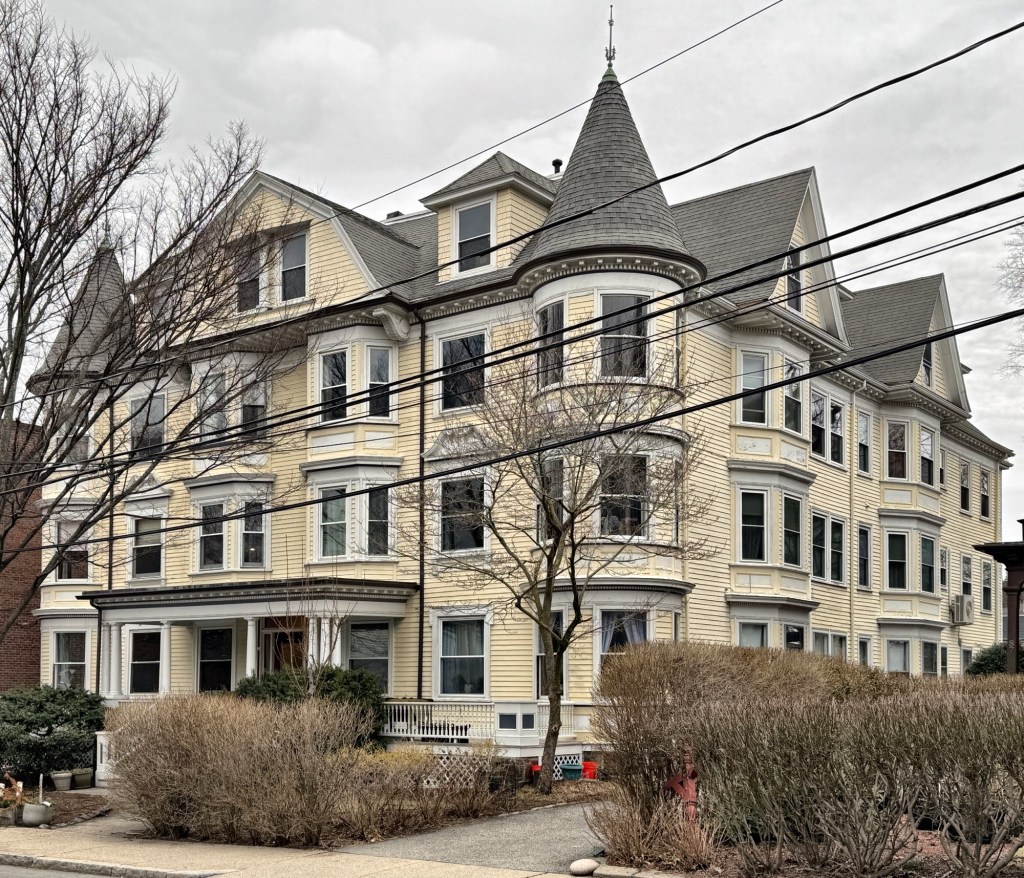
Blenheim Apartments // 1898

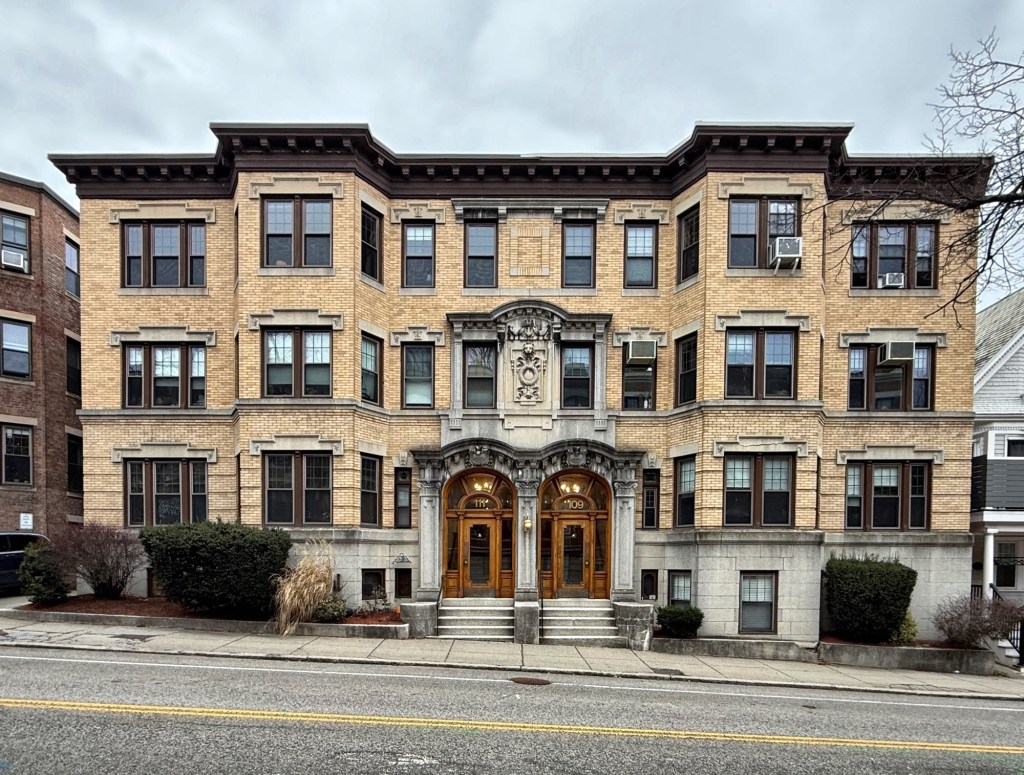
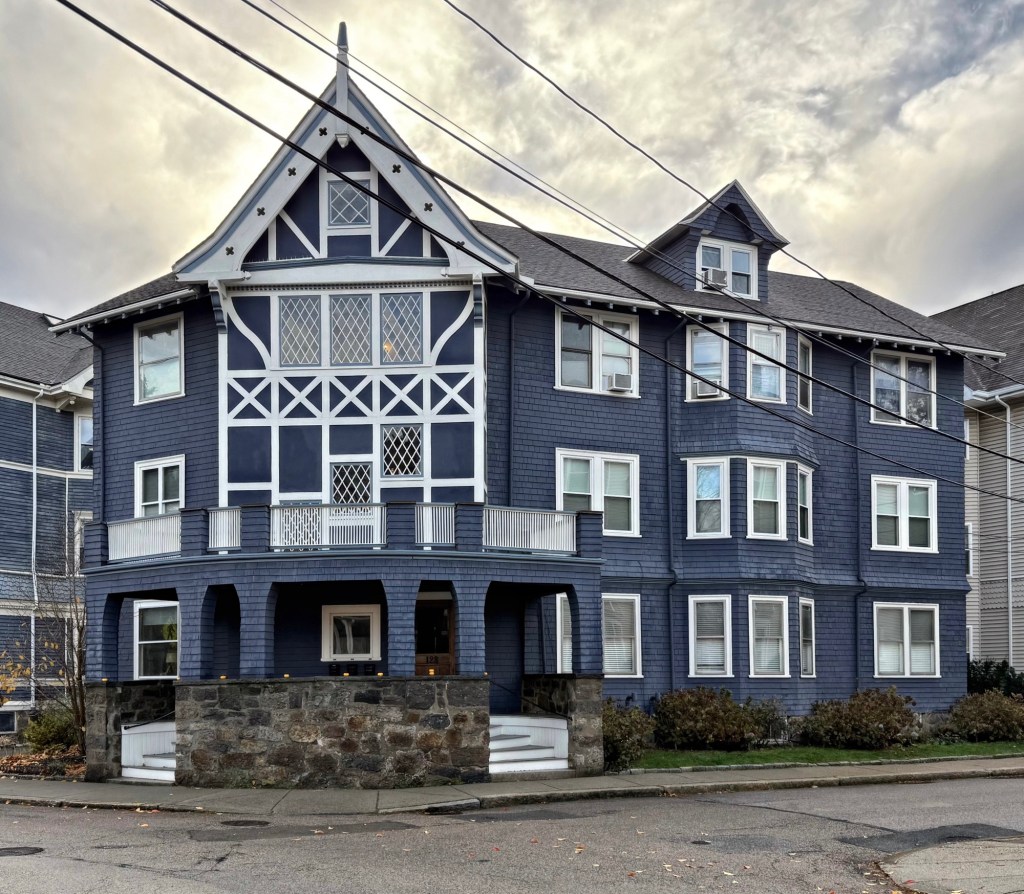
As Brookline, Massachusetts, saw rapid development in the late 19th and early 20th centuries, developers redeveloped lots formerly occupied by single-family residences and built large, multi-family triple-deckers and apartments, specifically in neighborhoods in close proximity to train stations into Boston. This building, constructed in 1898 by local builder, John H. Pineo, for owner, Walter H. Whittemore as an investment property. The building contained six apartments as a double triple-decker with two units on each floors accessed by a central entry and stairwell. The building has been known as the Blenheim Apartments and blends Queen Anne and Colonial Revival styles into a single, eclectic composition. The large massing is broken up by both the undulating facades and roof with projecting bays, dormers and corner towers, along with the applied ornament of panels, dentils, corbels and broken pediment motifs. If all multi-family housing looked like this, people would not complain about density as much!

Potter-Leland House // c.1888

Francis Street in Brookline, Massachusetts, has some of the finest Queen Anne Victorian residences in the Boston area. This is the Potter-Leland House, built by 1888 by William Potter, a wealthy shoe manufacturer and businessman who developed rental housing in the neighborhood not far from his house on Kent Street. Various exterior wall textures, irregular massing, and turned posts on the front porch contribute to the Queen Anne character of this house, but the real showstopper is the rounded bay projection with three, 25-over-2 (yes you heard that right) curved sash windows! The property was later purchased by Herbert M. Leland, a broker.

James H. F. Standish House // 1874

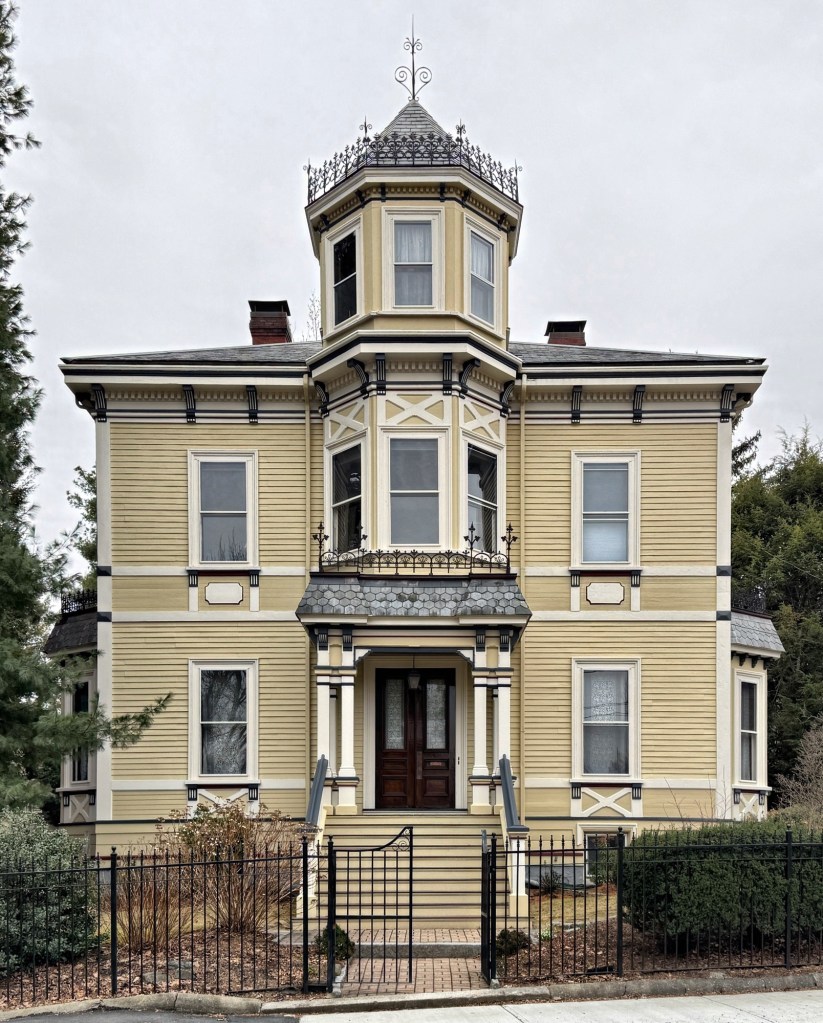
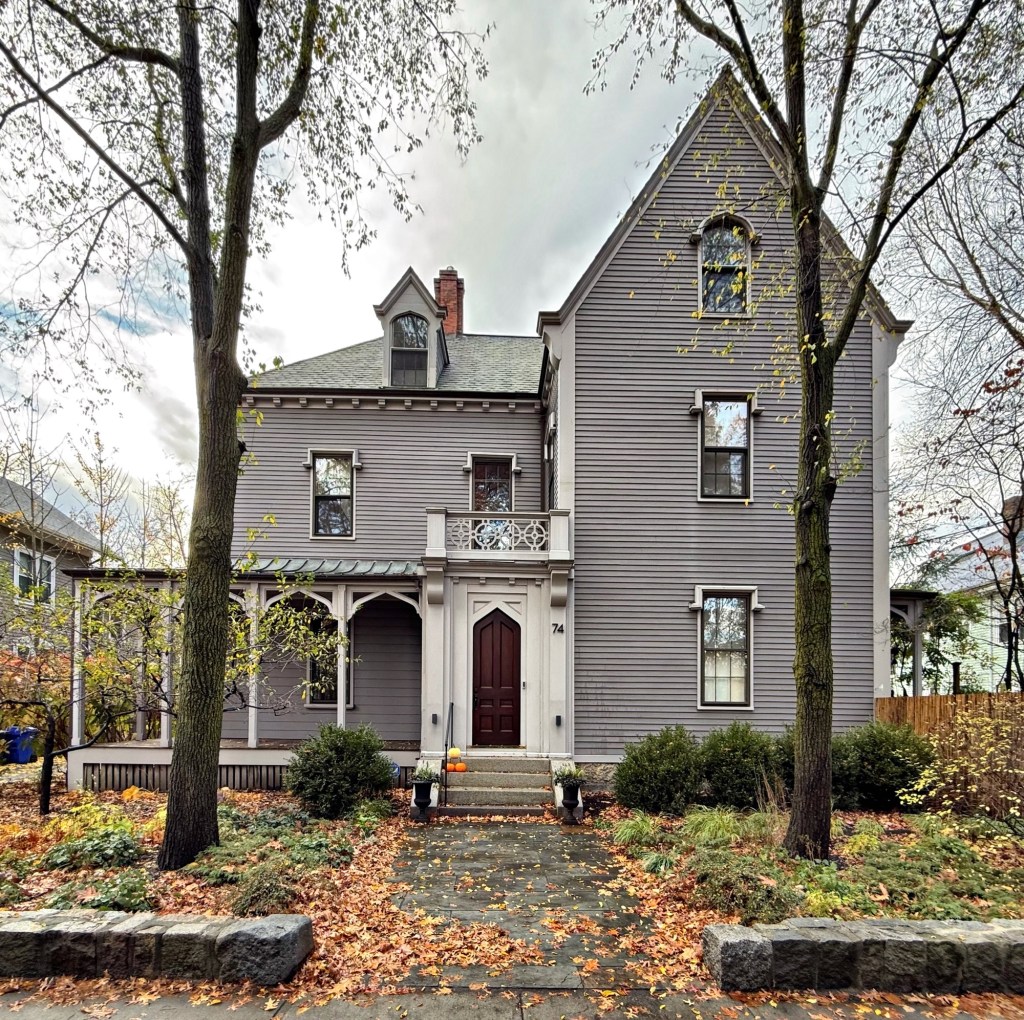
In 1873, James H. F. Standish (1811-1887) purchased a house lot on the corner of Francis and Toxteth streets in Brookline and set out building his forever home for his wife, Sarah. James and Sarah originally lived in Bath, Maine, where he worked as a builder and mason, constructing many large homes there before relocating to Brookline where he likely remained busy as Boston and its surrounding communities experienced a period of rapid development and suburbanization. James surely built this house and rear stable himself in the interpretation of the Stick and Italianate styles for his family, who moved in by 1874. Sadly, Sarah died unexpectedly in 1876 of heart disease, and James would sell their Brookline home. The Standish Home has been preserved by subsequent owners, including the central cupola, bracketed and dentilled cornice, stickwork and iron cresting. The Standish House was individually listed in the National Register of Historic Places in 1985 as a well-preserved, evocative example of Victorian period styles in a residence.