Charles H. Rutan House // 1889

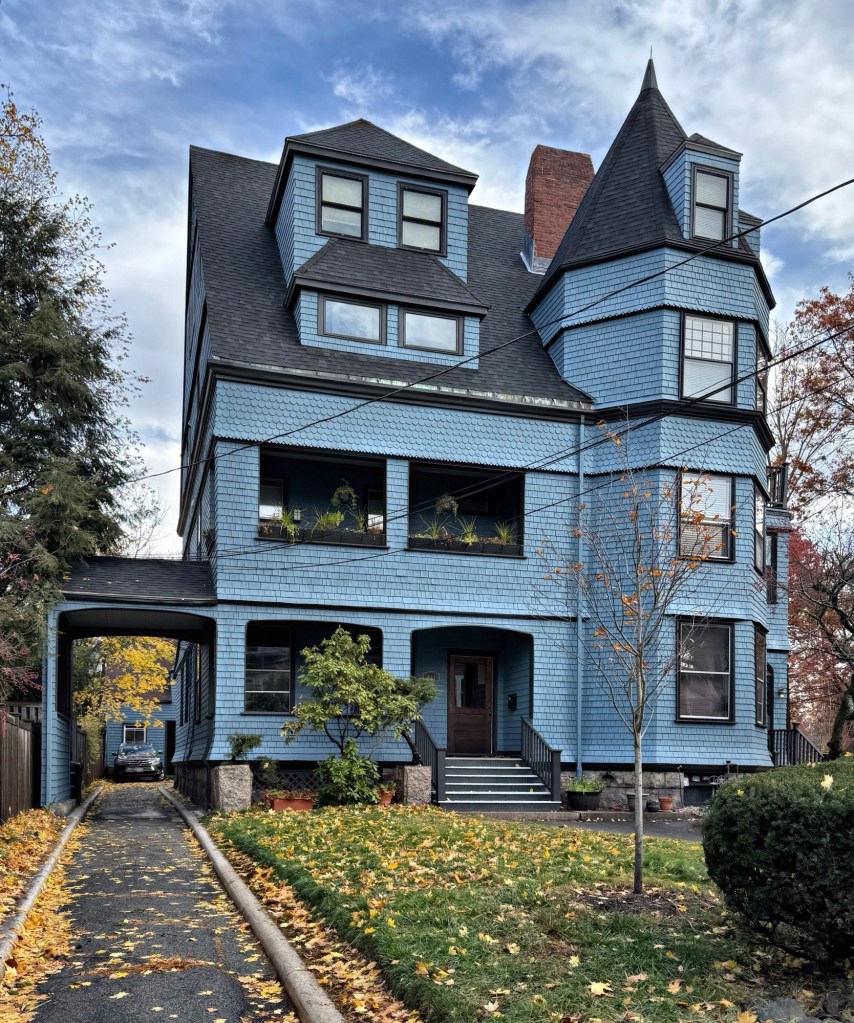
In 1889, prestigious architect Charles H. Rutan, purchased a house lot from the heirs of Elijah Emerson on the family estate and oversaw construction of his own residence in Brookline Village. Charles Hercules Rutan (1851-1914) was born in New Jersey and moved to Brookline in 1874, where he worked in the office of famed American architect, Henry Hobson Richardson. After Richardson’s death in April 1886, at the height of his career, Rutan and two other senior employees, George Foster Shepley and Charles Allerton Coolidge, took charge of the studio and its uncompleted work. Soon after, the three formed a formal partnership, Shepley, Rutan & Coolidge, to succeed to Richardson’s practice, and in 1887 moved the office to Boston. From his new position as head of a prominent firm, Rutan designed this handsome Queen Anne/Shingle style mansion for his family, where he lived until he suffered from two debilitating strokes in 1912, when he and his wife moved to an apartment on a nearby street. Besides the blue color, the house retains so much of its original architectural integrity and is one of the most significant residences in the Brookline Village neighborhood.
Emerson-Arnold Double-House // c.1875

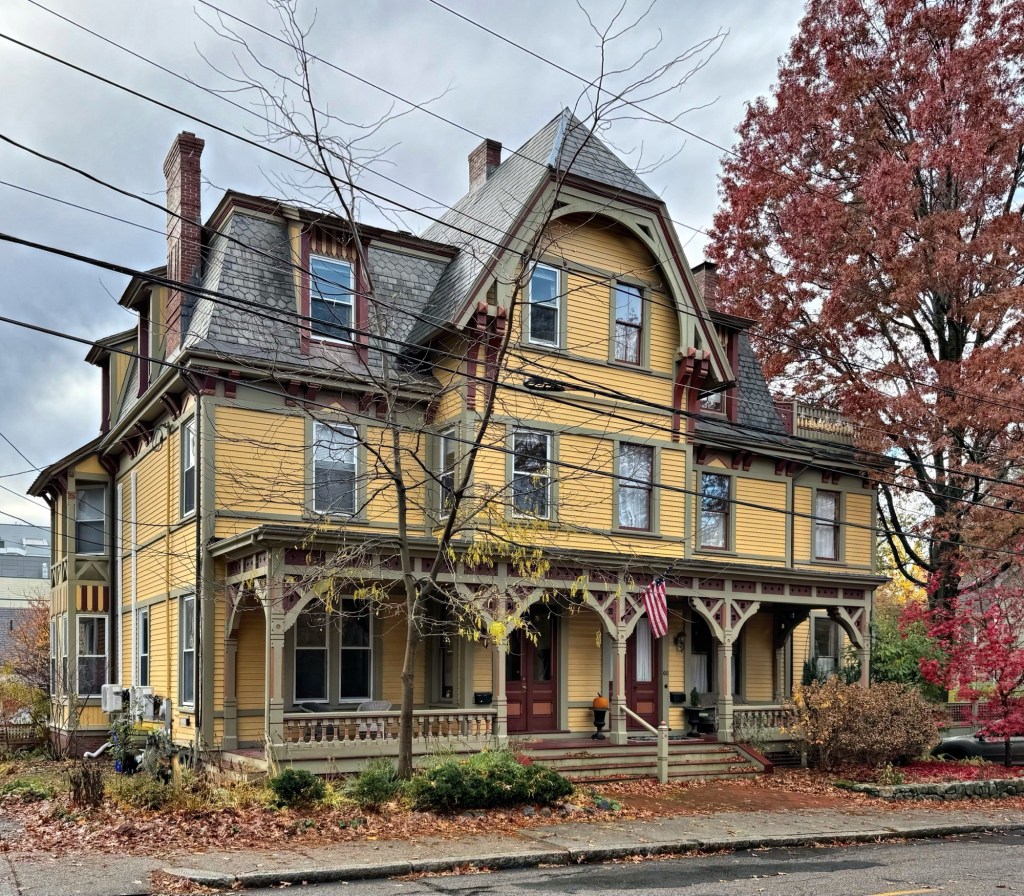
Elijah Carleton Emerson (1807-1888) was a wealthy Boston merchant, making his fortune as Director of the Second National Bank and President of the Middlesex Horse Railroad. In his late 30s, he purchased land in Brookline Village and established his estate on the land that is now Emerson Park in 1846. The bucolic setting of his estate included a pond, boathouse and adjacent cottage, but as the surrounding area continued to develop with easy access to Downtown Boston, Elijah Emerson began to develop his estate. Emerson began to build residences on his land for supplemental income. This handsome Stick style double-house was built around 1880 and rented by Mr. Emerson and was eventually occupied by his granddaughter, Tirzah and her husband, George Francis Arnold. The residence features a mansard roof, decorative brackets and applied stickwork, and a handsome porch with turned posts.

Elijah Emerson House // 1846

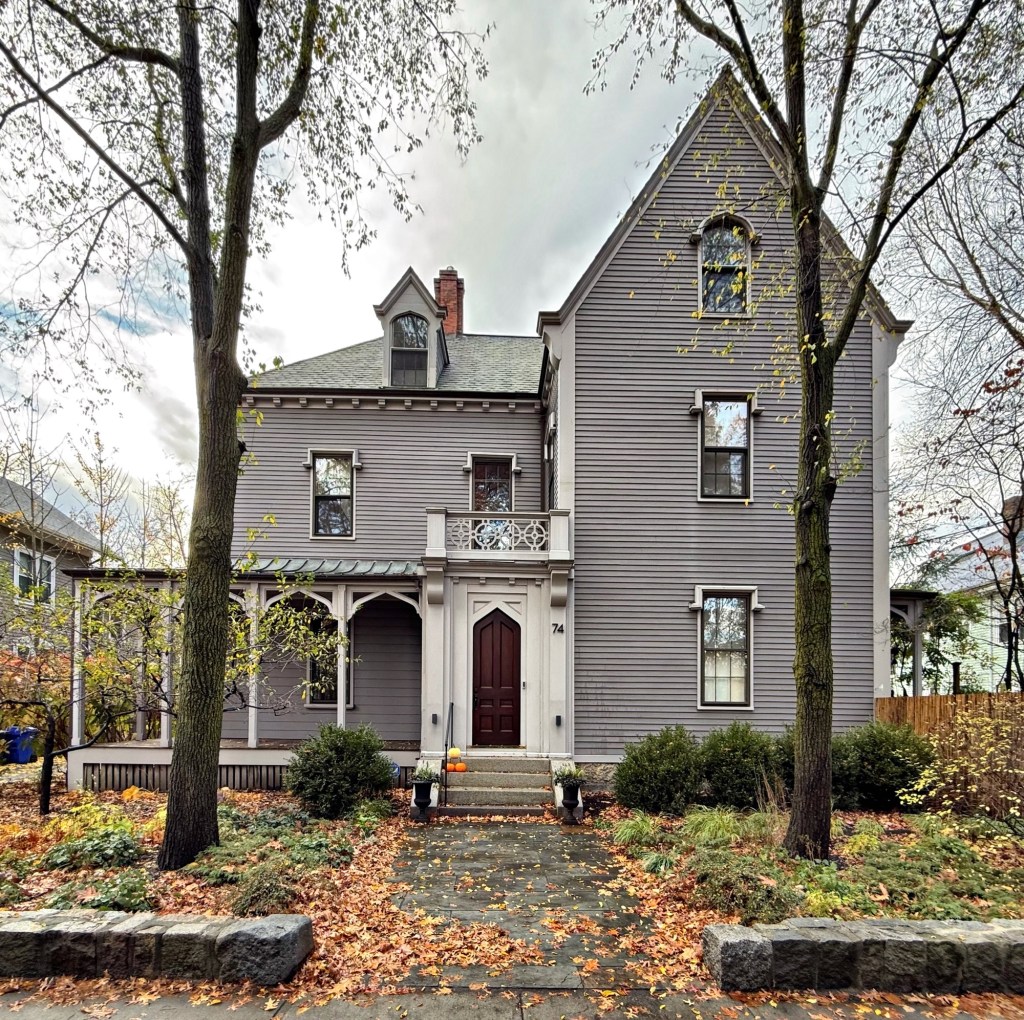
Elijah Carleton Emerson (1807-1888) was a wealthy Boston merchant, making his fortune as Director of the Second National Bank and President of the Middlesex Horse Railroad. In his late 30s, he purchased land in Brookline Village and established his estate on the land that is now Emerson Park in 1846. The bucolic setting of his estate included a pond, boathouse and adjacent cottage, but as the surrounding area continued to develop with easy access to Downtown Boston, Elijah Emerson began to develop his estate. Emerson began to build residences on his land for supplemental income. After his death in 1888, Emerson’s two daughters, Sarah Davis and Tirzah Snell Arnold, maintained the property but sold it to the Town of Brookline in 1907. Brookline officials originally sought to build a new library on the site, but ultimately built it on Washington Street in 1910. The Emerson house and carriage barn were moved across Davis Street from their original site and Emerson Park was established. Emerson’s granddaughter, Mrs.Katharine Snell and her husband, inventor, Cullen B. Snell moved into the relocated house. The Elijah Emerson House (and carriage house at the rear) is a great, well-preserved example of a suburban Boston residence designed in the Gothic Revival style.

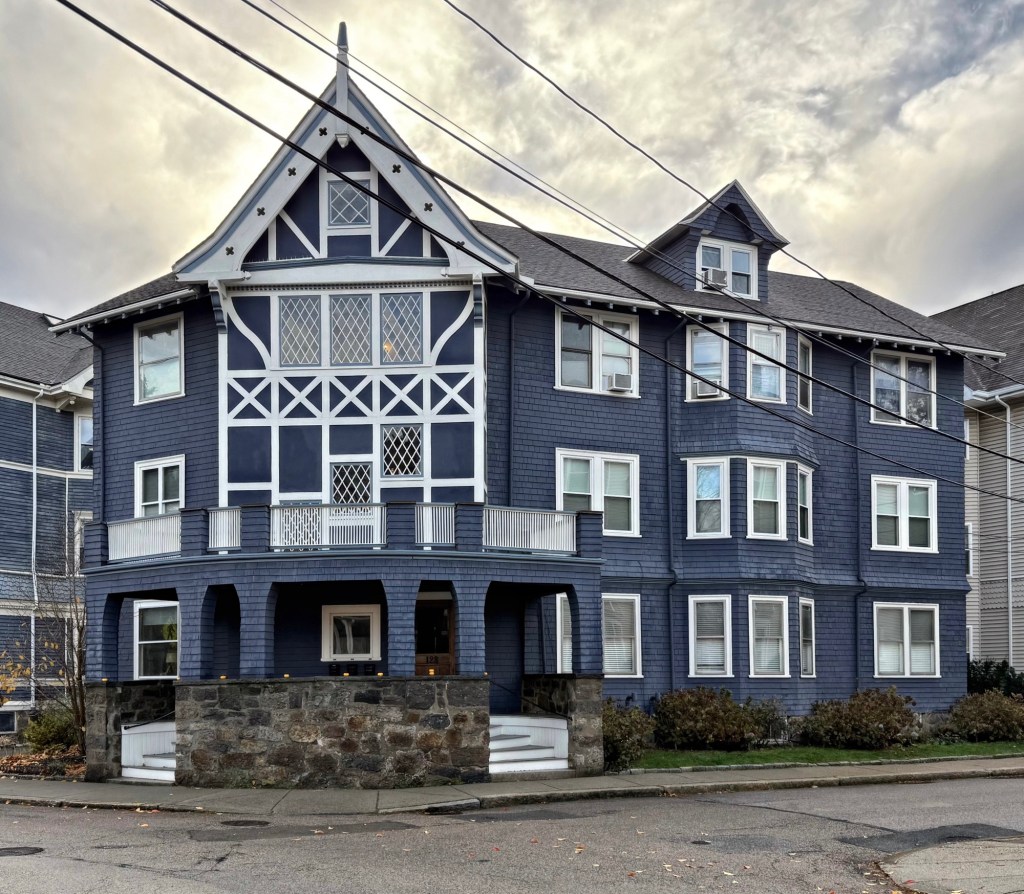
Graham Apartments // 1904

This handsome, and unique example of a three-decker in the English Revival style is located on a corner lot at 128 Davis Avenue in the Emerson/Brookline Village neighborhood of Brookline, Massachusetts. Built in 1904 from plans by architect and genealogist, J. Gardner Bartlett, whose work focused on colonial New England and the English origins of colonial families. Trained as an architect at MIT, he gave up architecture for genealogy, but still occasionally designed buildings in the Boston area. The building here was developed for Richard Graham, an Irish immigrant, who along with his wife, operated a laundry business in the village. The use of a shingle and stone entrance porch and entrance bay with stucco half-timbering and diamond-pane casement windows stand out architecturally as one of the few examples of a three-decker built in this style in New England.

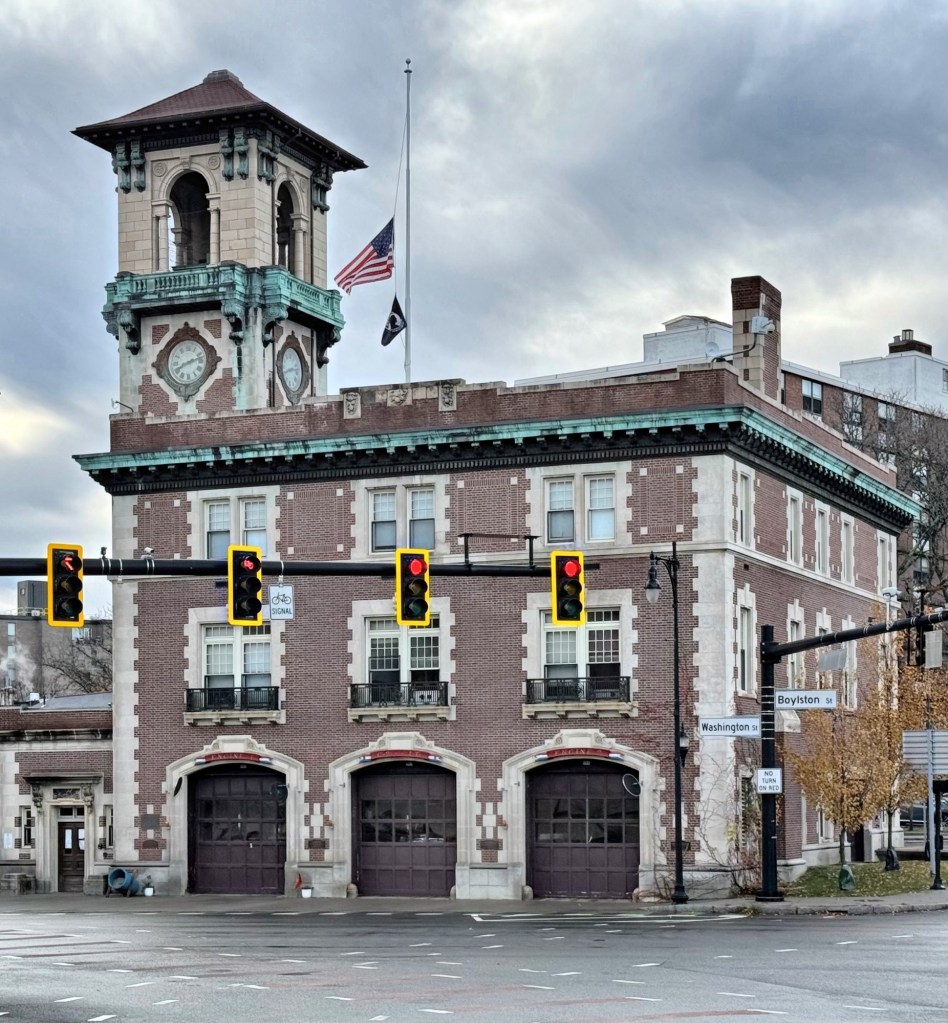
Brookline Village Fire Station // 1908

Built in 1908 from plans by the architectural firm of Freeman, Funk and Wilcox, the Brookline Village Fire Station is a massive, red brick structure with white sandstone trim and a copper cornice. Located on Washington Street in Brookline Village, the station stands out for its high-style Italian Renaissance style, notable for the use of brackets and off-center hose-drying tower with arched openings. The station replaced an earlier hose house, and was built before the fire department shifted to fire trucks, but was adapted later for larger fire apparatus. The station is one of the finest in the Boston area, and the Town of Brookline have done a great job preserving this significant structure.

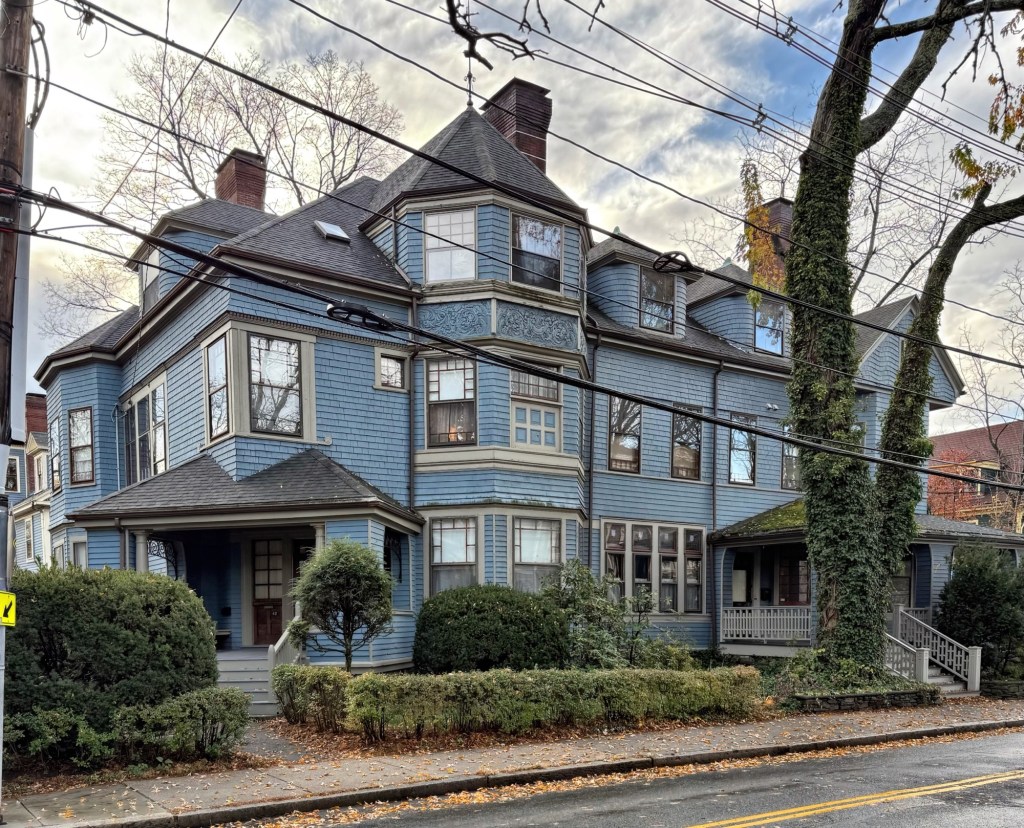
John D. Sturtevant Double-House // 1892

John Dean Sturtevant (1816-1889) was born in New Hampshire and became engaged there in local woolen mills, quickly growing into advanced management positions. He operated woolen mills in New Hampshire, Maine, Connecticut, and Massachusetts, and settled in Brookline where he had access to other states via excellent rail service. When he died in 1889, John’s heirs inherited their late-father’s properties, and began to develop them as Brookline filled out in the last decades of the 19th century. This handsome double-house at the corner of Cypress and Waverly streets was built in 1892 by the Sturtevant Estate, who rented the property to two families of wealthy residents. The Sturtevant Double-House is a landmark and exceptionally preserved example of the Queen Anne style, with varied siding, asymmetrical forms, complex roofline with dormers, and applied ornament in the form of carved panels.

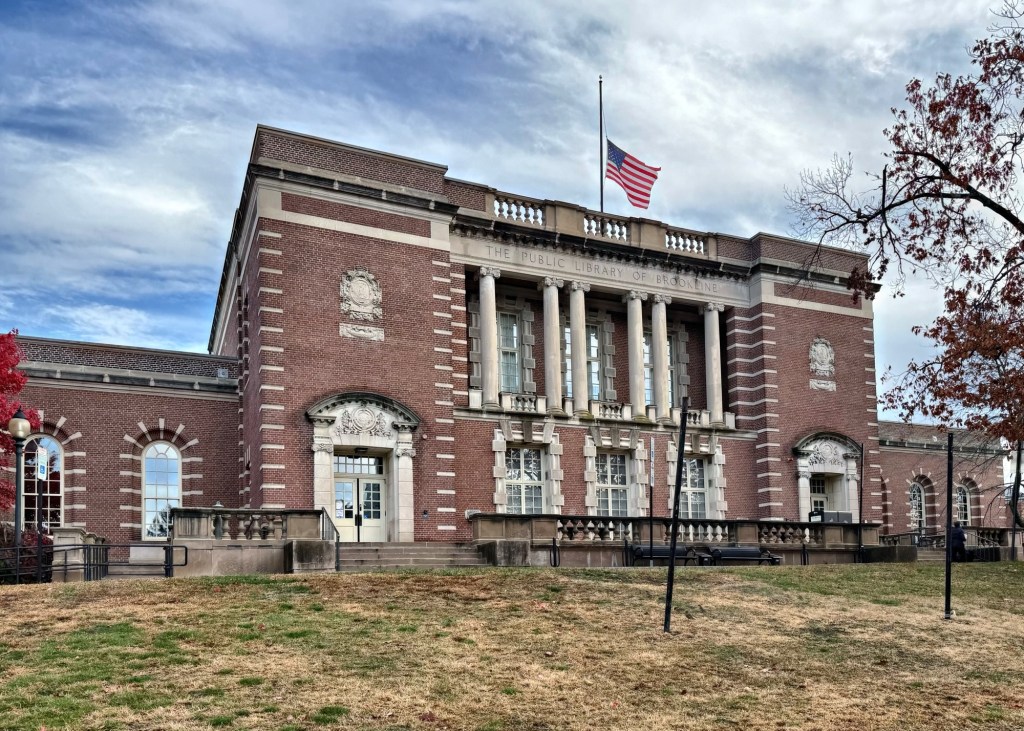
Brookline Public Library // 1910

The Brookline Public Library in Brookline Village opened in 1910 and was designed by R. Clipston Sturgis, one of the great 20th century architects in the Boston area. Taking his cue from the south facade of the Queen’s House at Greenwich, England, Sturgis designed a modest expression of Palladianism in red brick and limestone. The building is the second library on the site, replacing an 1869 mansard roofed building that was outgrown and demolished for this building. The Brookline Library was expanded in 1974 by Integrated Design Services Group and renovated again by Perry, Dean & Rogers.

Rhodes Building // 1905

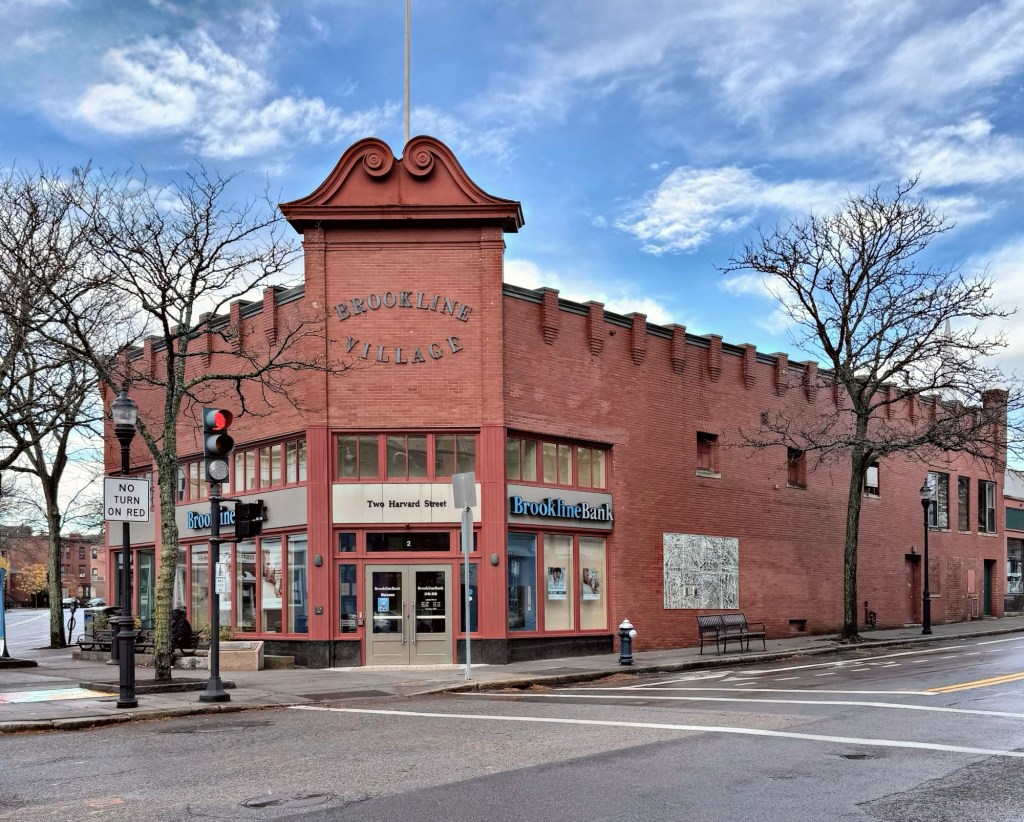
The Rhodes Building in Brookline Village is an exuberant example of a Colonial Revival style commercial block in an playfully eccentric way. Built in 1905, the block feels almost Post-Modern in style, which highlights ironic elements through the use of historical references, like here with the oversized swan’s neck pediment. The structure was designed by architect, William C. Collett, and was rented to Edgar and Leonard Rhodes, dealers in groceries and provisions and housed the Rhodes Brothers grocery store.

The Linden Apartments // 1885

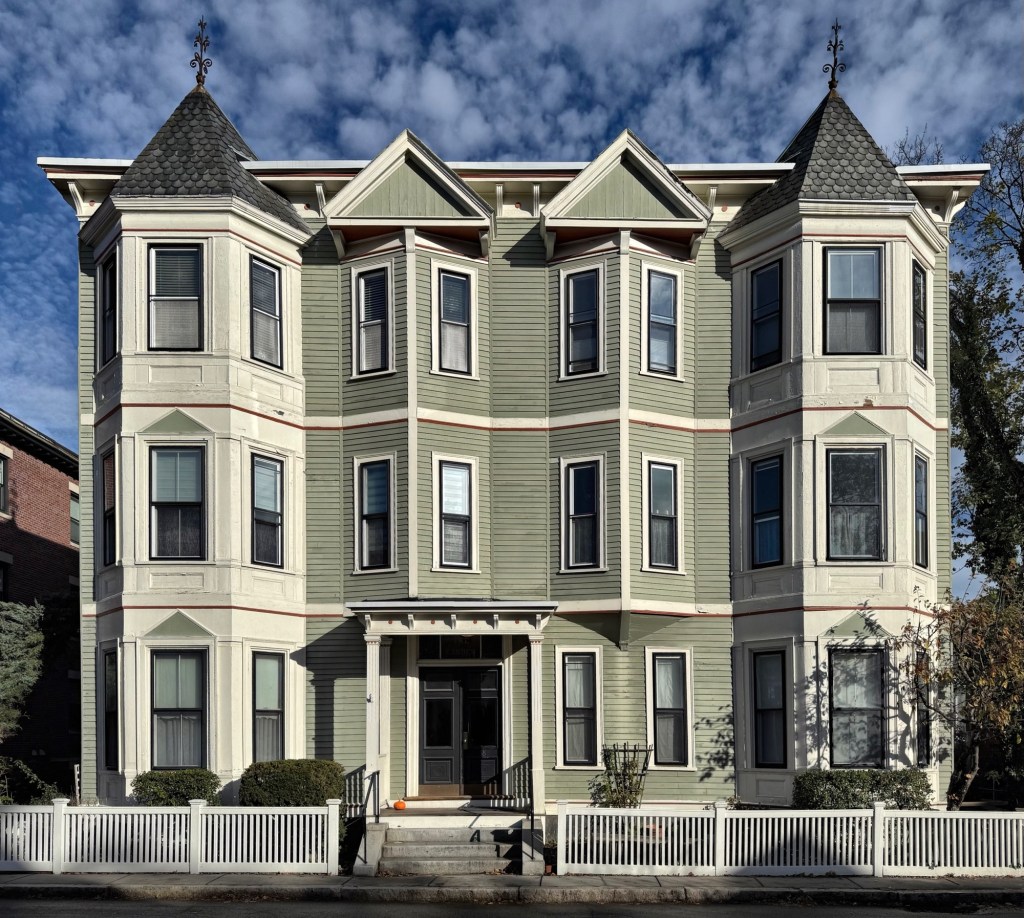
The Linden Apartments is an early multi-family apartment building in Brookline Village that shows how density can be done tastefully. The building is located at the center of Linden Place, Brookline’s first planned subdivision which was laid out in the 1840s. By the end of the 19th century, development pressure associated with the growth of Brookline Village lead to further subdivision of the original building lots and greater density of settlement in this neighborhood. The Lindens was constructed in 1885 by and for James W. Tobey (1830-1914), a local builder, as an income-generating property. Designed in the Queen Anne style, the Linden Apartments contained six suites, all with exceptional quality materials and finishes. The façade is embellished with two octagonal bays at the ends and two angled bay windows with gables which break up the otherwise rectangular form. The building has been lovingly maintained by residents and contributes to the rich history of Brookline Village from a sleepy village to a vibrant and dense “downtown”.

Goodspeed Livery Stable // c.1870

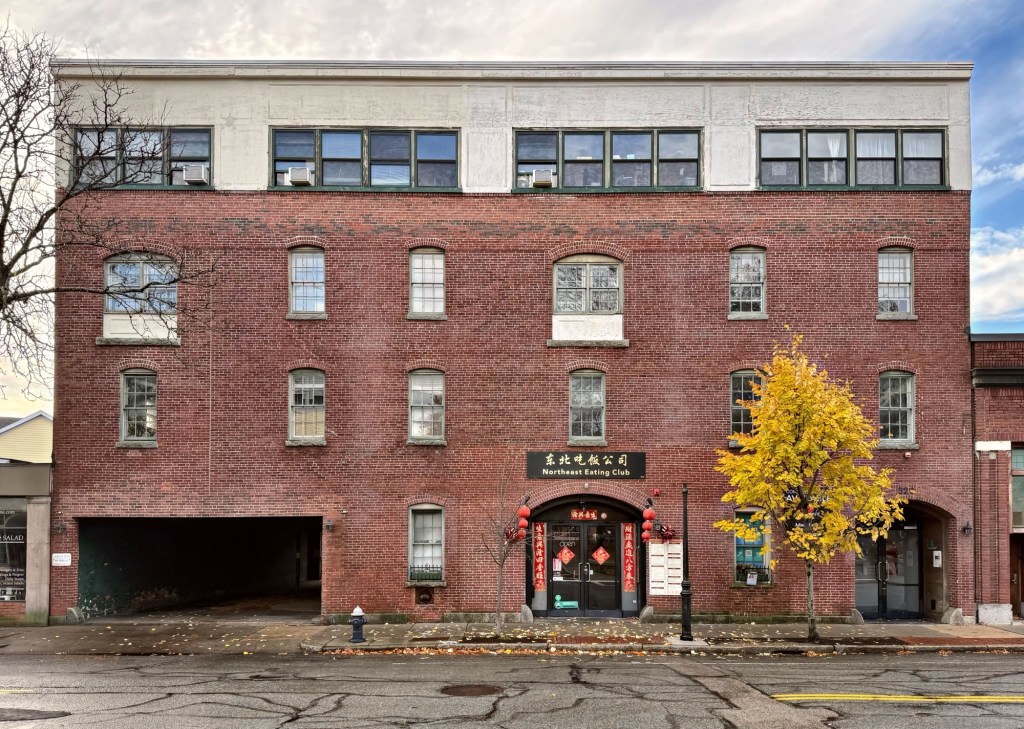
This somewhat unassuming brick building at 316-320 Washington Street in Brookline Village, which now houses offices and a Chinese barbecue restaurant, was for many years the home of a livery stable. Livery stables were facilities where horse owners would pay a weekly or monthly fee to keep their horses and sometimes carriages, with 24/7 staff who take care of and feed the horses. Liveries were essentially the 19th century equivalent of parking garages today, just with more hay and manure. This building was long-owned by Monroe Goodspeed (1842-1921) who originally found work with an express company, delivering packages by horse-drawn wagon. By 1874 Goodspeed was operating this stable, first in partnership with Grafton Stone, and later as sole proprietor. The building was originally a two-story wooden structure but was expanded by the 1880s and built of brick, to fireproof the building. Munroe Goodspeed was succeeded in the business by his son Carl, and remained in operation until the early 1930s. After this, the vehicular door was cut into the first floor for garage use and the upper floor was boxed off from the original gabled design. Two of the original wagon entrances remain on the facade and are now the entrances to the restaurant and to offices in the upper floors.