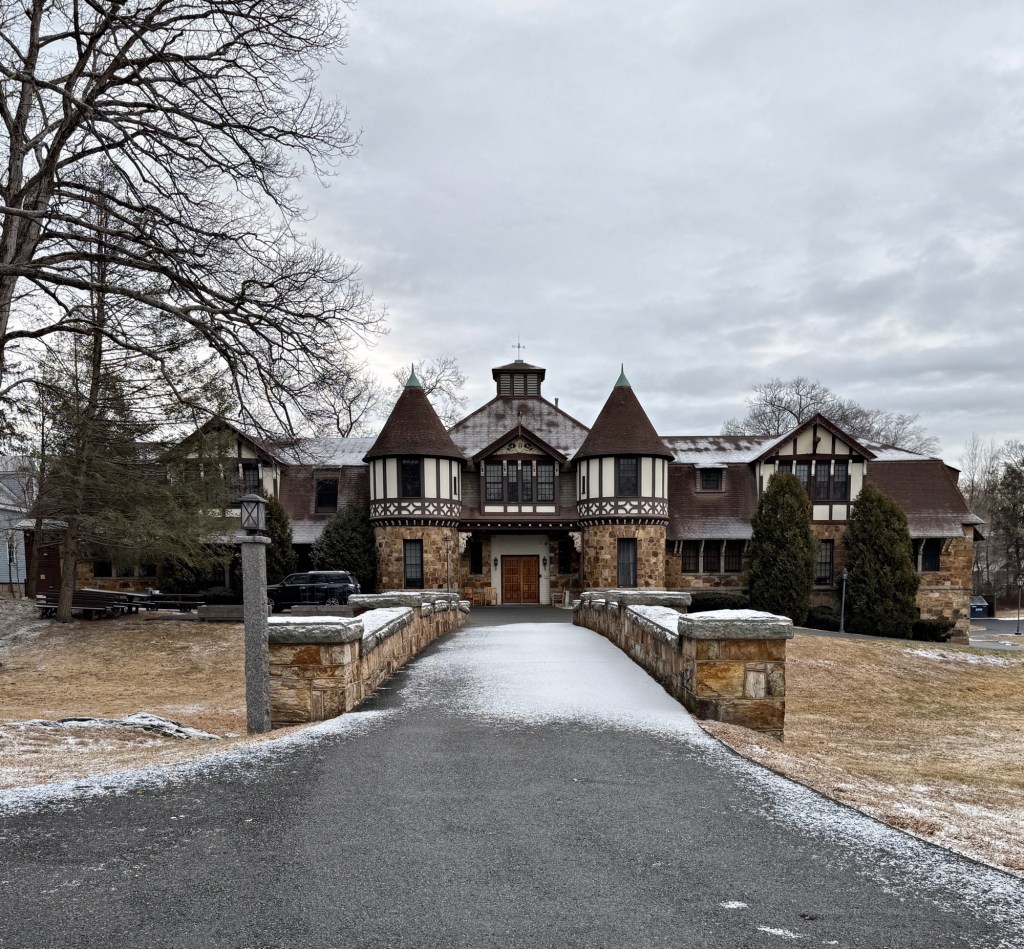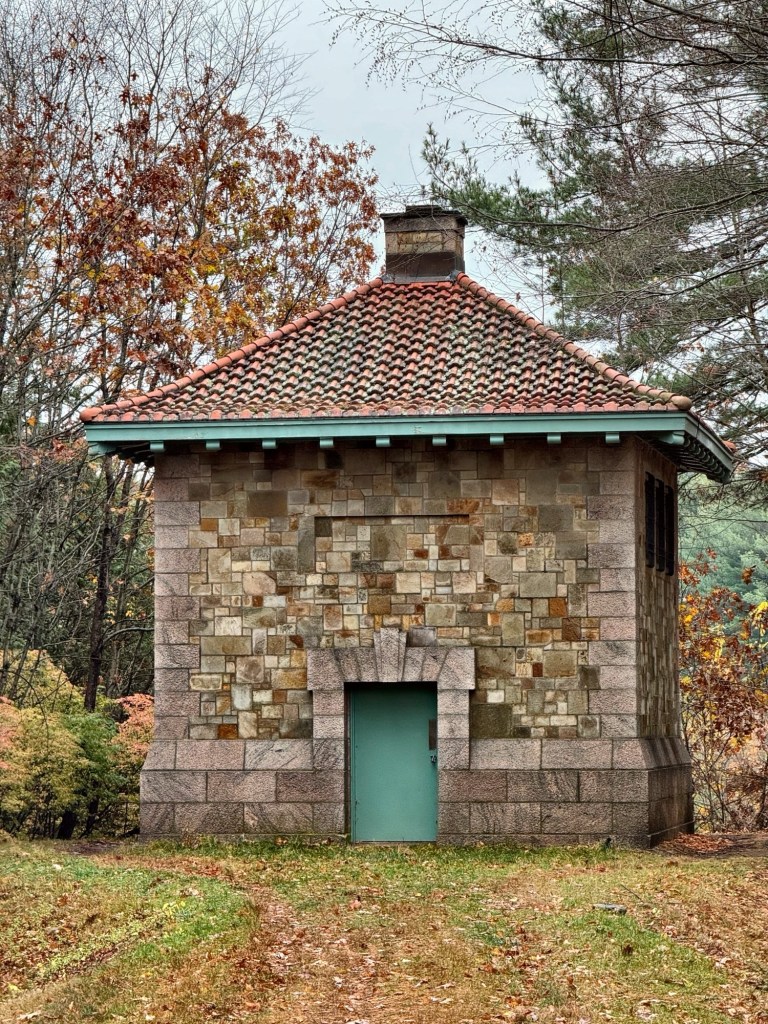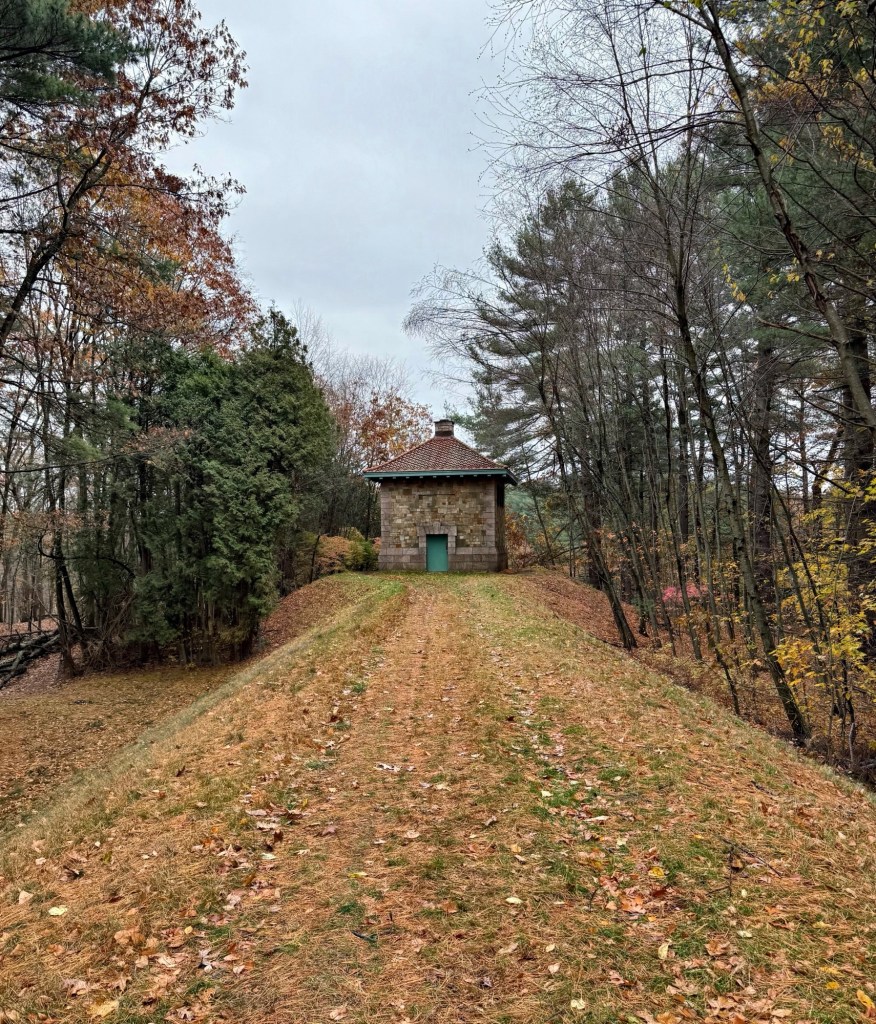
Happy Hollow Siphon House, Weston Aqueduct // 1903

The Weston Aqueduct was designed to deliver water from the Sudbury Reservoir in Framingham to the Weston Reservoir in Weston, Massachusetts. Built between 1901 and 1903, the aqueduct was designed to provide water to the suburbs north of Boston. All of the buildings that shelter the aqueducts above-ground elements, including this structure in Wayland, were designed by the architectural firm of  Shepley, Rutan and Coolidge, with landscaping along the route and at the reservoir designed by the Olmsted Brothers, landscape architects. This siphon house, known as the Happy Hollow Siphon House was built in 1903 and was an important part of the aqueduct system, as it transferred water through varied elevations using gravity and pressure to move the liquid without a pump. The aqueduct route is now a long, linear path and remains owned by the Massachusetts Water Resource Authority.

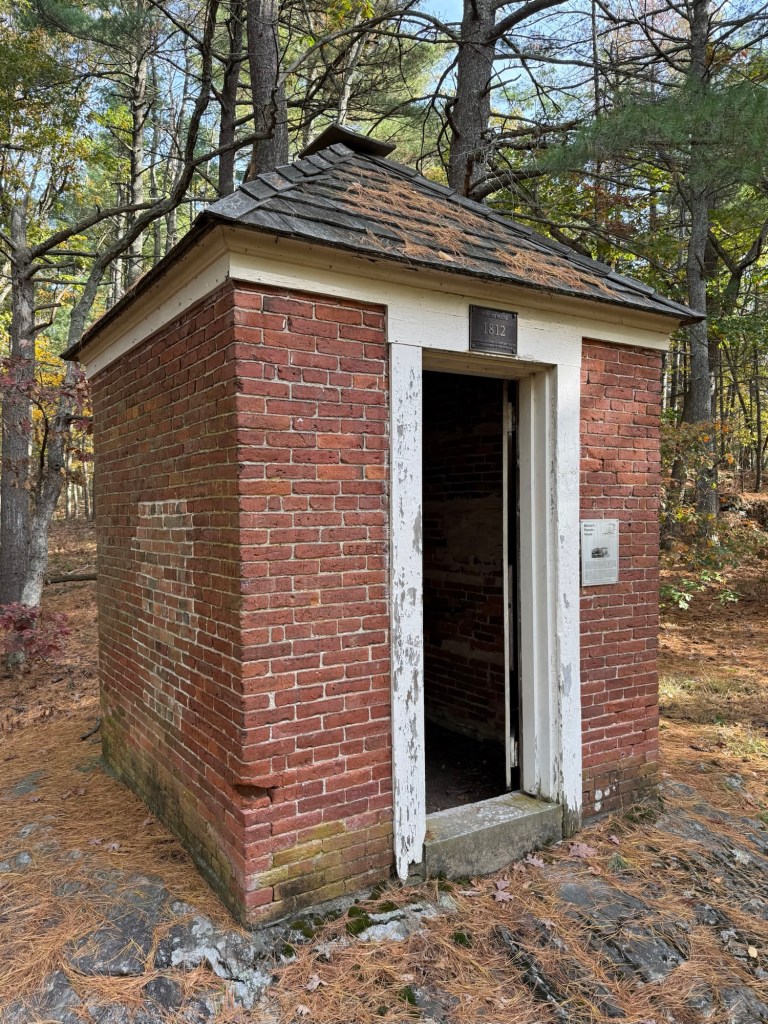
Bolton Powder House // 1812

Hidden away in the woods behind the Bolton Town Hall, this small brick structure sits atop a rocky outcropping and showcases a piece of early history we often do not think about. Built in 1812 as a powder house, a storage facility far from homes and businesses to store the town’s supply of gunpowder, musketballs and cannonballs, the structure remains as the town’s oldest extant municipal building. Since the founding of the colonies, the procurement and storage of ammunition had been the responsibility of local governments. Before this structure was built in the forest, Bolton‘s gunpowder and ammunition had been kept under the meetinghouse pulpit, not the best place suitable for highly explosive storage. The structure is a well-preserved example of a typical early 19th-century powder house, built of brick manufactured in town, laid in common bond, measuring just over seven-feet square with a pyramidal wood shingle roof.

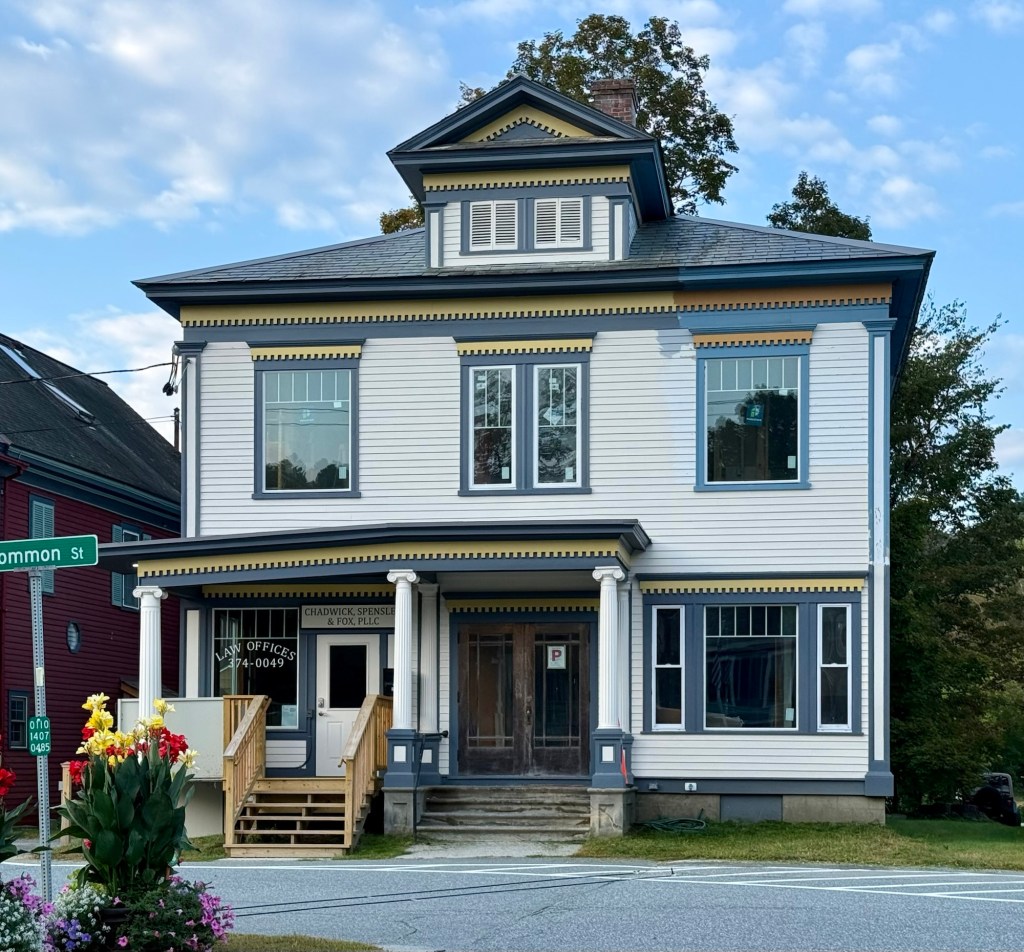
Chester Masonic Temple // 1907

Built in 1907, this handsome building on Main Street in Chester, Vermont, has long been the home to the Olive Branch Lodge 64 of the Freemasons, an international fraternal organization. Colonial Revival in style, the building features corner pilasters that support a denticulated entablature along the eaves of the slate hip roof. A projecting portico over the front entrance is supported by classical Ionic columns. The 1920s marked a heyday for Freemasonry, especially in the United States. By 1930, over 12% of the adult male population of the United States were members of the fraternity. Following the Great Depression and WWII, membership sharply declined in fraternal organizations, like the Masonic Temple. A number of years ago, the Lodge here moved to a new building in a nearby town, and a local law firm purchased the building and spent 18 months renovating the building for use. Today, the historic character and even symbology remain on the building, while it houses a local business. 

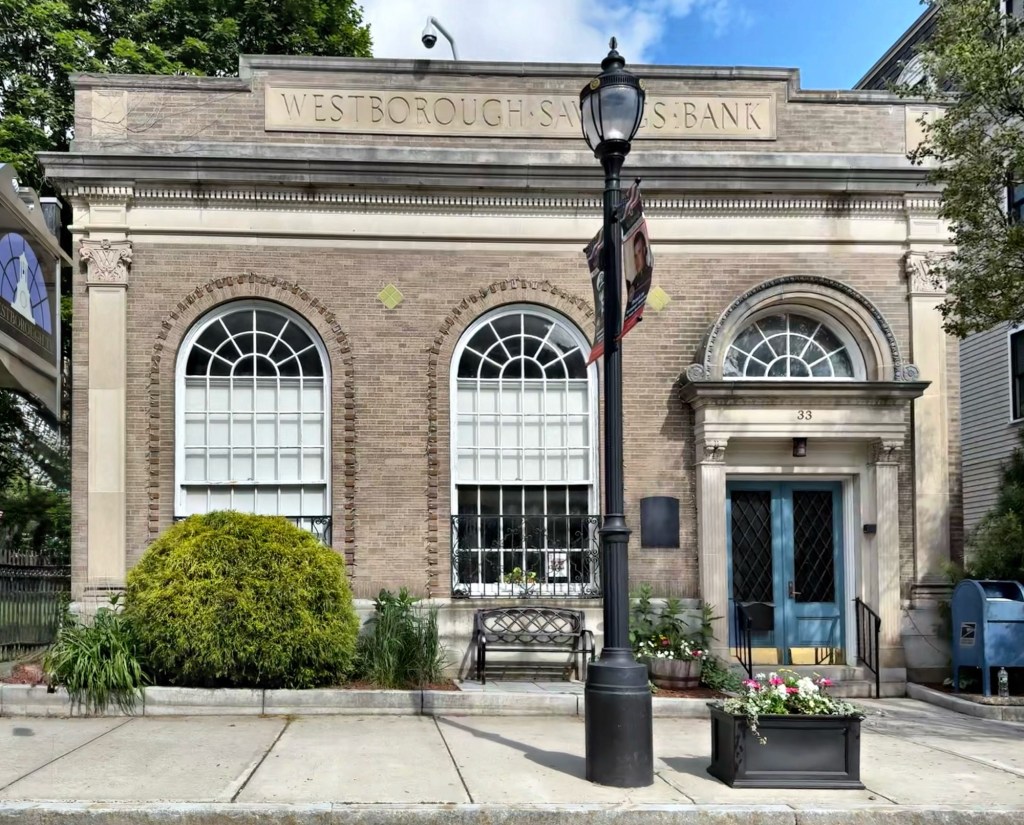
Westborough Savings Bank // 1928

The Westborough Savings Bank was incorporated in 1869 and shared space in a building with another bank and the post office. As the population and prosperity grew in the suburban community, so did the Westborough Savings Bank, who would move into a larger space. Just before the Great Depression, the bank sought to build its first purpose-built structure, and they hired the firm J. Williams Beal & Sons to furnish plans for this handsome masonry bank, designed to showcase the strength and stability of the institution. Renaissance Revival in style, the 1928 building is constructed of buff brick with limestone trim. The facade is dominated by large, round arched windows and is framed by pilasters with an off-center entrance. The Westborough Savings Bank would eventually merge into Avidia Bank and the West Main Street building was sold. The handsome building is well-preserved and home to Westborough TV, which makes broadcast media programming that is by, about, and for the entire Westborough community.

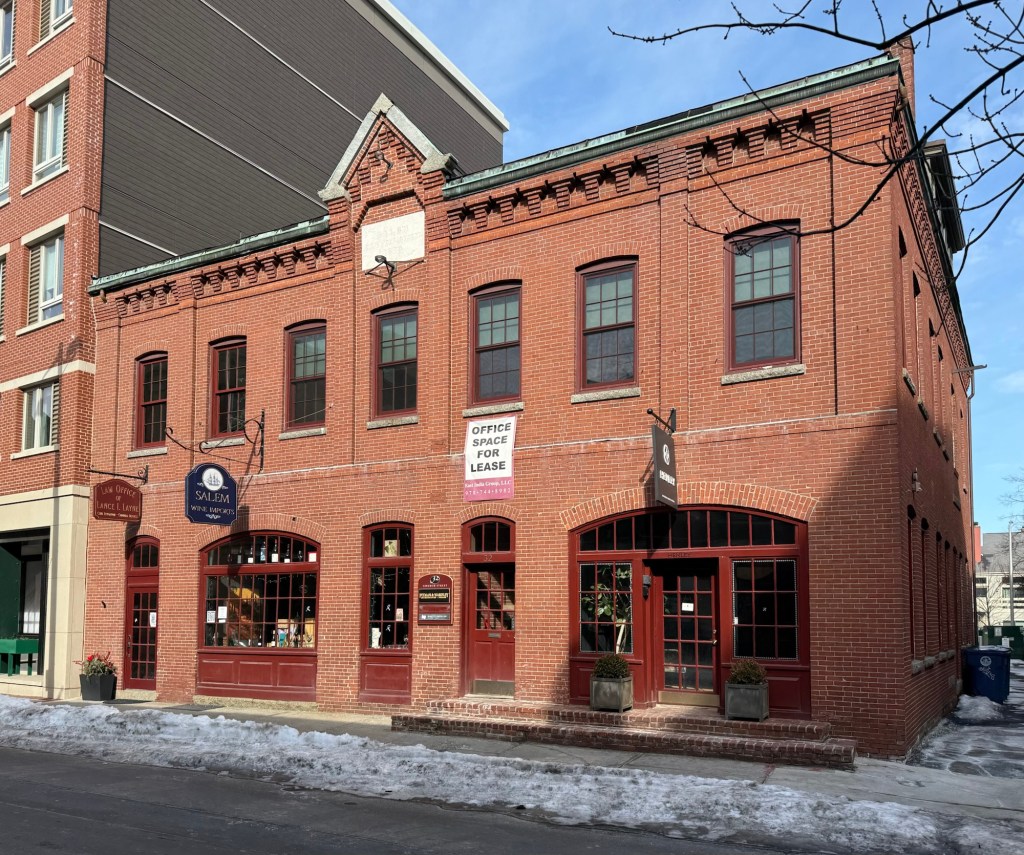
Salem Water Company Offices // 1879

Salem, Massachusetts, was first settled by Europeans in 1626, and it would take 170 years until in 1796, an organization of citizens was established for the purpose of supplying the inhabitants generally of Salem and Danvers with pure spring water. The Salem and Danvers Aqueduct Company was incorporated in 1797  “for the purpose of conveying fresh water by subterraneous pipes into the towns of Salem & Danvers.” As Salem grew, the need for a more central water district and distribution network became a necessity for the health and prosperity of the city. A 1864 law allowed Salem to construct its own water works, and it formed a Board of Water Commissioners who designed and constructed the system. From this, funding was acquired and paid for the laying of tens of thousands of feet of subterranean water distribution pipes connecting the reservoir to buildings and hydrants in Salem. Offices of the Waterworks were scattered and obsolete until 1877, when funds for the construction of this structure at 32-34 Church Street were set aside as the new Water Department Offices. Completed by 1879, the building is a great example of a Romanesque/Italianate style masonry structure with corbelled cornice and arched openings. According to the city directories, this building continued to operate as the Salem Water Works into the late 1930s. By 1945, it was the headquarters of the United States War Price & Rationing Board. In 1964, it held a number of city offices including: Civil Defense headquarters, Fire Department headquarters, Licensing Board, Planning Board, and the City Veterans Service, before being sold by the City of Salem to private ownership in 1976.

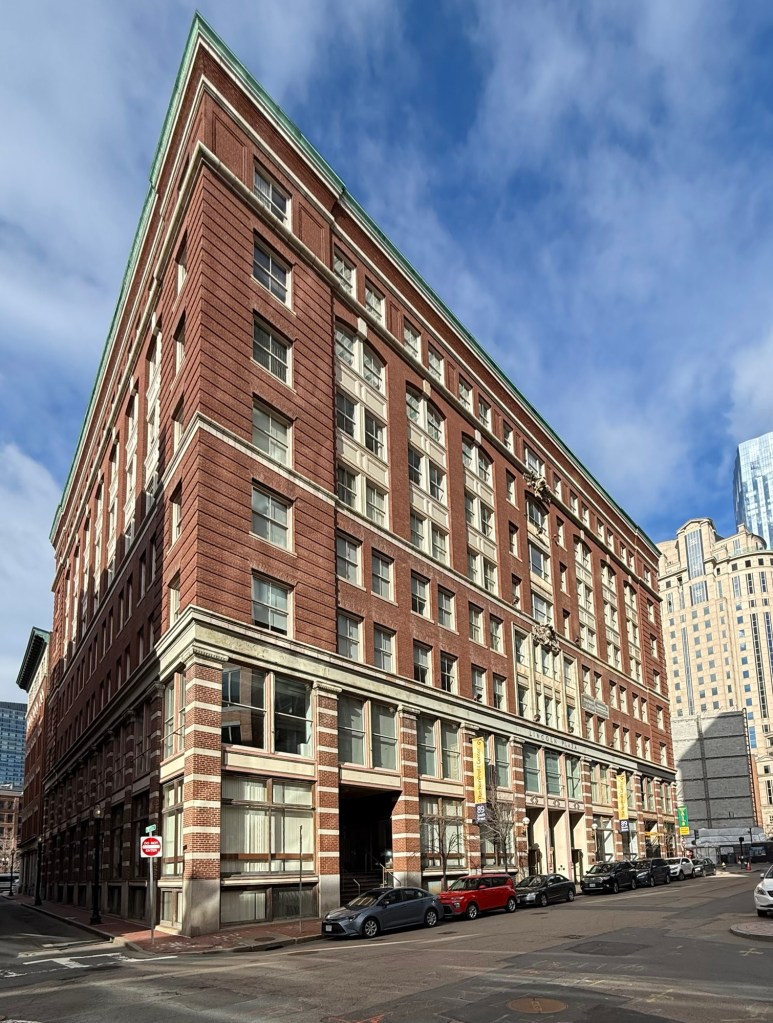
South Street Building // 1899

One of the larger mercantile buildings in the Leather District of Boston is this turn-of-the-century block, historically known as the South Street Building. Bounded by three streets, this eight-story building was constructed in 1899 from plans by Winslow, Wetherill & Bigelow and is a great example of a Classical Revival style commercial block with Beaux Arts motifs to further decorate the facades. In 1901, as expected, the city directories list many leather and soft goods-related occupants in the building, including: The American Calfskin Leather Company, John F. Moore Co., leather dealer, and Charles D. French, leather remnants dealer. The building was renovated in 1990 and rebranded as Lincoln Plaza, becoming a major space for non-profit offices.

New Gloucester Town Hall // 1886

New Gloucester, Maine was established in 1736 under a Massachusetts Bay Colony grant of a 6-square-mile tract of land in the Maine Territory to sixty inhabitants from the Gloucester fishing village on Cape Ann. The first white settlers here built cabins in the forests in the 1740s, which were largely abandoned from 1744–1751 due to the heightened native tribe attacks during King George’s War. As the Native Americans gradually withdrew to Canada, the settlers moved out into their own newly built homes and the town has grown ever-since. New Gloucester was incorporated on March 8, 1774, and was named New Gloucester after Gloucester, Massachusetts, the native home of a large share of the early settlers, as Maine was still a territory of Massachusetts until 1820. Previous to 1886, the First Baptist Church was used for a town meeting house, but in that year the new Town Hall, this building, was dedicated. The building is Queen Anne in style with varied siding, applied ornament in the gable, with a more Classical portico at the entrance.

Warren Industrial Trust Building // 1906

This monumental Georgian Revival bank building sits on Main Street in Warren, Rhode Island, and is one of the finest buildings of the style in the entire state. The Warren Industrial Trust in 1906 hired Edmund R. Willson of the Providence architectural firm of Stone, Carpenter & Willson to design the bank for the town after it had absorbed the town’s multiple banks, under one roof. Four Corinthian columns support a robust pediment over the entrance with the red brick elevations enlivened with arched windows, oversized keystones, and pilasters with contrasting capitals and bases. The building shows that Colonial Revival architecture, while often seen as a refined, classical style, can be festive and ornate.

Doucette Ten-Footer // c.1850

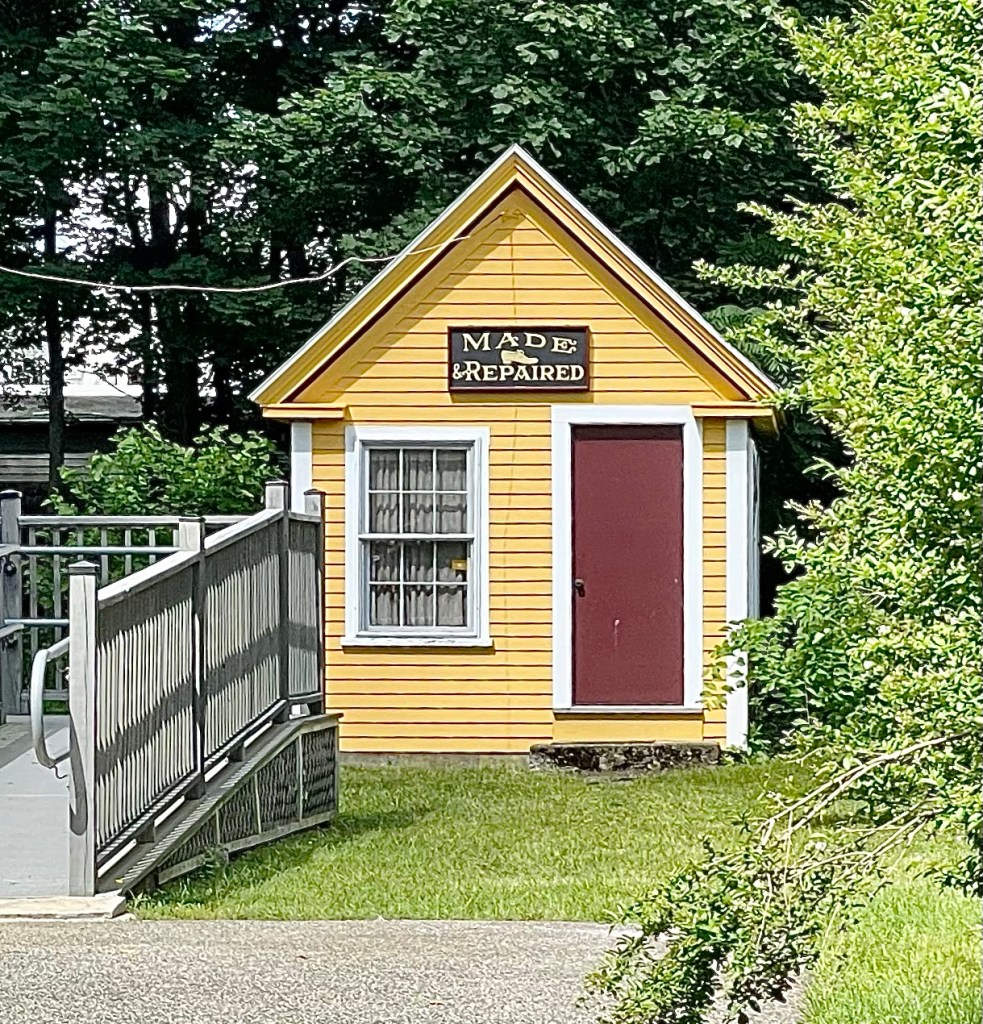
Here is a building type many of you may not know of… the Ten-Footer! This 10 x 10-foot square building is a well preserved example of a kind of shop historically used by many shoemakers in the late-18th to mid-19th centuries. In Stoneham during the 19th century there were many such shops scattered throughout the town as the area became a sort of hub for shoemaking. In the age before and just after the Industrial Revolution, many Massachusetts residents had home shops in the yards where family and neighbors could earn extra part-time money by doing piece work on shoes. These cottage industry shoe workers were paid for each pair of shoes delivered to the local distributor. Usually, the owner-shoemaker worked alone or with family members in the cramped space with materials like leathers, rubber, and straps stored in the attic space in a loft in the gable. This ten-footer was built in the mid 19th century and later owned by Peter Doucette, who ran a shoe shop here. The small building was eventually acquired by the Stoneham Historical Society and was moved behind their building, restored and it can better tell the story of the town’s rich shoemaking history.

First Church of Christ Scientist, Providence // 1906

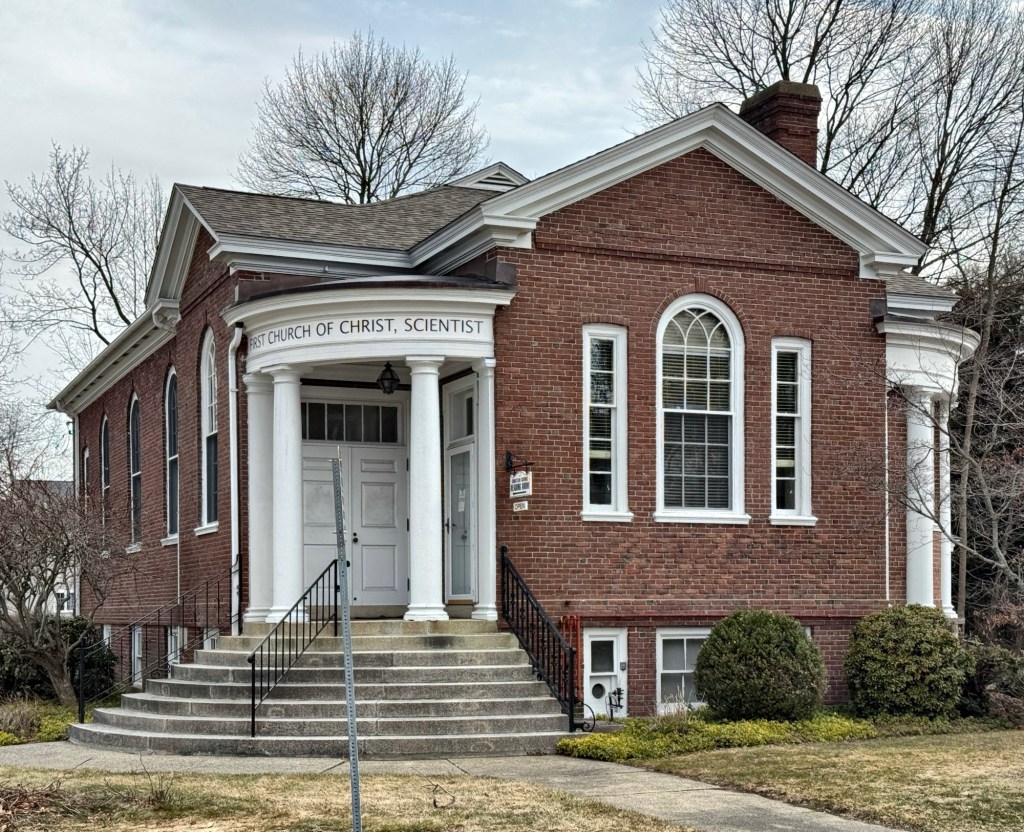
One of the most stunning and monumental buildings in Providence is this building, a church which pretty closely resembles the Rhode Island State House! Christian Scientists in Providence began to hold informal services in 1889 and received a charter from the state legislature in 1895. Construction started on this church, the First Church of Christ, Scientist in 1906 from plans by local architect Howard Hoppin who roughly modeled the building after the congregation’s Mother Church in Boston. The Classical Revival building is capped by a copper hemispherical dome supported by a colonnade of Corinthian columns. The main block of the structure at the street is fairly modest, possibly due to the residential character of its surroundings.