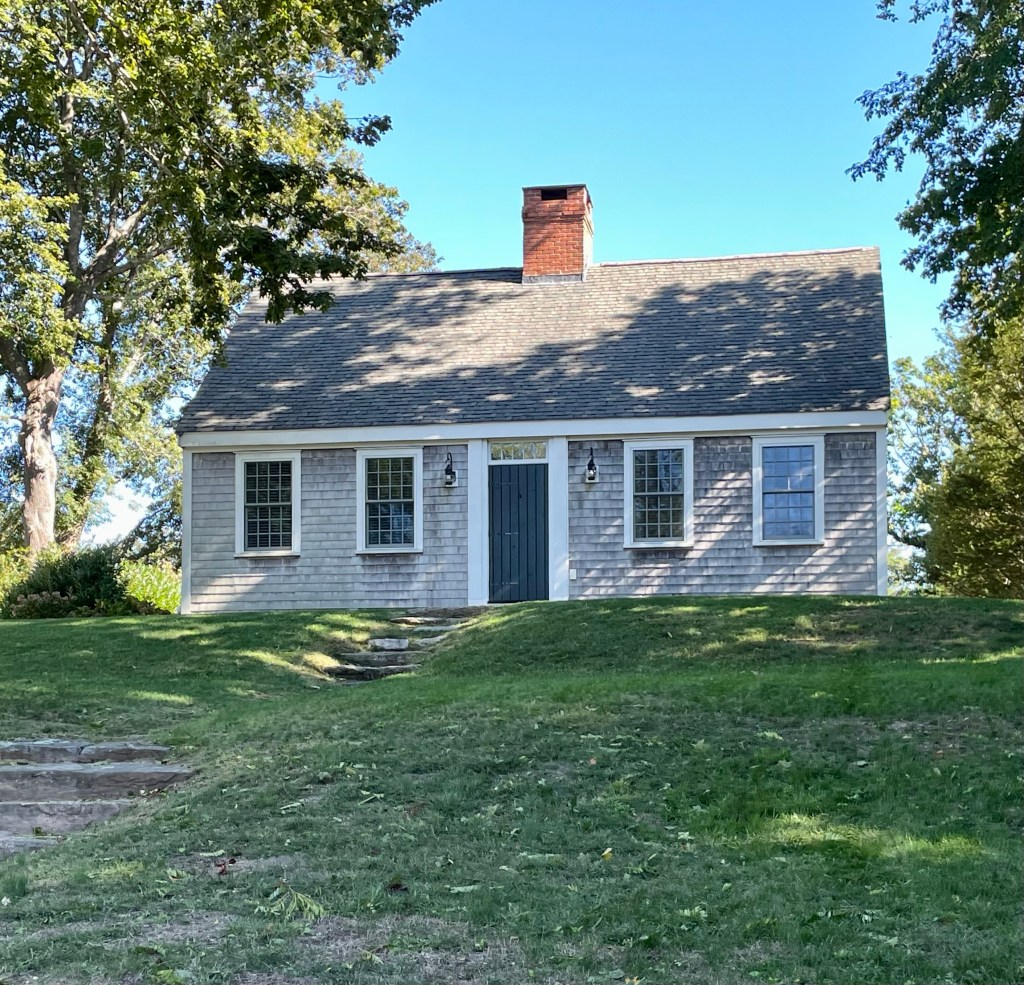
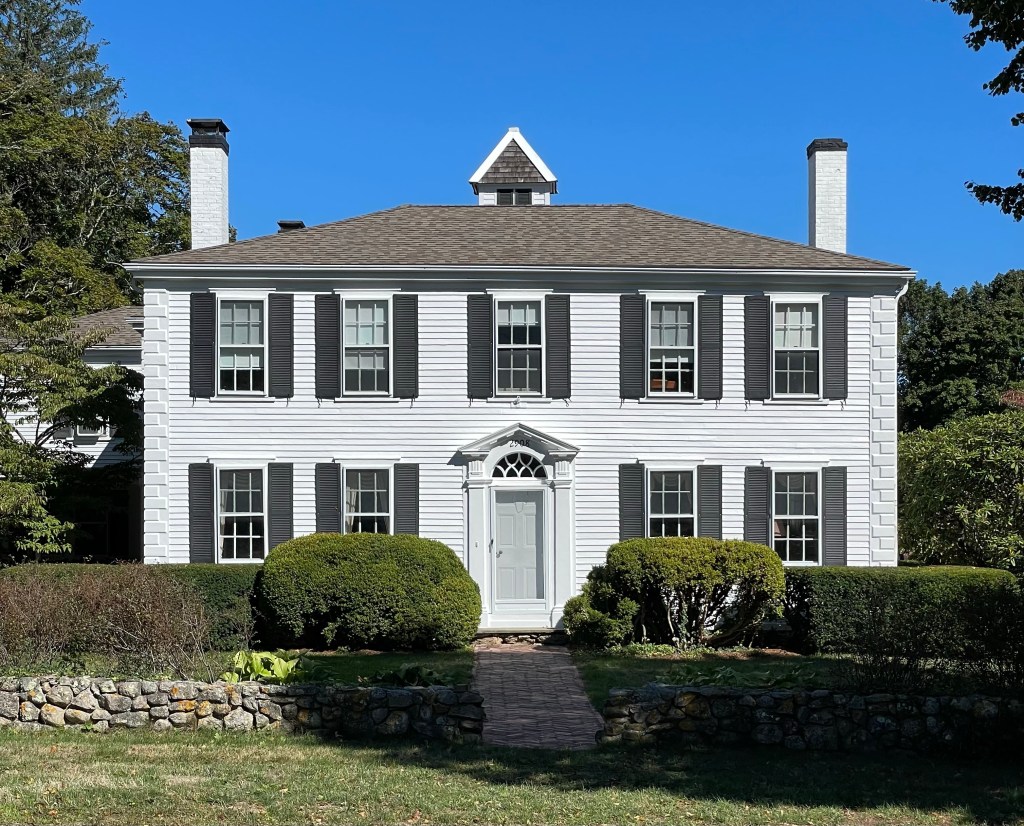
Samuel J. Nutter House // c.1750

The Samuel J. Nutter House on Indian Pond Road in Kingston, Massachusetts, is a fairly rare example of a half-cape Georgian-era home in New England. Local history states that the house dates to before the American Revolution and was constructed as an early half-cape, with an off-center door flanked by two bays of windows. The small house form would allow the owner to add on additional bays to make it a 3/4- (has a door with two windows on one side and a single window on the other) or full-cape (with a central door and two windows on each side) as the family and prosperity grew. This house was built as a half-cape and has not changed in its over 275-year existence, besides the addition of a barn and one-story connecting addition to it. The house was originally located elsewhere in town, but was relocated to the site in about 1830 by Samuel Nutter (born Nutt and changed his name in 1825), who married Mercy Washburn that year. The Nutter Family farmed here until the early 1900s.
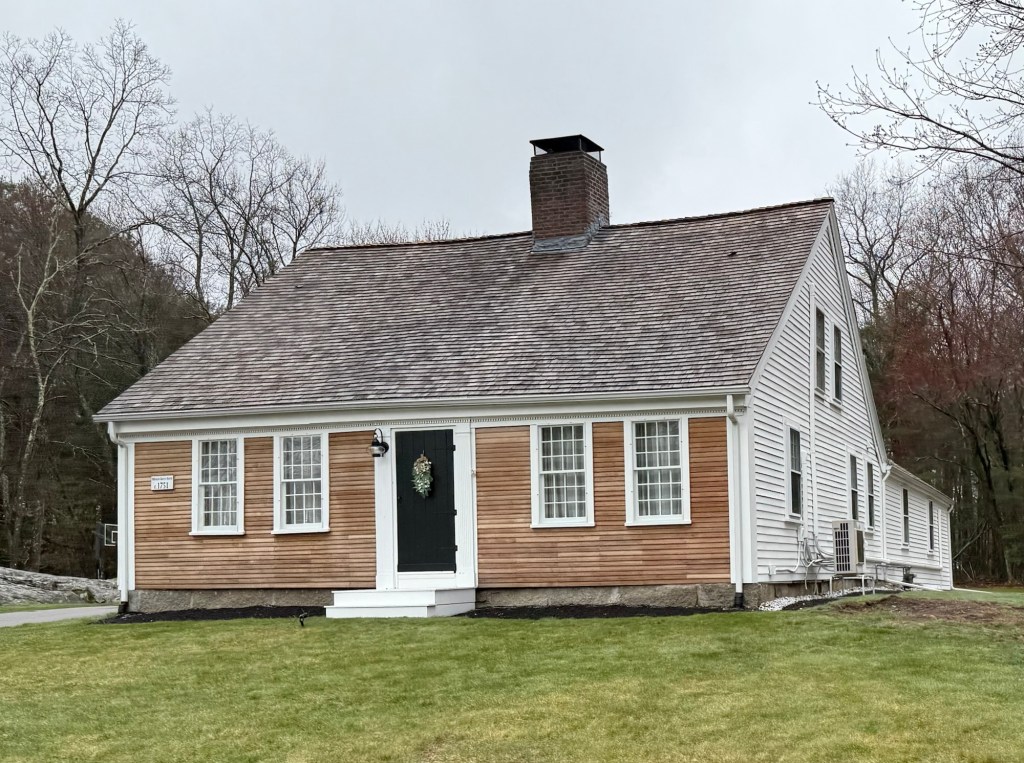
Orcutt-Ford Homestead // c.1751

In about 1751, Emerson Orcutt (1713-1777) purchased land in North Abington, Massachusetts, and built a half cape for his family. In 1762, Orcutt sold some of the land to John Ford, who was later a Lieutenant in the Continental Army, and according to local tradition, Ford added the other half of this current Georgian Cape house, giving it the current configuration. Character defining architectural details include an entry surround with fluted pilasters, and dentil cornice band on the main facade, 12-over-12 sash windows, and the central chimney, which would have heated both sides of the house. The property remained in the Ford family for over 100 years, and has since been converted back to a single family residence. Today, the charming pre-Revolutionary cottage is one of the oldest extant houses in Abington.

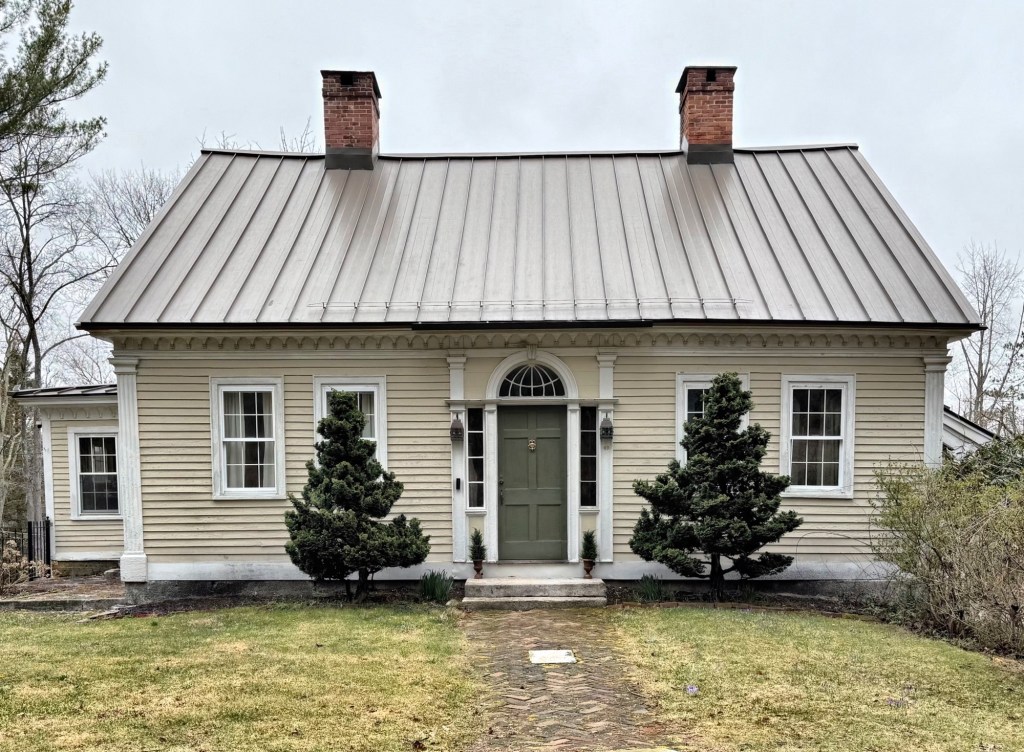
Levally-Crandall House // c.1820

This attractive Federal-style Cape house is located in Canterbury, Connecticut, and is one of the very finest such houses of its type in the state. The house was built by William Levally, a successful millowner in town who married Patience Horton just prior. William died unexpectedly in 1841, and the property was inherited by Patience, who then married Hezekiah Crandall, also a millowner, who was also the brother of Prudence Crandall, the teacher who operated the famous African American girls boarding school in Canterbury Center in the 1830s. Hezekiah and his sister later migrated to Kansas, after essentially being pushed out of town. The Levally-Crandall House stands out for its proportions, exterior moldings, and ornate entry with pilasters, sidelights, and a molded, keyed arched transom. The house has been lovingly preserved by the successive owners, who clearly take pride in owning such a piece of history.

Killicut House // c.1740

Thought to be the oldest extant residential building in Nashua, New Hampshire, the Killicut House is an important piece of local history of the early settlement days of the city. The exact date of construction of the Killicut House is not known, with local legend stating that the house was built between 1680 and 1700 with other estimates dating the house slightly later, to 1740. It was known for years as the “1700 House”. Regardless, this is one of only two 18th century houses remaining in Nashua. The first known owner of the house was Thomas Killicut (1723-1784) who resided in present-day Nashua by 1746 when he was chosen to hold the position of field driver for the newly established town of Dunstable, New Hampshire (an extension from Dunstable, Massachusetts). Killicut served as one of “Rogers Rangers” in the French and Indian War. During the early to mid 19th century, the Killicut House apparently passed onto members of the Blodgett family who were apparently related to the Killicuts as up until the 1960s, the house was still reportedly owned by descendants of Thomas Killicut. Later in the 20th century, much of the land was subdivided and single-family homes were built nearby, with the Killicut House now located on the end of an unassuming cul-de-sac. It is a great example of a Georgian-era Cape style house with central chimney.

West Acton Citizens Library // c.1845

Old houses adapted for other uses always deserves a highlight! The West Acton Citizens Library was originally constructed in 1840 as a small, one-story Greek Revival style cape house either for or purchased by Phineas Wetherbee, a farmer and early landowner in the village. The modest house features little detailing besides the recessed entrance composed of wide, flat pilasters and a lintel decorated with square corner blocks and a central keystone. In 1883, Phineas Wetherbee met with thirty-nine others to form the Citizens Library in West Acton. The organization accessioned the collection of the former Farmers Club Library. When Mr. Wetherbee died in 1895, he bequeathed his house to the library, who later moved into the house by 1900. Today, the house remains a library space for the West Acton village.

Doane-Foster House // 1807

In 1807 Hezekiah Doane (1768-1834), a shipwright, purchased land on Main Street in Barnstable Village, building a family home. The house was built in the Federal period, likely with a side gable or hipped roof. Hezekiah and his small family lived here until his death in 1834. After successive ownership, the property was purchased in 1846 by sea captain Heman Foster (1812-1867). Foster renovated the house, raising the roof and adding the Greek Revival detailing with the pedimented roof and pilasters, and the gothic lancet window in the gable for some Gothic Revival flair.

Barnstable Customs House – Coast Guard Heritage Museum // 1855

The former United States Customs House (now the Coast Guard Heritage Museum) in Barnstable is located at the eastern end of the village, and across the street from the Unitarian Church (featured previously). The building was constructed in 1855, likely under the supervision of Ammi B. Young, who was acting as the first Supervising Architect of the U.S. Treasury Department. The Seventh Customs District was established by Congress in 1789, and encompassed Barnstable County except Falmouth, and it ranked fourth in revenue among the state’s customs districts. By 1850, 91,102 tons of materials had been reported through the district, so the need for a new customs house was clear. The Customs House is said to have been the first ‘fireproof’ building constructed on Cape Cod, in contrast to the traditional wood-frame and shingled dwellings found there. This district merged with Boston in 1913, and the building became a local Post Office until 1958. It was converted to a museum and named after Donald G. Trayser. It was renamed the Coast Guard Heritage Museum in 2005.

Crocker Tavern // c.1754

One of the largest pre-Revolution houses in Barnstable is this stunning Georgian manse, known as the Crocker Tavern. The c.1754 home was built along Main Street in Barnstable Village by Cornelius Crocker (1704-1784), who operated it as a tavern along the Old King’s Highway, the main stagecoach route through Cape Cod. Cornelius died in 1784, and he left the eastern half of his house and land to his grandsons Robert, Uriah, and Joseph Crocker; the western half of land and house went to his daughter Lydia, widow of Captain Samuel Sturgis who died at 25, she never remarried. The house was “to be divided through by the middle of the great chimney“, a feature which was likely removed under separate ownership. Lydia eventually acquired the other half of the house, and continued operation of the tavern as her father did before her, though it was known as Aunt Lydia’s Tavern. The property was passed down through the family until 1925, when the property was left to the Society for the Preservation of New England Antiquities (later renamed Historic New England) as a historic house museum. The Georgian house and property were eventually de-accessioned by Historic New England and the tavern can be rented out on AirBnb!

Reverend Joseph Green House // c.1725

In 1725, the second or eastern parish of Barnstable separated from the first (or west) and the congregation had a 25 year old pastor to lead them in Reverend Joseph Green. Joseph Green(e)(1701-1770) attended Harvard and trained in theology, graduating and accepting the call to lead a new congregation in Barnstable Village on Cape Cod. Green would must have had this house built around the time of his arrival, which was a modest, full-cape Georgian home. Reverend Green remained in his position until his death in 1770.

Hinckley-Crocker House // c.1827

In 1827, Isaiah Hinckley (1786-1880), a boatbuilder, purchased a pre-Revolutionary home built by Dr. Abner Hersey on Main Street in Barnstable Village. Hinckley, being a skilled tradesman, completely re-designed the house, creating the stunning Federal style manse we see today. It is likely that Hinckley used an architectural pattern book, like one of the many by Asher Benjamin, which provided plans and drawings for carpenters and other tradesmen to be able to build stunning homes and churches all over the country. In 1861, this estate passed to Captain Elijah Crocker, a sea captain who commanded the ship Akbar.