Leet Store // 1909

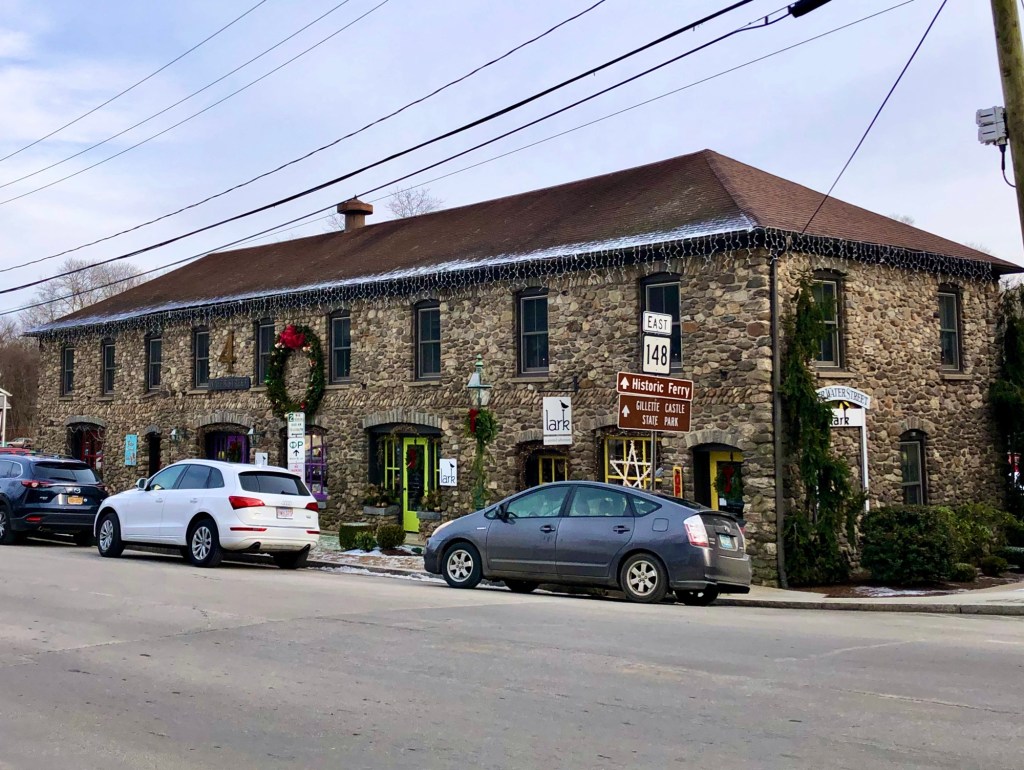
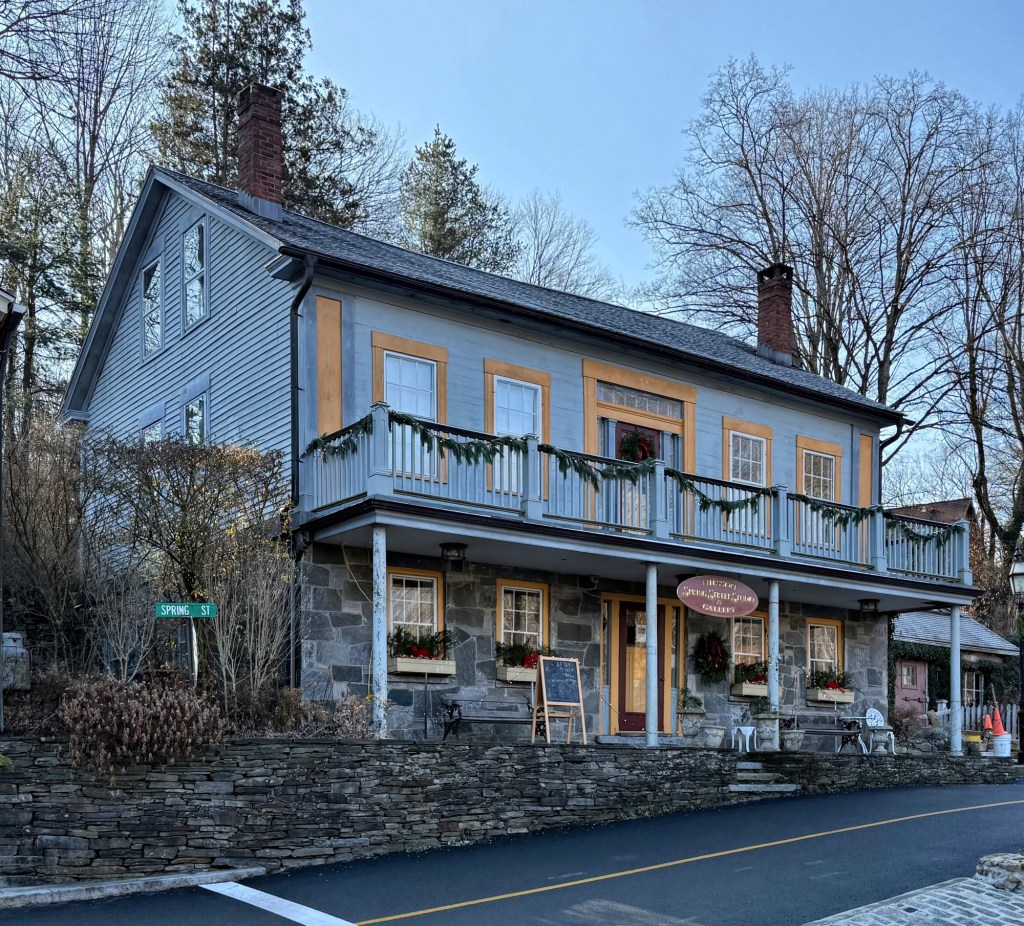
The handsome rubblestone commercial block at the corner of Main and Water streets in Chester, Connecticut, was built in 1909 by Italian stone masons for Joseph H. Leet and contained a grain and feed store, with other spaces in the building rented out. Decades later, the old Leet Store became a auto repair shop and the upstairs space was used as a meeting hall and theater for the community. The building was restored in 1979 and expanded at the rear with a two-story wood-frame addition for additional commercial space.

Old Stone Store, Chester // 1809

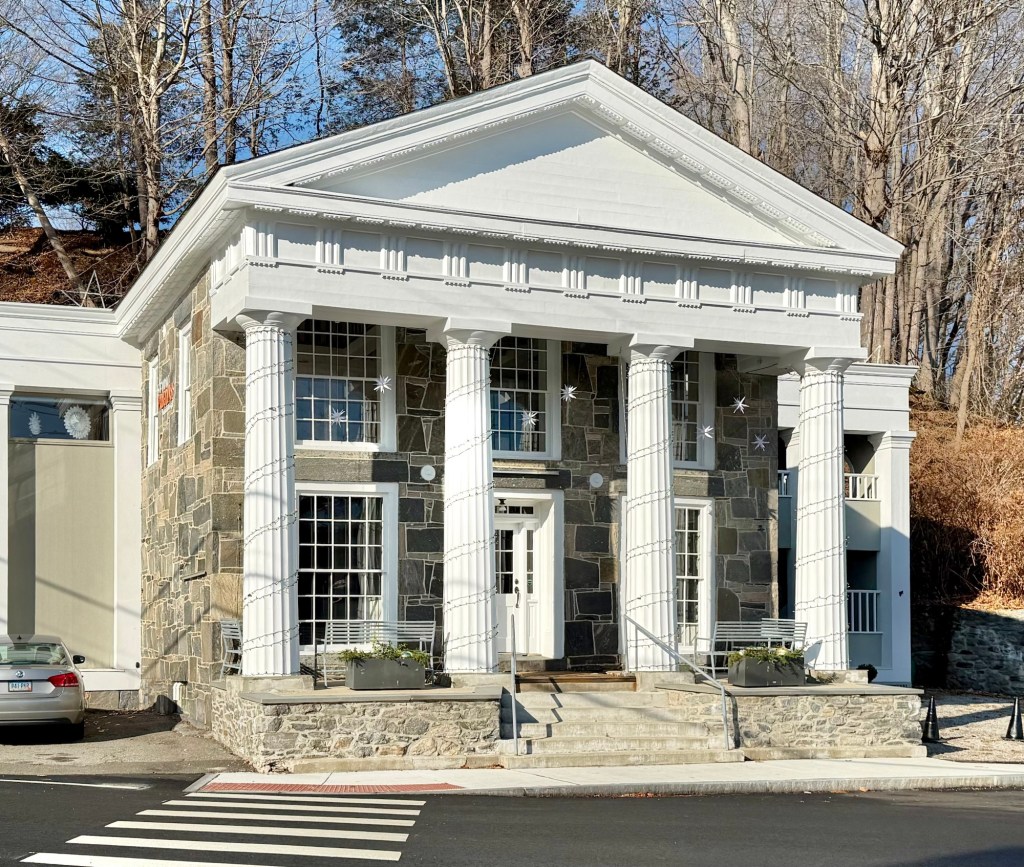
Colloquially known as the “Stone Store,” this handsome stone structure in Chester Village, Connecticut, was built by William Buck in 1809, a merchant involved in the West Indies trade. The stone for the building is believed to have come from the Chester quarry in town and was likely more vernacular without the columned portico. The four-columned Doric portico was likely added in the 1830s or 1840s as the Greek Revival style surged in popularity. The two side wings were added in the 20th century. The Old Stone Store has held various uses from a store, tavern, post office and liquor store, while the upper floor has served as a private school, the town’s library and an apartment. The Old Stone Store today acts as the western terminus of the town’s Main Street commercial district.

Chester House Hotel // c.1840

This altered building in the center of Chester Connecticut’s village Main Street, has historically been known as the Chester House, a hotel and tavern to provide lodging and drinks to travelers passing through the area in the mid-late 19th century. The structure, built atop a raised stone foundation, was constructed in the Greek Revival style around 1840, and long had a sheltered two-story portico supported by four monumental columns under a gabled roof which resembled a pediment. In 1903, a fire destroyed the upper floor and the roof was removed, creating a flat roof design. Later in the 20th century, a shallow side gable roof replaced the flat roof and the columns on the facade were also removed, giving the building the appearance we see today. The hotel closed, but the historic structure remains an anchor to the town’s vibrant commercial center, and houses a local business.

Robbins & Marsh Store // c.1858

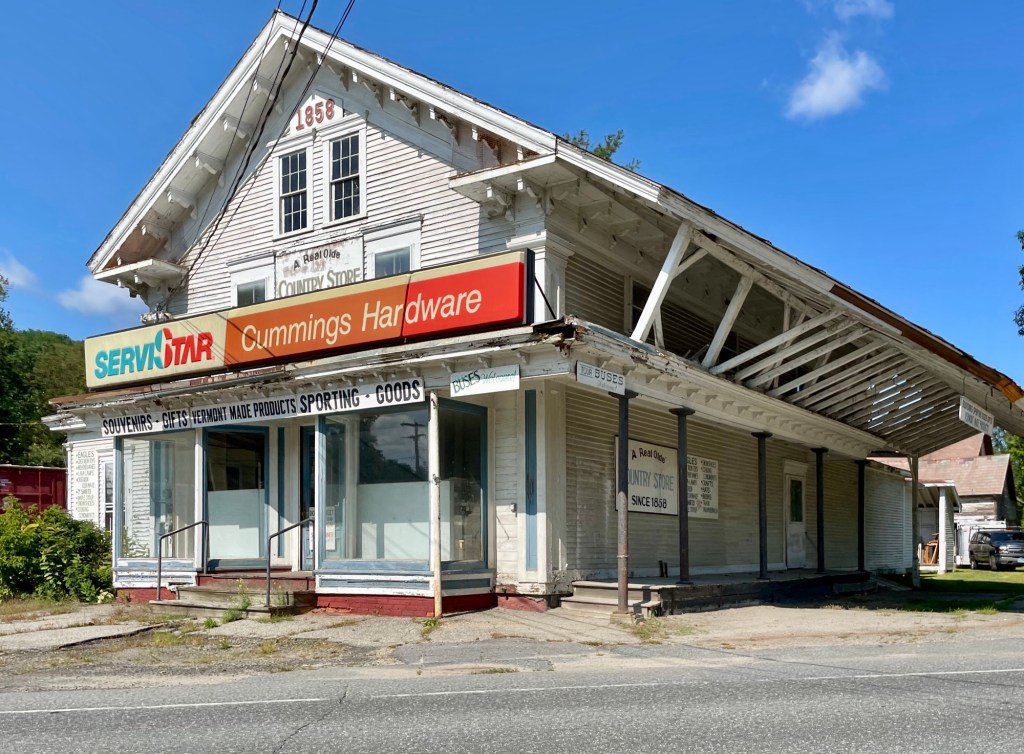
Located in the Chester Depot Village, a commercial and civic assortment of buildings constructed in the mid-19th century between the often feuding North and South villages in Chester, Vermont, this handsome commercial building contributes to the character and history of the once thriving commercial center of town. Built across the tracks of the Central Vermont Railroad from the town’s depot, this Italianate style building dates to about 1858 when a P. H. Robbins opened an all-in-one store, selling everything from groceries to hardware and building products. Mr. Marsh was later joined by Frederick W. Marsh, who entered into the business, then named the Robbins & Marsh Store. The business thrived with the close proximity to the railroad depot with later alterations to the building including the addition of plate glass storefronts and a massive side awning porch. Business slowed after WWII, as rail service slowed and ultimately stopped in town. Today, the handsome building remains as an important visual anchor to the depot village. 

C & J Mauran Company Warehouse // c.1820

In Providence, even industrial warehouses are architecturally interesting to look at! This is the C & J Mauran Company Warehouse at 369 South Main Street in Providence’s East Side neighborhood. The building was constructed around 1820 for brothers, Carlo (1779-1844) and Joshua Mauran (1782-1847), who were wealthy merchants who stored goods from their ships trading in the Indies here. Before all of this, the site was home to an earlier structure from the 1770s, built by Deacon Joseph Sheldon, and the site was occupied by a warehouse, later owned by his son, Christopher Sheldon, and was known as the “Slave Pen” for its use of holding and transporting enslaved people. The “slave pen” burned in 1801 and the structure was later rebuilt by the Earle Brothers, and then again (the current structure) by Carlo and Joshua Mauran. Later in the 19th century, a brick façade and storefront were added to the building as the street shifted firmly to commercial uses, with noxious industrial buildings moving further to the periphery of the established College Hill neighborhood. From 1856 to 1939, the Ferry Coal Yard Company and the National Coal Company stored coal in the building After WWII, the City of Providence took the building and adjacent block by eminent domain to make way for urban renewal, and luckily for us, the building was rehabilitated rather than demolished at this time. The structure was converted to office use, and was again restored in the 2010s by Newport Collaborative Architects.

Cheapside Block // 1880

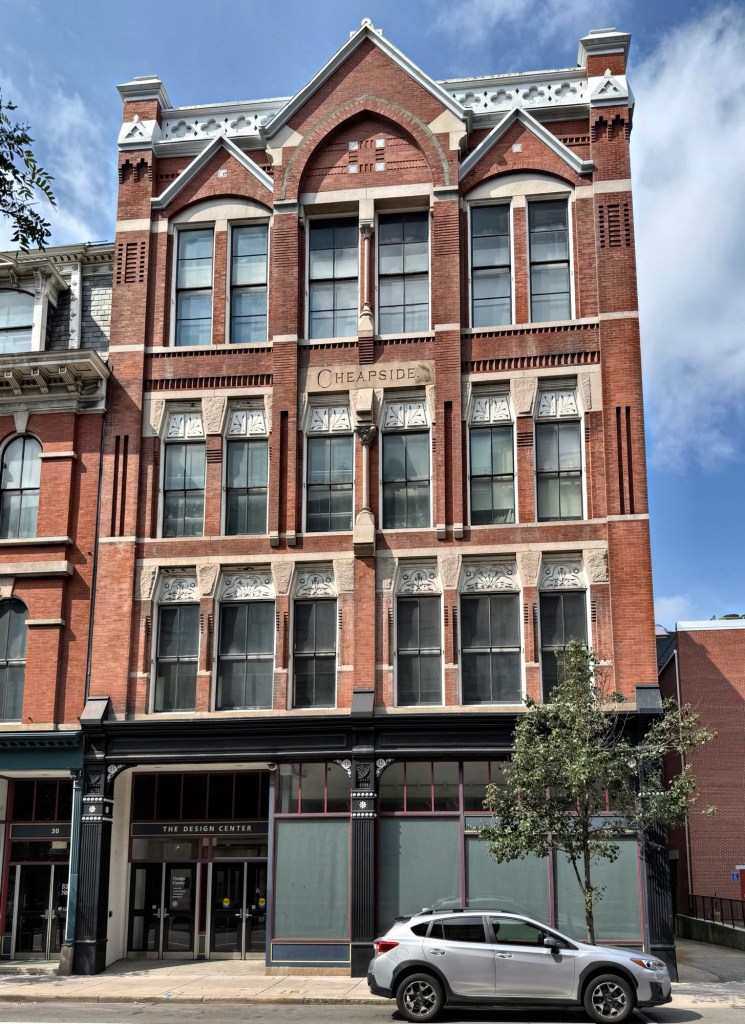
The Cheapside Block on N. Main Street in the East Side district of Providence, Rhode Island, is significant as a remaining Victorian-era commercial block that retains much of its original architectural detailing. Built in 1880 and designed by local architects Stone & Carpenter, the Cheapside Block was named after the early nineteenth century name given to the commercial district running along the west side of Main Street, north from the eighteenth century Market House, after the London commercial district of the same name. The word “cheapside” is derived from the Anglo-Saxon word “to barter.” The block here is an excellent example of the High Victorian Gothic architecture style, with intricate brick and stonework, pointed gables with inlaid tile, quatrefoil motif in the parapet, and the original cast iron storefronts. The building was acquired by the Rhode Island School of Design and renovated in the 1980s. Today, the Cheapside Block is home to the RISD Design Center

Cloon Stores // c.1880

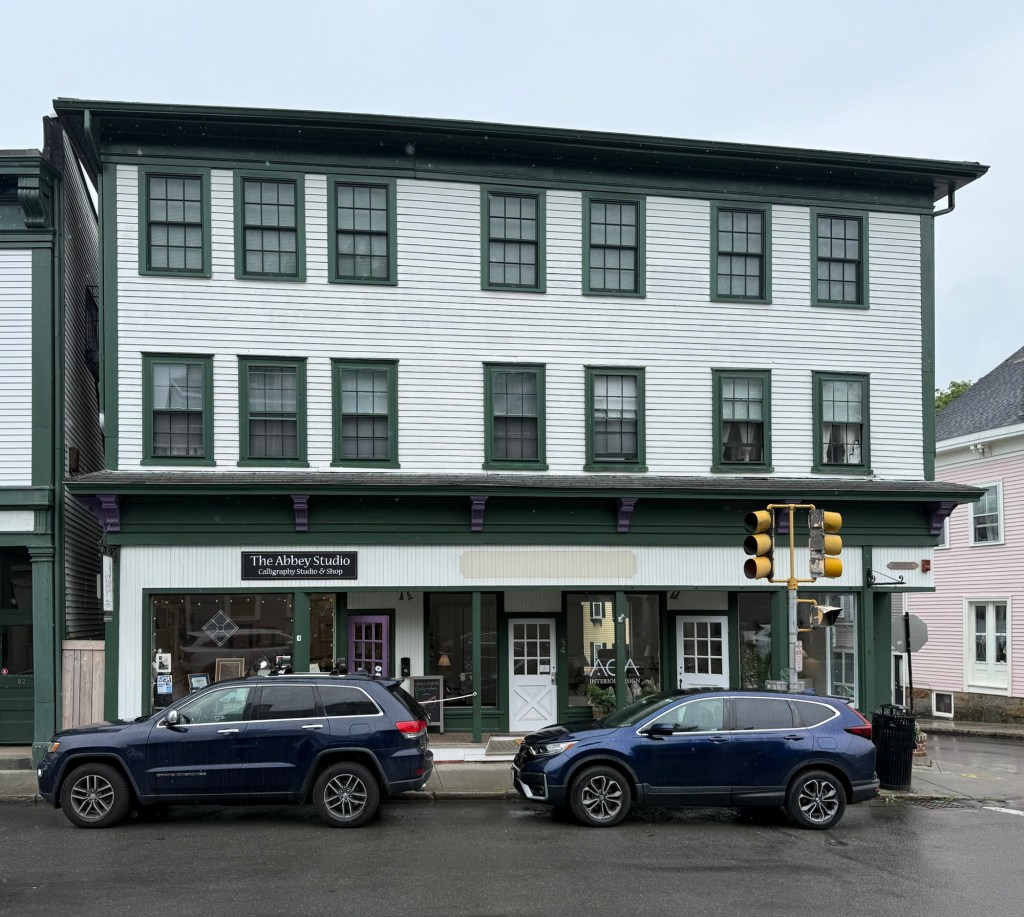
Washington Street in Marblehead is lined with dozens of amazing old homes, civic, and commercial buildings, that serves as the “downtown” spine of the old village. Located at the corner of Washington and State streets, this handsome late-Victorian commercial block serves as an important contributing building to the character of Marblehead. The structure was built around 1880 for a member of the Sparhawk Family, who operated the building as a factory or store for their shoe manufacturing. By the 1890s, the building was owned by Horace Cloon and Samuel G. Cloon, who operated a hardware store from the ground floor and leased the upper floor as apartments. The block retains its original bracketed cornice over the storefronts, but the brackets at the upper cornice are no longer extant. 

Henry Block // 1873

Mid-late 19th century commercial blocks provide human-scaled density, high quality design, and often contain intimate storefronts providing reasonable rent to local businesses. The Henry Block in Westborough, Massachusetts, is one great example of a historic commercial building that checks all of these boxes. The brick building was constructed in 1873 by its namesake, Samuel Gates Henry (1813-1877), a pharmacist and dentist who rented space in an earlier building on the site. When a fire destroyed the old structure, Samuel Henry had this block erected on the site and leased out spaces in the building to other businesses and tenants in the floors above. The block is Italianate/Italian Renaissance Revival in style with the typical round arched windows and bracketed cornice. The granite storefronts even retain some of the original cast-iron supports.

Bow Market // 2018

One of the best and most successful examples of adaptive reuse in the Boston area has to be Bow Market in Somerville’s Union Square commercial district. Tucked away behind buildings on the busy streets, a former concrete block storage facility was reimagined as a vibrant, European style marketplace of local vendors and businesses. The project was envisioned by business partners Matthew Boyes-Watson and Zach Baum, who worked with Matthew’s father, architect Mark Boyes-Watson, to renovate the storage building to create storefronts. The team worked with landscape architects, Merritt Chase, to make the public courtyard more enticing, which each micro-commercial space opening onto the landscaped communal courtyard. Design elements include seat walls constructed from recycled granite from the renovation of the Longfellow Bridge and reclaimed wooden beams from a ship building facility in Hingham. If you haven’t been to Bow Market yet, you must. This project is exactly what good urban planning and design is all about!

Peerless-Capitol Theater // 1894

Located across from the North Abington Depot, this structure was constructed in 1894 as a leather harness and saddle shop by local businessman, Henry Crossley. The expensive building of cut granite and brick seemed to have overextended Mr. Crossley’s means, as he would soon-after file for bankruptcy. The building would remain as commercial use until 1915, when the property was purchased by the Peerless Amusement Company for use as a 300-seat theater. By the 1930s, the building became known as the Capitol Theater, and was listed to seat 230 customers on the main floor and 70 in the balcony. Due to the more rural nature of the cinema, it closed in the mid-20th century, and suffered from neglect for decades until it was restored and is currently housing apartments.