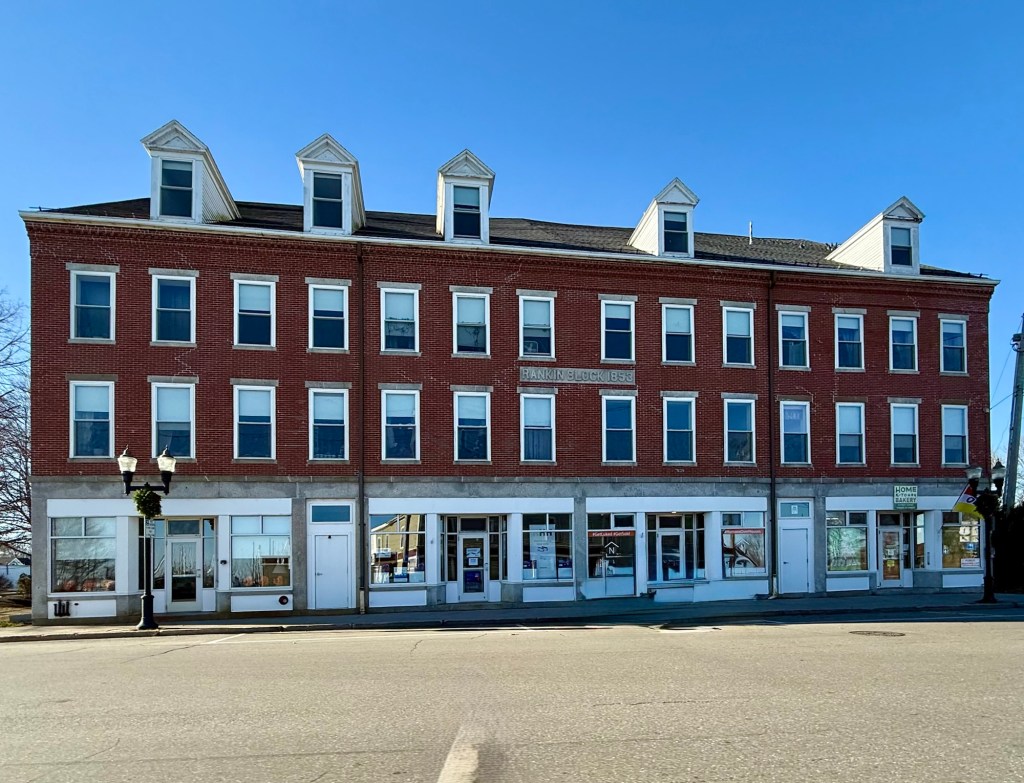
Rankin Block // 1853

The Rankin Block is a significant early commercial building in Rockland, Maine. The brick block was built in 1853 by Samuel Rankin, a descendant of one of the area’s first European settlers. Its location was near the center of the city’s shipbuilding industries, and replaced an earlier commercial building destroyed by fire. Its early tenants included a ship chandlery, shipping offices, and a sail loft. The vernacular Greek Revival style building is constructed of brick and granite, showcasing the no-frill architecture that working Maine sailors preferred. The building is now occupied by a senior living facility. Talk about a great adaptive reuse!

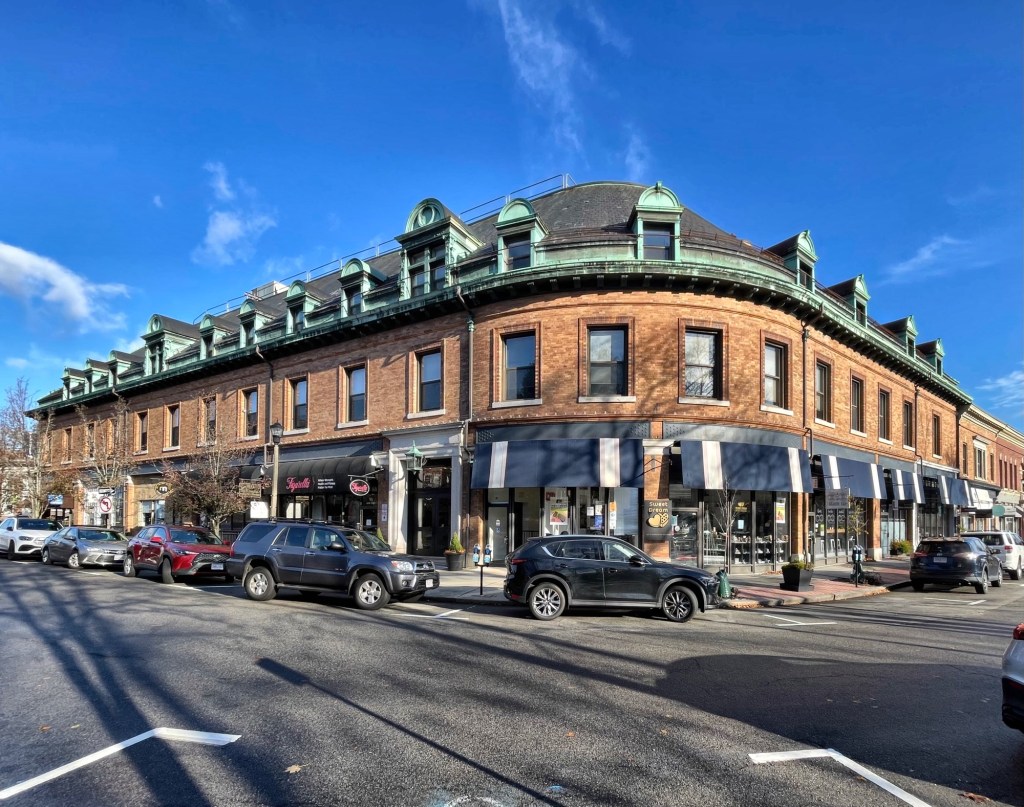
Bray’s Hall // 1893

As Newton Centre’s new railroad station and following development boom transformed the once sleepy village into the main commercial center for the city, landowners capitalized on the opportunity by developing commercial blocks to serve the community and line their own pockets. Mellen Newton Bray (1856-1946) became a major landholder in Newton Centre and would develop the areas directly surrounding the new train station there. On a curving site, he built Bray’s Hall, this three-story commercial block renting out spaces to local banks and stores with a large assembly hall and bowling alley in the building as well. Initially, Bray planned for an eight-story structure, having contracted a solid foundation that could support such a structure, pending the success of the initial construction. That is mixed use before it was “cool”. The building was designed by the firm of Kendall & Stevens, likely led by Henry H. Kendall, who resided in Newton Centre. Kendall would also design the apartment block across the street for Mr. Bray. The building is constructed of light Tuscan bricks and is notable for the bracketed cornice and dormers all in copper. The building was restored in the 1970s by owner David Zussman, and rebranded as Piccadilly Square, following his recent trip to London being impressed with by the atmosphere of Piccadilly Circus.

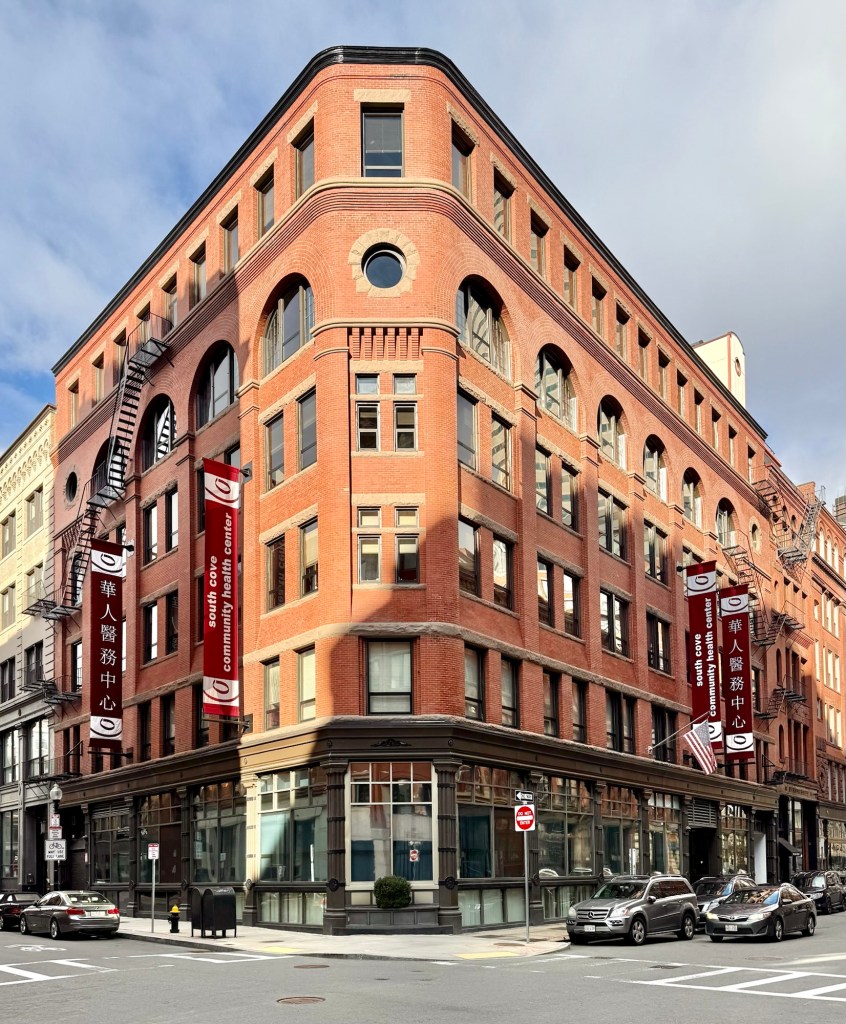
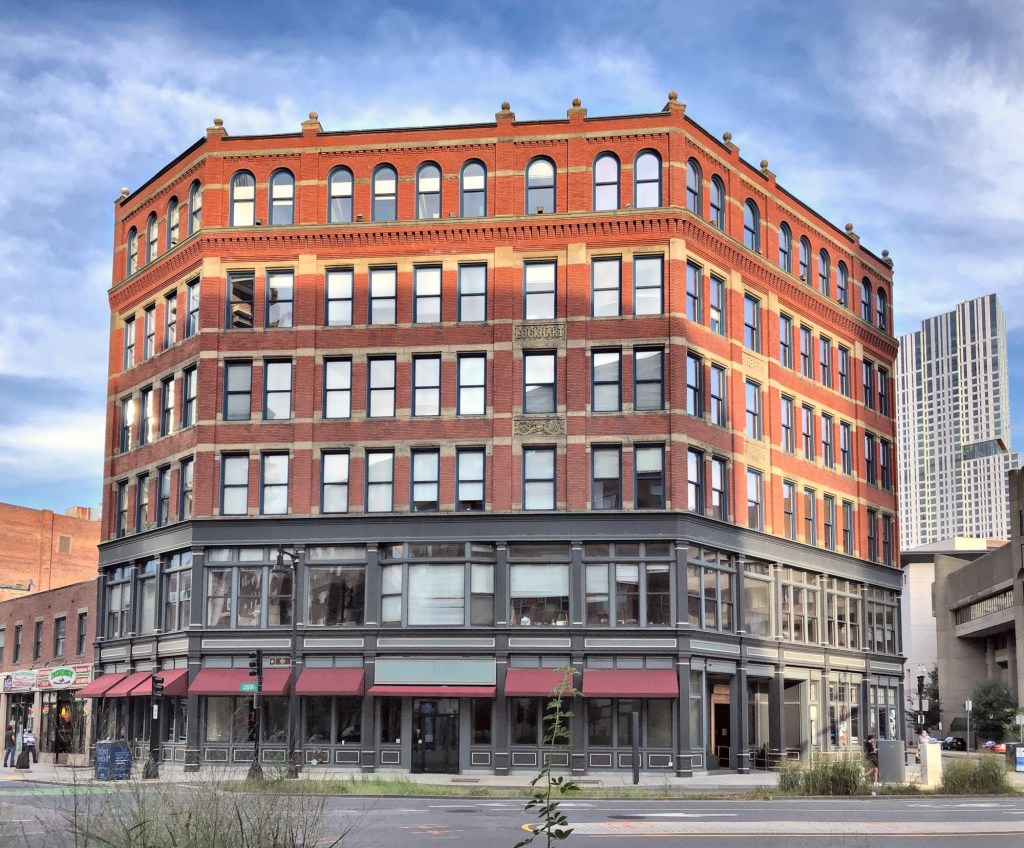
William L. Lockhart Company Building // 1887

This six-story brick and sandstone building at Causeway and Staniford streets near North Station in Boston was built in 1887 as the headquarters and sales center for William L. Lockhart & Co., manufacturers and wholesale dealers of coffins, caskets, and undertakers’ supplies, which at the time was considered the largest establishment of its kind in New England. The company had its factory in East Cambridge and built this structure as offices and sales rooms. The building is an excellent example of the Romanesque Revival style, which is typified by the use of round arched windows at the top floor and the use of inlaid carved stone panels. Frederick Nason Footman a relatively unknown architect is said to have designed the building for the Lockhart Company, with the building serving as an important piece of the company’s portfolio. Shop space was created on the street level, with the company’s offices, salesrooms and casket hardware department occupying the second floor, show rooms on the third floor, shipping department on the fourth floor and storage on the fifth and sixth floors. While the adjacent parcels have been razed and are still vacant, this building serves as an important visual gateway into what was once the West End, a neighborhood that was almost entirely demolished during urban renewal.

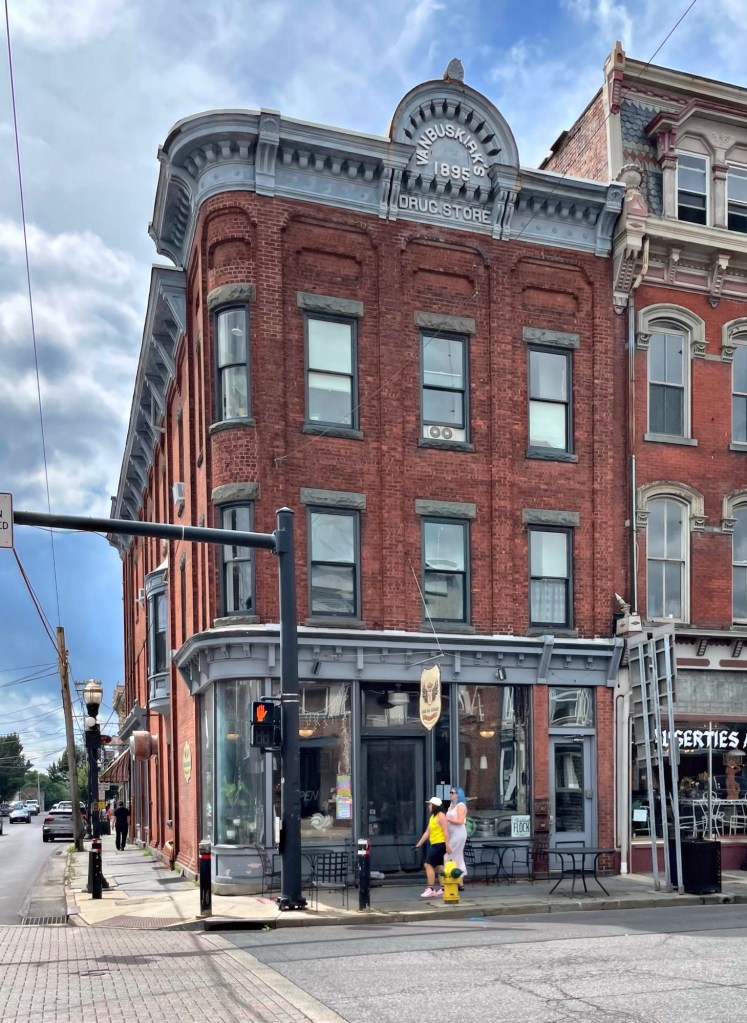
Van Buskirk Block // 1895

Built at the corner of Main and Partition streets in Saugerties, New York, this handsome 19th century commercial building is located next door to the Whitaker Block – featured previously. The Van Buskirk Block was built in 1895 for the Van Buskirk Brothers, who were pharmacists in town. The building has a unique rounded corner, inset brick paneling, and a bold metal cornice at the roof.

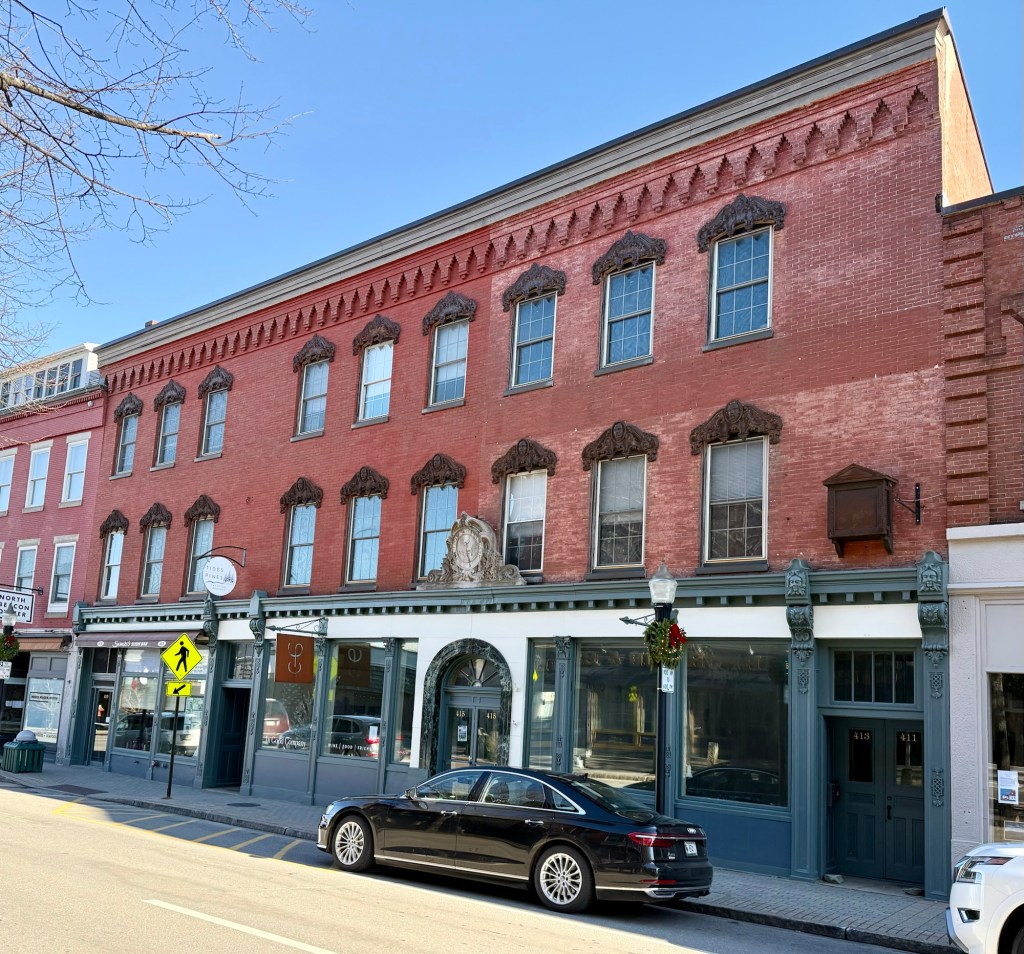
Whitaker Block // c.1870

One of the finest commercial buildings in downtown Saugerties, New York, is the Whitaker Block, a landmark Second Empire style structure from the years following the American Civil War. The structure dates to around 1870 and was first owned by an E. Whitaker and was mixed use with retail at the street and offices above. Additionally, the building was home to the local chapter of the Independent Order of Odd Fellows (IOOF) a fraternal social organization. The three-story with mansard roof building stands out for its architectural details and integrity which largely remain intact to this day.

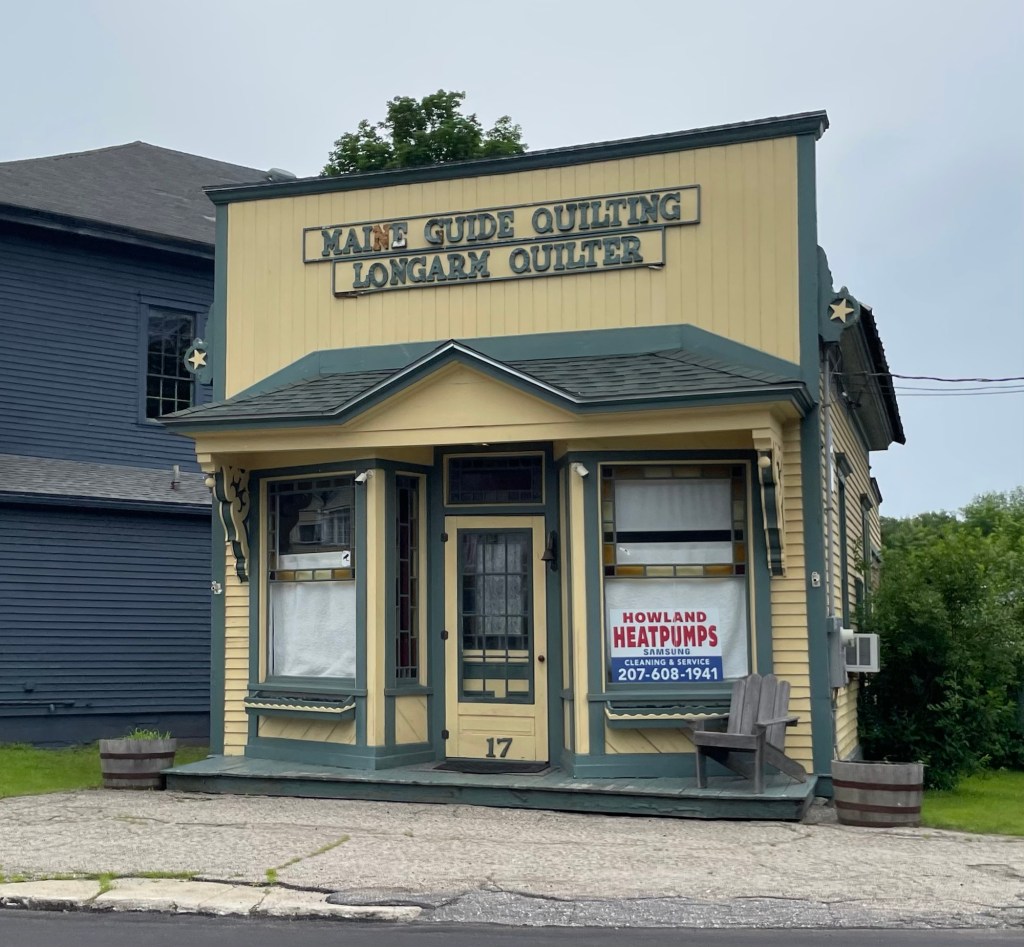
Ms. Perkins’ Millinery Shop // c.1890

This charming one-story shop sits on the Porter-side of Kezar Falls village, a district that spans the Ossipee River between Porter and Parsonsfield, Maine. This shop was built at the end of the 19th century as a millinery shop (womens’ hat store) for Ms. Florence Perkins (1862-1950), who appears to have been unmarried all of her life. Retaining almost all of its original decorative detail, the building has a symmetrically arranged facade with two-sided projecting bays; the upper sash in the facade windows, including that in the entrance door, has a border of small rectangular colored glass panels. The storefront is a rare survivor of this period, with not many other examples in the area.

Old Highgate Post Office and General Store // c.1830

In the small village of Highgate Falls, Vermont you will find this unique Federal period commercial building, and if you are like me, want to know more about it! According to historians, the building was constructed around 1830 and had multiple uses: a U.S. Customs House, a Post Office, and later as a general store for owners Stockwell & Steele. The brick structure suffers from some deferred maintenance, but is a significant piece of vernacular architecture in this sparsely visited part of the state!

Sylvia Store // 1879

This charming commercial store was built in 1879 as one of five similar commercial buildings constructed on Nantucket as investment properties by Robert McCleave (1809-1878), a retired whaling captain. Located on Orange Street, this store was long occupied as a neighborhood grocery store, before the days of supermarkets with seas of parking. Antoine Sylvia Jr. (1835-1906), an Azorian-born merchant on the island purchased the property 1879 from McCleave and operated a grocery store at this location until his death in 1906. His wife, Elizabeth C. “Lizzie” Sylvia (1850-1929), retained the property and operated a shop where she sold wallpaper. In 2015-16, the façade was restored with the installation of a salvaged façade of nearly identical detail and dimensions built at 106 Main Street in 1869 also by McCleave. This façade was salvaged for re-installation here when that building was demolished in 2001. The Sylvia Store was given a preservation easement after the restoration, preserving it for another 150+ years to come!

Old Head Tide Store // c.1890

Every village needs a general store, and the store in the Head Tide village of Alna was this vernacular building constructed around 1886. The store was operated for years by John Allen Jewett, who’s ancestors settled in Alna generations before. Jewett sold grain from the building to local farmers and residents and lived across the street in the family home. Vernacular “mom and pop” stores like this are becoming more rare, but they are among the most charming in New England. Be sure to shop local and support small businesses when you can!

Broad Street Association Building // 1805

One of the few remaining Federal period buildings in Downtown Boston is this survivor located on Broad Street, one of the best streets in the city! The building was constructed for the Broad Street Association, which was made up of members: Uriah Cotting, Harrison Gray Otis, Francis Cabot Lowell and other prominent Boston entrepreneurs with the goal to upgrade Boston’s waterfront south of Long Wharf which comprised of an outdated system of individual wharves. The organization hired the esteemed Boston architect, Charles Bulfinch to furnish plans for the building, of which they paid him $100. While this modest example of the Federal style is not Bulfinch’s best work, is is notable as he was largely responsible for changing the architectural face of Boston, not only through own designs, but also through influence on other architects and builders of the time. This building was long owned by Francis Cabot Lowell and was rented out to commercial ventures, including some of the later decades of the 1800s when it was occupied by C. D. Brooks, a maker of pickles and preserves. The building was restored by CBT Architects in 2005 as part of a larger redevelopment of the block which includes a mid-rise apartment building, Folio.