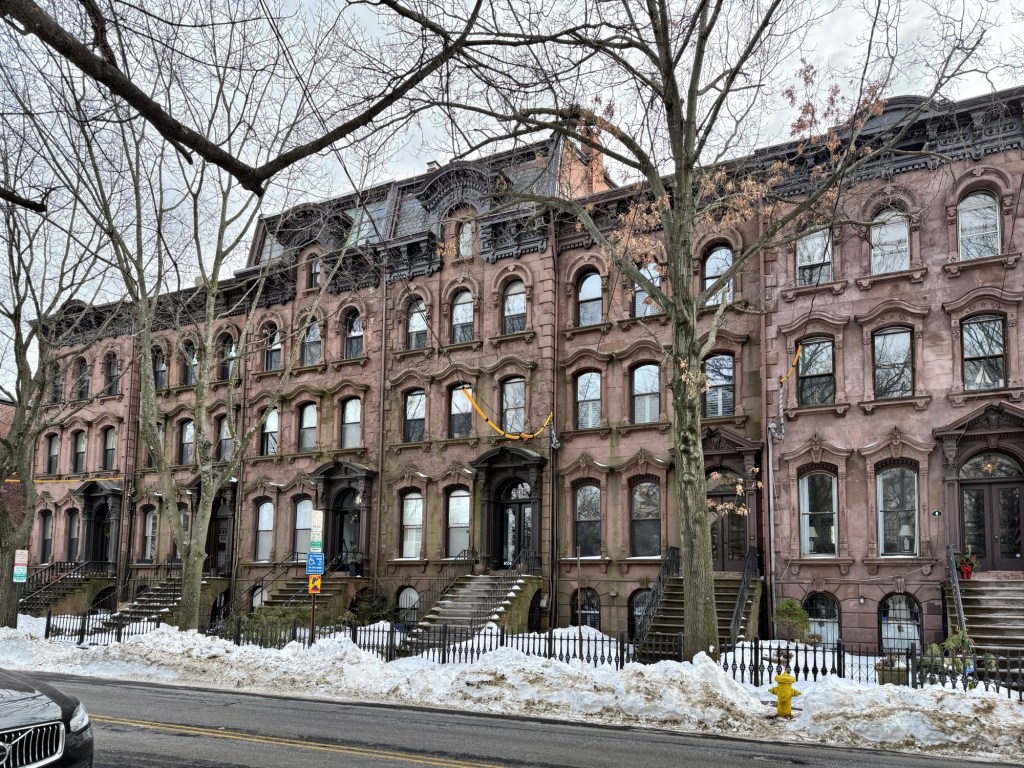
This extraordinary row of brownstone homes is located on Chapel Street in New Haven, Connecticut, and overlooks Wooster Square as its southern anchor. Built in 1871, the symmetrical row of six rowhouses are clad with brownstone facades which read more like Brooklyn townhouses than what is typical in New Haven, which is why these are so special. The row was designed by New Haven architect, David R. Brown, who got his start as an apprentice under Henry Austin, and became a prolific local designer. The row was likely constructed by one owner on speculation and subsequently sold to individual owners, who have maintained the structure over 150 years since. The Brownstone Row is Italianate/Second Empire in style with window surrounds, bracketed cornice and cupolas on the flanking homes with the center two residences capped by mansard roofs.
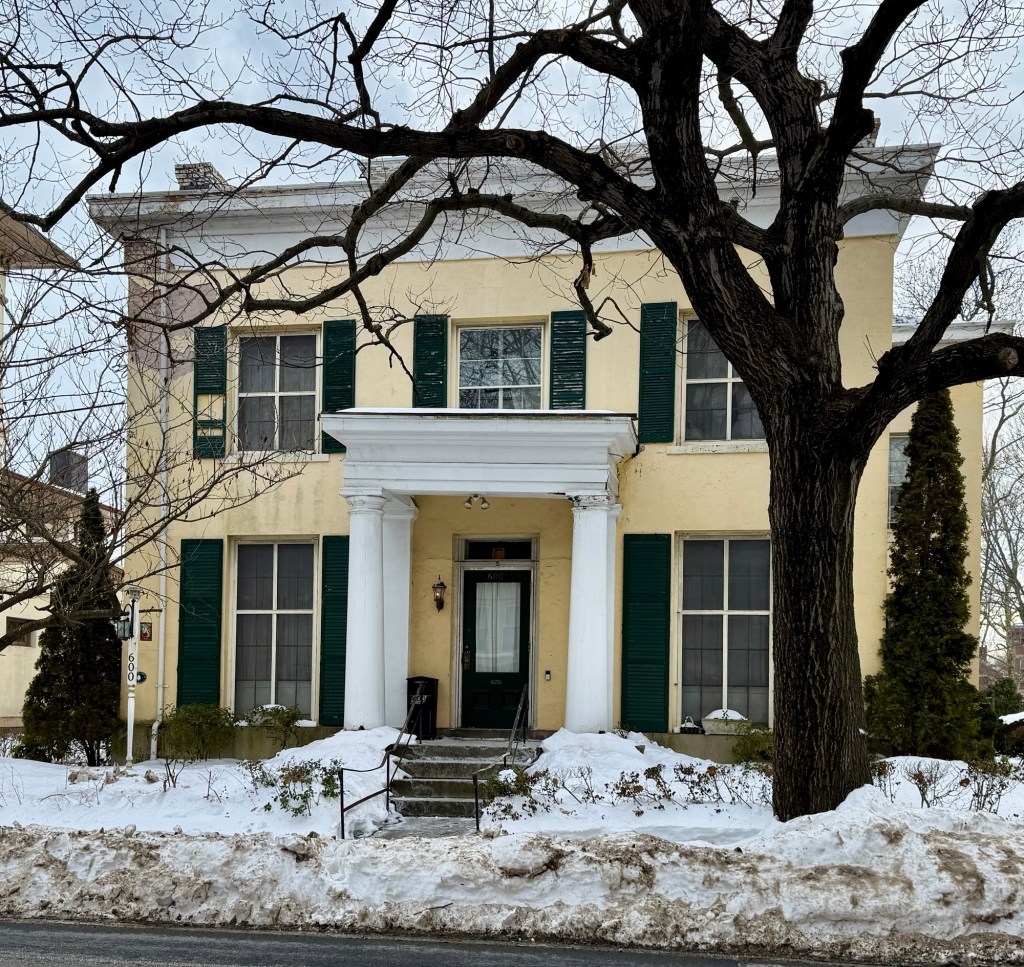
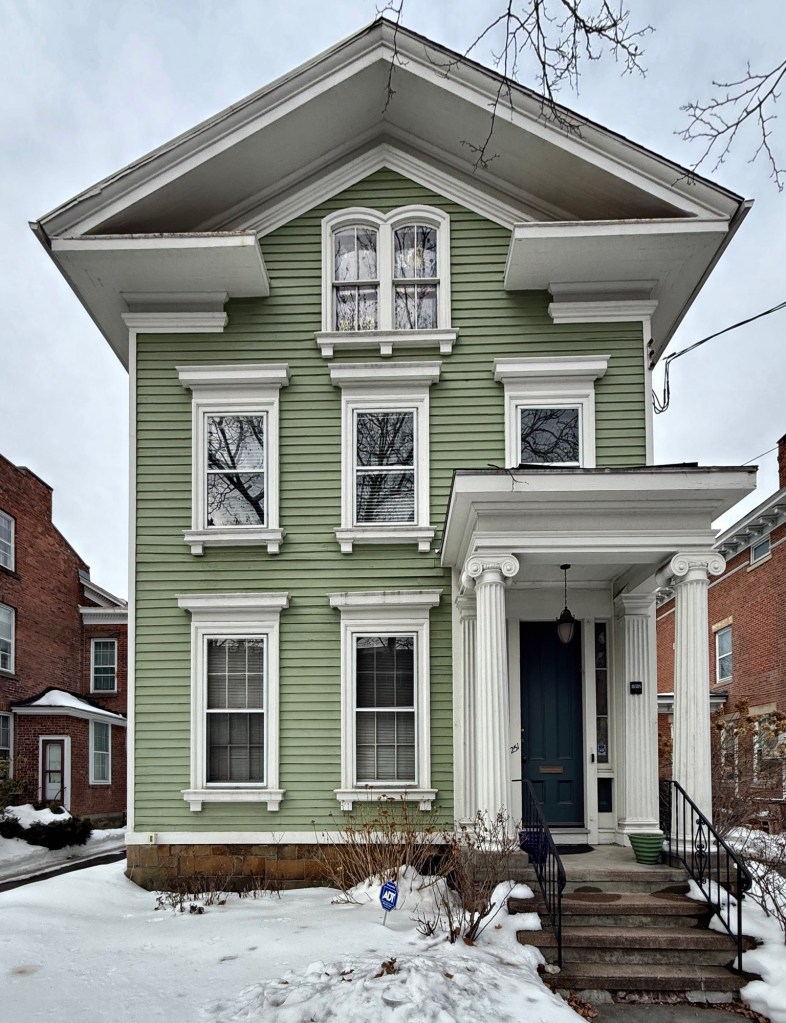
The Phebe Wallace House on Greene Street in New Haven, Connecticut, at first glance, may appear as a typical mid-19th century house, but some of the architectural features and details make it stand out! The residence was built in 1854 for Phebe Barney Wallace (1792-1872), a widow of William B. Wallace who died decades earlier. Phebe lived here with her daughter, also named Phebe, and a servant. The house exhibits a traditional Greek Revival form with gable roof oriented towards the street, with an off-center entry with Ionic portico, but the massive overhanging eaves without brackets with paired arched windows in the gable and balcony off the side of the house showcase the emerging Victorian influence in American residential architecture.
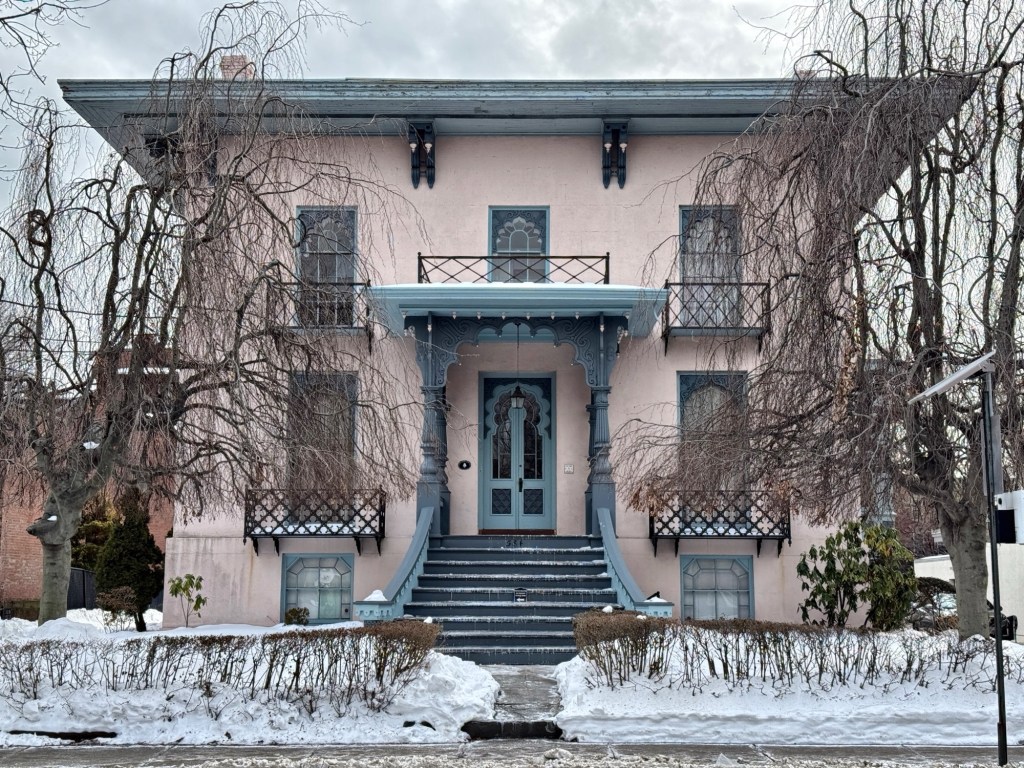
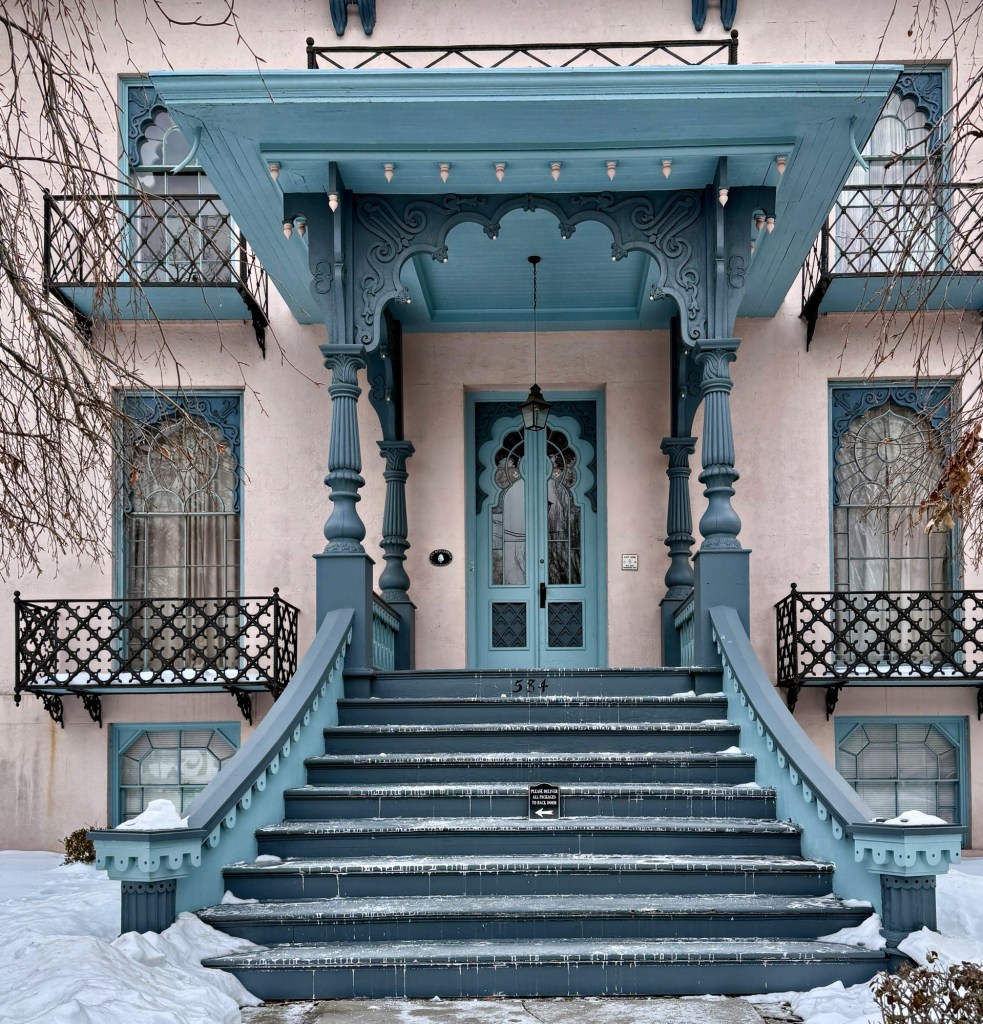
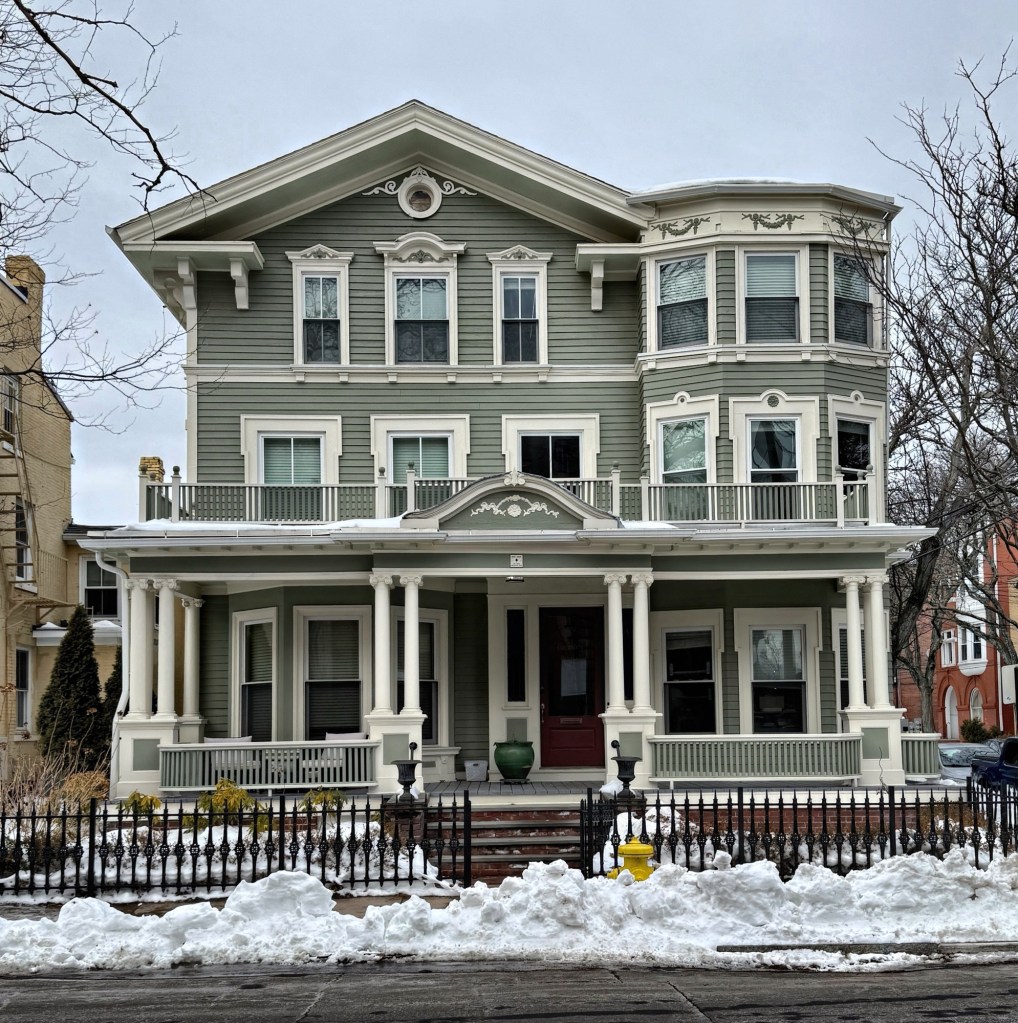
One of the eclectic mid-19th century residences in New Haven’s Wooster Square neighborhood is the Bromley House, an exuberant blending of architectural styles that have been lovingly preserved. The history is a little murky on this residence but from research, the home was built around 1850 and was possibly a two-story flat-roofed Italianate style design with three-bay facade and off-center entrance. The home was acquired by Joseph Bromley, who appears to have added a third-story with gable roof. After the Civil War, the property was purchased by Lyman Erving Bradley, a veteran of the war who was employed as a police officer and later as private security for an area factory. It appears that Mr. Bradley, before his death in 1901, had the property expanded with a whimsical front porch, three-story side addition, and applied ornament in the Queen Anne style. The home is today a three-unit condominium, similar to the three-deckers found in cities all over New England.
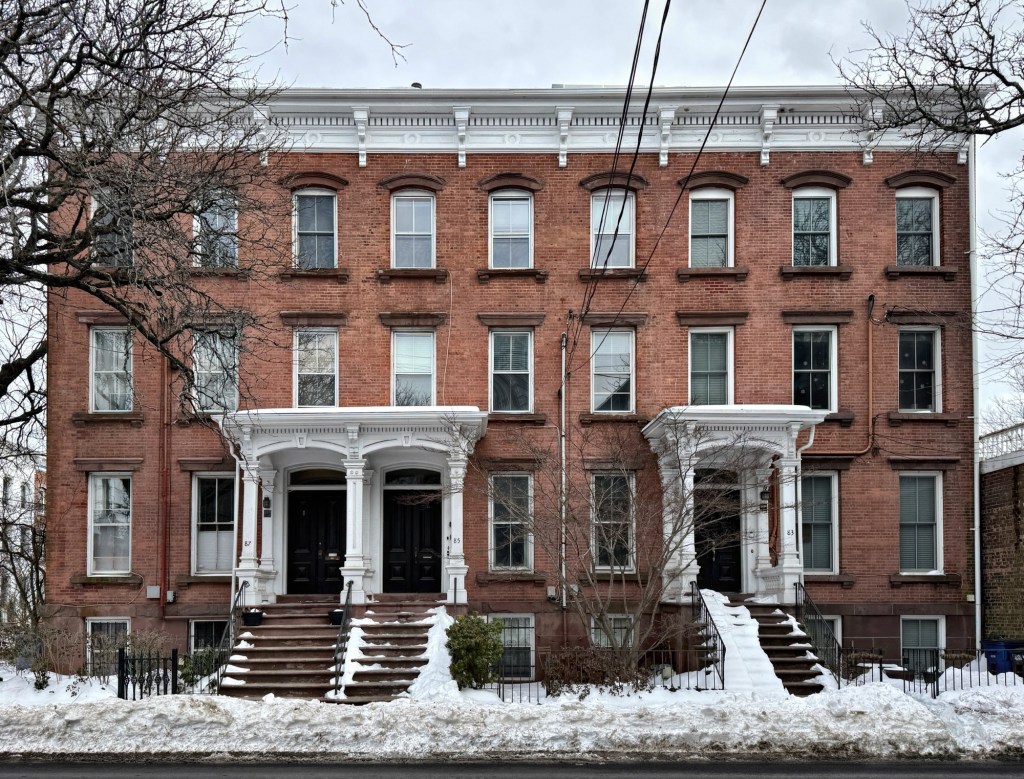
The Wooster Square area of New Haven, Connecticut, is comprised of a lovely collection of houses and institutional buildings from the 1830s through the late 19th century, showing the ever-changing taste of architectural styles from Greek Revival to Italianate to Second Empire and Queen Anne. These rowhouses on Olive Street serve as bookends to long rows of houses on Court Street, a narrow, one-way street radiating from Wooster Square. The buildings were developed by the Home Insurance Company, a fire insurance firm and developer that helped fuel the development of residential New Haven in the 1860s by investing in real estate, primarily with fireproof masonry buildings. These Italianate style rowhouses were built in the 1860s after the Civil War and were sold on speculation to middle-class families. All buildings retain the original bracketed cornices, brownstone sills, lintels, and basement facing, and projecting porticos at the entries.
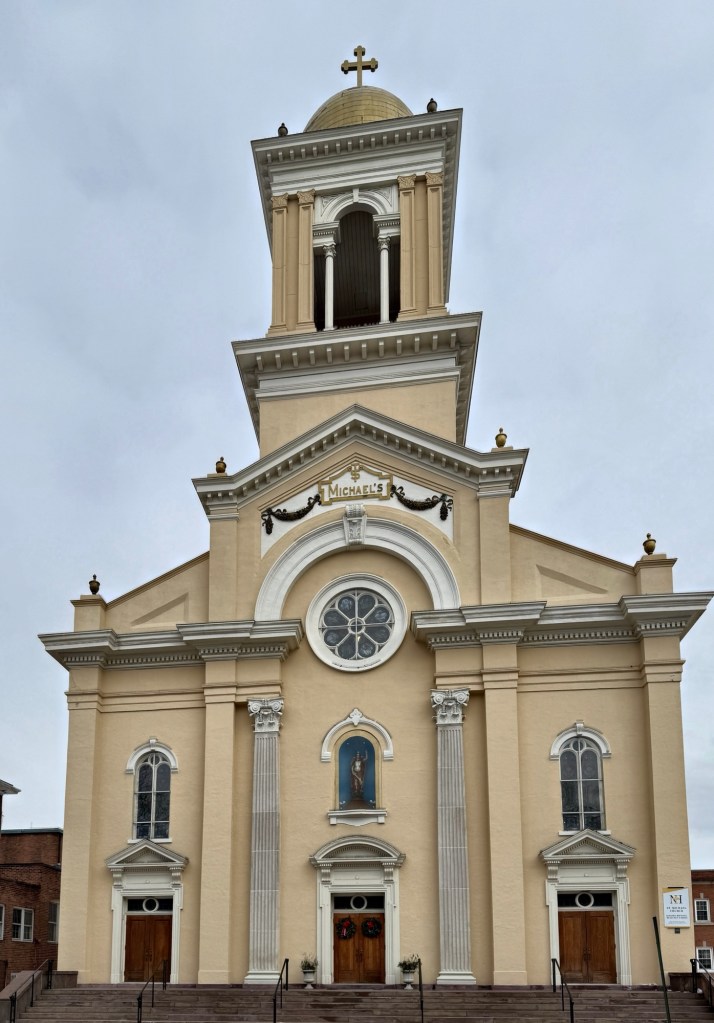
St. Michael’s Roman Catholic Church in Wooster Square, New Haven, Connecticut, was established in 1889 to serve a burgeoning community of Italian immigrants and is said to be the oldest Italian Catholic church in the state. New Haven’s census of 1870 listed just ten Italian residents and by 1900, the census listed more than 5,000 Italian-born residents. Most of these Italian immigrants were drawn to New Haven for employment in the growing industrial and railroad industries and the proximity to New York, where many arriving immigrants passed through. New Haven’s Italian community centered around Wooster Square, where many today know all about the many Italian groceries and nationally known pizzerias. The Italian Community acquired a c.1855 church here by 1899 and following a fire, rebuilt the church in the current form. The New Haven-based architectural firm of Brown and Von Beren furnished plans for the Italian Renaissance Revival style renovations, which was completed in 1904 with bold central tower and stucco walls, retaining many original Italianate windows. The church has served as an important cultural and institutional landmark in New Haven for over 120 years and the congregation remains active.
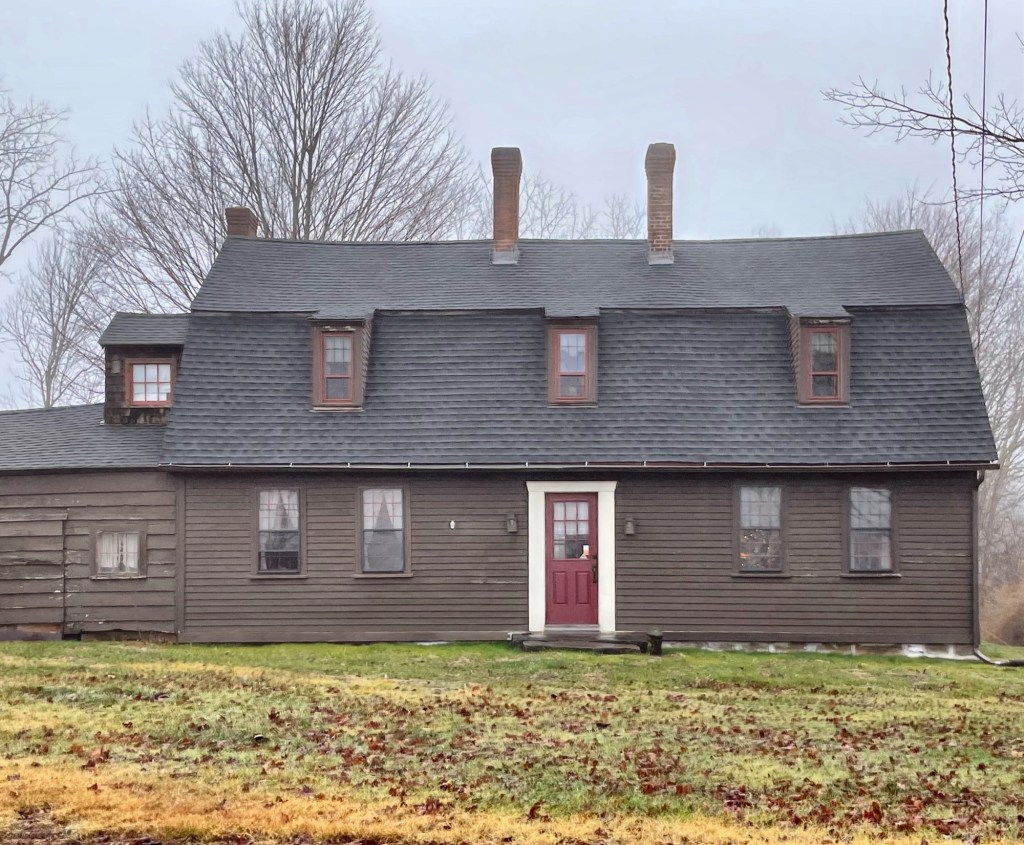
Known locally as the ‘Ye Olde Manse‘, this stunning Georgian cape house is located at the eastern edge of the town green in Willington, Connecticut. Thought to be the oldest extant house in the small, rural community, the gambrel-roofed homestead was possibly built by John Watson of Hartford, who was thought to have been an original proprietor of Willington, but was instead an assignee of George Clark who was. In the 19th century, the homestead operated as the congregational church parsonage. Today, the Georgian cape house with gambrel and saltbox roof is a single family home and has been lovingly preserved by centuries of stewards of this old manse.
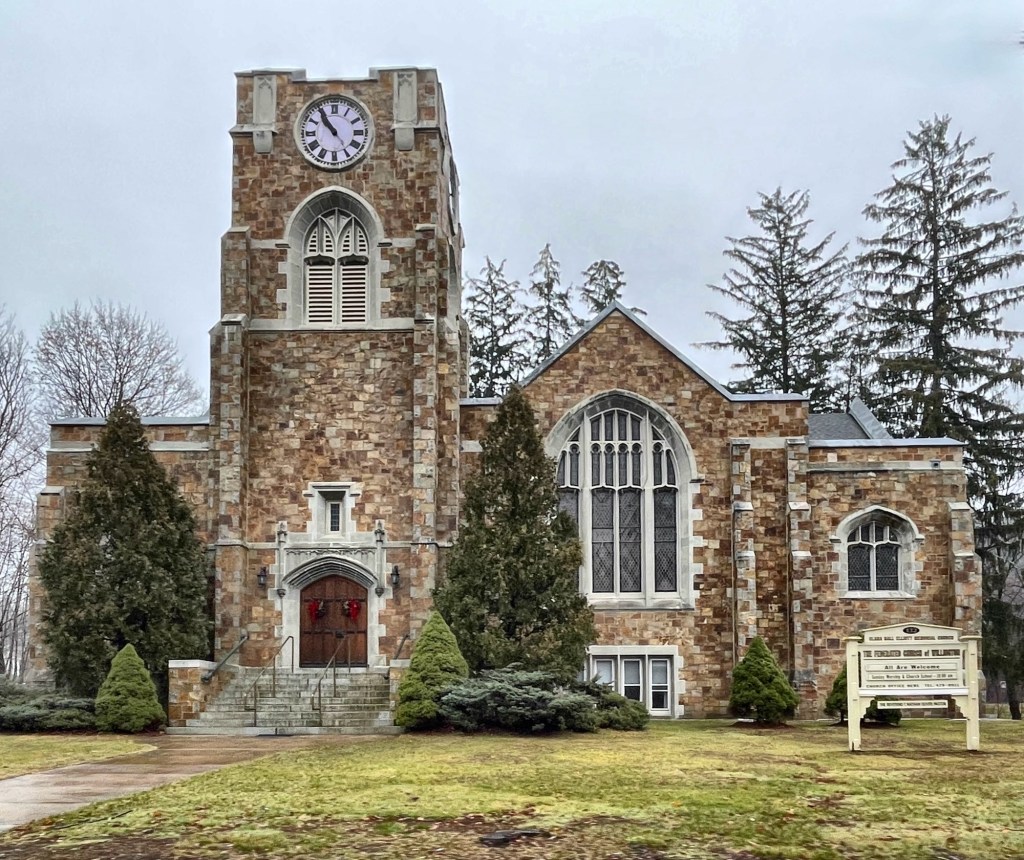
This handsome stone church in South Willington, Connecticut, was commissioned in 1909 by Gardiner Hall Jr., a terminally ill industrialist, in memory of his late daughter Clara, who tragically died in 1899 at the age of 30. The church was used by area residents, many of which included mill workers hired to work at Mr. Hall’s factory nearby and lived in mill housing just behind this church. Following the construction of this Memorial Church in South Willington, Baptist and Congregational Churches of Willington merged to form the Federated Church of Willington, which has worshiped at this location ever since. Neo-Gothic Revival in style, the church is constructed of multicolored random ashlar sandstone with limestone trim and features a corner clock tower with belfry, buttresses, stained glass windows, and limestone tracery. The church was designed by Boston architect, Thomas Marriott James and was completed by 1911.
Villa Bella Vista in Chester, Connecticut, stands as a striking and deeply personal interpretation of an Italian Villa, designed not by a professional architect, but by its remarkable owner, Eila Pierre. Known even among friends as Madame Pierre, she was a turn-of-the-century feminist of independent means who defied convention at nearly every turn. Drawing inspiration from the indigenous farmhouse architecture of northern Italy, Pierre personally designed the well-preserved stuccoed stone house, which was later constructed by local Italian immigrant masons who settled in Chester. Born Ila Rowland Stone (1870–1931), she was newly married to Reverend Dwight Stone, a Yale-educated minister of the town’s Congregational Church. Within just two years of marriage, it unraveled. Reverend Stone resigned his post, and by 1906, the couple’s uncontested divorce, scandalous for the time, was finalized. Casting off both marriage and social expectations, Ila reinvented herself as Eila Pierre. Despite the scandalous divorce and cheating rumors, she chose to remain in Chester and build a summer home that reflected her independence and worldview. Plans for Bella Vista were underway as early as 1904, when she purchased land on Old Depot Road. To prepare for the design, Pierre embarked on an extended tour of northern Italy, studying villas firsthand and bringing along a young local stone mason, Martin Lanzi, who later built his home across from Madame Pierre’s mansion. Villa Bella Vista, completed in 1908, includes common architectural details in the Italian Villa style with the campanile, or tower, the colonnaded piazza, and stone masonry that define the Latin prototype, all unique to Connecticut, which makes this home so special.
This architecturally unique and stunning Federal style house in Chester, Connecticut, was built in 1820 on the Middlesex Turnpike by Abram Mitchell for $10,000, double what he originally hoped to pay for the residence. The principal builder was Samuel Silliman, a locally well-known master carver, who clearly showcased his skill inside and out, much of which has been preserved by two centuries of owners. In 1845, the property was purchased by George Spencer, and presented as a wedding gift for his daughter, Julia, who married Dr. Ambrose Pratt (1814-1891). Dr. Pratt became well-known for his practice of hydropathology and temporarily used his house as a sanitarium known as the Chester Water Cure. The house was acquired by the local Roman Catholic Church and became the parish center until the residence was purchased and moved away from the busy street to its current location in 1966. In the 1980s, the house was purchased by famed artist, Sol Lewitt. The house has a large spider web window, still containing the original glass over the door and full-height pilasters dividing bays and inside, many stunning carved mantles and woodwork.