White-Dickey Cottage // c.1844

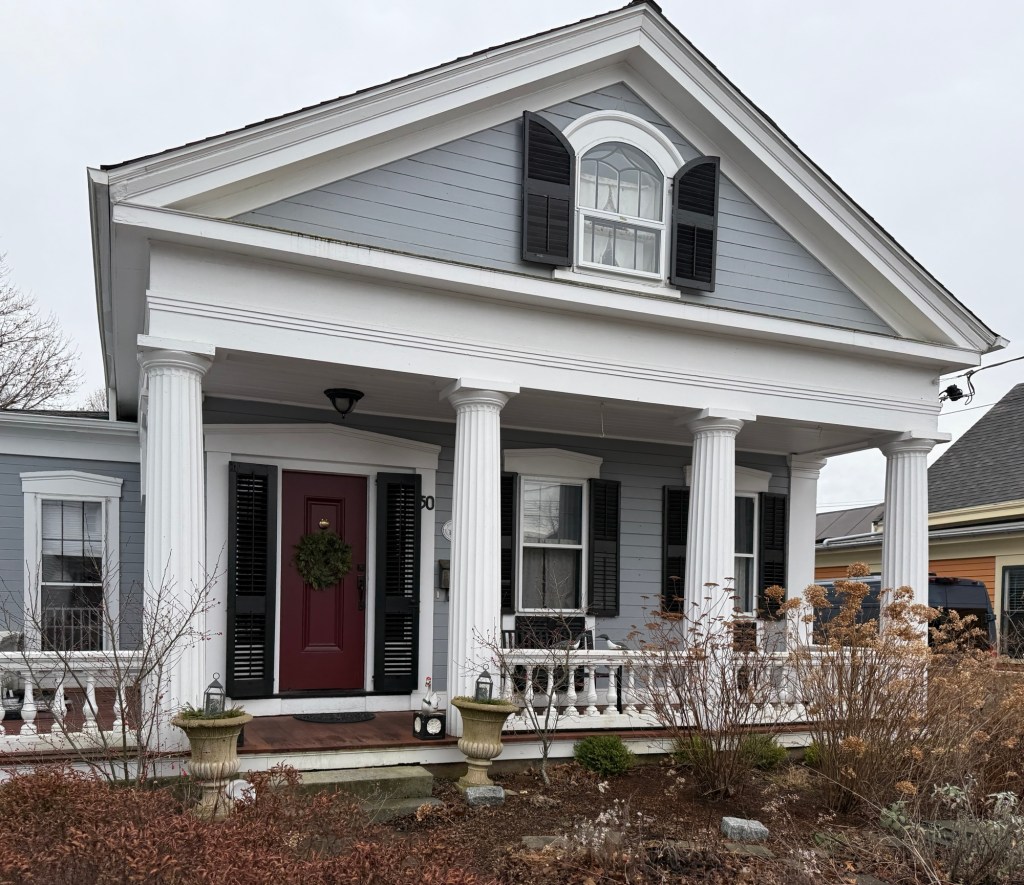
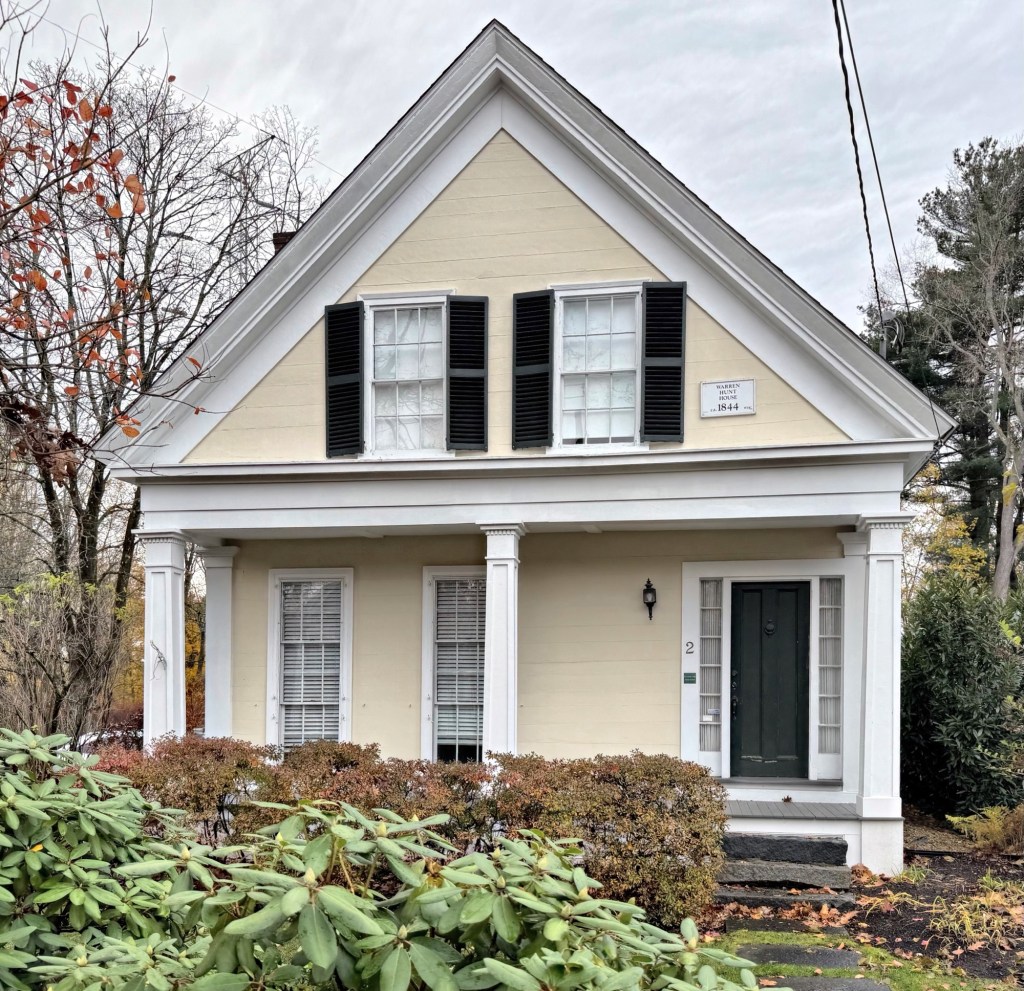
Located in the Wayland Center village, this c.1844 Greek Revival style cottage stands out not for flourish or scale, but for its excellent design, proportions, and state of preservation. The three-bay facade has a recessed first story set under the pediment extending over the open porch. The pediment is carried by squared, tapered columns with dentils and the facade retains its unique flush-board siding and triple-hung first-story window sash. The house was built by 1844 for Warren Hunt, who operated a small dry goods store near the town common. Not long after he had the house built, Hunt sold the property and store to Luther B. White (1822-1884), who lived here for at least two decades. In 1888, Mrs. Alice Dickey and her husband, Charles F. Dickey, a carpenter, purchased the house and expanded it at the rear.

Upland Farmhouse // 1929

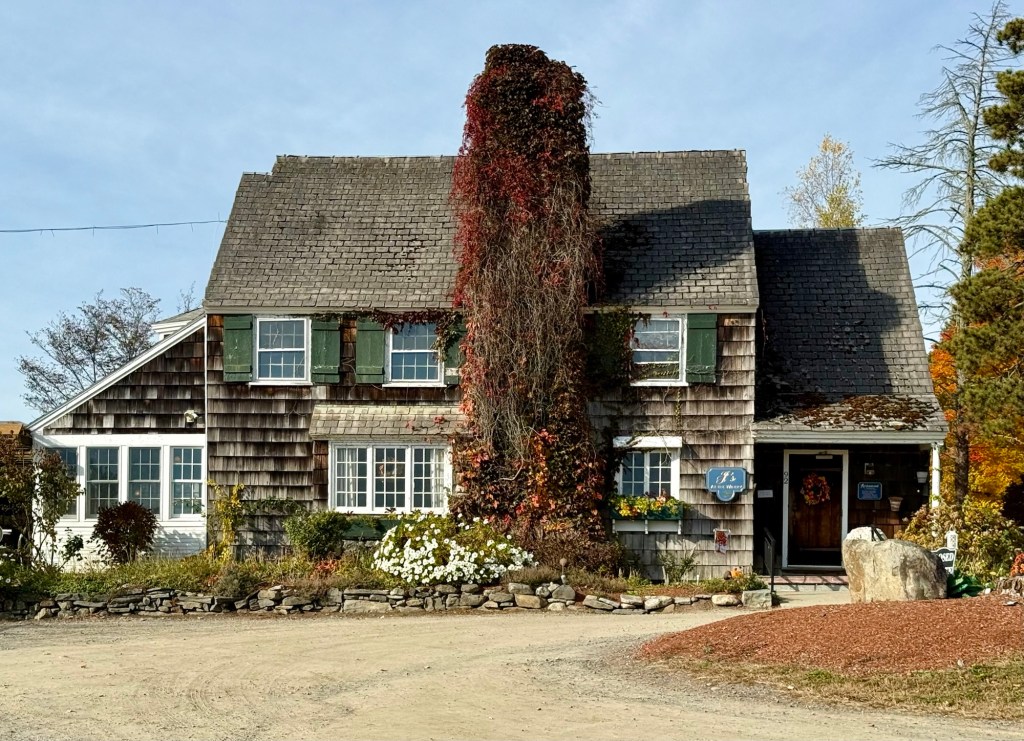
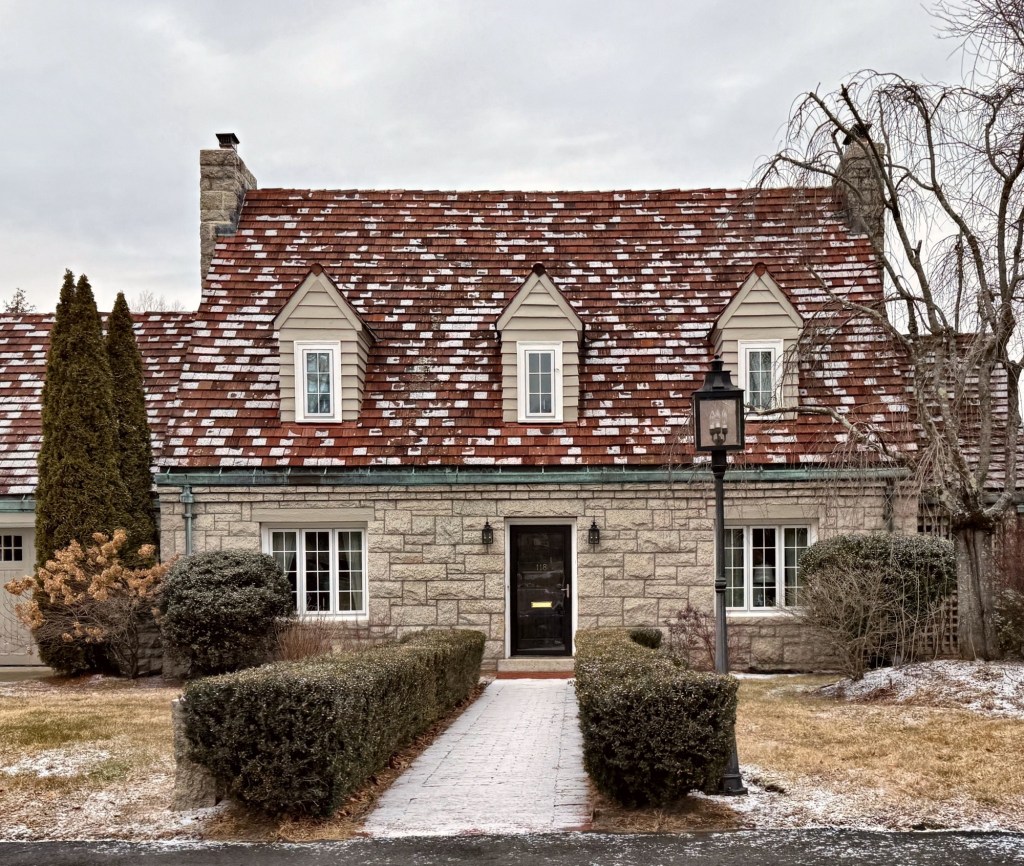
The Nashoba Valley Winery in Bolton, Massachusetts, is one of Bolton’s most successful examples of the adaptation of an old agricultural property in the state. The land here was first developed as a farm in the early 19th century by Captain Martin Houghton (1779-1833). The farmland here, which has always had a scenic view, was called “Valley View Farm” later owner, William N. Felton (1835-1920). Sadly, the old farmhouse burned down in 1928, and the property was sold that year to Roy Clemens, an osteopathic doctor, who had this charming shingled cottage built in 1929. Roy and his wife, Laura, planted an apple orchard on the hills and named the property “Upland Farm”. Roy died in 1969 and Laura followed in 1981. With suburban development likely, the property was ultimately saved when it was purchased by Jack Partridge as the new home of the Nashoba Valley Winery, which was founded in Somerville in 1978. The winery specializes in fruit wines, and grows most of the fruits and berries for them on the property. The business expanded, adding a distillery, brewery and restaurant, and the beautiful grounds are often host to weddings and events.

Brown-Crocker House // c.1836

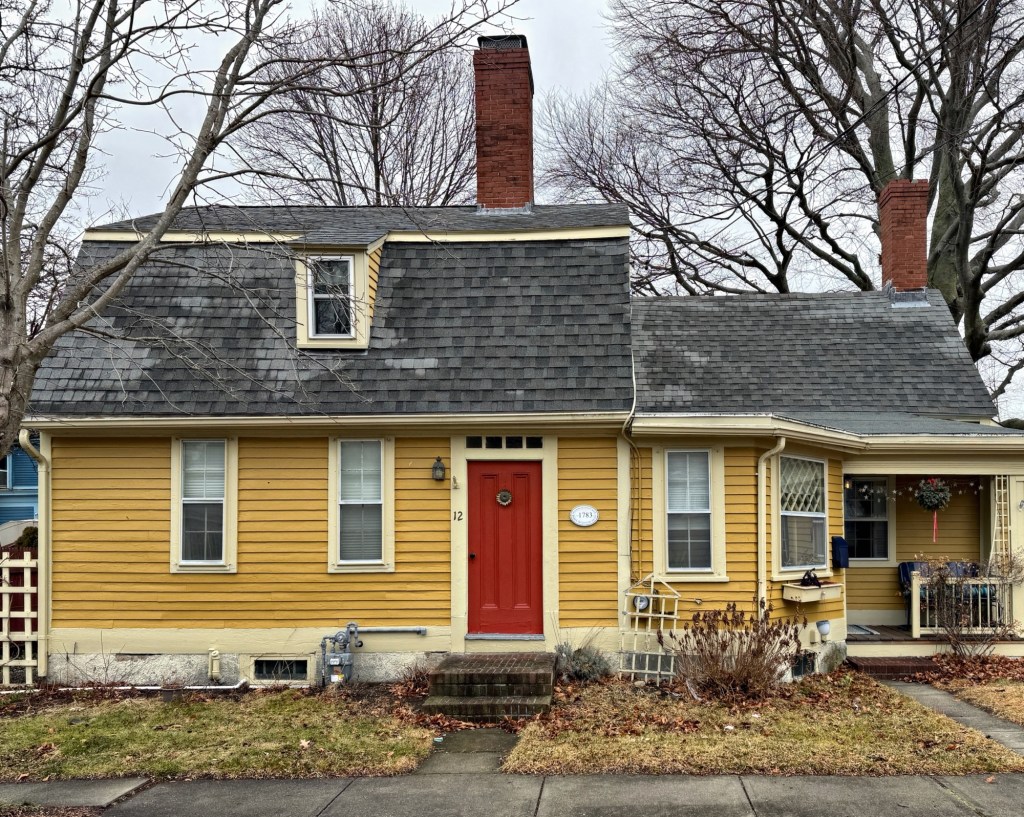
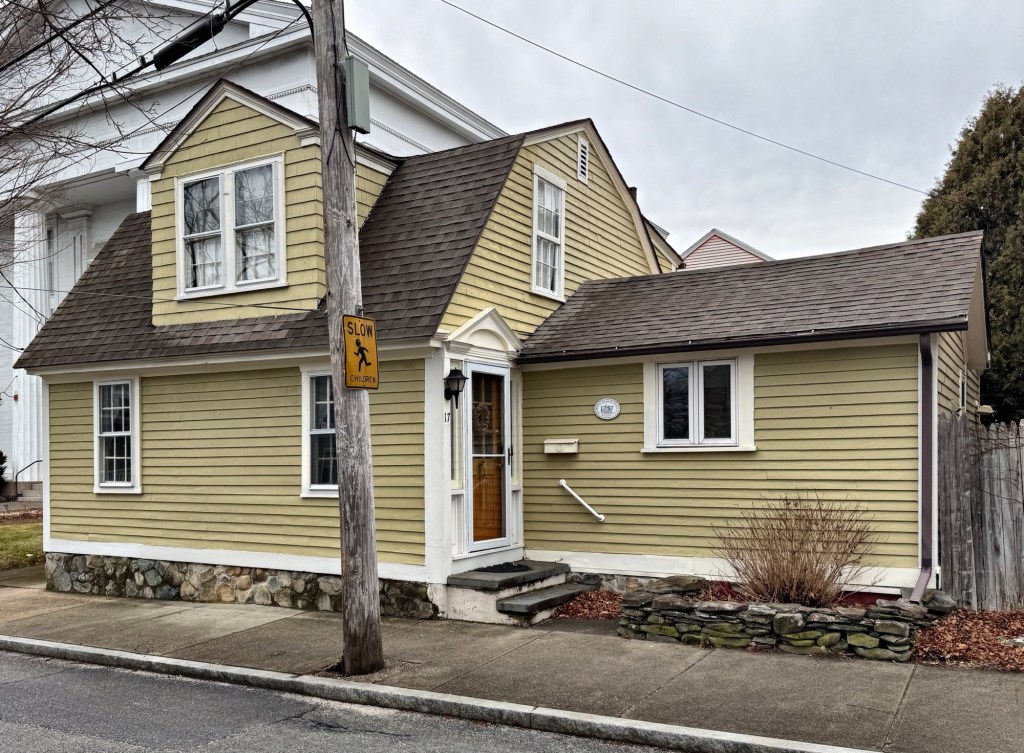
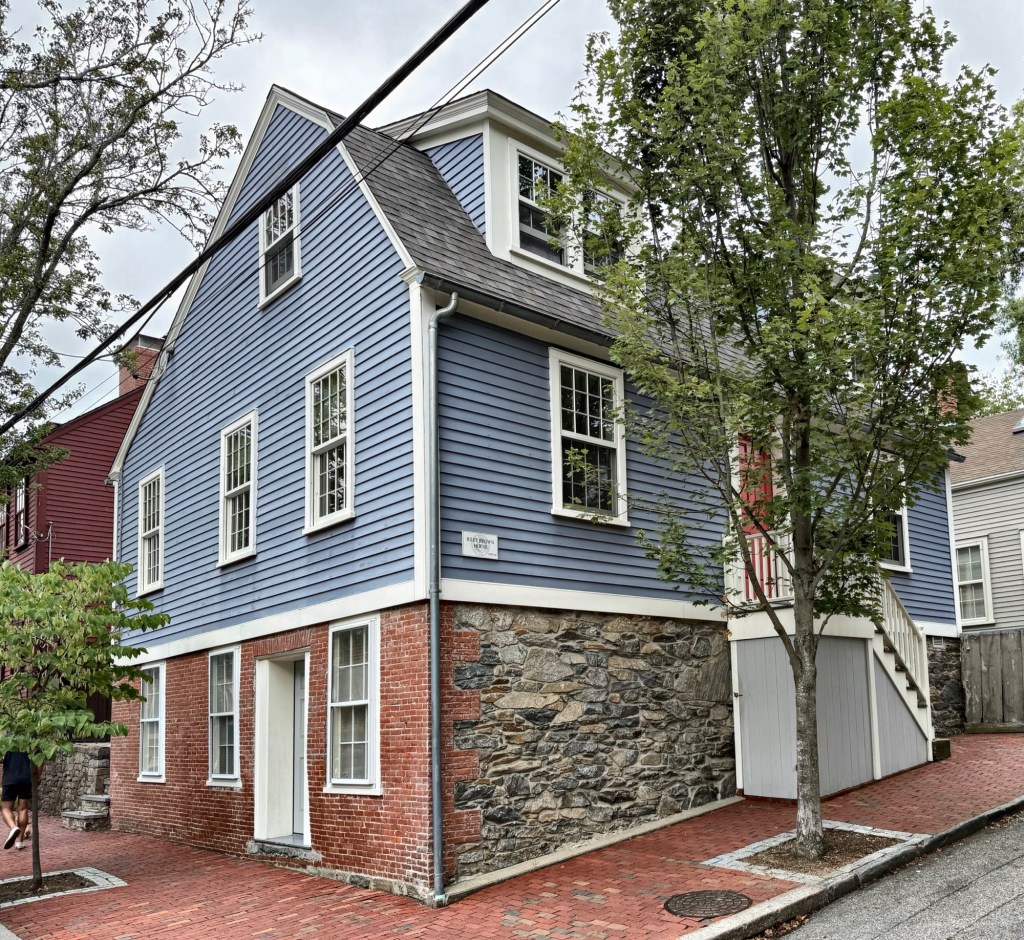
In 1829, Riley Brown, a housewright, purchased a house lot at the corner of Thayer and Transit streets in Providence, and by 1836, built this charming gambrel-roofed cottage, which is one of the most charming in the city. Riley Brown lived in the house next-door at 6 Thayer Street (1829) and on available land, built this 1-1/2-story dwelling on a full-height raised basement on speculation. It is possible that the house could have dated to the 18th century, and was possibly moved to the site from a nearby location, given the distinct gambrel roof and Georgian qualities. The residence here was sold in 1836 to John Crocker, who resided here with his family until his death in 1865. The Brown-Crocker House stands out for its unusually high basement of brick and stone, with a stair ascending up to the central entry and the gentle saltbox roof off the rear. Two shed dormers were likely added in the 20th century to make the house’s second floor more liveable.

Joseph Lindsey Cottage // 1886

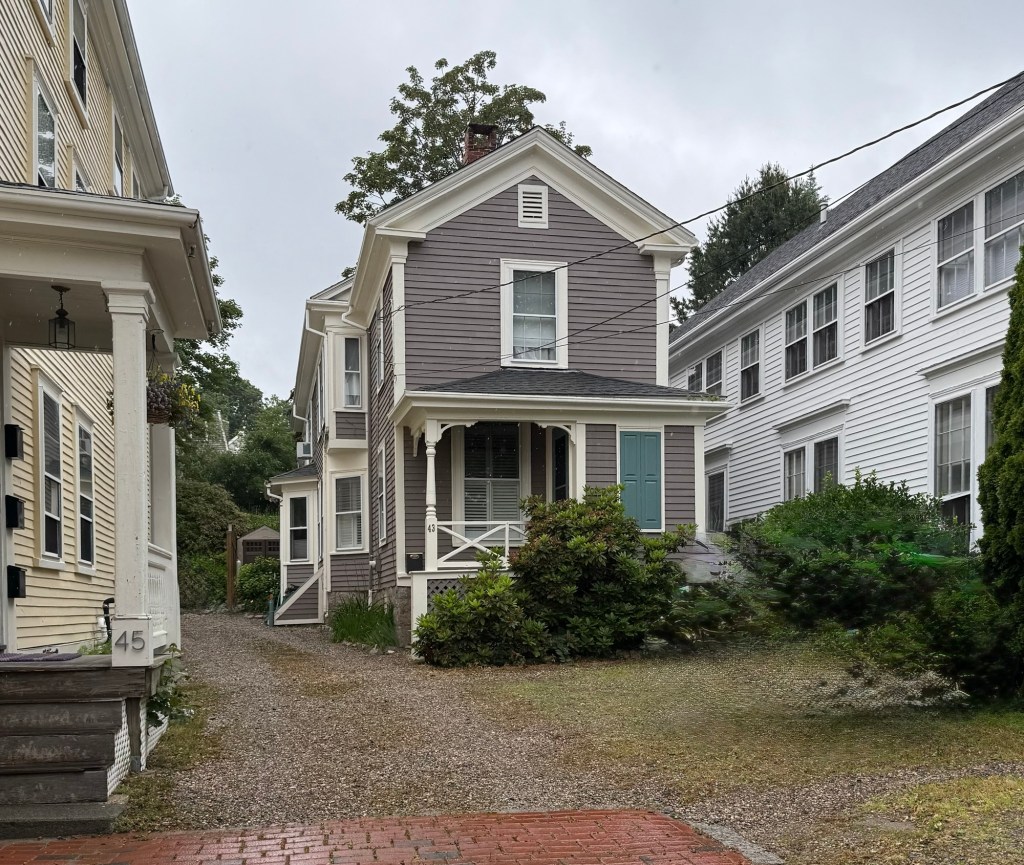
While Marblehead is best-known for its Georgian and Federal period houses, there are some great examples of later styles, sometimes tucked behind and in side yards of earlier residences. This is the Joseph Lindsey Cottage on Washington Street, a vernacular, Folk Victorian style residence built in 1886 by carpenter and housebuilder, Joseph W. Lindsey (1823-1902). Mr. Lindsey lived nearby on High Street, and purchased an earlier house at 45 Washington Street by 1881, building this cottage five years later and rented both out to boarders. Joseph Lindsey worked his entire life as a carpenter, except for a few years when he and his brother, Philip B. Lindsey, travelled west to seek gold and fortune during the California Gold Rush. The Lindsey Family Papers are part of the collections of the Marblehead Museum. 

Richmond J. Lane House // c.1860

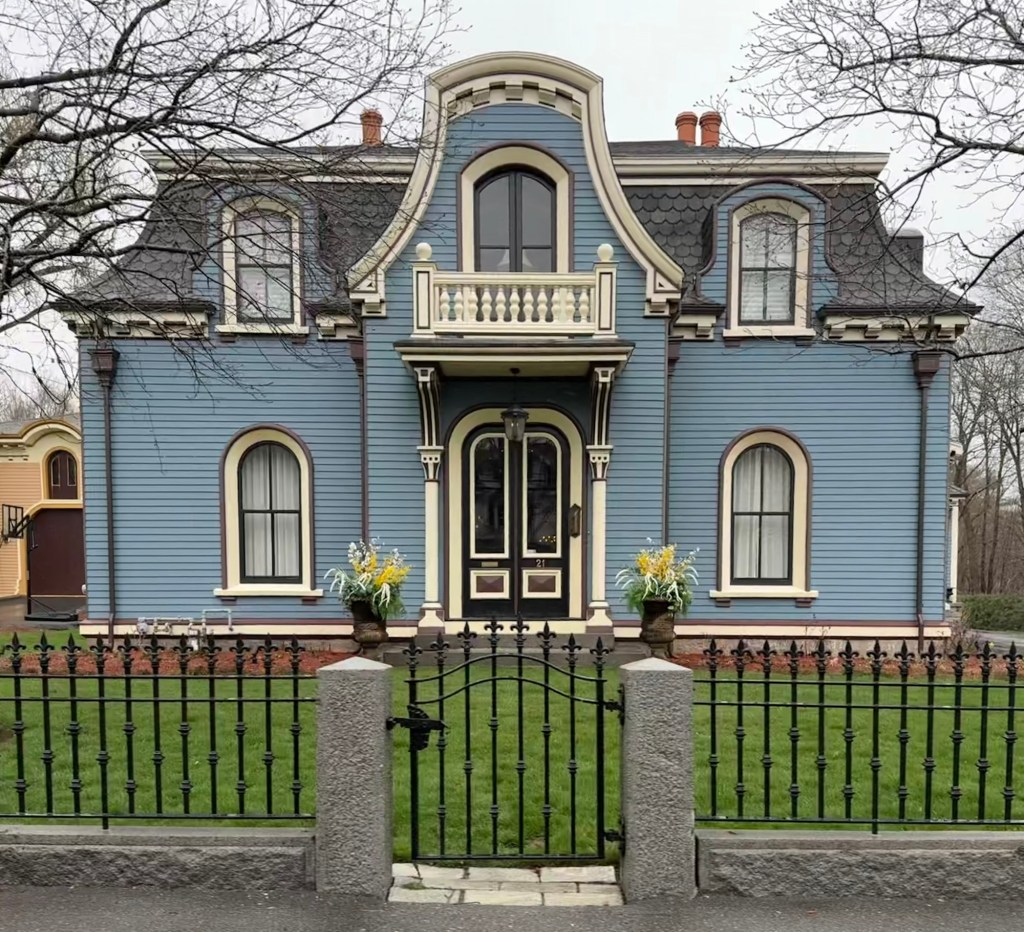
Located next door to his brother’s house on Union Street in Rockland, Massachusetts, Richmond J. Lane, a shoe manufacturer, built this charming cottage for his family. Built around 1860 in the Second Empire style, this residence includes a concave mansard roof, dentilled cornice with brackets, and arched windows and dormers, and a stable at the rear. Richmond J. Lane (1826-1905) worked in shoe manufacturing and was said to have been instrumental in establishing the Hanover Branch Railroad, and served as president of local banks. The Richmond J. Lane house is an important, and well-preserved example of the Second Empire style in Rockland.

Charles Mason Cottage // 1853

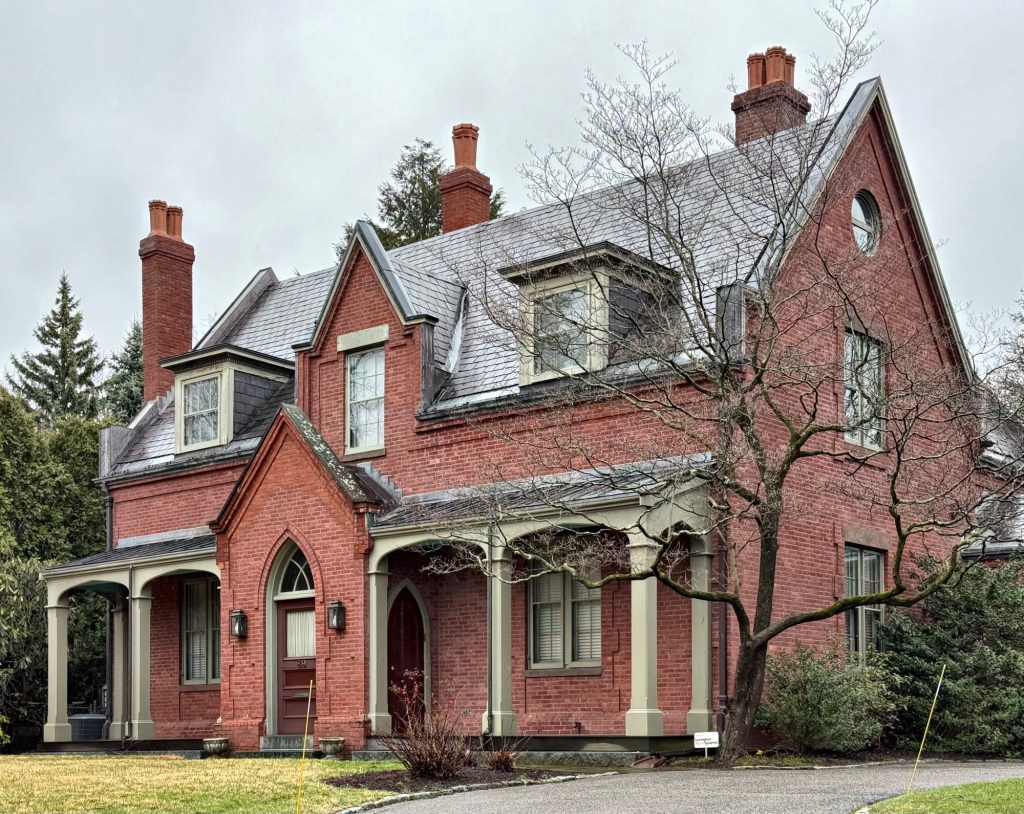
The Charles Mason Cottage at 89 Carlton Street is one of two extant brick cottages built by Amos A. Lawrence as part of his Cottage Farm neighborhood in Brookline, Massachusetts. The Gothic Revival style cottage was built around 1853 and owned by Lawrence for rental purposes. By 1861, this house had been sold to Reverend Charles Mason (1812-1862), who married Amos Lawrence’s late sister, Susanna. The property was inherited by the couple’s daughter, Mary and her husband, Howard Stockton, a lawyer and onetime president of American Bell Telephone Company. The Mason Cottage is unique for its brick construction, projecting entry with porches on either sides, lancet doors and window, wall and shed dormers at the roof, and the original windows with chimney pots.

Bates Cottage // 1853

This Gothic Revival brick cottage is of several houses built by Amos A. Lawrence for his Cottage Farm neighborhood in Brookline, Massachusetts. After he built his own stone residence at the center of the estate, Lawrence erected a series of cottages in the vicinity which were rented or sold to family and friends. This house was listed as the “Bates House” in Amos Lawrence’s papers, likely referring to the renter of the property soon after the cottage was completed by 1853. After Amos Lawrence died in 1886, the estate was inherited by his daughter, Hetty S. Cunningham. The “Bates Cottage” was later acquired by Boston University, who in 1964, received town approval to convert the residence into offices for the Center for the Study of Liberal Arts Education. The cottage was expanded at the rear and is today home to the Boston University African American & Black Diaspora Studies Program.

Lavalette Perrin House // c.1844

The perfect whimsical blending of the Classical Greek Revival and the intricate details of the Carpenter Gothic styles can be found under one roof in Goshen, Connecticut; this is the Lavalette Perrin House. Built c.1844 for Lavalette Perrin (1816-1889), who graduated from Yale in 1840, and became licensed to preach in 1843. Reverend Perrin was in his late 20s when he accepted the call to become the pastor of Goshen’s Congregational Church in 1843. Upon arriving to town, he had this residence built soon after, blending two differing styles in a blissful composition. Perrin remained in Goshen until he was called to New Britain in 1858, where he remained until his death. Unique architectural features of the home include the flushboard siding, pilaster-and-lintel framed doors and windows (very rare in this form), and wave-like bargeboards. What a special home!

“Villino” // 1882

“Villino” was built in 1882 for $7,553, as a summer residence for Ms. Frances L. Skinner, a widow of the late Reverend Thomas Skinner. “Villino” was the work of the young firm of McKim, Mead & White, and it is one of the firm’s many Shingle style buildings, but one of the most compact. The asymmetrical 2½-story Shingle Style cottage sits atop a granite foundation with continuous shingles above. The entrance porch is tucked into the building mass on the side and its prominent tower with conical roof. The house is sited well into the landscape and unlike many other summer “cottages” the name Villino which is Italian for cottage, actually fits!


Streeter Cottage // 1882

In 1881, Gilbert Streeter and his wife Rebecca purchased a small house lot in the Salem Willows for a summer cottage for them to retreat across town to during the warmer months. Gilbert Streeter was an amateur historian, businessman, publisher of the Salem Observer and was able to afford a second residence in his hometown. The Streeter cottage was built by 1882 and stands out not only for its excellent state of preservation, but for its unique architecture. The cross-gabled form cottage is covered in board-and-batten siding with bargeboards lining the eaves.