Gleason-Patterson House // 1803

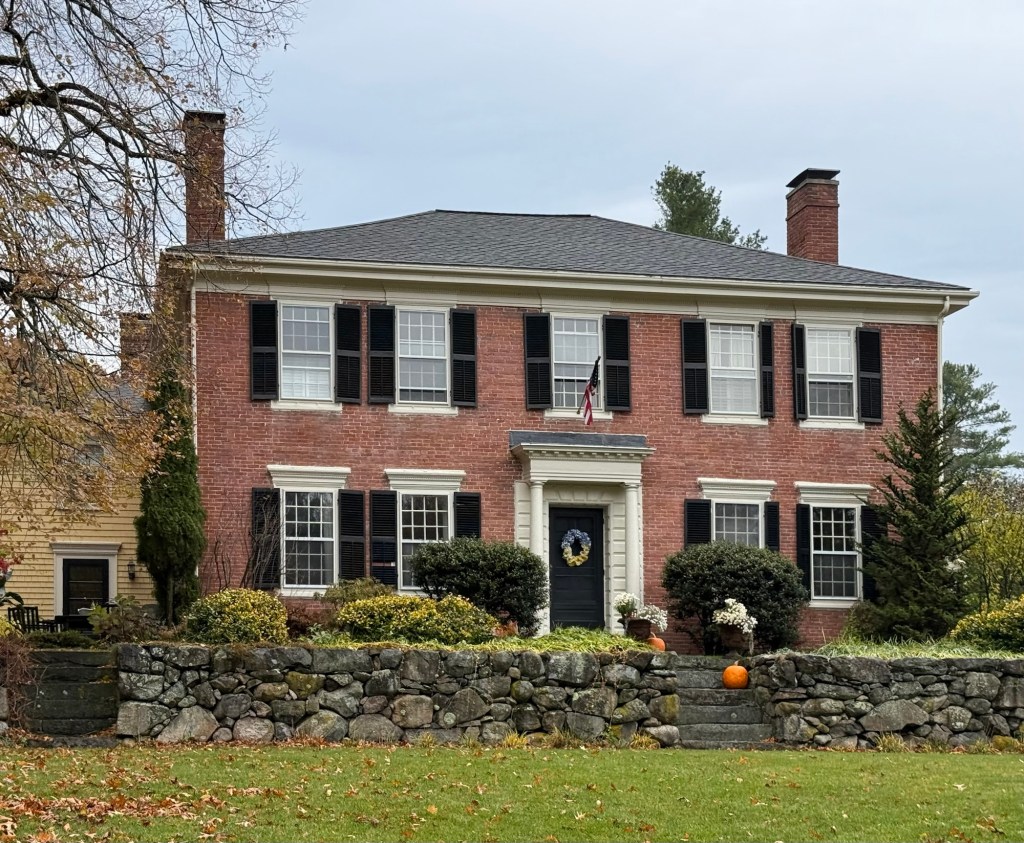
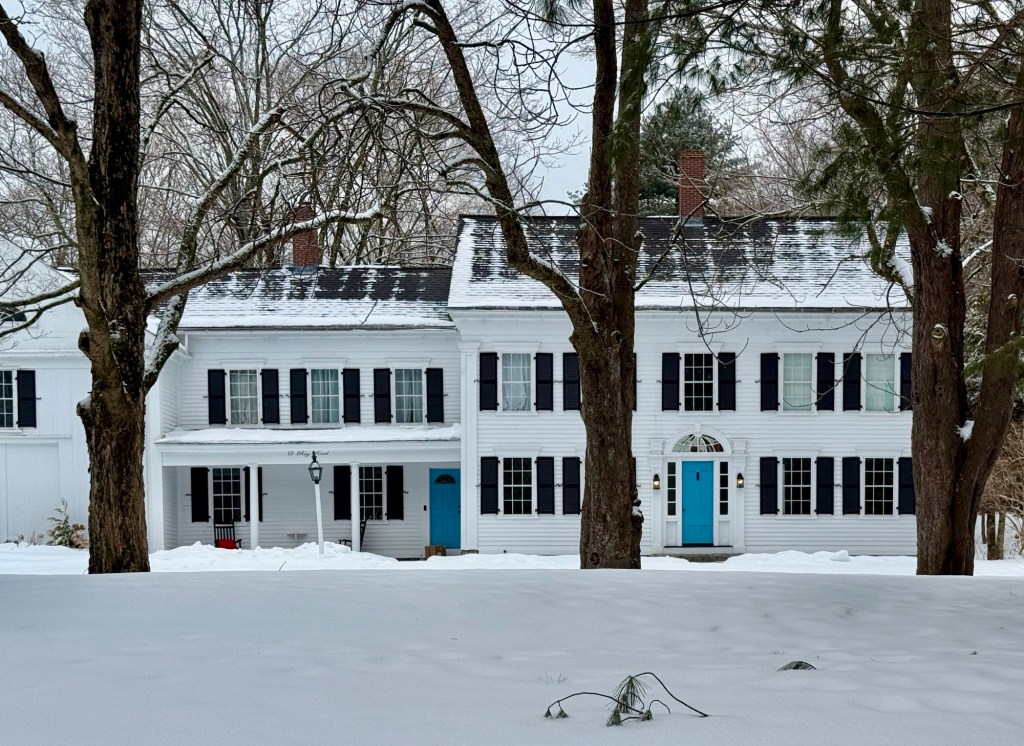
Another stately old home on Glezen Lane in Wayland is this brick, Federal style country mansion located across from the town Training Field. This residence is said to have been built by a Nathaniel Gleason (Glezen) and later inherited by a family member, Abel Glezen (1803-1890) who farmed the 55 acres of land and was a local politician. In 1900, as Wayland shifted from rural community to a desirable Boston suburb for summer residences, the Gleason House was purchased by Henry W. Patterson, who was in his late 20s when he bought this country house. Henry inherited his father’s estate and married Jane Harrington Adams from Massachusetts. The couple spent only a couple years here until Henry died in 1907 at just 35 years old. Jane, his widow, remained here until her death in 1950. The estate was subsequently subdivided and remains one of the finest homes in the community.

Wilder Mansion // c.1738

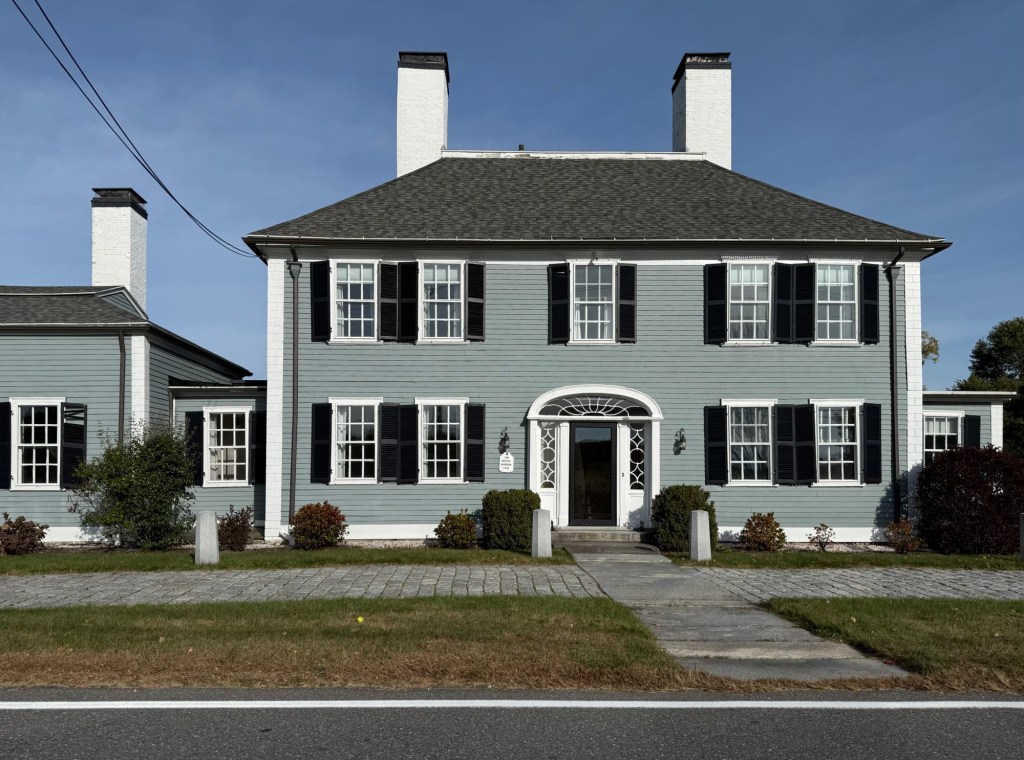
The Wilder Mansion at 101 Wilder Road in Bolton, Massachusetts, was built in about 1738 as an early Georgian farmhouse by Josiah Richardson, a Revolutionary War veteran who died in the home in 1799. By 1814, Sampson Vryling Stoddard Wilder purchased the property and “modernized” the old farmhouse which due to its location along the Bay Path, a major east-west route from Lancaster to Boston, operated it as an inn and tavern. Mr. Wilder expanded the property, purchasing additional nearby farmland to create a country seat worthy of a wealthy agent for some of the most influential merchants in the shipping trade in Boston. During his tour of the United States in 1824, Marquis de Lafayette spent the night here on September 2nd between visits to Boston and Lancaster. Sampson V. S. Wilder lost the property following economic crises, and the property changed hands many times until the early 20th century. Stockbroker John L . Saltonstall (1878-1929), first cousin to Massachusetts Governor Leverett Saltonstall, hired Boston architects Bigelow & Wadsworth in 1910, to return the house to a more Colonial appearance. He and his family were apparently only summer residents here, and he was probably absent for a long period during the First World War, when he worked with the Navy and the War Trade Board in Washington, D.C. In about 1915, he sold the property, and in the early 1920’s he relocated to Topsfield, Mass. After WWI, the house had a series of short-term owners, one of which was Henry Forbes Bigelow, who designed the renovation of the house just years prior. Bigelow would later relocate to a new summer house nearby in Lancaster.

Highfields Estate // 1821

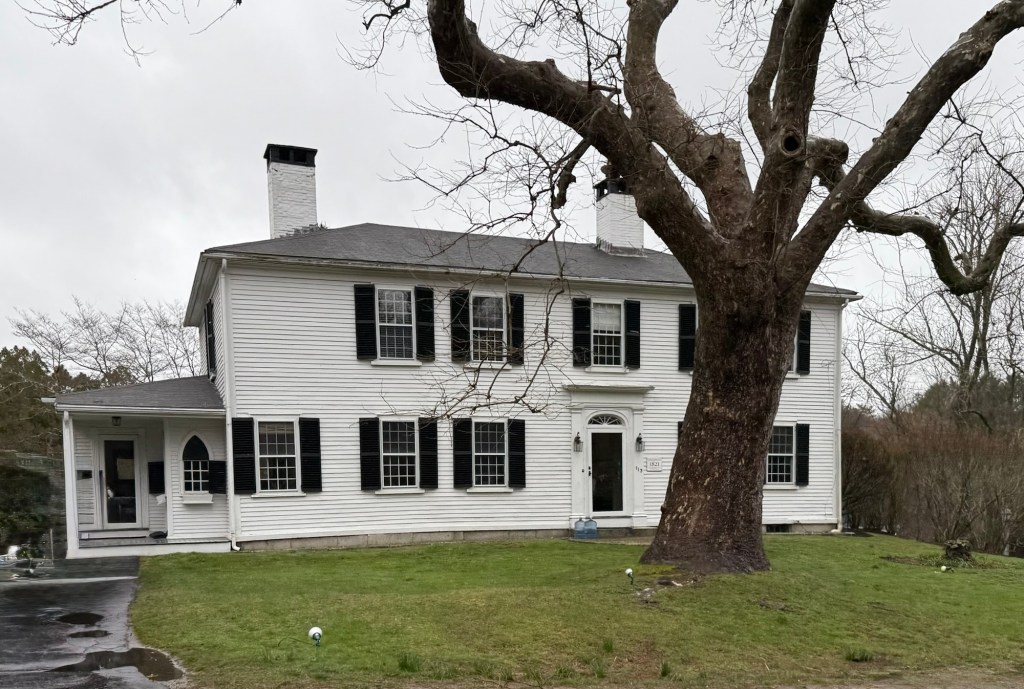
Constructed in 1821 for Joshua King (1783-1849), this Federal style mansion is one of the last country estates in Abington, Massachusetts. Joshua King was a Deacon of a local church and a well-to-do citizen in town, living nearby until a hurricane blew the roof off of his former house. Seeking to rebuilt a new, more substantial family home, it is said that Joshua required that this house would be built to last centuries, with some residents stating that the roof structure itself had enough timber to build a second home. The Federal style mansion has three chimneys with 12 fireplaces inside, and is set amongst rolling fields bounded by old stone walls, likely giving the property its name, “Highfields”. The property was later converted to a duplex, but retains much of its original design at the exterior. 

Hidden Valley Castle // 1921

Photo from listing.

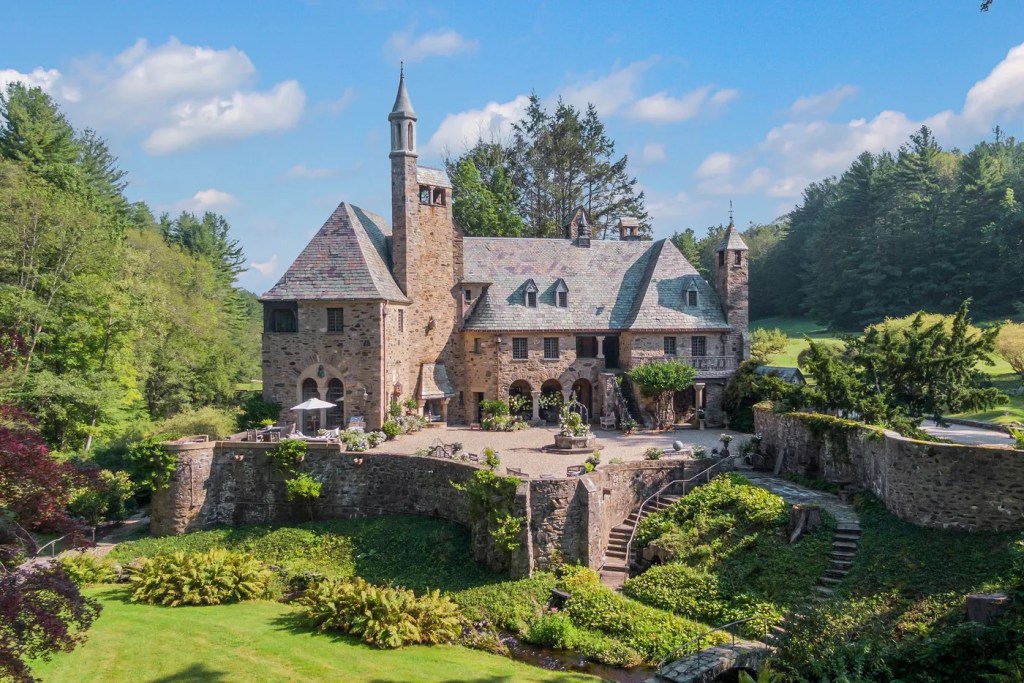
A castle can be found in the small town of Cornwall, Connecticut! Set amongst 275 acres of woodland and streams, with several outbuildings on the property, this whimsical castle looks like it was dropped here from Cornwall, England, but it actually dates to the 1920s. Hidden Valley Castle, had its beginnings when socialite Charlotte Bronson Hunnewell Martin envisioned building a unique country retreat for herself and her husband, Dr. Walton Martin, in the Litchfield Hills of Connecticut as a summer retreat. Just before this, Charlotte had bought a group of 20 brownstones in Manhattan on 48th and 49th Streets, between Second and Third Avenues, and converted them into charming townhouses around a central Italian-inspired garden. Called Turtle Bay Gardens, the houses were highly acclaimed and almost immediately attracted prominent and celebrated residents. The Cornwall Castle was designed by architect, Edward Clarence Dean, who also redesigned the Turtle Bay Gardens for the couple. Dr. Martin imported many of the materials as well as the 100 workmen required to build the castle, a project that lasted five years. Charlotte would also have a cottage built on the estate and hired young Italian artist, Vincenzo Rondinone, to be her resident artist on the estate to create unique vases, bowls, and pots to be used at the house and to be given as gifts to visitors and friends. The property was restored in recent years and put up for sale, with the cottage sold as a separate dwelling.

Glen Magna Farms // c.1790

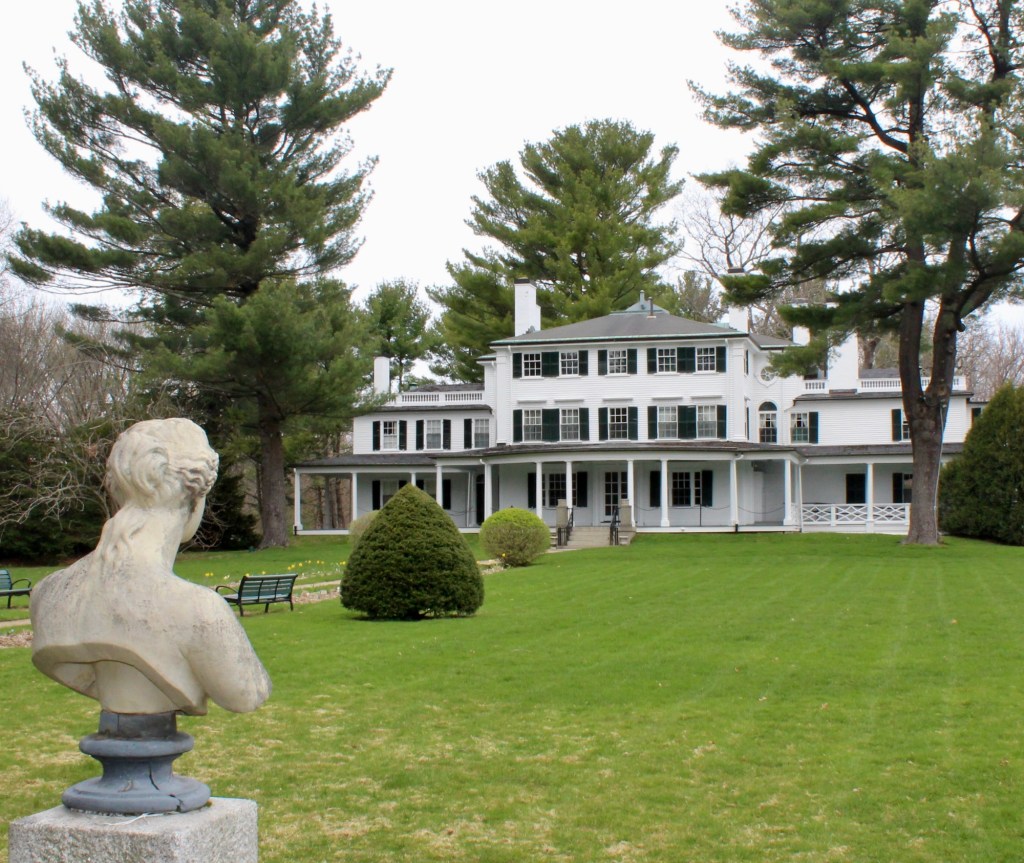
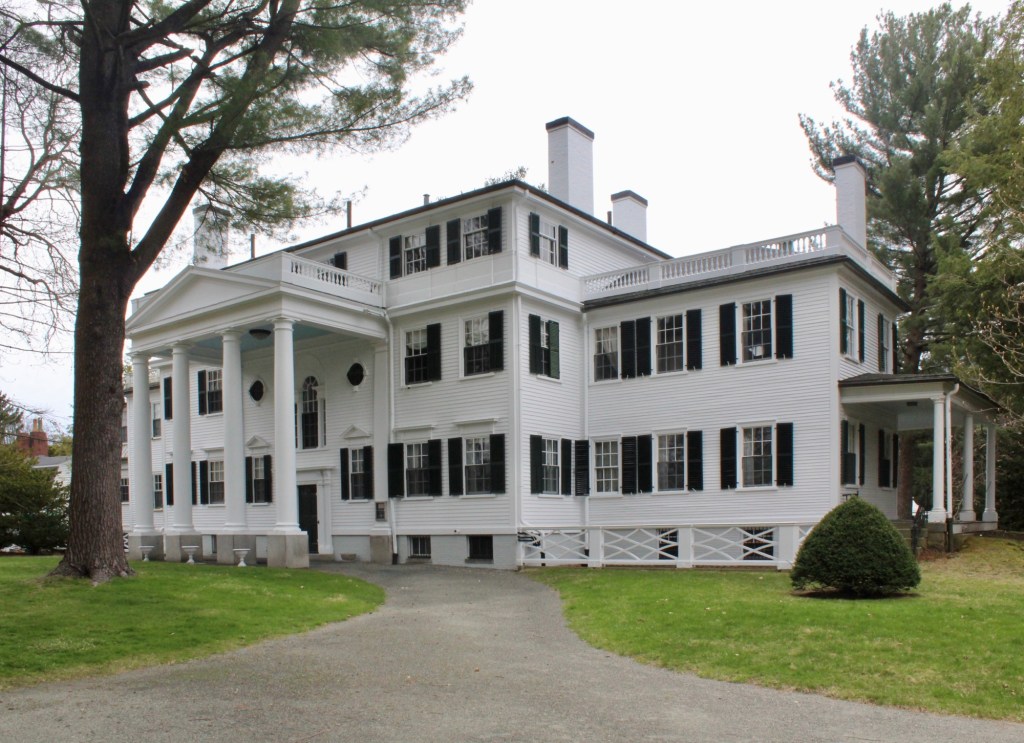
Glen Magna Farms is a historic estate located in Danvers, Massachusetts, and it is one of the lesser-known historic properties of this stature. During the War of 1812, Joseph Peabody, the wealthiest Salem shipping merchant of his day, bought a 20-acre Danvers farm with a dwelling house. The c.1790 house was likely updated at this time in a higher example of the Federal style, and used as a summer residence the family would escape to during the warmer months. Peabody purchased additional property and Glen Magna grew to over 130-acres. William Crowninshield Endicott, who served as Secretary of War during the Grover Cleveland administration, married Ellen Peabody, granddaughter of Joseph Peabody in 1859. The couple would inherit Glen Magna and later hire the firm of Little, Browne, and Moore in the 1890s to renovate the mansion and update the gardens. Ellen Peabody Endicott would also have the Derby Summer House added to the grounds by 1901. In 1963, the Danvers Historical Society purchased the house and eleven acres of surrounding gardens which they painstakingly restored to their early 20th century condition. Glen Magna can now be rented out for weddings and other events!

Overlook Mansion // 1842

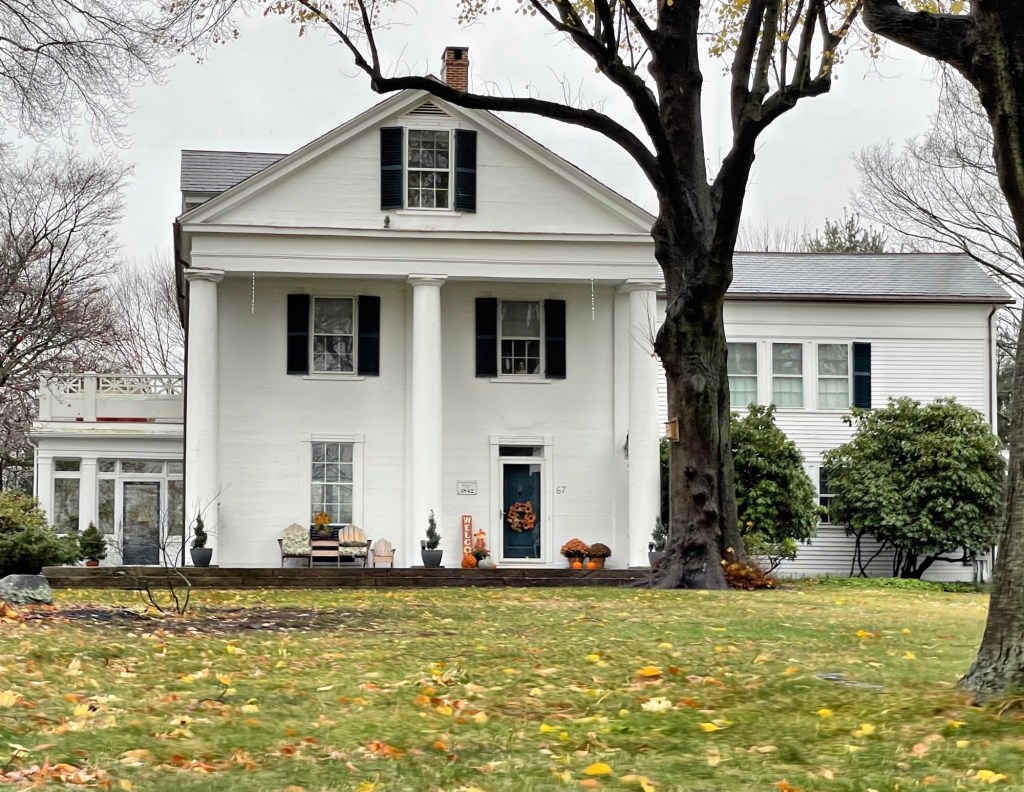
In about 1842, a Salem merchant, Joseph Adams, built this stately Greek Revival style mansion on Pine Street in Danvers, Massachusetts. Named “Overlook”, the house is a simplified adaptation of the temple-front form with three columns supporting an entablature and closed pediment above. Joseph Adams was an instrumental force who brought an Episcopal church to Danvers, bankrolling the new building there himself. By 1862, the house was owned by Milton P. Braman (1799-1882), who had just retired as pastor for the First Church of Danvers. Of particular note, when news reached Danvers of the assassination of President Lincoln, a gang of men there captured two men who had said unkind words of the late president, and tar and feathered them. A number of the mob were said to have planned to also go to Rev. Braman’s house here to do the same to him, as he was said to have been a “copperhead” a democrat who opposed the American Civil War and wanted an immediate peace settlement with the Confederates. Reverend Braman got wind of the plans of the local mob and had men stationed in the windows with shotguns, with the order to shoot anyone who entered the property. Luckily for all involved, the mob never showed. He would later move to Brookline and Newton. Overlook remains a significant country estate and very well-preserved by the owners.

Cheesman Mansion // 1887

Timothy Matlack Cheesman was born in New York City in 1824, a son of physician, John Cummins Cheesman. Following in the footsteps of his father, he graduated in 1859 from the College of Physicians and Surgeons, now known as Columbia University Vagelos College of Physicians and Surgeons. Timothy served as Surgeon in the 7th Regiment NY National Guard in 1853 and upon the start of the Civil War, he mustered into US service April of 1861 as a Surgeon. In the late 1880s, like many other wealthy New Yorkers, Dr. Cheesman and his wife, Maria, decided to build a country home in Ridgefield, Connecticut. They chose nearly 30 acres on the east side of East Ridge, an area that was being touted as “Prospect Ridge” for its view. Dr. Cheesman was ill with Bright’s disease and and may have been seeking the clean air of the country climate to help his health or at least as a place to rest. Sadly, he died one year later in 1888, and did not get to fully enjoy his country retreat. He was 63 years old. His widow Maria continued to use Matlack (the house’s name) until her death in 1903. In 1922, the estate was acquired by the Holy Ghost Fathers, who set up a school for new members of the order who would get their initial training to be priests or brothers there. Declining membership and costs required them to sell the campus, which was acquired by the Town of Ridgefield in 1971. Matlack is now the centerpiece of a large housing complex for the elderly in town and is managed by the local housing authority.

Dr. F. W. Jackson House // 1903

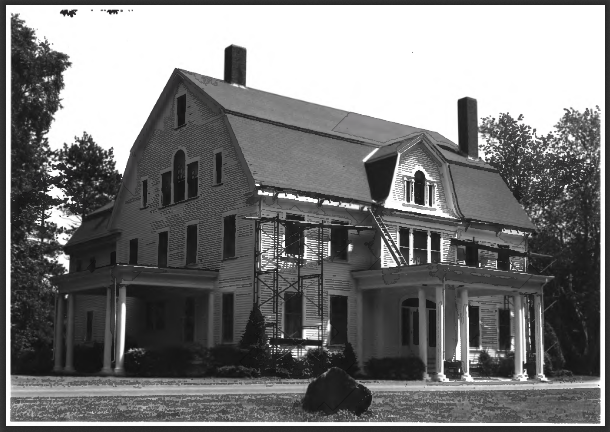
One of the largest Colonial Revival style homes I have ever seen is located in the unassuming small town of Jefferson, Maine. Built in 1903 on the northern shore of Damariscotta Lake, the house stands three-and-a-half stories tall with a broad gambrel roof and clapboard walls. The house was built for Dr. Fred W. Jackson in the Colonial Revival style by relatively unknown Waltham, Massachusetts-based architect Samuel Patch. Dr. Jackson studied medicine and for several years practiced his profession in Providence, Rhode Island. There, he built up a large medical practice and accumulated property, later marrying into a wealthy family. This house in Jefferson was the family summer estate, and Frederick was said to have owned 1,000 acres and laid out bridle paths, gardens, and landscapes in the vast estate. Across the street, a massive gambrel-roof barn was built to house his livestock as part of his gentleman’s farm.

Keller Cottage // 1896

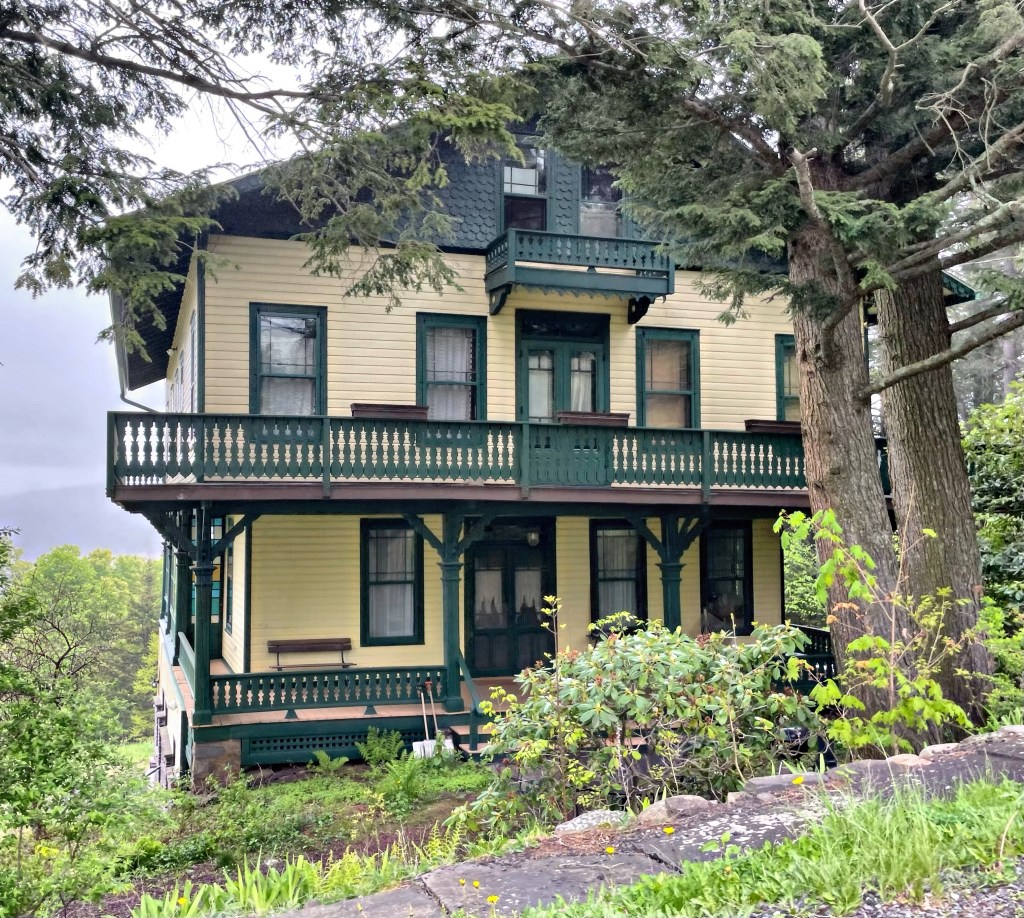
It wouldn’t be a German-developed summer colony with at least one Chalet-style summer cottage, would it? The Keller Cottage in Elka Park, New York, was built in 1896 for John Keller (1867-1924) and his German wife, Caroline Goehring (1866-1917) who summered in the colony for a few months of the year from Brooklyn, N.Y. The 3,500-square-foot, 6-bedroom “cottage” includes a sunroom with stained glass, original unpainted wood-paneled walls and oh, just some jaw-dropping views of the Catskill Mountains for good measure!

Eben S. Draper Jr. Mansion // 1926

Anyone that has followed me for long knows I am obsessed with two architecture styles, Dutch Renaissance and Colonial, and Tudors! Set back way off the street in Hopedale, Mass., sits this rambling Tudor Revival country estate. Built in 1926 for Eben Sumner Draper Jr. (1893-1959), the son of Massachusetts Governor and Draper Corporation owner Eben Sumner Draper, the home provided a secluded escape for the rich millionaire. The home was designed by Boston architects Bigelow & Wadsworth, and replaced his father’s Shingle style country mansion “The Ledges”. The new Draper mansion was highlighted in numerous architectural magazines shortly after it’s construction, which highlighted the amazing brickwork, layout, and interior finishes, all of which remain to today! This spectacular home is over 14,000 square feet and has 17 bedrooms, several located in the staff wing, 10 full baths and 4 half baths, an in-ground swimming pool, gazebo, tennis court, and landscape design attributed to the notable landscape architect Warren Manning. In the 1960s, the home sold out of the family and was used as a home for adults living with developmental disabilities, mental illnesses, physical disabilities, the facility has since sold the Draper mansion and occupies the former carriage house.