William Dexter House // 1899

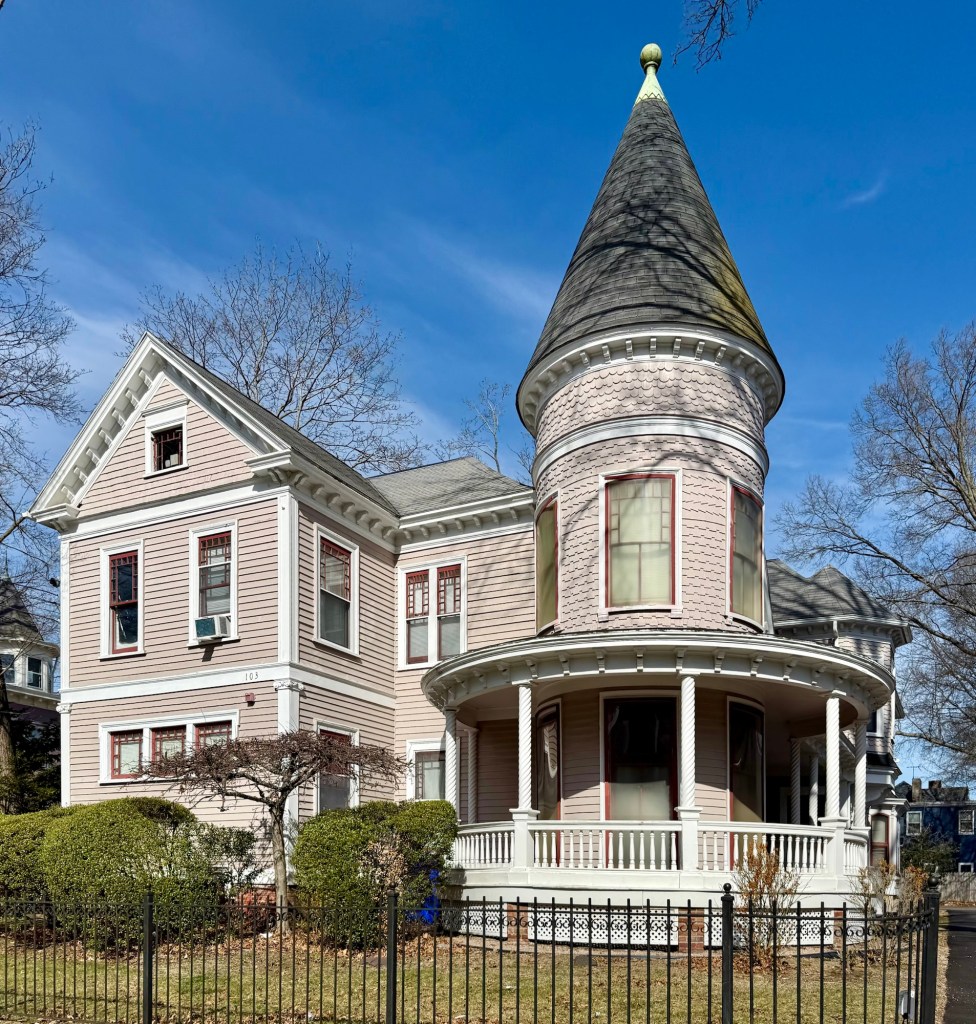
One of the best examples of the eclectic architecture designed at the of the 19th century in Norwood, Massachusetts, can be found on Beacon Street in the William Dexter House. Built in 1899 for William W. Dexter (1827-1911), who in 1852, married Harriet Blake, later settling in Massachusetts. Tragedy struck the family in 1871, when on the same day, his wife and daughter died; two days later, his sister-in-law, and six days after that, his other daughter Carrie died, all of bacterial infections. All that remained of the family was William and his only surviving daughter, Nellie. William remarried and built a blended family until his death in 1911. This house was built by Dexter, who worked as a contractor and painter, and George F. Bagley, a local builder. The complex form, rooflines, varied siding types, corner tower, and intact historic windows all add to its beauty. If only it had a historically appropriate color scheme to compliment it!

Judge Philip Rubenstein House // c.1915

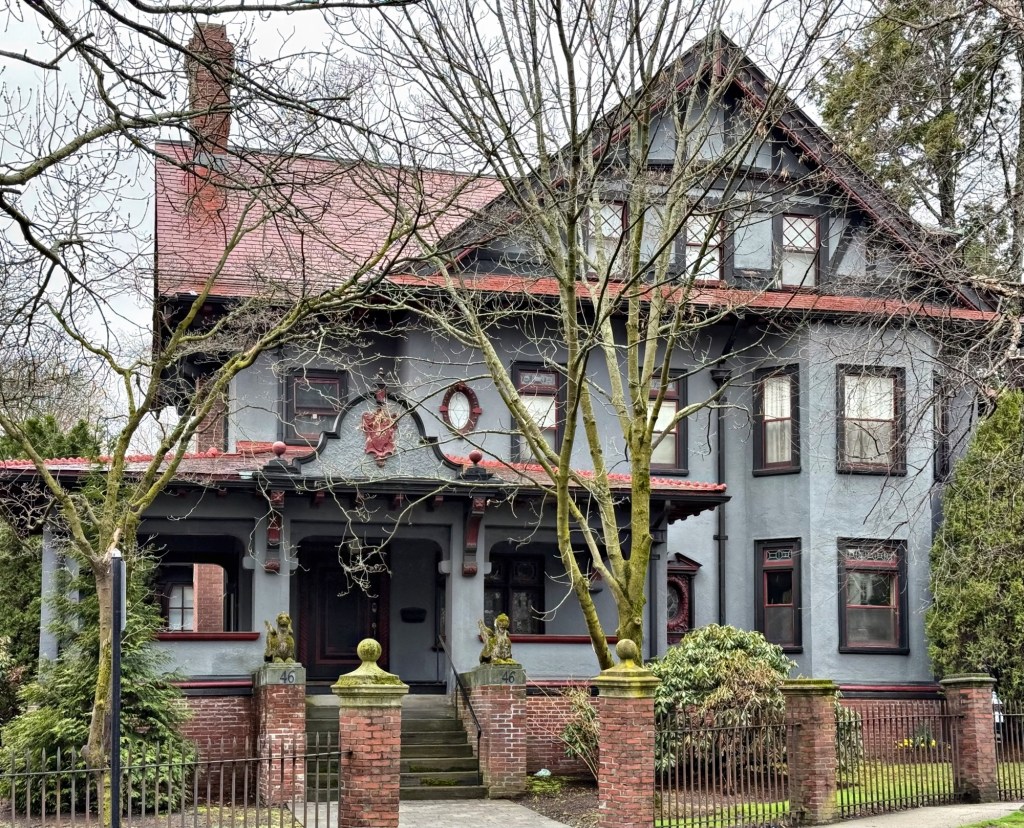
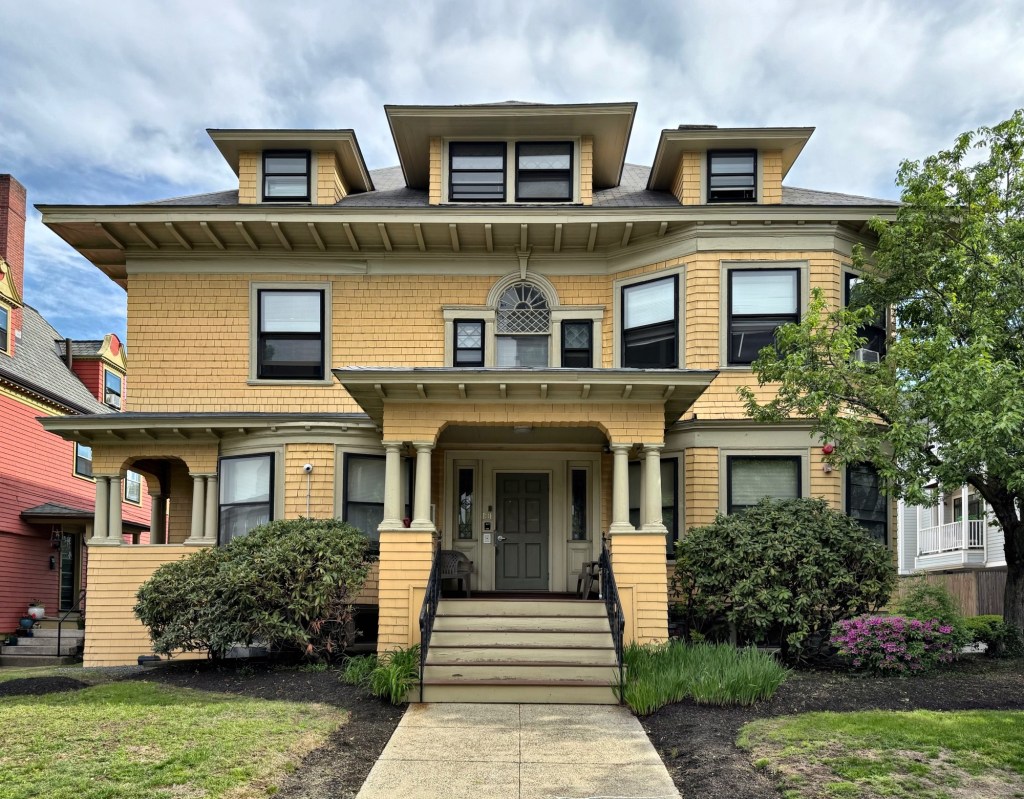
In the early 20th century, the suburban development of Longwood in Brookline saw another period of rapid development. Larger estates were subdivided and developed with all kinds of housing from single-family mansions to middle-class homes to large apartment buildings. One of the more modest-sized houses built in the first decades of the 20th century was this house, one of a collection of stuccoed homes on Colchester Street. The house was purchased by Judge Philip Rubenstein, the first member of the Jewish faith to serve on the Massachusetts bench and one of the first three judges of Boston’s juvenile court, the first in the country. The unique home is clad with stucco with a terracotta shingle roof and Colonial Revival style entry, showing an effective blending of the Arts and Crafts and Colonial styles.

Dudley W. Davis House // c.1900

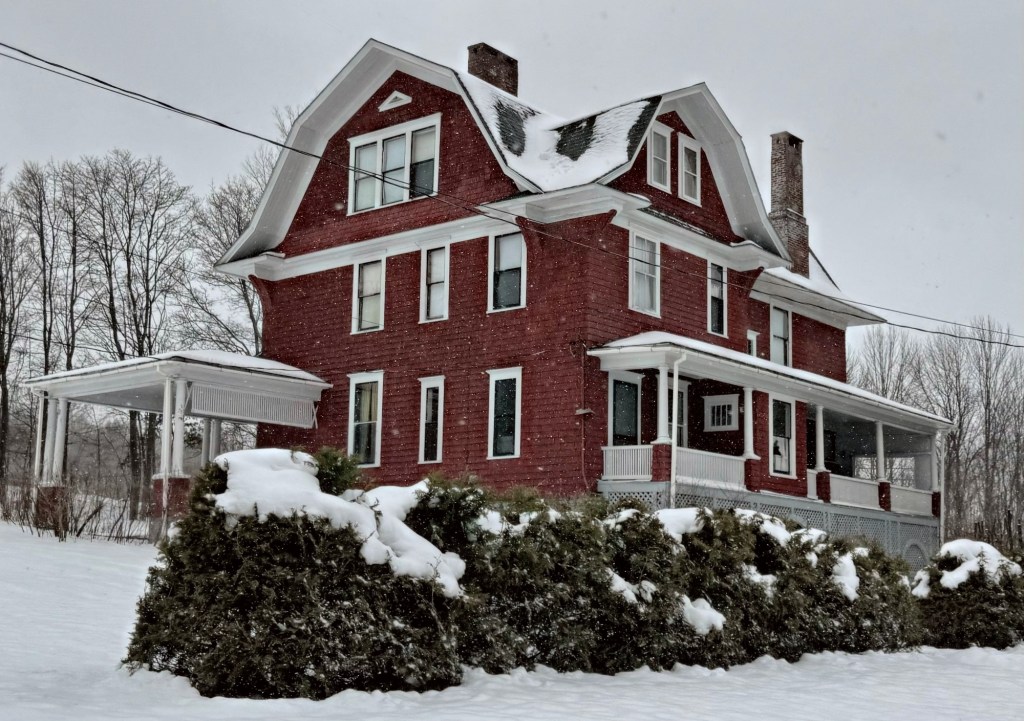
Dudley William Davis (1857-1942) was born in Quebec, Canada and eventually moved to the United States, graduating from Bates College and settling in the border town of Derby, Vermont. Here, he engaged in business and became the cashier, and eventual President of the Derby Line National Bank (featured previously). His success in banking afforded him the ability to purchase a house lot on high ground in town, and he had this large home built. Clad with wood shingle siding and a prominent cross-gambrel roof, the house retains much of its original architectural integrity.

Butler House // 1865

A true Italian Villa can be found in the dense center of Newport, Rhode Island. This is the Butler House, built in 1865 for physician Samuel Butler (1816-1881) and his wife, Emeline. Dr. Butler was born in Maine and was educated at Harvard before moving to Newport to become a member of high-society there. Besides working as a physician, Samuel Butler served on the Newport School Committee and as a director of the Redwood Library. His house was originally built in 1865 (as the right half) in a late-Greek Revival style as a side-hall house with flushboard siding and pilasters between the bays. As Newport continued to grow in wealth as a summer destination, Dr. Butler modernized his home in 1876, adding the oversized corner tower with round arched windows and bracketed cornice. The two aesthetically opposing styles somehow work well together in this eclectic home, which today, is further enhanced by a color palette to accentuate the two sections.

Johnston-Sullivan House // c.1894

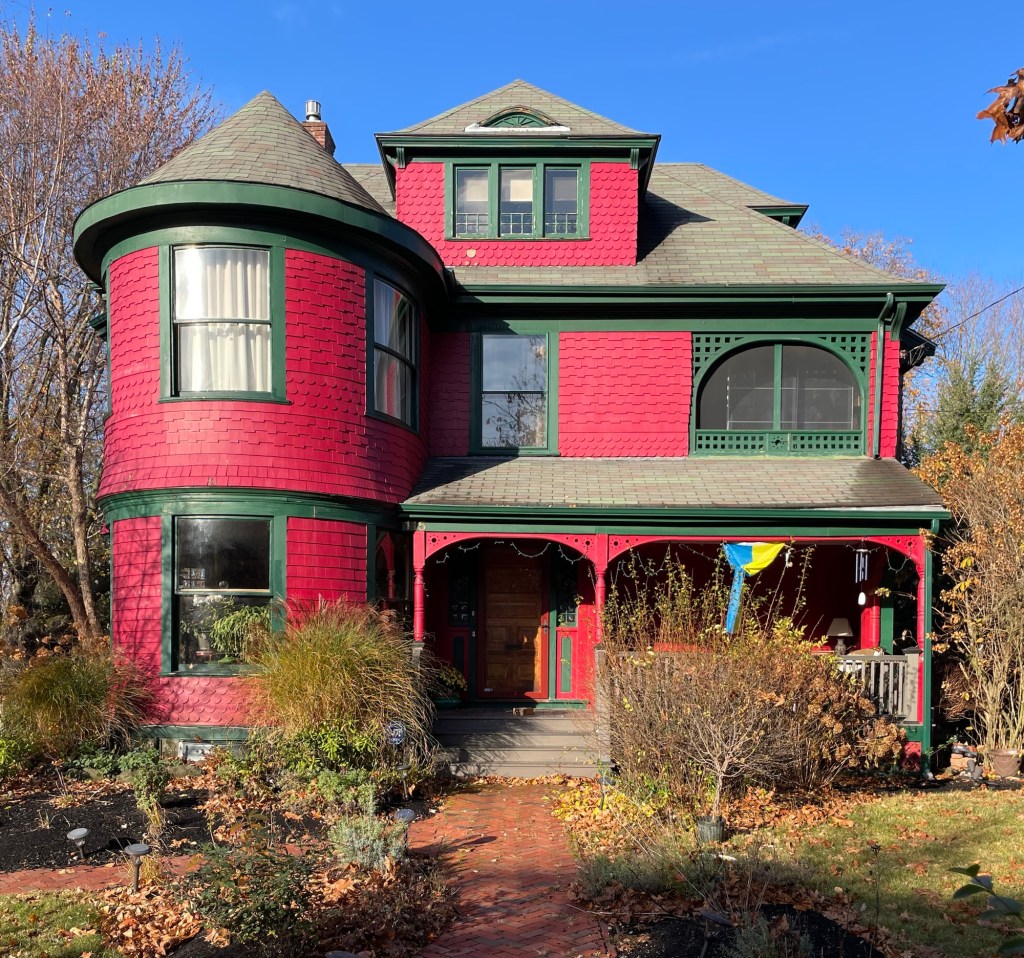
One of the more exuberant and ornate homes in Roxbury’s Washington Park neighborhood is this charmer on Howland Street. The eclectic house was built in around 1894 for Ellen S. Johnston from plans by local architect Timothy Edward Sheehan and stands out for its preserved exterior in a neighborhood where many homes are covered in later siding, obscuring the ornate details underneath. Details include: swag and garland applied ornament, two bays at the facade (one polygonal and one rounded), a Colonial Revival style porch, and central rounded dormer. Wow!

Ashton Croft Mansion and Carriage House // c.1892

Tucked behind the Jesse Lee Memorial Church on Main Street in Ridgefield, you will find this stately Queen Anne/Tudor Revival estate. The ‘Ashton Croft’ Manor House, now called Wesley Hall, is part of the Jesse Lee Memorial United Methodist Church complex and it has been modified several times blending two distinct styles into a single, pleasing composition. This house was originally constructed by Henry and Elizabeth Hawley circa 1892 in the Queen Anne style. The house was later sold to Electa Matilda Ziegler, a wealthy New York City widow in 1912, who reconfigured the structure to include half-timbering on the gables and upper story walls in the Tudor Revival style. She spent summers at a mansion in Darien, Connecticut, and would sell her Ridgefield property to Sanford H.E. Freund, a New York City attorney. The local order of Odd Fellows bought the estate from the Freund family in 1956. Three years later, the organization sold most of the property — retaining the carriage house for its lodge — to Jesse Lee Methodist Church, which planned to eventually build a new church there to replace the old one at Main and Catoonah Streets. Today, the entire former Ashton Croft estate is owned by the local Methodist Church and is known as Wesley Hall.

Bowen-Newton-Tobin House // c.1825

Who would have ever imagined that the Federal and Second Empire architectural styles could work so well together?! This is the Bowen-Tobin House on Spring Street in Newport, Rhode Island. The house was originally built around 1825 by Stephen Bowen as a typical two-story Federal style house with five-bay facade and entry with pedimented fanlight above. The property and it remained in the Bowen Family until 1892, when it was sold by his heirs to Mary Bailey Newton, the wife of Dudley Newton, a prominent local architect who designed dozens of summer cottages for wealthy residents in Newport. Dudley Newton “modernized” this house, adding a towered mansard roof, bracketed cornice, new two-over-two windows, and a full-length front porch wrapping around the side. The couple later moved the house, which was formerly set back behind a front garden, to the side and at the sidewalk to lay out Green Place (originally Bowen Ct.) and house lots behind this home, removing the front porch in the process. The house was later sold to the Tobin Family.

Stephen S. Albro House // 1876

Stephen Stedman Albro (1817-1895) was born in Newport, Rhode Island, the son of James and Rhoda Albro. After attending local schools, he entered into a mason’s trade, eventually starting his own contracting business. He split his time as a contractor and as a Deacon of a local Baptist Church. He was engaged in local politics, serving as a alderman for Newport and even was a director of the National Exchange Bank in Newport for some years. He built this home on Green Street after his marriage to his second wife, Emma, possibly designing and constructing the house himself. The Albro House is a stunning example of a late-Italianate style dwelling with later Queen Anne/Colonial Revival embellishments. This is a special house!

John Reed House // c.1840

The John Reed House at 37 Orange Street in Nashua, New Hampshire is a testament that houses can be updated over time with thoughtful renovations, and still be pretty darn amazing! The house was originally constructed in 1840 in the then-popular Greek Revival architecture style. Within a decade, to ‘keep up with the Jones”, the house was “modernized” with Italianate style detailing, including the brackets at the eaves and the large, square cupola with round arched windows and shutters. Decades, later, Queen Anne/Colonial Revival changes were made, with the full-length front porch with turned, fluted posts, enlarged windows, and an oversized front door. The house today blends these very different styles very well and adds to the house’s significance.

Lester Thurber House // 1895

As Victorian styles of architecture fell out of vogue in the late 19th century, New England towns and cities alike, saw a revival of Colonial designs which dominated building styles throughout much of the next century. Early examples of Colonial Revival tend to blend Queen Anne (Victorian) and Colonial motifs under one roof, which makes for exuberant yet refined designs. The Lester Thurber House in Nashua, New Hampshire was built in 1895 and is an ornate example which preserves elements of the Queen Anne style in its asymmetry and high gables, but with Colonial pediment scrolls and classical columned porch. Lester Freeman Thurber (1858-1935) was born and raised in Vermont and was engaged in the political arena there, serving as private secretary to Gov. Roswell Farnham of Vermont, 1880-2. He moved to Nashua in 1882 and was BUSY! He served in both branches Nashua city government, was member for six years on the board of education, member N.H. House of Representatives, 1895, served on railroad committee; was a delegate to Republican National Convention, 1908, and was a member of many local fraternal organizations and clubs. The Thurber House has suffered from some deferred maintenance of sorts, but is a great local example of the transitional Queen Anne/Colonial Revival styles in Nashua.