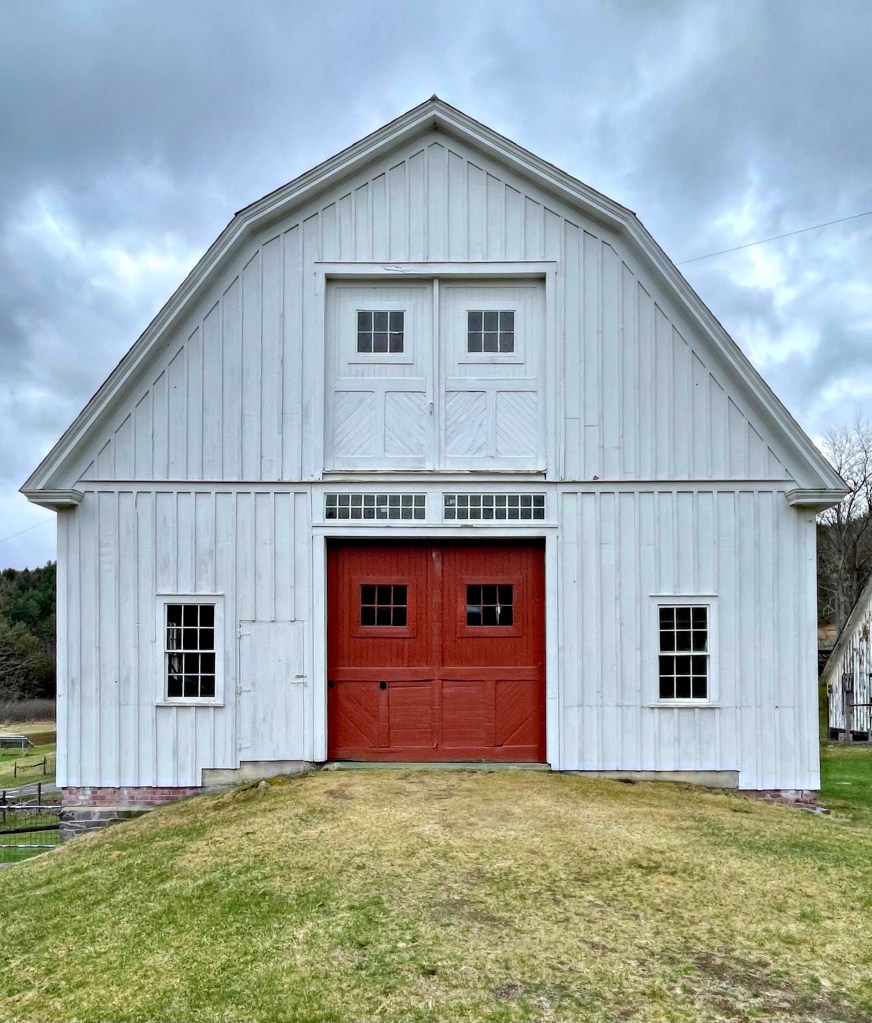
You saw the cow barn at Scott Farm, now you can see where the horses lived! The Horse Barn at Scott Farm in Dummerston, Vermont is a very photogenic building with its symmetrical facade and bright colors. The barn was built not long after Frederick Holbrook II of Boston acquired most of the farm to add to Naulakha, where he lived. Holbrook used the farm as a gentleman’s farm where he would have laborers managing the grounds and supplying him with the freshest produce and dairy products. Inside, there is a ramp down to the basement which still retains the horse stalls, it’s so charming!
Historic barns really are the most charming buildings, and luckily, Vermont is home to soooo many great examples. The Cow Barn at Scott Farm in Dummerston, VT was built in 1862 and constructed into the slope of the land. The barn has a brick and stone foundation, barn board siding, and a roof sheathed with small dark slate. It is built into the slope of the land and has a single-story shed roof addition (c.1915) off the west facade to give the building a saltbox form, and a single story gable roof milk house addition off the east facade. The rear facade has a more rustic appearance and has a large entrance to the space inside which is occupied by The Stone Trust, with the mission to preserve and advance the art and craft of dry stone walling. The organization holds classes and trainings where people can learn how to build a traditional or modern stone wall and more! The barn (and the rest of the buildings on the Scott Farm property) is owned by the Landmark Trust USA.
Scott Farm, established as a working farm in the late 18th century and as a commercial apple orchard in 1911, is an excellent example of the vernacular architecture that Vermont is known for. The sprawling 571-acre farm was established in Dummerston in 1791 and purchased by Rufus Scott in the mid-1800s. In the 1840s, he built this farmhouse and many of the barn buildings soon after. The five bay Greek Revival house is in a Cape form and retains its historic slate roof and detailing. The property has been owned since 1995 by The Landmark Trust USA, a non-profit organization whose mission is to preserve historic properties through creative sustainable uses for public enjoyment and education. The farm sits a short drive to Naulakha and the Dutton Farmhouse (both featured previously) which are also managed by the Landmark Trust USA.
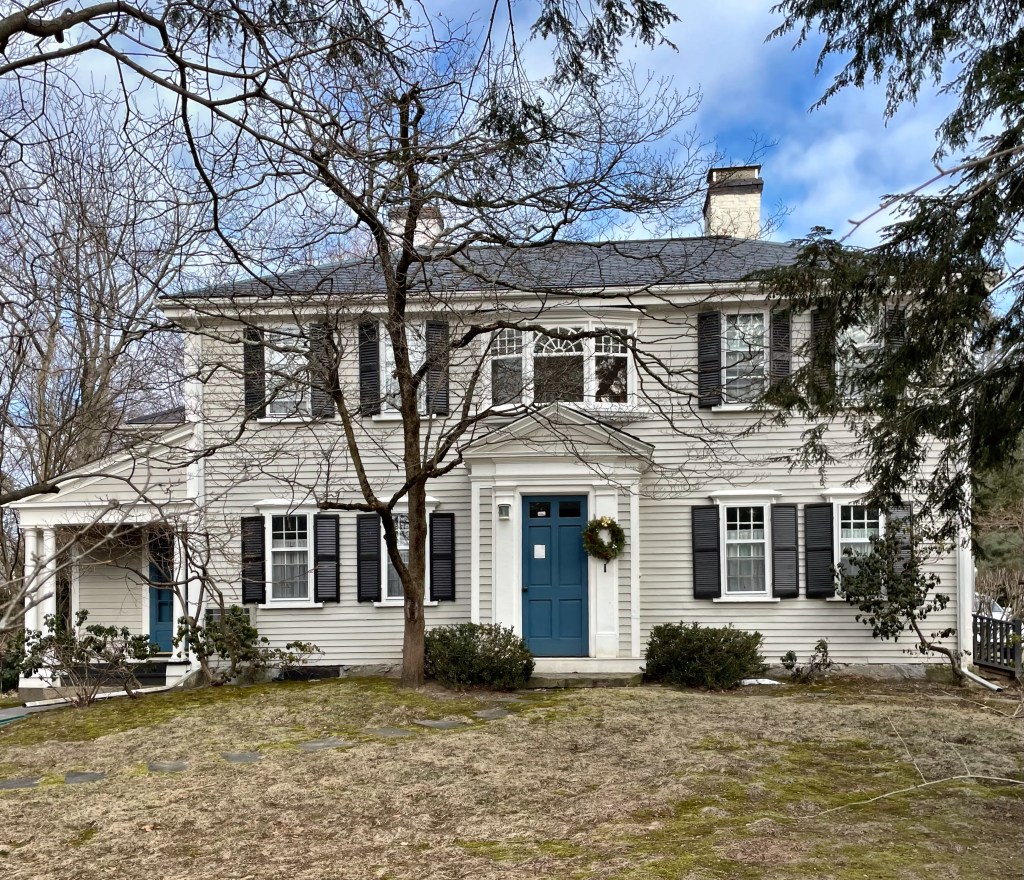
One of the oldest extant homes in Waban Village, Newton, is this 18th century farmhouse which is an excellent example a Federal-period home in the Boston area. Dates of construction for this house have ranged from c.1765 to 1790. The earliest recorded ownership of 38 acres of land at this location is attributed to Eleazer Hyde (1664-1731), one of Newton’s earliest citizens and one of a long line of Hydes in Newton. From 1772 to 1791, the house was owned by Josiah Starr. Immediately after, this property was owned by a housewright named Capt. Ebenezer Richardson, who possibly built or re-built this house in the current configuration. Thaddeus Tower owned the land from 1844-1866, when the City of Boston took a portion of it in 1848 for the new Cochituate Aqueduct, which ran right behind his home. Not long after, Thaddeus sold the farm to Edward Wyman, a linen importer from Roxbury. He subsequently sold it to his brother Dr. Morrill Wyman in 1869. Dr. Morrill Wyman sold 150-acre property to developers, never appearing to have lived in the home, after the railroad came west from Boston in 1886 and increased the value of the surrounding farmland, later known as the village of Waban. All of the land was developed with homes, and all that remains of the old farm is the farmhouse seen here.
This farmhouse is unreal… Located on a rural back road in Millbury, I came across this rambling old Cape house with a stone wall and everything! The home appears to have been built in the late 18th or early 19th century, possibly as a half-cape (with the door and two windows to the right) for Emery Bond, or possibly his father, Oliver Bond. The home (like many Cape houses) was added onto as the family grew and finances could necessitate a more substantial house. It likely added the two bays to the left of the front door next, then bumping out the sides by the 20th century to give it the present, elongated appearance. It’s not often that a once-modest Cape house stops me in my tracks!
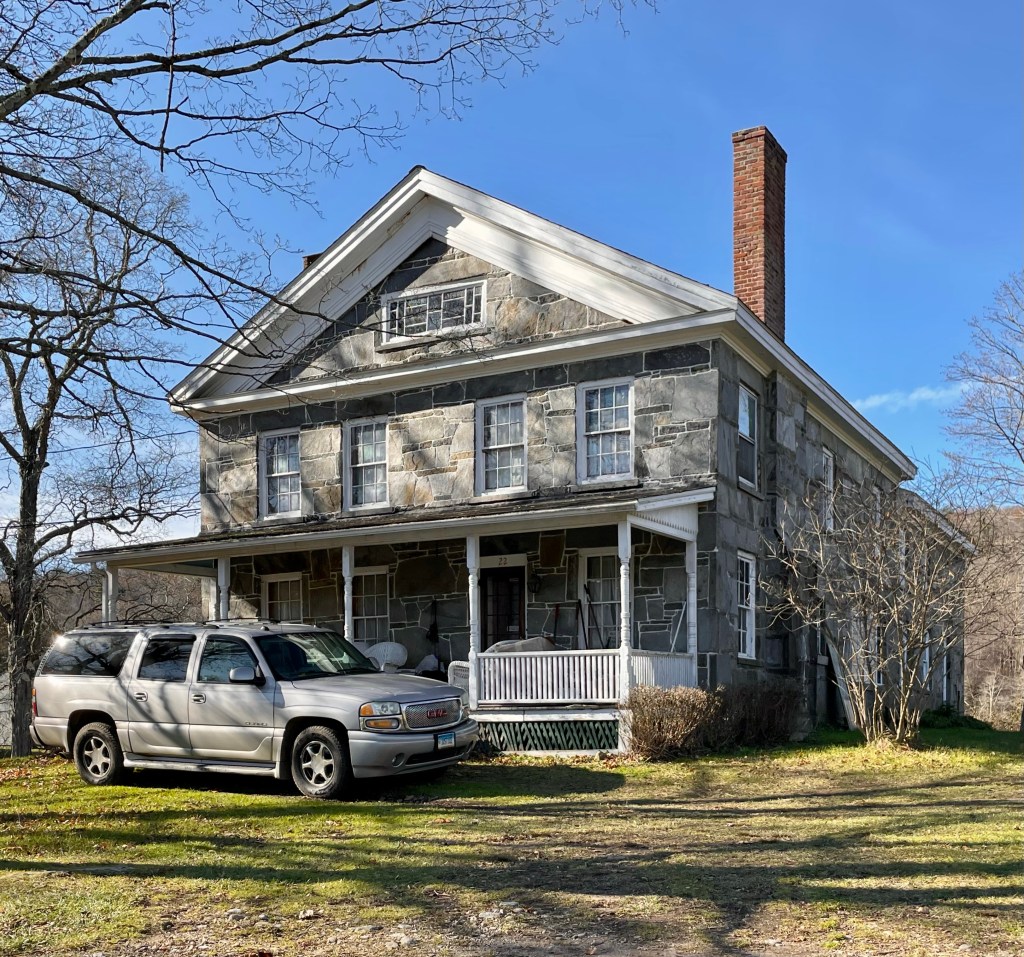
Known locally in Canton as the “Stone House,” the Barber-Perry House was built in 1843 by two brothers, Volney and Linus Barber, seemingly for their brother, Samuel. They used local stone for the construction, that was quarried to the north of the property. The house was bought by George W. Lamphier in 1866 and by Thomas M. Perry in 1944. Perry was a physicist working on gears for naval ordinance during the war. He worked in a shop on his property and soon started the T.M. Perry Company in 1955. The property here is still a working dairy farm, known as Perrys Dairy, and is reportedly the last working dairy farm in town!
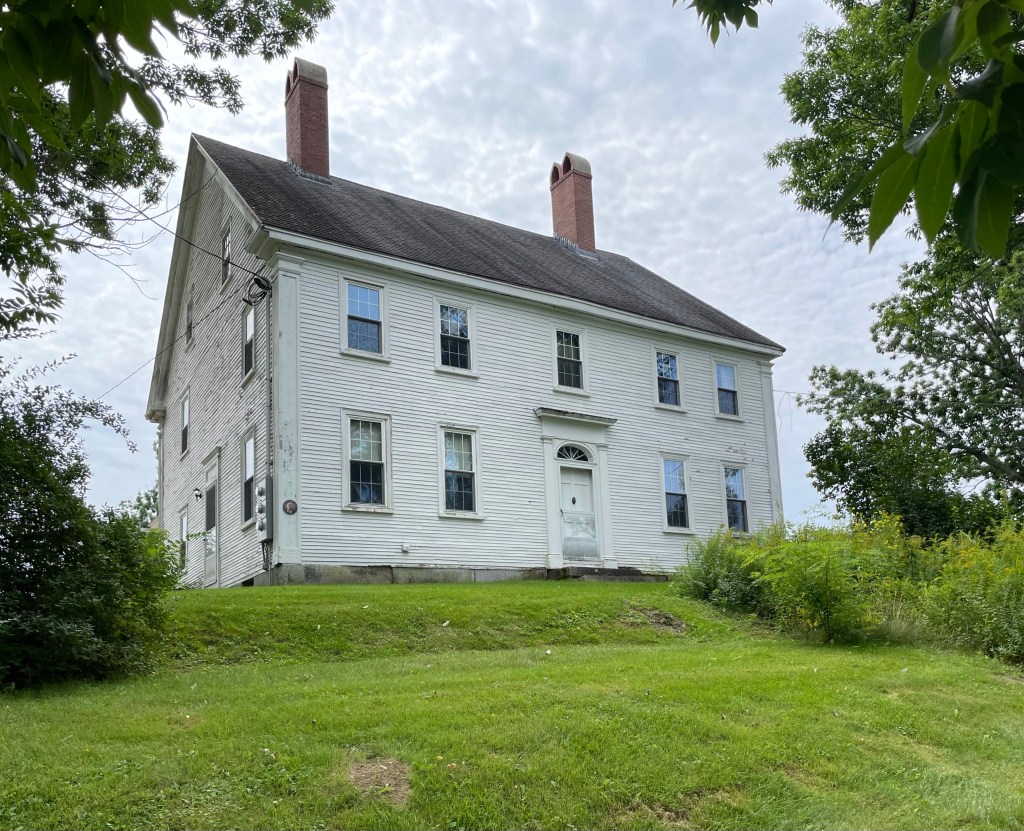
Beginning in 1798, sea captain John Bickford (1765-1813), purchased a 127-acre farm which extended from the newly laid turnpike to the Oyster River. Bickford was a resident of Salem, Massachusetts, but owned his family’s homestead across the river on Durham Point and also purchased five other farms in the area but did not live on any of them. The Wagon Hill farmhouse was built in 1804 and is a great example of a vernacular Federal style house. In 1814 while on a voyage to the southern tip of Africa, Captain Bickford died. All of his New Hampshire property was sold except for this Durham farm which remained under the management of his widow, Mary Bickford. She worked as a housekeeper for Captain Joseph White in Salem, and rented out the Durham farm. In 1830, the farm was sold to Samuel Chesley, and it remained in the ownership of four generations of the Chesley family. Here, the family ran a diversified farm, from sheep, to ducks, to apple orchards. In 1960, the farm was sold to Loring and Mary Tirrell. Farming had ceased entirely by the time the Tirrells moved into the house but the fields were kept open and it’s agricultural past was honored by the placement of an old wagon on the crest of the hill. Over the years, the farm has become known to local residents as Wagon Hill Farm. It was purchased by the town in 1989, and serves as a lasting remnant of agricultural history and an amazing preserved open space in the town.
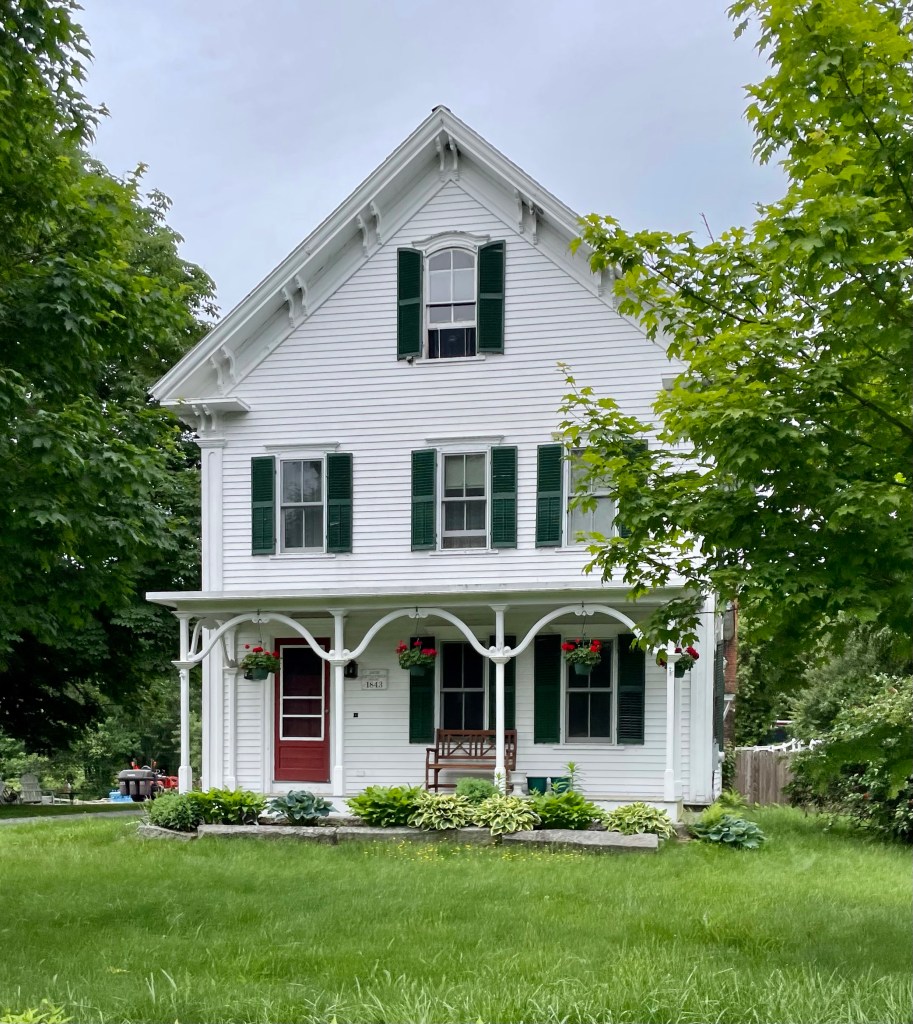
One thing I really love about small towns in New England is the prevalence of amazing old homes on the winding back roads. Located in Boxborough, MA, the Jacob Littlefield Farmhouse showcases the agricultural character and charm seen in the town. The farmhouse and outbuildings were built by Jacob Littlefield, who likely hired a housewright from town as the home is a near match to a home built on a nearby street. Mr. Littlefield was a farmer from Wells, Maine with seven children and a wife named Anna. After his death, his wife Anna owned the farm, until her death in 1896. Their son Albert ran the farm from about 1896-1922, after which time Jacob’s grandson Earl was the owner. Earl was taxed in 1928 for ownership of two horses, 17 cows, a bull, the house, barn and shed, tool house, ice house, root house, hen house, garage, and a second house on 101 acres. He resided here until 1929 when it was sold out of the family. Since then, subsequent owners have restored the home and the various outbuildings to maintain the architectural and historic integrity of the property. We need more stewards of old homes like this!
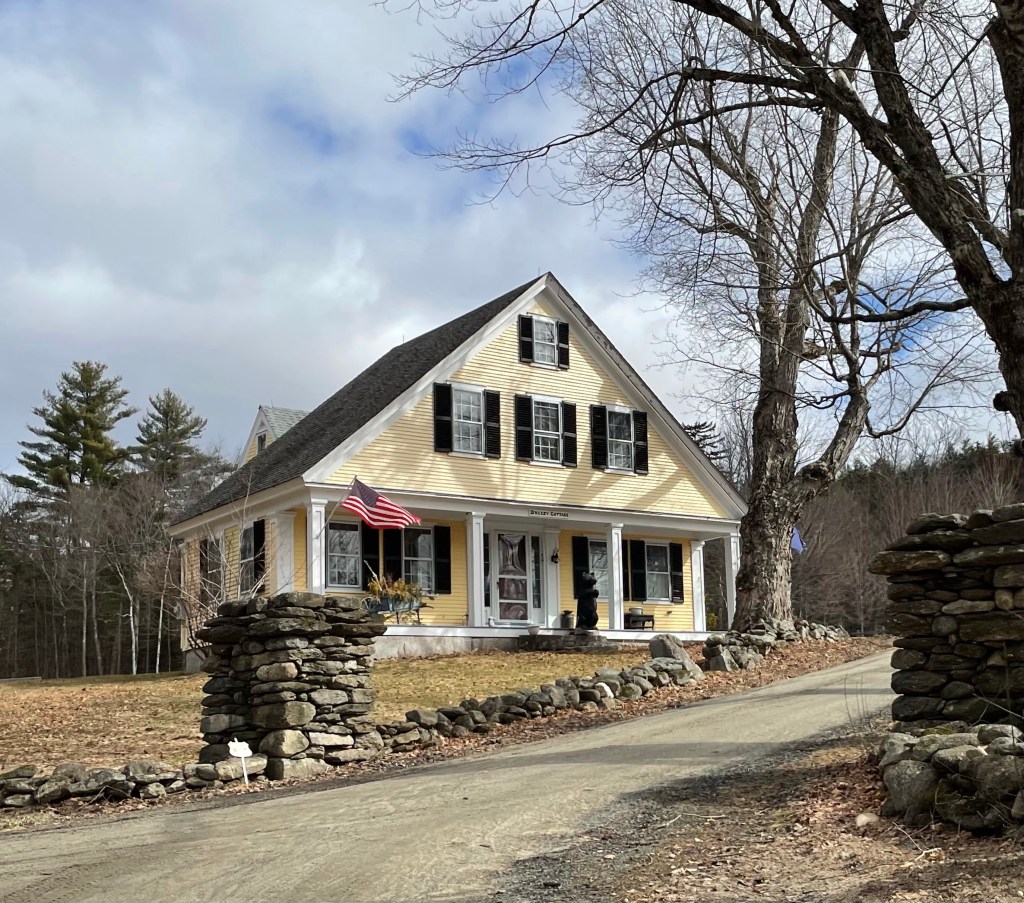
On the backroads of the rural town of Wilmot, NH, I stumbled upon this perfect Greek Revival cottage tucked away on a dirt road. The home was built in 1840 by Col. Samuel Thompson, likely operated as a farm. The property was purchased by the Tewksbury Family decades later, who likely gave the home its name “Breezy Cottage”, after an older colonial home nearby, and subsequently the name of the street in which it is sited. The Greek Revival home is symmetrical with a wide, gabled roof and upper floors overhanging the recessed front porch. The home features bold corner and entry pilasters.
All I want for Christmas is a brick Federal house! This home in Stockbridge, Massachusetts was constructed in 1830 by Thomas Carter (1777-1863) and his wife Anna. The couple farmed the property and had eleven children (plus two who died in childbirth). According to a family history, the lime for the mortar on the home was burned in a kiln on the property by Thomas. The ancestral home remained in the family for generations, including by John Calvin Calhoun Carter, a town selectman, who added a full-length porch on the home in the mid-late 19th century (since removed). The home’s rural charm remains even-though it sits on a busy road in the Berkshires.
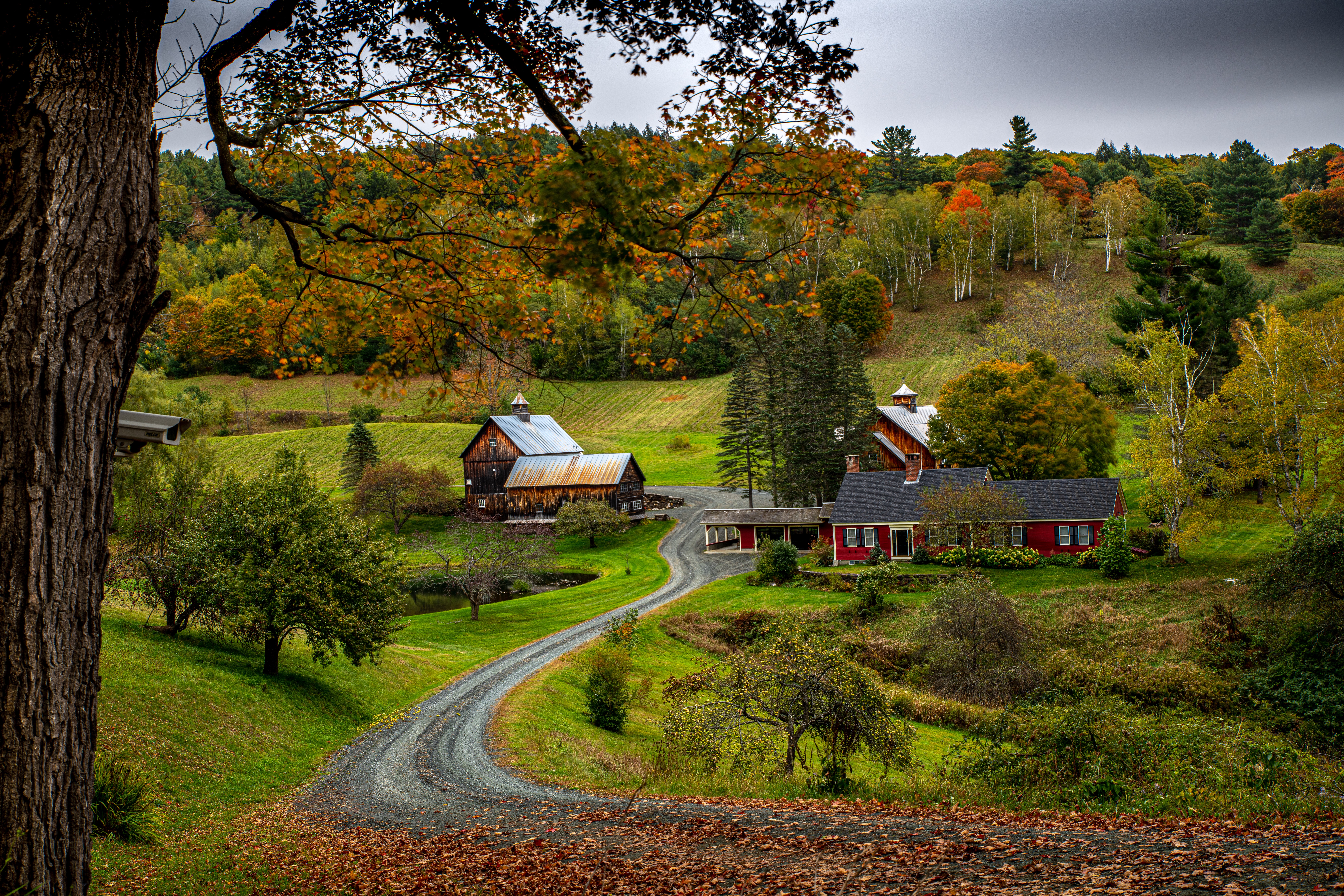
Without question, this property is the most photographed site in the tiny town of Pomfret, Vermont, if not the state. The property dates to the late 18th century when John and Samuel Doten moved to the newly settled town of Pomfret Vermont, overlooking the growing town of Woodstock in the valley below. The two brothers acquired vast farmland on the hills of Pomfret and each built farmhouses adjacent to eachother, with Samuel getting elevated land and John developing the land sunken off what is now known as Cloudland Road into this stunning property. Sleepy Hollow Farm remained in the Doten family for centuries until the 1950s, when the owners sold the property to move to Woodstock and work for Laurance Rockefeller, the famous philanthropist and conservationist, who later donated his Summer home in Woodstock to the National Park Service. The property sold numerous times in the late 20th century, and is presently owned by Aerosmith guitarist Joe Perry and his wife, Billie. They are clearly great stewards to the property’s rich history and various outbuildings, and must not care too much to have swarms of photographers at the end of their driveway year-round!
Away from the busy coast of Kennebunkport, Clock Farm, a mid-19th century farmhouse with an odd clock-tower caught my eye while driving by. Clock Farm is a rambling extended farm complex that remains a landmark in the more rural section of town. According to historians, the oldest part of the complex was a home that was later converted to one of the ells, was built in 1773 by a Peter Johnson. By the 1850s, the 1 1/2-story Greek Revival home and barn were built. In the late 19th century, the property was purchased as a summer residence by Thomas Lemmons, factory owner in Lawrence, MA. The story associated with the clock is that originally was mounted on his factory, but kept such bad time that his employees complained. In the early 20th century Emmons had the tower specially built to house the clock, which was transported here from Lawrence.