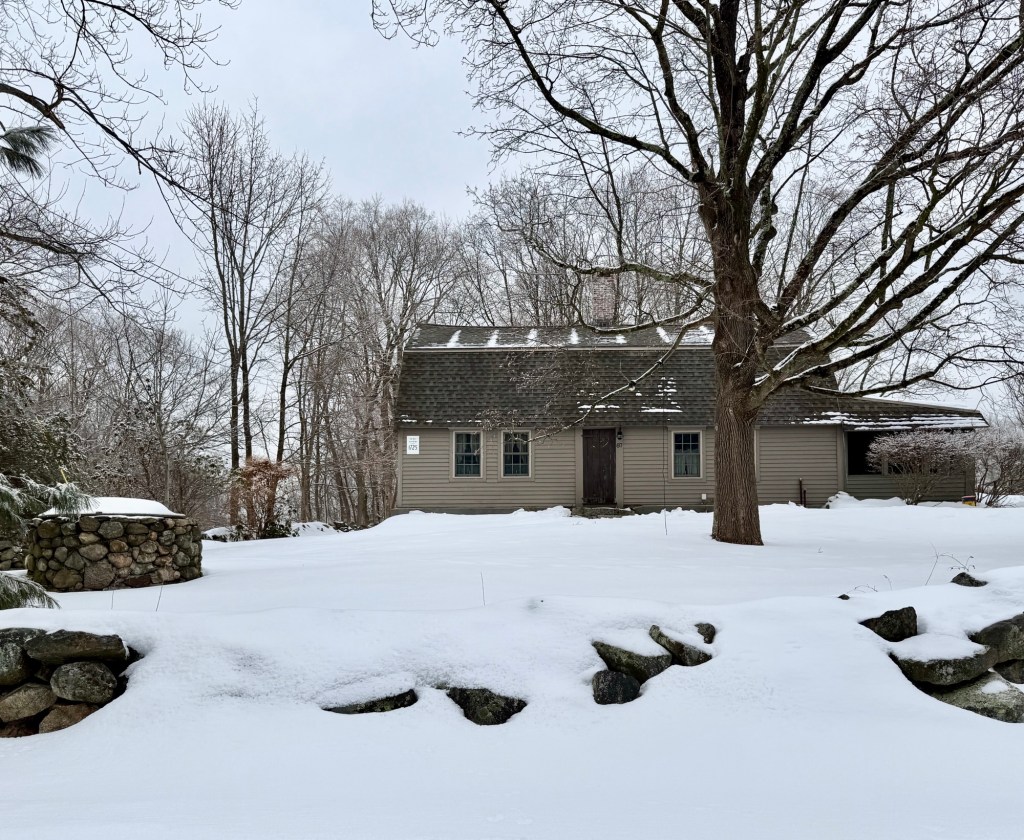
Daniel Smith House // c.1750

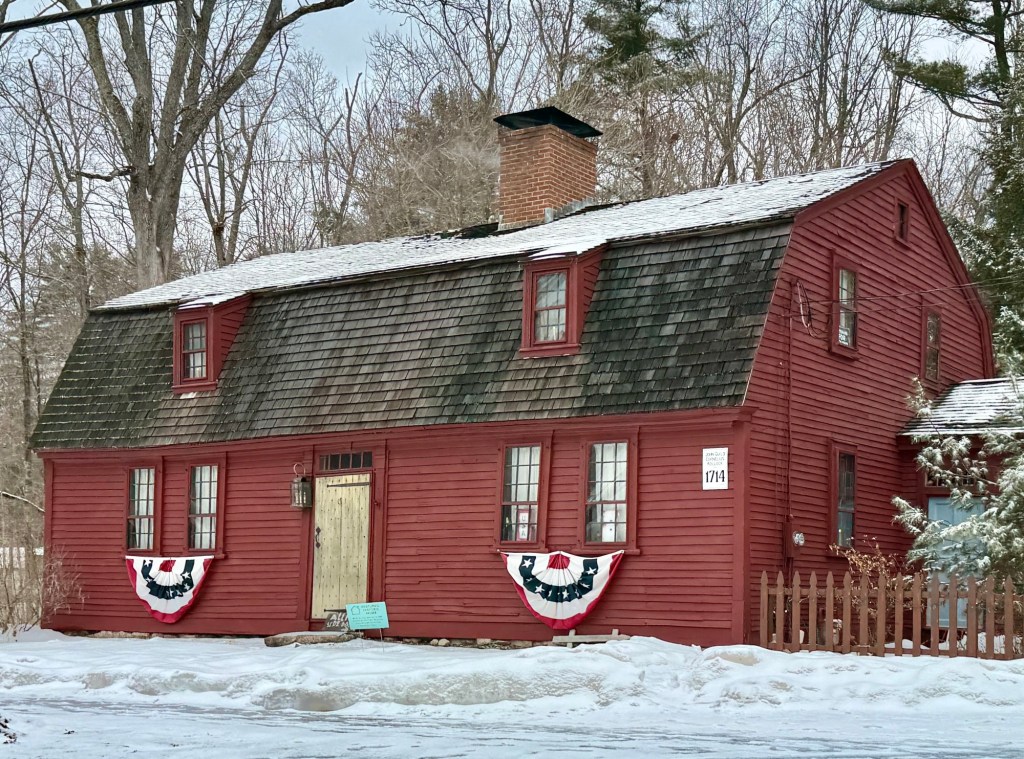
The Daniel Smith House at 362 Benefit Street in Providence, Rhode Island, stands out in the neighborhood as an uncommon gambrel-roofed Georgian-era residence, but it was not built here! The home was built by about 1750 for Daniel Smith, and may possibly date to around 1725 a year after he was deeded land from his father and the same year he married his wife, Dorcas Harris. If the home does indeed date to around 1725, it would likely be the oldest extant house in Providence! The home was originally located across town on Chalkstone Avenue, and moved to the present site on Benefit Street in 1982 to save it from institutional expansion by Roger Williams Hospital. The hospital set a date to demolish the farmhouse, then covered in asbestos siding, and offered the building for free to someone who could move it off the site. After tense weeks and a nearing deadline, Angela Brown Fischer, a real estate executive, agreed to pay the costs to move the building across town to a site on Benefit Street, where it remains today. The home was put back together and restored by Newport-based architect, Richard Long, who worked as principal architect for the Restoration Foundation of Newport before opening a private architectural practice. What a great preservation success story!

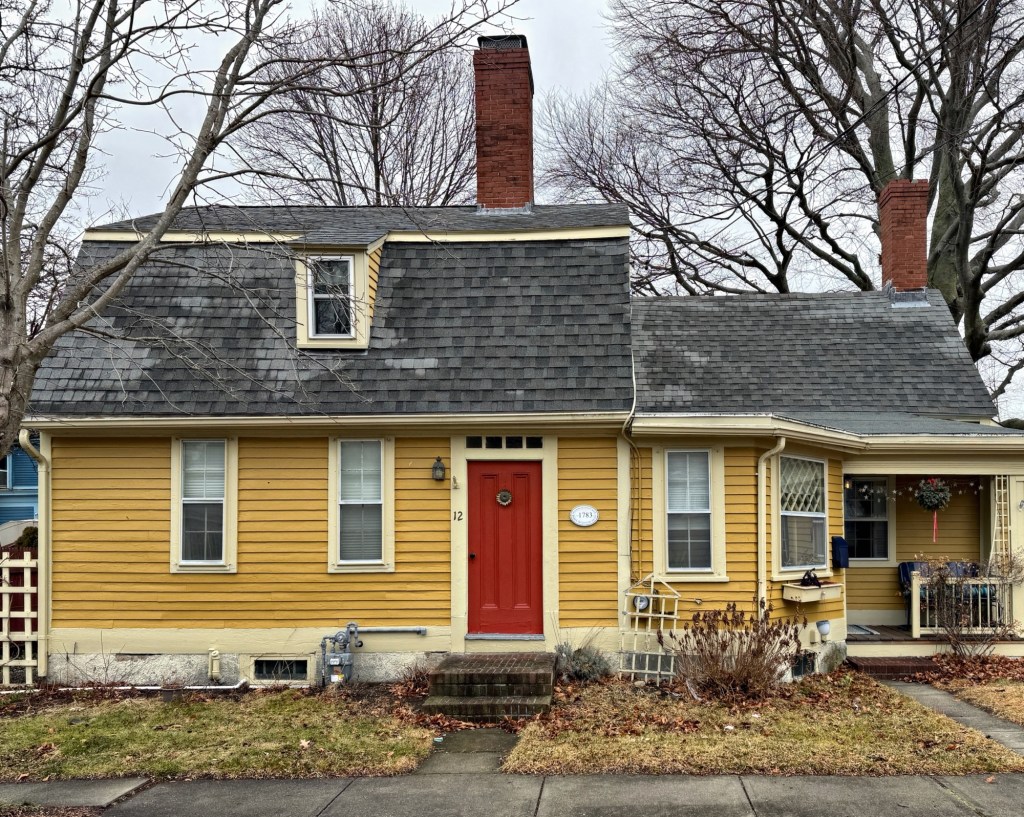
Brown-Crocker House // c.1836

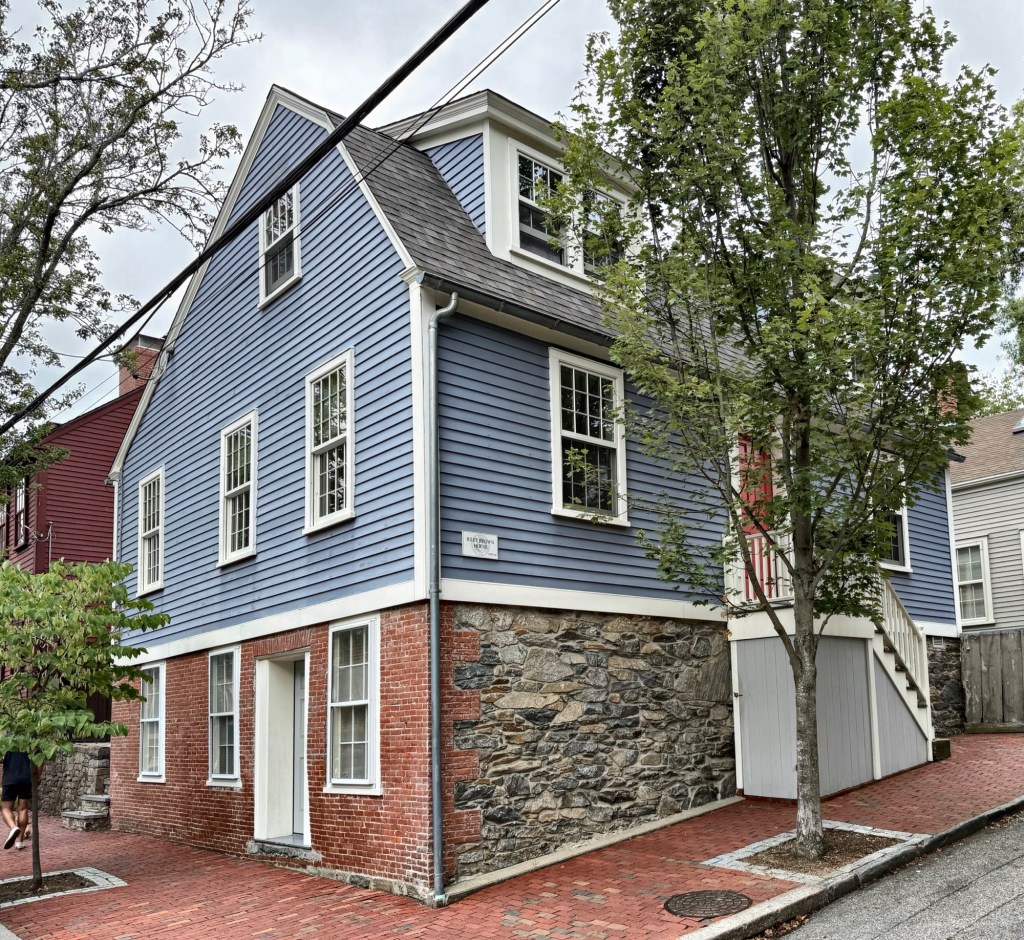
In 1829, Riley Brown, a housewright, purchased a house lot at the corner of Thayer and Transit streets in Providence, and by 1836, built this charming gambrel-roofed cottage, which is one of the most charming in the city. Riley Brown lived in the house next-door at 6 Thayer Street (1829) and on available land, built this 1-1/2-story dwelling on a full-height raised basement on speculation. It is possible that the house could have dated to the 18th century, and was possibly moved to the site from a nearby location, given the distinct gambrel roof and Georgian qualities. The residence here was sold in 1836 to John Crocker, who resided here with his family until his death in 1865. The Brown-Crocker House stands out for its unusually high basement of brick and stone, with a stair ascending up to the central entry and the gentle saltbox roof off the rear. Two shed dormers were likely added in the 20th century to make the house’s second floor more liveable.

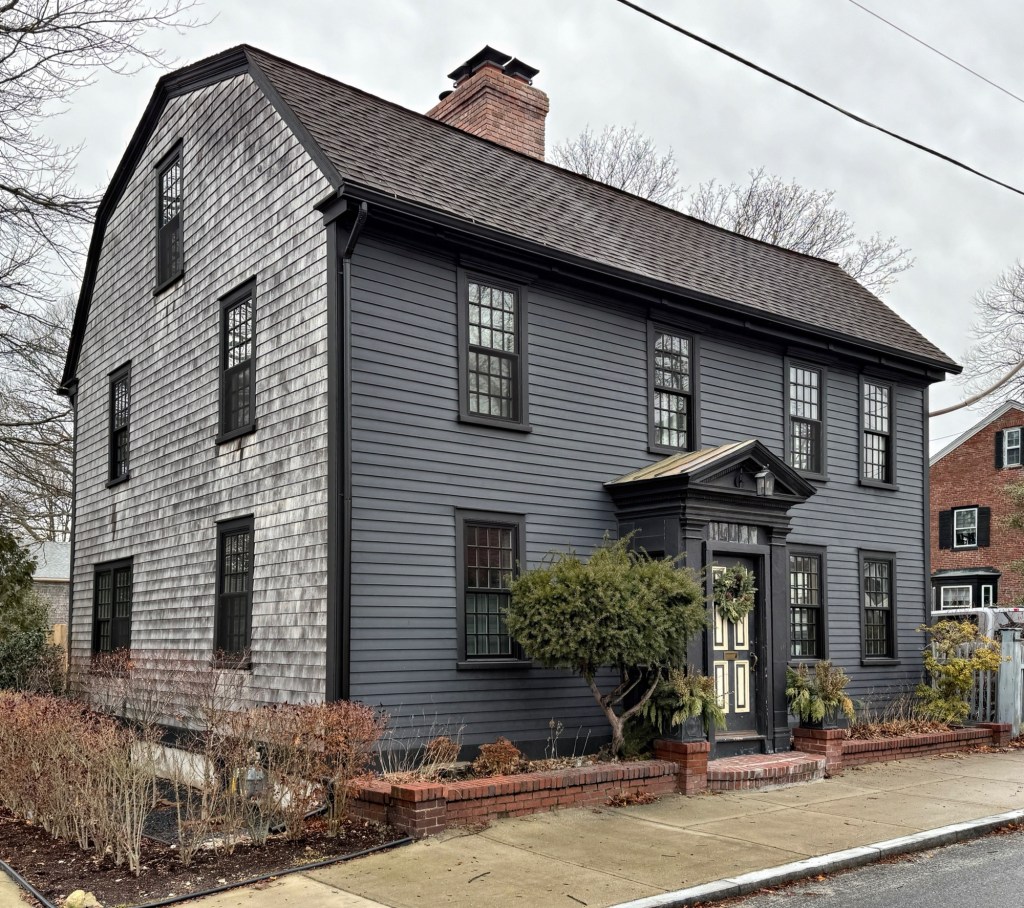
Shillaber House // c.1768

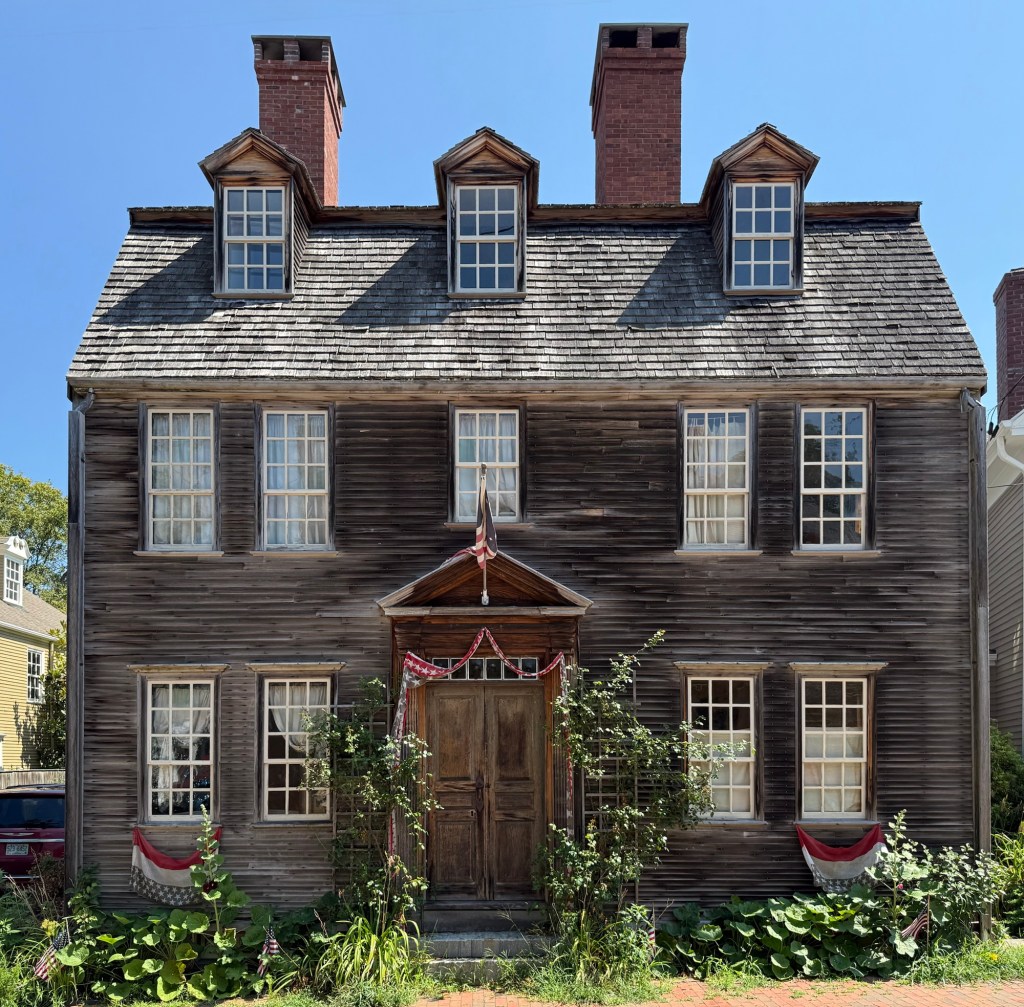
The Shillaber House on Washington Street in Portsmouth, is one of the most photogenic residences in the charming port city. The Georgian-style residence was likely built in the late-1760s, after Joseph Shillaber (1725-1791), a potter, purchased land here in 1766. The residence is of a typical form for 1760s Portsmouth, with a gambrel roof with pedimented dormers and a slightly off-center entry with Georgian style pilasters and pediment. In the later half of the 19th century, the house was “Victorianized” with a bracketed door hood and bay windows at the facade, but the house would be restored by later owners to a version close to its original conditions. The exposed clapboard siding adds to the home’s unique charm.

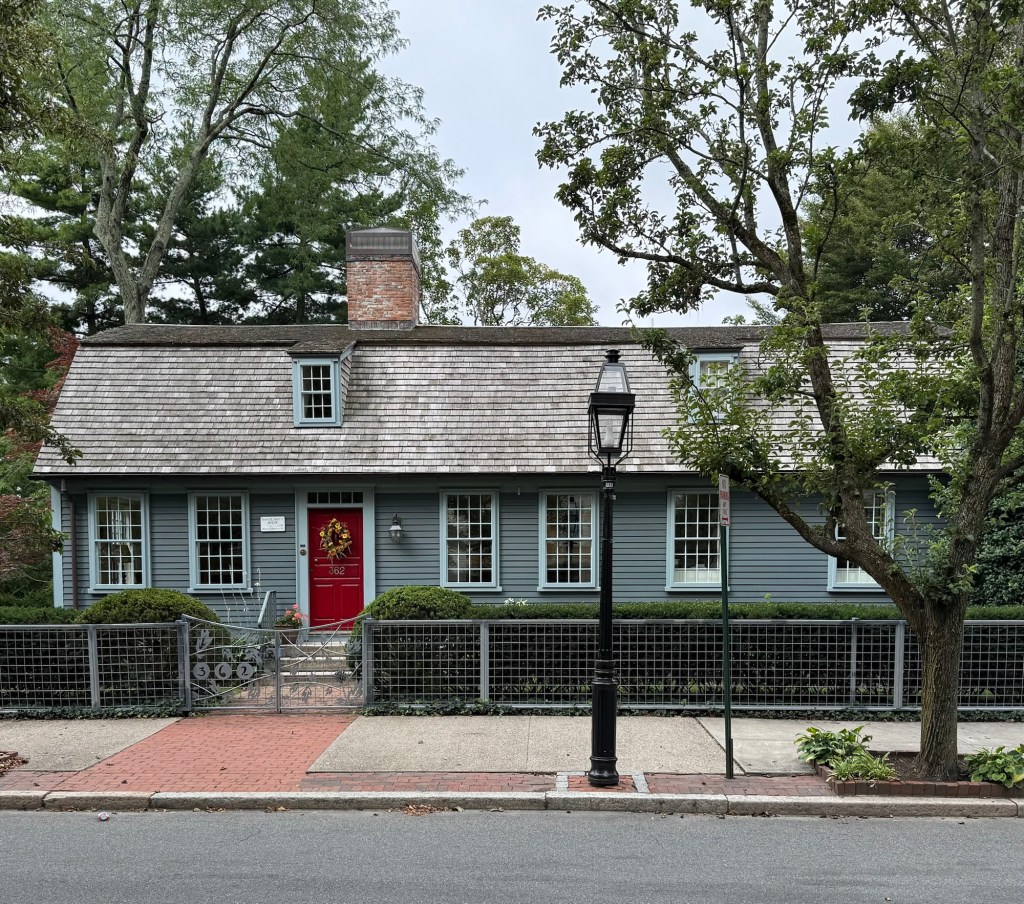
Cobb-Bartlett House // 1754

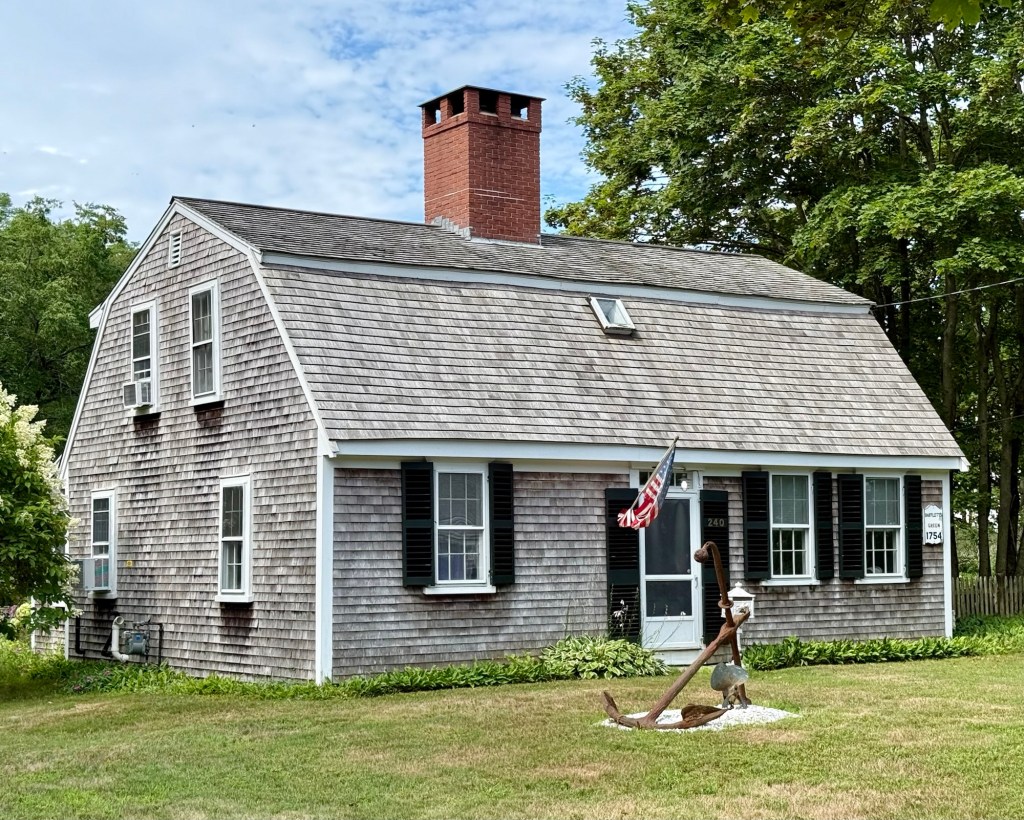
The Cobb-Bartlett House at 240 Main Street in Kingston, Massachusetts, was built around 1754 for Gershom Cobb (1717-1799) where he raised his family. The gambrel-roofed Georgian house was built before the revolution, and may have originally been a half-cape and expanded to a full-cape in the late 18th or early 19th century. The property was sold by Cobb in 1768 to Captain Joseph Bartlett, and the property remained in the family for generations after his death in 1788. The house is a well-preserved example of a Cape style house with large, central chimney and clad with cedar shingle siding and roof.

Lynch House // 1889

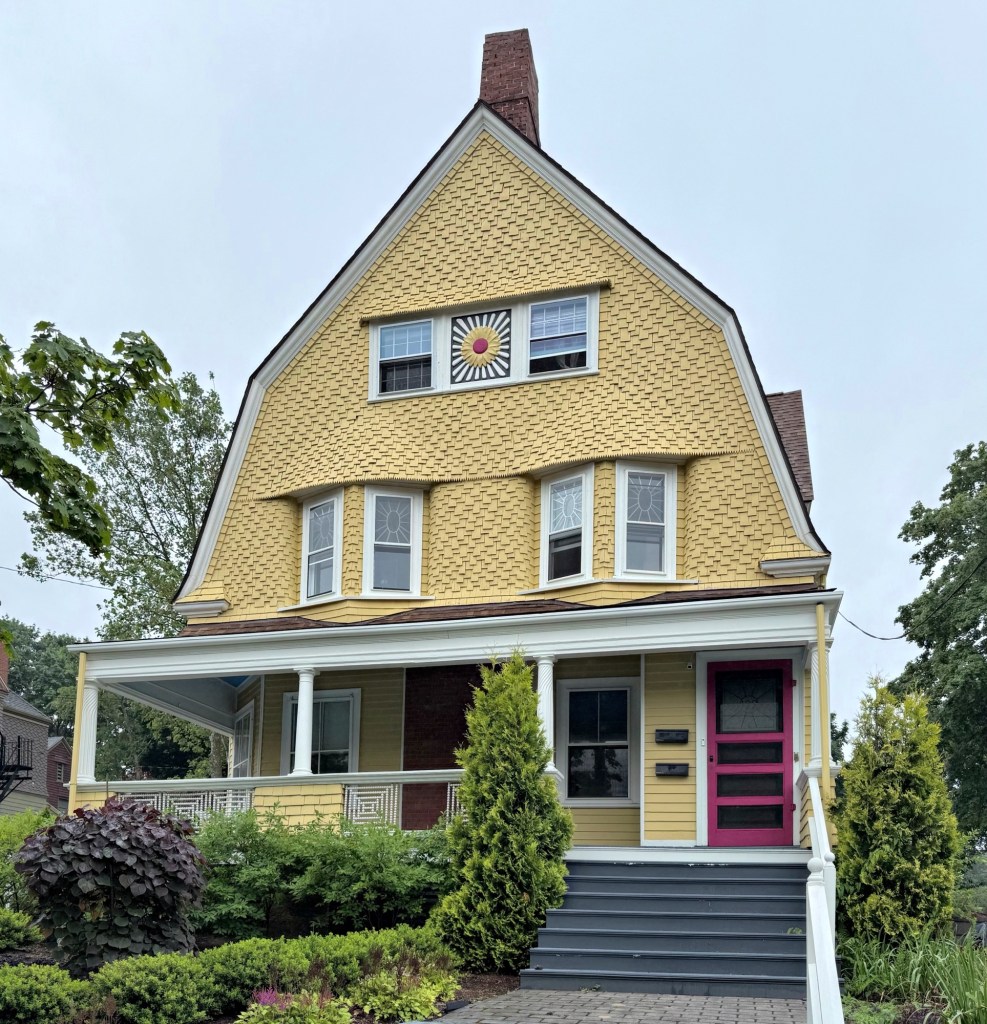
One of the most unique and enchanting houses in the Ashmont Hill neighborhood of Dorchester is the Lynch House (aka the Sunflower House) at 102 Ocean Street, a landmark example of the Queen Anne architectural style. This residence was designed in 1889 by architect Samuel J. Brown, who worked in the firm of Cummings and Sears before opening his own office in Boston, where he specialized in residential designs. The first owners were Edward C. Lynch, a stair builder, and his wife, Petronella P. Lynch, who was born in Sweden and emigrated to the United States. Architecturally, the Lynch House features a prominent gambrel roof that swells out over the second-floor inset windows, clapboard and shingle siding, sawtooth shingled details over the windows, and the sunflower motif in a panel at the third floor.

Hattie Furbush House // 1888

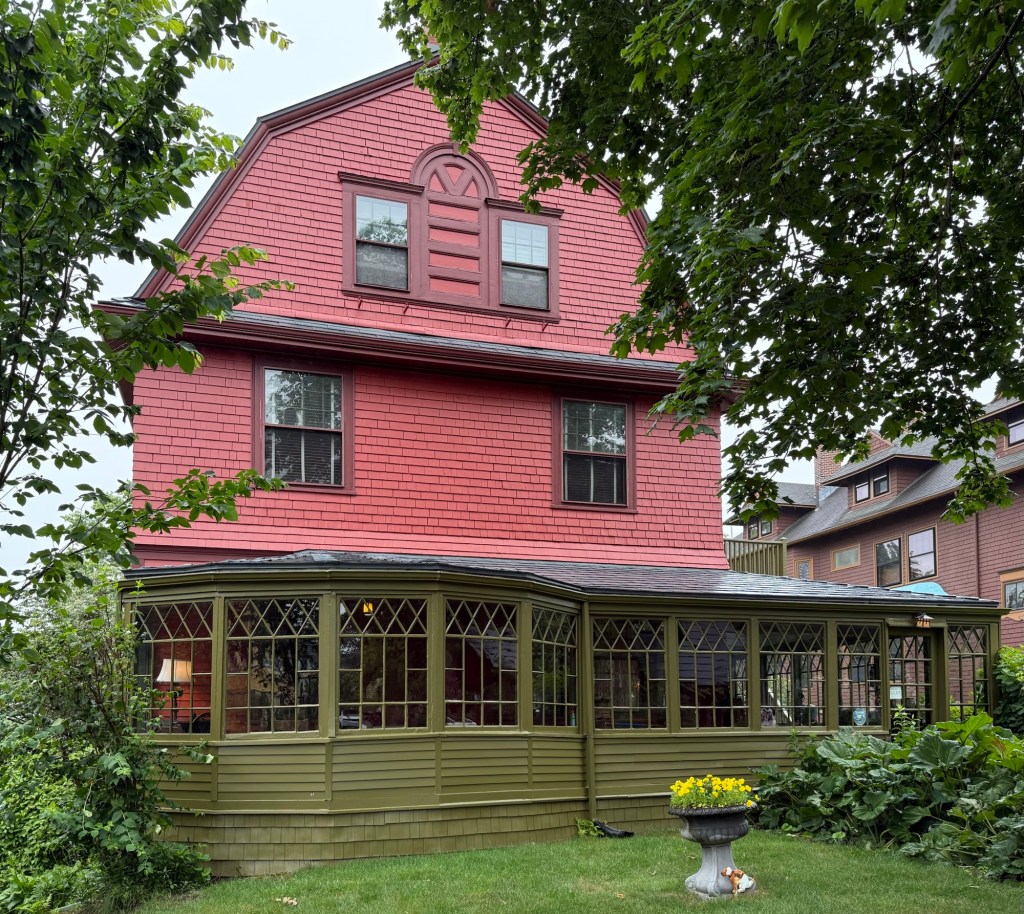
Located next to the Harrison Henry Atwood House on Alban Street in the Ashmont Hill neighborhood of Dorchester, this stately home with a broad, gambrel roof oriented to face the street was also built by the architect and neighbor, Harrison H. Atwood. Appointed City Architect of Boston in 1889, Atwood designed schools, firehouses, and other public buildings, and just before this, designed a number of homes, primarily in the Shingle and Queen Anne styles in Ashmont. While he specialized in Victorian styles, Atwood was well-versed in the Colonial Revival style, as evidenced here. Built in 1888, this stunning house was constructed for owner, Harriett “Hattie” Dinsmore Furbush (1862-1950), who was an active member in a local organization, the Ashmont Tourists Club, a women’s social club devoted to talking books, travel, and life. The club often met in the library of Ms. Furbush’s home, which likely migrated out to the gorgeous enclosed porch with its multi-light windows.

Captain John Stacey House // 1731

In 1731, Captain John Stacey, a merchant and shipowner in Marblehead, had this gambrel-roofed house built on family land. Due to its orientation from the main street, a passageway allowed access to the rear of the property where other buildings were constructed by the family. By 1850, the house was jointly owned by Hawkes and Brown, with Mr. Hawkes operating a store in the first floor corner room. Eventually, by 1912, Brown had bought the whole building and moved his meat market into the store in this building. The property was later purchased and restored by Donald Mackenze Stacey (1916-1998), a contractor and descendant of the home’s original owner, John Stacey. Donald was a veteran of the U.S. Navy and served in World War II, before moving back to Marblehead and worked in the building trade. In town, he restored antique clocks, furniture, and buildings, including the Old Town House and Abbott Hall, the current town hall

Captain John Felt House // 1757

The Captain John Felt House on Federal Street in Salem, Massachusetts, is a surviving Georgian residence with ties to the American Revolution. In May 1757, John Felt purchased a lot on present-day Federal Street from Benjamin Lynde for 52 pounds, and began building his family home here. John Felt, a Salem native, worked as a “shoreman,” but was primarily an owner of vessels involved in the coasting trade, also owning a large warehouse to store the goods from the West Indies brought in by his ships. Felt’s title of “Captain” came from his involvement in the Essex county militia. Captain Felt was a key figure in Leslie’s Retreat, also called the Salem Gunpowder Raid, which took place on February 26, 1775, in Salem. British Colonel Alexander Leslie led a raid to seize suspected cannons from a makeshift Colonial armory in Salem. Instead of finding artillery, Leslie encountered an inflamed citizenry and militia members ready to stop his search. These colonists flooded Salem’s streets, preventing Leslie’s passage and forcing him to negotiate. Ultimately, the Salemites convinced the British Regulars to stand down and return to Boston. No shots were fired, and no one was seriously injured—but tensions were high and a skirmish was evident until Captain Felt stated, “If you do fire, you will all be dead men.” Had a soldier or a colonist gone rogue and fired their weapon, the American Revolution might have begun in Salem, and not Concord just weeks later. After the Revolution, Captain Felt sold his house and moved to present-day Danvers. After centuries of successive ownership by merchants, today, the Felt House is used (at least in part) as professional law offices.

Bowler House // c.1760

This beautiful Georgian house in Newport, with its prominent gambrel roof oriented toward the street, was built by 1760 and owned by Metcalf Bowler (1726-1789), a merchant, politician, and magistrate. Bowler was for many years speaker of the house in the Rhode Island colonial assembly, and it was discovered in the 20th century that he was a paid informant (spy) for the British during the Revolutionary War. The house was owned by Metcalf before he would purchase what is now known as the Vernon House, an even more stately Georgian mansion designed by Peter Harrison. This house was sold, and later owned by Charles Wickham, a Captain in the war, and later to the Burdick and Merrill families.

Wright Homestead // 1767

This large, brick gambrel-roofed Colonial home in West Goshen, Connecticut, was built over decades beginning before the American Revolution and has remained in the same family ever-since! In 1767, Captain Jabez Wright (1737-1813) married Martha Baldwin of Goshen, and began constructing this farmhouse of brick. When the war broke out, he fought in New York, he also served as captain of a company of Connecticut militia, turning out to repel the British forces at New Haven. He would largely complete the home by 1787, and ultimately died in 1813. After successive ownership of generations of the Wright family, the property was owned by Henry G. Wright (1831-1917), a farmer who represented Goshen in the state legislature and held many town positions. The first Methodist sermons in town were also held in the home. Henry Wright died at 86 years old on this property, after being attacked by a bull. When entertaining guests, he showed others a prized bull, and possibly fell into the pen, and was trampled and attacked. The Wright Homestead is unique for its brickwork with bonds and burned headers, resembling many Colonial-era homes in Virginia, but this house can be found on the back roads of Goshen, Connecticut!