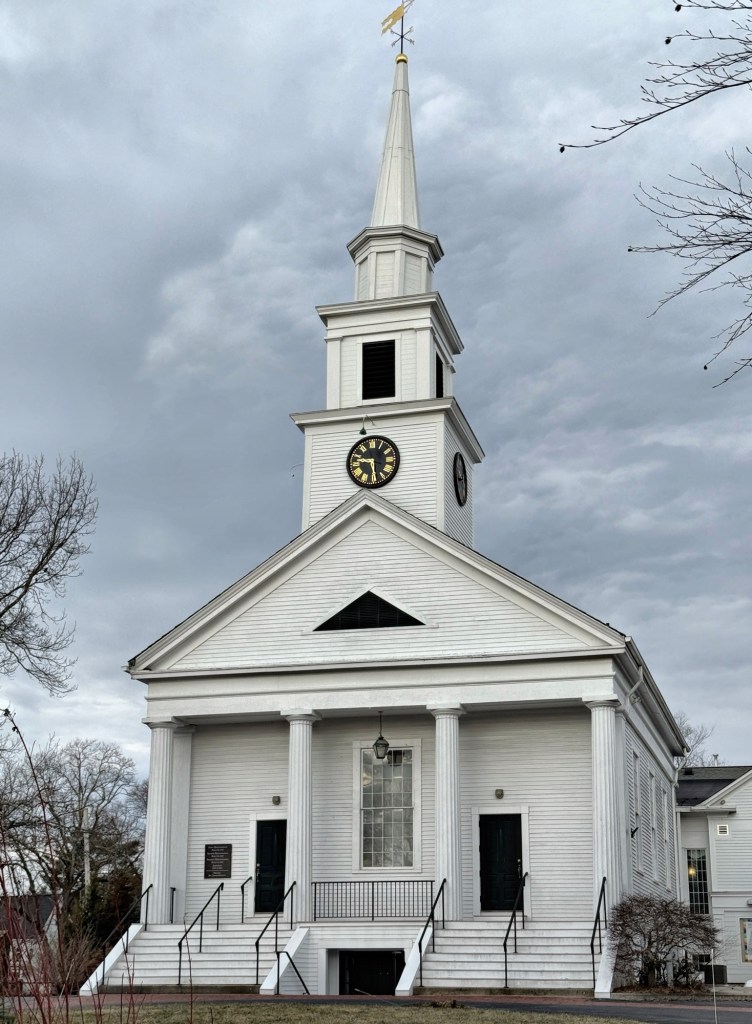
Bow Bog Meetinghouse // 1835

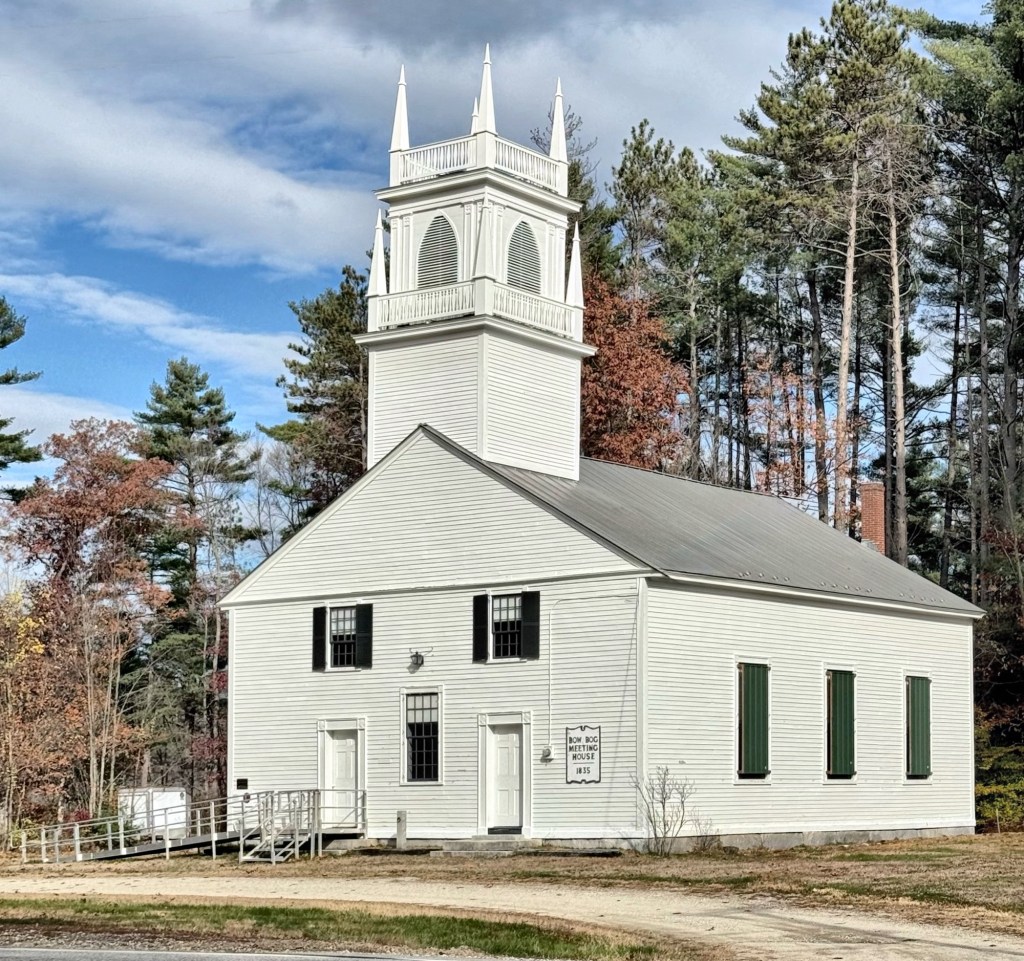
The Bow Bog Meetinghouse in Bow, New Hampshire, was built in 1835 for the First Methodist Episcopal Church and Society in town. Designed in the Greek and Gothic revival styles, the traditional form and paired entries with two stage belfry is adorned by finials and pilasters, showcasing an elegant blending of these two styles. built by George Washington Wheeler for the First Methodist Episcopal Church and Society of Bow in 1835. Mary Baker Eddy, founder of the Christian Science Church, mentioned Reverend Orlando Hinds as a contributor to her early religious teachings. She maintained close ties with this Church, donating funds for the bell in 1903. The Church provided religious instruction and social activities for 116 years and in 1951, the Church was closed and the Bow Bog Meeting House Society acquired the building. In 1970, they restored it to nearly its original condition, and it was acquired by the town in 1985.

Stone Village Unitarian Church // 1845

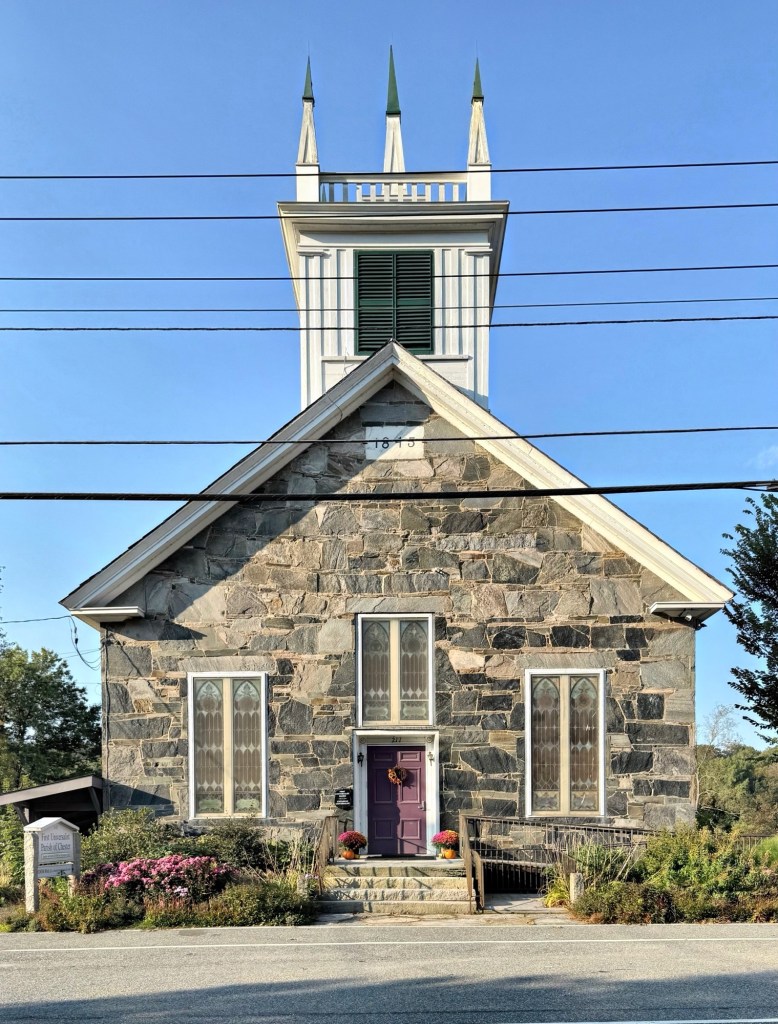
The Stone Village of Chester, Vermont, is said to be the largest collection of stone buildings in the state, and is anchored by its largest building, the Unitarian Church. Built in 1845, the Unitarian Universalist Church is one of a few dozen “snecked ashlar” buildings in the region, where rubblestone is laid up with mortar using small long stones called “snecks” to tie an outer and an inner wall together. The construction method is said to have been brought to the area by masons from Scotland and Ireland which is known there as ‘Celtic Bond’. Oral tradition state that Scottish masons from Canada introduced the technique to local masons while erecting a mill in nearby Cavendish in 1832. Local Chester resident, Dr. Ptolemy Edson became such a fan of the building that in 1834, he had his home, the first stone building in Chester, built in this method. Dr. Edson served on the building committee for the new village church, and likely pushed for a cohesive material and construction method for this church and other buildings soon after. The Stone Village Unitarian Church blends Greek Revival and Gothic Revival styles in a more vernacular way, typical in many rural Vermont communities. The building exhibits stained glass windows that were added sometime in the late 19th or early 20th century.

Old St. Stephen’s Church – Barker Playhouse // 1840

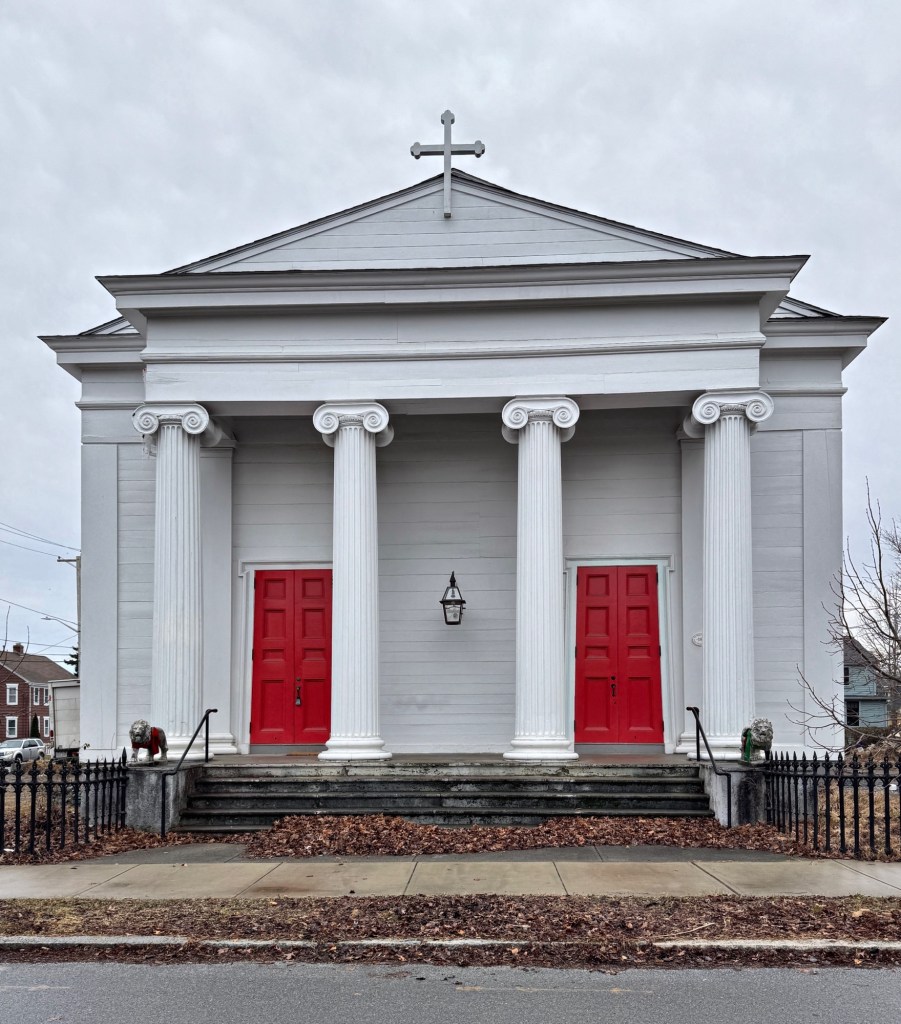
The old St. Stephen’s Episcopal Church in Providence’s Fox Point neighborhood is an architecturally distinctive Greek Revival style church building located on charming Benefit Street. The church had its beginnings in 1839, when the newly established congregation called on 29-year-old Francis Vinton to serve as their first pastor. The congregation funded this small church which broke ground in 1840, and before it was completed, Rev. Vinton resigned as Rector. The building, built of stone and covered in stucco, once had a spire and belfry above the main entrance. The congregation grew over the next decade and it was soon realized that a larger and more central church should be built for members, many of whom were wealthy residents with mansions surrounding Brown College. In 1860, the parish purchased a lot on George Street, and hired architect, Richard Upjohn to design the new church in the Gothic style. For reasons of location, and possibly social class, twenty-two men and women remained here at the less fashionable church and formed a new parish, the Church of the Saviour. The smaller, mission church with its stucco walls, remained until the property was sold in 1932 to house the Barker Playhouse, reputed to be the oldest continuously operating little theatre in the United States.


Westborough Unitarian Universalist Church // 1850

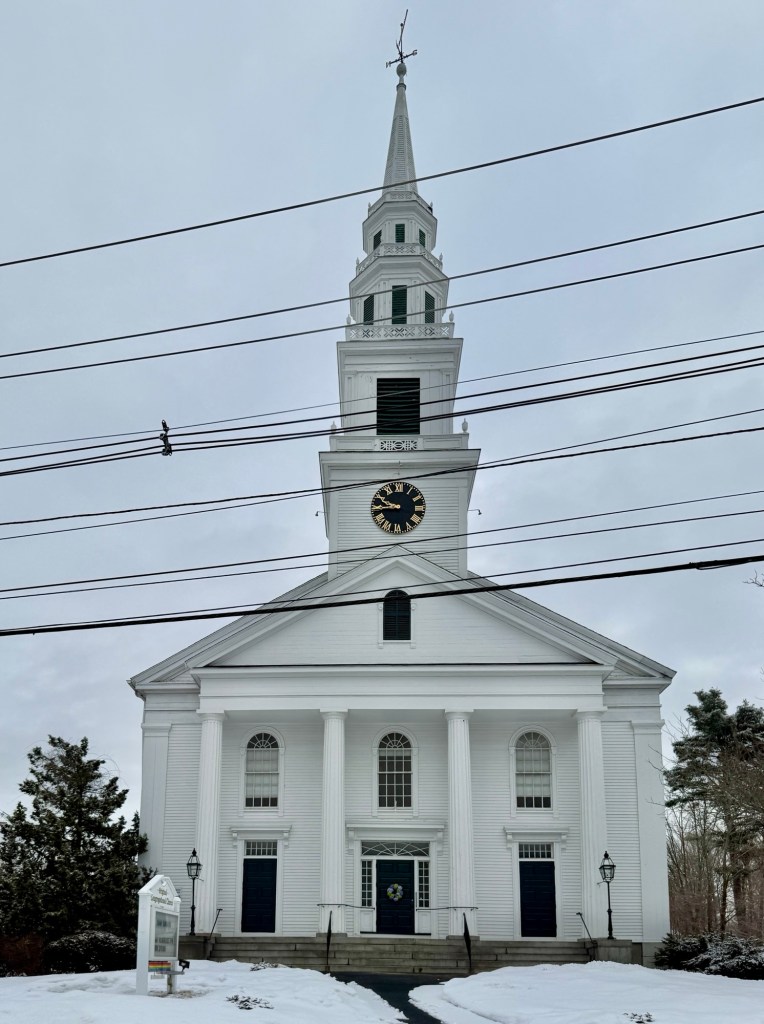
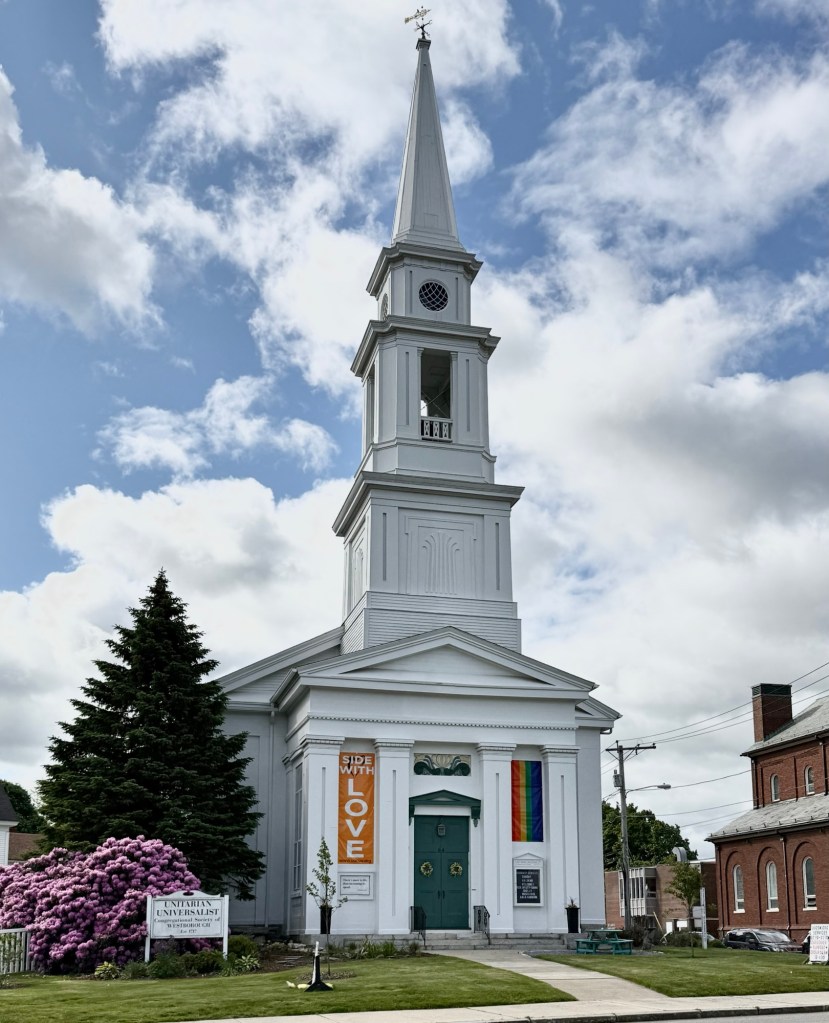
The Unitarian Universalist Church of Westborough, Massachusetts is architecturally significant as an excellent example of a ecclesiastical building in the Greek Revival style, but it is also significant historically as it tells a richer history of the community and New England as a whole. The Congregational Church has its roots in the first church in Westborough, established in 1724 under Reverend Ebenezer Parkman. The Religious Freedom Act of 1811 and the official separation of church and state in 1825 encouraged a diversity of religious views in Westborough and a branching out from the first church both spiritually and since churches needed new houses of worship. As a result, the local church in Westborough split due to differing beliefs, with the Congregationalists building a church and a few years later, the Unitarians building this church, both in variations of the same architectural style. The UU Church in Westborough was built by 1850 and was expanded as the congregation grew. The building remains nearly identical to when it was built except for the steeple, which in 1921, was in such bad repair that it had to be removed. Less than a decade later in 1930, member Isadore Forbes donated the funds to have the steeple rebuilt and a bell installed. 

Congregational Church of Westborough // 1834

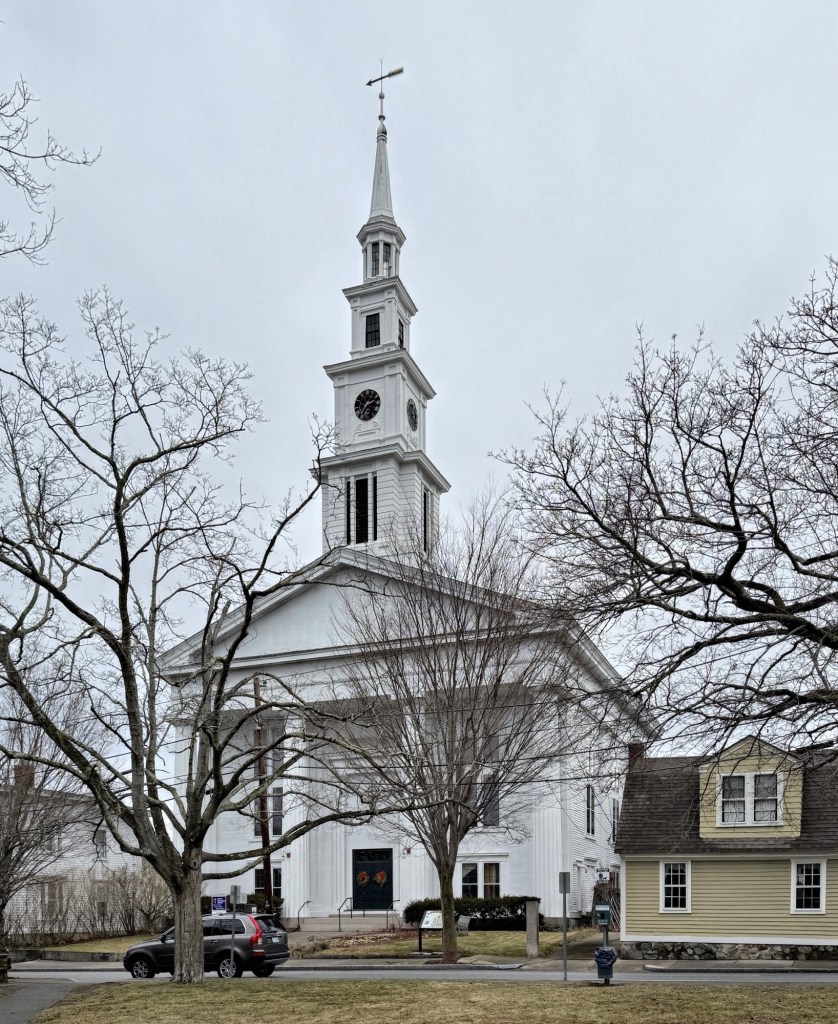
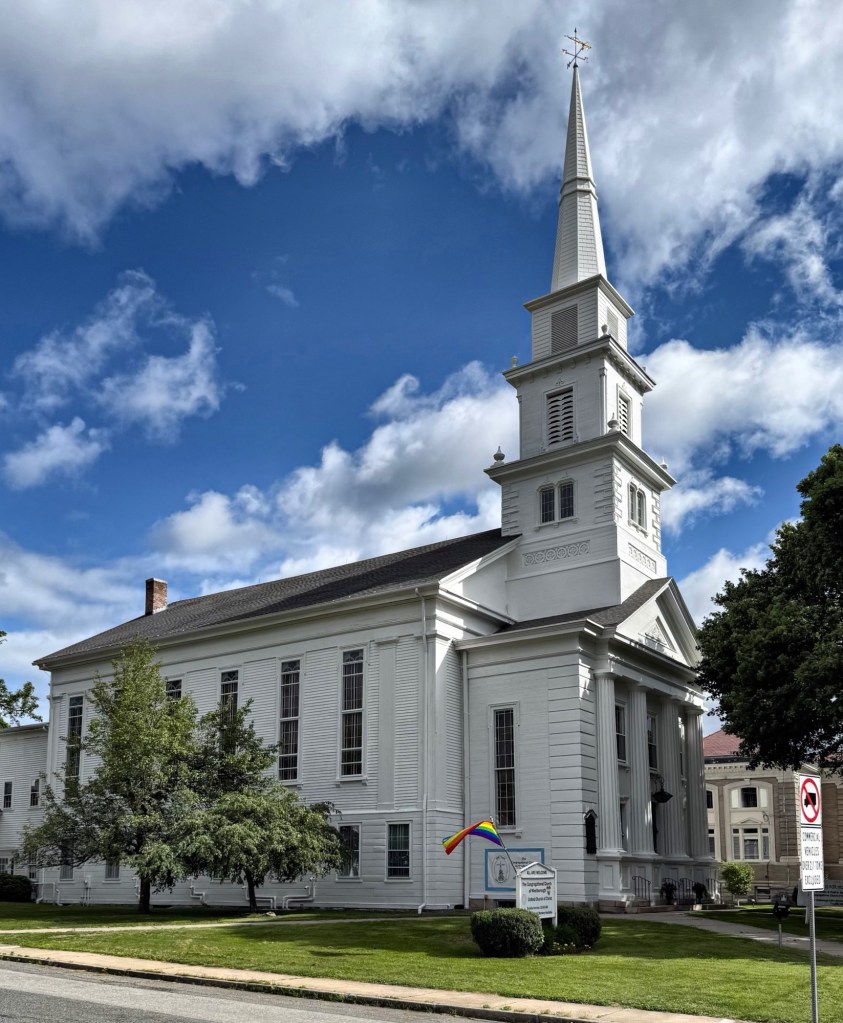
The Evangelical Congregational Church of Westborough, Massachusetts, has its roots in the first church in Westborough, established on Powder Hill in 1724 under Reverend Ebenezer Parkman. The Religious Freedom Act of 1811 and the official separation of church and state, encouraged a diversity of religious views in Westborough and a branching out from the First Church. As a result the church here split in 1834, with some members forming the Evangelical Society, and those who remained, became the First Congregational Unitarian Society. The newly formed Evangelical Congregation built this church at the corner of West Main and Church streets in 1834 and the building is a typical 1830s Greek Revival style religious building in the state. In 1869, the church was remodeled, where the first floor was jacked up to provide basement meeting rooms.

First Congregational Church of Abington // 1849

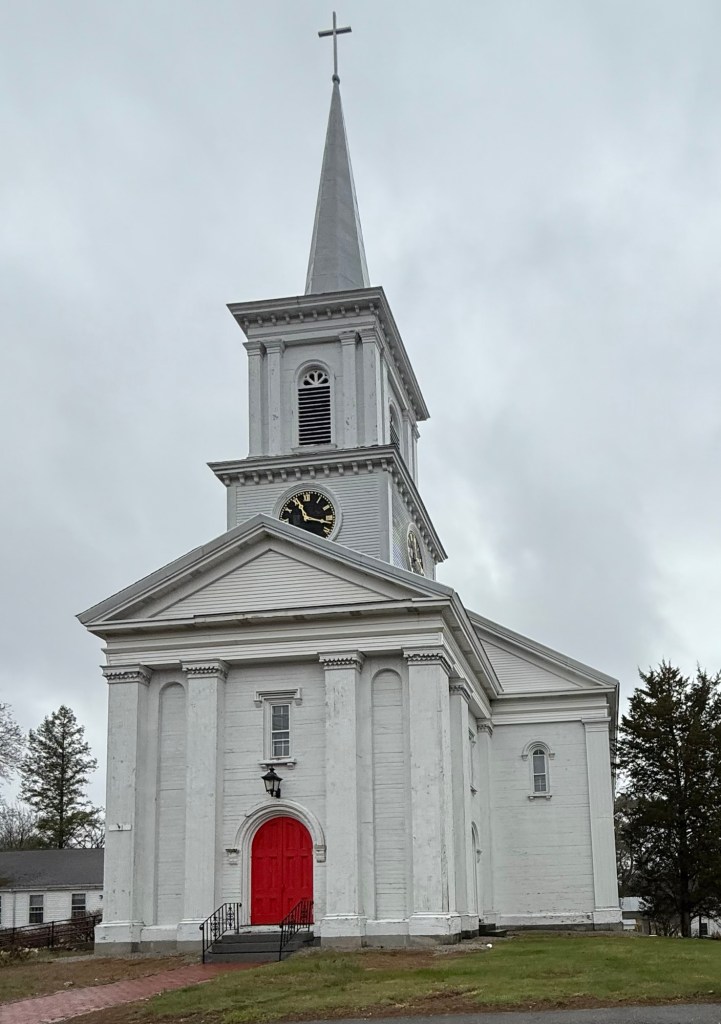
Abington, Massachusetts was first settled by Europeans in 1668 and was officially incorporated in 1712. Its namesake was is said to have been set by Governor Joseph Dudley as a tribute to Anne Bertie Venables, Countess of Abingdon, wife of the second Earl of Abingdon, who helped Dudley secure the governorship of the Colony of Massachusetts from Queen Anne. Governor Dudley noted in its decree that, “the Town be named Abingdon”. A marginal note on the document gave the spelling as “Abington” with a “t”, which has served as the spelling ever-since. At the center of town, this handsome church is the fourth edifice of the Congregational Church Society in Abington, Massachusetts, and replaced the third church, which was occupied for just thirty years until 1849, when this Greek Revival structure was built. Located a stone’s throw from its former home, this church showcases the increase in membership and relative wealth of the congregation by the middle of the 19th century. The structure with its flushboard siding and bold Doric pilasters, features an arched center entrance and multi-stage tower containing a clock and enclosed belfry.

Westminster Meetinghouse // 1770

The Westminster Meetinghouse (aka the Westminster Congregational Church) was built in 1770 by Canterbury, Connecticut residents who in the 1760s, created a separate religious jurisdiction, the Westminster Society, due to their reluctance to travel long distances to Canterbury village for required religious services. Local resident John Parks donated land to be used as a public green, as well as a site for a cemetery and this meetinghouse. Sherebiah Butts, captain of the local militia, was engaged as master builder and architect, who along with his sons and other helpers, constructed the church by 1770. The original church, originally a square-plan meetinghouse, initially faced east, but was rotated to face south by around 1840, when the entire structure was remodelled in the prevailing Greek Revival style. The church is said to be one of the oldest continually utilized meetinghouses in Connecticut.

Scotland Universalist Church – Shetucket Grange Hall // 1843

This charming, Greek Revival style building near the town green in Scotland, Connecticut, was built in 1843 as a Universalist Church for area residents who split off from more Congregationalist beliefs. By the end of the 19th century, populations shifted heavily to industrial centers where work was more plentiful, the church appears to have lost much of its membership and the building became a local grange hall. The Shetucket Grange was organized in June 1887, and was a meeting place for local farmers and their families to promote the economic and political well-being of the community and agricultural pursuits. Today, the building is owned by the town, but it’s use is unclear. Greek Revival in style, the building retains much of its original architecture, from its simple form, facade with two entrances flanking a central hung window, and pilasters framing the bays.

Scotland Congregational Church // 1842

The main visual anchor of the charming town green of Scotland, Connecticut, is this building, the Scotland Congregational Church. Built in 1842 as the congregation’s third building, this Greek Revival style edifice features stately proportions, temple-front with four large Doric columns supporting the portico, and a two-stage belfry. The chapel (some say it was converted from the original town hall) was acquired by the congregation in 1867, and has remained in its new location ever since. Later alterations include the stained glass windows and clock in the pediment, which dates to the early 20th century.

Cornwall Congregational Church // 1842

The Cornwall Congregational Church in Cornwall, Connecticut, was erected at 8 Bolton Hill Road in 1842, replacing the colonial-era meetinghouse which had first stood on Old Meetinghouse Hill at Cornwall Center. When members of the church split into two separate congregations due to religious differences, the original congregation moved to South Cornwall in 1790. Another Congregational church was built in North Cornwall for the other group. This wonderful Greek Revival church reflects the enormous popularity the style in the first half of the 19th century. The structure rests on a stone block foundation and is sheathed with clapboard siding. The building incorporates a central entry of paired doors with a Greek Revival surround, flanked by 20/20 windows. The street elevation of the building is dominated by a monumental portico with pedimented gable, broad frieze and fluted Doric columns. The showstopper is the two-stage square belfry, each stage Doric columns and pilasters. The church is active today as the United Church of Christ and is often utilized for town events.