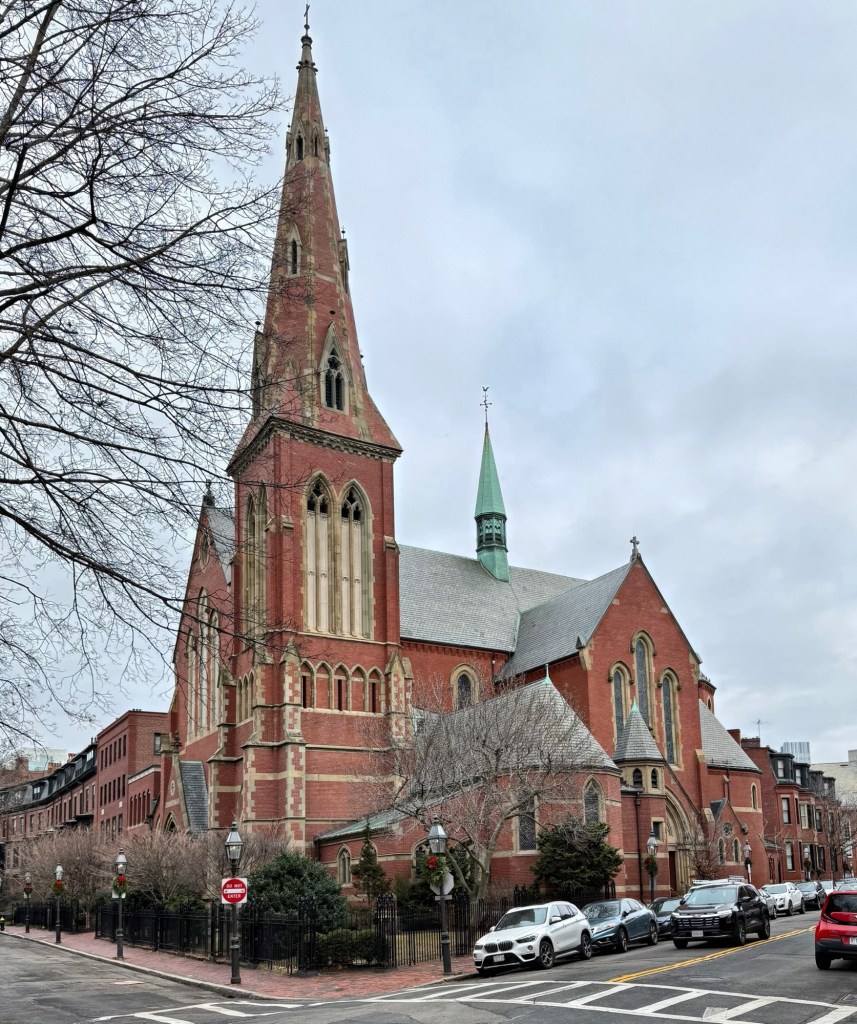
Church of the Advent // 1878

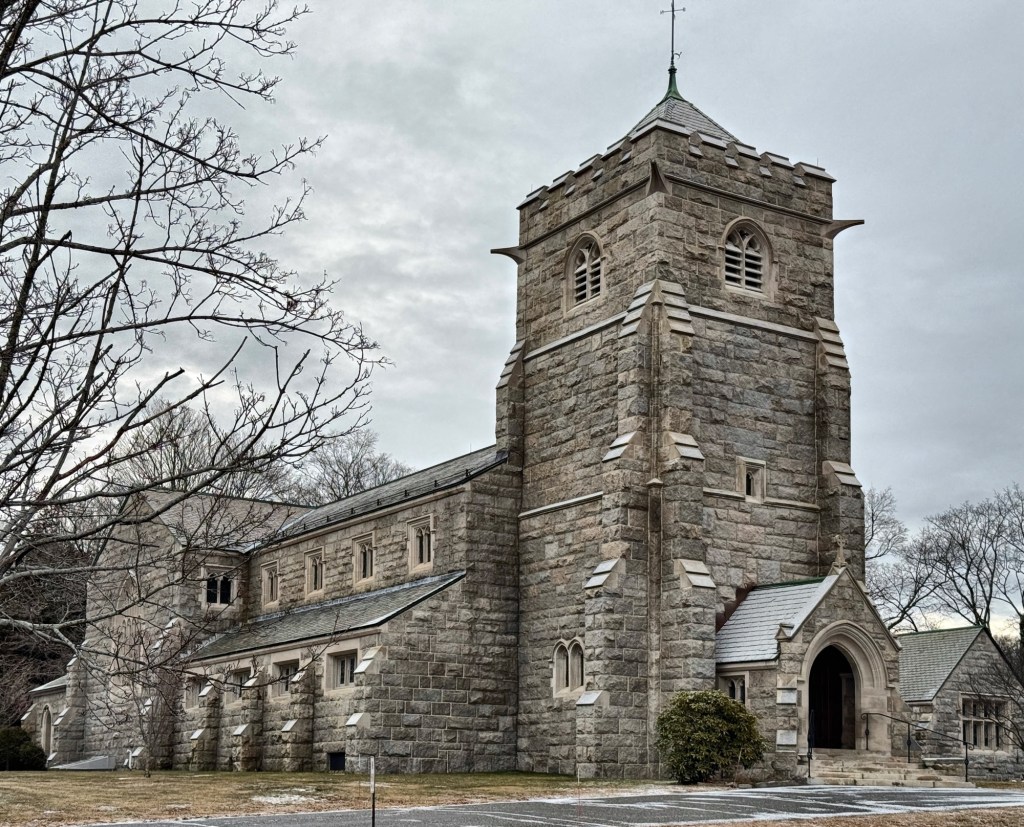
The Church of the Advent in Beacon Hill, Boston, is a landmark example of a church designed in the Victorian Gothic style with strong English influence. The congregation, established in 1844, purchased a large corner lot at Brimmer and Mount Vernon streets on the newly made filled land west of Charles Street in Beacon Hill Flat, to construct their new church. In 1875, John Hubbard Sturgis, a Boston architect and parishioner, began designing the red brick with sandstone-trimmed church set on a corner lot with dominant corner tower and octagonal steeple. Construction began in phases beginning in 1878 and took years until the steeple was completed in 1888. Before its completion, John H. Sturgis died and his nephew, Richard Clipston Sturgis, oversaw the completion of the church, which became somewhat of a memorial to his late uncle. Following the completion of the Church of the Advent, Sturgis’ widow, extended family and clients donated a major portion of the interior art, stained glass windows, and furnishings. The polychromatic exterior in red and charred brick mixed with sandstone trim appears to have been inspired by his designs for the original Boston Museum of Fine Arts (1876, demolished in 1911.) The Church of the Advent in Boston is one of the finest ecclesiastical buildings in New England and is the master-work of one of America’s great architects.

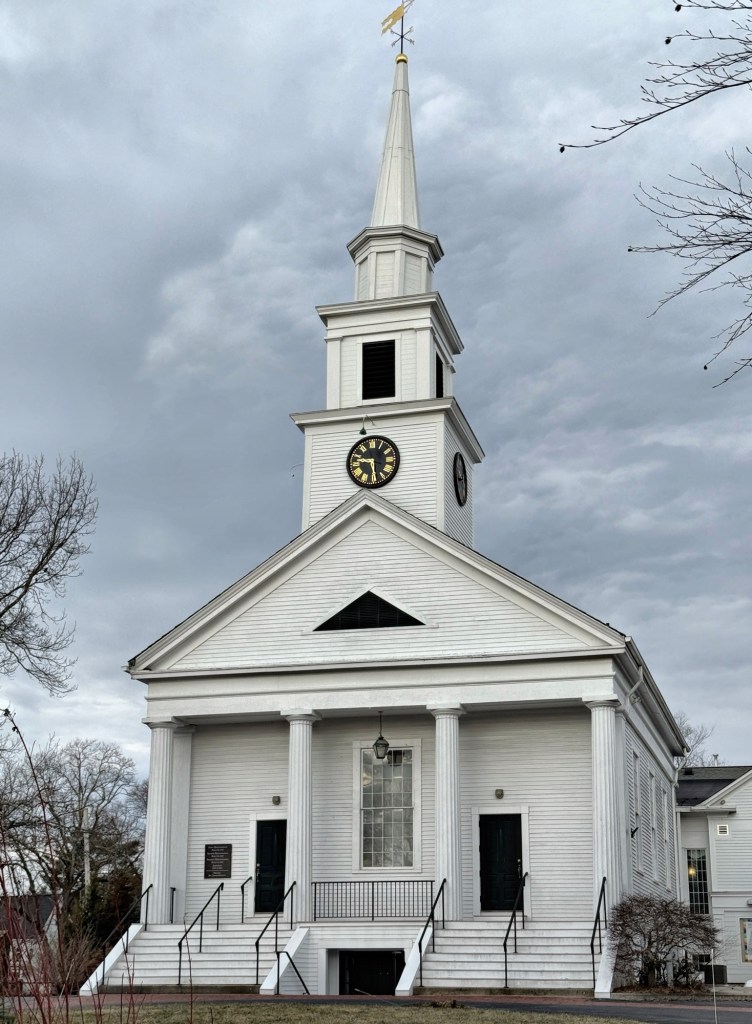
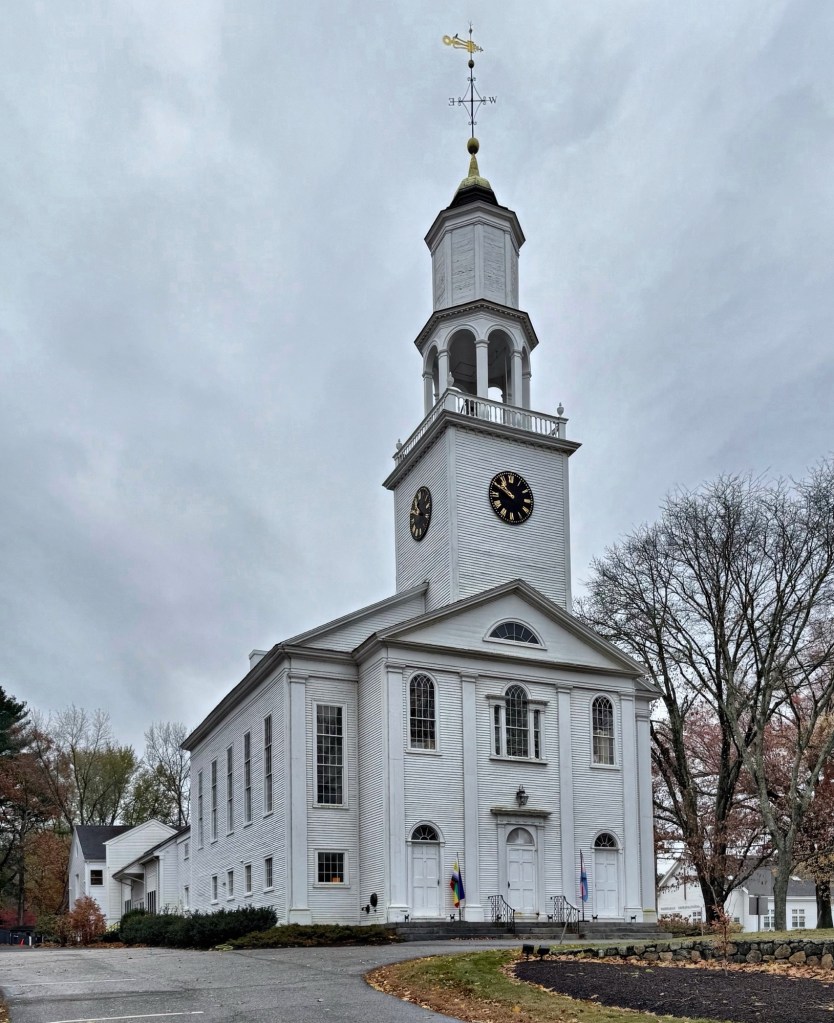
First Parish Church, Wayland // 1814

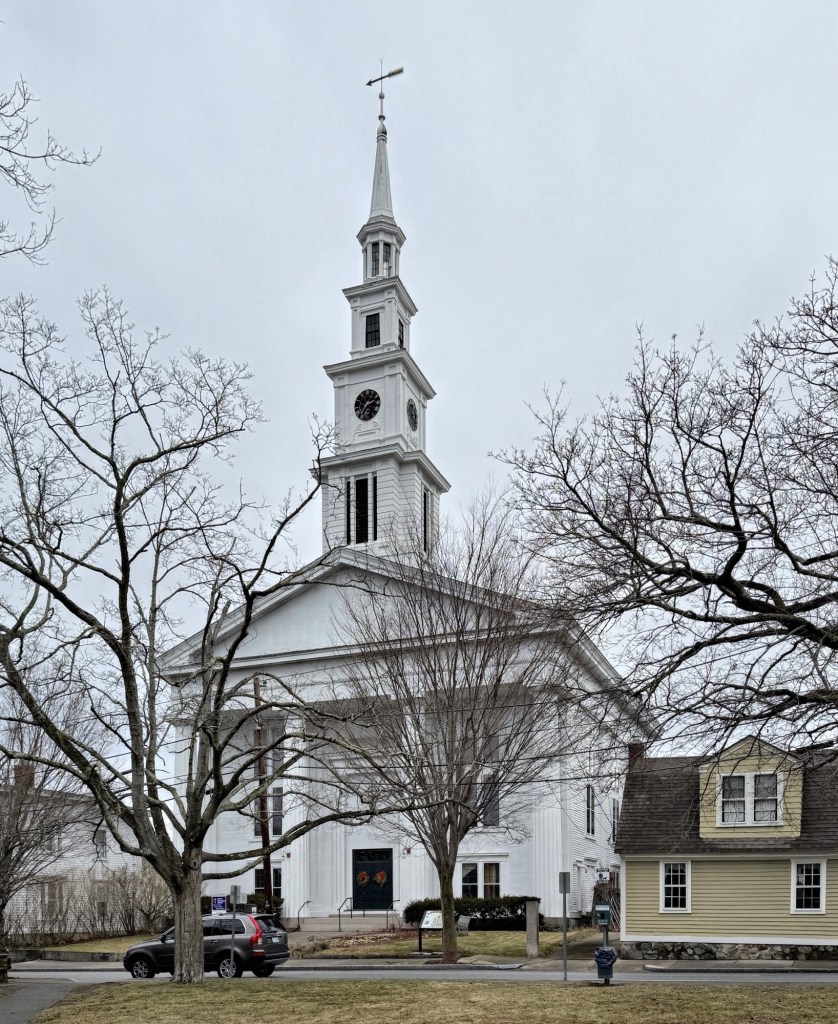
The First Parish Church of Wayland, Massachusetts, is an iconic church that displays the typical early 19th-century meetinghouse form with Federal-style elaboration. Built in 1814, the church is two-stories with a five-bay gabled-front structure with a projecting enclosed portico of three entrance bays, and a four-stage bell tower that rises above the façade. Today known as Wayland, the town was originally called East Sudbury, after it split away from the western parish in 1780. In 1835, members of town meeting voted to rename East Sudbury “Wayland” in honor of Dr. Francis Wayland, a temperance advocate, abolitionist, and then president of Brown University. The First Parish Church of Wayland was built by Andrews Palmer of Newburyport, who used an Asher Benjamin design. The bell was cast by Paul Revere and Sons and first lifted into the bell tower in 1814. The property also includes the historic, twelve-bay horse/carriage sheds where parishioners would “park” their horses and carriages while attending services.

Derby United Methodist Church // 1894

The former Derby United Methodist Church (now the Ghana United Methodist Church) is located at the northern edge of the Town Green in Derby, Connecticut, and is a great example of a ecclesiastical building constructed in the Romanesque Revival style. Its large round arches, tall square tower, and heavy detailing in brick and brownstone place it in the Romanesque Revival mode, all with stained glass throughout. The church was built in 1894 and dedicated in early 1895. The stately church building was designed by George Washington Kramer (1847-1938), an architect who designed many Methodist churches in the midwest and east coast.

First Congregational Church of Derby // 1821

Derby, Connecticut was settled by colonists in 1642 as a trading post with local Native people under the name Paugasset. The community was eventually named after Derby, England, in 1675 and incorporated 100 years later in 1775. Like all communities in New England, it was required to have a meeting house, where religious services and town business would take place. Derby had its first meeting house built in 1681, a rustic, square structure which was eventually replaced with a new meeting house on “The Common”, now the East Derby Green. The building served its purpose for over 100 years, with sermons led by Rev. Daniel Humphreys (1706-1787) for 54 years. In that church, his son, David Humphreys (1752-1818) was baptized, he later became George Washington’s aide and most trusted general, later becoming the first presidential speech-writer. That meetinghouse was eventually outgrown, and the present Congregational Church of Derby was built on its present site on the eastern banks of the Naugatuck River in 1821. The Federal style church building was built by Williams and Barnum from Brookfield, who likely utilized plan books by Asher Benjamin for the finishes. The Congregational Church of Derby has watched as the commercial “downtown” of the city shifted to the other side of the river and has stood here for over 200 years as a landmark of “old Derby”.

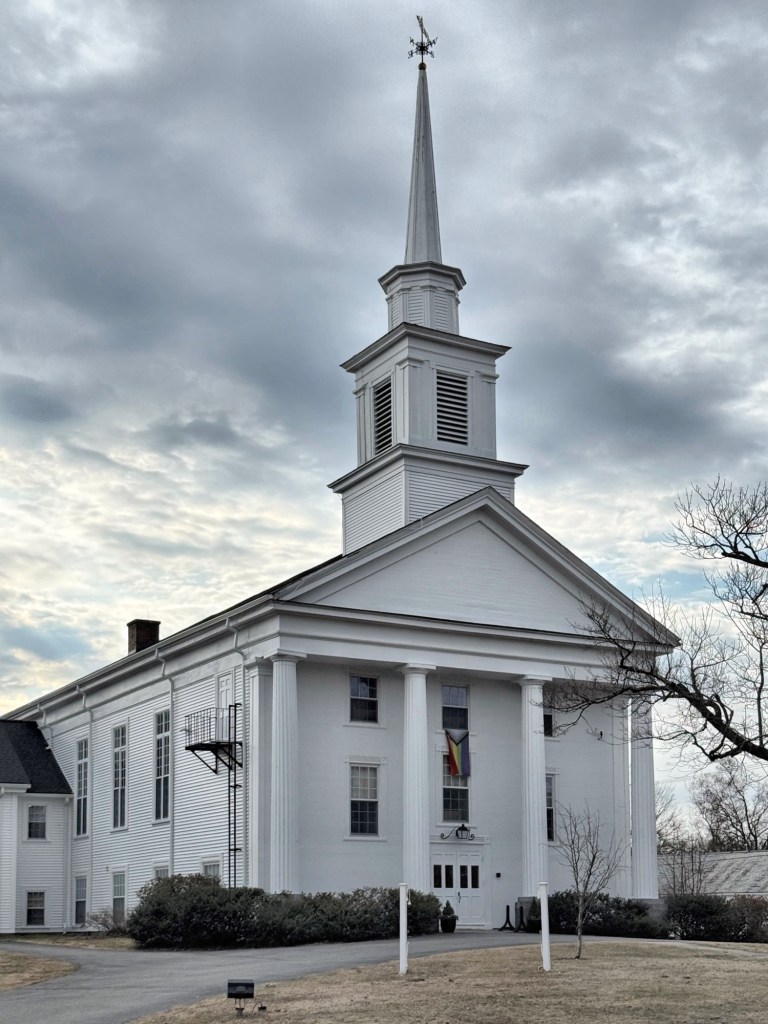
Bow Bog Meetinghouse // 1835

The Bow Bog Meetinghouse in Bow, New Hampshire, was built in 1835 for the First Methodist Episcopal Church and Society in town. Designed in the Greek and Gothic revival styles, the traditional form and paired entries with two stage belfry is adorned by finials and pilasters, showcasing an elegant blending of these two styles. built by George Washington Wheeler for the First Methodist Episcopal Church and Society of Bow in 1835. Mary Baker Eddy, founder of the Christian Science Church, mentioned Reverend Orlando Hinds as a contributor to her early religious teachings. She maintained close ties with this Church, donating funds for the bell in 1903. The Church provided religious instruction and social activities for 116 years and in 1951, the Church was closed and the Bow Bog Meeting House Society acquired the building. In 1970, they restored it to nearly its original condition, and it was acquired by the town in 1985.

First Church of Lancaster // 1816

Built in 1816, the First Church of Lancaster is one of just two extant church buildings designed by famed American architect, Charles Bulfinch, and is said to be one of the finest churches in the Federal style in the United States. The fifth meetinghouse of the Unitarian First Church of Christ in Lancaster, this building was constructed of local brick, slate, and lumber from master-builder, Thomas Hearsey. Hearsey is said to have modified Bulfinch’s design, which had proposed one tall center arch flanked by two lower arches to reflect the unequal heights of the three vestibule doors behind them; instead going with three, identical arches. Other than this change, the church remains substantially as originally built, even without artificial lighting or central heat inside. Besides the iconic arched portico, the two- stage brick tower topped by a beautifully proportioned wood cupola surrounded by Roman Ionic columns, and fronted by a giant arcuated portico, is especially noteworthy. The congregation, which dates back to 1653 as a Puritan congregation was the first parish established in Central Massachusetts and remains active to this day.

Chester Baptist Church // 1835

The Baptists of Chester, Vermont, first built a wood-frame meetinghouse in 1788 for meetings and worship. The congregation here was established a year prior by Aaron Leland (1761-1832), a successful pastor and preacher, who settled in town with the task of building up a church there. Active in politics, Leland served in local offices including Town Clerk and Selectman, and was Windsor County Assistant Judge for eighteen years, he was later elected into the Vermont House of Representatives and served as Lt. Governor. After his death, the Federal style building was outgrown and sold by the 1830s. The original meetinghouse was moved to its current location across from the town’s Congregational Church and planning began for a new house of worship. The current Baptist Church, an impressive brick edifice in the Gothic Revival style, features a high slated spire that was likely added in the early 1870s, replacing a more traditional wooden crenelated tower. The 1870s spire was destroyed in 1953 and reproduced in 1999. The congregation here remains active and maintains the church well.

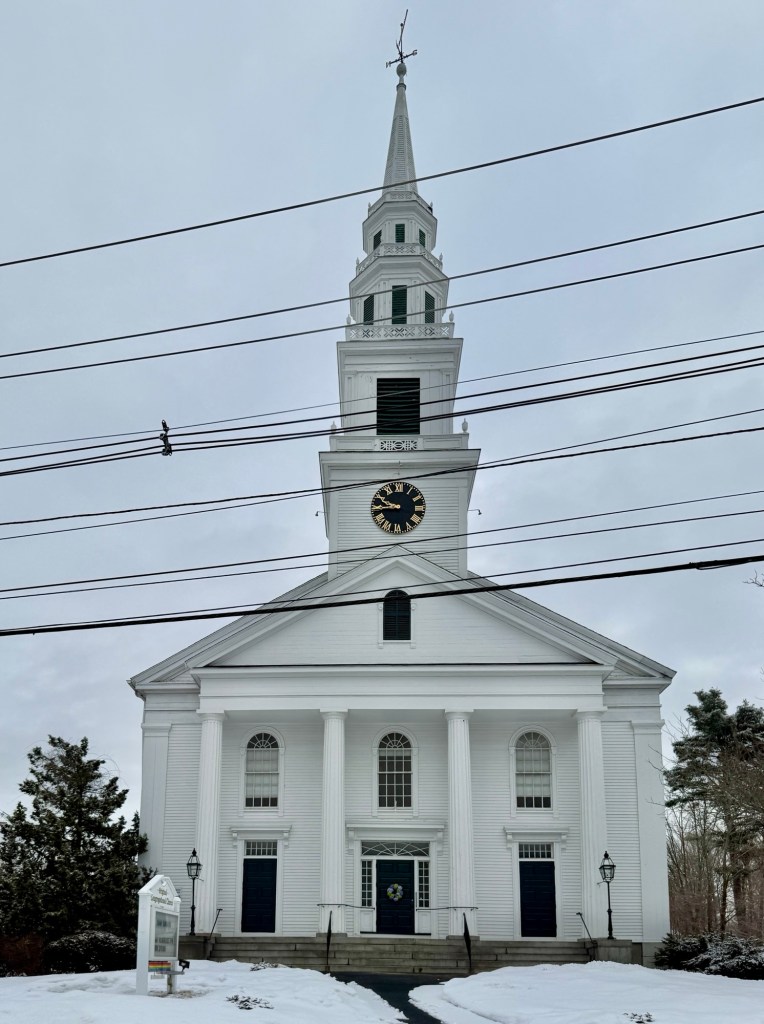
Chester Congregational Church // 1828

A significant landmark in Chester, Vermont, the Congregational Church of Chester is a sophisticated interpretation of ecclesiastical Federal architecture. Built in 1828, the soaring, five-stage clock-and-bell tower with bellcast cap and weathervane rises above a pedimented three-bay entrance pavilion with semi-elliptical fanlight, a common motif in the style. It is believed that local carpenters, Comfort Carpenter Dresser and his son, Charles Dresser, built the church, likely from planbooks for specific details. The church originally served as the Union Meeting House for Congregational, Methodist, and Universalist parishioners until around 1848, when other churches set off to build their own structures, after this, the Congregationalists remained here. Today, due to years of dwindling membership and a small population in the surrounding area, the church is “replanting” to reactivate membership and realign with community needs. Hopefully this significant church will be preserved in the future, possibly through preservation grants!

St. John’s Church, Portsmouth // 1807

St. John’s Episcopal Church is located on Chapel Street, atop Church Hill near the historic commercial center of Portsmouth, New Hampshire. A church has been located on this site since 1732, when British Anglicans built Queen’s Chapel here. It was named “Queen’s Chapel” after King George II’s wife, Queen Caroline, who donated many fine gifts to help the new parish. The congregation increased in growth alongside the community until a tragic fire on Christmas Eve in 1806, which destroyed over 300 buildings in Portsmouth including the original wooden structure of St. John’s and most of its contents. The parishioners immediately began to raise funds to erect the present brick church, with its cornerstone laid in June 1807. The Federal style church was one of the first known buildings by architect-engineer, Alexander Parris, in the time before he moved to Boston, designing many iconic buildings there. St. John’s Church of Portsmouth stands as the oldest Episcopal Parish in New Hampshire and was individually listed on the National Register of Historic Places in 1978.

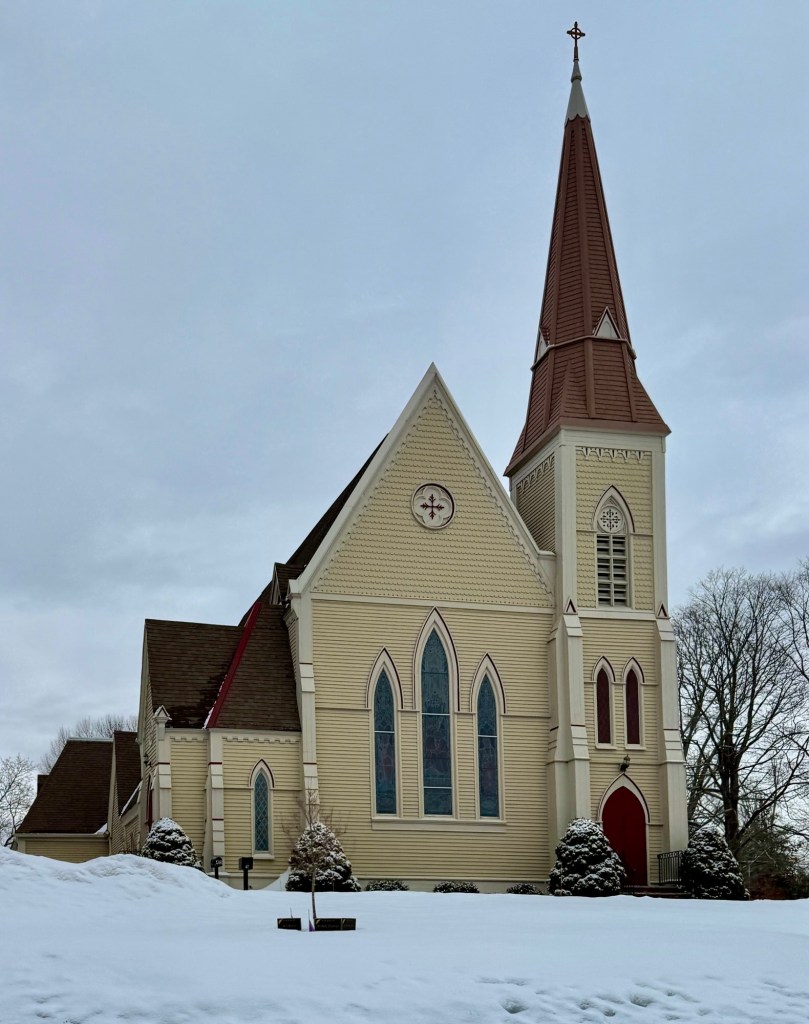
St. Mark’s Orthodox Church // 1882

Built in 1882 as a Catholic mission church, the St. Mark’s Orthodox Church on Main Street in Kingston, Massachusetts, stands as a lovely example of a Victorian Gothic ecclesiastical building in a great state of preservation. In the waning decades of the 19th century, the Irish and Catholic population of Kingston grew, which led members to petition the Diocese to erect a mission church closer to their homes, rather than attend St. Peter’s in Plymouth. Originally called St. Joseph’s Church, the building served the local Catholic population until after the new, brick St. Joseph’s. Church was built further down Main Street in the 1930s. The local St. Mark Of Ephesus Orthodox Church congregation purchased the chapel in 1995 and restored the building, removing faux-brick shingling and reshingled the exterior.