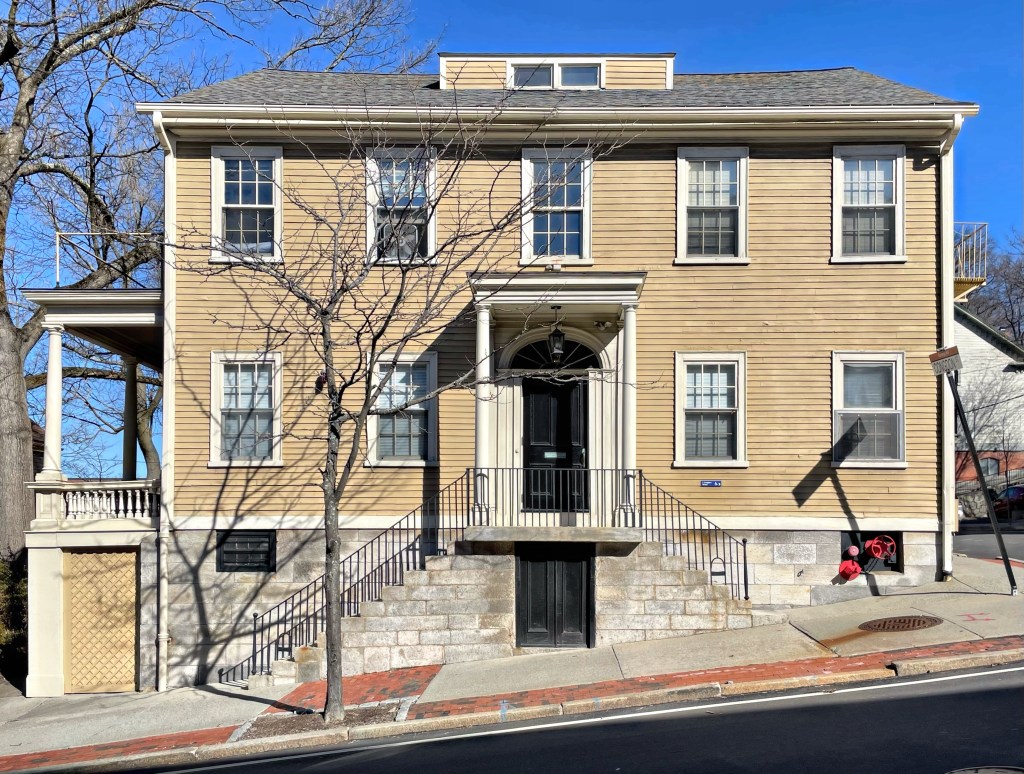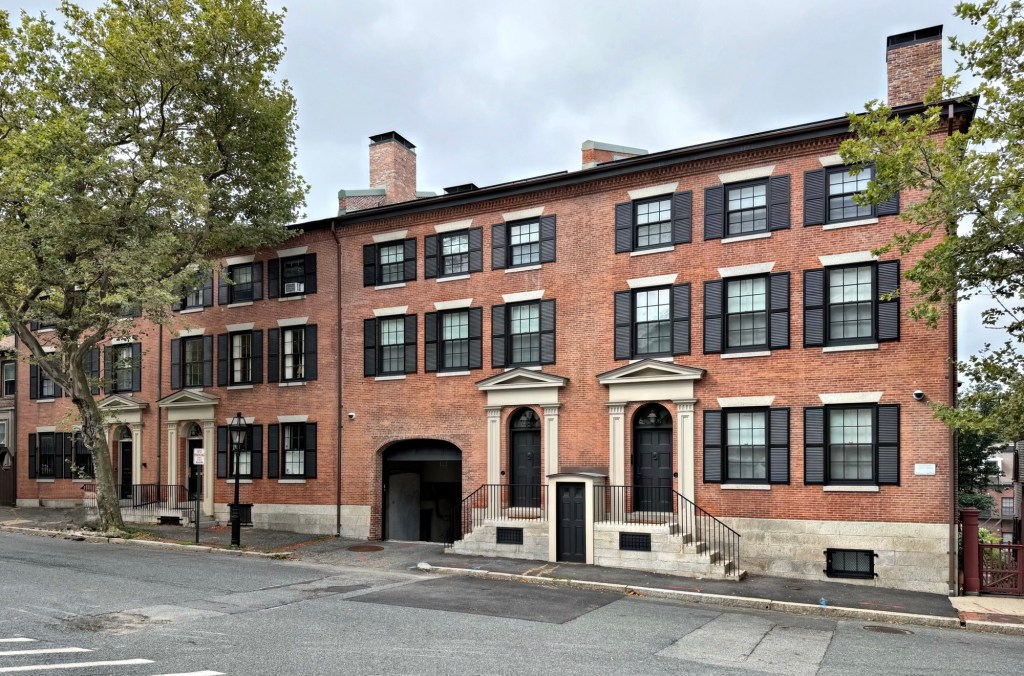
Ives Rowhouses // 1814

The Ives Rowhouses stand at 270-276 Benefit Street in Providence and are an important and intact example of a Federal period row from the early 19th century. These four, three-story brick rowhouses were built between 1814-19 as investment property for Thomas Poynton Ives, a successful local merchant and partner in the firm of Brown & Ives, who lived nearby on Power Street. Each of the houses has a three-bay facade with pedimented fanlight doorways. The one residence was significantly altered in 1948 by the massive archway for vehicular access at the rear. The houses stand out in Providence, as fairly uncommon rowhouses, which never took off quite like they did in Boston and other New England cities. The row is today neighbors with the National Historic Landmark Hopkins House.
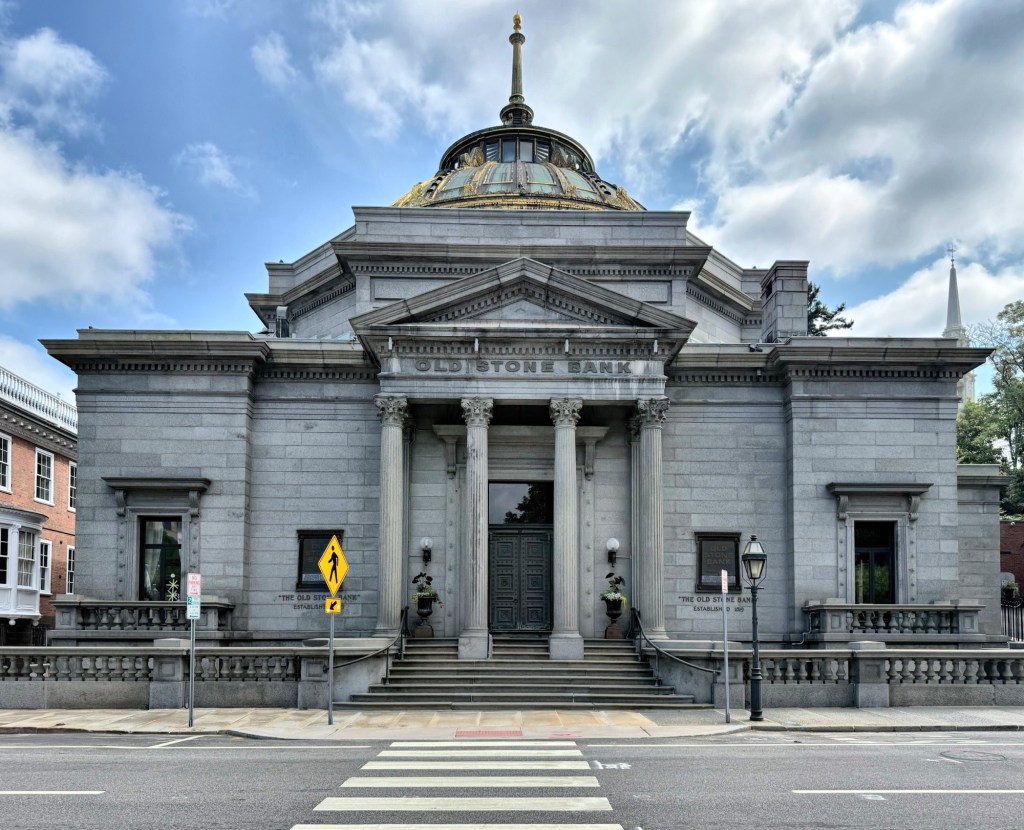
Old Stone Bank // 1896

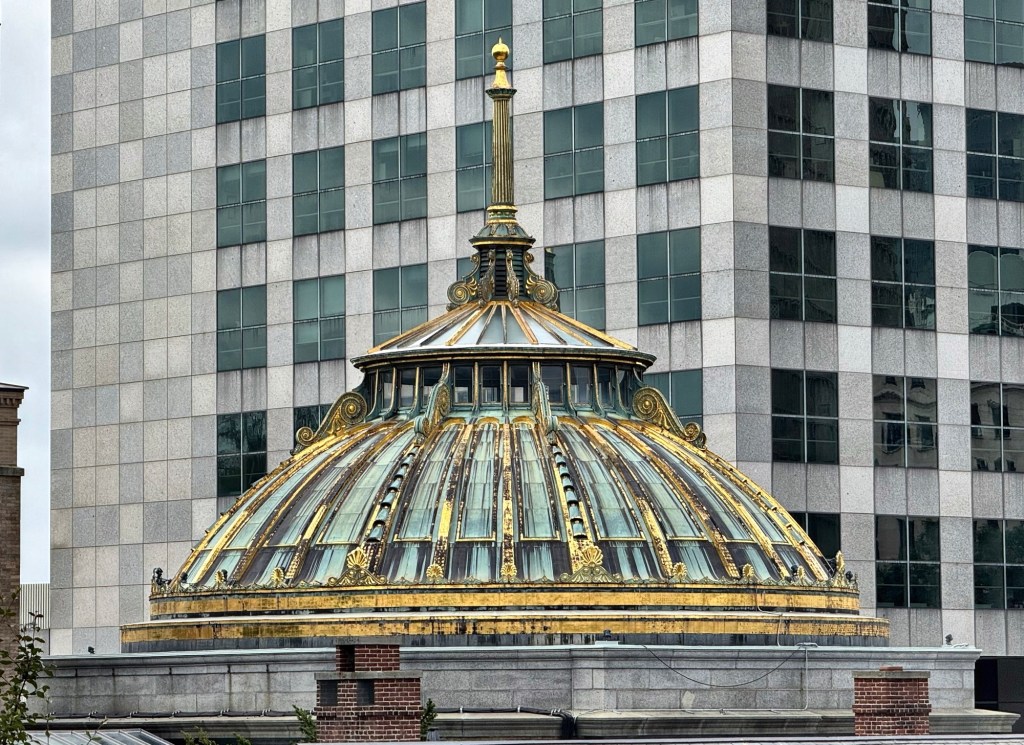
The Old Stone Bank was founded in 1819 as the first savings bank in Providence, Rhode Island, but originally under the name, Providence Institution for Savings. A constantly growing volume of business influenced the erection, in 1854, of a building for the exclusive purposes of the bank at 86 South Main Street, near College Hill. Designed by C.J. and R.J. Hall, the original stone bank stood one-story tall with a gable roof. Success and further expansion of the institution led to the erection, in 1896, of the present building, which served as the main office. Designed by the local architectural firm of Stone, Carpenter & Willson, the present domed banking structure is said to have incorporated parts of the 1854 building, and expanded the rest to the landmark we see today. The Beaux Arts/Neo-Classical banking structure is constructed of granite, with a Classical pedimented entry of monumental Corinthian columns atop the staircase, but the highlight of the building has to be the gold-leaf-and-copper domed roof which partially served as a skylight for the banking hall inside. Offices relocated to a new building in the late 1960s. The banking institution closed in the 1980s and following acquisitions and insolvency, the main bank was sold in 1995 to Brown University for $1.15 million to house the Haffenreffer Museum of Anthropology‘s collection of Native American artifacts. Years later, Brown decided it was unfeasible to house the collection in the building as the necessary alterations would have altered the historic character of the building, they then sold the building to an LLC in 2009. The Old Stone Bank is now a single-family home. Yes, you heard that right. The new owners have lovingly preserved this architectural marvel for all to enjoy as they stroll the city.

Hope Block // 1869

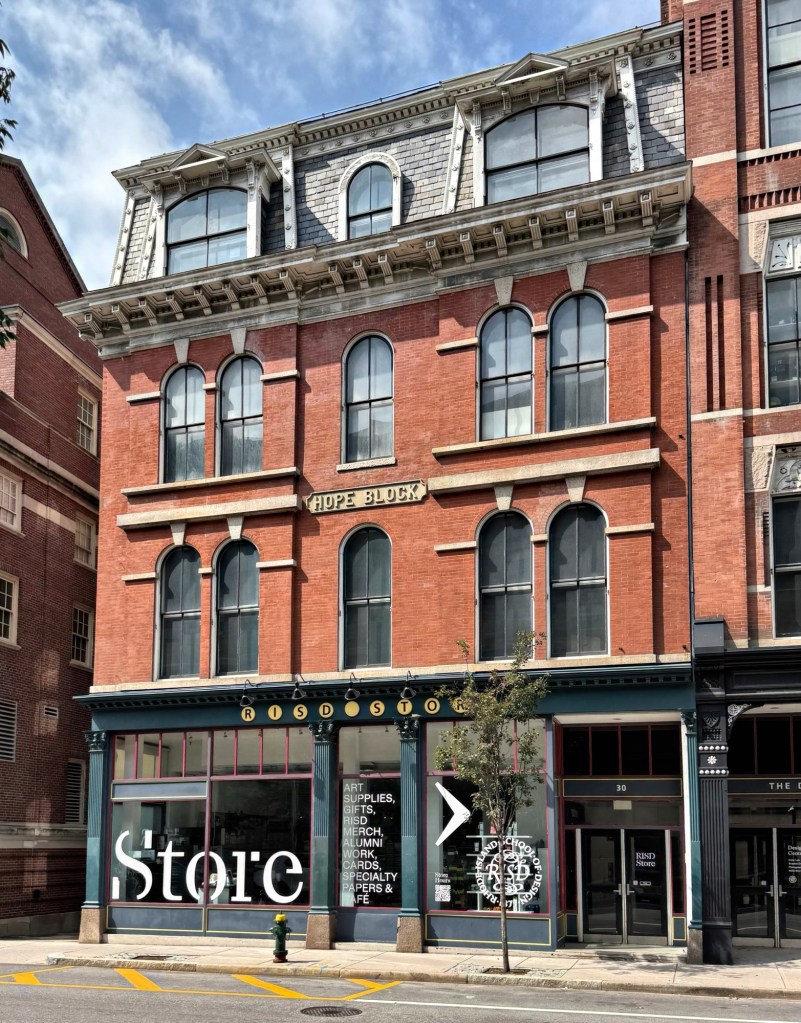
The Hope Block on North Main Street in Providence’s East Side neighborhood is an architecturally significant commercial block in the Second Empire style. The masonry building was constructed in 1869 and is probably designed by architect, Clifton A. Hall, who designed similar buildings in the city around that time. The block was developed by Edward M. Young and Ezra P. Lyon of the firm, Young & Lyon to house their fruit and grocery store, which they operated here from 1870 until 1889. By the latter half of the 20th century, the building was owned by the Rhode Island School of Design, and rehabilitated for classrooms in 1984, even retaining the cast iron storefronts, unique arched windows, and slate mansard roof. Today, the Hope Block houses the RISD Store.

Joseph Brown House // 1774

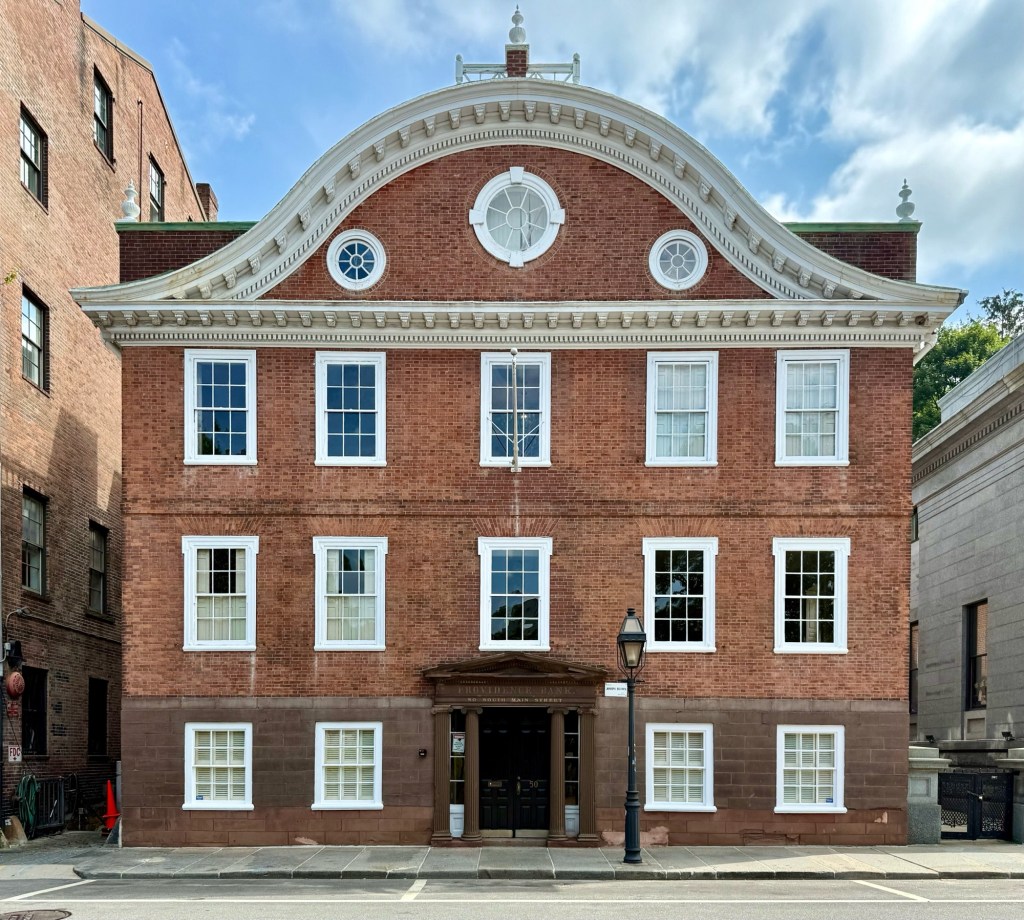
Constructed in 1774 by architect Joseph Brown (1733-1785) of the Brown family of Rhode Island as his personal residence, the John Brown House of Providence, stands as one of the oldest (if not the oldest) house built by an American architect for his own use. Joseph Brown, while a member of the Brown Family, was not as much in the shipping business as others in his family, instead turning his attention to scientific matters, becoming an expert in astronomy, electrification, and architecture. He was an architect in the Thomas Jefferson-gentleman mode, owning English architectural books from which he selected motifs for inclusion in his designs. It is believed that the eccentric curved ogee gable that caps the façade was adapted from the roof design of a garden house published in William Salman’s Palladio Londinensis, owned by Joseph Brown’s builder, Martin Seamans. The same ogee gable was later replicated in the Colonial Revival period in Providence. The residence’s entrance was originally raised above ground and accessed via symmetrical flights of stairs; in the late 18th century, the entrance was moved to street level in the brownstone basement level. Over a decade after Joseph’s death in 1785, the structure was acquired by the Providence Bank, an enterprise founded by Brown’s brothers John and Moses, and used as an office. The bank occupied the structure until 1929, and the Joseph Brown House was subsequently owned by the Counting House Corporation, and still appears to be owned by descendants of the Brown Family.

Eliza and Samson Almy House // 1859

The College Hill neighborhood of Providence has some of the finest residential architecture in New England, and some really fun stories of those who built these grand homes. In 1859, the house was built with a concave mansard roof punctuated with dormers and a bold bracketed cornice below. The use of round headed windows on the second floor is a really great design detail. The residence was first owned by Eliza Talbot Almy (1808-1886), who held the title to the property. Wives holding the title of properties in this period was fairly common as it would protect their personal property and residence from financial risk if the husband was met with lawsuits or financial hardship. Eliza’s husband was cotton broker and manufacturer Samson Almy (1795-1876), who had already been sued in a case heard before the United States Supreme Court in 1851. After Eliza’s death in 1886, her daughter, Susan Smith (1837-1917) and husband, Amos Denison Smith (1835-1912), a Civil War veteran, occupied the house into the early 20th century.

Watson-Knight Mansion // 1854

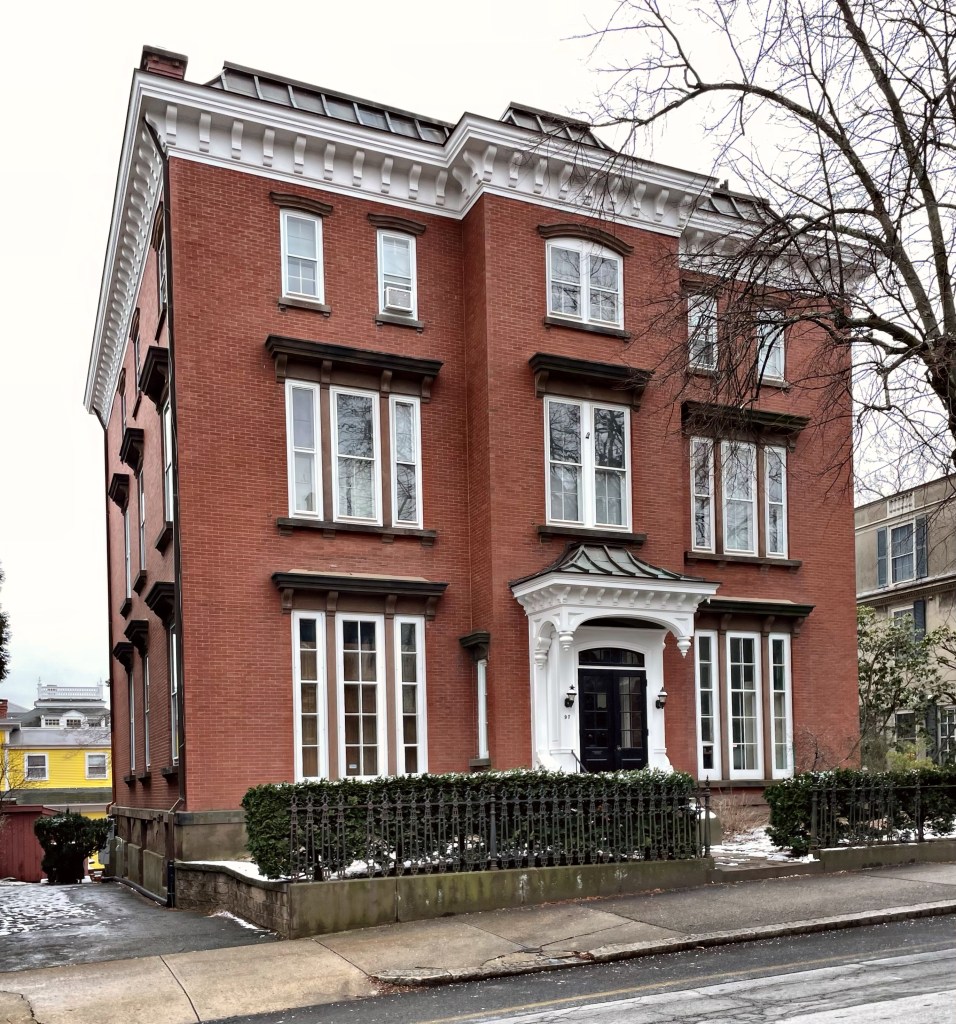
No town does Italianate architecture quite like Providence! Case in point, the Watson-Knight Mansion, a relatively overlooked example of the style found on Angell Street in College Hill. In 1854, a house lot here was purchased by an elderly Matthew Watson (1786-1857), who possibly lived in half of the house for a few years until his death. Directories also list his son Robert as living in the home in 1854. The three-story brick mansion has a boxy form with symmetrical facade. Brownstone hoods and sills are located at the windows and add depth to the otherwise blank facade. A projecting wooden door hood with hanging pendants covers the large entry. The home remained in the Watson Family until it came under the possession of Robert Brayton Knight (1826-1912) a businessman and mill owner who became the largest individual owner of cotton mills in the world, with upwards of twenty distinct establishments under his personal control. He co-founded what became the Fruit-of-the-Loom brand with his brother in the 1850s. The building has since been divided into apartment/condominiums.

King-MacFarlane House // 1845

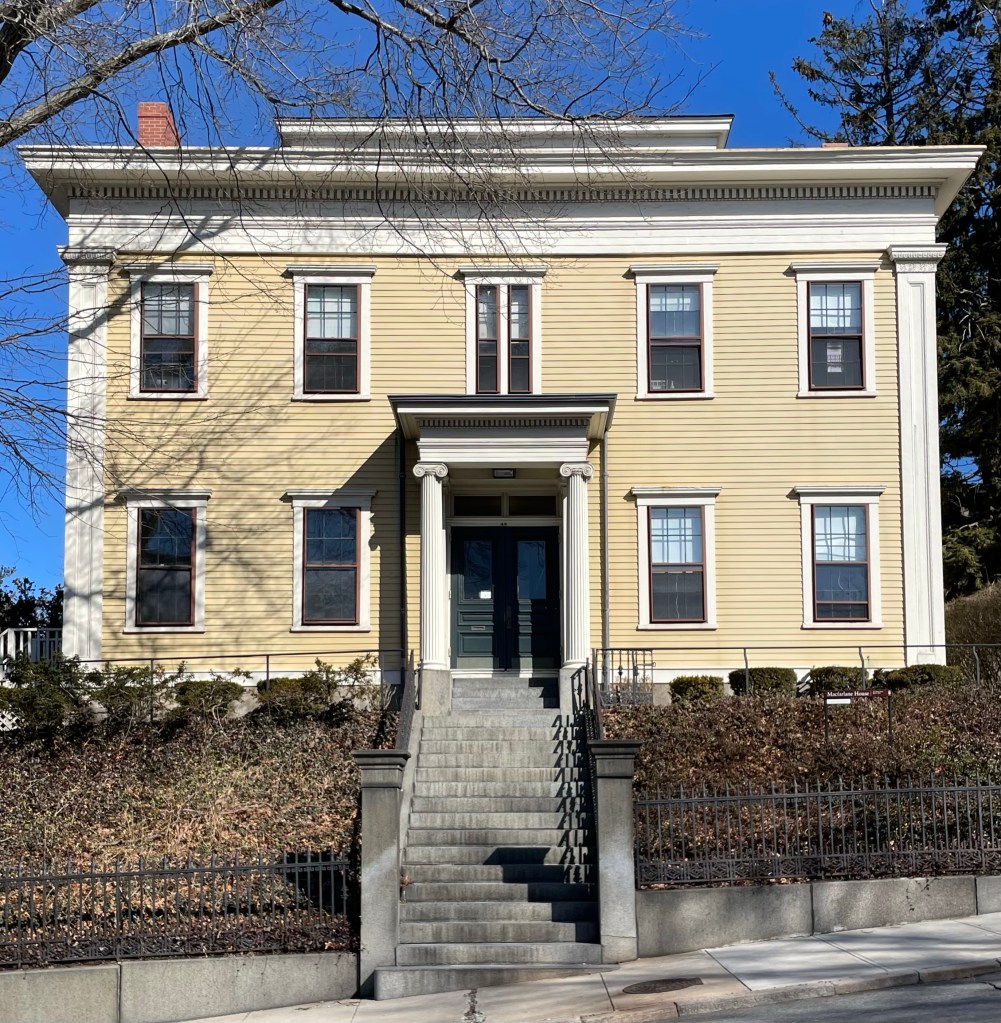
William Jones King (1803-1885) was born in Providence, Rhode Island as the eldest son of Elijah and Nancy King. His father Elijah was a master-mariner and a wealthy ship-owner, engaging in trade with the West Indies, likely partaking in the transport and sale of humans like many Rhode Island “merchants” at the time. Elijah was travelling to Martinique in 1815, when the Great Gale of 1815, the largest hurricane on record at the time in New England, intercepted the ships and capsized them. Elijah and his crew died at sea. After his father’s untimely death, which left the family poor, William (as the eldest at just 12 years old) became the sole support of his mother and three younger siblings at the time. William eventually became a clerk at the Union Bank in town, moving up the ranks until he became a cotton merchant. He had this home built a few years after his marriage to Lydia Gilbert. The house is an excellent example of a traditional Greek Revival home in the College Hill section of Providence with corner pilasters and central Ionic portico all sited high on a landscaped terrace behind an iron fence. The house is now owned by Brown University and has been renamed MacFarlane House after Walter Kilgore MacFarlane, Jr., a Brown alumnus in the class of 1923. The house today houses the main office of the Classics Department at Brown University.

Pardon Miller House // 1822

Pardon Miller, a watchmaker and silversmith in Providence had this Federal style home built in 1822 in Providence’s high-value College Hill neighborhood when he was in his 20s. The home and its neighbor were built at the same time, seemingly by the same builder as they share a lot of similarities in design and detailing. The house remained in the Miller Family until 1882, and it is now owned by the Rhode Island School of Design (RISD). The homes on the northern side of Angell Street, like this house, are largely built on a raised foundation with high retaining walls, which showcases the “hill” in College Hill.

Jonathan Congdon House // 1818

Jonathan Congdon (1763-1862) worked in the hardware and iron business, following his father’s footsteps, eventually taking over the family business. Jonathan married Elizabeth Arnold and had at least nine children together. Two of their sons, Arnold and Welcome, too followed in the family business, as ironworkers and salesmen, with the new firm name, Jonathan Congdon & Sons. The company did well, and Jonathan replaced his c.1787 home on the lot (built at the time of his marriage) with the present structure. He also laid out a street on the side of the property, which was named Congdon Street. The home remained in the Congdon Family until 1937, when it was acquired by the Rhode Island School of Design (RISD).

Sisters of Mercy Convent // 1894

Mary Francis Xavier Warde was the American foundress of the Sisters of Mercy. Born in Ireland in 1810 to fairly prosperous parents, she was orphaned in her teens. At age sixteen she moved to Dublin, where she met Catherine McAuley, a social service worker who established the Sisters of Mercy in 1831 to provide for the education and social needs of poor children, orphans, the sick, and homeless young women. Mary moved to the United States after establishing several convents in Ireland. Her educational work on behalf of the Irish immigrants in that city prompted Irish-born Bishop Bernard O’Reilly to invite the Sisters of Mercy to Providence in 1851. The convent acquired a Federal style house in present-day Downtown and provided services to poor residents for decades until a more substantial convent was deemed necessary. The one-block site was cleared and a cornerstone was laid for the new building in 1894. The brick and terra cotta building is Victorian Gothic in style with amazing proportions and really great detail. The chapel in one of the wings was completed soon after. After WWII, the building saw dwindling funds and the building was sold to Johnson & Wales University in the 1980s, who renamed the building Xavier Hall, and it now houses over 300 students in Downtown Providence.