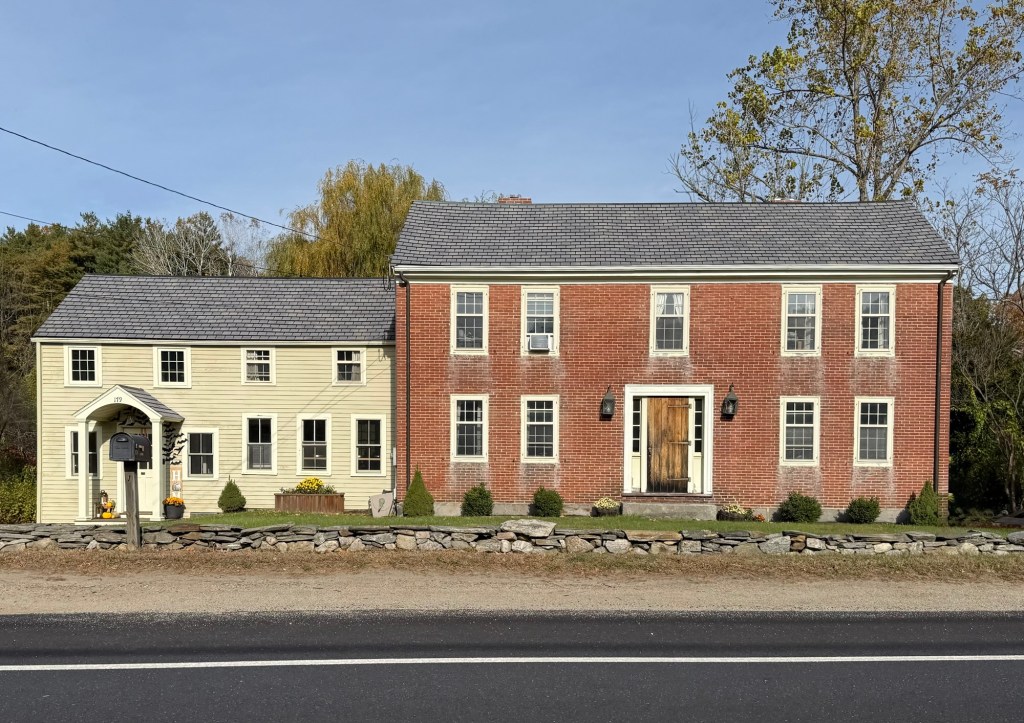
This exceptional vernacular example of a brick, Federal period house in Bolton, Massachusetts, sits on the town’s Main Street in the East Bolton village. Built in 1827, this house with attached wooden ell was the home to Abraham Wilder, a local blacksmith who followed his father’s footsteps in his professional pursuits. The house is two-stories with historic six-over-nine sash windows. The main center entry, rather than displaying a common elliptical fanlight for the period, is surrounded by trim boards, four-pane sidelights and a vertical-board door. Abraham’s blacksmith shop was once located next-door but was moved and reassembled in Old Sturbridge Village in 1957.
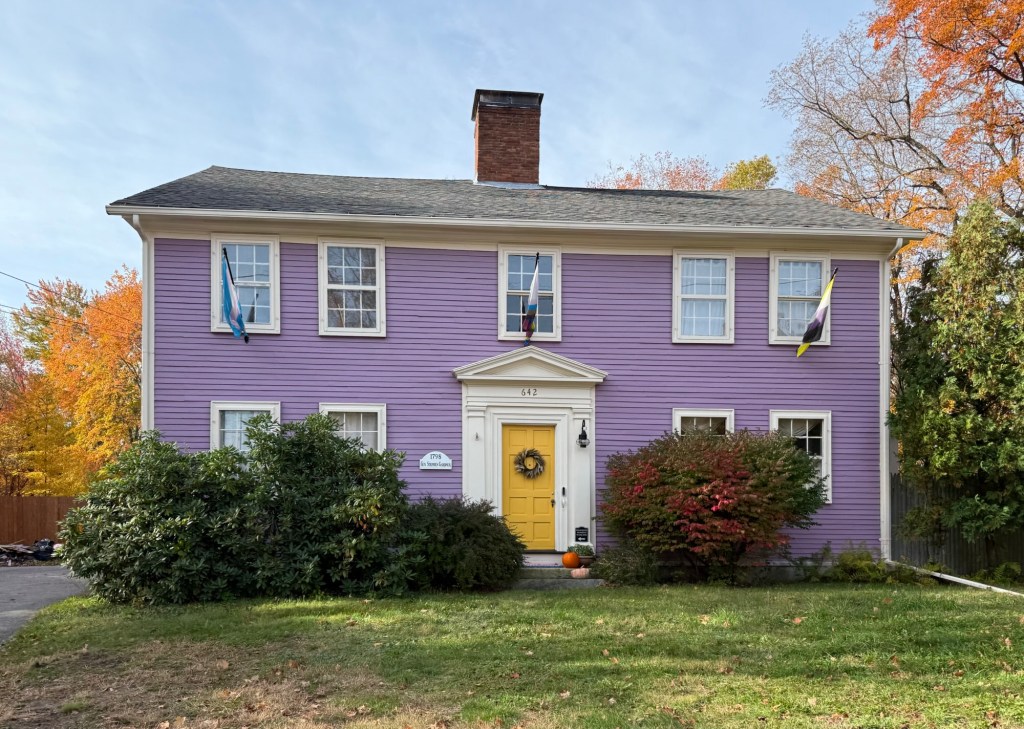
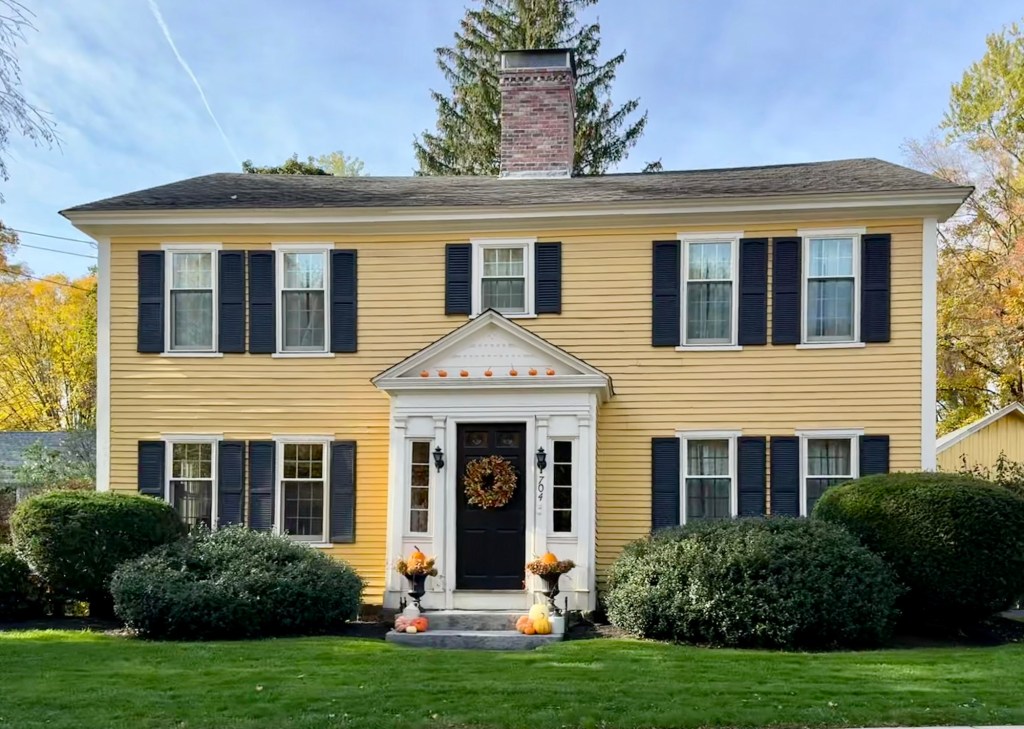
The Stephen P. Gardner House on Main Street in Bolton Center, Massachusetts, is a stunning late-Georgian style residence evocative of rural housing built in the decades following the American Revolution. The home was built by 1798 for Stephen Partridge Gardner (1766-1841) upon the occasion of his marriage to Achsah Moore. Stephen Gardner was born in Sherborn but settled in Bolton where he quickly became one of Bolton’s most important residents. He served as Town Clerk for twenty years from 1797 to 1816, as Town Treasurer from 1810 to 1820, and was also an Assessor and a Selectman for many years. Stephen Gardner was chosen to help write the petition from Bolton against the Embargo Act prior to the War of 1812, and rose to the rank of Brigadier General in the Massachusetts militia. In 1873, the house was purchased by the First Parish Church and used as the minister’s residence for about fifty years before being sold to private owners. The now purple house is well-preserved and maintains its traditional pedimented doorway and central chimney.
The building that became the Bolton Historical Society in Bolton, Massachusetts had unusual beginnings. According to town records, this residence-turned-historical society was built around 1805 as an addition to the famed Holman Inn, which stood in town from 1767 until its demolition in the 1870s. The wing contained a ballroom on the first floor, and guest chambers on the second. The main part of the inn was eventually torn down in 1874, but the east wing, this structure, was moved down the street to the present site, where it was converted to a house by owners Charles S. Rich, a Civil War veteran, and his wife Mary. In 1904, the house was bought by Arthur H. Nourse, who enlarged the property by purchasing adjacent land from his uncle, and bought two small buildings from the Town of Bolton, the historic engine house and old hearse house, which he moved to the site. The house was purchased in 1923 by Perley and Florence Sawyer. Mrs. Sawyer was a charter member of the Bolton Historical Society at its founding in 1962, and later, by 1970, she gave the house, with over three acres of land, to the Society. The property is still owned by the Historical Society, which operates it as a house museum and a repository for local historical documents.
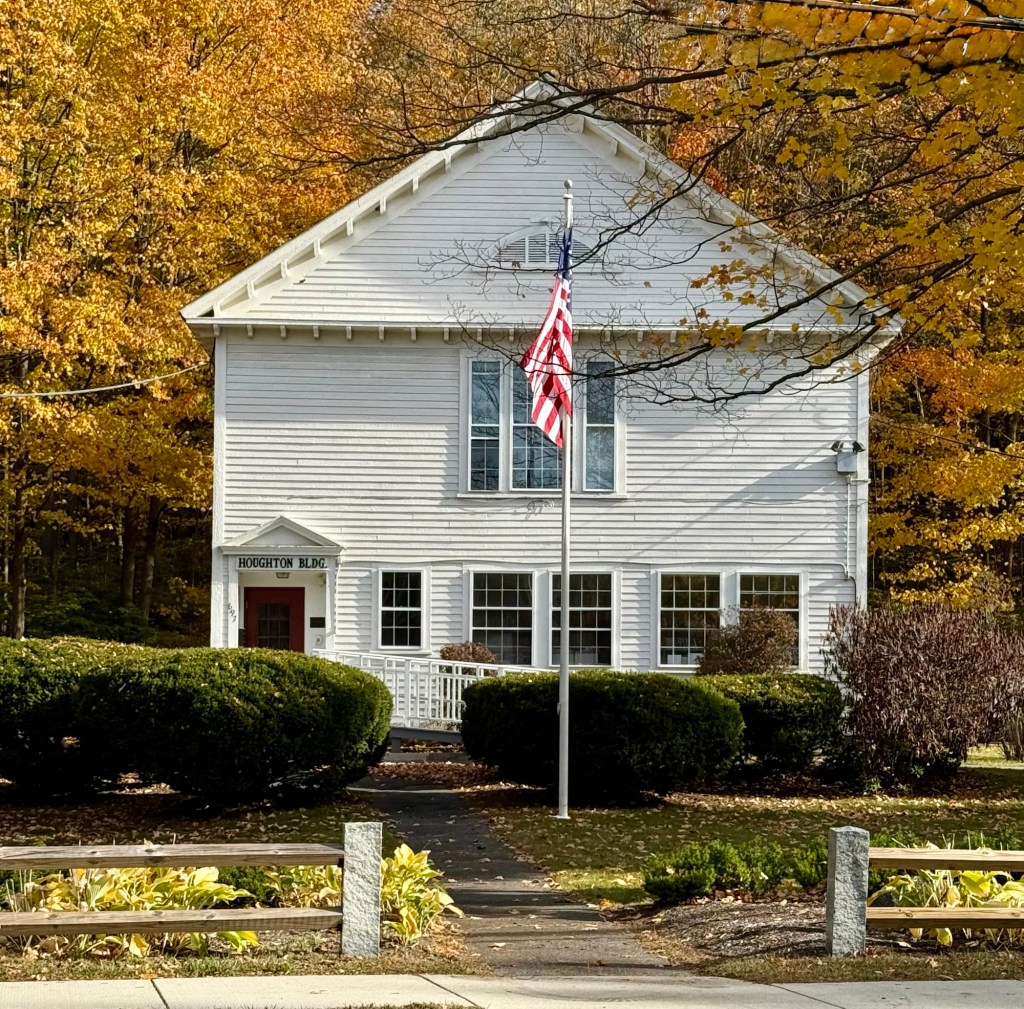
In 1849, the Town of Bolton, Massachusetts, built its first high school, the Houghton School at 697 Main Street in the town center. Blending Greek Revival and Italianate styles, similar to Bolton’s 1853 Town Hall, the Houghton School is a large, two-story, pedimented building of wood-frame construction. Interestingly, the school was largely funded privately by a local resident, Joseph Houghton (1772-1847), who in his will, bequeathed land and $12,000 for a public high school for the town. By the terms of the donation, nine men (all of whom had at one time served as a Bolton tax assessor) and their descendants, were barred from attending the school for a hundred years. Questions about the bequest were put before the Massachusetts Supreme Court, which disallowed this clause. An additional requirement, stipulated that no teacher could serve there longer than two years. That restriction was eventually put aside in the early 20th century. In 1917, the high school was discontinued. The fenestration was likely altered around this time. Bolton began sending its high-school students out of town to a school of their choice, and the Houghton School became the Bolton junior high school. In 1970-71, the building was converted to town offices, with the Town Clerk and Assessor on the first floor and the Police Department on the second. Since 2012, the building houses Bolton Access TV, as well as The Conservation Trust and Friends of the Bolton Library.
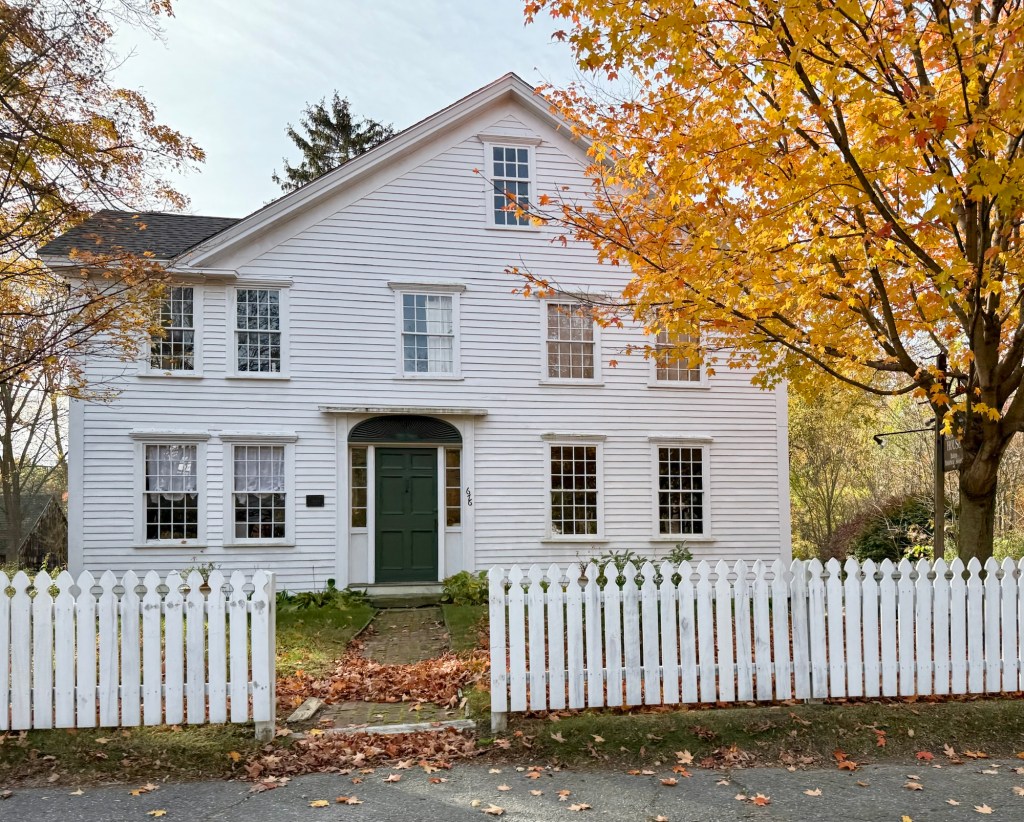
Built in 1800-1801, this house on Main Street in Bolton, Massachusetts, had multiple owners in quick succession until 1806, when it was purchased by Dr. Amos Parker. Amos Parker (1777-1861) was born in Hubbardston and later moved to Bolton to work as the town’s doctor, and also served as Bolton’s first Postmaster, from an ell that was once attached to this residence. Dr. Parker and his wife, Elizabeth (Whitney,) had at least four children, who of which died as infants and two daughters remained unmarried. Elizabeth Lydia Parker (1809-1882) and Louisa Jane Parker (1812-1900) inherited their parent’s home and lived here until their deaths. Louisa worked as a teacher in Bolton schools, and was forced to remain unmarried to keep her teaching position by law. In 1904, the Parker home was acquired by the local Baptist church and occupied as a parsonage and was later sold to private owners who restored the home to its near-original condition.
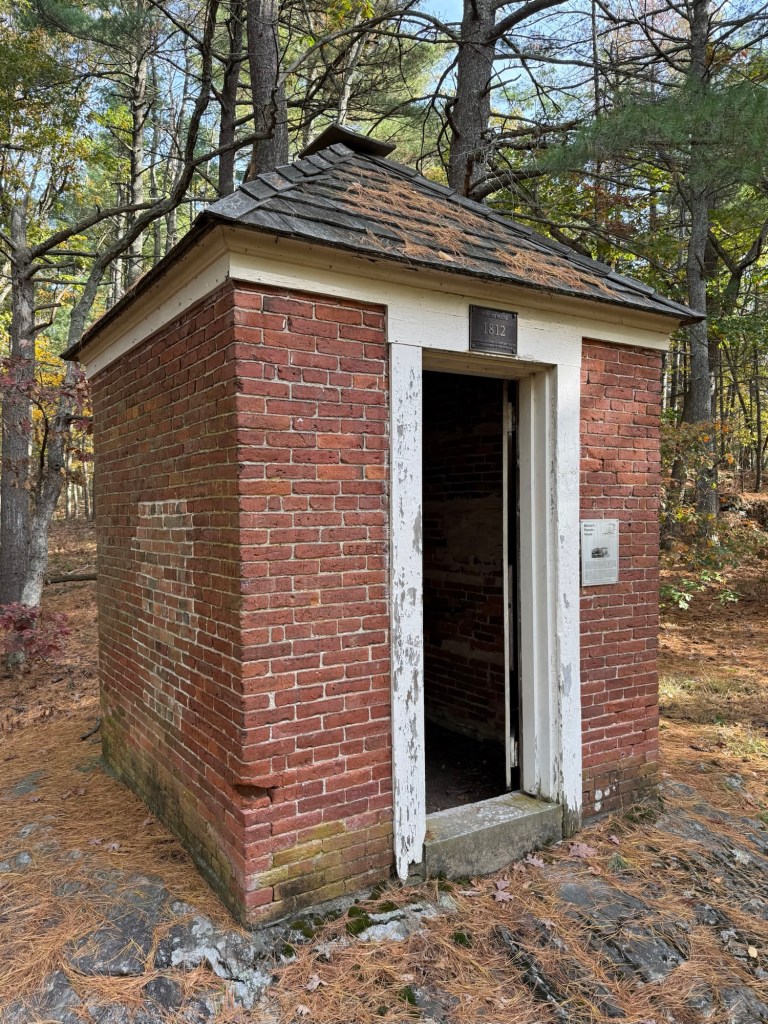
Hidden away in the woods behind the Bolton Town Hall, this small brick structure sits atop a rocky outcropping and showcases a piece of early history we often do not think about. Built in 1812 as a powder house, a storage facility far from homes and businesses to store the town’s supply of gunpowder, musketballs and cannonballs, the structure remains as the town’s oldest extant municipal building. Since the founding of the colonies, the procurement and storage of ammunition had been the responsibility of local governments. Before this structure was built in the forest, Bolton‘s gunpowder and ammunition had been kept under the meetinghouse pulpit, not the best place suitable for highly explosive storage. The structure is a well-preserved example of a typical early 19th-century powder house, built of brick manufactured in town, laid in common bond, measuring just over seven-feet square with a pyramidal wood shingle roof.
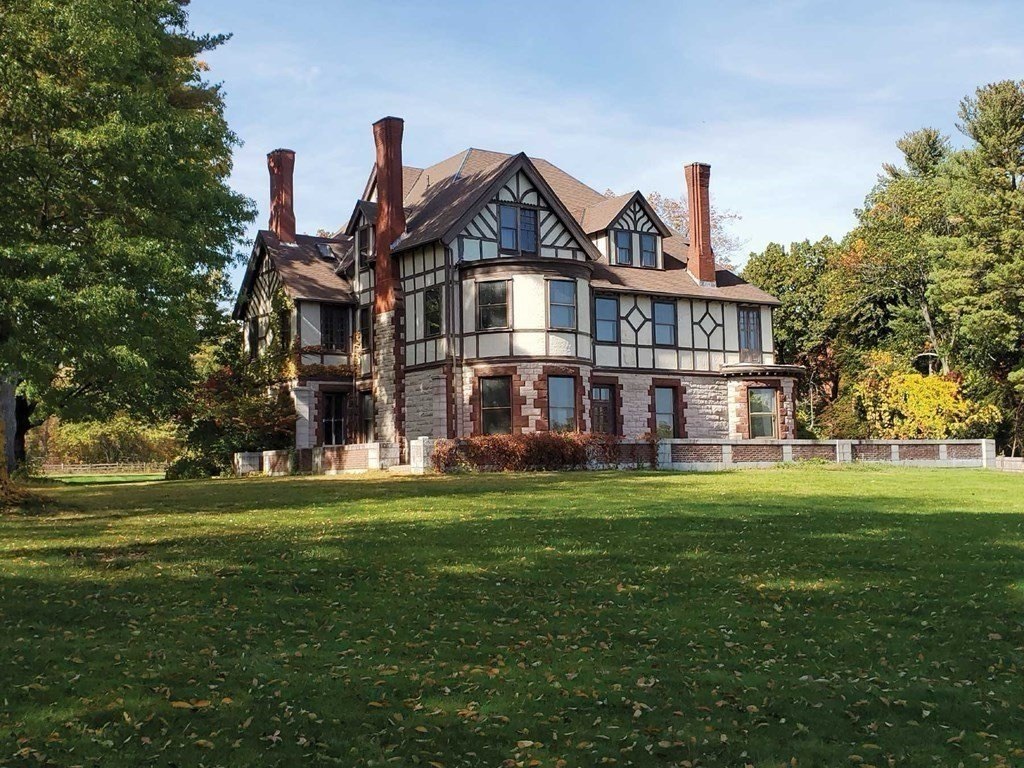
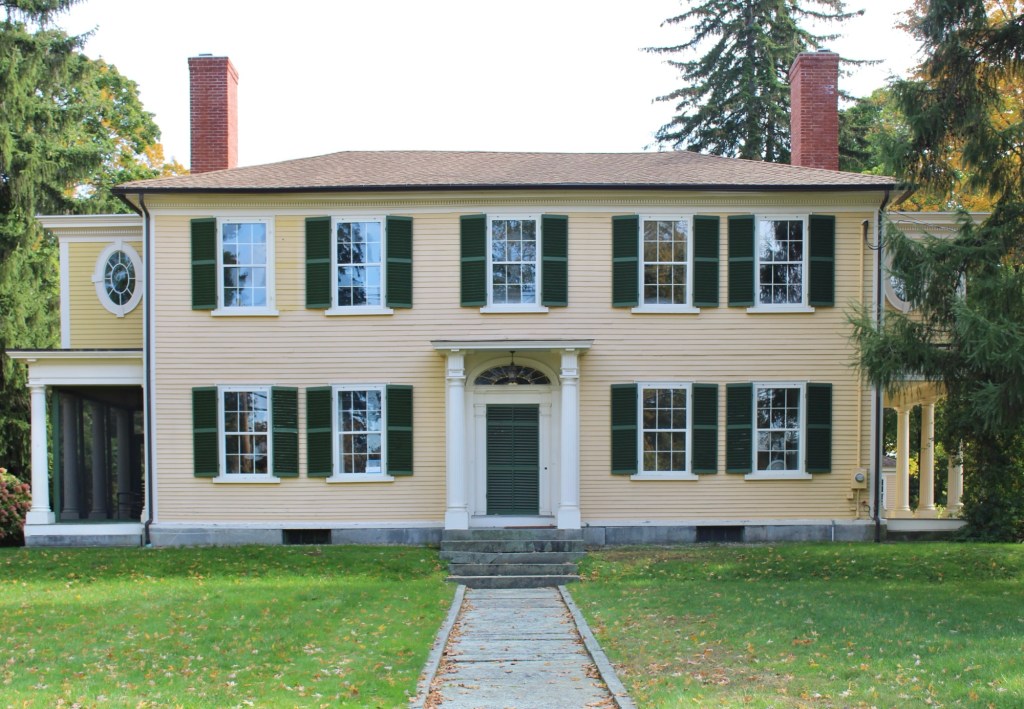
A lesser-known residence built for a member of the wealthy Thayer Family is this stately Queen Anne mansion tucked away in South Lancaster, Massachusetts. The John E. Thayer Mansion was built in the 1880s for its namesake, John Eliot Thayer (1862-1933), who graduated from Harvard College in 1885 and engaged in business before becoming one of the world’s most prominent ornithologists. John began collecting and housed his collections in several wooden buildings close to his home in Lancaster, but when these became unsafe and crowded he built a beautiful brick building in 1903 nearby, opening it to the public as a museum a year later. John Thayer hired esteemed Boston architect, John Hubbard Sturgis, who was then working with his nephew, Richard Clipston Sturgis, to design the English Queen Anne style country mansion. The residence features a stone first floor with wood-frame above that is given half-timbering treatment, suggesting the English design. John Thayer’s country mansion was a short walk away from his twin brother, Bayard Thayer’s mansion, and his other brother, Eugene’scountry house, both in Lancaster. The house remained in the Thayer family until the 1960s, and was recently sold to new owners. The interiors are some of the best preserved for a country estate I have seen and worthy of the Thayer name.
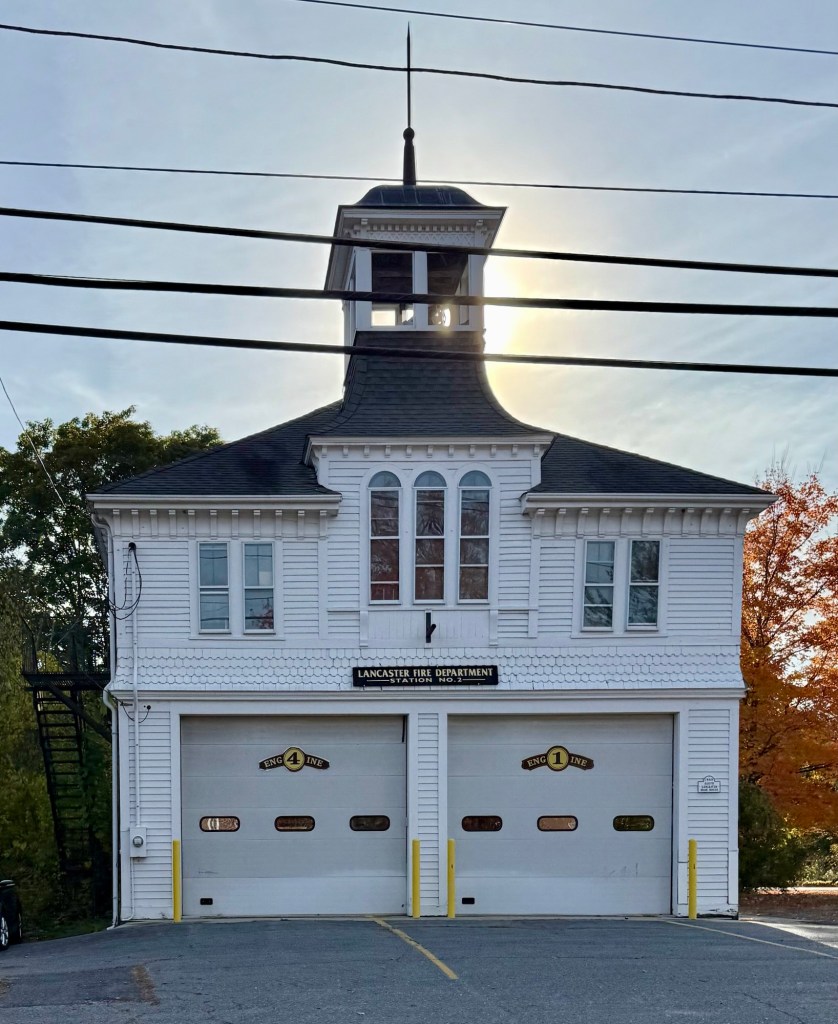
The South Lancaster Engine House is located in the village of South Lancaster, Massachusetts, and is one of the town’s three remaining historic fire stations and the oldest that remains in use by the local fire department. At the Town Meeting of June 18, 1887, it was decided that $3, 500 would be expended to build a station for the Fire Department in South Lancaster. Construction began in 1887, and was completed in March of 1888 from plans by architect, C.A. Woodruff. The station housed horse-drawn wagons, including one sleigh, and featured a bell in the belfry to call attention to the public. The station appears much like it did when built in 1888, besides the bright white paint color and the modification of the engine doors for the new, larger fire trucks.
The oldest residence in the North Village of Lancaster, Massachusetts, the John Bennett House dates to 1717 and evokes the old Colonial days of New England towns. John Bennett settled in Lancaster and built this large First Period house for his family and operated it as a tavern to weary travellers passing through town along the main turnpike. After Bennett’s death, local legend identifies that the property was a stopping place on the Underground Railroad for runaway slaves escaping to Canada. This, however, has never been substantiated. From 1872 to 1874, the house was occupied by the first Adventist missionary, John Nevins Andrews, co-founder of the Seventh-day Adventist Church. The house is well-preserved and remains as one of the oldest in Lancaster and an important landmark of the early days of the community.
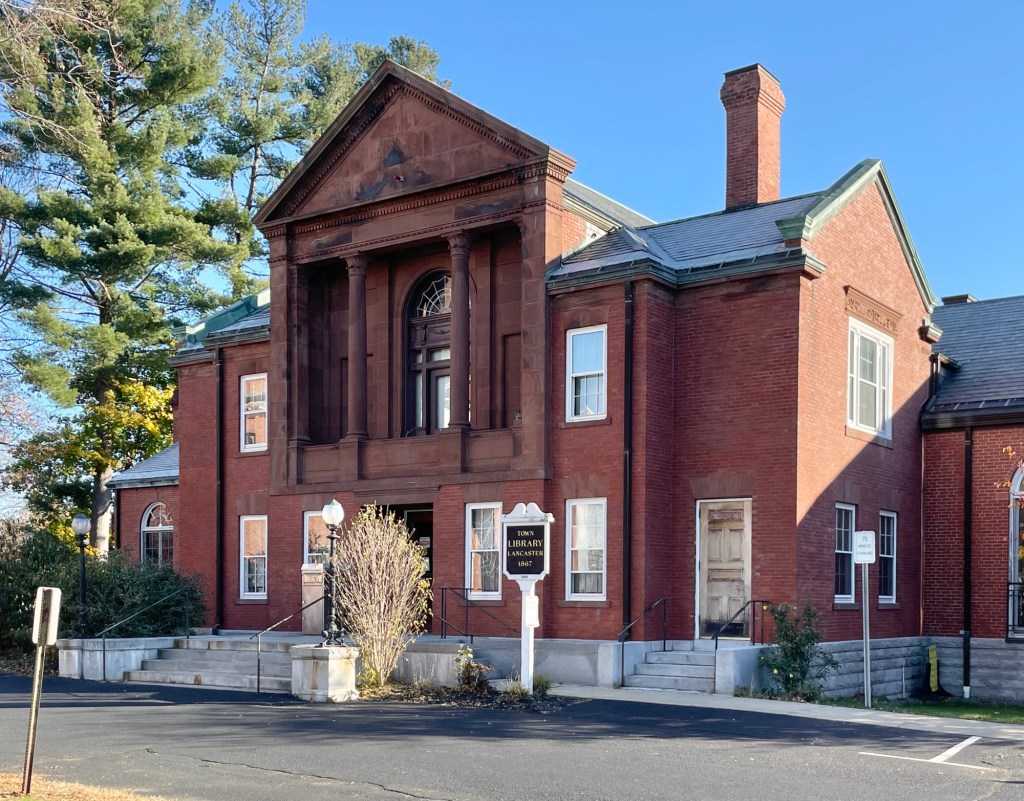
One of the four stately brick buildings framing the Lancaster Town Common in Lancaster, Massachusetts, is this brick and brownstone building, the historic town library. The story of the town’s first purpose-built library building began in 1866, when wealthy resident, Nathaniel Thayer offered $5,000 to the town for the erection of a new library in his hometown. Quickly, a committee of residents, led by Mr. Thayer, worked to acquire land from the First Church of Christ in Lancaster and hire architects Ryder & Harris of Boston to furnish plans for the new building, which was set to be a library and Memorial Hall dedicated to the 39 Lancaster men who died fighting in the Civil War. Nathaniel Thayer ultimately donated two-thirds of the final cost of the building, believed to be nearly $30,000, in addition to his already established $5,000 for books. The building was updated later with the addition of a children’s room in 1929, a gift of Mrs. Bayard Thayer in memory of her son, another Nathaniel Thayer. The Classical/Renaissance Revival style building stands out for its unique central brownstone pedimented bay with engaged columns and balcony over the main entrance.
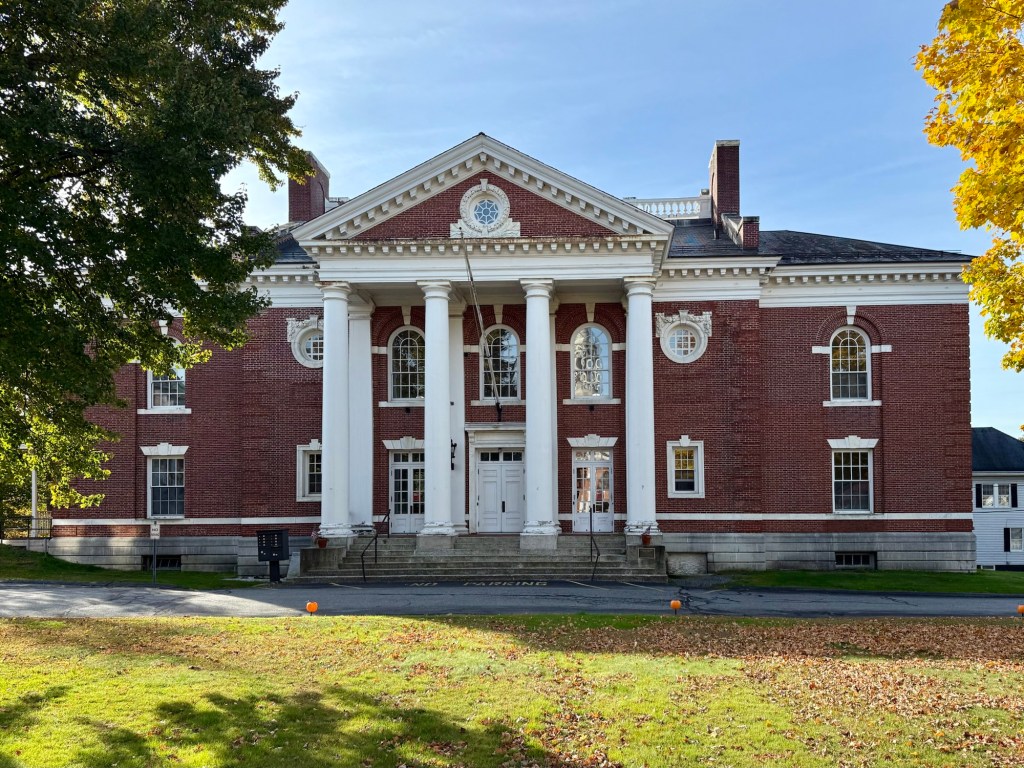
John Eliot Thayer (1862–1933) was an amateur ornithologist and member of the wealthy Thayer Family in Lancaster, Massachusetts. Due to his family’s business dealings, John Thayer was able to turn his passion, studying birds, into one of the largest collections of stuffed birds, eggs and nests for professionals all over the country to study. John began collecting and housed his collections were in several wooden buildings close to his home in Lancaster, but when these became unsafe and crowded he built this beautiful brick building in 1903 in South Lancaster opening it to the public as a museum a year later. The Boston architectural firm of Winslow & Bigelowdesigned the Colonial Revival style building, with the Guastavino Fireproof Construction Company providing plans for interior spaces and likely engineering inside. Many of the leading ornithologists of the time visited the Thayer Museum and it was estimated that more than ten thousand visitors came to the museum in the first six years. In 1974, the building was sold to the now defunct Atlantic Union College and reopened as the Mabel Bartlett Art Gallery. Much of the Thayer collection was donated to the Museum of Comparative Zoology at Mr. Thayer’s alma mater, Harvard University. Since the Atlantic Union College closed in 2018, this important building has been closed, hopefully to see reuse in the eventual redevelopment of the campus.
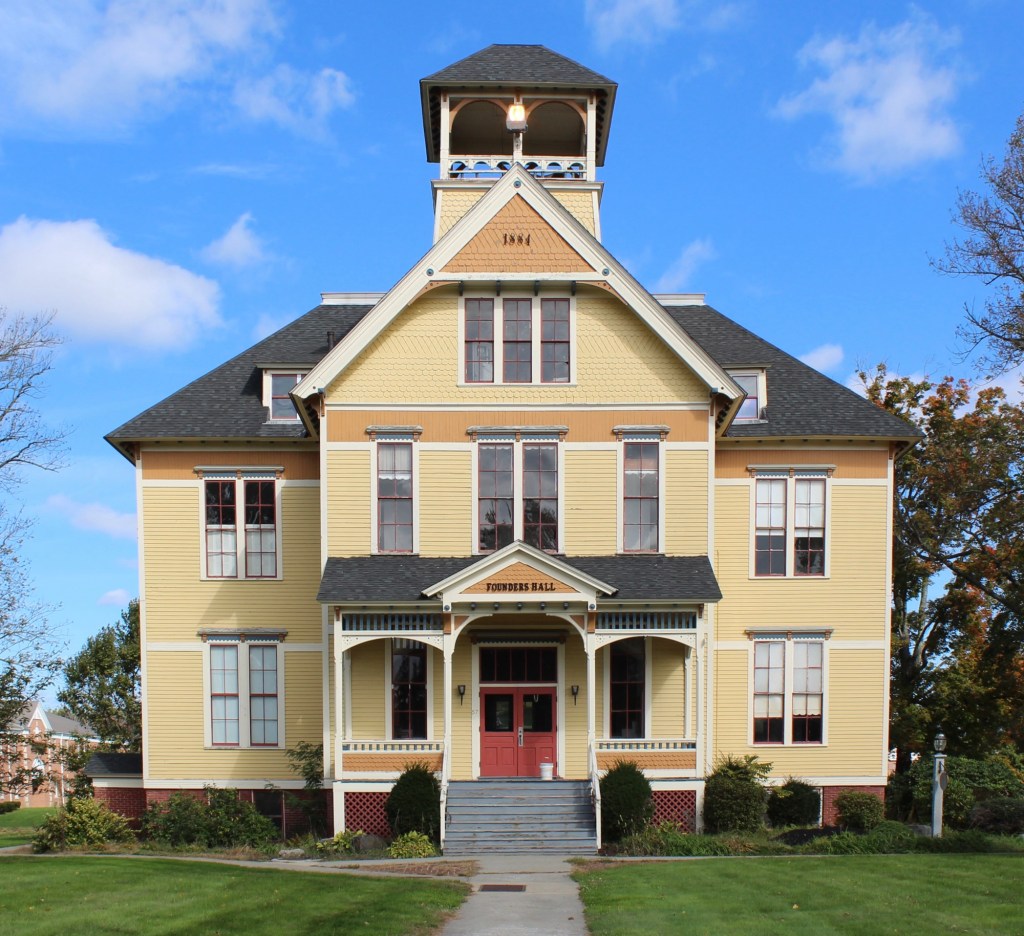
Completed in 1884, Founder’s Hall is the oldest building on the campus of Atlantic Union College, a now defunct college in Lancaster, Massachusetts. The handsome Queen Anne style building was constructed for the school, originally known as South Lancaster Academy by Stephen N. Haskell, an elder of the Seventh-day Adventist (SDA) church. The building was designed by Worcester-based architects Barker & Nourse, and is the oldest educational SDA facility standing. The institution changed names, first to Lancaster Junior College, and then to Atlantic Union College, before the institution closed in 2018. The building and nearby campus buildings were sold in 2021, but the future is uncertain at this time.
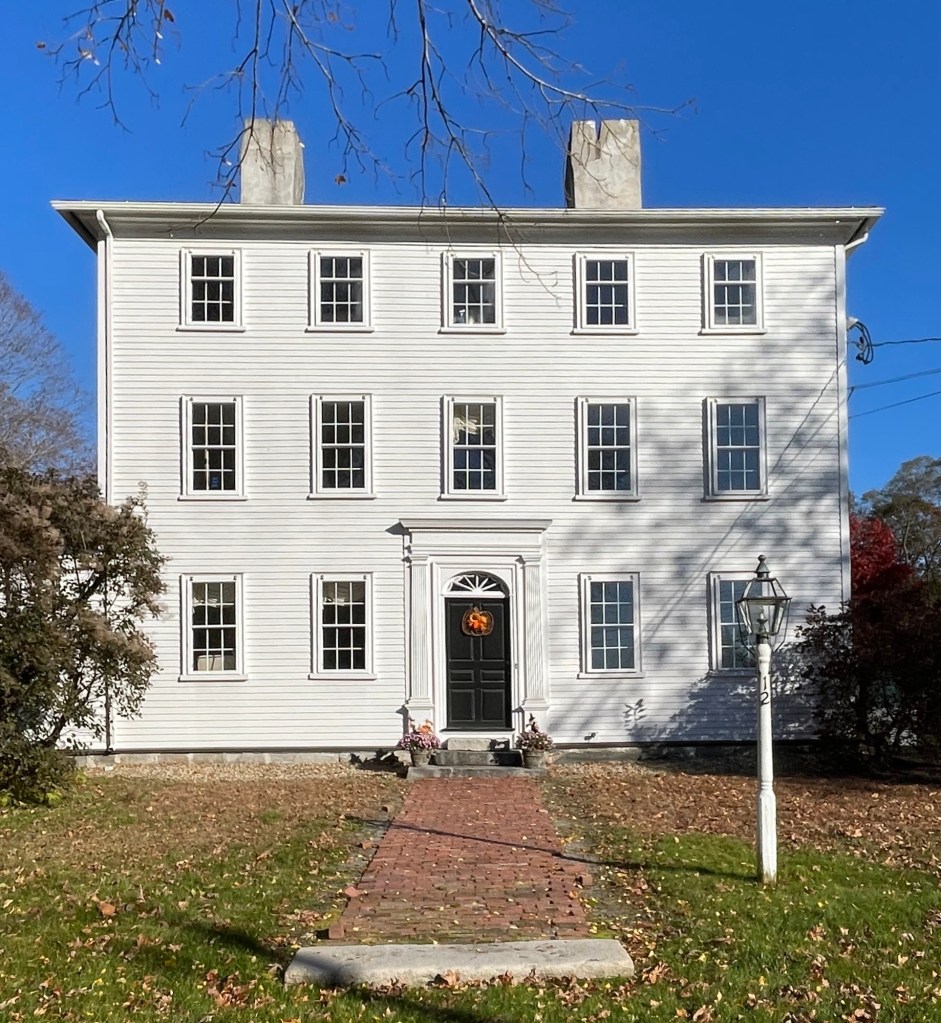
This stately Federal period mansion in Lancaster, Massachusetts, was originally constructed as a Georgian, two-story, five-bay house for Levi Willard (1727-1775), the son of a major landholder and descendant of one of the earliest settlers in the town. The residence is said to have been built by Levi’s cousin, Aaron Willard around 1760. Sometime after Levi’s death in 1775, the property was acquired by William Stedman (1765-1831), a notable attorney who served as town clerk of Lancaster 1795-1800, later becoming a member of the Massachusetts House of Representatives from 1802-1810. It was during Representative Stedman’s ownership that the house was remodelled into the fashionable Federal style appearance we see today, with the third floor added with shallow hip roof and classical entrance with pilasters and fanlight. In the mid-19th century, the house was operated as different boarding schools, though more information is needed. Today, the residence has been preserved and maintained as a single-family home, contributing to the charming Lancaster Center Village.
 Buildings of New England