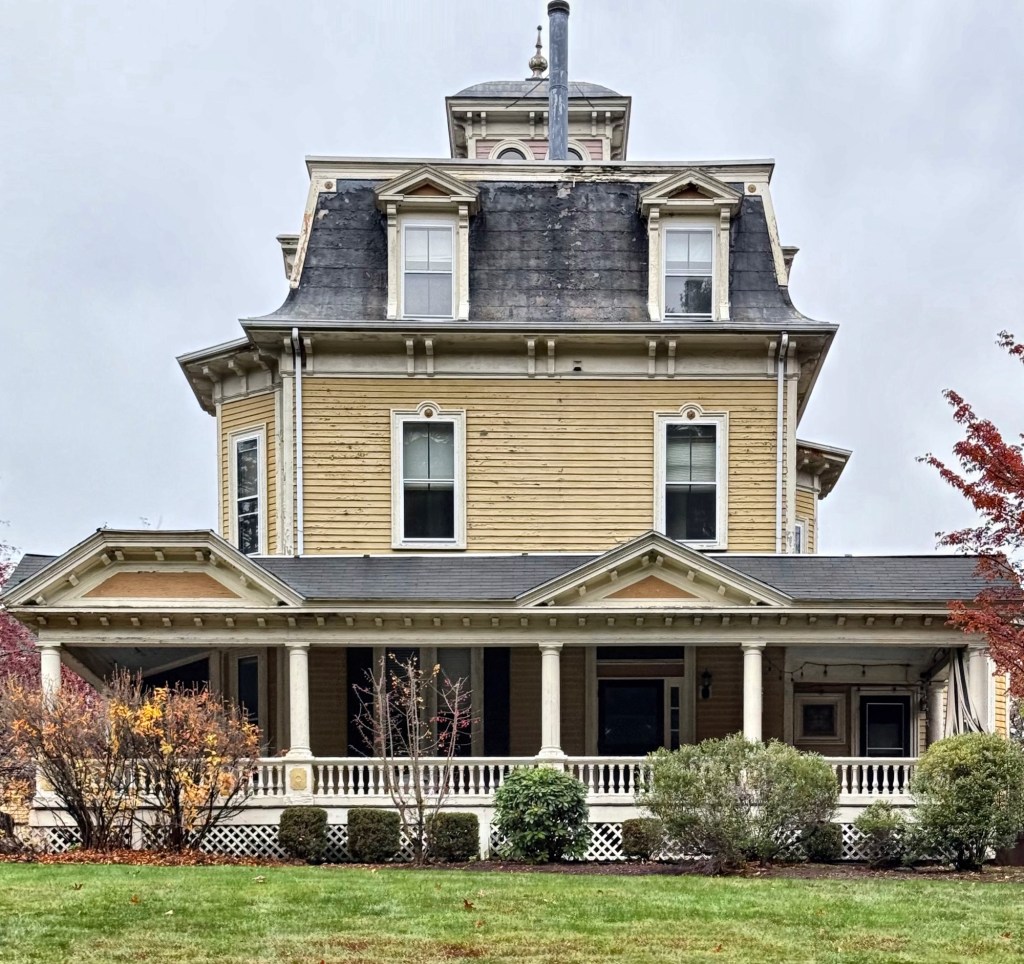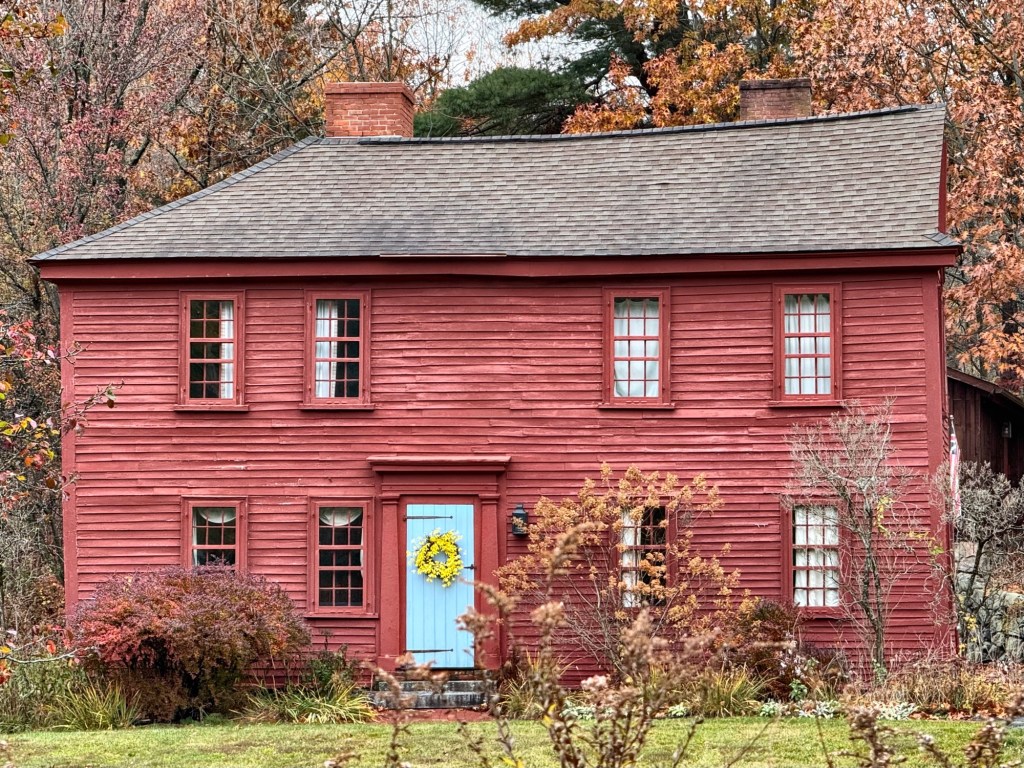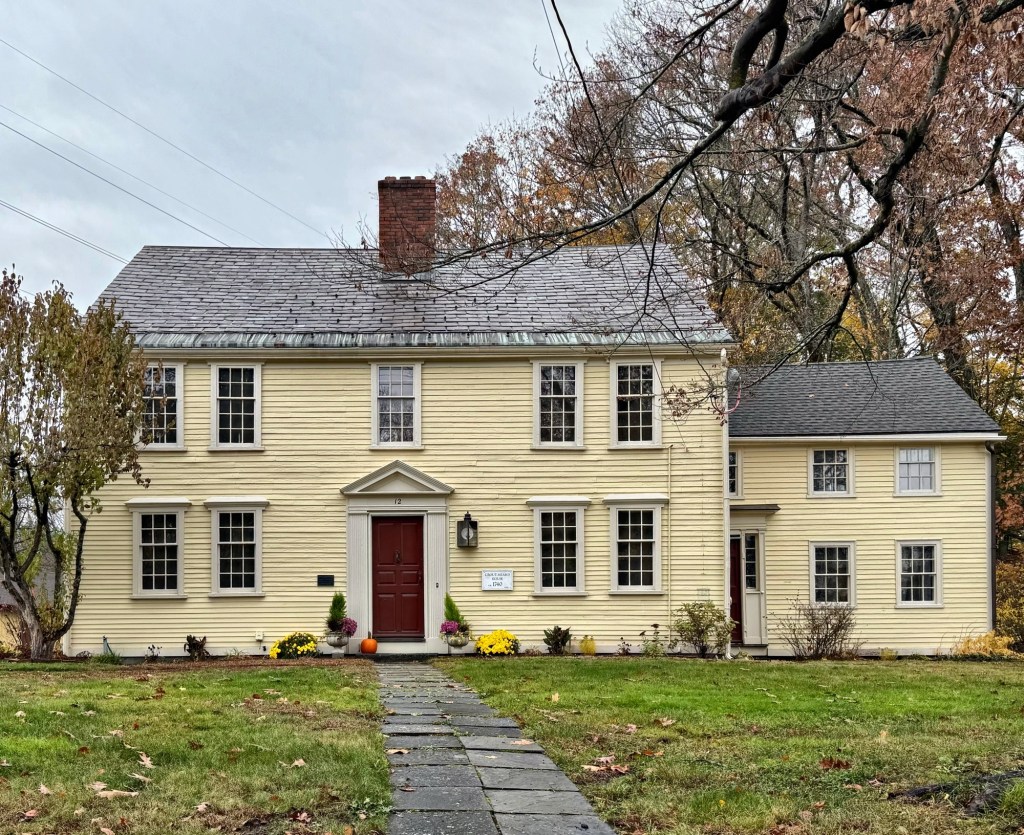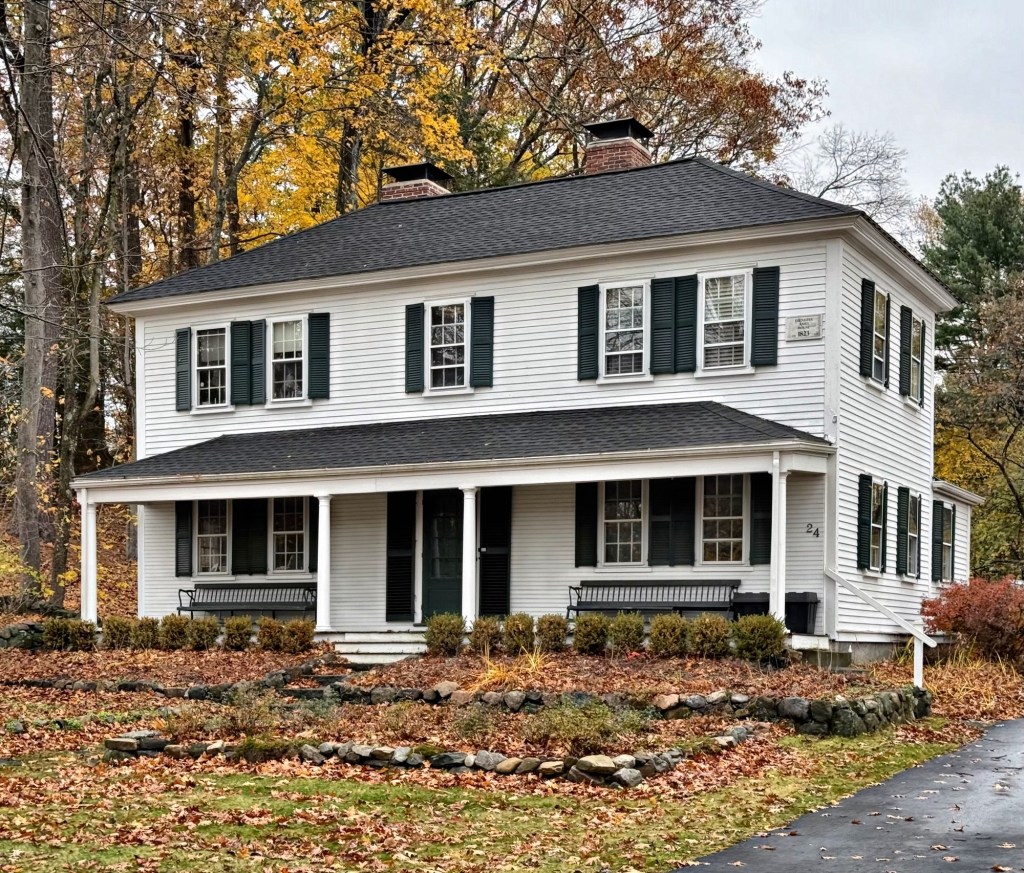
Major John Bradford Homestead // 1674

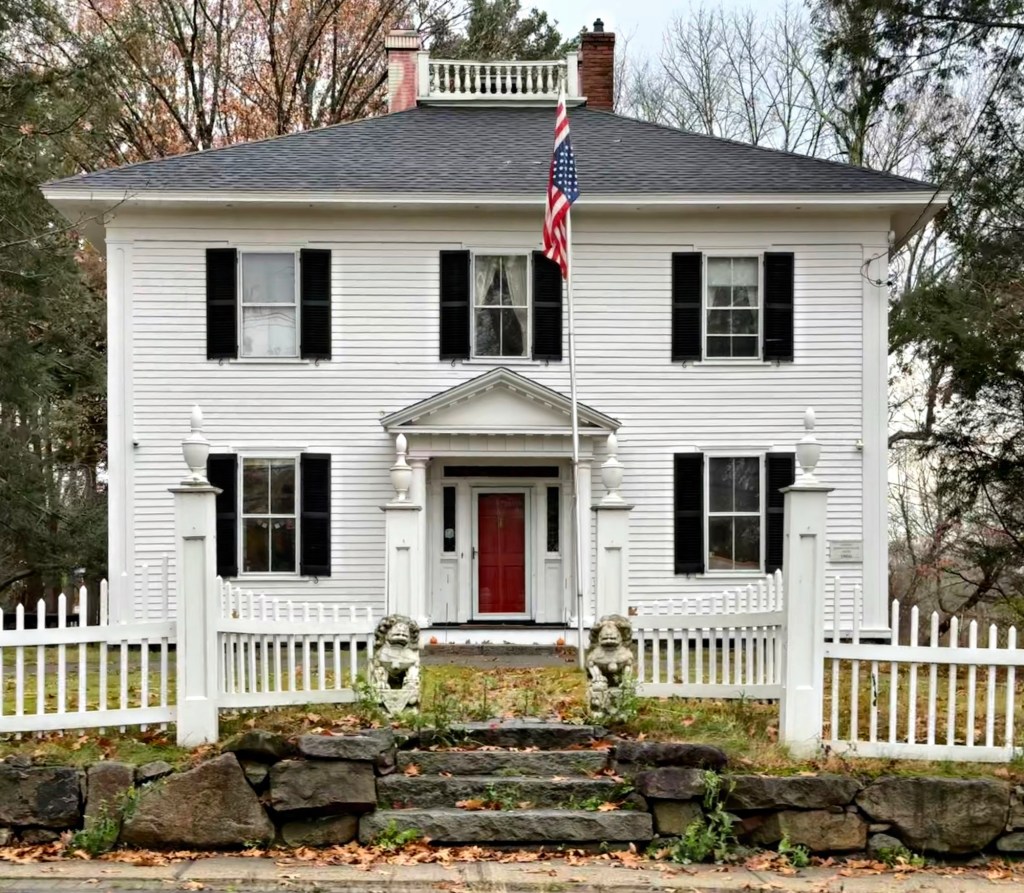
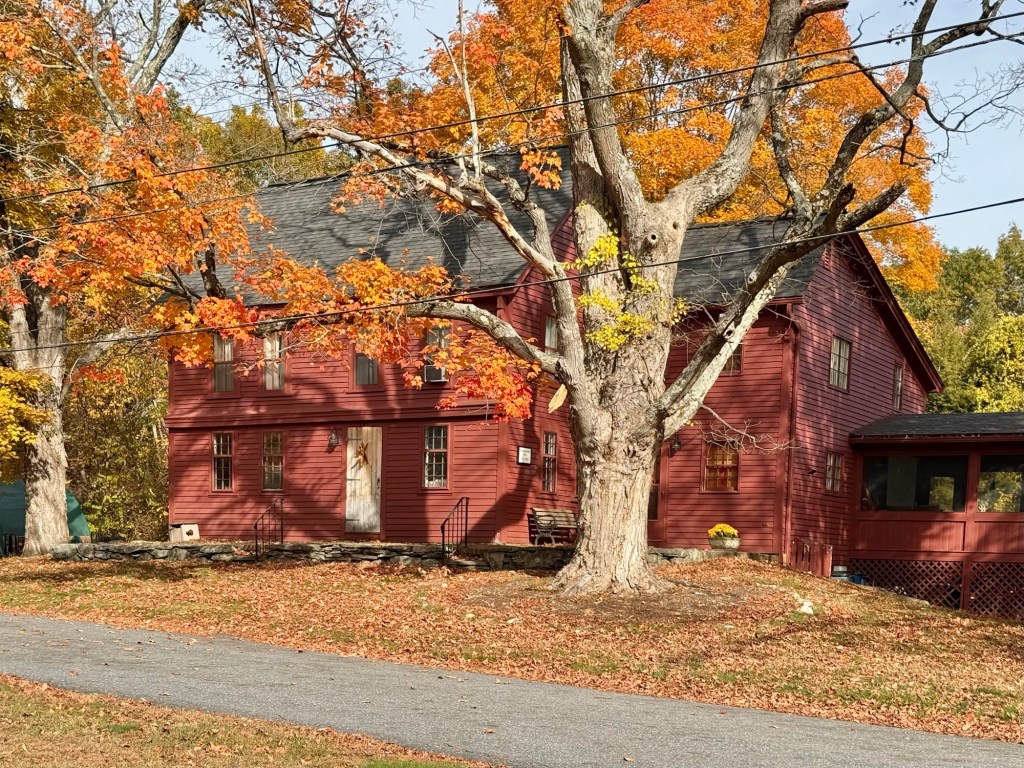
The Major John Bradford Homestead (also known as the Bradford House) is a stellar and well-preserved example of a First Period house in Kingston, Massachusetts. The house was reportedly built by Major William Bradford (1624-1704), the son of Governor William Bradford  who arrived to Plymouth via the Mayflower in 1620 and served as Governor of the Plymouth Colony between 1621 and 1657, purportedly built the west (left) half of the house in 1674 for his eldest son John Bradford and his bride, Mercy Warren. John Bradford (1653-1736) served as selectman, a deputy from Plymouth, and as a representative in the Boston General Court, who in 1717, led in the establishment of Kingston as a new town by donating land for the meeting house, school house, burial ground, training green, and minister’s house. In around 1715, John Bradford expanded this house which was not sufficient to house his wife and seven children. After centuries, the house began to show its age, and in 1921, coinciding with the tercentenary of the Pilgrims arriving to Plymouth, the Bradford House was thoroughly documented and restored by Frank Chouteau Brown and George Francis Dow. Since 1921, the property (including a historic barn moved here from a nearby site) has been owned and preserved by the Jones River Village Historical Society, who operate the property as house museum.

Kingston Almshouse // c.1772

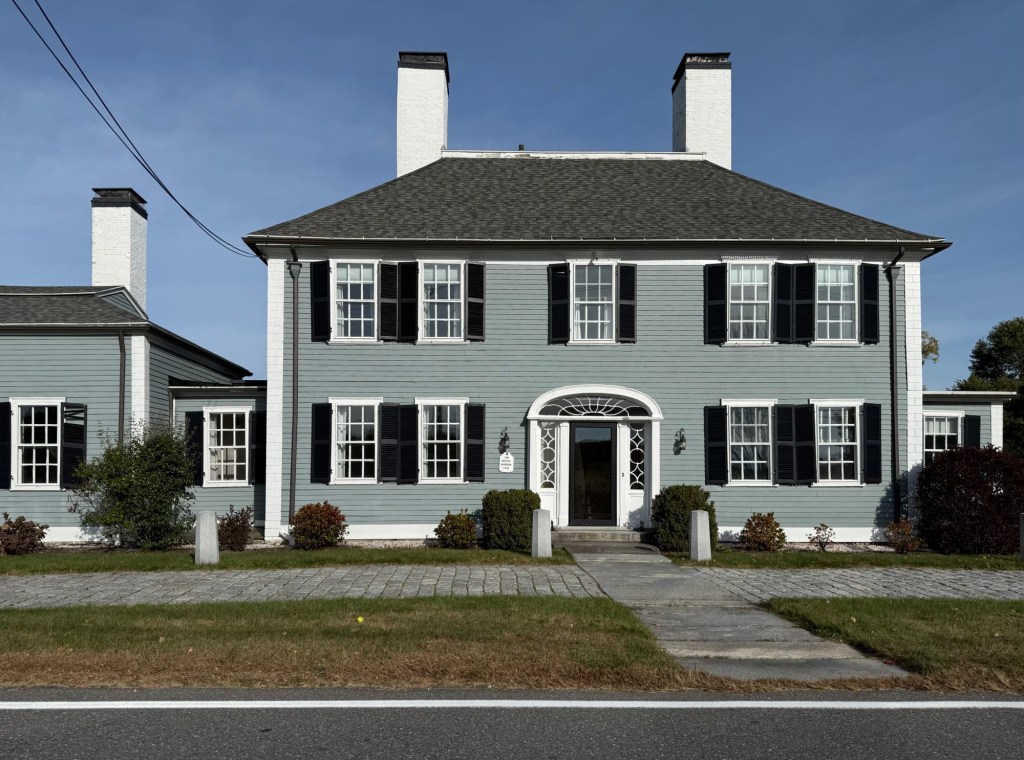
Built on the banks of the Jones River in Kingston, Massachusetts, this large residence is said to date to 1772 and was the home to a prominent ship-building family as well as to hundreds of destitute residents of the community who lived and worked here as the town’s poor house. Land (and possibly an earlier house) was acquired in 1772 by Zenas Drew (1735-1822), the son of Cornelius Drew, a wealthy shipbuilder who employed his many sons to work in the same industry, and the existing house was constructed for his family. From the house, numerous shipyards would be seen with large brigs travelling down the Jones River into Plymouth Bay and the Atlantic. After Zenas Drew’s death in 1822, the Town of Kingston acquired the property for use as the town’s almshouse or poorhouse, and likely expanded the property to its current Federal style configuration. Throughout the 19th and early 20th centuries, almshouses were a reality for society’s most vulnerable people, where these locally run institutions provided living and working conditions in a time before Social Security, Medicaid and Section 8 housing became a reality. These facilities were designed to punish people for their poverty and, hypothetically, make being poor so horrible that people would continue to work at all costs. Being poor began to carry an intense social stigma, and increasingly, poorhouses were placed outside of public view, as was the case here in Kingston outside of the town center at the banks of the river. By the 1920s and 1930s, these institutions began to close, with Kingston’s closing in 1923. The property was sold to a private owner, and has remained as a single-family residence ever since. 

William Sever House // 1755

The William Sever House is an architecturally and historically significant residence in the town center of Kingston, Massachusetts. A prosperous merchant, owner of ships involved in coastal and international trade and member of the colony’s House of Representatives, William Sever (1729-1809) was prepared to erect a home of appropriate status when he married his cousin, Sarah Warren, in 1755. Sever joined his father Nicholas Sever’s commercial shipping business after graduating from Harvard College in 1745 and in 1754, was elected to the Massachusetts Bay Colony’s House of Representatives. In 1769, Squire Sever was elected to the Governor’s Council, a position he held until 1774 when he joined the Provincial Congress. Due to his experience and seniority, Sever was appointed to head the Congress and was declared “President of Massachusetts” and endowed with the governor’s executive powers. After his death in 1809, the house remained in the Sever family for generations, including as a summer residence for James W. Sever, the namesake of Sever Hall at Harvard University. The residence is well-preserved and showcases the telescoping nature of some of these early Colonial-era properties, with the main house adjoined by a barn and carriage house and diminutive ells and was thoroughly documented in the 1930s through the Historic American Buildings Survey, with detailed drawings, plans, and photographs of the exterior and interior spaces. 

General John Thomas House // c.1761

The General John Thomas House at 156 Main Street in Kingston, Massachusetts, is significant as a pre-Revolution Georgian style residence and for its connections with a notable Patriot. General John Thomas (1724-1776) was born in Marshfield and later studied medicine, completing his studies in 1746 at the age of 22. He practiced medicine until being appointed in March 1746, as assistant surgeon by Governor William Shirley in Samuel Waldo’s regiment. Liking military service, in 1747 he traded his post as surgeon for that of a lieutenant. By the time of the French and Indian War he had risen to colonel in the militia. After the war, he married Hannah Thomas in 1761 and either built or moved into this house in Kingston, where he practiced medicine. In the years leading up to the American Revolution, John Thomas was a Brigadier, and briefly resigned from the ranks, disappointed that while four major generals were named, he was not on the list. Congress was then trying to name no more than one major general from each state, and Artemas Ward was given preference. George Washington implored him to remain, and John Thomas returned to service. The Congress resolved that he would be given precedence over all other brigadiers in the army. On the night of March 4, 1776, he led his division to fortify the Dorchester Heights, overlooking the south harbor at Boston, by using cannon that Henry Knox had brought from Fort Ticonderoga. From that position, he threatened the British fleet and the British were forced to withdraw, evacuating Boston on March 17. Thomas was finally named a major general. Soon after, Thomas was assigned to command in Canada and take charge of the Canadian invasion. He joined the army besieging Quebec and remained there until he died of Smallpox in June 1776, not living long enough to see a free America. The John Thomas House is a lasting and important physical vestige of his legacy.

Holmes-Stetson House // 1841

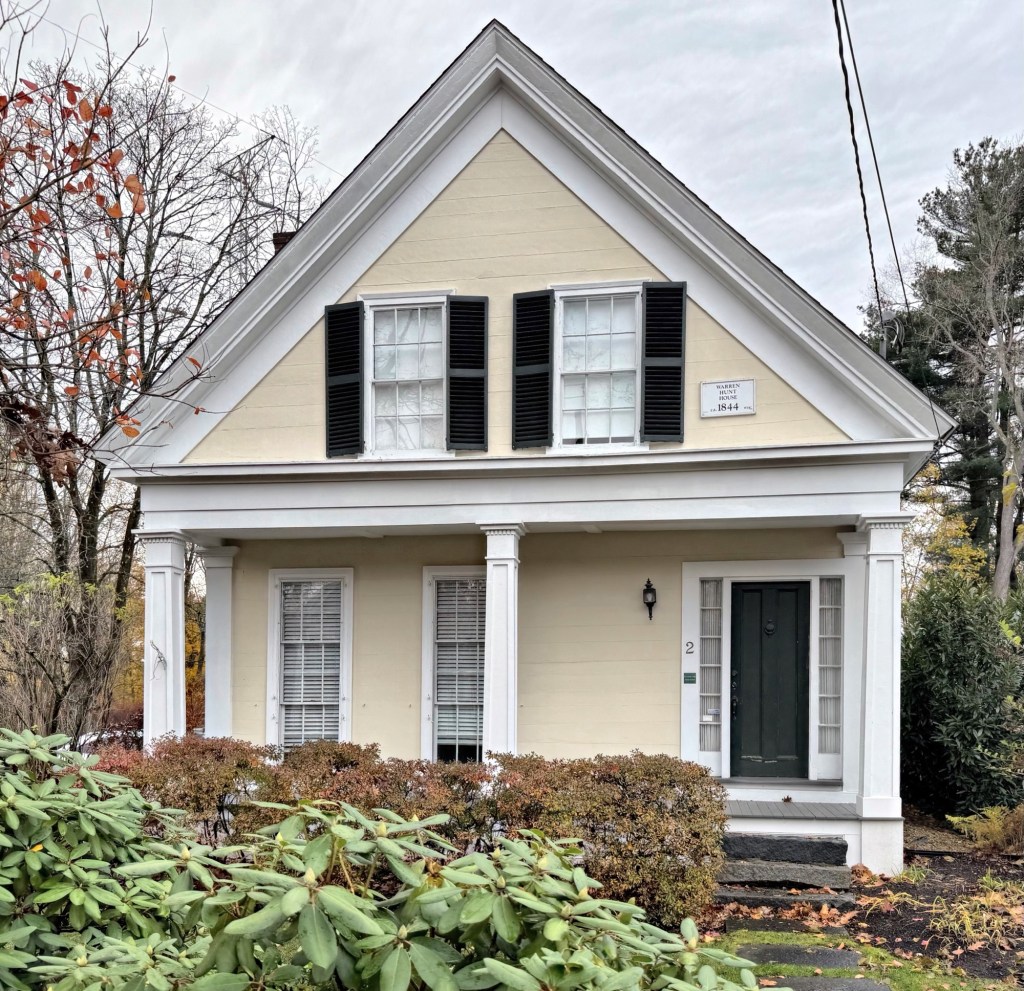
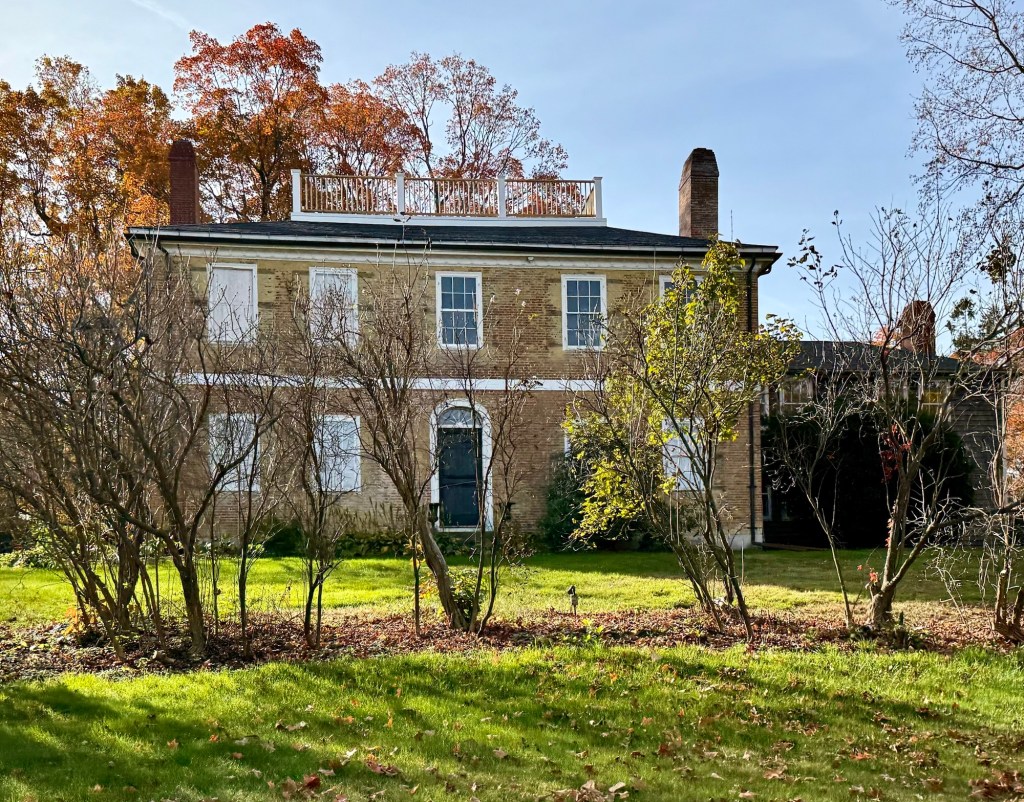
Built the same year as the Old Kingston Town House in Kingston, Massachusetts, this handsome Greek Revival style house sits on the town’s Main Street and has ties to two of the communities oldest and most significant families. The house was constructed in 1841 with matching side porches for Horace Holmes (1809-1855), a merchant and son of Joseph Holmes, a wealthy ship owner and builder. Horace operated a store near his home until his death in 1855. The property was later purchased by Captain Charles Stetson, a master mariner. The couple’s weath soon allowed them to sell this older residence and they built a “modern” Italianate style house at the rear garden (now 20 Green Street) to reside in. After successive ownership, the Greek Revival style house was converted to a store, but has since been reverted back to a residence, retaining much of its original fabric.

Old Kingston Town House // 1841

Overlooking the town green in Kingston, Massachusetts, this stately Greek Revival home was once the original town house for the community, containing meeting hall, town offices and even a jail cell! Before we go into that further, it is helpful to learn about history first. Present-day Kingston was within the tribal homeland of the Wampanoag people, who in the decades prior to the arrival of the Mayflower, saw their populations decimated from a rapidly spreading pandemics due to earlier contacts with Europeans. Originally part of Plymouth, Kingston was first settled by Europeans shortly after the landing of the Pilgrims at Plymouth Rock in 1620. In 1717, residents in the northern part of Plymouth petitioned the General Court to be set off from Plymouth as a separate township or a precinct. They were allowed to become the north precinct of Plymouth on the condition that they maintain a suitable minister. The northern precinct was wealthier and led to present-day Kingston incorporating as its own town in 1726, following a tax dispute. Early town meetings were held in the parish church until the separation of church and state necessitated a new town hall. The town hall here was built in 1841. As the town grew the building was re-oriented southward and enlarged in 1871 from plans by architect Luther Briggs. Further alterations were made to the building in 1935 under the guidance of the architectural firm of J. Williams Beal & Sons. In the early 2000s, space, parking, and accessibility concerns led the Town of Kingston to sell the 1841 Town House, which was purchased by private owners and converted to a residence. Inside, remnants of the old town house include old signs, office doors for city departments, former vaults converted to closets, and even a jail cell in the basement. Talk about a unique adaptive reuse!

Captain John Stacey House // 1731

In 1731, Captain John Stacey, a merchant and shipowner in Marblehead, had this gambrel-roofed house built on family land. Due to its orientation from the main street, a passageway allowed access to the rear of the property where other buildings were constructed by the family. By 1850, the house was jointly owned by Hawkes and Brown, with Mr. Hawkes operating a store in the first floor corner room. Eventually, by 1912, Brown had bought the whole building and moved his meat market into the store in this building. The property was later purchased and restored by Donald Mackenze Stacey (1916-1998), a contractor and descendant of the home’s original owner, John Stacey. Donald was a veteran of the U.S. Navy and served in World War II, before moving back to Marblehead and worked in the building trade. In town, he restored antique clocks, furniture, and buildings, including the Old Town House and Abbott Hall, the current town hall

Pedrick Mansion // c.1756

One of the great Colonial-era houses of Marblehead is this stately residence, the John Pedrick Mansion on Washington Street. The house dates to about 1756 and was built for John Pedrick (1733-1780), a wealthy shipping merchant. According to ‘The History and Traditions of Marblehead’, Pedrick’s “ships sailed to nearly every port in England, Spain, and the West Indies, and his transactions were with some of the largest mercantile houses of Europe. At one time, it is said, he owned twenty-five vessels engaged in the foreign trade.” The Revolutionary War, which proved so disastrous to the merchants of Marblehead, bore with especial severity upon Major Pedrick, as several of his vessels were destroyed by British cruisers in Massachusetts Bay, and many others rotted in port from blocades and engagements. The property was likely modernized after John Pedrick’s death in 1780 with a more Federal form, possibly adding the third floor and shallow hipped roof. The building’s facade is scored to resemble ashlar masonry, giving it a more stately appearance, but the bright blue really diminishes the feature, which should typically be colored a natural stone.

Russell-Goodwin House // c.1750

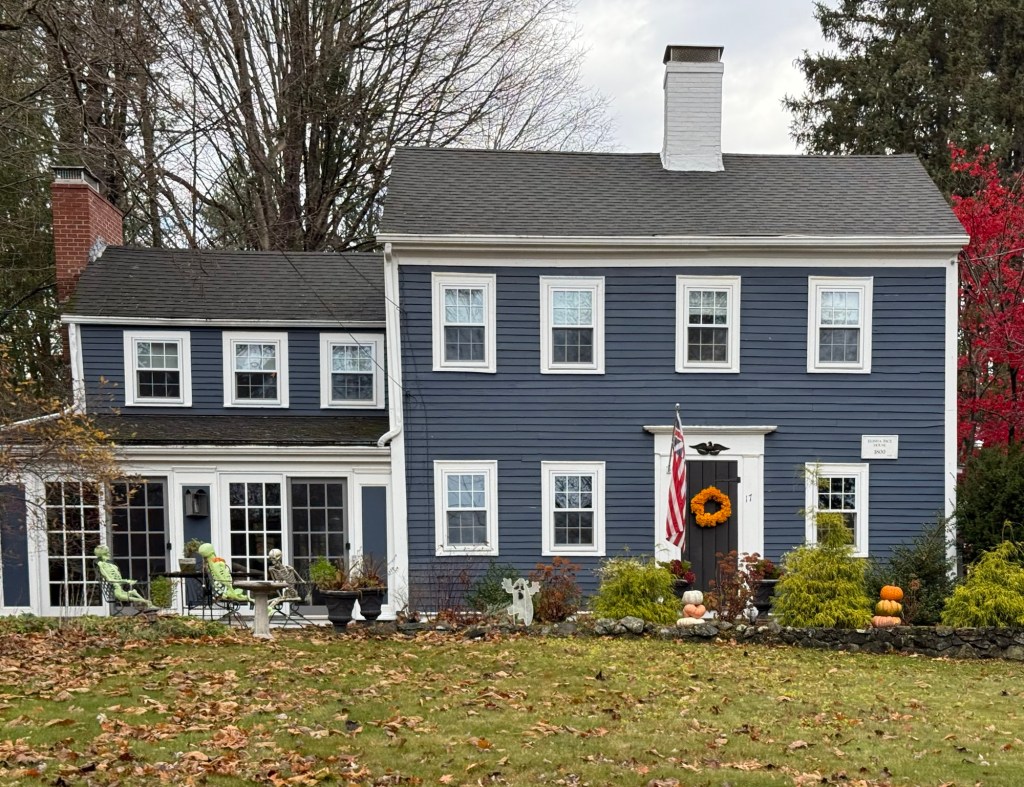
Marblehead is one of the oldest towns in America, first settled by colonists in 1629 and incorporated twenty years later. For the following decades, the coastal community grew, and was even one of the ten largest towns and cities in the colonies in 1790! From this history, the town has worked to preserve the unique character and walkable warren of narrow streets, that makes the town feel so charming and a great place to visit. There are dozens of pre-Revolution houses in Marblehead’s downtown area, including this side-hall Georgian house on Franklin Street, with a neighboring “sister house”. The residence dates to about 1750 and was occupied early on by Richard Russell, who according to the house plaque, was a fisherman. Later, in 1850, the house was occupied by John Goodwin Jr., who fought in the Civil War, and ultimately lost his life in the Battle of Roanoke Island, on February 8, 1862, when he was killed when he was struck in the chest by a cannonball. After his death, local Marblehead veterans established the G.A.R. Hall, John Goodwin Jr. Post 82 in his honor. The Russell-Goodwin House remains one of the many charming Colonial-era houses in Marblehead’s walkable village, telling a story of the generations of families who made this coastal community home.

Parker-Maynard Homestead // 1777

Hidden away on a quiet country road in Westborough, Massachusetts, the Parker-Maynard Homestead sits as one of the best-preserved and significant properties in town. Revolutionary War veteran Isaac Parker (1750-1798), after the war, acquired land in town and built a farmhouse here around 1777. Upon the time of his death in 1798, his property listed in his will included: a homestead farm, grist mill, saw mill, a small dwelling house, a horse stable, and a pew at the town meetinghouse. The property was acquired by brothers Ebenezer and Ephraim Maynard, who lived in the house together with their respective families. The Maynard brothers worked as wheelwrights and had their shop on the property for years. Ephraim Maynard’s eldest son, Horace Maynard (1814-1882) was born here and after graduating from Amherst College, moved to Tennessee to teach law at East Tennessee University before getting into politics. Horace served in Congress between 1858-1873 as a representative from Knoxville. He spent much of his first two terms in Congress fighting to preserve the Union, and during the Civil War, he consistently urged President Abraham Lincoln to send Union forces to free East Tennessee from its Confederate occupiers. After the war, he was appointed minister to Constantinople by President Grant in 1875. In 1880 he returned to the United States and was appointed Postmaster General by President Rutherford B. Hayes. Horace owned the family homestead following the death of his father and uncle, and often returned to Westborough to see family and get away from politics.

Gilman Morse House // c.1850

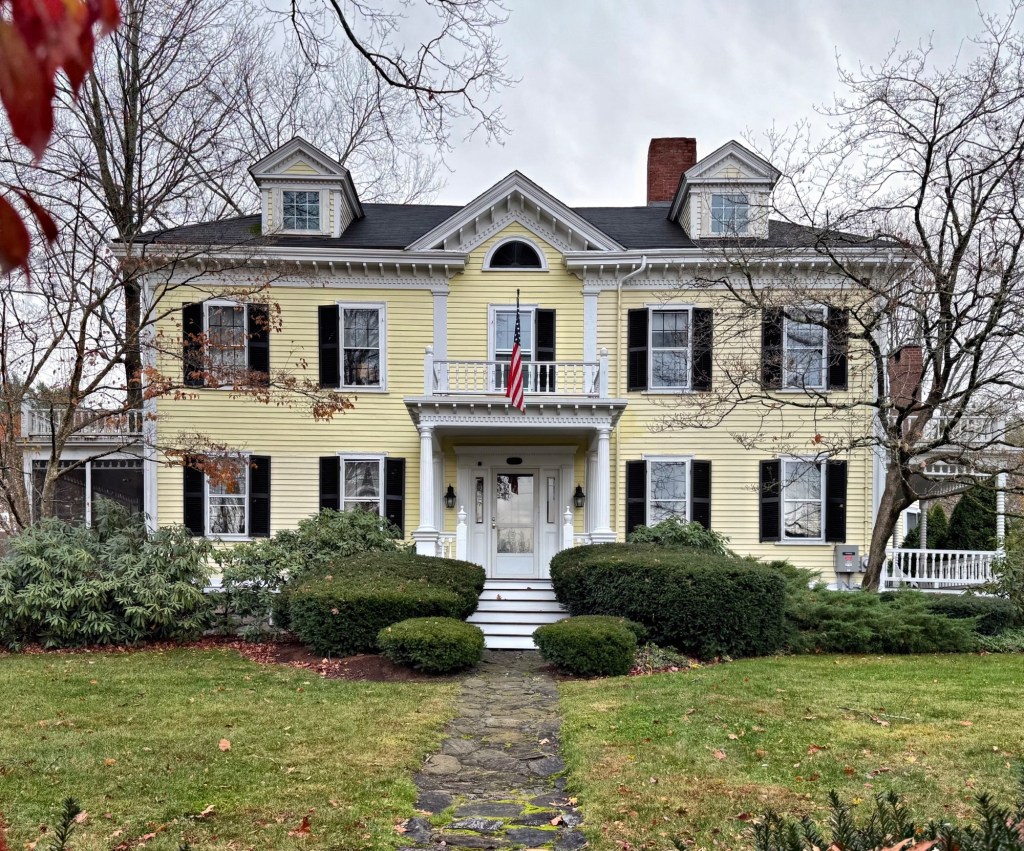
As the town of Westborough emerged from rural agricultural community to commercial center, connections to Worcester and Boston via rail service opened the town to prosperity. As businessmen accumulated wealth, these merchants built stately homes to showcase their position in the community. Before the Civil War, the Greek Revival style was ever-popular in Westborough, even though the style was already waning in popularity in larger cities. This is the Gilman Morse House, built around 1850 for Mr. Gilman Wood Morse (1810-1899) on East Main Street. Morse was a merchant in town and clearly did well for himself, building this stately house for his family. The residence is Greek Revival in style with its facade bays broken up by pilasters capped with Corinthian capitals adorned by acanthus leaves. The house also features ornate window and door hoods, showcasing the emerging Italianate style influence.

Sibley House – Westborough Historical Society Building // 1844

The Sibley House is a historic house museum as well as the headquarters of the Westborough Historical Society. Located on Parkman Street in the center of Westborough, Massachusetts, the transitional Greek Revival/Italianate style house was built in 1844, by William Sibley, who was a blacksmith and wheelwright. Soon after the house was built, William married Jane Caroline Gibson, and the couple raised five children here. William joined Westborough’s Company K, 13th Massachusetts Regiment during the Civil War and was wounded at Antietam. After the war, William returned home and he and his brother Frank began to manufacture sleighs.  At one point, they produced as many as 300 a year! The Sibley House was purchased by the Westborough Historical Society in 1990, nearly 100 years after the society was established in 1889. The house is open to visitors and provides a glimpse into daily life for Westborough citizens at the time. 

Dr. Edwin B. Harvey House // c.1830

Edwin Bayard Harvey (1834-1913) was born in Deerfield, New Hampshire, and attended Wesleyan University in Connecticut, pursuing his career as a teacher. He would teach for a few years until he shifted gears and enrolled at Harvard Medical School, graduating in 1866. With the intention of settling in the West, he went to Waukegan, Illinois, but was not satisfied, so he returned to New England, and made his home in Westborough, Massachusetts. Edwin operated a medical office from this house on West Main Street and resided here with his family until his death in 1913. He often made house calls around town travelling by horseback. During his time in Westborough, Dr. Harvey served as President of the Massachusetts Medical Society from 1898-1900, and served on local school and library boards in Westborough. Never giving up on his push for education, as a State Senator in the legislature in 1884, Dr. Harvey introduced and was instrumental to the passage of a bill to provide free textbooks to the children of the state. The Dr. Edwin Harvey House remains in a great state of preservation.

Barnes-Luce House // c.1890

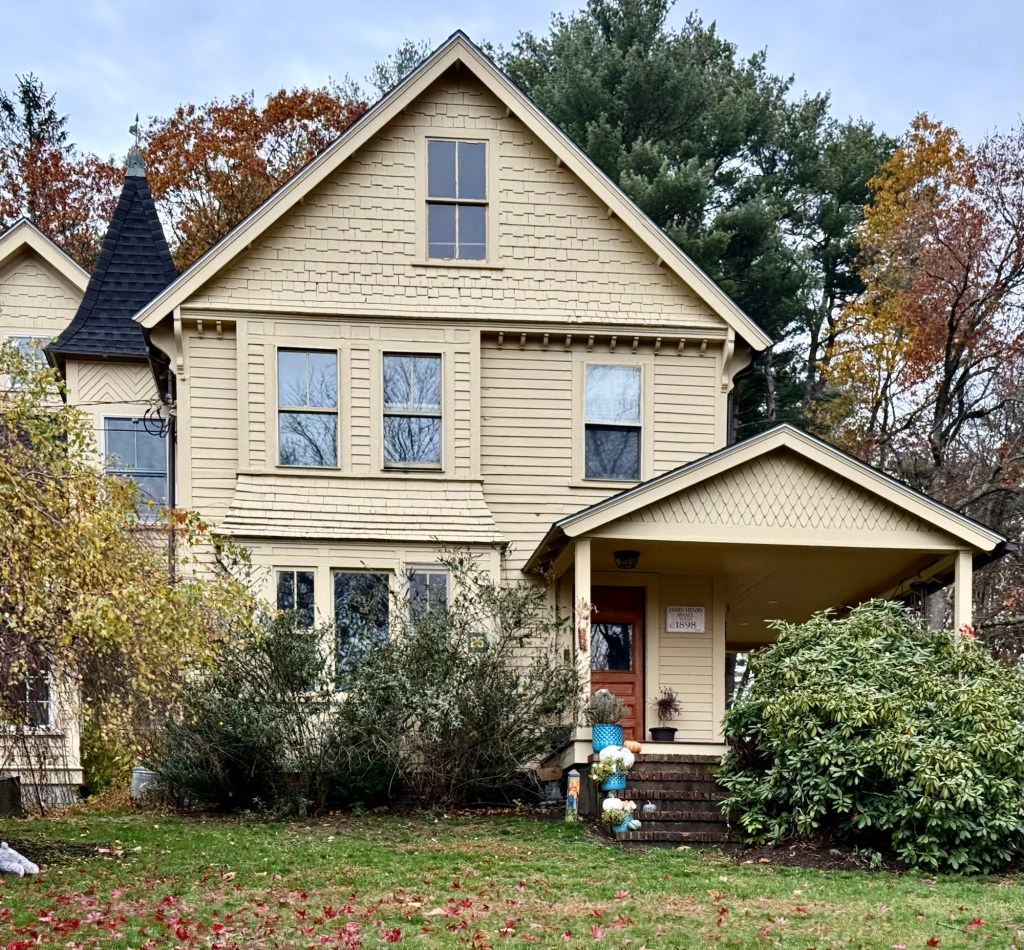
This lovely Queen Anne style home can be found on Highland Avenue in Somerville, Massachusetts. Built around 1890, the residence was built for Walter Saunders Barnes (1838-1931), a manufacturer with a paper box business in Boston. The property was sold in 1903 to Robert Luce (1862-1946), a prominent businessman and politician who founded the Luce’s Press Clipping Bureau before he was elected a member of the Massachusetts House of Representatives in 1899 and 1901–1908. He was elected the 42nd lieutenant governor of Massachusetts in 1912. After serving as Lt. Governor, Luce would spend the next decades in the House of Representatives. His Somerville house is a well-preserved example of the Queen Anne style and includes a steeply pitched hipped roof with gable and dormers, asymmetrical plan, porch with braced supports, and a half-round window in the gable.

George F. Loring House // 1895

The George F. Loring House on Highland Avenue in Somerville, Massachusetts, is an architect-designed house designed as the architect’s personal residence. While the architect specialized in the Richardsonian Romanesque and Colonial Revival styles, for his own home, George Loring crafted a free interpretation of seventeenth-century medieval architecture with a brick first story and upper floors overhanging and sheathed in cedar shingles. Loring trained in the office of Boston City Architect, George A. Clough, before establishing his own practice. By 1895, when he constructed this residence on Highland Avenue, Loring was in partnership with Sanford Phipps, specializing in the design of large single-family homes in the Boston metropolitan area.