Charles P. Ware House // 1894

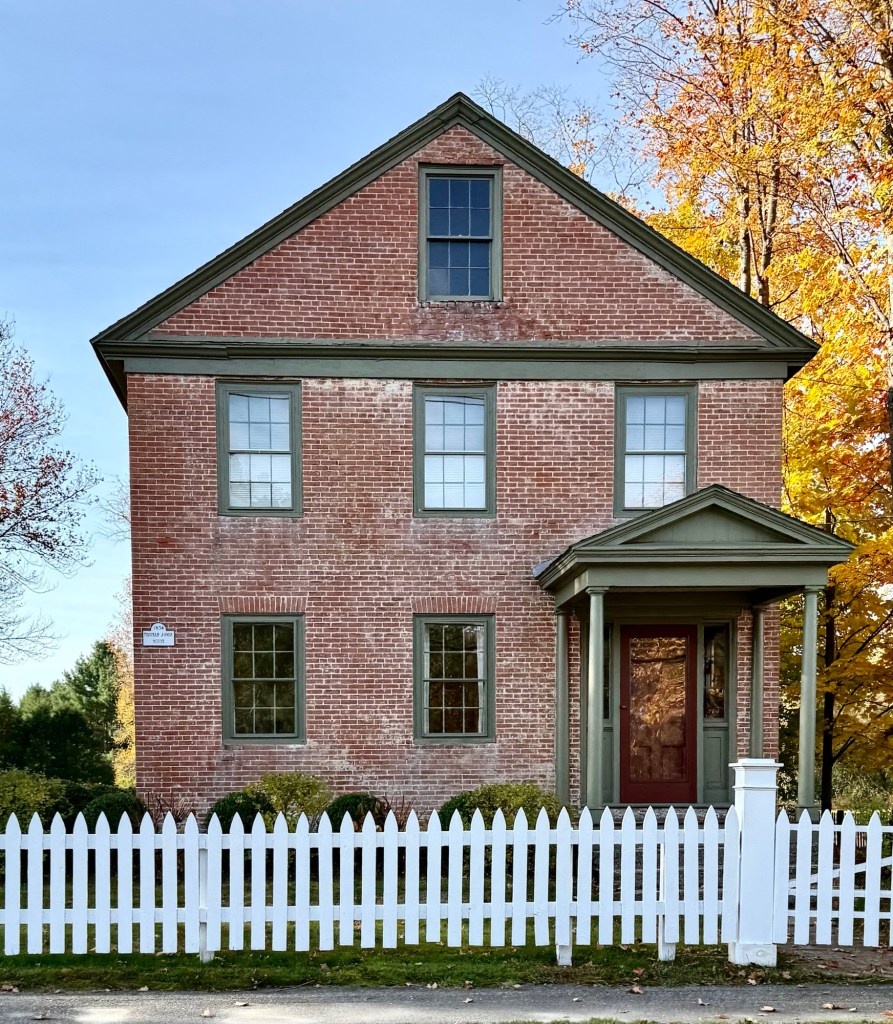
The Charles P. Ware House at 52 Allerton Street in Brookline, shows us that a house doesn’t have to be a mansion to make a statement! Built in 1894 from plans by architect, Henry Forbes Bigelow, this charming Colonial Revival cottage is notable for its brick construction with gambrel roof and brick endwalls rising as parapets. The home was built for Charles Pickard Ware (1840-1921) and wife, Elizabeth Lawrence (Appleton) Ware, who lived here until their deaths. Charles P. Ware was an educator, music transcriber, and abolitionist, who served as a civilian administrator in the Union Army, where he was a labor superintendent of freedmen on plantations at Port Royal, South Carolina during the Civil War. At one of the freedmen plantations, Seaside Plantation, Ware transcribed many slave songs with music and lyrics, publishing many in Slave Songs of the United States, which was the first published collection of American folk music. After Charles and Elizabeth Ware died in 1921 and 1926, respectively, the property was inherited by their son, Henry Ware, who was an attorney.

Codman-Gillet House // 1928

Built in 1928 as an accurate reproduction of an 18th-century residence the Codman-Gillet House at 60 High Street in Brookline is significant architecturally in the Colonial Revival style but also as a preserved house by the architectural firm of Howe, Manny and Almy. Lois Lilley Howe and Eleanor Manning were among the first women graduates of the M.I.T. School of Architecture, and the firm was joined in 1926 by Mary Almy. Their firm was the first all-woman architecture practice in Boston and the second in the U.S. Howe was the first woman elected a Fellow of the American Institute of Architects. The house was built for William Coombs Codman, a trustee of various real estate trusts, and was likely rented or sold for investment. The first long-time owner/occupants of the residence were Mr. and Mrs. Fernand Gillet and who both taught at the New England Conservatory of Music. Fernand was the principal oboist of the Boston Symphony Orchestra from 1925 to 1946. The Codman-Gillet House features many traditional Colonial Revival elements including: the corner quoining, window trim, a pedimented projecting entrance, and hipped roof with large central chimney.

Dana House // 1896

The Dana House at 41 Allerton Street in Brookline, Massachusetts, is one of many stately suburban residences designed in the Colonial Revival style here. Built in 1896 for Ms. Julia Hurd Dana (1825-1914), a widow of James Dana, who was a Mayor of Charlestown between 1858-1860, before it was annexed to Boston. The Dana House was designed by the important architectural firm of Chapman & Frazer, who specialized in higher-end suburban housing at the turn of the 20th century. Julia Hurd Dana was the daughter of William Hurd of Charlestown, and after her husband’s death, moved to Brookline in this new home with her daughter, Mary. The residence is notable for its ample setback from the street, providing a front yard garden, hipped roof of slate with pedimented dormers, and palladian window over the portico which is now covered in crawling ivy.

Russell-Hayes House // 1899

The Russell-Hayes House at 58 Allerton Street in Brookline, Massachusetts, was built in 1899 in the highly popular Colonial Revival style for Mr. and Mrs. Russell. Francis Henry Russell (1832-1919) was born in Plymouth and married Elizabeth Stevens (1835-1922) of Lawrence, and had one daughter together. Francis attended Harvard College and eventually worked as the Treasurer of the Bates Manufacturing Company, doing well enough to purchase a house lot in the fashionable “Pill Hill” neighborhood of Brookline to build his home here. Mr. Russell hired Plymouth-born architect, Joseph Everett Chandler, to design his suburban residence for himself, his wife, and daughter. After the death’s of Francis (1919), Elizabeth (1922) and their unmarried daughter, Mary (1926), the property was purchased in 1927 by African American musician, Roland Hayes. Just years prior to purchasing this stately home in Brookline, Roland Hayes performed abroad in Europe, even a private performance for King George V and Queen Mary at Buckingham Palace. He returned to the United States of America in 1923 and made his official debut on November 16, 1923, in Boston’s Symphony Hall, which received critical acclaim. He was the first African-American soloist to appear with the Boston Symphony Orchestra, who would later hire him, with a reported salary of $100,000 a year. Roland and his family lived in this house for 50 years until his death in 1977. His legacy lives on here with a plaque in front of the home, and a public school named after him.

Joshua Delano House // c.1785

One of the finest Federal period houses in Kingston, Massachusetts, a town full of amazing Federal homes, can be found at 93 Main Street, set away from the street on a sizable lot. The residence here was likely built in the 1780s or 1790s as one of a series of Delano Family houses near Rocky Nook, a peninsula at the end of the Jones River, where many new ships were built and traversed their way to Plymouth Bay and ports in the Indies and beyond. The Delano Family had built the Delano Wharf and Warehouse and operated extensive salt works just north of the wharf on the Nook, along with owning many seafaring vessels, many of which were built by Kingston shipbuilders. This house was seemingly built for Joshua Delano and is architecturally unique with brick end walls, hip roof with a monitor which projects in the center of the hip, and a classical entry portico sheltering the projecting door surmounted by a fanlight transom. The property has recently been purchased. Hopefully the new owners treat this architecturally and historically significant residence with the care she deserves. 

Delano Warehouse and Wharf // 1803

In 1802, Kingston-based merchants and landowners Benjamin Delano and brother-in-law Peter Winsor built this stone wharf and warehouse at Rocky Nook, a small peninsula at the end of the Jones River where it meets Plymouth Bay. The Rocky Nook had several warehouses in the early 1800’s which were used to hold cargo for the busy Kingston vessels that carried passengers and goods all down the eastern seaboard for transit, with larger vessels sent to the West Indies for trade. Benjamin Delano and his son Joshua either owned or partly owned 37 vessels between 1803 and 1882 and were a wealthy family that built their fortune on shipbuilding and trade. The warehouse, built at the end of the wharf was used to store goods and also served as a ship chandlery, a store selling goods needed for newly outfitted ships that were berthed up the Jones River.  A combination of the coming of the railroad and the need for faster and bigger vessels caused the decline of the shipping business in Kingston in the late 19th century with the shipbuilding industry largely evaporating by the 20th century. The Delano warehouse at the end of the wharf has since been converted to a private residence yet retains its unique character and siting with arguably the best view in town. 

Major John Bradford Homestead // 1674

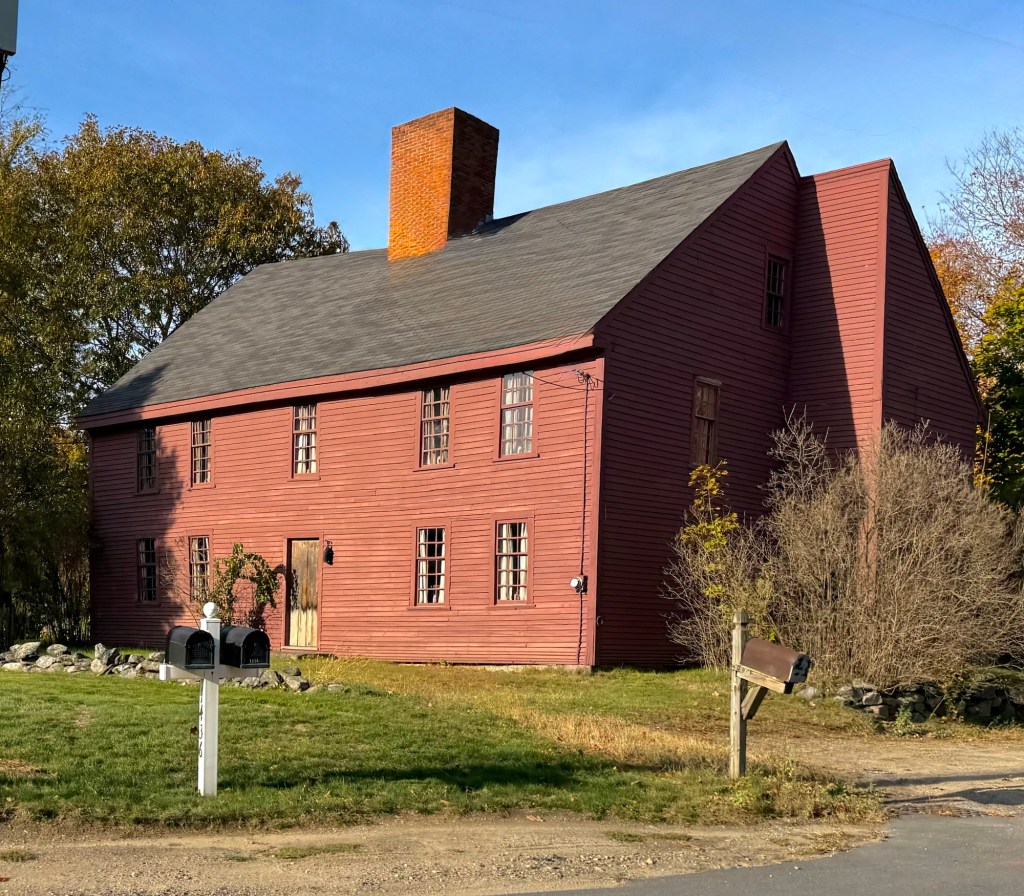
The Major John Bradford Homestead (also known as the Bradford House) is a stellar and well-preserved example of a First Period house in Kingston, Massachusetts. The house was reportedly built by Major William Bradford (1624-1704), the son of Governor William Bradford  who arrived to Plymouth via the Mayflower in 1620 and served as Governor of the Plymouth Colony between 1621 and 1657, purportedly built the west (left) half of the house in 1674 for his eldest son John Bradford and his bride, Mercy Warren. John Bradford (1653-1736) served as selectman, a deputy from Plymouth, and as a representative in the Boston General Court, who in 1717, led in the establishment of Kingston as a new town by donating land for the meeting house, school house, burial ground, training green, and minister’s house. In around 1715, John Bradford expanded this house which was not sufficient to house his wife and seven children. After centuries, the house began to show its age, and in 1921, coinciding with the tercentenary of the Pilgrims arriving to Plymouth, the Bradford House was thoroughly documented and restored by Frank Chouteau Brown and George Francis Dow. Since 1921, the property (including a historic barn moved here from a nearby site) has been owned and preserved by the Jones River Village Historical Society, who operate the property as house museum.

Drew-Holmes House // c.1760

This charming Colonial house is located at 51 Landing Road, overlooking the banks of the Jones River in Kingston, Massachusetts. The house is thought to date to 1760, and by 1800, was likely owned by Stephen Drew a prominent local shipbuilder from a family of shipbuilders who operated a shipyard near the property. In 1810, the property was owned by Joseph Holmes (1772-1863), who also would build a wharf and dock on the riverfront of the property. The property remained in the Holmes Family when it was inherited by Edward Holmes, who worked in shipbuilding until the decay of the industry. The house is a great example of a 18th century residence with a 4×2 bay two-story form, clad with wood clapboards and shingles with a large brick chimney at the roof. In 2018, Jones River Landing, a non-profit, purchased the house and ‘seek to provide seasonal lodging and accommodations for visiting students, interns, scientists and advocates who are studying and working in environmental programs in our region’. While there were plans were to restore the house, the landscaping and peeling siding appear to show some deferred maintenance.

Kingston Almshouse // c.1772

Built on the banks of the Jones River in Kingston, Massachusetts, this large residence is said to date to 1772 and was the home to a prominent ship-building family as well as to hundreds of destitute residents of the community who lived and worked here as the town’s poor house. Land (and possibly an earlier house) was acquired in 1772 by Zenas Drew (1735-1822), the son of Cornelius Drew, a wealthy shipbuilder who employed his many sons to work in the same industry, and the existing house was constructed for his family. From the house, numerous shipyards would be seen with large brigs travelling down the Jones River into Plymouth Bay and the Atlantic. After Zenas Drew’s death in 1822, the Town of Kingston acquired the property for use as the town’s almshouse or poorhouse, and likely expanded the property to its current Federal style configuration. Throughout the 19th and early 20th centuries, almshouses were a reality for society’s most vulnerable people, where these locally run institutions provided living and working conditions in a time before Social Security, Medicaid and Section 8 housing became a reality. These facilities were designed to punish people for their poverty and, hypothetically, make being poor so horrible that people would continue to work at all costs. Being poor began to carry an intense social stigma, and increasingly, poorhouses were placed outside of public view, as was the case here in Kingston outside of the town center at the banks of the river. By the 1920s and 1930s, these institutions began to close, with Kingston’s closing in 1923. The property was sold to a private owner, and has remained as a single-family residence ever since. 

Former Howard Johnson’s Motor Lodge, Kingston // 1956

Howard Johnson’s (Hojo’s) traces its beginnings to the late 1920s when the Boston native Howard D. Johnson (1887-1972) opened a series of ice cream stands at various locations along the South Shore of Massachusetts. By 1940, there were more than 125 restaurants from Maine to Florida and by the late 1950s there were approximately 500 along the east coast. In 1954 the company expanded to motor lodges (motels), eventually opening over 500 across the United States. The growth of the motel tied closely with 1950s legislation that authorized Interstate highways connecting cities via automobile, increasing traffic all across the country. Howard Johnson’s adopted a policy of acquiring real estate directly off highway exit ramps and often the parcels were large enough to include a restaurant and motor lodge. Specifically, many Howard Johnson’s Motor Lodges featured prominent signage and bright orange roof, to help motorists identify the motel while speeding down the interstate. The Kingston location here opened in 1956 along Rt. 3, connecting Boston and points north, to Cape Cod. While it’s iconic name and orange roof do not remain, the unique Googie-esque form of the lobby with very 50s weathervane remain as an important vestige of 1950s America.