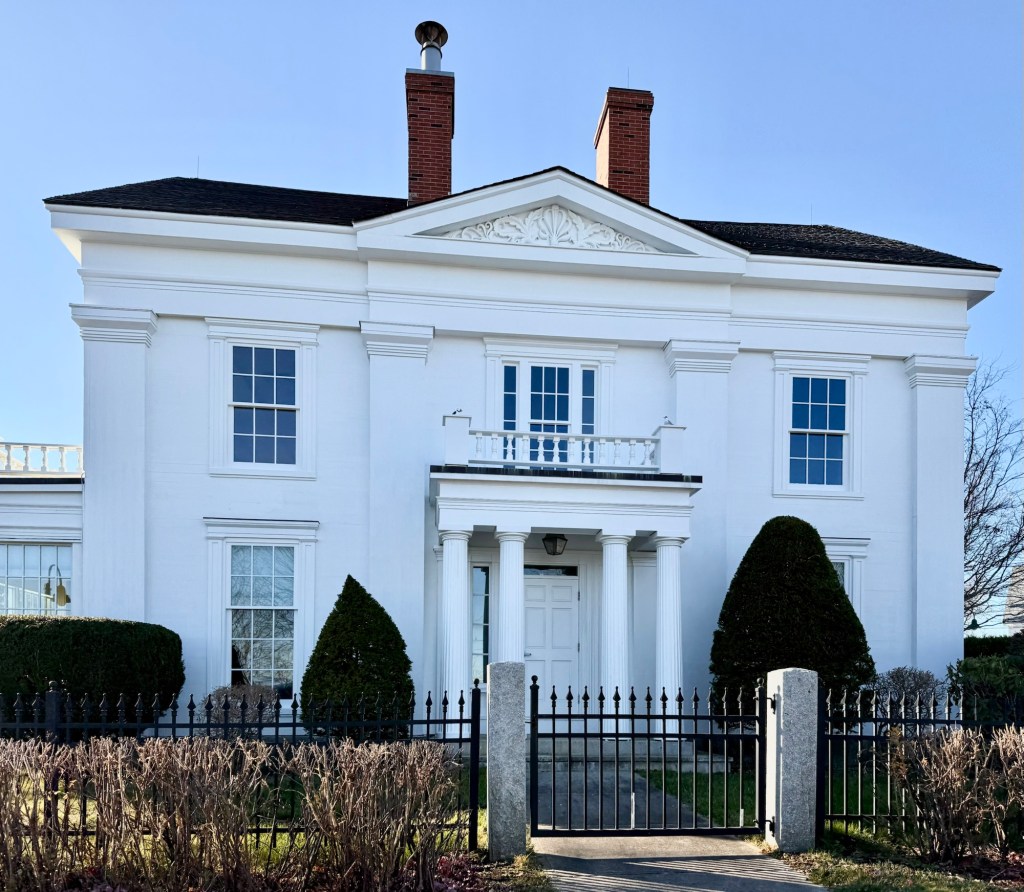
Israel Snow House // c.1850

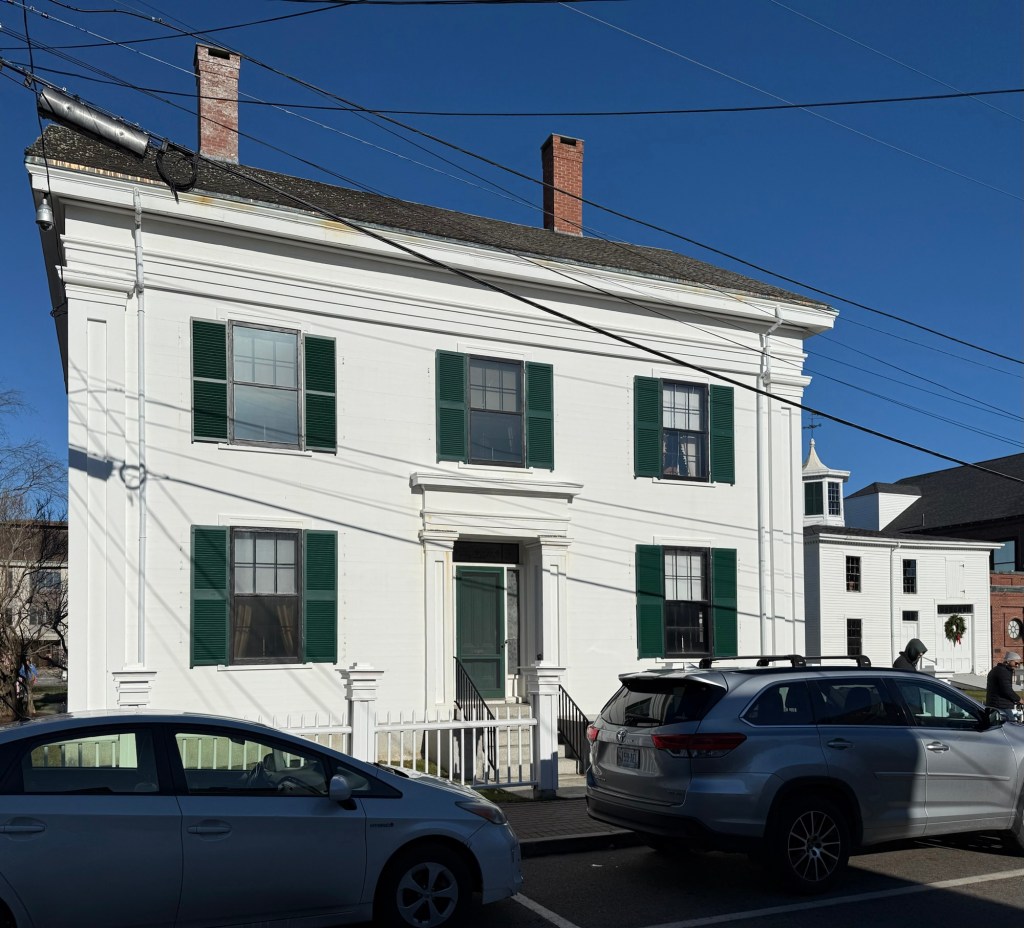
The Israel Snow House stands at 9 Water Street in the South End of Rockland, Maine, and it is one of the region’s finest examples of late Greek Revival architecture. The residence was built for Captain Israel Snow (1801-1875), a mariner and captain of several vessels, including the schooner Maria (1829), the brig Snow (1835-36), the brig Lucy Ann (1842), and the Barque Star (1848). In 1850, he and his wife Lucy moved from Thomaston to Rockland, and he would build this stately mansion where they raised seven children. Some records put the construction of this house at 1861, but that seems very late for such an example of this style. In 1863, he founded Snow’s Point Shipyard on Mechanic Street in the South End. Rockland was the fourth largest seaport in the United States in terms of production and commerce at the time, and Snow’s shipyard was a large part of that production. This residence is now offices to the U.S. Fish and Wildlife Service’s Maine Coastal Islands National Wildlife Refuge Complex.
Farnsworth Homestead // 1850

The Farnsworth Homestead is located on Elm Street in Downtown Rockland, Maine, and is an excellent example of a mid-19th century residence in the Greek Revival style. The home was built in 1850 for Rockland businessman William Alden Farnsworth, who gained his income from lime-rock quarries and the Rockland Water Company. Mr. Farnsworth was a leading businessman who helped establish Rockland as the number four port in the United States, largely exporting lime for masonry construction all down the east coast. After William died in 1873, the property was inherited by his heirs, the last of which, Lucy Farnsworth, lived here until her own death in 1935. The 96-year-old Lucy Farnsworth died in the home and in her will, bequeathed the family property and ample funds to establish the Farnsworth Art Museum, and included preservation of the family homestead as a mid-19th century house museum, which it remains to this day. The Greek Revival style house with its flushboard siding and bold pilasters, was recently restored by the museum, along with the carriage house which stands to its east.

William H. Glover House // 1873

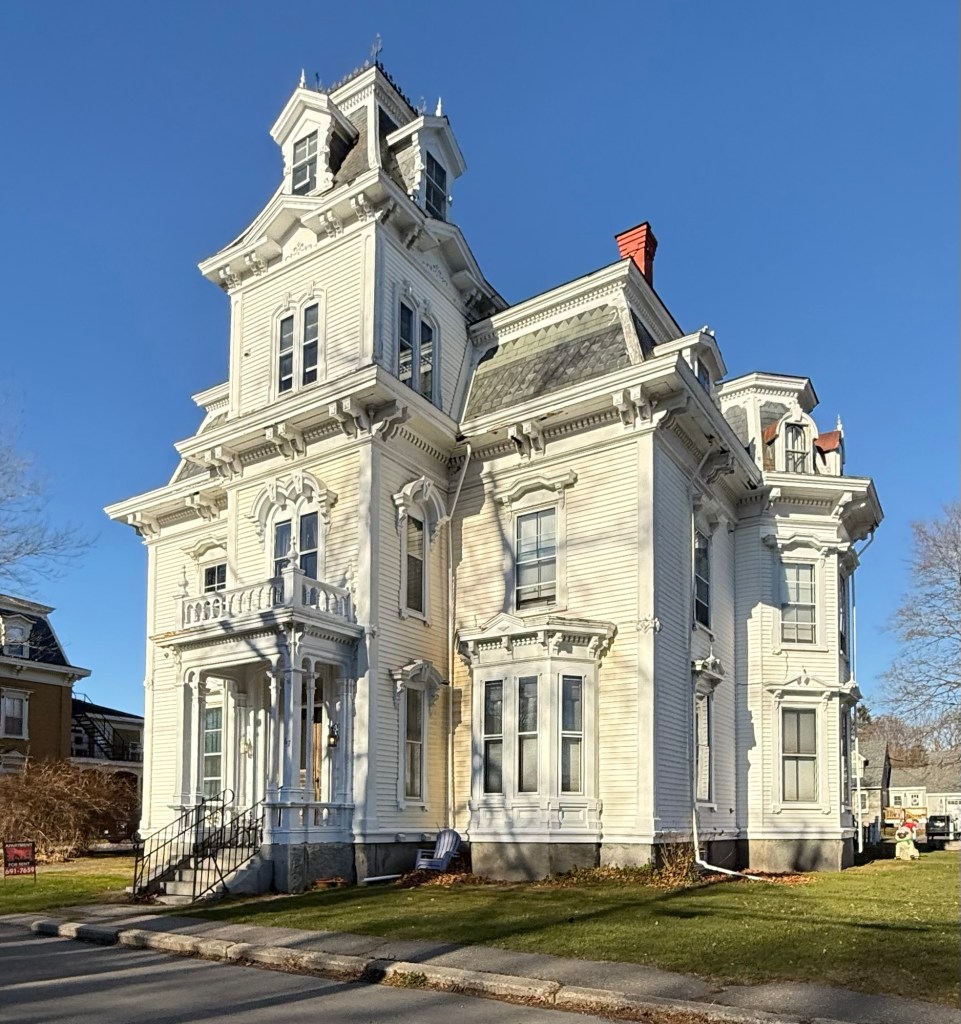
William Hurd Glover (1834-1910) was a prominent lumber dealer and builder in Rockland, Maine, and would built this house as his residence on Talbot Avenue. Mr. Glover hired architect Charles F. Douglas, to furnish the plans for the Second Empire style mansion. While covered in vinyl siding, the handsome residence features a slate mansard roof, central tower, delicate projecting portico over the entrance, and decorative window hoods and brackets. The house is one of the best examples of the style in Maine, even with the later siding.

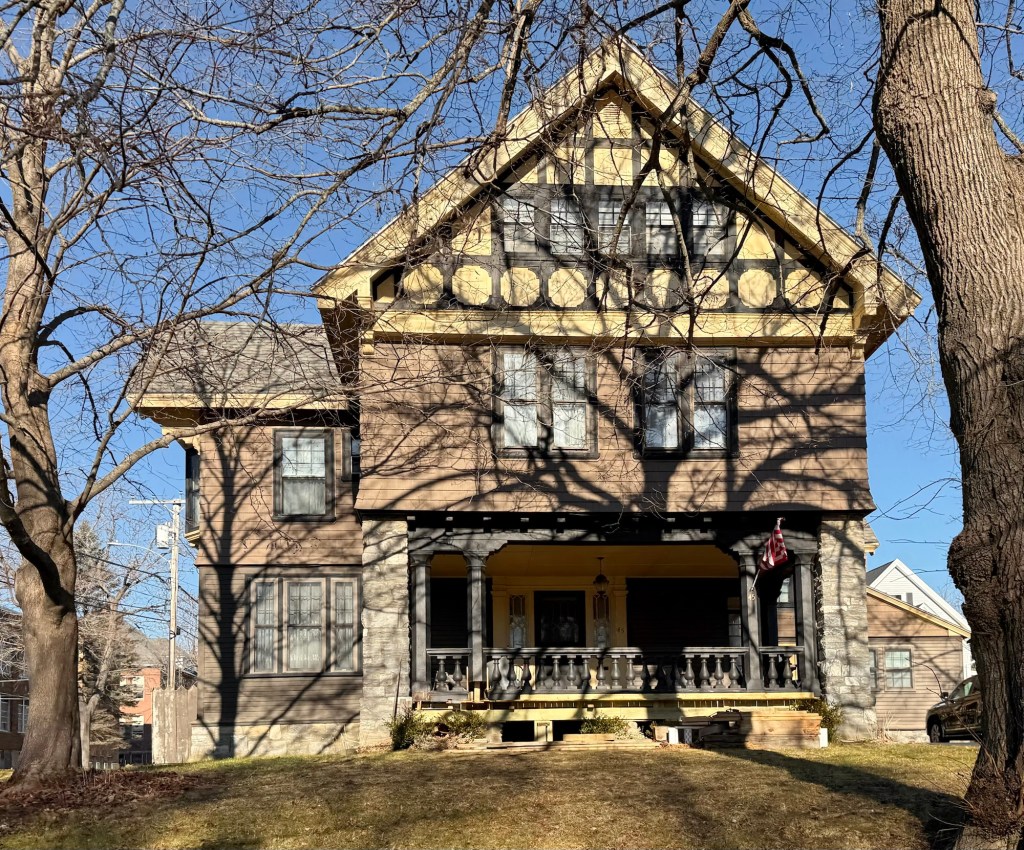
William and Kathleen Fuller House // 1905

This handsome Tudor residence was built around 1905 for William Oliver Fuller (1856-1941) and his wife, Kathleen Stephens Fuller (1869-1948), and can be found at the corner of Beech and Lincoln streets in the finest neighborhood in Rockland, Maine. Although an architect could not be established at this time, the high-style residence features half-timbered gables, an inset front porch framed by stone pillars, and an absolutely perfect color palette. William Fuller was a newspaper publisher, who created his first newspaper, the Rockland Enterprise when he was 18 years old and in high school. He would go on to become the editor and publisher of the Courier-Gazette, the region’s main newspaper. Kathleen Fuller frequented the newspaper herself through her published poetry and columns and would later become an associate editor and co-owner of the paper.

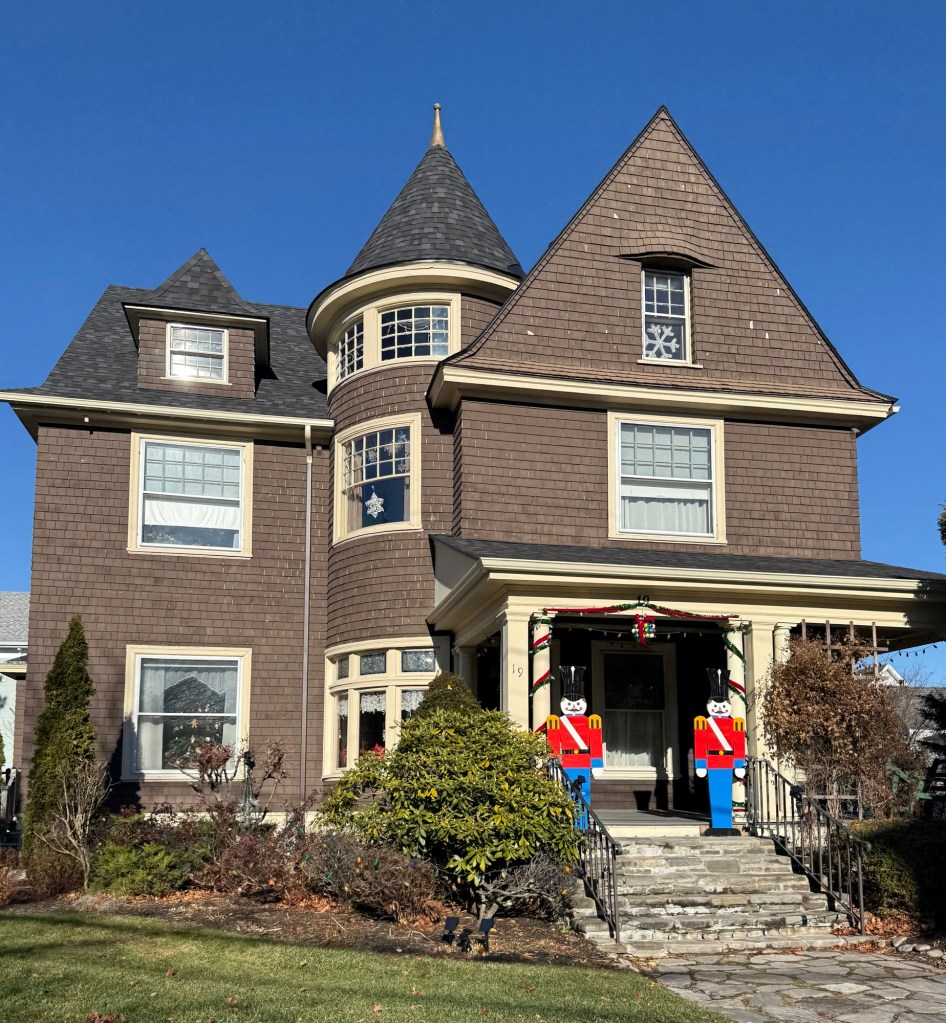
Bird-Crane House // c.1891

The Bird-Crane House is located at 19 Beech Street in the charming coastal community of Rockland, Maine. The house was built c.1891 for  Maynard Sumner Bird (1869-1960) and his wife, Mary Hawkins Bird, who married that year. Mr. Bird was a businessman who originally worked in insurance before joining Bond & Goodwin. Inc., which dealt in investment securities with offices in Boston and New York. The couple would move to Florida, and the house was later owned by Kennedy Crane Jr., who operated the local Senter-Crane’s Department store in downtown Rockland. The house is a great example of the Shingle style of architecture with continuous shingled siding, rounded corner tower with curved sash windows, and shingled flared lintel over the window in the gable. What a great house!

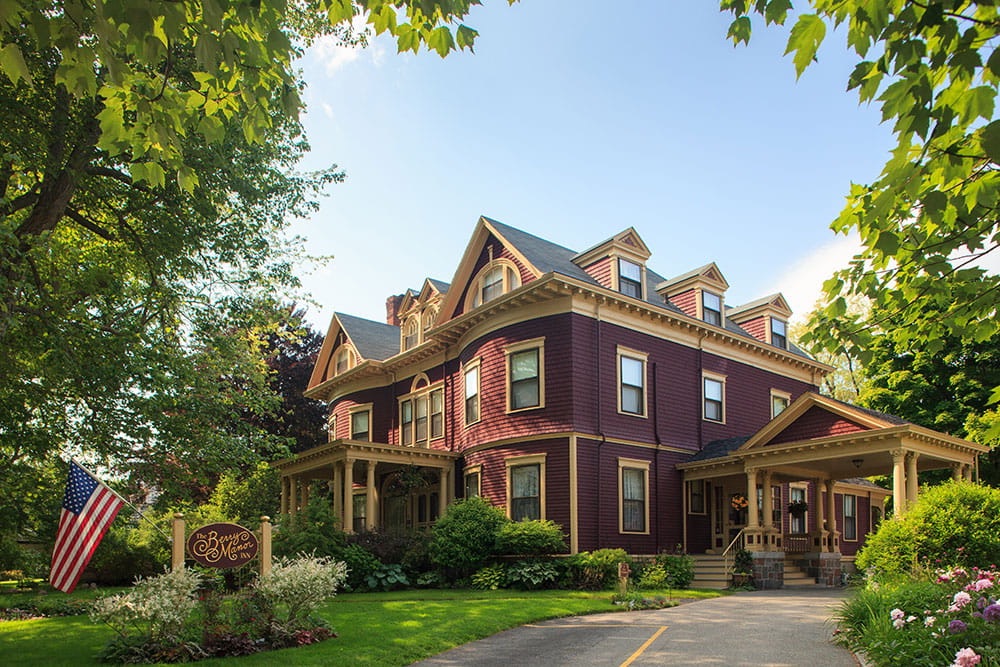
Charles Berry House // 1899

Photo courtesy of Berry Manor Inn

The Charles Berry House is located at 81 Talbot Avenue in Rockland, Maine, and it is one of the town’s finest examples of a residence built in the Colonial Revival style. The house was built for Charles Howard Berry (1849-1909), a businessman who operated a stage route, livery stables, and later entered the hotel business. He would hire Portland-based architect, Austin Pease, to furnish the plans for the house and adjacent carriage house. The residence features a symmetrical façade with front porch and porte-cochere, Palladian window over the entrance, bowed front, and ornate dormers at the roof. The entire property is lovingly maintained and preserved and is now home to the Berry Manor Inn, an up-scale bed & breakfast that maintains the old charm of Rockland, while providing high-class finishes.

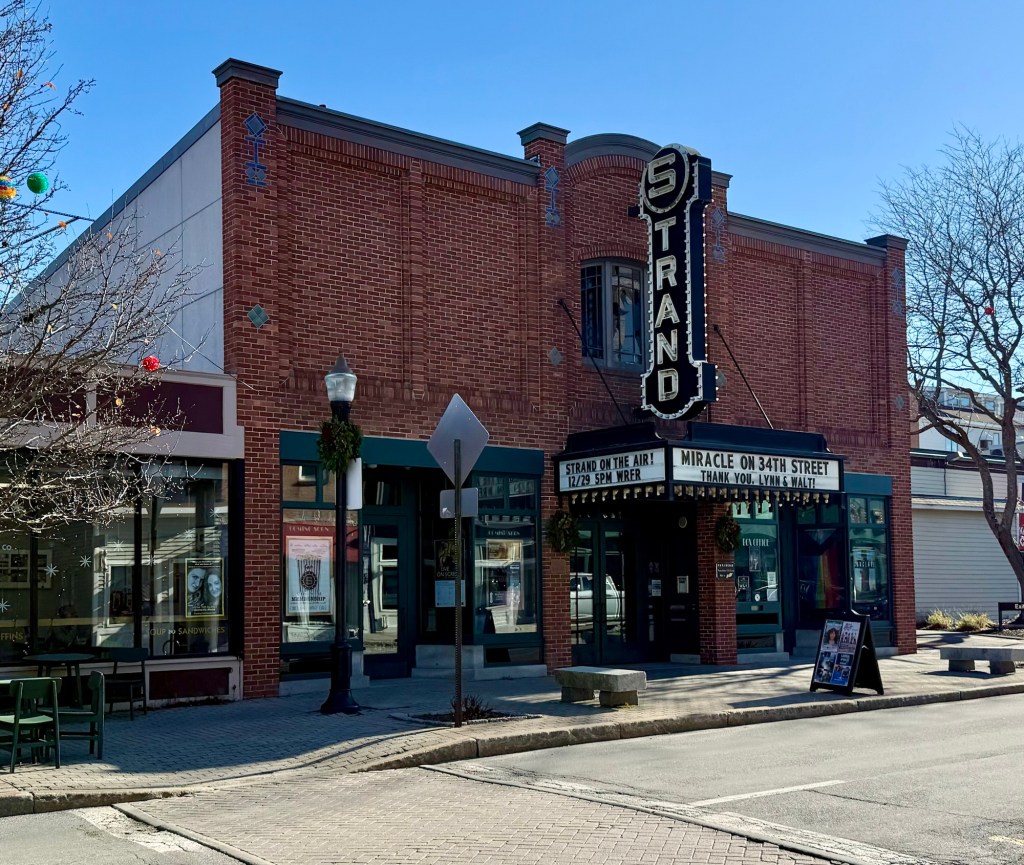
Strand Theater // 1923

The Strand Theater on Main Street in Rockland, Maine, is a great example of the inter-war theaters that sprouted up in towns all across the country following WWI. The theater was built in 1922-23, on the site of a building destroyed in a 1922 fire that swept through the southern part of Rockland’s downtown. The steel-framed theater, with its terracotta tile walls and ornamental brick facade is fairly unadorned, besides the blade sign marquee reading “STRAND”. Two storefronts, a cigar store and a flower shop, were also incorporated into the theater, framing the entrance. The theater stayed open until the early 2000s when the local multiplex bought it and closed it. In February, 2004, the theatre was purchased by a long-time summer resident who restored the building and opened it back up. The Strand remains a vital economic and cultural center for the town, and its preservation is an important piece of Rockland’s charming Main Street.

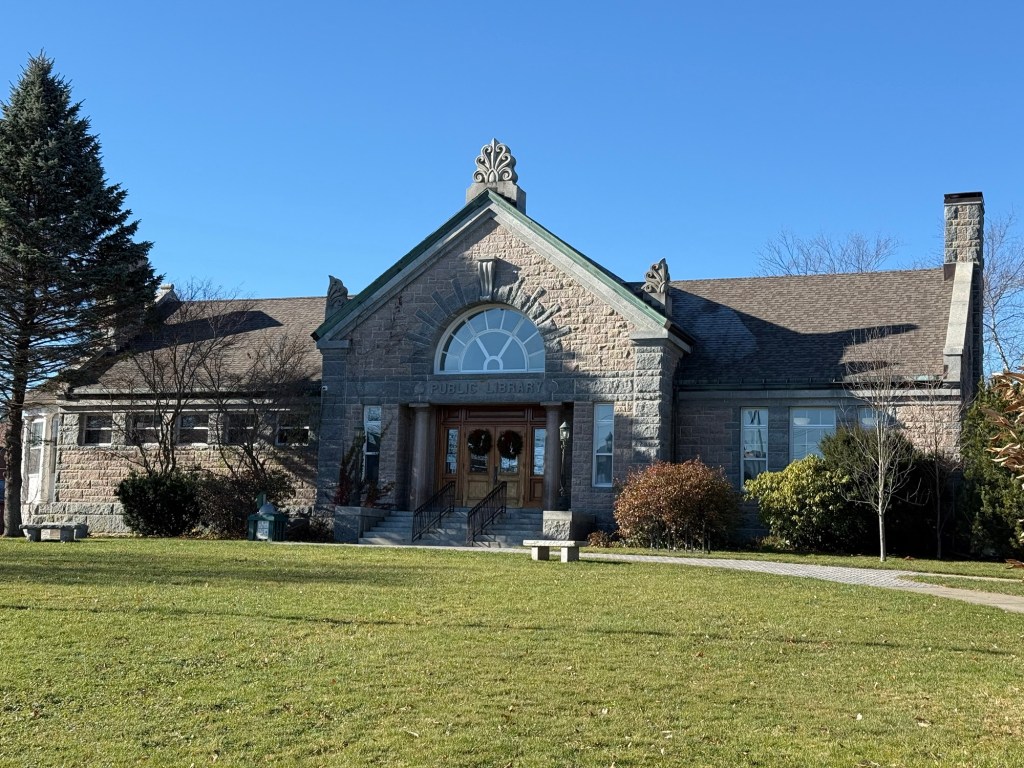
Rockland Public Library // 1903

The Rockland Public Library in Rockland, Maine, is an architecturally significant civic building that showcases the coastal town’s prosperity at the turn of the 20th century. The library was built in 1903–04, and was funded in part by a $20,000 grant from Andrew Carnegie. It is the city’s only major example of Beaux Arts architecture, a style that is also uncommon in the state. The library was designed by Maine native George Clough, who used granite quarried from nearby Vinalhaven in its construction. The building was later expanded by an addition at the rear, but from the street, the handsome Beaux Arts library looks near-identical as to when it was built over 120 years ago!

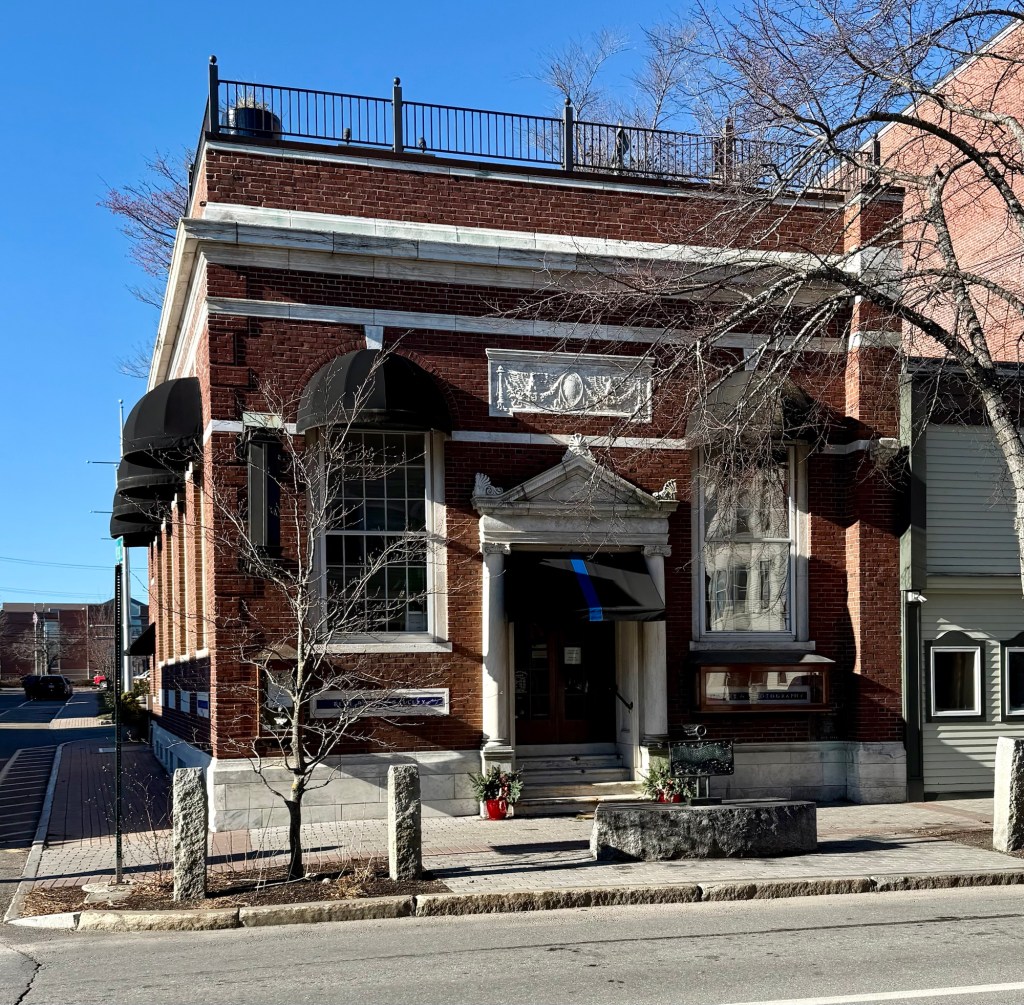
Rockland Security Trust Building // 1912

The Rockland Security Trust Building is a significant Colonial Revival style bank structure located on Main Street in Downtown Rockland, Maine. Built in 1912 from plans by Boston architect Richard Clipston Sturgis, the brick building is trimmed in marble, to provide a visual representation to the financial wealth and stability the bank could provide its clients. The bank closed and the building is presently occupied by an art gallery. Sadly, the rooftop deck railing takes away so much from the building’s presence.

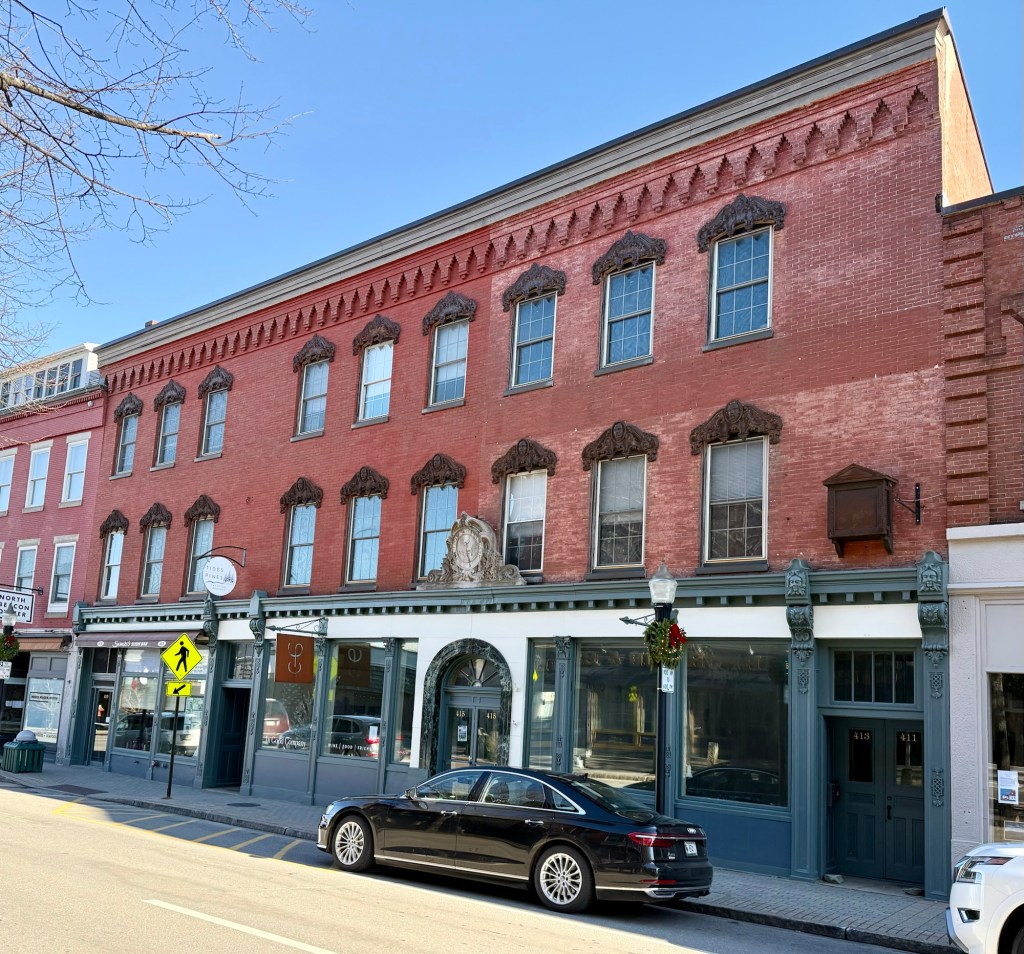
Custom House Block // 1853

This stately commercial block is found on Main Street in Rockland, Maine. The block originally housed the local custom house (before a larger, purpose-built custom house was erected nearby in 1873) with other retail and commercial spaces at the ground floor with offices and meeting space above. The block is a great example of the Italianate style with an intricate brick corbeled cornice and cast iron and marble storefronts. The commercial space occupied by the First National Bank also exhibits a stone medallion with deer set within a wreath over the entrance. The detail that stood out to me most was the cast iron lintels over the windows, with the second floor lintels including a man’s face! The building is well preserved and is today occupied by local businesses.