Dr. Ptolemy Edson House // 1834

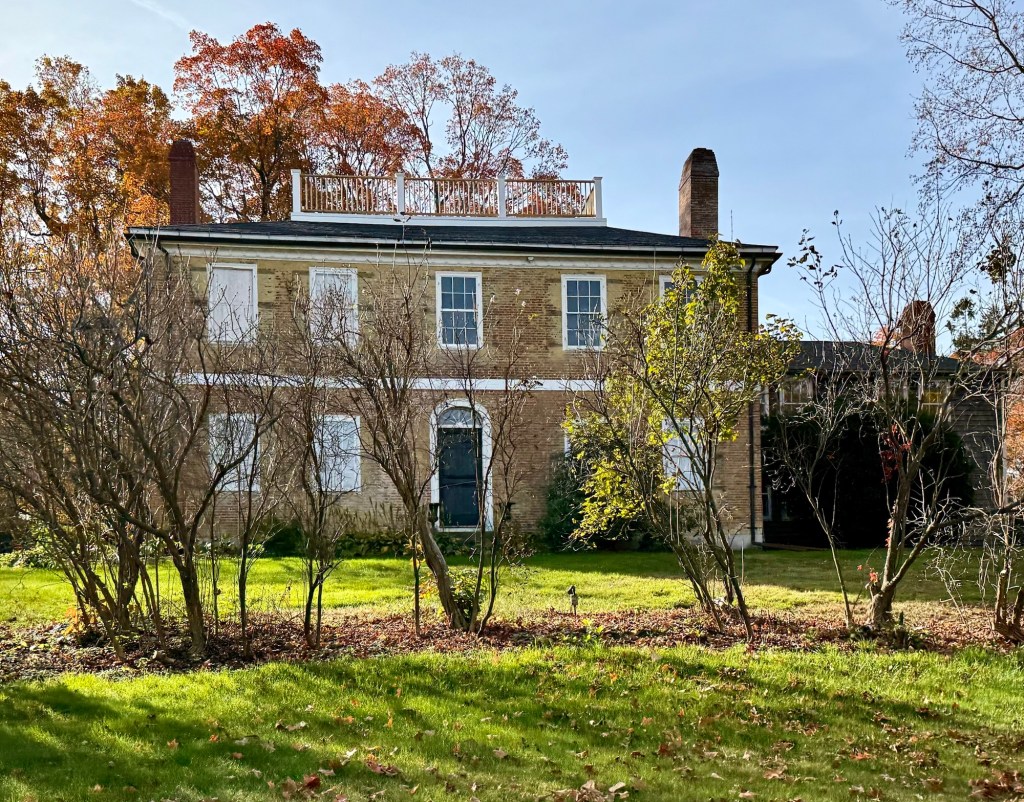
The Stone Village of Chester, Vermont, is said to be the largest collection of stone buildings in the state. Built in 1834, the Dr. Ptolemy Edson House is one of a few dozen “snecked ashlar” buildings in the region, where rubblestone is laid up with mortar using small long stones called “snecks” to tie an outer and an inner wall together. The construction method is said to have been brought to the area by masons from Scotland and Ireland which is known there as ‘Celtic Bond’. Oral tradition state that Scottish masons from Canada introduced the technique to local masons while erecting a mill in nearby Cavendish in 1832. Local Chester resident, Dr. Ptolemy Edson became such a fan of the building that in 1834, he had his home, the first stone building in Chester, built in this method. He then would influence the rest of the North Village of Chester, where many of his neighbors, as well as the church and schoolhouse, built their structures in snecked ashlar. Designed in the Federal style, the Edson House is a vernacular, five-bay, two-story residence with central entrance and arched fanlight transom over the front door.

Robbins House // c.1850

Originally built in the 1840s or 1850s, this stunning house on Main Street in Chester, Vermont, was “Victorianized” in the late 19th century through applied ornament, a tower, and porches. Historic maps show that this house was owned by Cyrus Robbins and his wife, who likely had the residence built in a vernacular example of the Greek Revival style, with a 2 1/2-story form with gable roof oriented towards the street. The corner pilasters remain as do the original facade windows with five on the first floor, three on the second, and a single window in the upper floor. By the late 1800s, the house was modernized with the addition of the wrap-around porch with decorative spindles and ornament and the octagonal turret with wood shingle conical roof. Today, the house is painted colors to highlight the Queen Anne appearance and details.

Fullerton Inn // 1921

The Fullerton Inn, overlooking the Town Common in Chester, Vermont, is an imposing Colonial Revival style hotel that has been in operation through many iterations, and contributes to the strong commercial character of the Chester Village streetscape. The inn was first developed here following the arrival of the railroad to Chester, which brought new business and travellers to the formerly agrarian and light industrial community. The original 1862 inn building, known as the Ingraham House, was destroyed following a large fire in the village, and its replacement burned as well in January 1920. Within a year, the present building was built from the ashes in a style typical of the early 20th century, Colonial Revival. Dominated by the large slate-shingled gambrel roof and projecting front veranda, the building’s most iconic feature is said to be inside, a fireplace inside the lobby which contains 27 stone varieties from the area.

Yosemite Engine House // 1879

The Yosemite Engine House on Route 103 in Chester, Vermont, is a unique and iconic architectural landmark that has stood for almost 150 years. Chester’s second fire district was established in 1871, following a number of large fires in the village, prompting funding from businessmen and the town for a new engine house. Built in 1879, the Yosemite Engine house was built as a fire station for the village defined by its rectangular massing, first-floor engine hall, second-floor meeting hall, and twin bell and hose-drying towers that are capped by mansard roofs. The station originally housed horse-drawn and human-operated fire engines until the 1920s, when the doors were enlarged for the first engine-powered fire truck. The fire district, a separate taxing entity from the town since its creation, was dissolved in 1967, and its properties, including this iconic fire station, reverted to the town. It was eventually sold into private hands, and was operated for a short time as a museum by the local historical society before being reacquired by the town in 2018. The building is awaiting a full restoration.


Daniel Heald House // c.1785

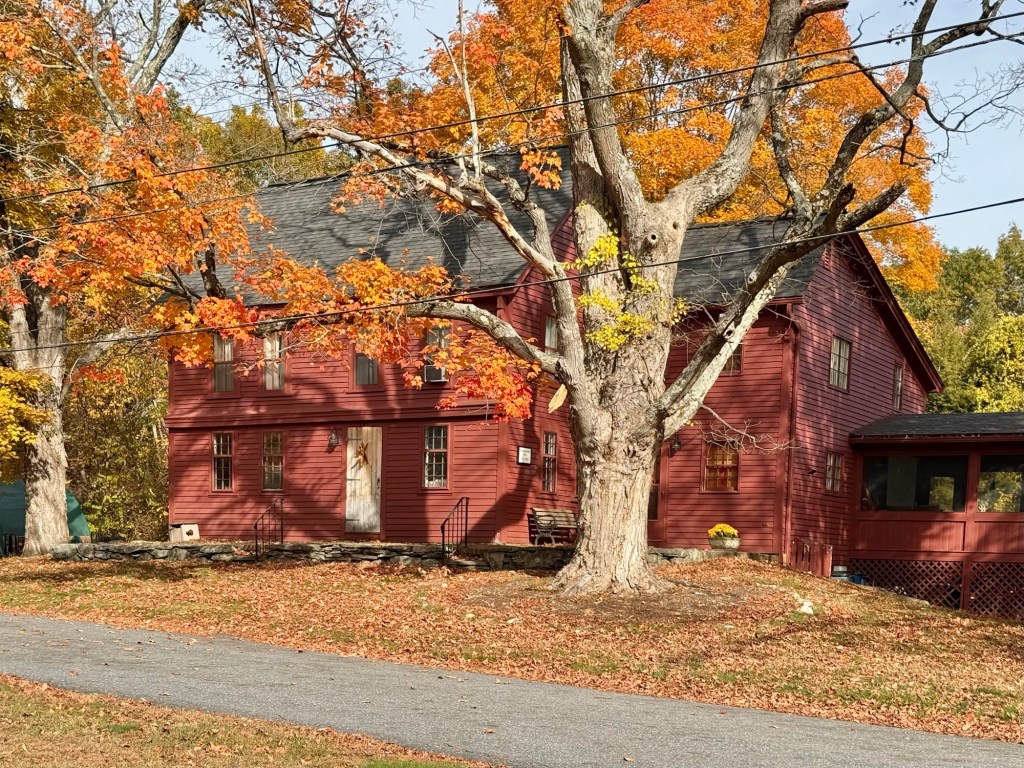
Daniel Heald (1739-1833), one of the earliest settlers in the town of New Flamstead (later renamed Chester) Vermont, established his farm on the west side of the upper Williams River. He moved to rural Vermont from Concord, Massachusetts, where he was one of the Patriot soldiers who at the Concord bridge, fought against the British troops while his wife and children who had fled from their home viewed the battle from a neighboring hill. He, with his family, emigrated to Vermont in about 1776 and eventually would serve as town clerk from 1779 to 1799 and as town representative from 1783 to 1797. Around 1785, he built this residence, oldest wood-frame house in North Chester, a two-story, central-chimney house with saltbox roof sloping to the rear. When his son, Amos Heald, was of age, some of the property was deeded to him, where he built a stately Federal style residence that stands across the street to this day. Both of the Heald houses tell the early history of Chester through well-preserved houses.

Chester Congregational Church // 1828

A significant landmark in Chester, Vermont, the Congregational Church of Chester is a sophisticated interpretation of ecclesiastical Federal architecture. Built in 1828, the soaring, five-stage clock-and-bell tower with bellcast cap and weathervane rises above a pedimented three-bay entrance pavilion with semi-elliptical fanlight, a common motif in the style. It is believed that local carpenters, Comfort Carpenter Dresser and his son, Charles Dresser, built the church, likely from planbooks for specific details. The church originally served as the Union Meeting House for Congregational, Methodist, and Universalist parishioners until around 1848, when other churches set off to build their own structures, after this, the Congregationalists remained here. Today, due to years of dwindling membership and a small population in the surrounding area, the church is “replanting” to reactivate membership and realign with community needs. Hopefully this significant church will be preserved in the future, possibly through preservation grants!

William Pollard House // 1899

This high-style and ornamental house in Chester, Vermont, ranks among the state’s best examples of the Queen Anne style. The residence was constructed in 1899 for William Pollard (1854-1941), a local businessman who owned a shirtwaist manufactory in town with his brother, who lived next door. The painted-lady Victorian house features an asymmetrical plan highlighted by a three-story octagonal corner tower that is surrounded by a wrap-around porch with a delicate spindled frieze. The use of accent colors in the paint scheme further highlight the millwork details on the residence, which have all been preserved for well over a century. 

Chester Masonic Temple // 1907

Built in 1907, this handsome building on Main Street in Chester, Vermont, has long been the home to the Olive Branch Lodge 64 of the Freemasons, an international fraternal organization. Colonial Revival in style, the building features corner pilasters that support a denticulated entablature along the eaves of the slate hip roof. A projecting portico over the front entrance is supported by classical Ionic columns. The 1920s marked a heyday for Freemasonry, especially in the United States. By 1930, over 12% of the adult male population of the United States were members of the fraternity. Following the Great Depression and WWII, membership sharply declined in fraternal organizations, like the Masonic Temple. A number of years ago, the Lodge here moved to a new building in a nearby town, and a local law firm purchased the building and spent 18 months renovating the building for use. Today, the historic character and even symbology remain on the building, while it houses a local business. 

Comfort C. Dresser House // 1799

Built just before the turn of the 19th century, this handsome five-bay vernacular Federal period house is located on the charming Main Street of Chester, Vermont, and is one of the oldest extant houses in the village. The residence was built in 1799 by Comfort Carpenter Dresser (1777-1856), who with his family, moved from Bridgewater, Massachusetts, to the town of Chester, where he found work as a carpenter and housewright, a fitting profession due to his middle name. The family resided here for nearly 30 years until they moved to New Hampshire. The beautiful home, painted a bright white sometime in the 20th century, features a front door with sidelights, 12-over-12 sash windows, and a symmetrical facade, common for the style. 

Robbins & Marsh Store // c.1858

Located in the Chester Depot Village, a commercial and civic assortment of buildings constructed in the mid-19th century between the often feuding North and South villages in Chester, Vermont, this handsome commercial building contributes to the character and history of the once thriving commercial center of town. Built across the tracks of the Central Vermont Railroad from the town’s depot, this Italianate style building dates to about 1858 when a P. H. Robbins opened an all-in-one store, selling everything from groceries to hardware and building products. Mr. Marsh was later joined by Frederick W. Marsh, who entered into the business, then named the Robbins & Marsh Store. The business thrived with the close proximity to the railroad depot with later alterations to the building including the addition of plate glass storefronts and a massive side awning porch. Business slowed after WWII, as rail service slowed and ultimately stopped in town. Today, the handsome building remains as an important visual anchor to the depot village.