Ambrose Burnside House // 1866

What do this unique Victorian house and sideburns have in common? Well, you are about to find out!

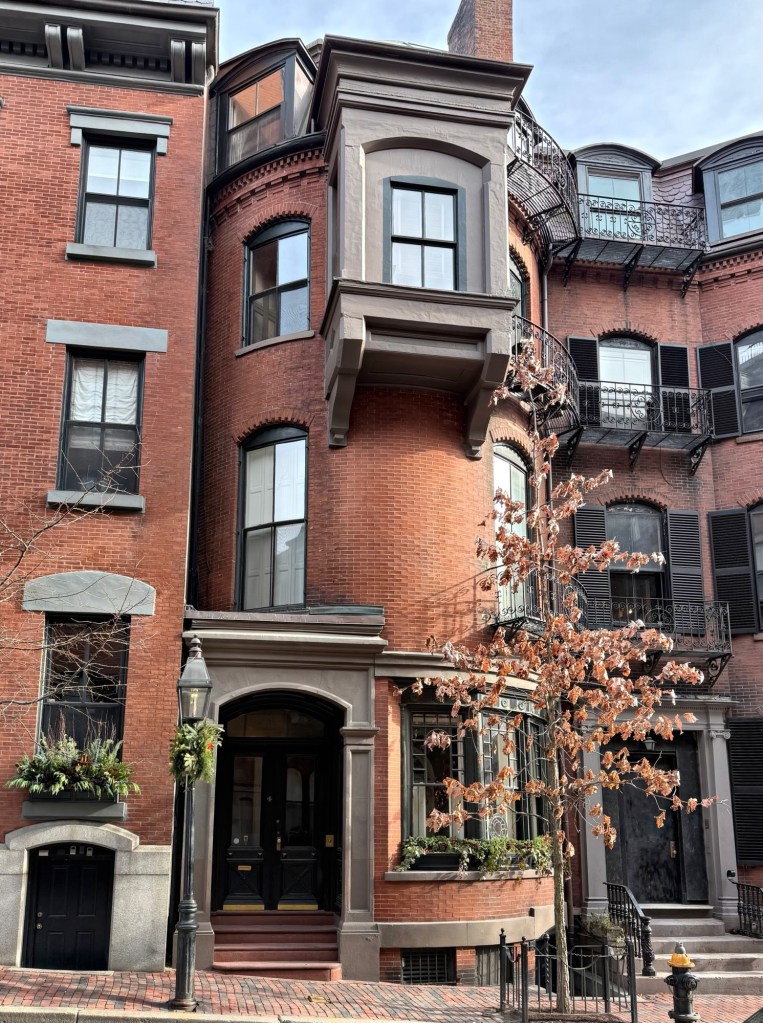
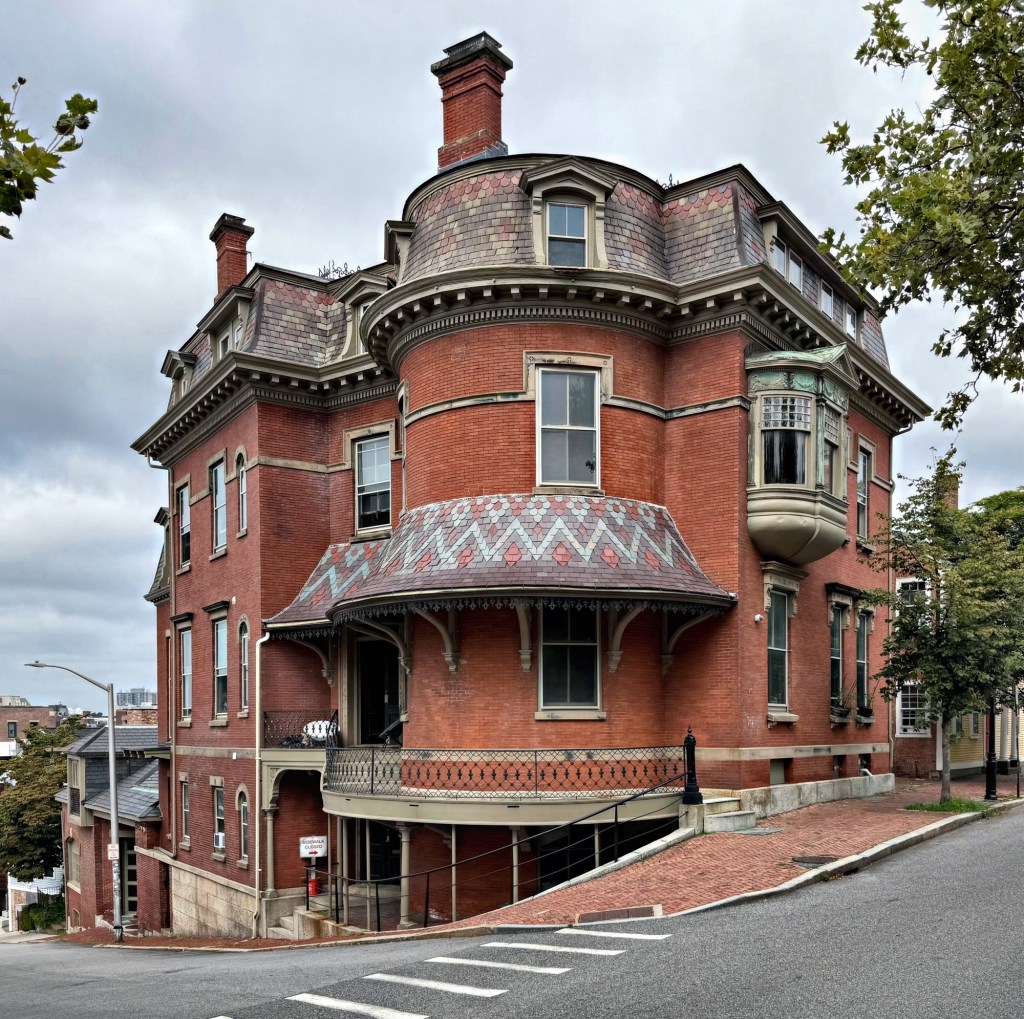
The Ambrose Burnside House is sited on an oddly shaped, and sloping corner lot on Benefit Street in Providence’s East Side neighborhood, and is one of the most unique Second Empire style residences in New England. The house was built in 1866 for General Ambrose Burnside (1824-1881), a Union general in the American Civil War, who returned to Providence and was about to begin a term as governor, followed by two terms in the United States Senate. Ambrose Burnside hired local architect, Alfred Stone, to design his new city mansion, which upon completion, was deemed one of the most “modern residences” in Providence. Built of brick with Nova Scotia stone with a concave slate mansard roof and one-of-a-kind rounded corner bay, the Ambrose Burnside House does not disappoint! Ambrose Burnside died in 1881 and the property was occupied by his sister-in-law until the property was sold in 1884 and housed the Providence Children’s Friend Society House for Aged Women and the Providence Association for the Benefit of Colored Children, providing shelter and food for elderly women and children of color without parents or guardians. After WWII, the Burnside House was converted to apartments.

Now, to the sideburns… Ambrose Burnside was noted for his unusual beard, joining strips of hair in front of his ears to his mustache but with the chin clean-shaven; the word burnsides was coined to describe this style. The syllables were later reversed to give sideburns.

Hope Block // 1869

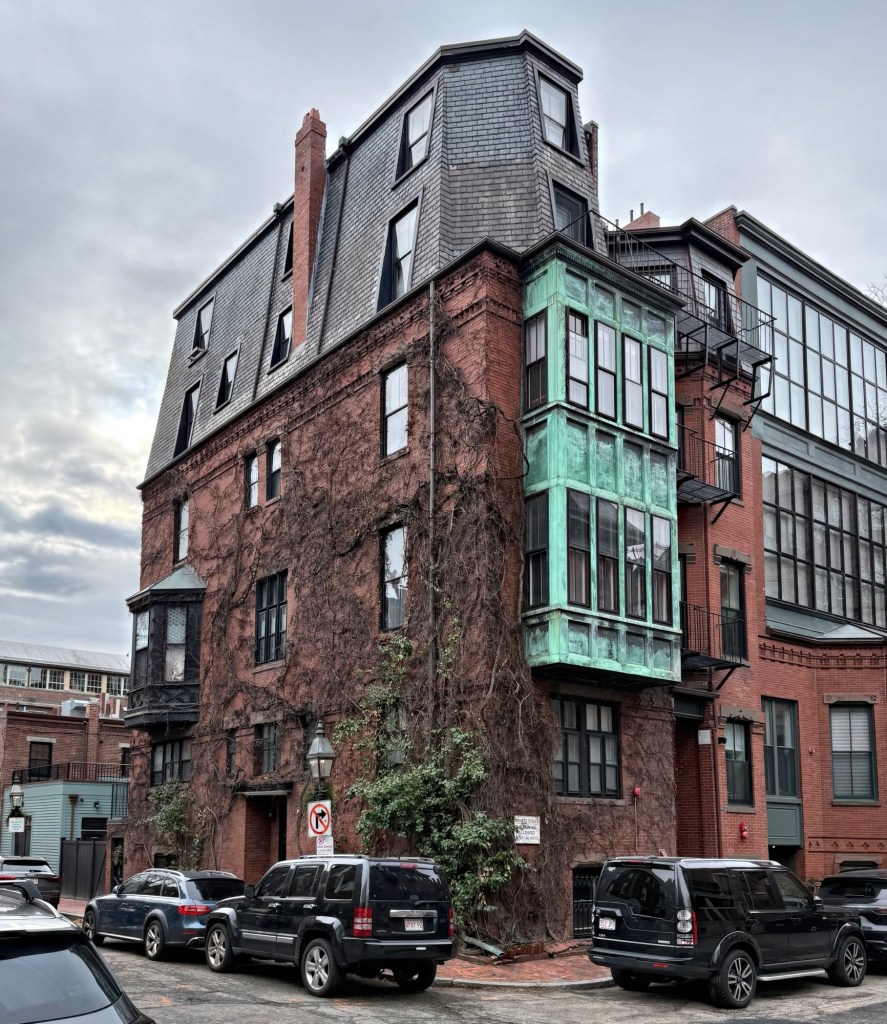
The Hope Block on North Main Street in Providence’s East Side neighborhood is an architecturally significant commercial block in the Second Empire style. The masonry building was constructed in 1869 and is probably designed by architect, Clifton A. Hall, who designed similar buildings in the city around that time. The block was developed by Edward M. Young and Ezra P. Lyon of the firm, Young & Lyon to house their fruit and grocery store, which they operated here from 1870 until 1889. By the latter half of the 20th century, the building was owned by the Rhode Island School of Design, and rehabilitated for classrooms in 1984, even retaining the cast iron storefronts, unique arched windows, and slate mansard roof. Today, the Hope Block houses the RISD Store.

Jones-Sinclair House // 1865

One of the finest Victorian-era residences in Portsmouth, the Jones-Sinclair House at 241 Middle Street, is a stately and oversized Second Empire style mansion built in the location of an even more significant home. Originally on this site, at the convergence of two busy streets, Thomas Haven, a wealthy merchant and half-brother to William Haven who lived across the street, built an impressive brick, Federal style mansion here in around 1818. Admiral George Washington Storer, Commander in Chief of the Brazil squadron of the U.S. Navy, later purchased the Federal style octagonal house. Mary Washington Storer, inherited the house after her father’s death in 1864, and she with her husband, Albert L. Jones, demolished the old octagonal-shaped house around 1865-1867, replacing it with this mansard-villa style mansion. By about 1890, Charles A. Sinclair and his wife, Emma, is said to have received the house as a gift from her uncle, the famous Portsmouth industrialist and politician, Frank Jones

William Fraser House // c.1873

In a town full of clapboards and shingles, brick houses really do stand out! This is the William Fraser House, located at 303 Pleasant Street in the ever-charming town of Portsmouth, New Hampshire, a stately example of the Second Empire style as a single-family residence. The house was built by 1873 for William James Fraser (1836-1930), a Canadian-born mason who immigrated to Portsmouth in 1850 and began a successful career as a mason, building many of the town’s great masonry buildings. The Fraser House has a slate mansard roof with overhanging eaves, bracketed cornice, and paired gable dormers and a double wood-paneled entrance door with transom under a flat roof portico.

John E. Colcord House // c.1870

While Portsmouth, New Hampshire, is arguably best-known for Georgian and Federal style houses of the 18th and early 19th centuries, there are some great examples of Victorian style residences built after the Civil War to be discovered. This brick Second Empire style residence on Pleasant Street was built around 1870 and originally owned by Ebenezer Lord (1788-1877), who lived elsewhere in Portsmouth, likely gifting this home to his daughter, Susan (Lord) Colcord, and her husband, Charles Colcord. Both Charles and Susan died one year apart in 1872 and 1873 respectively, and the property was inherited by their son, John. John Edward Colcord worked as the Clerk at the Portsmouth Navy Yard. The building has a Mansard roof with overhanging eaves, denticulated cornice, and three shed-roof dormers at the facade. Walls are brick and rest on a granite foundation, with a later, wood-frame side addition that employs similar design details of the main house. 

Tatro-Tyng House // 1873

The neighborhood now known as Ashmont Hill had its origins in 1870, when George Derby Welles, who was 26 years old and living in Paris, inherited extensive landholdings in this area from his grandfather’s estate in Dorchester. Welles engaged representatives to subdivide the land. Some parcels were developed with high-style rental properties, managed by his representatives while living abroad, and others were sold and developed by builders, designing homes in the prominent styles at the time. In the early 1870s, the Second Empire style was most popular, though began waning in popularity for Stick and Queen Anne styles. Lots on Welles Street were purchased by Mr. George Tatro, a builder and developer who seemingly designed and built two near identical houses at 48 and 52 Welles street. The houses were completed by 1873 at the time of The Panic, an economic downturn triggered by industrial and railroad over-expansion and consequent bank and business failures. The property was sold, but remained vacant until it was taken over by a bank and then purchased by Catherine Stevens Tyng, the widow of Reverend Dudley Atkins Tyng, who died at just 33-years-old from a freak accident at home. Catherine moved to the area, first settling in Cambridge, to follow her two sons who attended Harvard College, before selling the house and moving to New York. The Tatro-Tyng House is a stunning, and well-preserved example of the Second Empire style, with a shingled bay window and bay dormer in the mansard with applied ornament.

John A. Turner Cottage // c.1875 

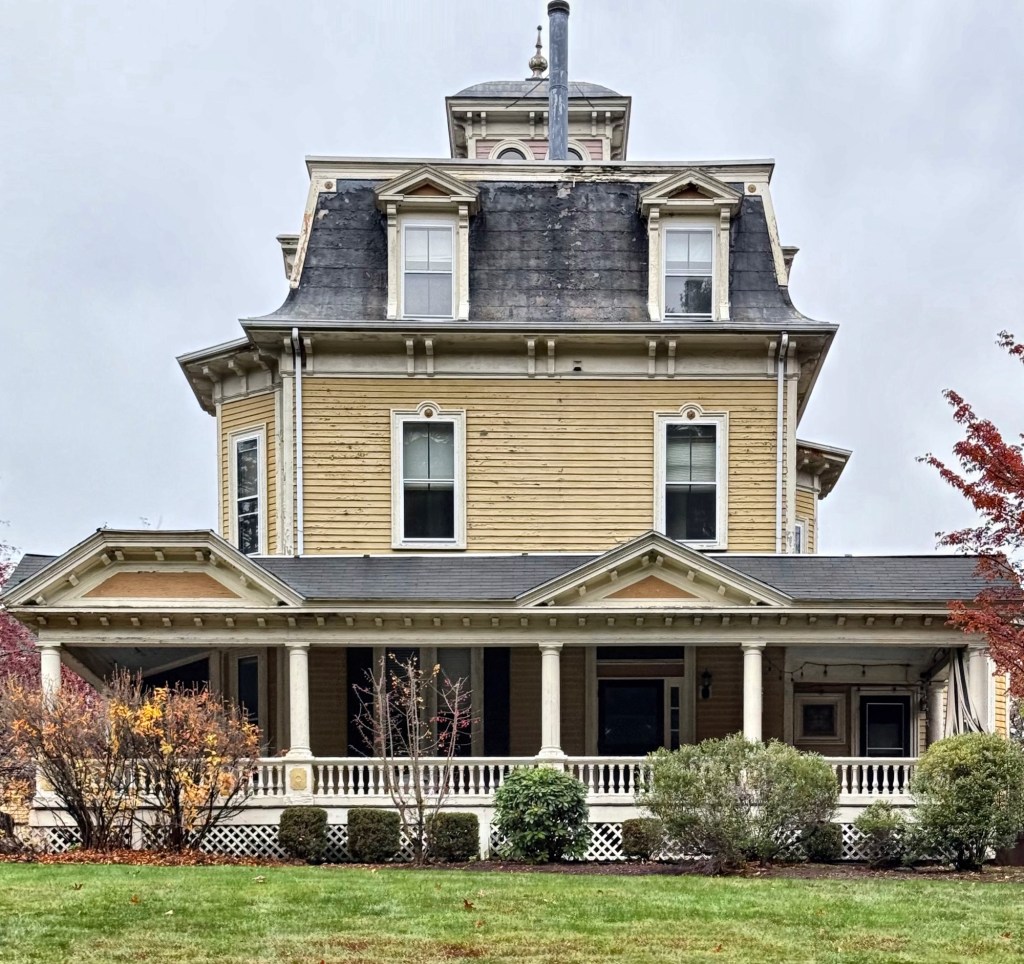
One of the most charming houses in Westborough, Massachusetts, can be found on Central Street, in the commercial village of town. The house was built around 1875 as a Mansard cottage, a style that was beginning to wane out of style by this point. The cottage was built for John Addison Turner (1833-1900) and his wife, Mary Ann Fiske. John worked as a superintendent at the National Straw Works factory, a local manufacturer of straw hats and other goods. The Turner House remains one of the best-preserved Victorian-era homes in Westborough and is even painted to highlight the many intricate details. 

Stonington Town Hall // 1885

Overlooking an archipelago of over sixty islands, the working port town of Stonington, Maine, is one of the more vibrant and active ports in the Pine Tree State. With a population of just over 1,000 residents, the town is consistently ranked among the top lobster ports in the country and is the largest lobster port in Maine. In 2011, 14,854,989 pounds of lobster were landed by Stonington fishermen! The town was originally a part of Deer Isle, with the main village known as Green’s Landing, until 1897 when it incorporated as its own municipality in 1897, choosing the name Stonington after the area’s granite quarries. This handsome mansard building was constructed in 1885 as the village’s school. Named Rockbound School, the building features an intact belltower at the rear. The school would eventually close in the second half of the 20th century, and became the Town Hall of Stonington after a fire destroyed the previous building in the 1970s.

Richmond J. Lane House // c.1860

Located next door to his brother’s house on Union Street in Rockland, Massachusetts, Richmond J. Lane, a shoe manufacturer, built this charming cottage for his family. Built around 1860 in the Second Empire style, this residence includes a concave mansard roof, dentilled cornice with brackets, and arched windows and dormers, and a stable at the rear. Richmond J. Lane (1826-1905) worked in shoe manufacturing and was said to have been instrumental in establishing the Hanover Branch Railroad, and served as president of local banks. The Richmond J. Lane house is an important, and well-preserved example of the Second Empire style in Rockland.

Joseph and Fanny Turner House & Stable // 1872

Joseph Stanley Turner (1841-1893) married Fannie Pratt (1849-1930) in 1871 and within a year, had this large, Second Empire style house built on Webster Street in Rockland, Massachusetts, for his family. Joseph Turner was a Civil War veteran and owned a shoe factory in town, making his fortune manufacturing shoes and boots which were sold all over the country. The main house is two-stories with a symmetrical plan with central entrance and projecting portico. An equally significant mansard-roofed stable sits behind and to the side of the main house, and can be classified as an example in the Stick style with applied stickwork at the siding and in the hay door, as well as the pedimented dormer with decorative truss.