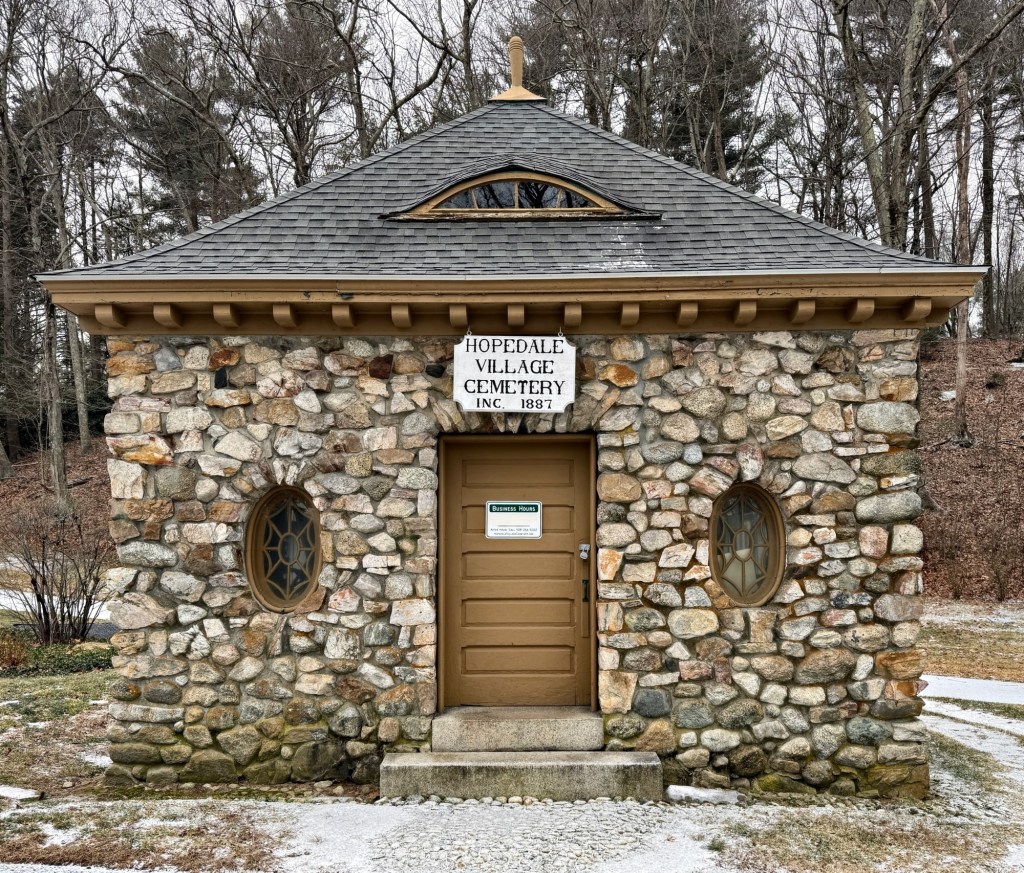
At the heart of the Hopedale Village Cemetery, this diminutive historic tool shed and office showcases that even for functional buildings set within a cemetery, high-quality materials and good design can enhance the landscape. The cemetery was laid out in 1845 in connection with Hopedale’s Utopian settlement, but expanded later in the 19th century as a formal landscaped cemetery in about 1887. The growth and investment of the cemetery coincides with the growth of the community as it prospered with the success of the Draper Corporation factories in town. Landscape architect, Warren Henry Manning updated the landscape here, with scenic vistas and hills, which followed the popular Rural cemetery movement of the 19th century. The cemetery contains many graves and mausoleums of the wealthy factory managers and benefactors of the community, which dot the sprawling landscape. In 1894, architect, Robert Allen Cook, designed this stone tool shed, which may have also contained a small office with cemetery records. The one-story, hip-roofed building features rough rubblestone walls with an eyebrow dormer centered on the façade, and has been preserved by the community for well over 100 years.
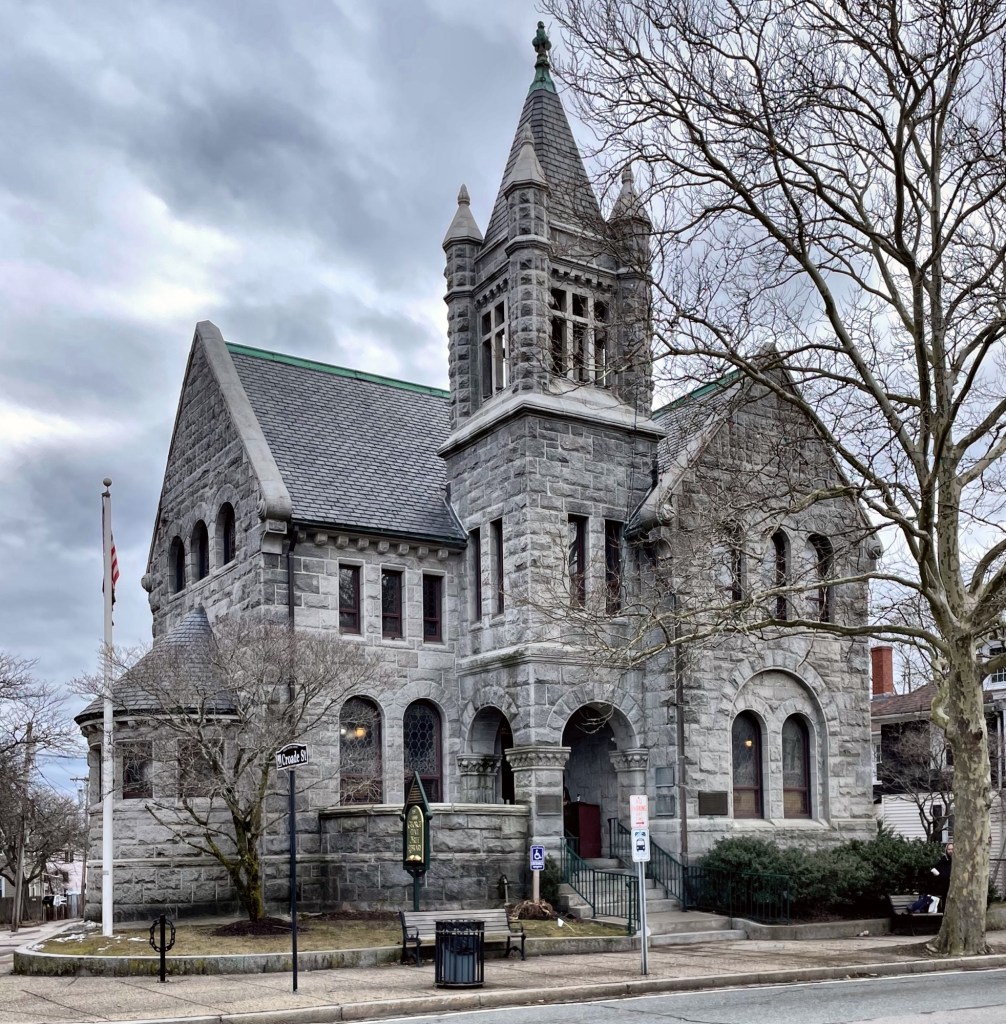
The George Hail Free Library on Main Street in Warren, Rhode Island, is a unique, Victorian-era public library building that has been lovingly preserved by the community. Built in 1888, the building cost just over $16,000 and was designed in a more vertical expression of the Romanesque Revival style by the Providence architectural firm of William Walker and Son and built of rough-faced granite. The library is named after George Hail (1793-1873), a merchant, philanthropist, industrialist, and native son of Warren. His second wife, Martha Hail died in 1882 and left $5,000 and their home to the Warren Public Library provided that the name of the Library be changed to the George Hail Free Library in memory of her husband. The Library Committee agreed and planning began soon after for a new, purpose built library we see today. The exterior is distinguished, but the interior is also well-preserved, with original cherry woodwork grained to resemble mahogany, brass gaslighting fixtures, fireplaces, and leaded glass windows patterned with stained glass, together with some of the original furniture, that preserve a sense of the original setting.
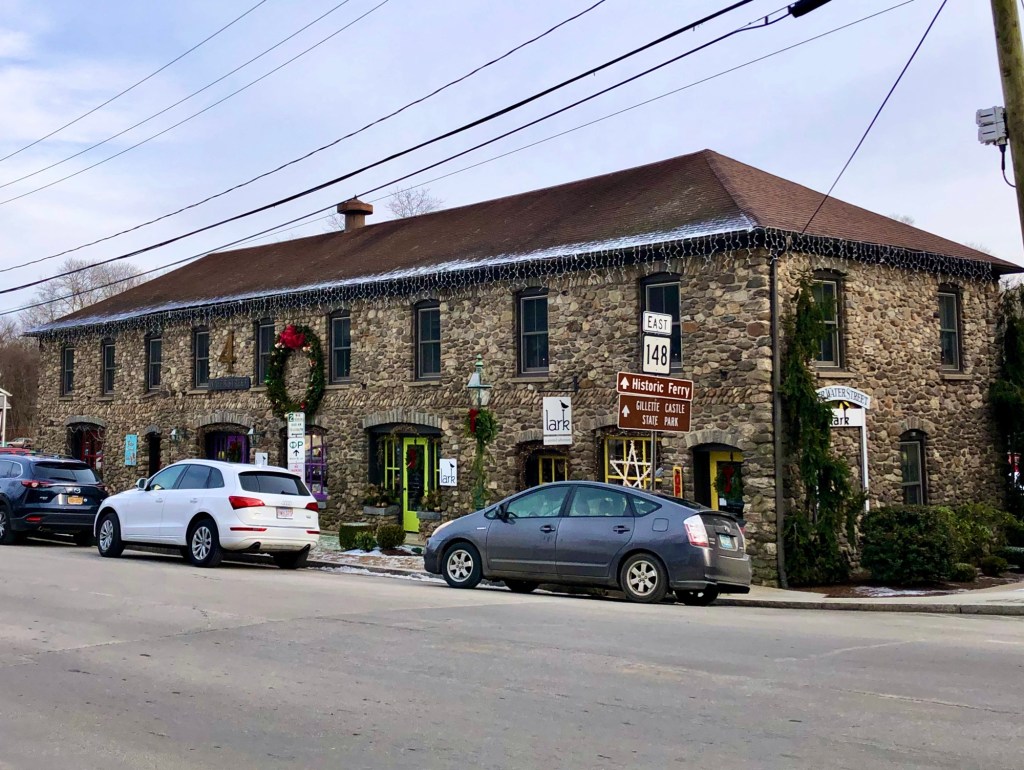
The handsome rubblestone commercial block at the corner of Main and Water streets in Chester, Connecticut, was built in 1909 by Italian stone masons for Joseph H. Leet and contained a grain and feed store, with other spaces in the building rented out. Decades later, the old Leet Store became a auto repair shop and the upstairs space was used as a meeting hall and theater for the community. The building was restored in 1979 and expanded at the rear with a two-story wood-frame addition for additional commercial space.
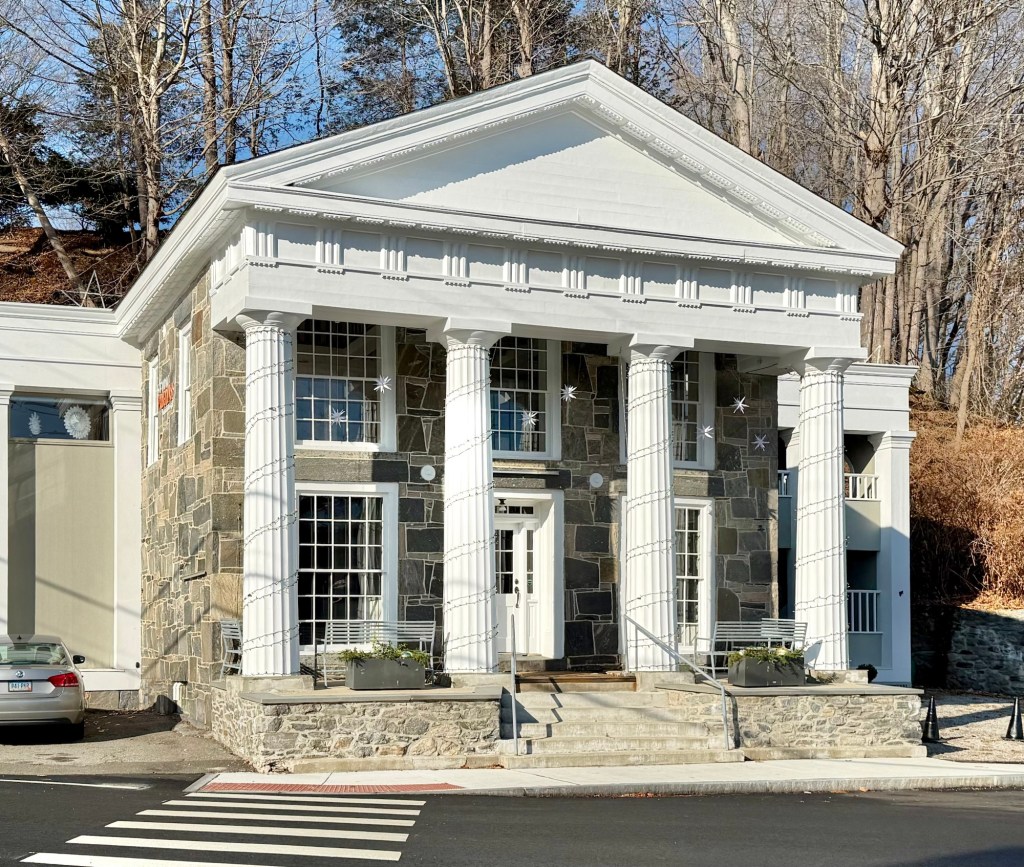
Colloquially known as the “Stone Store,” this handsome stone structure in Chester Village, Connecticut, was built by William Buck in 1809, a merchant involved in the West Indies trade. The stone for the building is believed to have come from the Chester quarry in town and was likely more vernacular without the columned portico. The four-columned Doric portico was likely added in the 1830s or 1840s as the Greek Revival style surged in popularity. The two side wings were added in the 20th century. The Old Stone Store has held various uses from a store, tavern, post office and liquor store, while the upper floor has served as a private school, the town’s library and an apartment. The Old Stone Store today acts as the western terminus of the town’s Main Street commercial district.
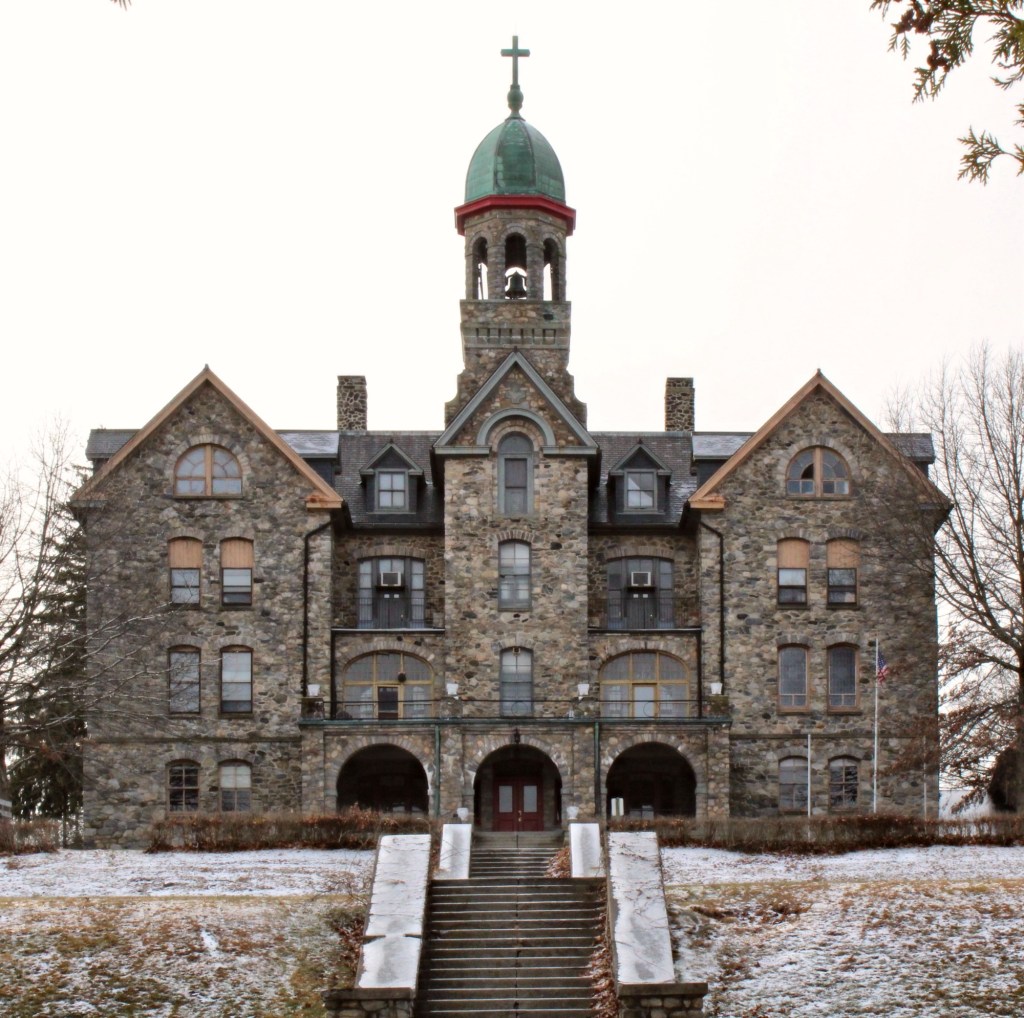
The former Mount Saint John School in Deep River, Connecticut, sits atop a hill on the western banks of the Connecticut River and is a visual landmark in every sense of the word. The school was founded by the Diocese of Hartford, who acquired the site in Deep River and began construction on the present building in 1907. Completed by 1908, the stone building (architect not known at this time), served as an industrial school for 100 boys in the Hartford region aged 8-16. The school, led by the Xaverian Brothers, was intended to educate troubled young men in the Catholic faith and learn working skills for a profession. The use changed numerous times throughout the 20th century, and ended up becoming the Mount Saint John School. Then under the Norwich Diocese, the school became known as the Mt. Saint John School. The school closed years ago and the historic building and surrounding campus’ future are uncertain.
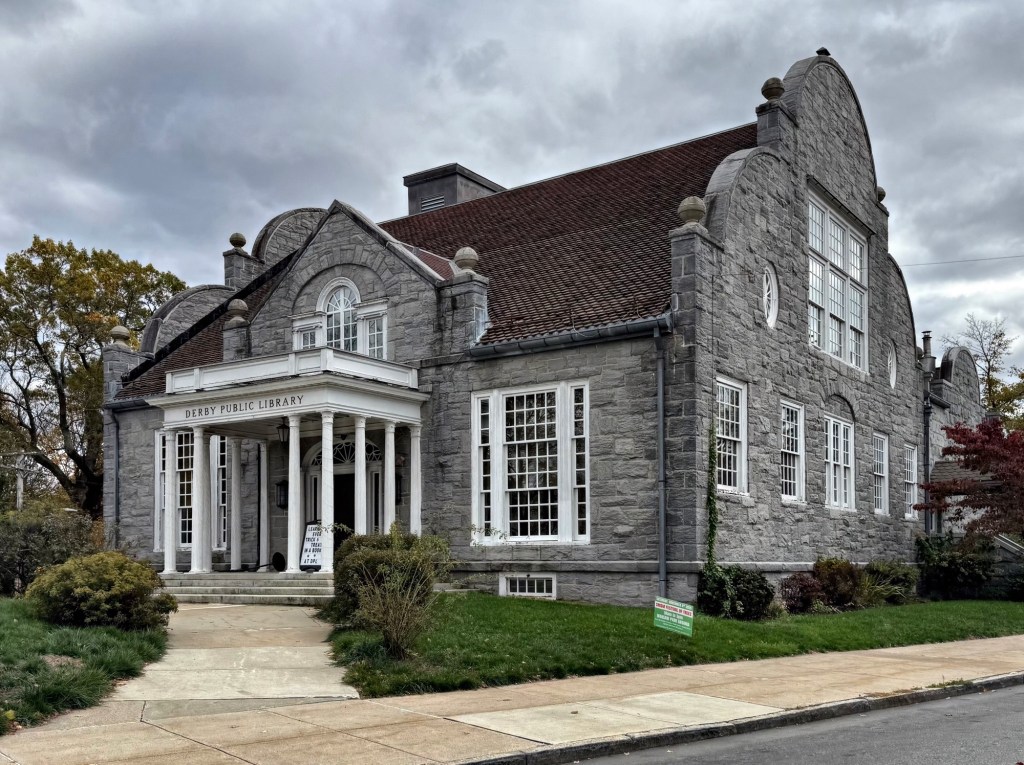
Derby’s main public library building, the Harcourt Wood Memorial Library, is located a few blocks from the city’s downtown on a unique triangular lot formed by Elizabeth and Caroline Streets. The one-story library is one of the finest of its period in all of New England and is built primarily out of Ansonia granite. The library was designed by architect Hartley Dennett and is notable for its Colonial Revival style porticoed entrance and distinctive rounded Flemish gables on the side walls. The interior is said to retain most of its original woodwork and many of its original furnishings. The building was constructed in 1902 following the donation of land and funds for its construction by Hamilton Holton Wood, a native of Montreal who made his fortune operating Derby’s streetcar railway system. The library is named in honor of Wood’s son Harcourt, who died at the age of 12 in 1897. The community does a great job at preserving the structure, which is one of the finest of its type in the region.
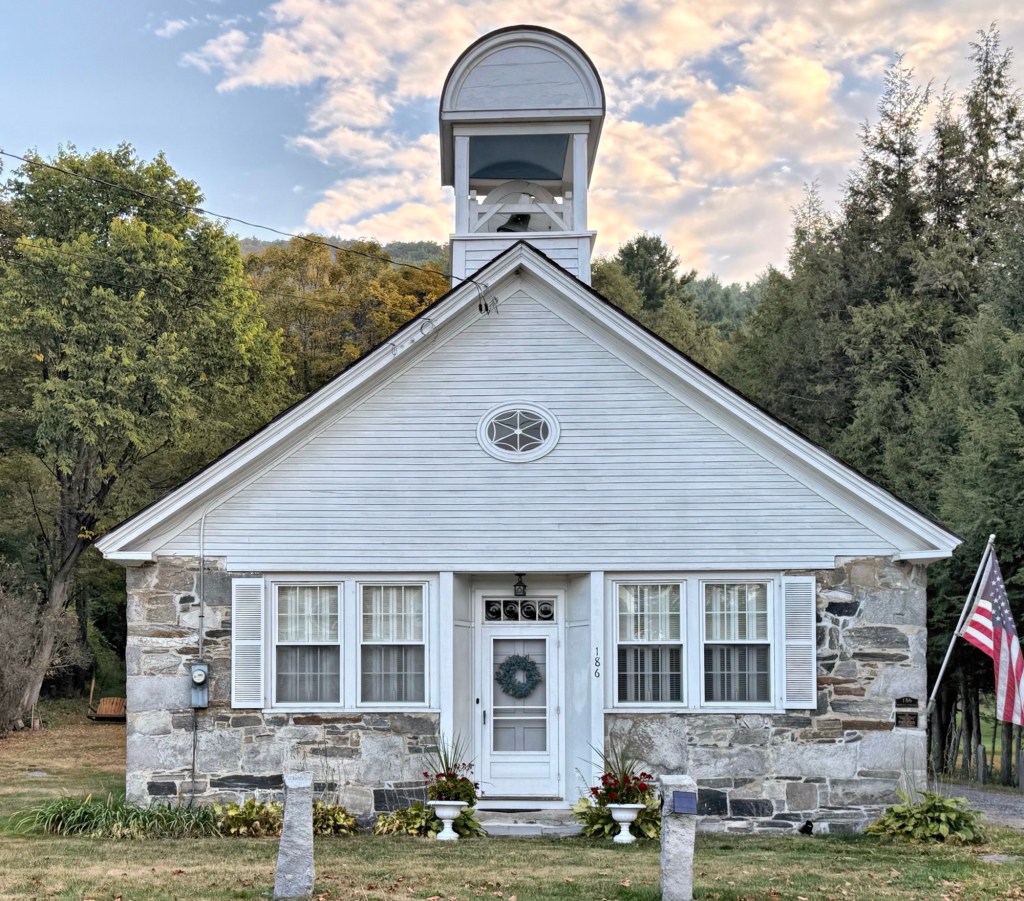
Across the street from the Gideon Lee House in the Stone Village of Chester, Vermont, this historic schoolhouse is one of the oldest in the state and one of the few extant schoolhouses built in stone in New England. The Stone Village Schoolhouse is a rare example of a snecked ashlar building, where the construction method is said to have been brought to the area by masons from Scotland and Ireland which is known there as ‘Celtic Bond’. Oral tradition state that Scottish masons from Canada introduced the technique to local masons while erecting a mill in nearby Cavendish in 1832. Local Chester resident, Dr. Ptolemy Edson became such a fan of the building that in 1834, he had his home, the first stone building in Chester, built in this method. He then would influence the rest of the North Village of Chester, where many of his neighbors, as well as the church and schoolhouse, built their structures in snecked ashlar. Completed in 1835, the schoolhouse is a single-story rectangular plan building with the end gables forming a high pitched roof with a bell cupola over the facade’s gable. The snecked ashlar siding appears only on the first floor with traditional wood clapboard siding in the gable above. Built as School No. 3 for Chester, the building converted to residential use in the 20th century, but still maintains its important materiality and the iconic school bell, allowing passersby to understand its original purpose.
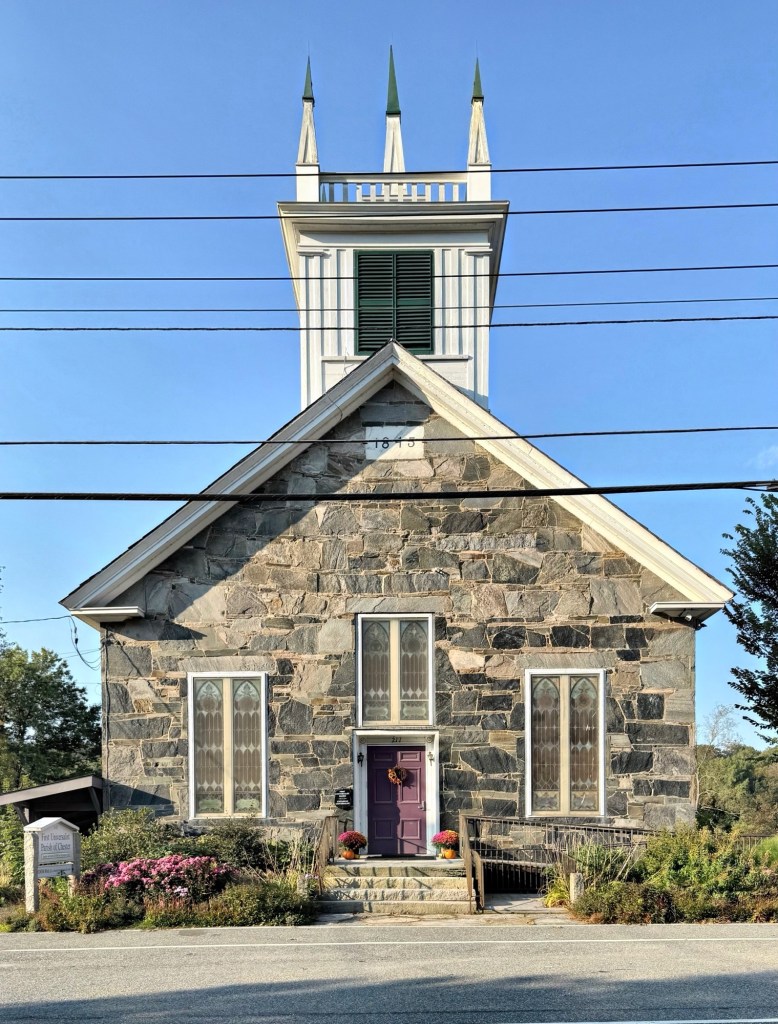
The Stone Village of Chester, Vermont, is said to be the largest collection of stone buildings in the state, and is anchored by its largest building, the Unitarian Church. Built in 1845, the Unitarian Universalist Church is one of a few dozen “snecked ashlar” buildings in the region, where rubblestone is laid up with mortar using small long stones called “snecks” to tie an outer and an inner wall together. The construction method is said to have been brought to the area by masons from Scotland and Ireland which is known there as ‘Celtic Bond’. Oral tradition state that Scottish masons from Canada introduced the technique to local masons while erecting a mill in nearby Cavendish in 1832. Local Chester resident, Dr. Ptolemy Edson became such a fan of the building that in 1834, he had his home, the first stone building in Chester, built in this method. Dr. Edson served on the building committee for the new village church, and likely pushed for a cohesive material and construction method for this church and other buildings soon after. The Stone Village Unitarian Church blends Greek Revival and Gothic Revival styles in a more vernacular way, typical in many rural Vermont communities. The building exhibits stained glass windows that were added sometime in the late 19th or early 20th century.
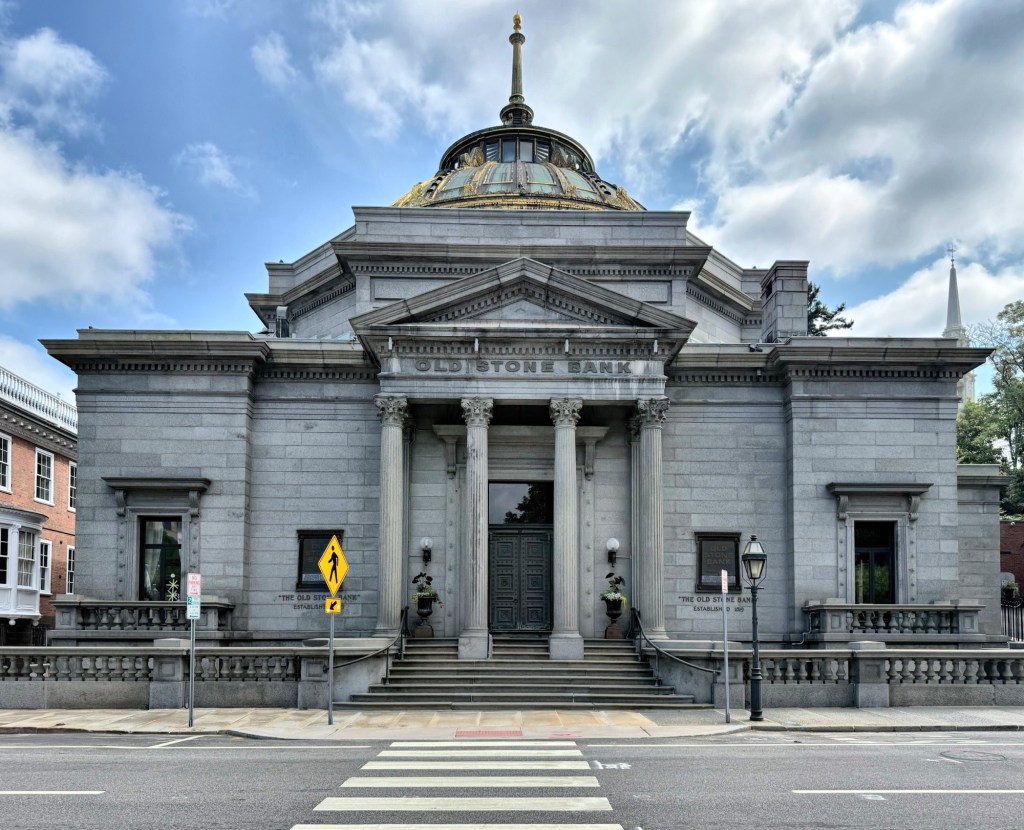
The Old Stone Bank was founded in 1819 as the first savings bank in Providence, Rhode Island, but originally under the name, Providence Institution for Savings. A constantly growing volume of business influenced the erection, in 1854, of a building for the exclusive purposes of the bank at 86 South Main Street, near College Hill. Designed by C.J. and R.J. Hall, the original stone bank stood one-story tall with a gable roof. Success and further expansion of the institution led to the erection, in 1896, of the present building, which served as the main office. Designed by the local architectural firm of Stone, Carpenter & Willson, the present domed banking structure is said to have incorporated parts of the 1854 building, and expanded the rest to the landmark we see today. The Beaux Arts/Neo-Classical banking structure is constructed of granite, with a Classical pedimented entry of monumental Corinthian columns atop the staircase, but the highlight of the building has to be the gold-leaf-and-copper domed roof which partially served as a skylight for the banking hall inside. Offices relocated to a new building in the late 1960s. The banking institution closed in the 1980s and following acquisitions and insolvency, the main bank was sold in 1995 to Brown University for $1.15 million to house the Haffenreffer Museum of Anthropology‘s collection of Native American artifacts. Years later, Brown decided it was unfeasible to house the collection in the building as the necessary alterations would have altered the historic character of the building, they then sold the building to an LLC in 2009. The Old Stone Bank is now a single-family home. Yes, you heard that right. The new owners have lovingly preserved this architectural marvel for all to enjoy as they stroll the city.

 Buildings of New England