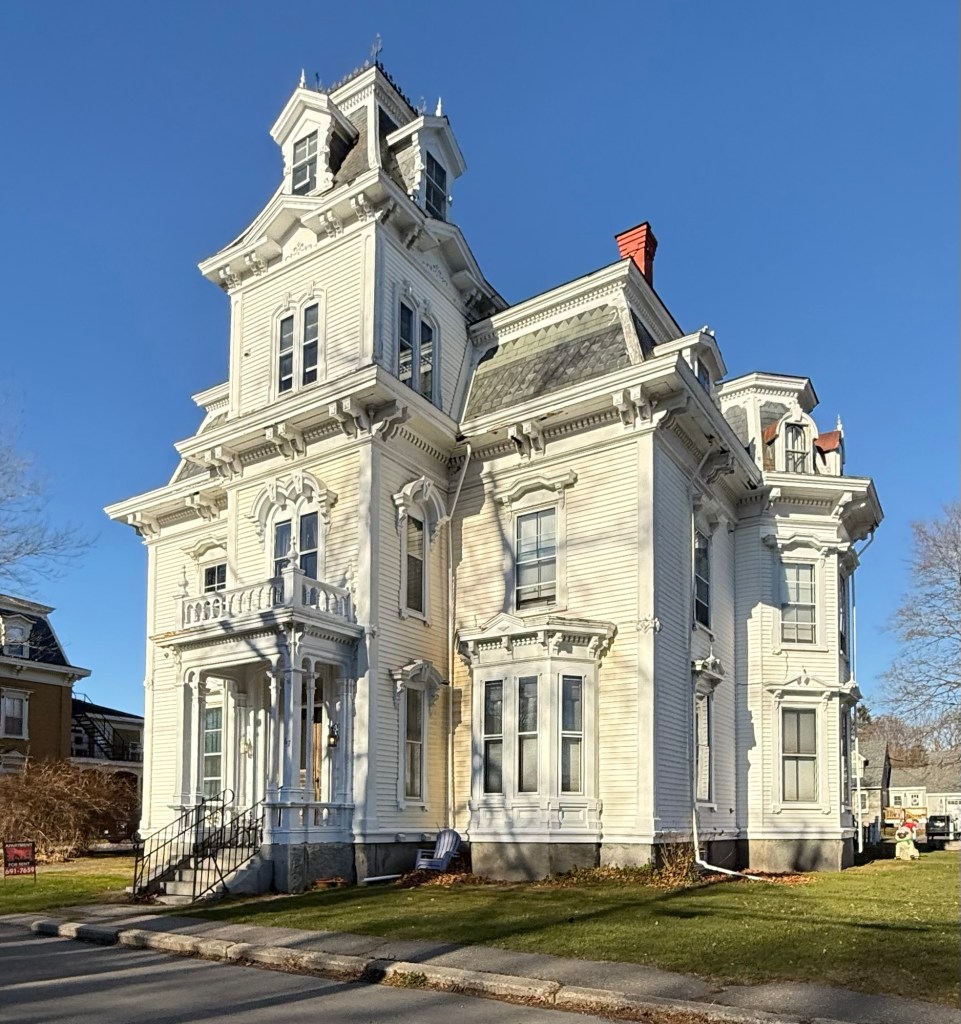
William Hurd Glover (1834-1910) was a prominent lumber dealer and builder in Rockland, Maine, and would built this house as his residence on Talbot Avenue. Mr. Glover hired architect Charles F. Douglas, to furnish the plans for the Second Empire style mansion. While covered in vinyl siding, the handsome residence features a slate mansard roof, central tower, delicate projecting portico over the entrance, and decorative window hoods and brackets. The house is one of the best examples of the style in Maine, even with the later siding.
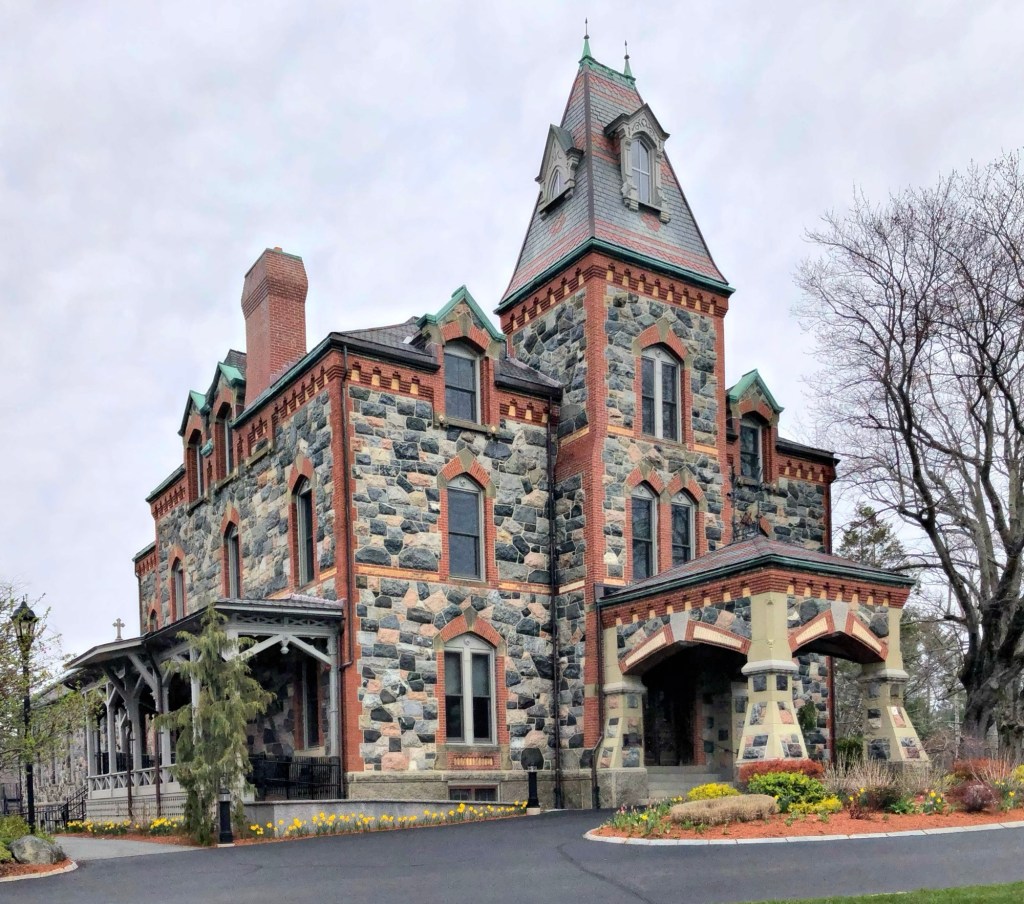
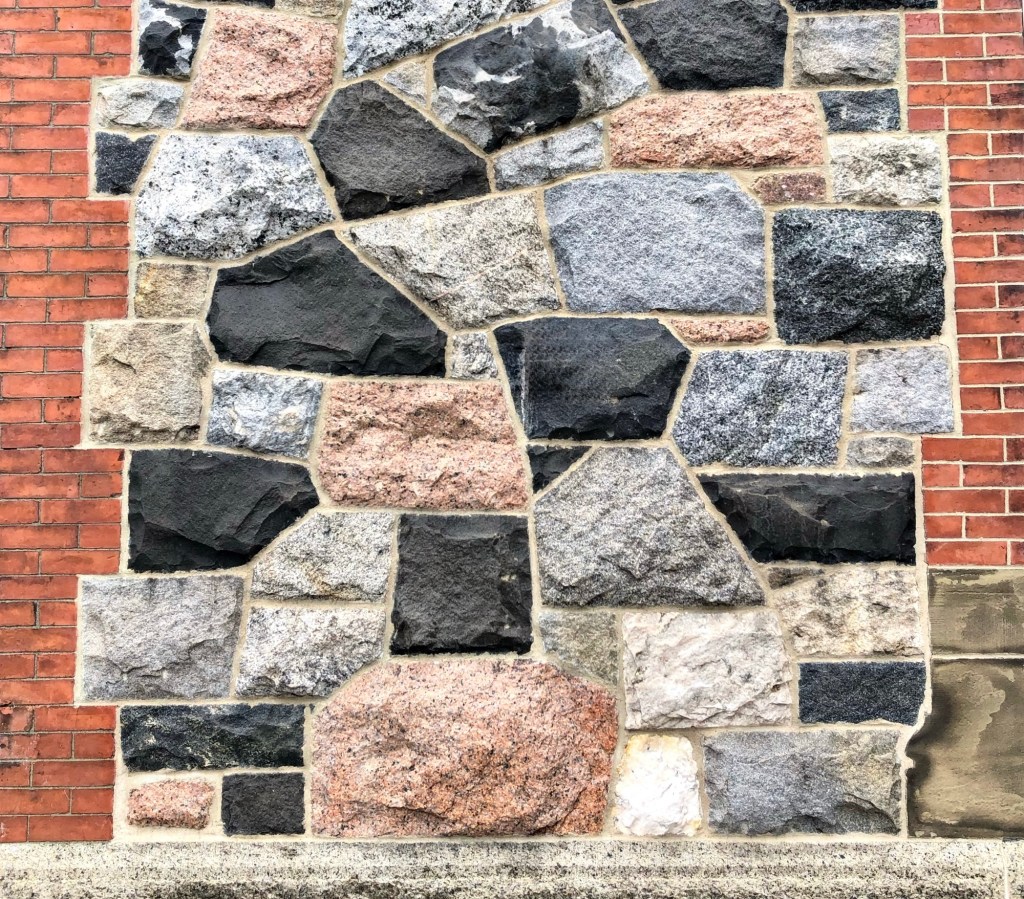
The Jacob E. Spring Mansion, also known as Porphyry Hall, is a high-style estate house located in Danvers, Massachusetts, that is one of the finest and most unique in the state! The house was built in 1880 for Jacob Evans Spring (1825-1905), who was born in Brownfield, Maine, and at the age of twenty, he went to Argentina and amassed a fortune in the wool business in Buenos Aires between 1845 and 1865, when he returned to the United States. Jacob and his wife, Sara Duffy, would purchase a large farm in Danvers and began planning for their family country home. Their residence was built on a high hill over two years and constructed of over 40 types of stones of irregular size and color with door and window sills of Nova Scotia freestone with arches of the doors and windows and corners of brick. The mansion was designed by architect George M. Harding of Boston, and built by several skilled masons over many months. Mr. Spring named his estate, “Porphyry Hall” with Porphyry meaning an igneous rock with large crystals in a fine-grained matrix; suitable for the walls of their mansion. The Spring’s lived lavishly at this home and spent nearly all of their fortune, selling the property after just ten years to the Xaverian Brothers, who opened it as Saint John’s Normal College. In 1907, the compound was re-organized as a Catholic boys prep school. In 1915, a chapel was added to the rear of the building, constructed from gray fieldstone to blend with the main house. Have you ever seen a building like this?
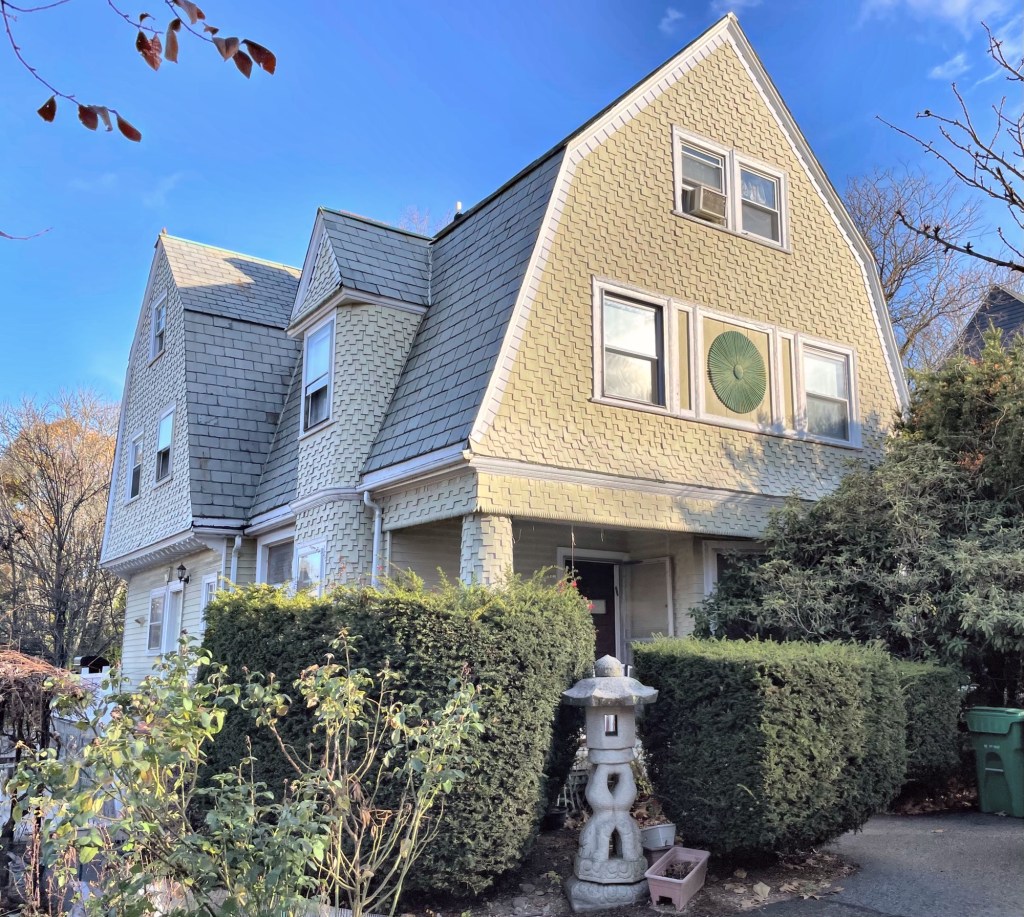
I do not think that I have ever seen rounded shingled columns like this before… What a treat! This house is located on Rice Street in Newton Centre, and was built in 1890 by Henry H. Read, a leather dealer who developed the entire street. This house was built on speculation and initially rented out to tenants before it was sold to Frank Ratcliffe and his wife, Elizabeth Ratcliffe. Frank Ratcliffe was born in England and would become treasurer of the Boston & Albany Railroad, which had a stop in Newton Centre. Frank and Elizabeth would sell or gift this property to their daughter, Mary Elizabeth Ratcliffe Holt and her husband, Warner R. Holt. Besides the unique shingled columns, the house features a broad gambrel roof and sunburst panels and a two-story rounded shingled bay. I could not locate the architect for this one, sadly.
This charming Shingle/Queen Anne style house is located on Sumner Street in Newton Centre, a street of fine suburban houses built for businessmen who commuted into Boston. This house was built in 1884 for Daniel Tufts Kidder (1852-1941), a glass dealer. Daniel got his start under the employ of Hills, Turner & Harmon, jobbers of plate, window and mirror glass, and manufacturers of mirrors, eventually working his way up to salesman and later as president of the consolidated company, Boston Plate and Window Glass Co. It is believed that Mr. Kidder used antique and imported glass in his home when it was built. The house remains well-preserved and characteristic example of the fanciful Victorian styles.
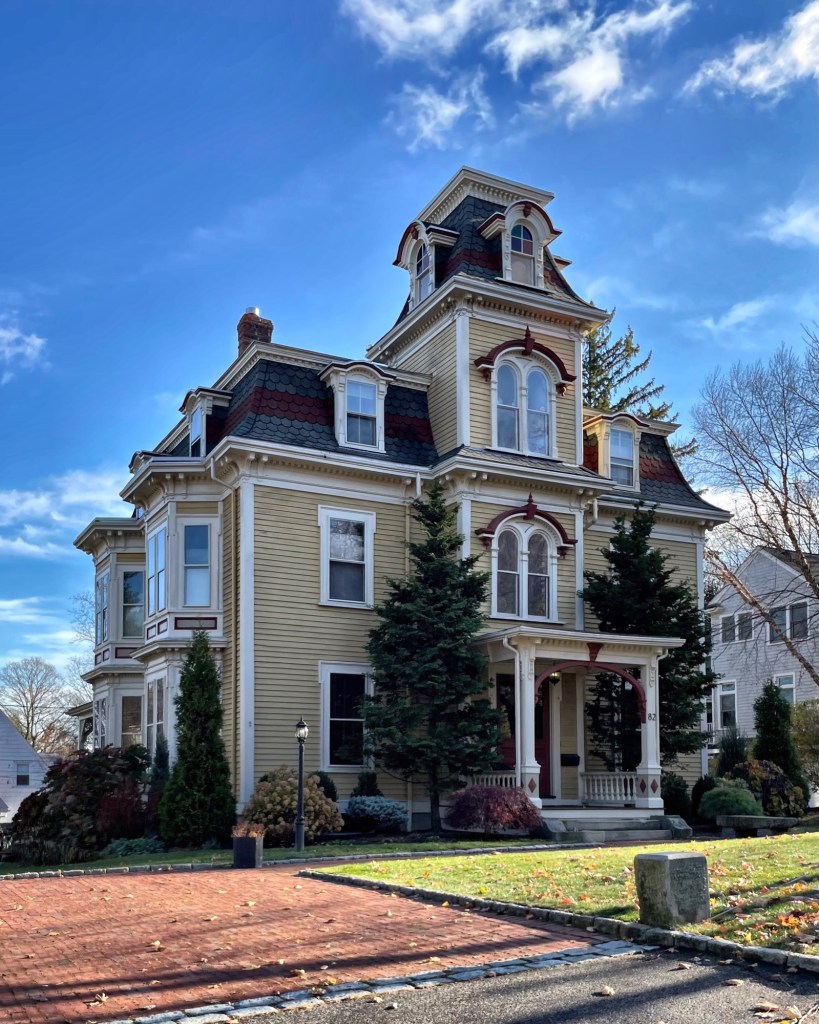
One of the finest Second Empire style residences in Newton, Massachusetts, can be found on Herrick Road in Newton Centre. This is the John H. Sanborn house, built before 1870 for John H. Sanborn, a Boston broker and commission merchant who also served as a Representative to the Massachusetts General Court. The imposing residence is a two-story house based on a rectangular plan, and capped with a bellcast Mansard roof of gray, fish-scale patterned slates. The focal point of the design is the four-story, towered entrance pavilion which dominates the facade.
The Hiram Ricker House sits in the Poland Springs Historic District of Poland, Maine, and was built as the personal residence of its namesake, who developed this formerly sleepy town into a destination in the 19th and 20th centuries. Hiram Ricker (1809-1893), the son of Wentworth Ricker and Mary Pottle, helped turn his father’s country inn in Poland into a popular late 19th century resort, bringing in droves of tourists to take in fresh air and the healing natural spring water. He and his wife, Janette (Bolster) Ricker had six children, all but one of which helped run the resort. This Queen Anne style residence was designed by Lewiston architect, George M. Coombs, and is set back down a long drive overlooking the resort grounds. Sadly, Hiram Ricker died the same year his residence was built, but the home was occupied by the Ricker Family for years after, notably by Hiram’s son, Hiram Weston Ricker. It is covered in later siding, but the trim details are preserved and typical of high-end Victorian homes of this period in Maine.
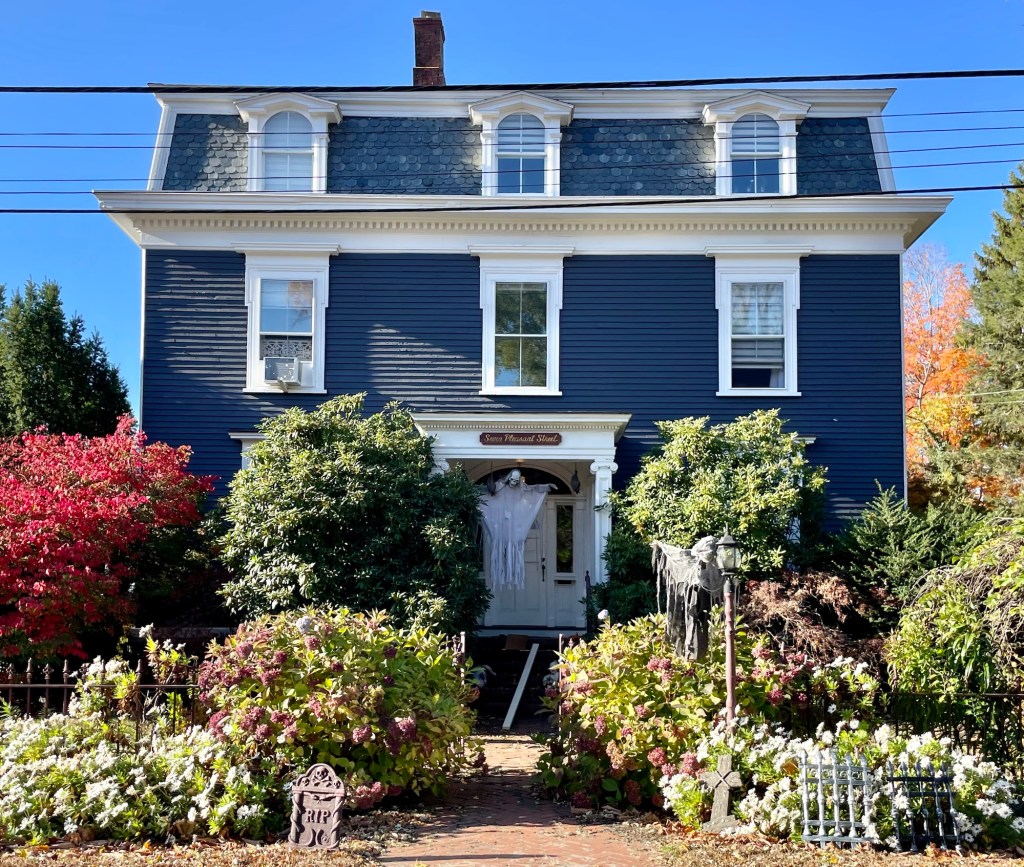
This house in Georgetown Center, Massachusetts dates to the 1860s and appears to have been built for Milton G. Tenney, a shoe manufacturer. By the early 20th century, the home was owned by the third member of the Root family to practice medicine in Georgetown. The first, Dr. Martin Root, established a practice in 1827, serving the community for more than 50 years. His son, Dr. Richmond B. Root, owner of 24 North Street (featured previously), was in turn the father of Dr. Raymond Root (1882-1958), owner of this fancy Second Empire style dwelling. In addition to his private practice, Dr. Raymond Root was a school physician for many years, and served as Town Clerk from 1937 to 1944. The house is Second Empire in style with a mansard roof, window mouldings and two-over-two windows, but features a Colonial Revival portico with what may possibly be a Federal-period entry of fanlight with sidelights, salvaged from his father’s home when that house was renovated.
“Maple Shade” is a historic, Second Empire style summer cottage located at 1 Red Cross Avenue in Newport, Rhode Island. The house was built in 1871 from plans by George C. Mason, a prominent local architect who designed many summer homes for summer residents in the late 19th century. He even lived in a home adjacent to this house! Maple Shade was built for John Doughty Ogden and his second wife, Mary C. Moore. John originally married Mary’s older sister Margaret, but remarried after Margaret’s death in 1845. The house gained attention again in 1934, when it served as the venue for the wedding reception of John Jacob Astor VI and Ellen Tuck French, then owned by Donald O. Macrae. The house, like many other former estates in Newport, has since been converted into condominiums, but retains its architectural grandeur and presence in town.
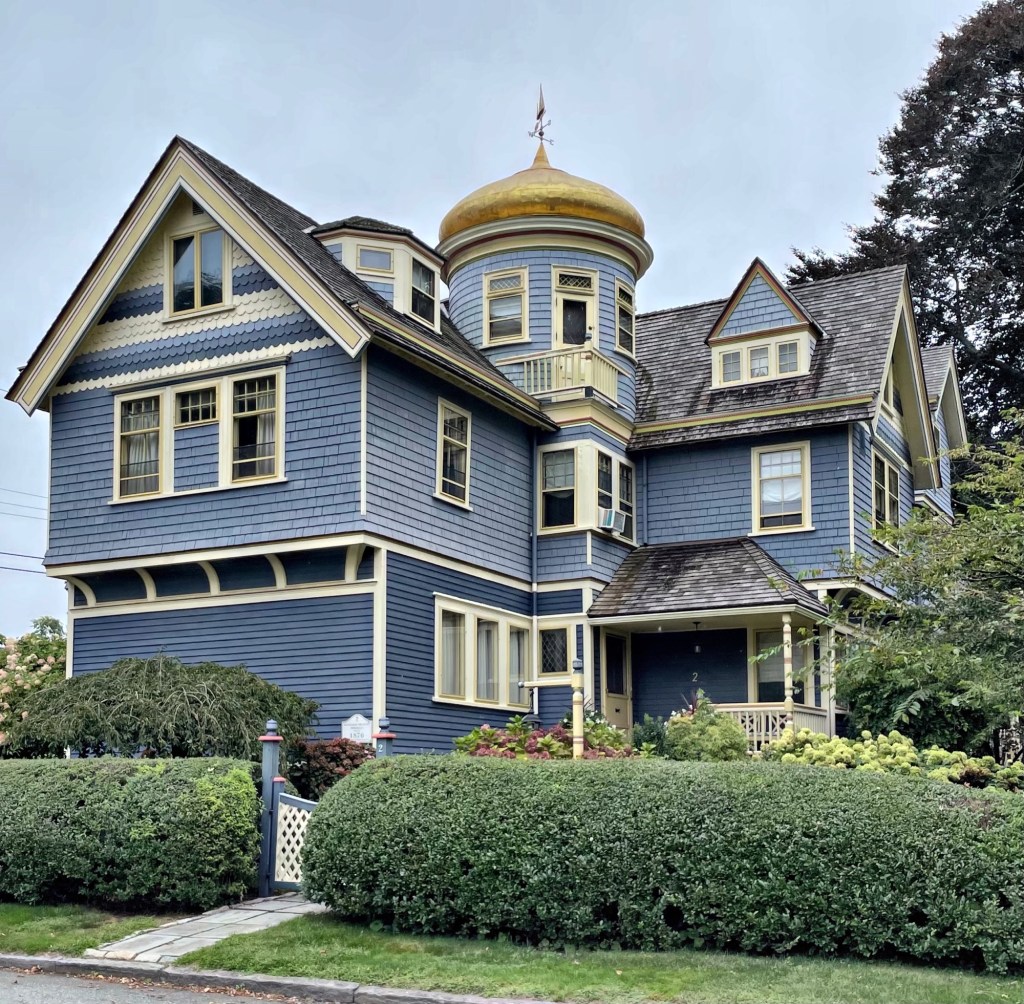
The Katherine Prescott Wormeley House is an eclectic and eye-catching Queen Anne architectural landmark on Red Cross Avenue in Newport, Rhode Island. Boston-based Katherine P. Wormeley (1830-1908), a native of England, served as a nurse for the Union Army during the Civil War and was one of the best-known translators of French literature into English. She built this double-house at a cost of $7,000 and rented another unit in the home for additional income. The Wormeley House is one of Charles Follen McKim’s early, independent works after working in the office of H. H. Richardson but before forming his own firm with William Rutherford Mead in 1877. Just years after she moved in, Ms. Wormeley in 1882, hired McKim, who was now under the firm, McKim, Mead & White to update and enlarge the home. By 1893, Wormeley had moved to New Hampshire and sold the house to Elizabeth Cabot Hayden and Dr. David Hyslop Hayden. The golden onion dome roof at the tower is a real treat!
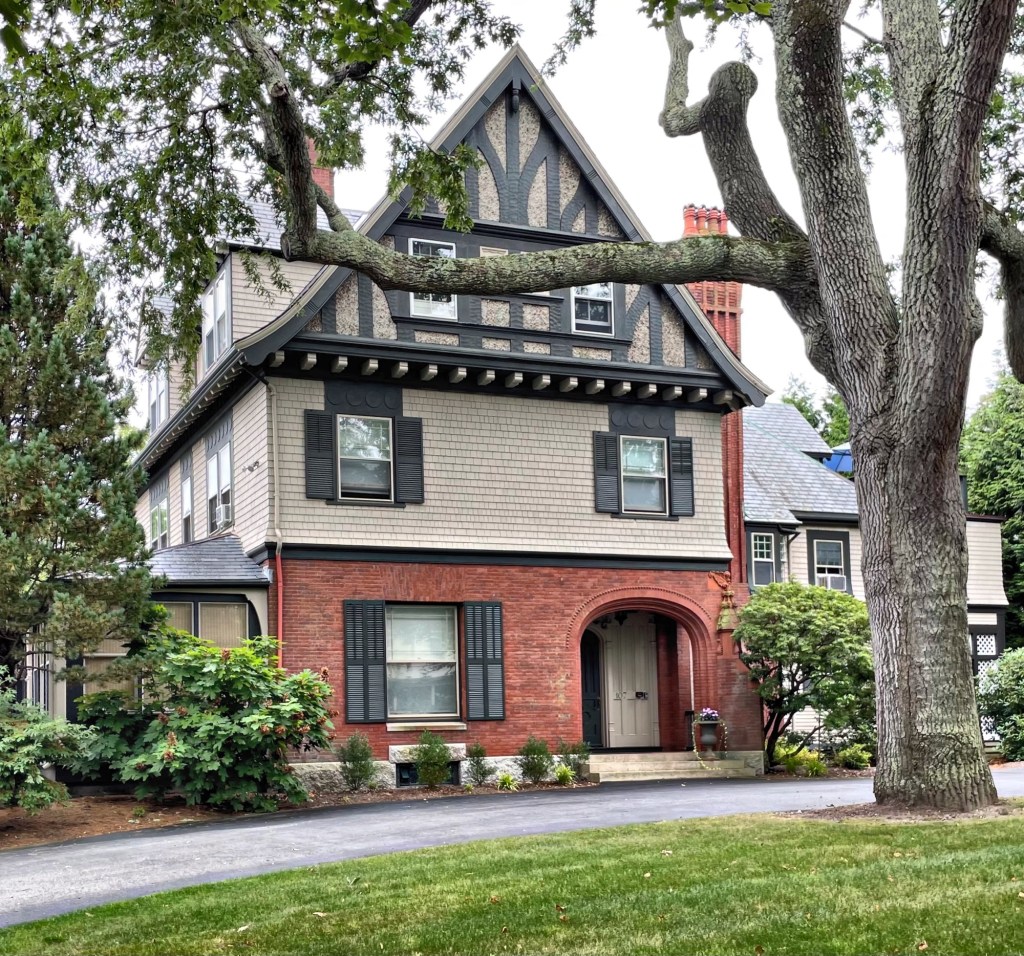
Oakwold, a stunning Queen Anne residence on Old Beach Road in Newport, Rhode Island was supposedly built on speculation and purchased by Augustus Jay (1850-1919). Mr. Jay was born in Washington, D. C., the son of Peter Augustus Jay and Josephine Pearson Jay. Augustus Jay graduated from Harvard College in 1871 and from the Columbia Law School in 1876, and worked as a diplomat. His wife was Emily Astor Kane (1854–1932), a daughter of DeLancey Kane and Louisa Dorothea (née Langdon) Kane. Emily was a descendant of John Jacob Astor. The “cottage” was named Oakwold, and was designed by architect Clarence Sumner Luce, who designed many summer residences in Newport, and specialized in the Queen Anne style. Particularly noteworthy in the design of Oakwold are the brick first floor with entrance within a recessed arched opening and pebble-dashed and half-timbered gable ends.


 Buildings of New England