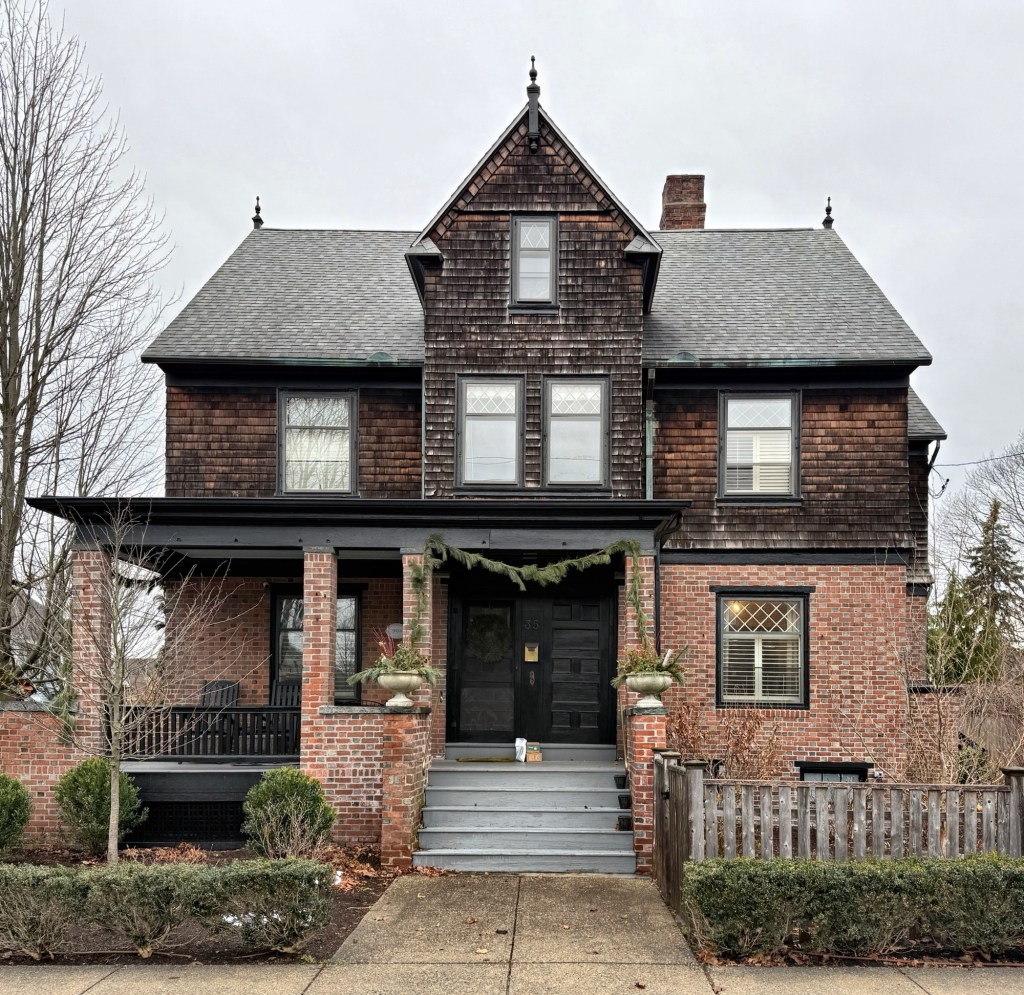
Buckingham House // 1903

This unique Queen Anne style house at the corner of Washington and Eddy streets in Warren, Rhode Island, stands out for its use of materials and late Victorian design, a departure from the Federal and mid-19th century architecture the waterfront community is best-known for. The residence was built for Hannah and Erastus Buckingham and today remains essentially as originally built. Its slightly asymmetric massing combining multiple materials of brick and weathered shingles with diamond pane sash windows, illustrate early 20″ century design simplification while retaining the use of materials typical of late 19″ century Queen Anne style. Erastus Buckingham inherited his father’s oyster farming business, which harvested over 200 acres of beds in the bays off Nayatt, Conanicut, Quonset, Rocky Point and Patience Island before packaging and shipping to markets.
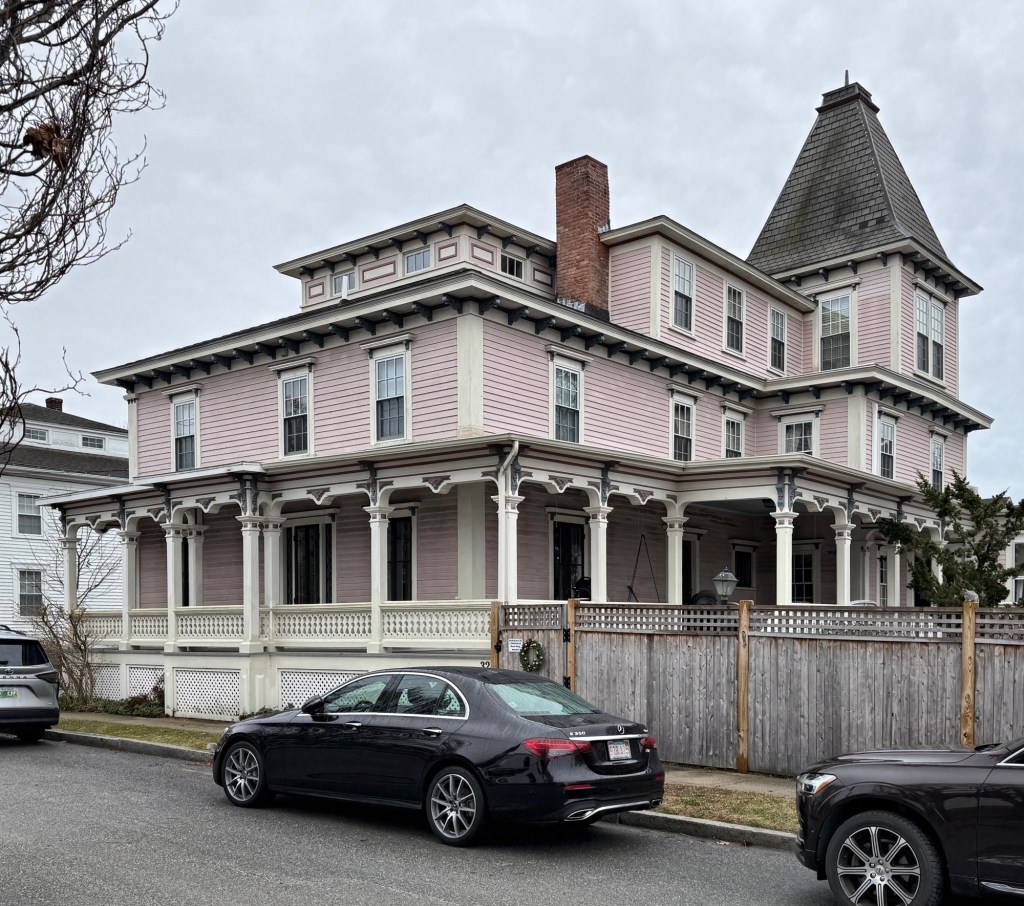
Smith-Waterman House // c.1820

One of the many great examples of Federal period houses being “Victorianized” later in the 19th century, the Smith-Waterman House on Broad Street in Warren, Rhode Island, stands out as one of the most elaborate. The residence was originally built by 1820 and possibly owned by Nathaniel P. Smith (1799-1872). After his death, the house was inherited by his son, N. P. Smith Jr., who would later sell the property to John Waterman, the Manager and Treasurer of the Warren Manufacturing Company. It was under Mr. Waterman’s ownership that the once standard Federal style house was enlarged and given Italianate features, including the wrap-around porch, overhanging eaves with brackets, addition and the three-story tower at the rear.

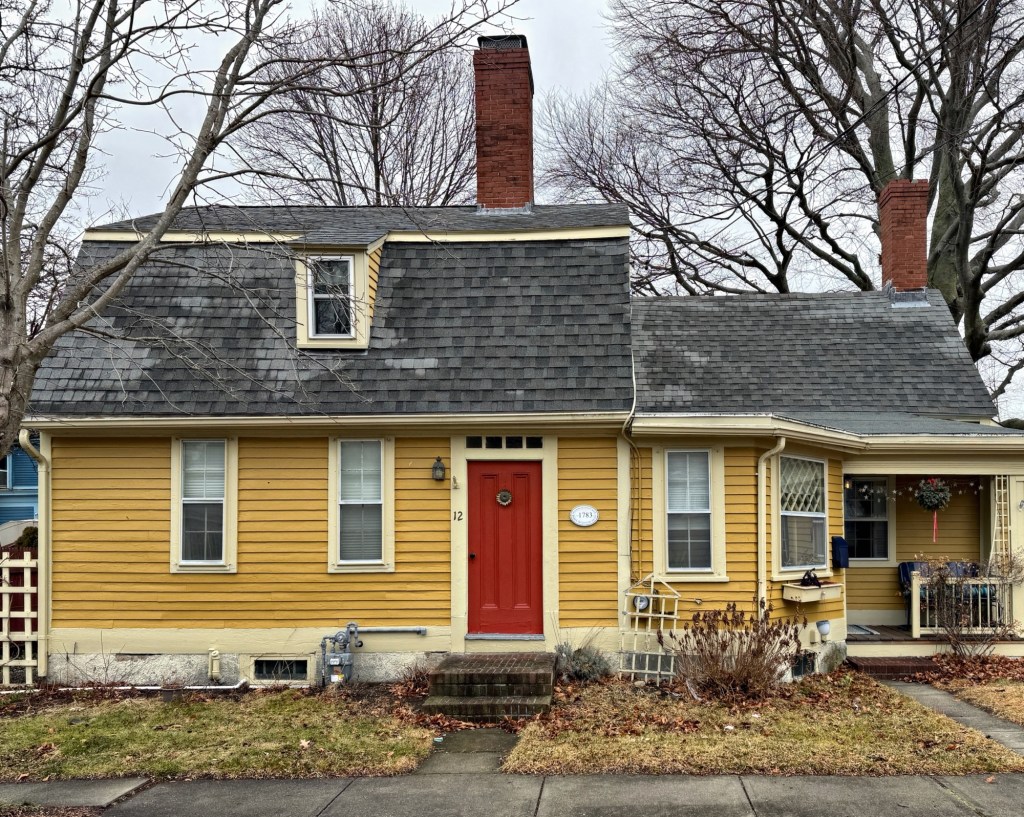
Cranston Cottage // c.1766

The Cranston Cottage on School Street is one of the few such Revolutionary-era gambrel-roofed cottages in the charming town of Warren, Rhode Island, and showcases how many early New England homes were originally built before later additions as families grew. The house was likely built soon after Queen Street (since renamed School Street) was laid out in 1765, or it was moved to the site after the street was laid out and house lots platted. The original owner, Benjamin Cranston, had the house built, which was then just a three-bay, two-story cottage with central chimney for heating. Over time, additions were made to the cottage, including the kitchen ell on the side with chamfered hyphen with diamond pane window.

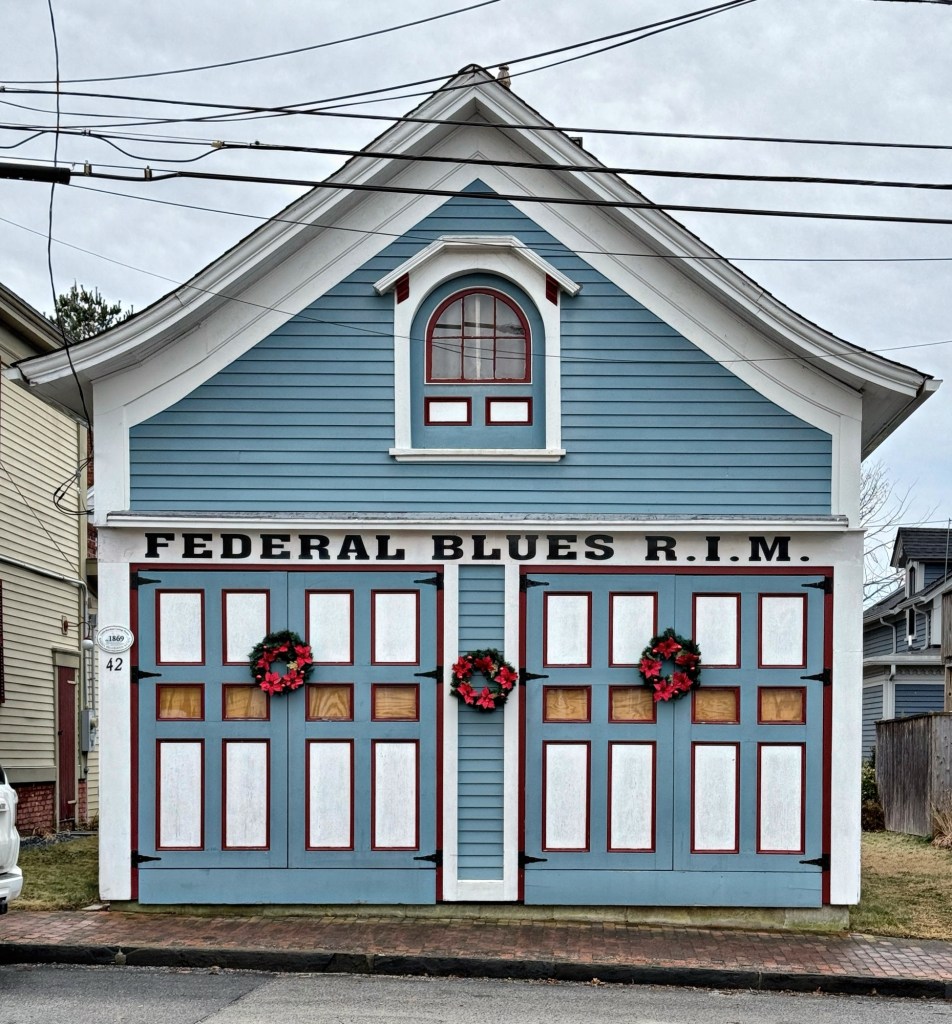
Warren Federal Blues Stable // c.1860

The Warren Federal Blues is an active independent military organization of the Rhode Island militia that was founded in 1798 and today, serves primarily as a ceremonial honor guard and as historic educational organization in Warren, Rhode Island. Members originally served as marines to police navy seamen on the USS General Greene (1799), which was commanded by Christopher Raymond Perry, the father of Oliver Hazard Perry, who also served aboard the ship. The Warren Federal Blues still remain part of the Rhode Island militia but serve in a largely ceremonial and educational role using period muskets and cannon for special events. The organization purchased the historic barn of the Baker-Merchant House on Main Street in about 1990, saving it from demolition for expansion of church parking, and moved the former barn to this site, adjacent to the old Narragansett Engine House, creating a unique composition of diminutive, but spectacular buildings. The former barn, which dates to around 1860, though is likely older, features paired double-leaf doors on the facade, round-arch window in the attic, and a flared roof with cupola centered on the ridge. 

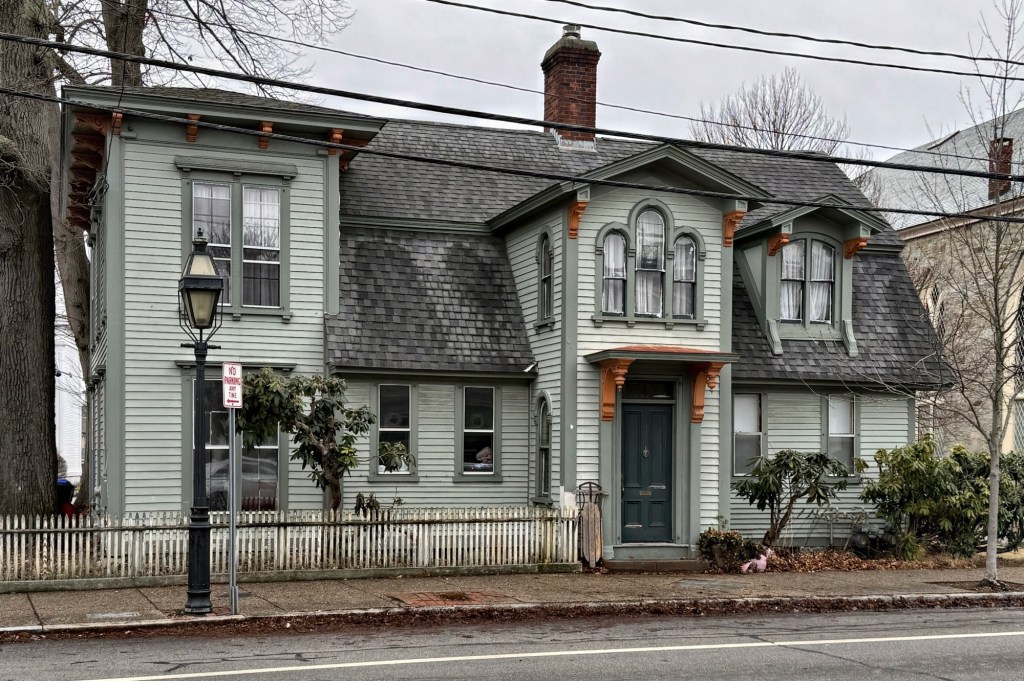
Baker-Merchant House // c.1750

One of the most historic and architecturally unique houses in Warren, Rhode Island, is this pre-Revolutionary cottage on Main Street, that was modernized in the mid-19th century for later owners. Historians state that the house was built by Jesse Baker (1708-1751), who must have died shortly after its completion. At the time of the British burning of Warren during the Revolution in May 1778, Jesse’s widow resided here and saved the modest cottage from the hot embers of the adjacent burning Baptist Church, parsonage and arsenal by wetting every blanket and sheet in the house and spreading them over the roof of the home. The once modest, gambrel-roofed Georgian cottage, was purchased in 1868 by Dr. Joseph Merchant, a physician and surgeon, who “Victorianized” the house to the eclectic beauty we see today. Dr. Merchant added the projecting two-story corner tower, two-story front entry vestibule with Rundbogenstil tripartite window which reads like a Palladian window, projecting eaves with brackets, and stickwork in the north gambrel roof. The home was later inherited by Dr. Merchant’s daughter, Mary, and her husband, Howard K. DeWolf. 

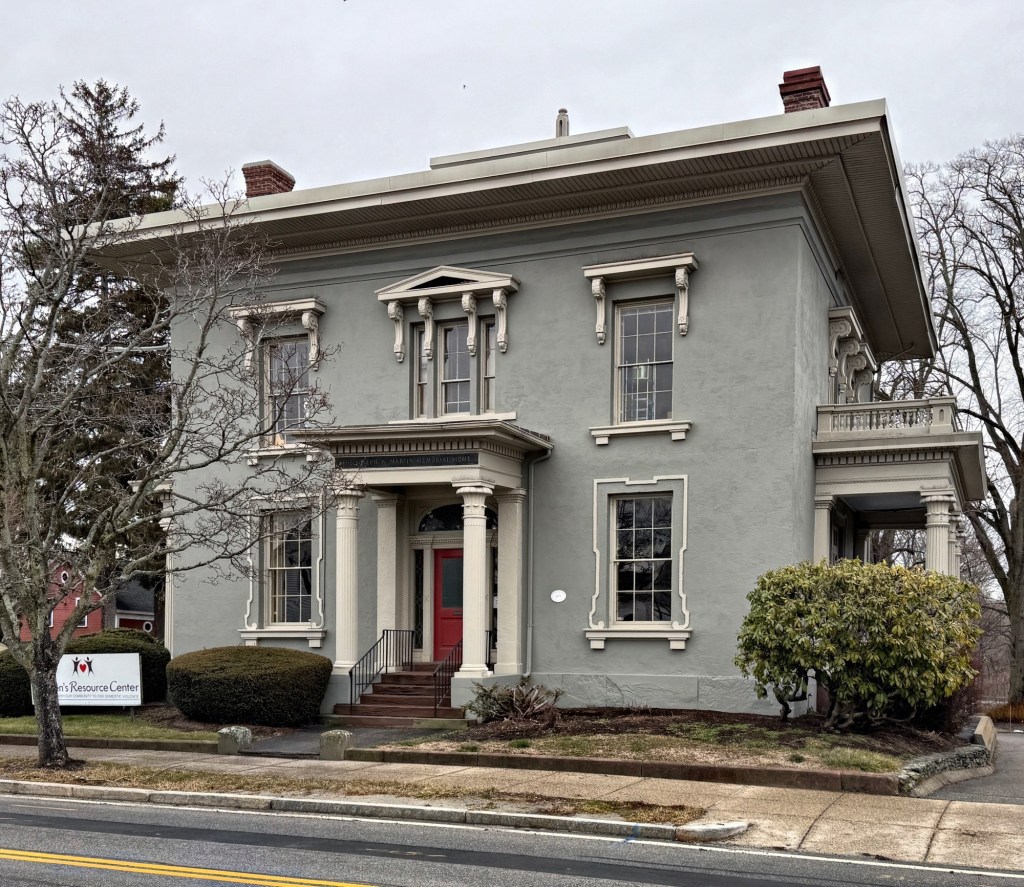
William Winslow House // 1850

The Smith-Winslow House on Warren’s Main Street is a striking two-story Italianate house with cubical massing with smooth stucco walls and bold detailing. The residence was constructed in around 1850
and was owned by Captain William Winslow captain of the schooner ‘‘Metamora’’, a trading vessel, and proprietor of Warwick’s Rocky Point, a shore resort and amusement park just across Narragansett Bay. The Winslow House was designed by Rhode Island architect, Russell Warren, who showcased his architectural prowess through the roof cupola, overhanging eaves, window hoods, and the unique Egyptian columns at the entry. Today, the residence operates as the Women’s Resource Center, a non-profit founded in 1977 to provide comprehensive domestic violence intervention and services that educate, advocate, and shelter any individual in need of assistance in the region.

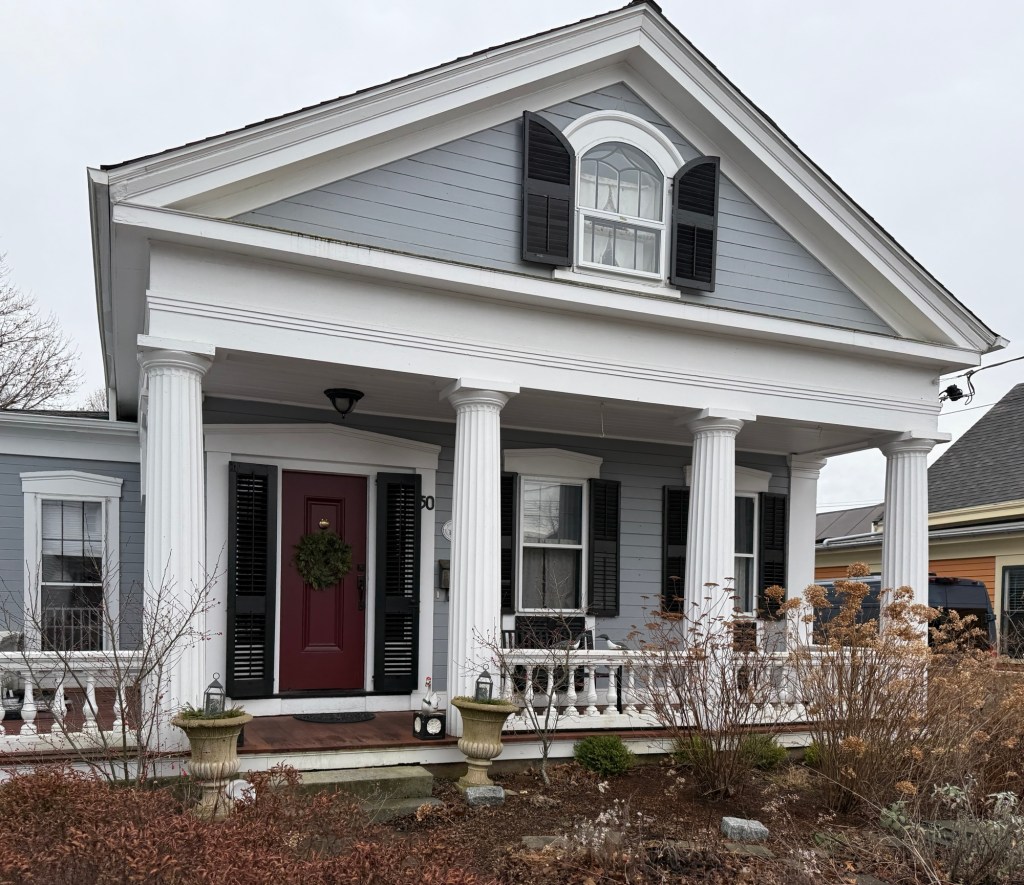
John R. Hoar House // 1841

The J. R. Hoar House on Washington Street in Warren, Rhode Island, is one of the best examples of a 1-1/2-story Greek Revival cottage in the town. The house has a full Doric portico in front, an arched second-story bedroom window in the pediment and pedimented lintels over the windows. Built in the 1841 for John Rodgers Hoar, the house has been lovingly preserved and restored by later owners.

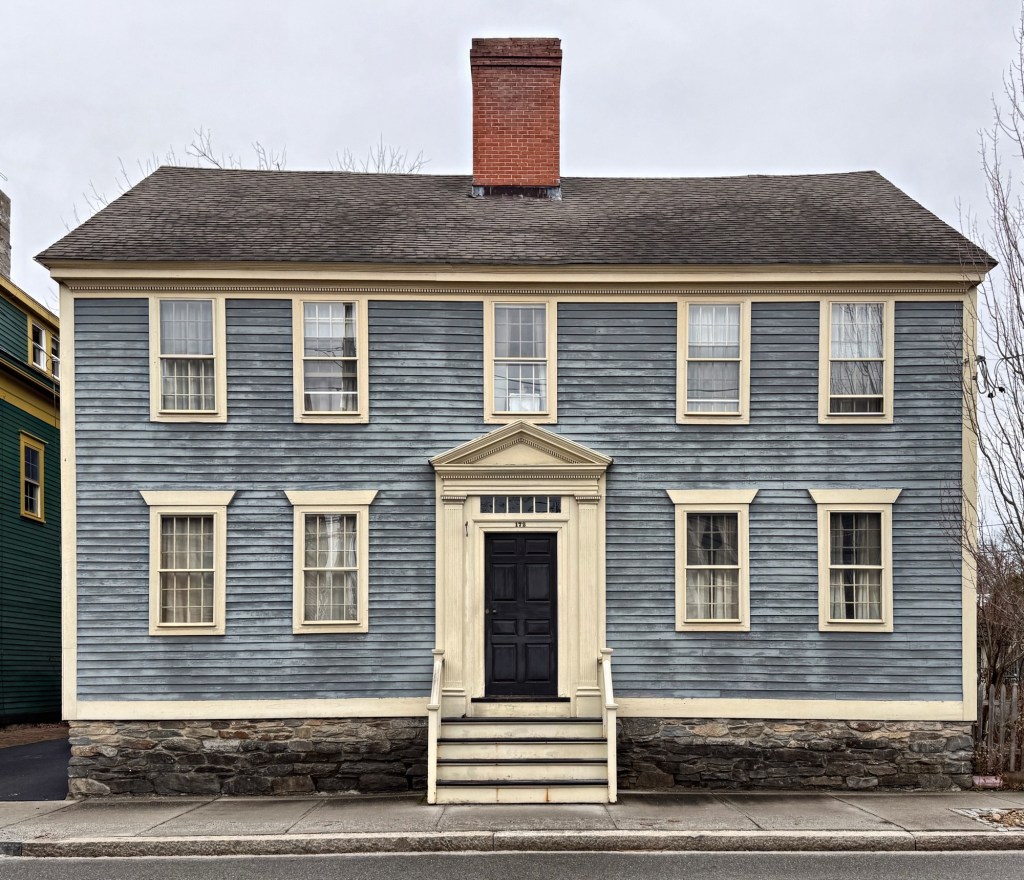
Hoar-Hall House // c.1770

This stately two-story, five-bay Colonial house at 172 Water Street in Warren, Rhode Island, is significant as a well-preserved Georgian style residence that has connections to a prominent local family. It is unclear who originally owned the residence, but by the mid-19th century, the property was owned by John C. Hoar, a blockmaker for the maritime trade. Passed through members of the Hoar family into the mid-19″ century, owned by John Champlain Hall (1818-1912), the son of John C. Hoar, who actually changed his last name from Hoar to Hall in 1867, but it is unclear why. John C. Hall worked as a carpenter and builder in town, building homes and commercial buildings for area residents, including his own shop nearby.

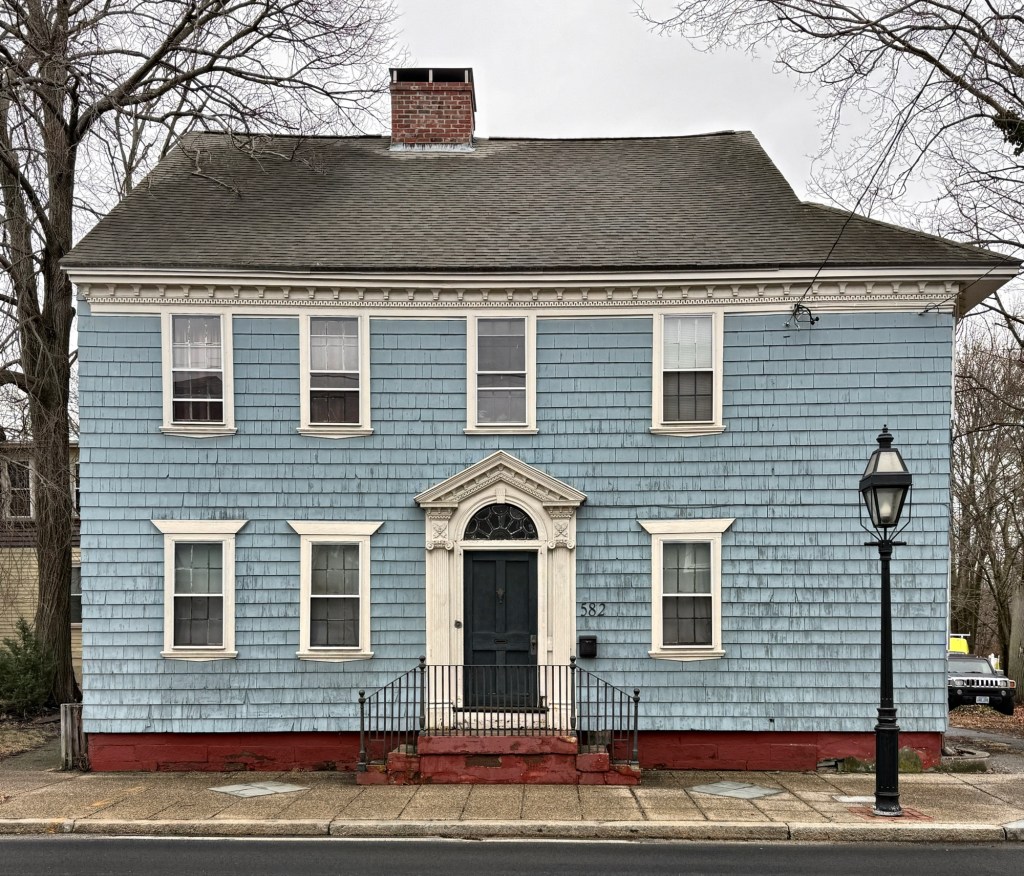
Burr-Eddy-Peck House // c.1786

This Federal style residence on Main Street in Warren, Rhode Island, features one of the town’s most spectacular entries, likely dates to the 1780s and exhibits later alterations. The house was originally owned by Rufus and Anna Burr, and was possibly built following their marriage in 1786. The late 18th century front entrance is one of Warren’s most elaborate examples with fluted Ionic pilasters supporting embellished frieze blocks, above which the pediment rests and contains a elli[tical fanlight transom. In the 19th century, the property was owned by James Maxwell Eddy (1811-1901), who, after the Civil War, elongated the southernmost bay on the facade, adding a bay window on the side which ties into the roofline with a half-hipped connector. In the 20th century, this was the home of illustrator Henry Jarvis Peck 1880-1967, whose work was re gularly published in Colliers, Harper’s Weekly, Ladies Home Journal, and other prominent magazines. The shingle siding was likely added in the first half of the 20th century.

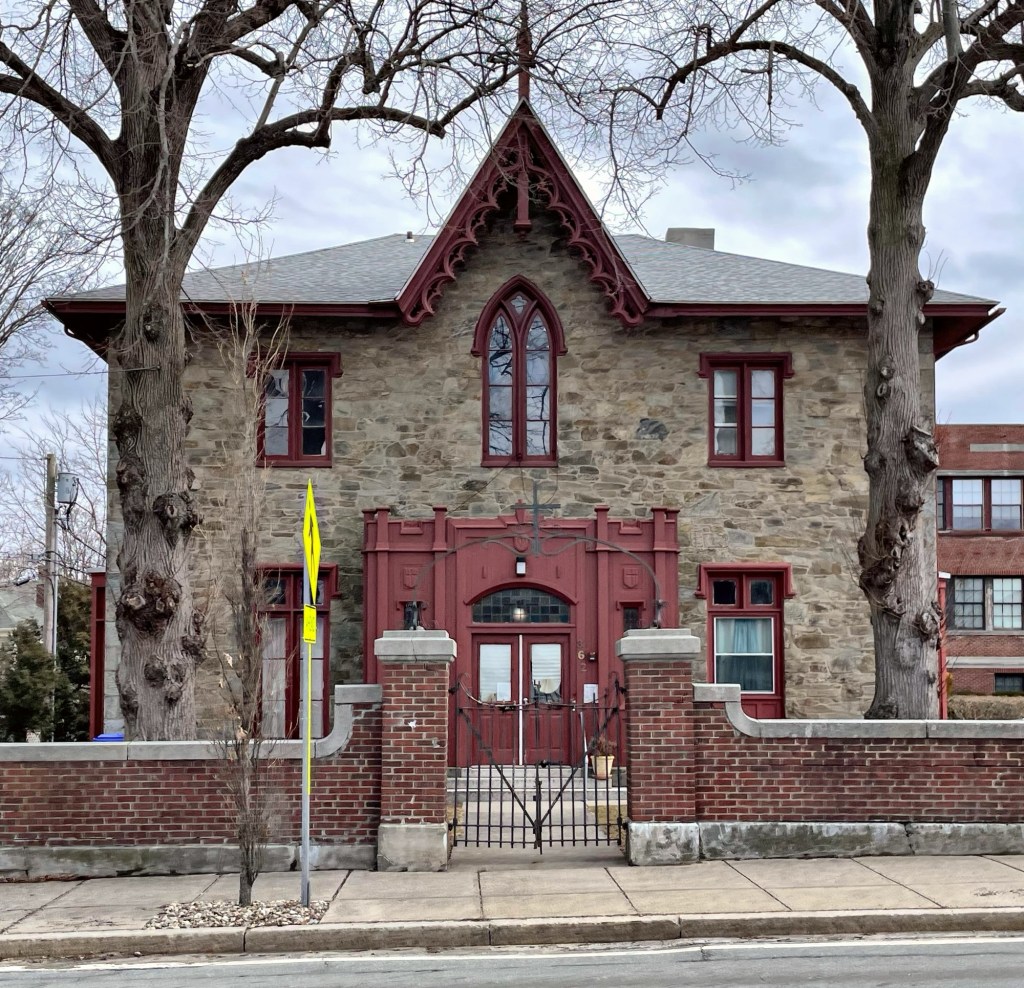
Dow-Starr House // c.1850

A big departure from the less ornate, yet classically proportioned Georgian and Federal style homes in Warren, Rhode Island, this Gothic Revival beauty on the town’s Main Street stands out for its detail and materiality. Built as a quintessential Gothic “cottage,” the facade of the Dow-Starr House in Warren has also been graced by a three-sectioned Gothic Revival porch as illustrated in Alexander Jackson Downing’s plan books from the 1840s. As completed, this house followed almost exactly Andrew Jackson Downing’s Design II as illustrated in Cottage Residences 1842 ; it differed only in its use of speckled fieldstone over coursed ashlar. The house was later acquired by and used as a convent for the St. Jean Baptiste Church in Warren, who also built a school building behind. The house has seen some alterations, but remains an important architectural landmark of the town.