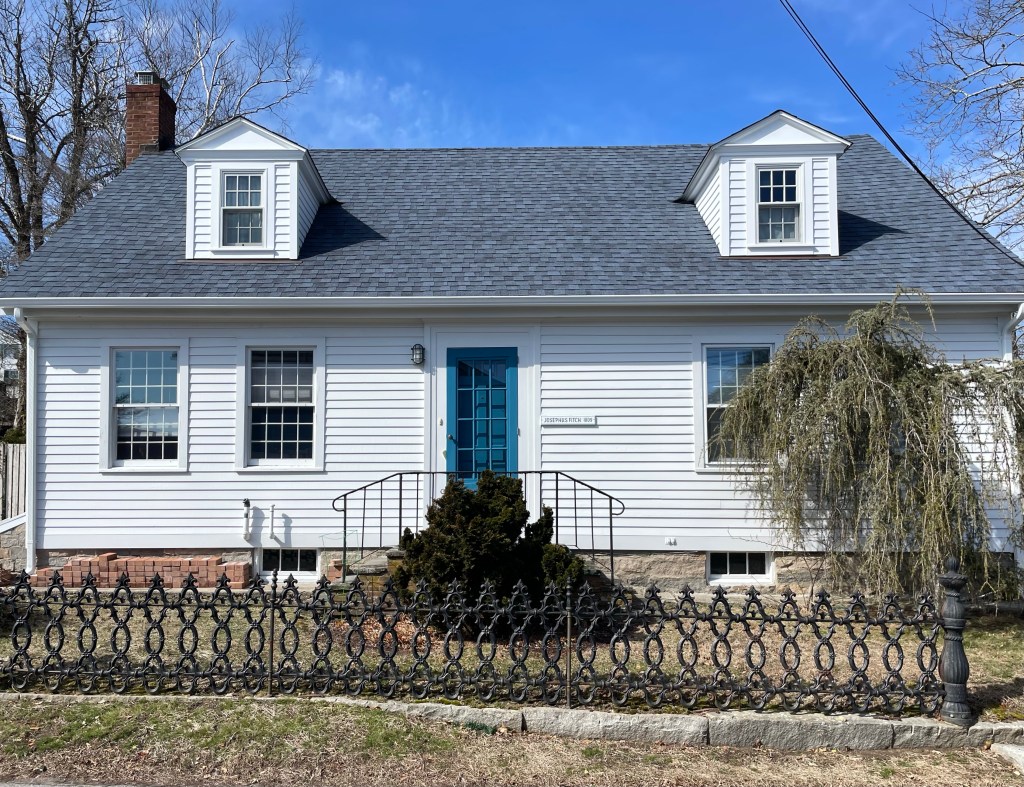
Not far from the Pelatiah Fitch House is this charming Federal Cape house in Noank, CT, built for Pelatiah’s grandson, Josephus (there are a lot of great names in this family)! Pelatiah’s eldest son Josephus was born in 1745 and was equipped for service in the American Revolution by his father. He survived the war, but in 1778, he perished at sea aboard a whaling vessel. Josephus Fitch Jr., his mother and siblings remained in Noank and tried to re-establish a life after losing their father who was just 32 years old. He grew up and married, and eventually purchased land in town, building this cape house in 1809. The house is vernacular with modest trim surrounding the door, 12-over-12 windows, and two small dormers at the roof.
In 1823, Samuel B. Mumford (1791-1849) purchased a lot on College Street in Providence and erected this modest Federal style home. The house’s marker reads “Samuel Mumford House”, but the most famous resident was actually Howard PhillipsLovecraft aka. H.P. Lovecraft (1890-1937). Lovecraft was born in Providence, Rhode Island, and lived almost his entire life there besides a few years in New York. He resided in a few places in the city but eventually settled in this home which he rented a room in his final years. Sadly, Lovecraft died at just 46 years old from intestinal cancer, and was largely unrecognized during his short, impoverished life. Since his death, he’s grown in literary stature to become one of the great fantasy classic horror authors of all time. While Lovecraft only lived in this home from 1933-1937, it was the location where he wrote his most mature and final pieces. I bet he would never imagine how popular he would become (even with an HBO series based on his worlds). The house was moved in 1959 (due to Brown University’s ever-growing and expanding campus) and now sits not too far from Prospect Terrace a small square that Lovecraft visited frequently during his time in Providence.
In 1820, Joseph Dorr, a trader, purchased this house lot in Providence’s East Side overlooking present-day Downtown. He had this Federal style house built with a symmetrical five-bay facade with fanlight transom over the door. He occupied the house until 1827 when he sold the property to a Charles Hadwin. In 1832, the property was acquired and soon after purchased by Welcome Congdon (1794-1874) who lived there until his death. The house was more recently added onto with a Modern addition on the side, to provide additional, private space for the owners who live directly next to a public park.
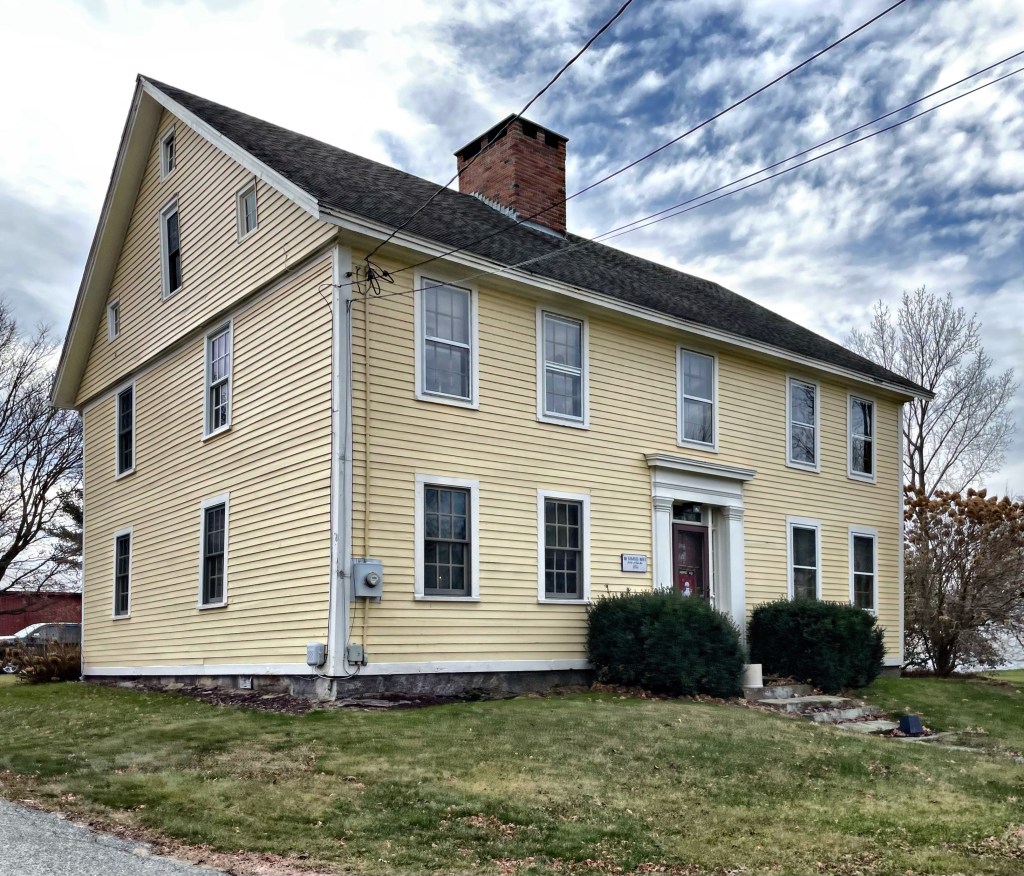
This old gambrel-roofed home sits on the beginning of Pautipaug Hill Road just outside the industrial village of Baltic, in Sprague, Connecticut. The house’s history is a little unclear, but it shows up on historic maps as being owned by W. Giddings. This appears to have been Walter Giddings (1788-1854). Walter may have built or inherited this property from his father Nathaniel, who died in 1809. Walter married Laura Lucretia Fillmore in 1811 and they had four children. Laura died in 1827 at just 37 years old and Walter remarried within a year to Lydia Lathrop Ladd. The property remained in the Giddings Family at least into the second half of the 19th century. It was later “Victorianized” with two-over-two windows, side and front porches, and a octagonal bay window. The home has been suffering from deferred maintenance for over 15 years (as far back as Google maps goes) and was listed for sale, so here’s to hoping this old beauty survives!
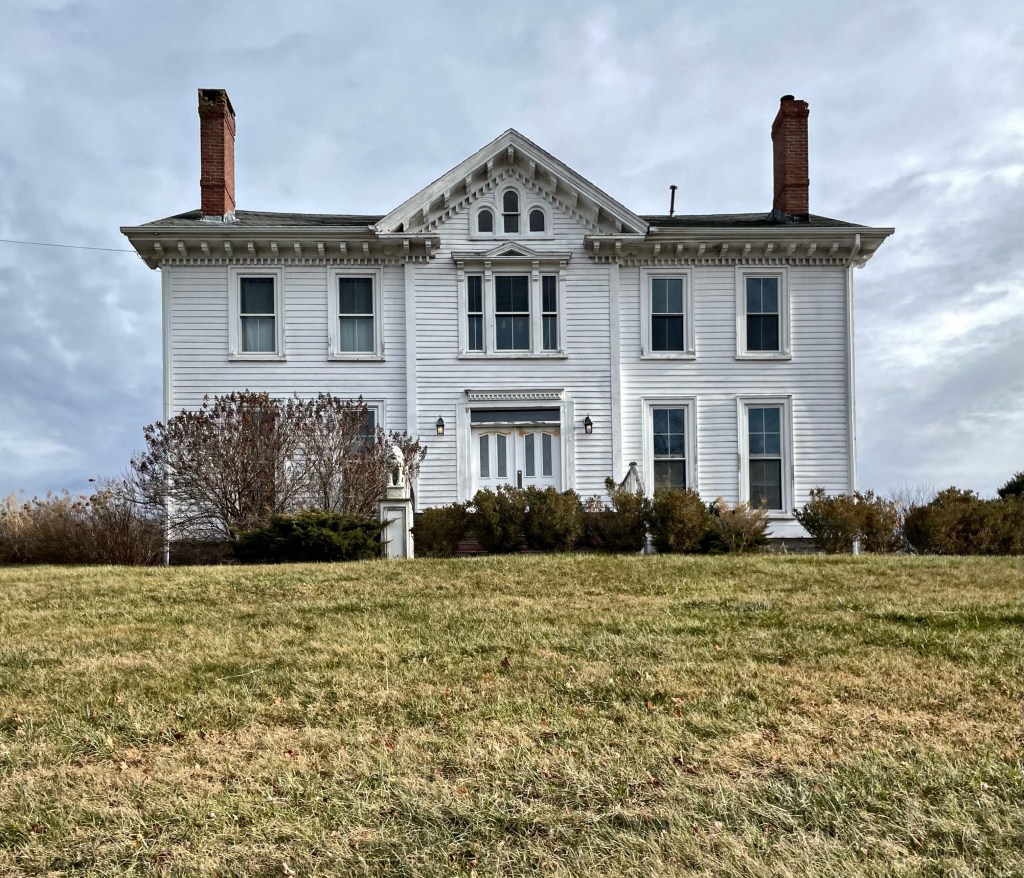
Jacob Kingsbury was born in Norwich, Connecticut on July 6, 1756, to Nathaniel and Sarah Hill Kingsbury. On July 11, 1775, at the age of 19, he enlisted in the 8th Connecticut Regiment, which was part of the Continental Army in the Siege of Boston. Kingsbury remained in the Continental Army when it was reorganized in 1776, and he was promoted to sergeant and then was commissioned an ensign in Webb’s Additional Continental Regiment on April 26, 1780. He served until the Continental Army was disbanded on November 3, 1783. At this time, Jacob moved back home and appears to have had this house built, or moved back into his father’s home. He would later serve with the United States military on campaigns against British allies and Native tribes. During the War of 1812, Kingsbury was appointed to command the defenses of Newport, Rhode Island. He served as Inspector General for Military District No. 2 (comprising the states of Connecticut and Rhode Island) from April 8, 1813, to October 31, 1814. He was discharged in 1815, and moved back to Franklin to live out his final days. The original vintage of this house in unclear, but it appears to have been built before or shortly after his return to Franklin in 1815. After his death in 1837, the property was inherited by his son, Col Thomas Humphrey Cushing Kingsbury, who updated the old homestead with Italianate detailing including the replacement double doorway, bracketed and dentilled cornice, tripartite window in the gable, and 2/2 windows. What a cool blending of styles here!
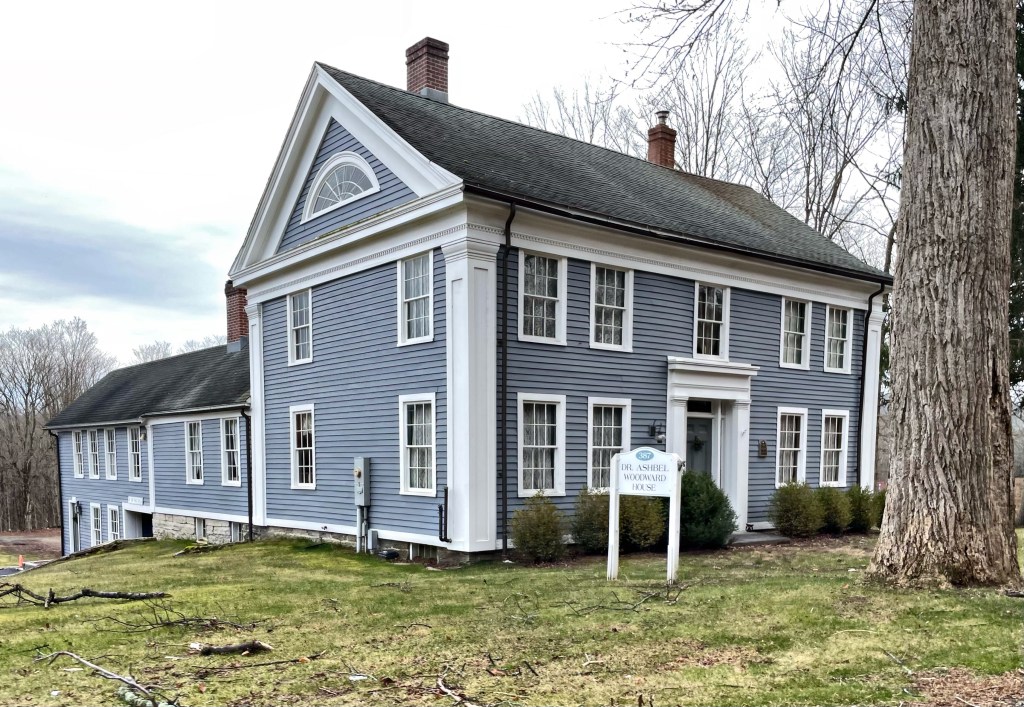
The Ashbel Woodward House in Franklin, Connecticut was built in 1835, on land purchased by Doctor Ashbel Woodward, a prominent local physician, a year prior. Woodward, was a graduate of Bowdoin College, and he began practice in Franklin in 1829, serving as the town’s primary medical practitioner until his death in 1885. Though in his 60s at the outbreak of the Civil War, Woodward perhaps lent his greatest service to his country when he served as a battlefield surgeon and medical facilities inspector for the Union army. Besides his work in medicine, Woodward collected literature and numerous artifacts pertaining to Franklin’s past and eventually wrote a book detailing the town’s history. The Ashbel Woodward House is an excellent example of the Greek Revival architectural style in a five-bay form. Interestingly, there are semi-elliptical windows in the pediment gable ends on the side elevations, seemingly a nod to the Federal style that was waning out of style at the time. The property is in use today as a museum, documenting the life of Dr. Woodward and the people of Franklin, Connecticut.
Reverend Samuel Nott (1754-1852) was born in Saybrook, Connecticut and did not have an easy beginning. When he was young, the family home burned, destroying all family possessions. Some years later on a business trip, he was beaten and robbed. At twelve years old, he began working for his father, later becoming a blacksmith by 16. For a while, young Nott lived with a Rev. Dr. Welsh of Mansfield. The older man had a profound religious influence on the young lad. At age 23, Nott entered Yale, but the college closed when British troops entered New Haven. In 1782, he married Lucretia Taylor and passed his examination for the ministry. A year before his marriage, he was invited to serve a parish in West Farms, now Franklin. He was apparently anxious to accept the position at the rural village, as the farmers attending the congregational church had fired their previous two pastors, he accepted the call regardless. During his tenure, he prepared more than 40 young men for college and schooled as many as 300 boys and girls in his home, some as boarding students. He was regarded as one of the most successful educators of the day. Education ran in his family as Samuel’s brother, Eliphalet Nott, would become President of Union College in Schenectady, NY for 62 years, from 1804-1866. Towards the end of Samuel’s life, in his 70s, his wife Lucretia, became an invalid, requiring care and finally passed in 1834. Three of his children also died. Nott passed away at 98 years old in this house, as a result of burns sustained from his own fireplace.
At the peak of Nantucket’s whaling industry wealth, the island began to see new brick buildings and whaling mansions that symbolized the stability and success of the town. In 1821, Frederick W. Mitchell (1784-1867), acquired this property on Main Street, demolishing the previous wood-frame house on the site, in preparation for his own mansion. Frederick Mitchell was a successful whaling merchant and one-time president of the Pacific National Bank. Mitchell was married twice but left no children from either marriage. The house remained in the Mitchell family until 1889 when it sold it to Caroline Louisa Williams French (1833-1914) of Boston, who summered on Nantucket until her death in 1914. A devout Episcopalian, French gifted this house to St. Paul’s Church in Nantucket for use as a Parish House. The church deaccessioned the house, and it eventually sold in 1962 to Walter Beinecke (1918-2004) acquired the house for his home. A central figure in the preservation and revival of Nantucket in the second half of the 20th century, Beinecke sought to preserve the island and reduce the damage done by tourism by creating a higher-priced resort that would reduce the number of day tourist and aim at increasing the number of wealthy tourists who would come as summer residents or for extended visits. Working towards this goal, Beinecke acquired large numbers of buildings (more than 150) in the commercial core of the town as personal investments through his private company Sherburne Associates, restoring many. The house is one of the finest examples of late-Federal residential architecture on the island with its recessed entry and fanlight transom, symmetrical five bay facade, decorative parapet and belvedere at the roof.
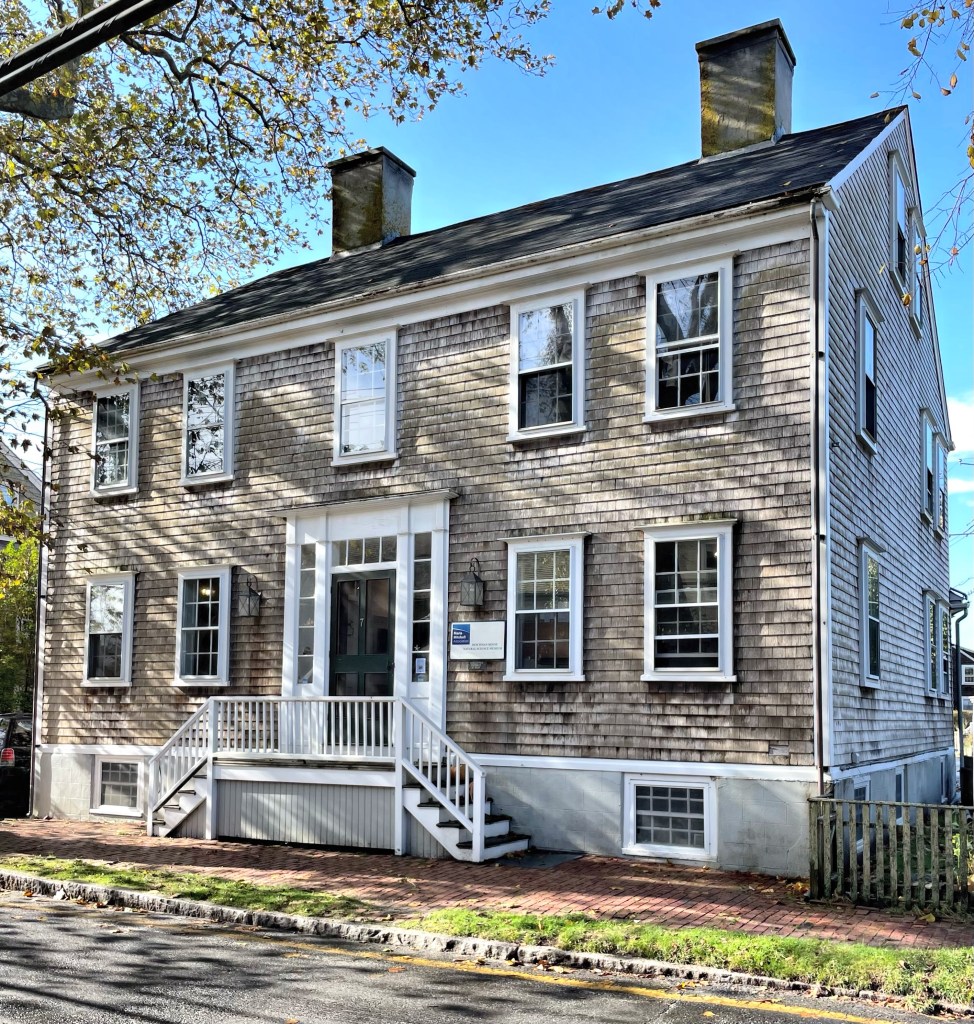
Although Hezekiah Swain built this house in 1790, the property is better known as the home of Maria Mitchell and is to this day, preserved to interpret her amazing legacy. Maria Mitchell’s father William bought the house in 1818, and Maria was born there later that year. Maria grew up on Nantucket and she became the first female astronomer in America. After she discovered a comet in 1847 (which was named Miss Mitchell’s Comet), her international recognition led to many awards and that acclaim enabled her to continue her work. She accepted a position as professor of astronomy at Vassar College by its founder, Matthew Vassar, in 1865 and became the first female professor of astronomy She established the Association for the Advancement of Women and became the first female member of the American Academy of the Arts and Sciences. She was also very involved in the anti-slavery movement in New England. After Maria Mitchell died in 1889, the Maria Mitchell Association, was established in Nantucket to preserve the sciences on the island and Mitchell’s work. On July 15, 1908, the Observatory on Vestal Street near the Science Library and Mitchell House was dedicated. The Observatory, built by the Nantucket Maria Mitchell Association, stimulated local interest in science. The success of the Observatory’s programs prompted the construction of an astronomical study in 1922, joining the existing facility with the Maria Mitchell Birthplace. The museum operates in Summers to this day, and continues Maria’s rich legacy in the sciences.
This late Federal style house on Nantucket was built in the early nineteenth century for Thomas Coffin, who himself acquired the land in 1818, which would date the home to around 1819. The Federal house exhibits a raised basement with a five bay facade with central entrance. The door is surrounded by sidelights and transom with Classical enframement. Like many houses on Nantucket, the house is clad with cedar shingles. After ownership by Thomas Coffin, the property passed through numerous hands until 1929, when the house was purchased by Lydia S. Hinchman (1845-1938). Lydia deeded the property to her son requesting that it go to the Maria Mitchell Association upon his death (Lydia was a first cousin of Maria Mitchell). He died in 1944, and the property transferred soon after to the Maria Mitchell Association which was founded in 1902 to preserve the legacy of Nantucket native astronomer, naturalist, librarian, and educator, Maria Mitchell.
There is so much to love about this house! The lot here was purchased by Paul Macy and Gideon Folger in 1807, and they had this house built on the site that year. Paul Macy and, Gideon Folger were two major shareholders in the ill fated whaling schooner “Essex”. In 1820, while at sea in the southern Pacific Ocean under the command of Captain George Pollard Jr., the ship was attacked and sunk by a sperm whale. Thousands of miles from the coast of South America with little food and water, the 20-man crew was forced to make for land in the ship’s surviving whaleboats. The men suffered severe dehydration, starvation, and exposure on the open ocean, and the survivors eventually resorted to eating the bodies of the crewmen who had died. When that proved insufficient, members of the crew drew lots to determine whom they would sacrifice so that the others could live. Seven crew members were cannibalized before the last of the eight survivors were rescued, more than three months after the sinking of the Essex. This ordeal was inspired Herman Melville to write his famous 1851 novel Moby-Dick. The Folger House was owned for some time by Walter Folger, a lawyer who served in the state senate.
In around 1800, Baker Turner built this beautiful Federal period home on Nantucket. It typifies the best parts of Nantucket architecture: gray weathered shingles, charm and simplicity. Over 100 years after the house was built, the property became significant as a facility for saving lives. The Nantucket Cottage Hospital was founded in 1911, conceived by the visions of Dr. John S. Grouard (who lived nearby) and Dr. Benjamin Sharp, to provide centralized high-quality medical services to the residents on the island. There had been no hospital on the island beforehand. The duo bought the former Turner homestead in 1912 and moved in. The hospital was eventually outgrown, and the hospital relocated to a modern building on available land in the 1950s. This building was sold and now appears to be a home, full circle.
The last (but certainly not least) building in Dorset, Vermont I’ll be featuring is the Manley-Lefevre House aka. Marble House! This stunning Federal period home was built around 1820 by Martin Manley (1783-1856) on land originally owned by his father George. The house is constructed of ashlar marble that was quarried with hand tools from the lower quarry located approximately 200′ behind the site of the house with dressed marble finished in town and brought back for installation at the lintels, sills, and door surround. In 1907, Edwin Lefevre, Sr. (1871-1943) traveled by train from Bronxville, New York to Dorset at the suggestion of the artist Lorenzo Hatch, with the intention of locating a summer residence for his family. They purchased this home, which became known as “The Old Stone House” and hired Eugene J. Lang, a New York architect, to remodel the house, design a kitchen wing and remodel the barn into a garage (1909). While in Italy, Lefevre fell in love with the formal gardens there, and wanted something like this for his country estate. Upon his return, he retained garden designer Charles Downing Lay to design the gardens that surround the house. The country estate is now home to The Marble House Project, a multi-disciplinary artist residency program.
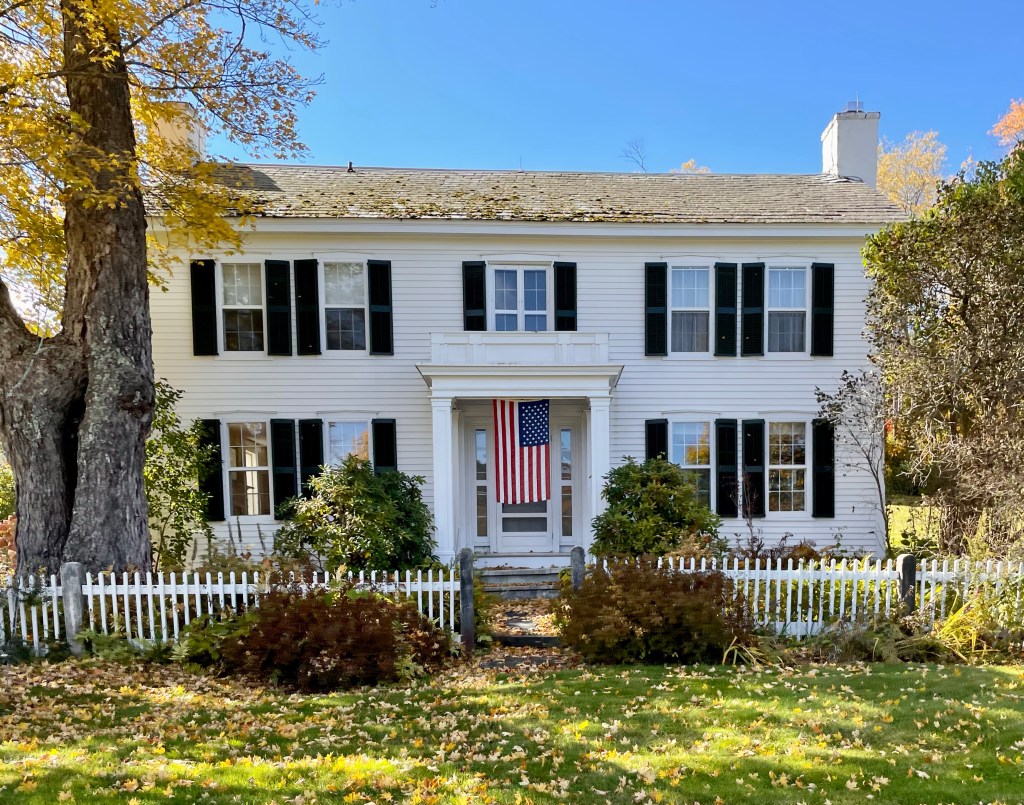
Located at the principal intersection in the Kent Hill area of Dorset, this home is the visual anchor for its surroundings. The property is a typical early 19th century Federal style house in Vermont, sheathed in clapboards, a central entrance, with a slate gabled roof and two exterior end chimneys. The house was probably remodeled not long before the Civil War, which would account for the classical entry porch, with square piers, entablature, and paneled parapet. Together with the peaked lintels, these are the only classical details on the exterior of the building. This was the home to Martin Kent (1769-1857), a son of Cephas Kent, an original settler to the area of the prominent Kent family of Suffield, Connecticut. Cephas built a house and tavern on the southwest corner of this home, which hosted four meeting of delegates from various southern Vermont towns in 1775 and 1776 to determine how to act together against New York claims to their lands, a catalyst to the establishment of the state of Vermont. Other owners of the Martin Kent House have included historian and novelist Zephine Humphrey, her artist husband Wallace Fahnestock, and Lincoln Isham, Abraham Lincoln’s great-grandson! Lot of history here!