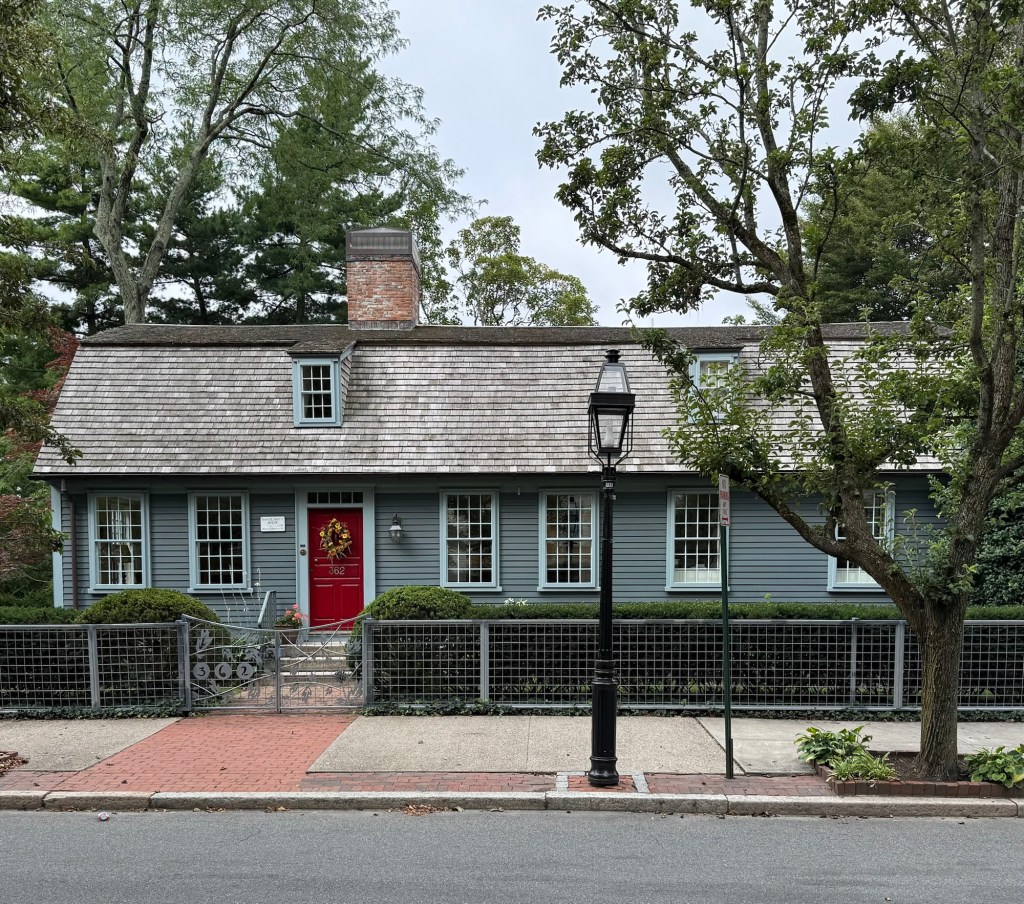
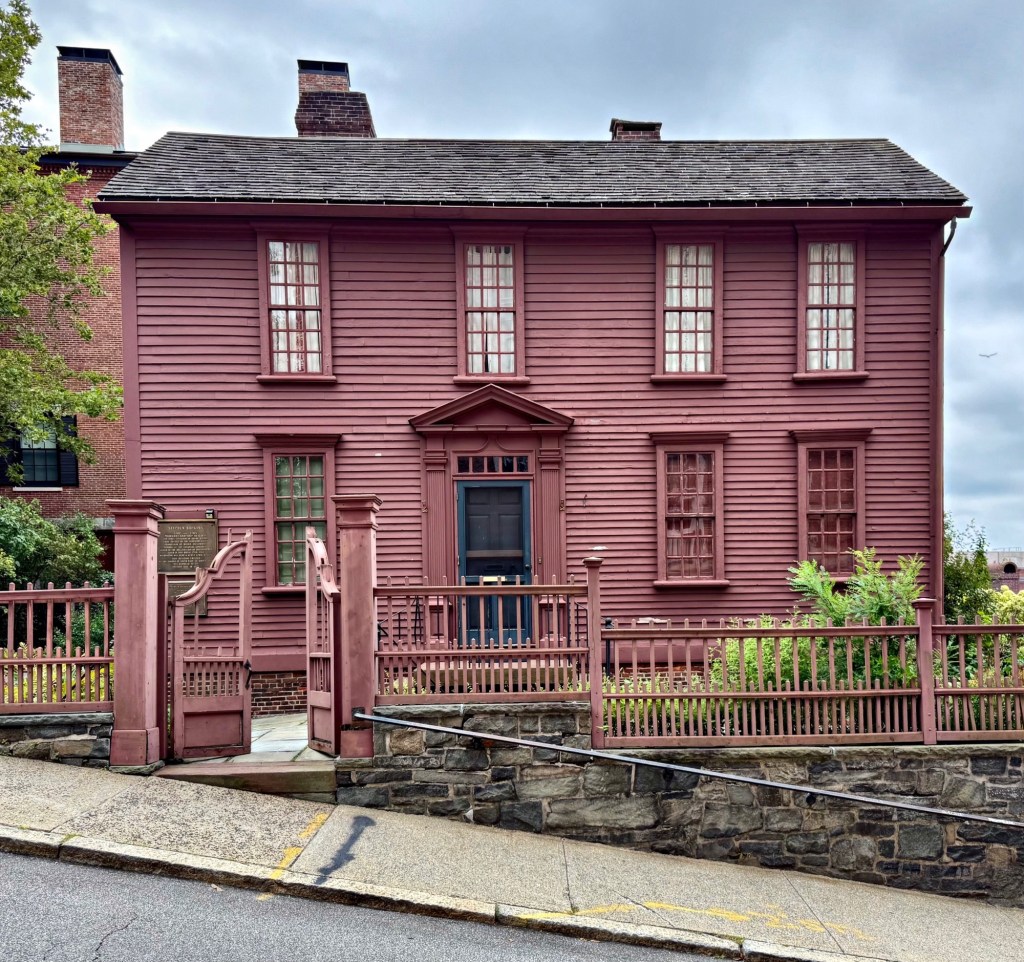
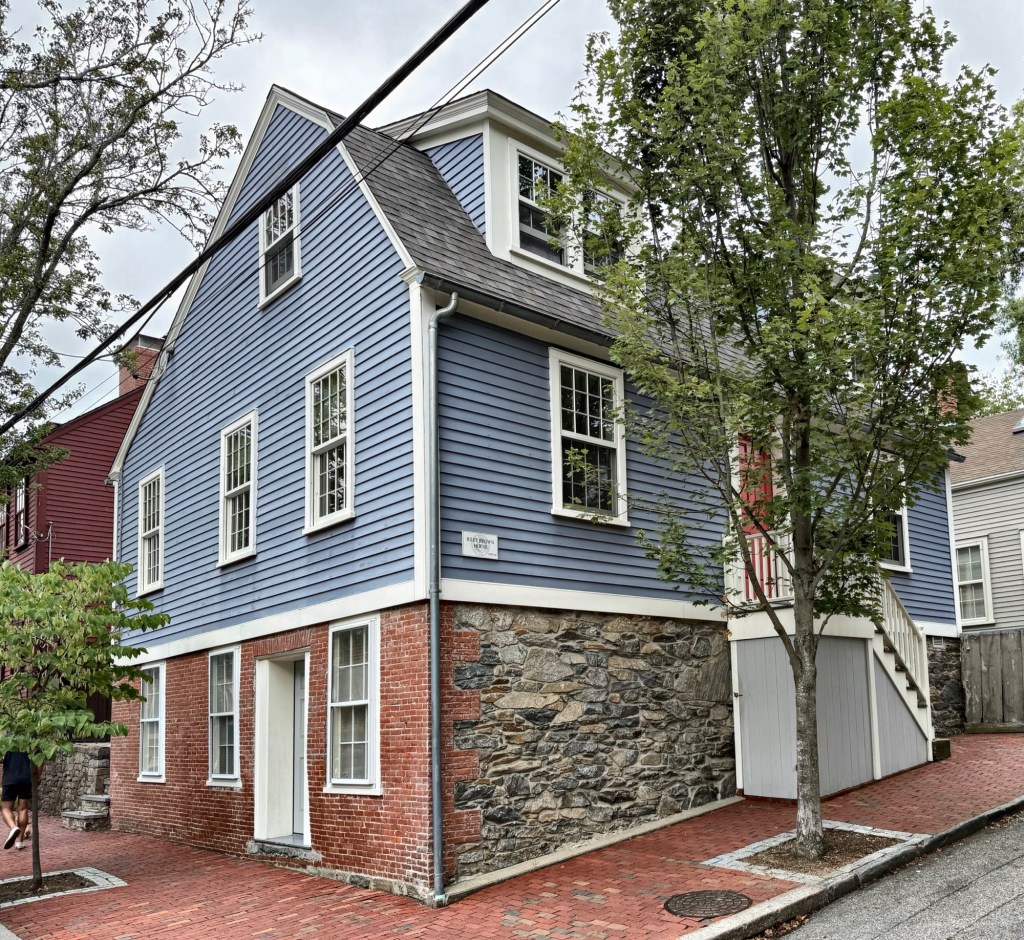
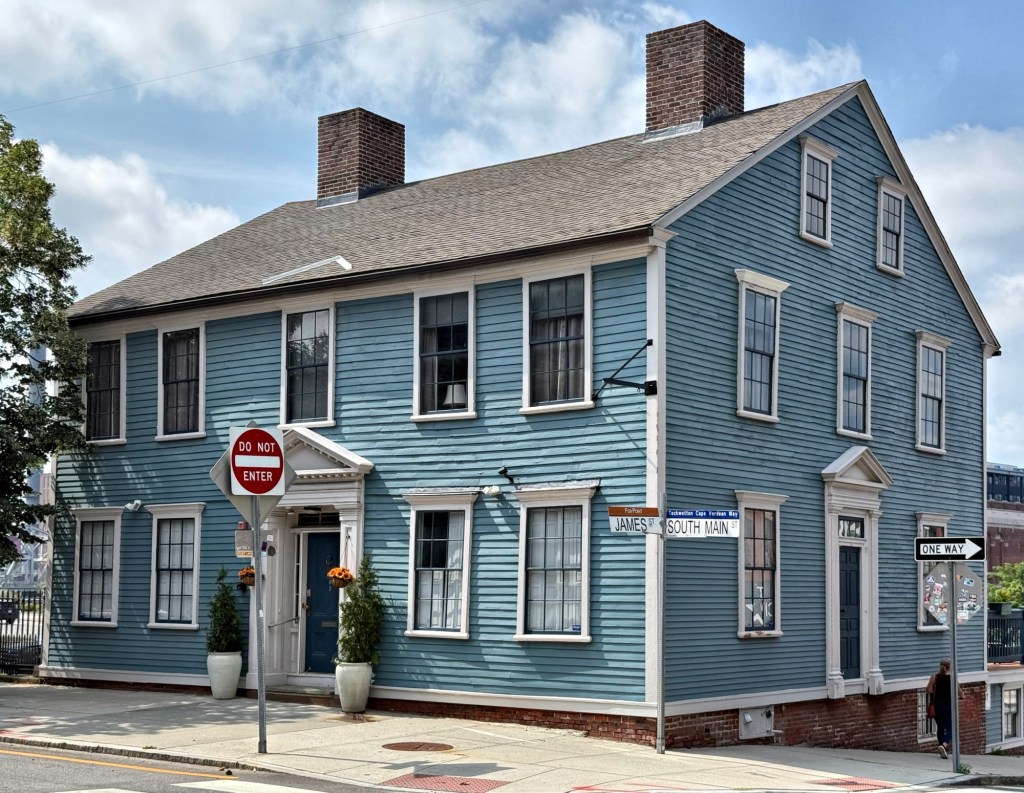
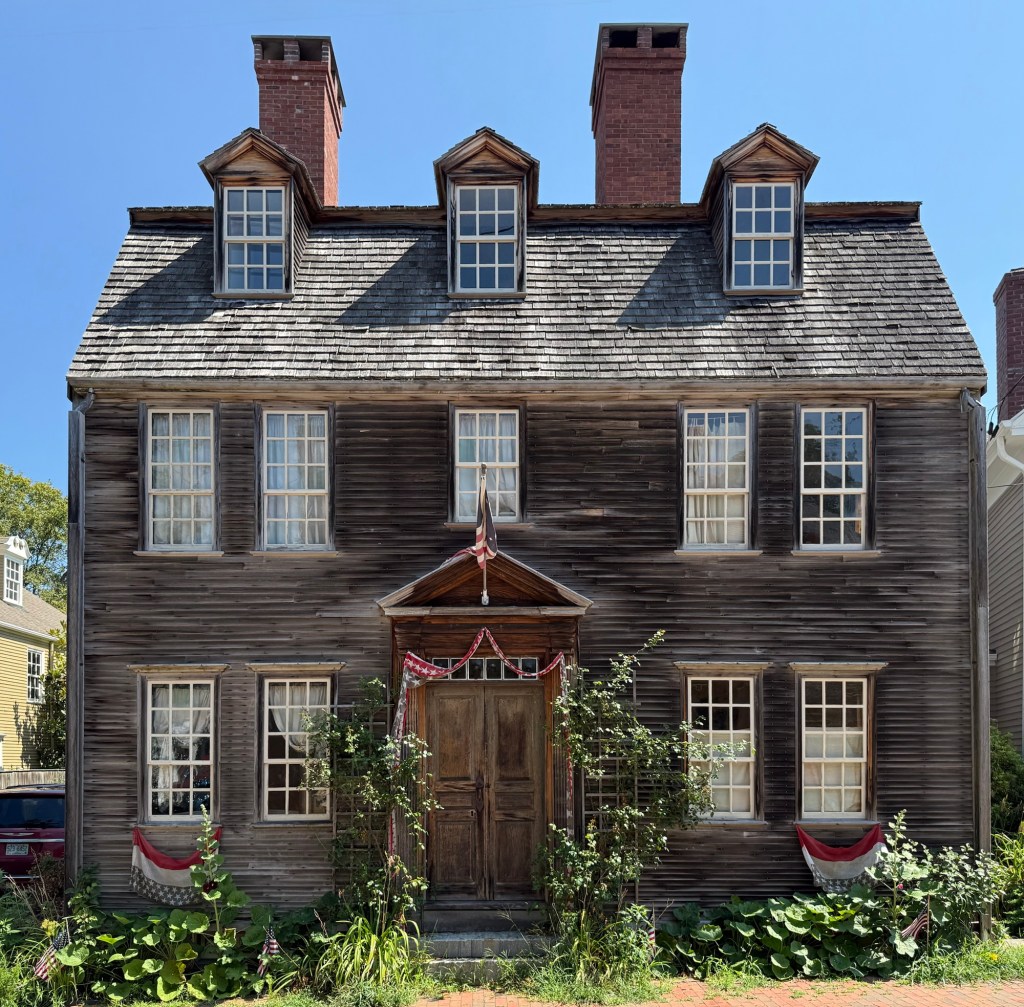
Joseph Royall House // c.1770

This is one of the oldest buildings in Boston! The Joseph Royall House is located at 770 Washington Street in the Ashmont section of Dorchester, set back from the street and passed by thousands who likely do not know its history and significance. The house dates to around 1770 and was built by Joseph Royall, of the infamous Royall Family of Cambridge, Medford, and Antigua, who made much of their money through sugar plantations in the Caribbean and enslaved Africans. Joseph was a nephew of Isaac Royal Jr., the patriarch of the family who resided at what is now the Royall House and Slave Quarters in Medford. Upon the outbreak of the American Revolution, the Tory Royalls were forced to flee for protection, Joseph would move to England. Isaac’s daughter (and Joseph’s cousin), Penelope Royall Vassall had her Cambridge home confiscated as a Tory property during the Revolution, causing her to flee to Antigua. When she returned to Boston after the war she was a widow and lived in poverty. Her cousin, Joseph, would sell her this Dorchester estate in 1782 nearly for free, allowing her to sell the property for money to survive in Boston. The house would remain here for another two-and-a-quarter centuries, as Ashmont grew around it. One-story stores were built in the front yard, completely obscuring the Georgian residence until later owners, Bob and Vicki Rugo, restored the house and demolished the stores in front, preserving this house for centuries to come. While the house is one of the oldest in Boston, it is not a landmark or listed on the National Register of Historic Places.

Captain John Stacey House // 1731

In 1731, Captain John Stacey, a merchant and shipowner in Marblehead, had this gambrel-roofed house built on family land. Due to its orientation from the main street, a passageway allowed access to the rear of the property where other buildings were constructed by the family. By 1850, the house was jointly owned by Hawkes and Brown, with Mr. Hawkes operating a store in the first floor corner room. Eventually, by 1912, Brown had bought the whole building and moved his meat market into the store in this building. The property was later purchased and restored by Donald Mackenze Stacey (1916-1998), a contractor and descendant of the home’s original owner, John Stacey. Donald was a veteran of the U.S. Navy and served in World War II, before moving back to Marblehead and worked in the building trade. In town, he restored antique clocks, furniture, and buildings, including the Old Town House and Abbott Hall, the current town hall

Richard Trevett House // 1730

Richard Trevett Jr. (1690-1749) was a wealthy shipwright and sparmaker (a carpenter who finishes and installs spars, masts, and cargo booms) in Marblehead, and part of a wealthy shipowning family. He would build this house on Washington Street (originally named King Street before the Revolution) and reside here with his family. Trevett lived here for just a few years until the death of his father, and he sold the property, which was later purchased by Joseph Pedrick, a wealthy ship owner, who’s son, John Pedrick, built an even larger mansion down the street. By the turn of the 19th century, this house was owned by Captain Samuel Horton, a commander in the Revolution under General John Glover. After the war, Samuel Horton engaged in mercantile pursuits, importing goods from all over the world. He likely brought home pineapples similar to the pineapple motif over the doorway from plantations in the Caribbean and South America as well.

Pedrick Mansion // c.1756

One of the great Colonial-era houses of Marblehead is this stately residence, the John Pedrick Mansion on Washington Street. The house dates to about 1756 and was built for John Pedrick (1733-1780), a wealthy shipping merchant. According to ‘The History and Traditions of Marblehead’, Pedrick’s “ships sailed to nearly every port in England, Spain, and the West Indies, and his transactions were with some of the largest mercantile houses of Europe. At one time, it is said, he owned twenty-five vessels engaged in the foreign trade.” The Revolutionary War, which proved so disastrous to the merchants of Marblehead, bore with especial severity upon Major Pedrick, as several of his vessels were destroyed by British cruisers in Massachusetts Bay, and many others rotted in port from blocades and engagements. The property was likely modernized after John Pedrick’s death in 1780 with a more Federal form, possibly adding the third floor and shallow hipped roof. The building’s facade is scored to resemble ashlar masonry, giving it a more stately appearance, but the bright blue really diminishes the feature, which should typically be colored a natural stone.

Thomas Gerry House – Hearth and Eagle House // 1717

This house has a lot of history! Originally built around 1717 by Ephraim Sanders, this house on Franklin Street in Marblehead was later purchased by Thomas Gerry (1702-1774), a merchant who operated ships out of Marblehead, and father to Elbridge Gerry, the fifth Vice President of the United States. The home was likely a three-bay, side hall Georgian house and expanded to the current five-bay configuration by Thomas Gerry around 1750. Thomas Gerry was born in Derbyshire, England, but came to Marblehead by around 1730 and was active in local politics and had a leading role in the local militia, later speaking out against the Crown and sought independence. Thomas Gerry died in 1774, and did not get to see the Revolution nor his son become a Founding Father. The property was later the home of one of his granddaughters, Sarah Gerry Conklin, and her husband, Frederick Conklin, an infantry captain, who housed officers in command of nearby Fort Sewall during the War of 1812. In the 1940s, historical novelist Anya Seton after researching her genealogy, led her to base her 1948 novel, The Hearth and Eagle, on the history of the seaside town. She set the novel in the Hearth and Eagle Inn, based on the Gerry House here.

Old Town House, Marblehead // 1727

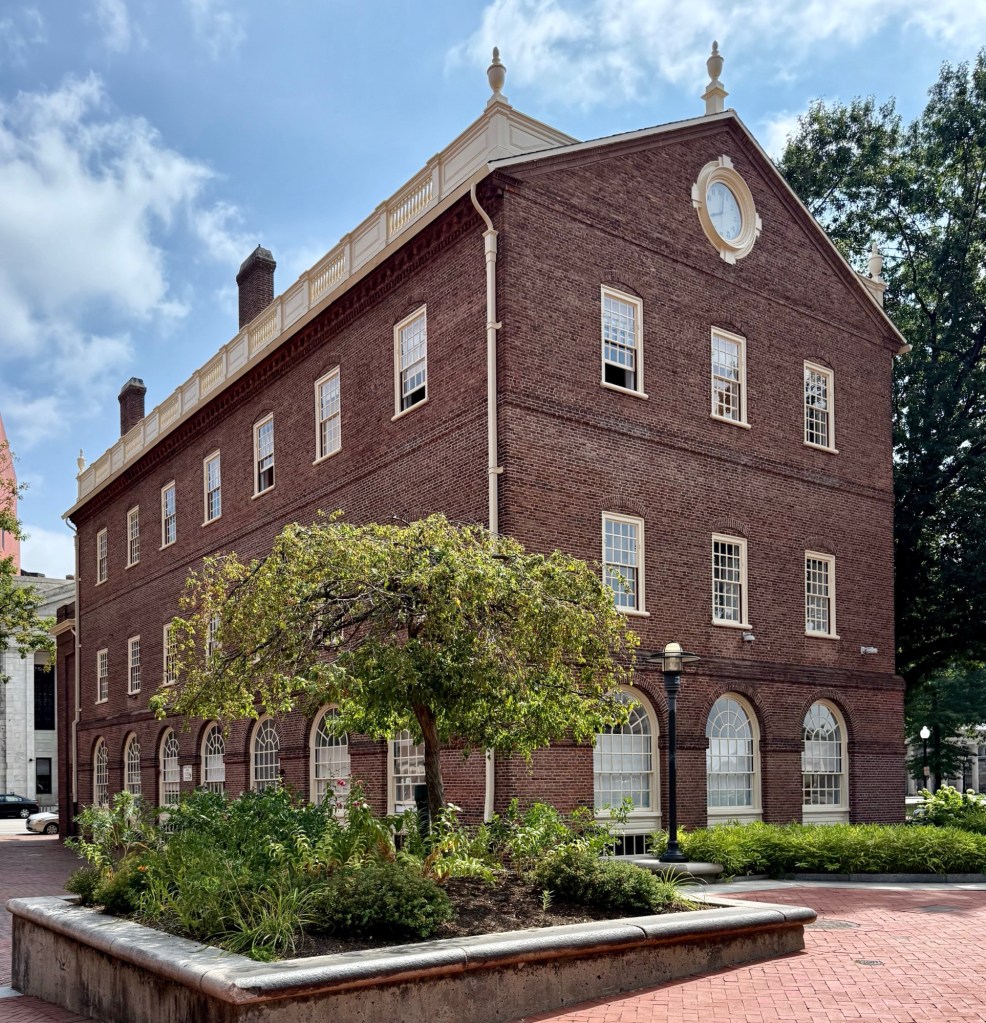
By the early 18th century, Marblehead had grown from a small fishing village to one of the most affluent and influential seaports in the colonies. This new wealth and the increasing secularization of government led town officials in 1727 to fund and build a Town House, to replace the Old Meeting House from 1696. The upper level of the building served as a town hall, while the lower level was originally used as a market. The Town House was later the gathering place to protest the Stamp Act and the Boston Port Act, and was a primary location for Sons of Liberty to meet and discuss Revolution. After Independence, the Town House was host to such dignitaries as presidents George Washington, Adams, Jackson and Munroe, Samuel Adams, John Hancock and the Marquis de Lafayette. The building would eventually be replaced as the town hall when the new Abbot Hall was built in 1876. The top floor became the GAR Museum, established after the Civil War as The Grand Army of the Republic veterans organization. The main floor houses meeting and exhibition space. The iconic Revolutionary-era Georgian building has been lovingly maintained and restored for nearly 300 years, a testament to the historic and architectural significance of this handsome structure.

Glover Broughton House // 1721

This Georgian-era house sits on Franklin Street in the charming coastal town of Marblehead, Massachusetts. The residence was built in 1721 for Benjamin Gale, who worked as a shoreman at the nearby harbor. The original structure (likely the left half) was likely just three bays wide with a side hall entrance that was later expanded by a later owner in the Federal style with a fanlight transom over the new main entrance. In the 19th century, this residence was the home of Glover Broughton (1797-1869), the grandson of Nicholson Broughton, the first commodore of the American Navy and, as part of the Marblehead Regiment, commanded George Washington’s first naval vessel USS Hannah. Nicholson’s grandson, Glover Broughton, was also an ardent Patriot and at just 15 years old, joined the crew of the privateer America, and was serving on the ship when it was captured and its crew imprisoned at the infamous Dartmoor Prison in Britain, the principal location for American prisoners during the War of 1812. Broughton drew the world’s attention to the inhuman treatment prisoners were subjected to in a rhyming long form poem that detailed the April 6, 1815, massacre that took place at Dartmoor. He also drew a map of the prison from memory to accompany the poem. Once Glover Broughton returned to Marblehead, he became a successful merchant and also served the town of Marblehead in a variety of offices including town clerk and postmaster. In later years, Glover also used his time to help fellow veterans of the War of 1812 by writing letters for them to help them get benefits for their time in service to the United States, as many men at the time could not read or write. It is possible that Broughton had his house “modernized” with the Federal period doorway and gambrel roof addition.

Captain Knott Martin House // 1770

This gambrel-roofed Georgian house on Franklin Street in Marblehead was built before the American Revolution for Mr. Henry Lane, a sailmaker, but is best-known as being the home to Captain Knott V. Martin. Knott Martin (1820-1898) was born in town as was descendants from early settlers of Marblehead, and after attending local schools, became a shoemaker beginning at the age of just thirteen. After over a decade as a shoemaker, he began a butchershop and had a slaughterhouse to the rear of his property. When the Civil War broke out, Captain Knott was among the first to reach Faneuil Hall to begin duty. A Boston Globe article from 1918 detailed his finding out of the war, “Late in the afternoon of April 15, 1861, Lieut. Col. Hinks of the 8th Mass. Regiment rode into Marblehead to notify the Commanders to be ready to take the first train, the following morning to answer President Lincoln’s call for troops… I found Captain Martin in his slaughter house, with the carcass of a hog, just killed. On communication to the Captain my orders, I advised him to immediately cause the bells of the town to be rung, and to get all the recruits he could. Taking his coat from a peg… with his arms stained with blood and his shirt sleeves but half rolled down, he exclaimed, ‘Damn the hog!” In a battle at New Bern he was wounded by a spent cannonball and lost eight inches from the main bone of his right leg, becoming permanently disabled. Following his discharge from the War he was elected a member of the Massachusetts House of Representatives serving in that capacity during 1866 and 1867.  He was then appointed Messenger to the House of Representatives for two more years. In May 1869 he was appointed Postmaster in Marblehead, a position he held until he retired on May 16, 1885. Knott Vickery Martin died at his home in 1898, but it has been lovingly preserved ever-since.

Knight-Tutt House // c.1750

The Knight-Tutt House on Franklin Street in downtown Marblehead, Massachusetts, is a great example of a pre-Revolutionary Georgian home built for the working class. The house, like its neighbor, has a three-bay, side-hall facade with a large, central chimney. The residence was built around 1750 for William Knight (1722-1799), who worked as a shoreman, loading and unloading the many ships that docked in Marblehead harbor. By 1850, the house was jointly owned by an F. Bateman and William Russell Tutt, a shoemaker. The residence remains one of a large number of well-preserved Colonial homes in the town of Marblehead, a testament to preservation planning and its effect on streetscapes and vibrant communities.

Russell-Goodwin House // c.1750

Marblehead is one of the oldest towns in America, first settled by colonists in 1629 and incorporated twenty years later. For the following decades, the coastal community grew, and was even one of the ten largest towns and cities in the colonies in 1790! From this history, the town has worked to preserve the unique character and walkable warren of narrow streets, that makes the town feel so charming and a great place to visit. There are dozens of pre-Revolution houses in Marblehead’s downtown area, including this side-hall Georgian house on Franklin Street, with a neighboring “sister house”. The residence dates to about 1750 and was occupied early on by Richard Russell, who according to the house plaque, was a fisherman. Later, in 1850, the house was occupied by John Goodwin Jr., who fought in the Civil War, and ultimately lost his life in the Battle of Roanoke Island, on February 8, 1862, when he was killed when he was struck in the chest by a cannonball. After his death, local Marblehead veterans established the G.A.R. Hall, John Goodwin Jr. Post 82 in his honor. The Russell-Goodwin House remains one of the many charming Colonial-era houses in Marblehead’s walkable village, telling a story of the generations of families who made this coastal community home.