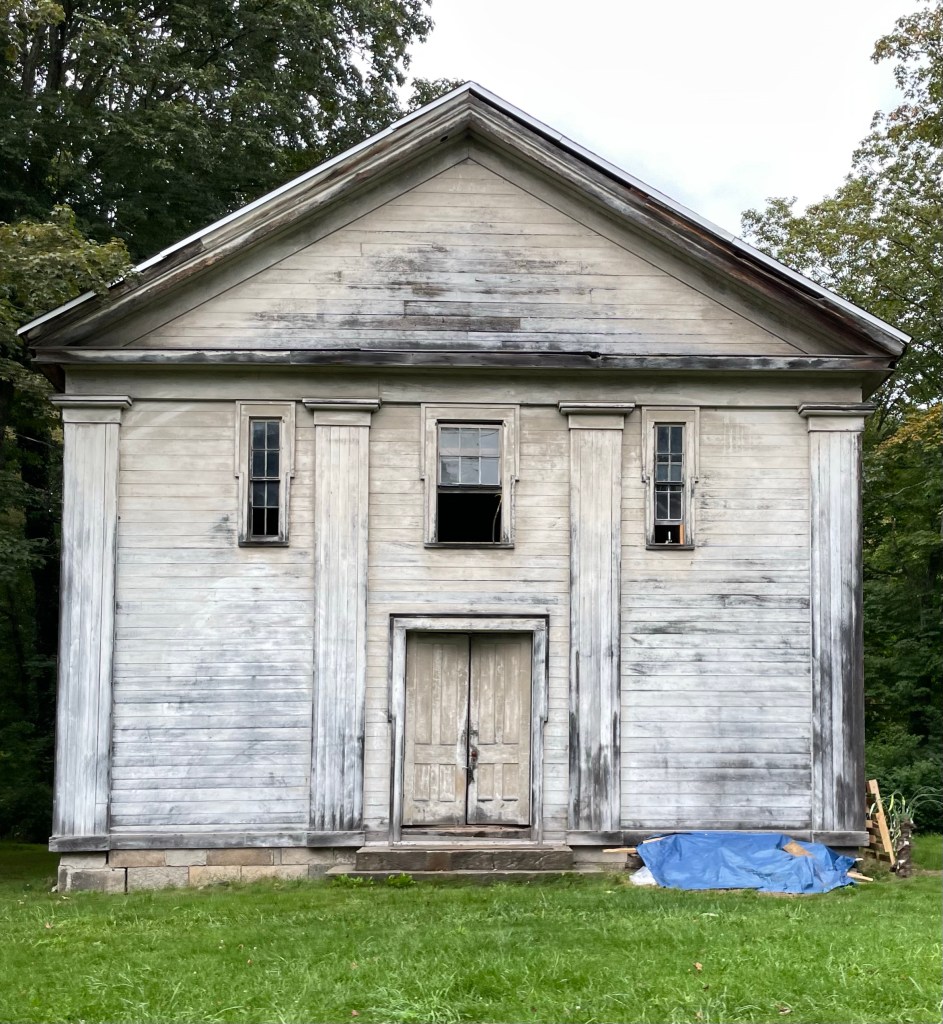
First Baptist Church of Sedgwick // 1837

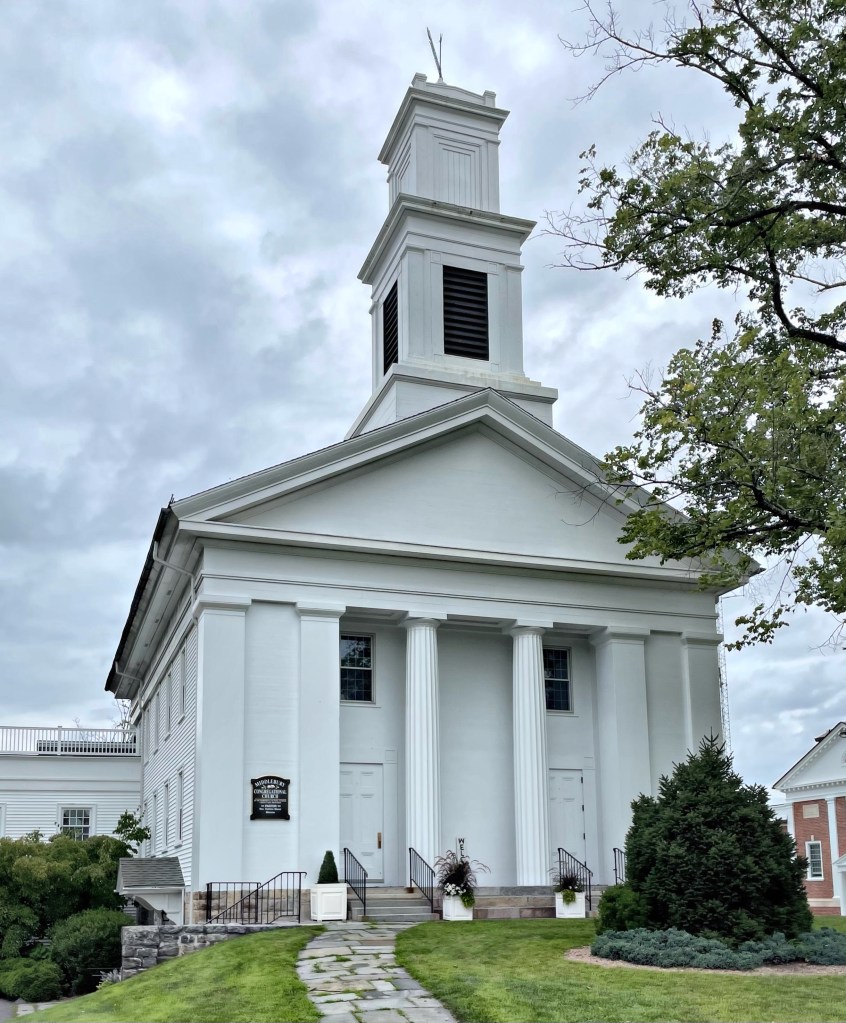
Sedgwick, Maine is a coastal town overlooking the Penobscot Bay separating it from the better-known Deer Isle. The town was originally inhabited by the Wabanaki people. In the 18th century, land here was granted by the Commonwealth of Massachusetts in 1761 to David Marsh and 359 others, and settlers began arriving and building homes here shortly after. In 1789, the town was incorporated as Sedgwick, named after Major Robert Sedgwick, who in 1654, captured nearby Fort Pentagouet from the French. The land in Sedgwick was very rocky and was thus better suited for grazing than cultivation. Because of the geology, for decades Sedgwick had operating many granite quarries, which shifted southward toward Stonington in later decades. The town then became a hub of seafaring professions, from ship-building to trading, to fishing and clam-digging. The town’s Baptist population established a congregation in 1794 as a Congregationalist organization which underwent a large-scale conversion to Baptistry in 1805. This congregation retained Bangor architect Benjamin S. Deane to design its church, which was built in 1837 in the Greek Revival style. Deane’s design is based on a drawing publisher by Asher Benjamin in his Practice of Architecture. The church had seen a dwindling congregation for decades until it was disbanded in 2008. The church was acquired by the Sedgwick-Brooklin Historical Society, who have recently restored the historic building.

Glen Cottage // c.1850

Not all of Kennebunkport’s summer “cottages” are grand, Shingle style mansions… Glen Cottage was originally built in c.1850 as a Greek Revival style cape house. As the town developed into a desirable summer colony for wealthy residents of Boston, New York and Philadelphia, the small cottage caught the eye of a Ms. Garrard. Margaret Garrard purchased Glen Cottage in 1900 and hired Maine architect William Barry to transform the old cape, adding the dormers, octagonal bay, and door hood. Here, she ran the Bonnie Brig Tearoom for twenty years. Tea houses were important social centers for wealthy summer residents Later owners renamed the tea house, “The Old Tree Tea Tavern” and “Periwinkle” but in 1926, the name reverted to The Bonnie Brig Tearoom. Today, the cottage has reverted back to residential use with the owners lovingly maintaining the old cape.

Almeron Goodell Farmhouse // 1863

The Little River area of Waterbury, Vermont, was a very sparsely developed area of farms located on the slope of Ricker Mountain, which was difficult to traverse and farm. Almeron Goodell (1834-1910) and his wife Luthera bought farmland here in 1863 and built this farmhouse that year from rough-hewn timbers on the land. In 1870, the couple and their seven-year-old son, Bert, had four cows, one horse, and a flock of chickens on their property – enough to supply the family’s needs. Life on Ricker Mountain was hard. By the late 1800s, the loss of soil fertility on the land prompted some farmers to abandon the hillsides for more fertile land in the valleys nearby or the free land offered in the American West. Additionally, the Green Mountain Power Company began purchasing farmland to erect a hydroelectric dam and reservoir in 1920, effectively abandoning the area. The Little River area was left behind, with abandoned farms, family cemeteries, and carriage roads, slowly returning back to the earth. Luckily for us, the area is preserved as part of the Little River State Park, where you can hike and explore the area, learning about the past inhabitants of the now ghost village. The Goodell Farmhouse is the only extant farmhouse left from this early settlement and a lasting reminder of how hard life was for many who settled in undeveloped land in New England. The farmhouse was used as a hunting lodge in the 1940s, likely the only reason it still stands to this day.

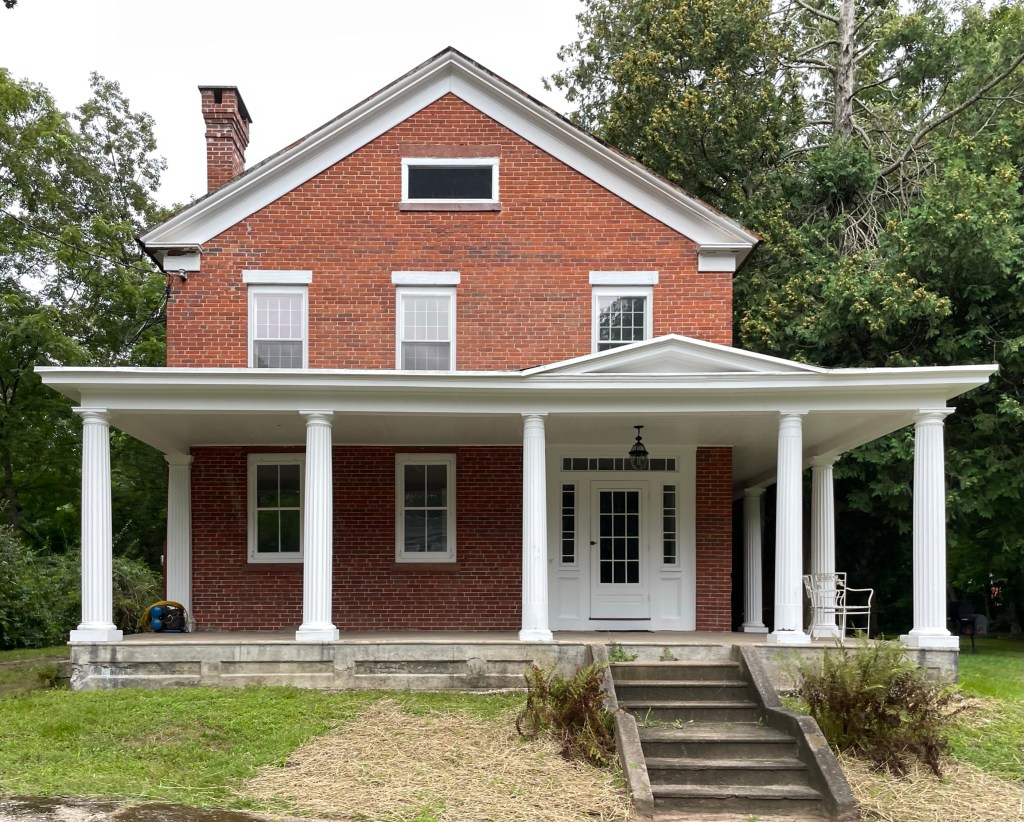
William W. Wells House // c.1845

One of the most stately and classic homes in central Vermont is this Greek Revival beauty constructed of brick, right on Main Street in Waterbury. The home was built for William Wellington Wells, who was born in Waterbury, Vermont in 1837. He soon became one of Waterbury’s most prosperous merchants of the mid-nineteenth century, starting as a lawyer with business interests including a tannery and grist mill in nearby “Mill Village” and a mop and chair stock business. He served in the Civil War and contributed much to the town’s growth. After successive ownership, the town’s appeal during the winter months shifted the demand towards short-term stays tied to the ski industry. The Wells House was added onto at the rear and converted to a motor hotel called the “Gateway Motel” in the mid-20th century. The use remained for decades until a fire destroyed much of the motel, leaving the 1840s Greek Revival home’s future in limbo. Thankfully, new owners restored the home and built much-needed residential housing at the rear, largely in the same form as the old motel. Love to see preservation at work!

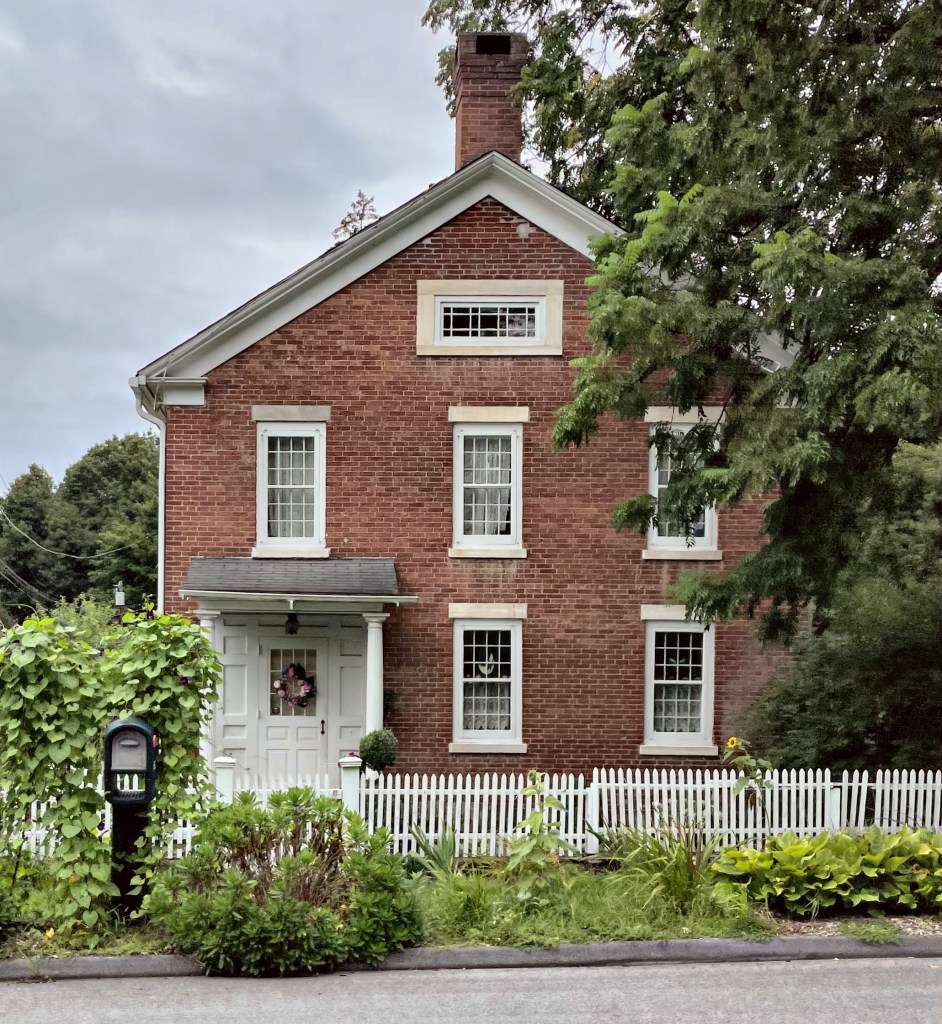
Vincent’s Pharmacy and Waterbury Masonic Hall // 1834

While of different scale, these two brick buildings on Main Street in Waterbury, Vermont compliment each other very well. Vincent’s Pharmacy, the smaller building, was built in 1834 in the Federal and Greek Revival styles by Dan Carpenter, early lawyer and judge, to house a pharmacy business that he ran with his son, William. Next door, dating from approximately the same year as the pharmacy, the larger structure housed Waterbury’s first Masonic hall in 1860’s and in successive years a hardware business. The former Masonic hall is now home to The Reservoir, a great local restaurant that I grabbed lunch in while visiting the town.

“The Old Corner Store” // 1833

White settlement in Waterbury Vermont began in about 1770, with the establishment of a small cluster of houses along the Winooski River near what is now Winooski Street. When Main Street, a stagecoach route paralleling the river opened in the 1790s, development moved to that area, including the construction of churches, residences, and businesses. Industry followed, and a town was formed. Many settlers arrived here from Waterbury, Connecticut, and named their new village Waterbury as a result. Many early commercial buildings were constructed with wood frames, but as the town prospered, businessmen developed more substantial brick blocks. This charming Federal/Greek Revival commercial building was erected in 1833 at the most prominent corner on Main Street in Waterbury, by Leander Hutchins (1798-1879). It is apparently the oldest extant commercial structure in the downtown section of Waterbury! The building has been restored in the late 20th century, down to the multi-pane windows and granite lintels. This building is just so perfect.

Moretown Public Library // c.1845

This 1840s Greek Revival home turned library, sits on the main street in the charming rural town of Moretown, Vermont. The quaint village never had a public library, but that changed starting in 1904, when residents and the town established a fund for purchasing books for the town’s citizens. In 1923, the library trustees purchased this residence which would serve as a stand-alone library for the village. Resident Lilla Haylett was instrumental in the accession and conversion of the home for use as a library from the estate of Ellen J. Palmer, who lived there until her death in 1923. The opening and celebration was short-lived however, as in 1927, elevated levels of the Mad River flooded much of the town. Water levels were well over the first floor of the building and nearly all books were lost. The Moretown Memorial Library was nearly lost, but the town rebuilt over years. The library remains today as a testament to the desire for learning and it serves as a landmark for the charming rural village.

Moretown Town Hall // 1835

The township of Moretown, Vermont was chartered on June 7, 1763 by Governor Benning Wentworth of New Hampshire. The original charter contained approximately 23,040 acres of land to be divided into about 65 shares of proprietors. Active settlement did not occur until after the Revolutionary War with early buildings constructed on the Winooski River (the northern boundary of the town) and subsequent development along the Mad River (which cuts through the middle of town). Saw and grist mills were built and the town developed as a rural farming and industrial community on the rivers. The Moretown Town Hall was erected in 1835 in the Greek Revival style. It has a pedimented portico with Doric columns that support a large pedimented gable peak in imitation of a Greek temple. Like most buildings in the Mad River Valley, the building is unapologetically Vernacular which means it relies on local materials, local builders, and not on architect-designed finishes. This is an aspect of Vermont architecture that makes the state so charming.

Isaac Newton Center Homestead // c.1850

Isaac Newton Center (1811-1889) was born in Windham, NH and arrived to the rural town of Litchfield, NH in its early days. Upon arrival, he appears to have built this homestead sometime in the mid-19th century based on its style. Like many in town, he was a farmer and was involved with the local Presbyterian Church, which is still neighboring this old farmhouse. After his death, the old farmhouse and homestead was inherited by Isaac’s youngest son, Isaac Newton Center, Jr., who was engaged in local town affairs, serving as City Clerk, Treasurer, Forest Fire Warden, and Library Trustee. The house appears as a melding of late Greek Revival and Italianate, possibly from the 1850s or 1860s.

Litchfield Community Presbyterian Church // 1844

Litchfield, New Hampshire remained a rural agricultural town on the eastern banks of the Merrimack River from its founding by white settlers until after WWII when it rapidly became a bedroom community for nearby NH cities and Boston. The area’s Presbyterian residents needed a place to worship, separate from the more common congregationalists, and they built this Gothic and Greek Revival style church near the geographic center of town, a stone’s throw from the Merrimack River. The building features lancet windows, tracery, and a two-tiered belfry with classical pilasters and Gothic finials at the tower.

Litchfield Old Town Hall // 1851

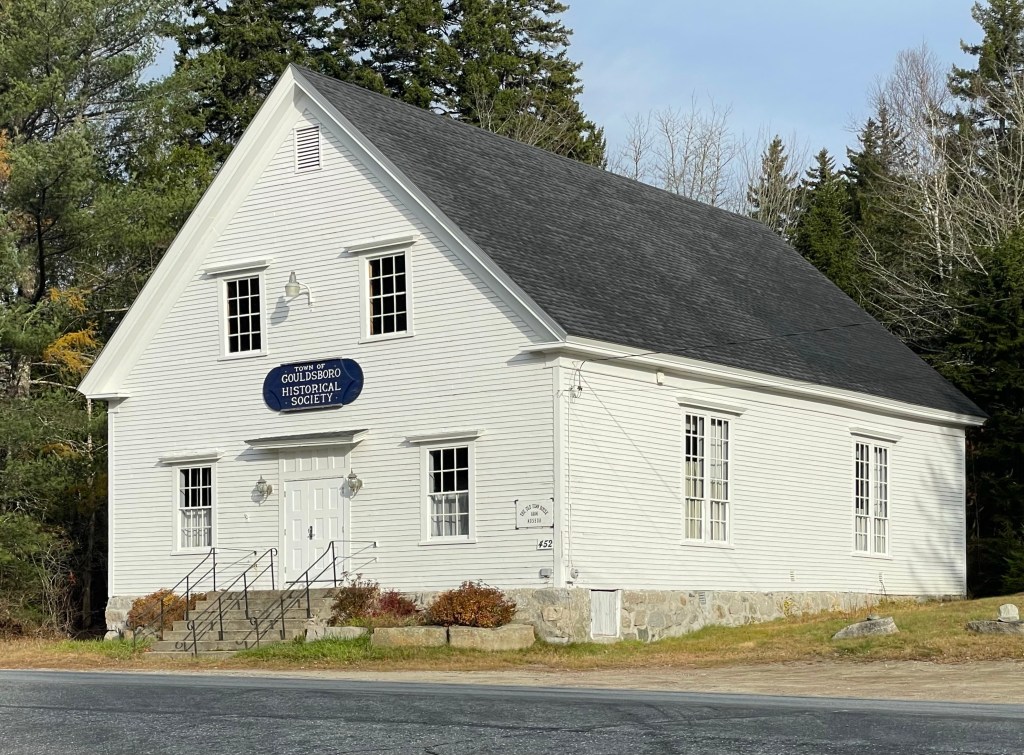
The town of Litchfield, New Hampshire is located at the southern section of the state across the Merrimack River from the town that carries its name. Land which is now known as Litchfield, was once populated by the Abenaki people. The New Hampshire Archaeological Society has located over 30 Native American sites along the shore of the Merrimack River in Litchfield, with artifacts several thousands of years old being uncovered. European influences started in the 1650’s with early records showing that Litchfield was then a part of Dunstable, Massachusetts. Both sides of the Merrimack River were granted in 1656, to William Brenton, colonial governor of Rhode Island. The name was changed to “Brenton’s Farm” in 1729. Chief Passaconaway of the Penacook lived in a Litchfield settlement at least part of the year around this era. In 1728, sixteen proprietors divided up the Brenton Farm Land. In 1749, the land was granted to another group of settlers and named “Litchfield” after George Henry Lee, Earl of Lichfield. The town has historically been comprised of farmland without a true town common or center. A small enclave of buildings did center in town, where the town hall was built. This building, the Old Town Hall of Litchfield, was built in 1851 from parts of an older meetinghouse, which was built across the road from where the building now stands. A shift in the course of the Merrimack River during the early 1800s forced the dismantling of the original Meeting House and a new structure to be built. It is a modest Greek Revival structure with corner pilasters, entablature, and gable end facing the street which reads as a pediment. It is very well maintained to this day as the home to the Litchfield Historical Society.

Roswell B. Fitch House // c.1850

Roswell Burrows Fitch (1833-1908) was born in the seaside village of Noank to parents Elisha and Mary P. Fitch. At twelve years of age he commenced to be self-supporting, and from then until he was fourteen, occupied a clerkship in a general store in town. In his teens, summers were spent aboard ships fishing for a livelihood, and his winters attending school. Upon completing his education, he became clerk in a store, and was afterwards engaged to assume the management of a union store which was erected for the special purpose of being placed under his charge. The store, located on Main Street in Noank, was eventually fully purchased by Fitch, and he did well financially. He may have had this house built or merely bought it years after it was built in the mid-19th century. When he sold his business in 1890, he “Victorianized” the classically designed Greek Revival style house with Queen Anne embellishments. The renovations in 1890 included an octagonal tower, an elaborate porch, a two-door entry likely replaced the sidelights and transom, brackets and applied decoration at the gable and cornice, and a Palladian window which was a Colonial-inspired addition. Hodge-podge or eclectic houses are some of the most fun!

Thomas Jefferson Sawyer House // 1840

Thomas Jefferson Sawyer was born in 1807 in Groton, Connecticut as the tenth of 13 children of William and Prudence Sawyer. It appears that his parents were running out of names by the time they had ten children, so they named number ten after the then President of the United States, Thomas Jefferson. Thomas Jefferson Sawyer moved to Noank’s coastal village in 1840 and built this interesting Greek Revival house with an atypical hipped roof. Sawyer was a sea-captain who remained in Noank until his death and he was a very active member of the local Baptist church. The Sawyer House remains as a unique example of the Greek Revival style captains house, which the village is known for.

Lars Thorsen House // c.1850

I love that when walking around towns and cities in New England, I find charming old buildings and snap a photo only to learn later on that they were the home of someone amazing later on! New England is full of amazing stories! This charming cottage in Noank, CT, dates to around 1850 and measures just 16 x 22 feet and is set on a full-height raised brick foundation just steps from the harbor. Upon further research, it was uncovered that this cottage was the home of Norweigan artist Lars Thorsen (1876-1952) and his family since 1923, he added the shed dormer for his art studio. Thorsen was born in Stavanger, Norway, and was fascinated by ships as a boy. He first went to sea as a cabin boy at age 14, and crewed on both sailing and steam-powered ships. By 1903 he had made at five trips around Cape Horn, and crewed on the Columbia, an America’s Cup yacht designed by Nathaniel G. Herreshoff. A year later, Thorsen happened to sail into Noank, and chose to settle down there. Thorsen became known for his marine paintings of coastal areas and ships and painted murals for the WPA and other commissions.

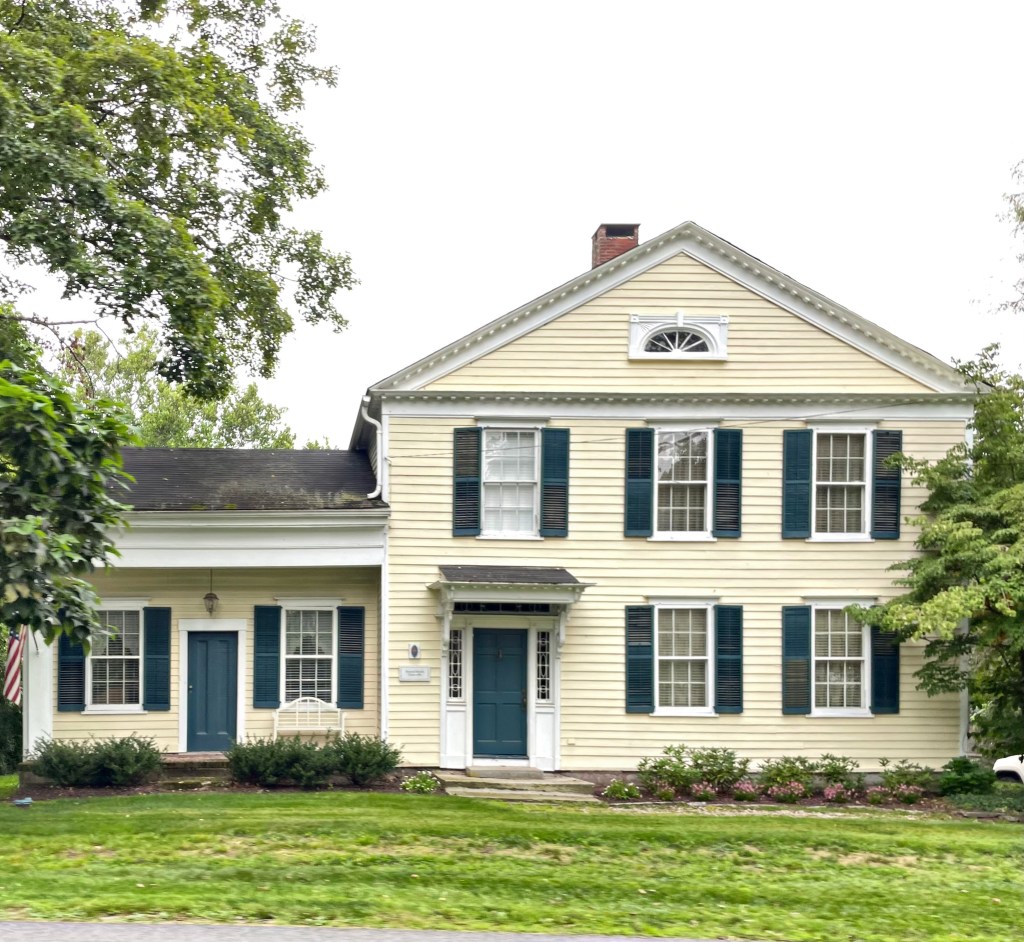
Moses Latham House // c.1845

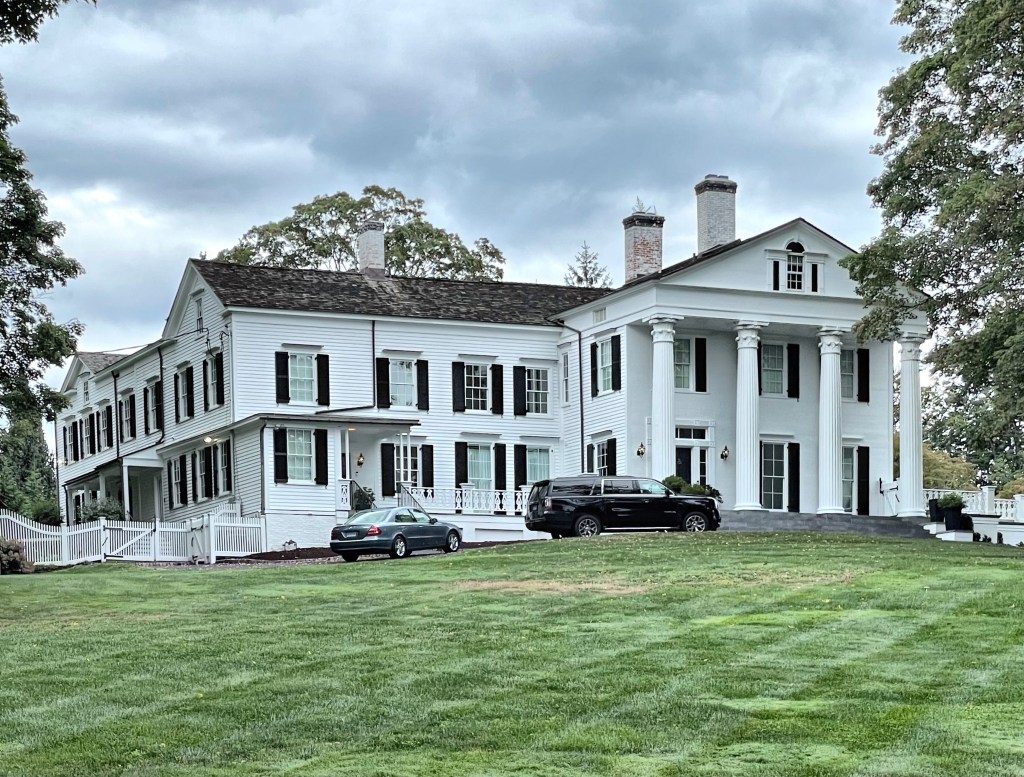
Noank is a charming seaside village within the town of Groton that is centered on a peninsula at the mouth of the Mystic River where it spills out into the Long Island Sound. Historically, the area was known as Nauyang (meaning “point of land”) and was a summer camping ground of the Pequot people, but they were driven out in 1655 following the Pequot War. White settlement was slow here until the mid-19th century, when the shipbuilding and fishing economy took off here. As a result, houses, stores, churches and industries were built, and an entire village was formed. Most extant homes here were constructed starting in the 1840s as the village (and nearby Mystic) saw economic growth from the maritime trades. This house, the Moses Latham House, was constructed for Mr. Latham in about 1845. The house is Greek Revival in style with flush-board siding, a fan light in the gable which reads as a pediment, and a simple portico supported by fluted Doric columns.