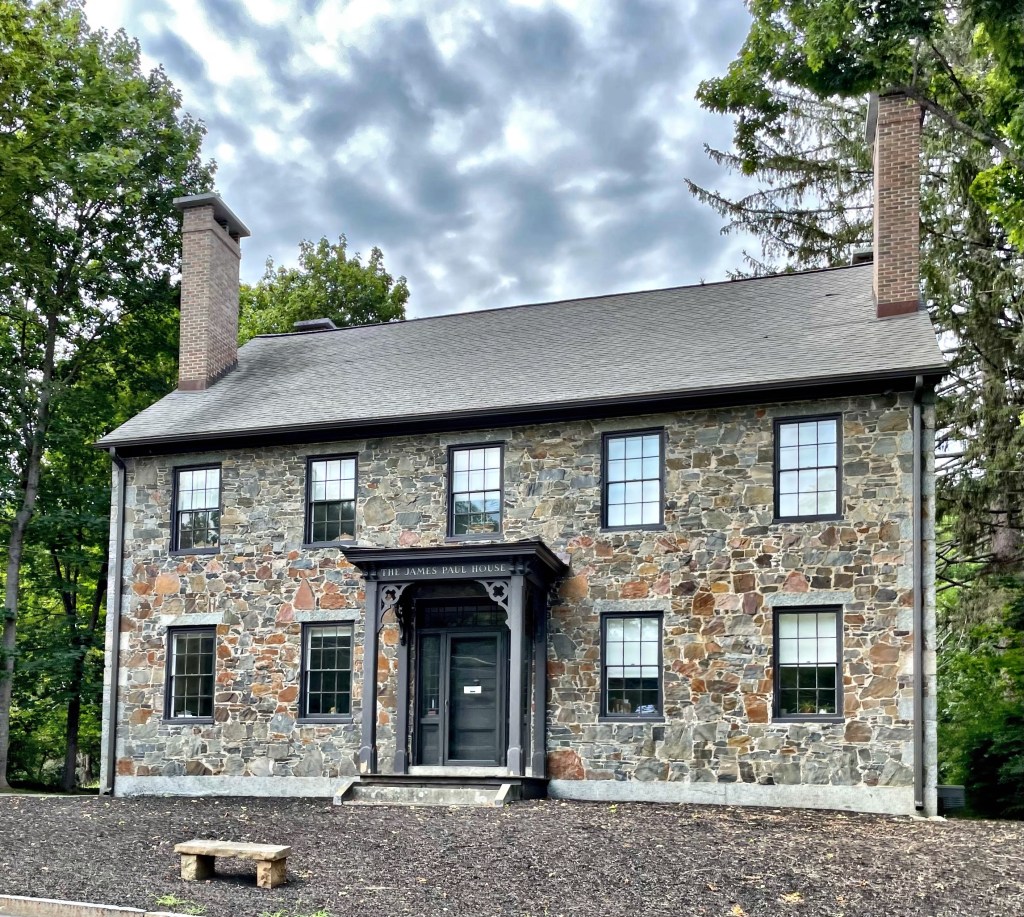
The James Paul House in Durham, NH, stands out as a rare example of stone construction in town. The house was built between 1830 and 1840, and is transitional Federal/Greek Revival in style. It has four tall chimneys (two on each slope of the roof), granite lintels over the windows, and granite quoins at the corners which together, create an elegant composition. Tragically, James Paul died unexpectedly when removing the staging on this house, he was never able to live in this beauty. The home was occupied by two reverends of a local church.
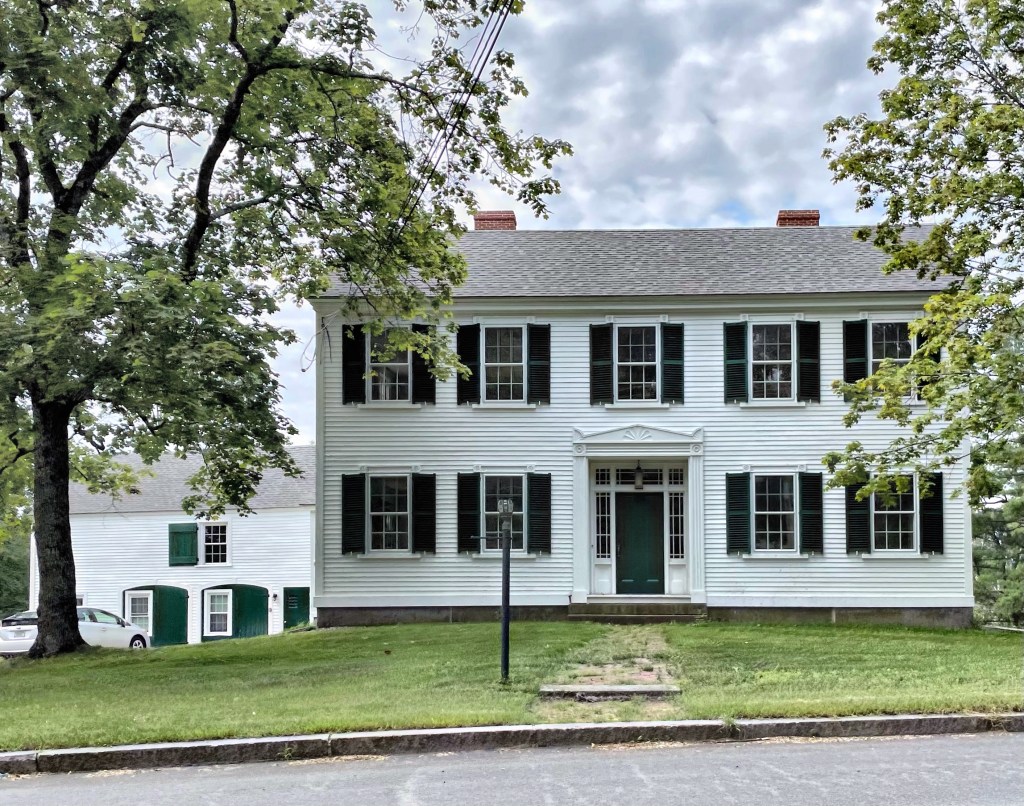
In 1840, a recently married Andrew Lapish Simpson built this home for his new bride, Lydia Kelly. The house blends Federal and Greek Revival architectural styles and has a perfect door surround that stopped me in my tracks. The L-shaped home is attached to a barn which was originally an older home. Andrew was a sea captain who took months long excursions, leaving his wife to maintain the home on her own. He died in 1870, and was survived by his widow for 25 years. The family home was gifted to the local Congregational church in which she was an active member. It was occupied as the church’s parsonage until the 1950s. It was an office until a couple years ago and it is now a single-family home.
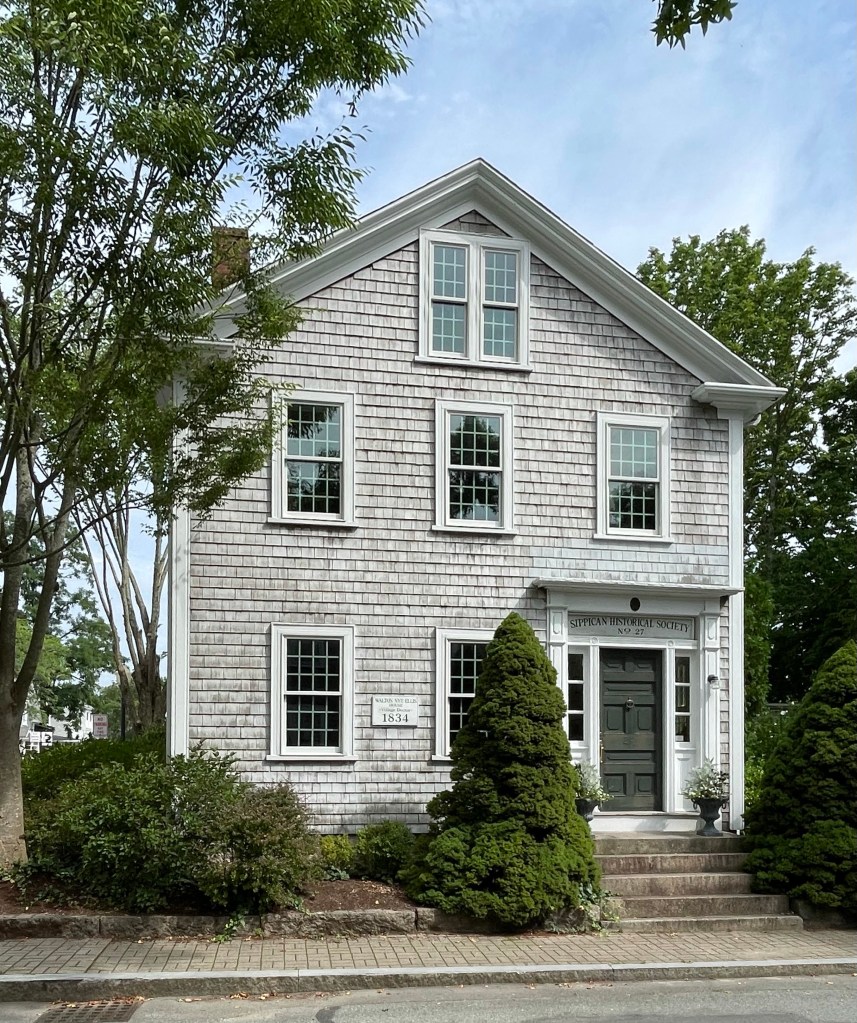
This house was built in 1839 Dr. Walton Nye Ellis (1808-1867), who served as physician in Marion in the second quarter of the 19th century. Born in Wareham, Ellis moved to Marion, and married Susan Delano (1809- 1840) after her death, within the year, he married Lucy Clark Allen (1820-1885); he had a daughter with his first wife and four daughters and three sons with his second. By 1838, he purchased a lot in Sippican Village for the price was $225. In 1855, Dr. Ellis organized a meeting of prosperous Village men, mostly sea captains, with the purpose of planning a library for the town. They pooled resources and funded a library which was located in a large closet on the second floor of his home seen here. The library’s books could be borrowed for a few cents a week. Subsequent funding from Elizabeth Taber helped create the Taber Library just decades later. In the 1960s, the home was gifted to the Sippican Historical Society, who remain in the building to this day.
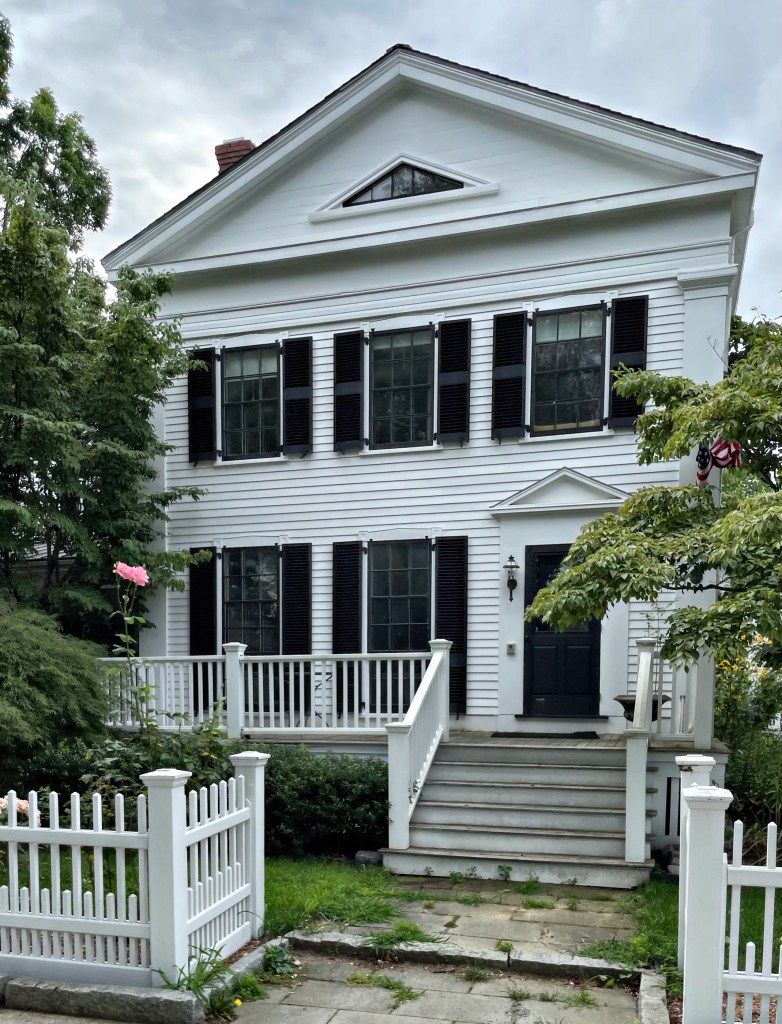
The highest-style Greek Revival house in Marion is this home, built in 1841 as a parsonage for Marion’s Congregational Church. The first pastor to reside here was Rev. Leander Cobb. He assisted his father, Rev. Oliver Cobb, who had been preaching in Marion since the completion of the first meeting house in 1799. Leander’s daughter, Sarah Elizabeth, married Captain Benjamin Briggs, who’s father ran the local post office (see last post). In 1872, Captain Briggs set sail aboard his ship, Mary Celeste, with his wife and two year old daughter Sophia, and seven crewmates. Their school-aged son was left at home with his grandmother. They sailed from Massachusetts on November 7, 1872, bound for Europe with a cargo of commercial alcohol. Less than a month later, on December 4, the ship was found sailing erratically off the coast of Gibraltar. A local crew boarded the ship to investigate when they saw no one on deck. The sails were furled and the ship was in excellent condition. In the infant’s crib remained the impression of a sleeping child. However, no sign of the crew or the Briggs family was ever found. There are many theories about what happened, with the most likely being that some alcohol barrels got loose and flammable liquor poured out near the kitchen. It is possible the family and crew became frightened and boarded the safety boat incase of an explosion. The boat was not tethered and they likely could not reach the main ship as her sails were up. They were probably capsized by a wave and drowned to death in the open ocean.
Built around 1830, this little cottage is set behind a front lawn and is among the many photogenic buildings along Marion’s Main Street. Originally located behind the Marion Congregational Church, this structure was moved to its current site between 1855 and 1879, and run as a post office for the village. During the mid-19th century, the job of post-master was a political appointment. For a time Captain Nathan Briggs, a retired sea captain and Democratic party appointee, operated a post office in this structure, competing with Republican Dr. Walton N. Ellis who was in charge of a rival Post Office nearby. He ran the post office until he was struck by lightning in the doorway of his home. Who knew that everything was as political then as they are now? Things do not change!
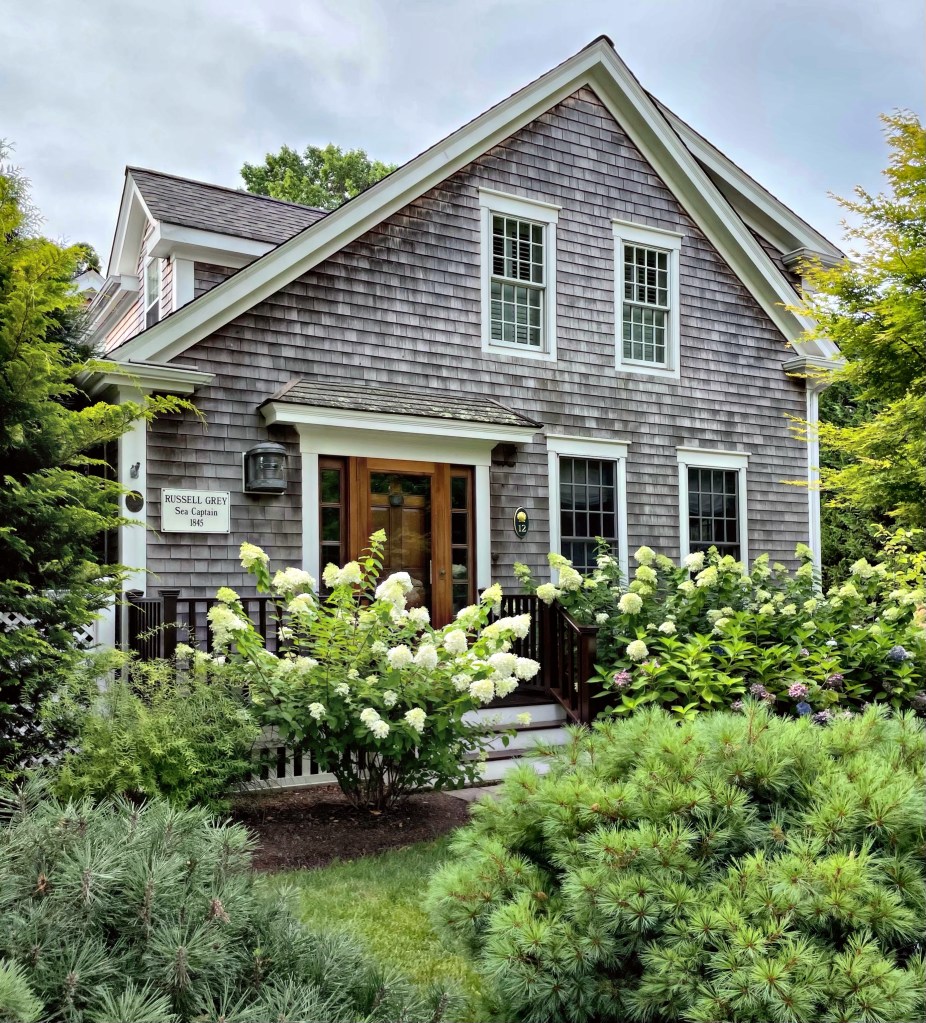
Captain Russell Grey (Gray) was one of a handful of sea-captains who lived in Wharf Village, the downtown of present-day Marion, Massachusetts. The men would own ships that were docked in the harbor or in nearby New Bedford, and would leave for months-long excursions chasing whales, fish, or other treasures. Behind, they left their young wives and growing families, who braved the harsh New England winters and the unpredictable coastal weather events. This small cottage was built around 1845, for a young Russell Grey and his wife, Sarah Luce, who’s own family was full of mariners as well. The couple’s Greek Revival style cottage remains as one of the most charming in the village.
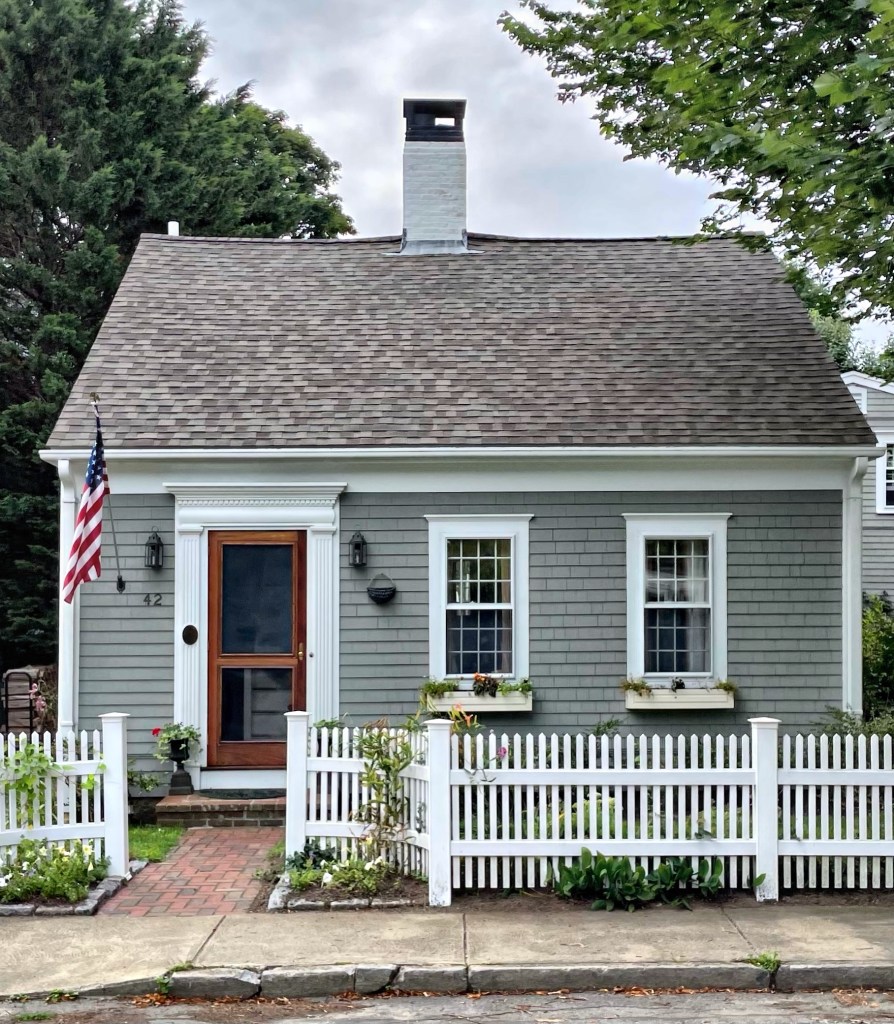
This tiny half-cape house in Marion was built in the mid-19th century for Timothy Hiller Briggs (1822-1877), a whaler. Based on the Federal/Greek detailing on the house, it is also likely the home was built much earlier for Timothy’s father, Silas, a sea captain, and was willed to his only son upon his death in 1833. Timothy died at the young age of 54 and his widow, Josephine, maintained the cottage until her death in 1924! The home is a half-cape as it has an off-center door with two bays of windows at the facade. A full-cape would be symmetrical with a central door and two windows on either side. The central chimney would provide heat to all rooms in the cold winter months.
I do love a good adaptive reuse story! This Marion, Massachusetts church building was constructed in 1830 for the town’s growing Universalist congregation. Architect Seth Eaton was hired and furnished plans, likely relying on neighbor, Warren Blankinship, a carpenter and congregant, to construct the building. It blends together the Greek and Gothic Revival styles well, but in a less sophisticated form. By the mid 20th century, membership of the church dwindled, and it finally shuttered its doors. With the building’s future uncertain, at a time where demolition for surface parking lots was the go-to solution, Marion residents Andrew and Dorothy Patterson, purchased the building and soon after worked with local artists in town to restore the building for use as an art space. The Marion Art Center was thus founded in 1957, and to this day, serves as a non-profit community cultural organization dedicated to promoting the visual and performing arts.
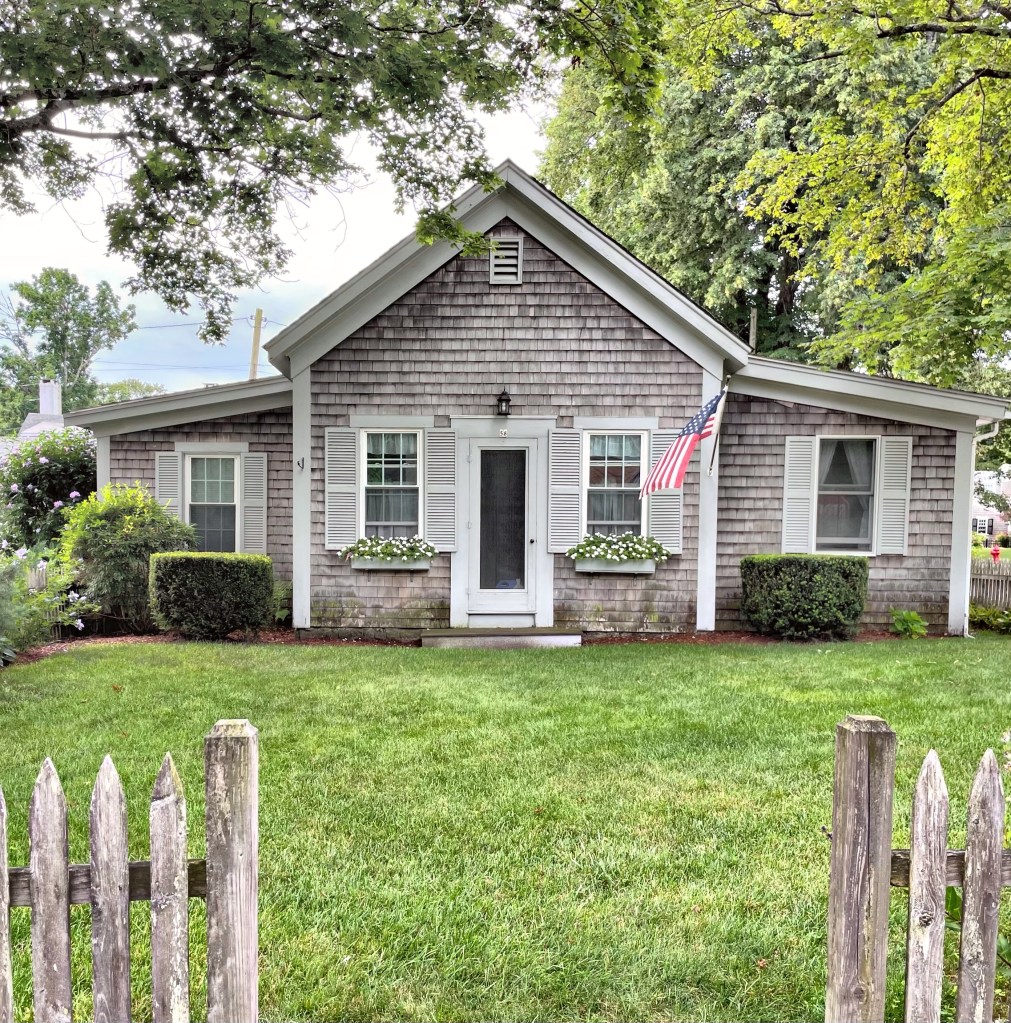
Across from the Marion Town Hall (last post), this perfect little cottage showcases what makes coastal New England so special. Built around 1840, by and for Warren Blankinship, a carpenter in town, the home represents a well-preserved example of a modest Greek Revival home. The home is clad in cedar shingles, a hallmark of many coastal homes in New England. White Cedar shingles are so popular historically as the species is such a hard wood that pieces are naturally insect and rot resistant and hold up amazingly well to salt air. Early colonists noted the use of the tree for canoes and other objects by Native people and followed suit, constructing homes from the native tree. The shingles were usually left exposed, and they would eventually weather over time. The exposed, cedar shingles have been a classic look in coastal homes since and even today, evoke a strong sense of place when seen on an old home here.
This Greek Revival home with a one-story full-length porch was built in 1839 for Peter Wanton Snow, one of the unluckiest men in Providence. Born the son of a leading China trader and the son of a granddaughter of a former governor of Rhode Island, Peter W. Snow (1788-1843) was born into privilege and like many of such stature, could enter the family business with ease and make a lot of money. Peter first sailed for Canton (Guangzhou, China) with his father in 1803. Doubtless because of his father’s position and trading connections, young Snow became the partner of Edward Carrington who, within fewer than a dozen years, was to become one of the richest and best merchants dealing in Chinese goods in Rhode Island, if not in the entire country. Carrington wanted to retire and have Peter Snow take over his agency in China, but Peter did not seem to like it there and always wanted to go back home to the United States. He got the chance for a few years beginning in 1814, but upon returning home, he learned that his only son, Charles, had died a year earlier at the age of five years, and to compound his personal tragedy, Snow lost two baby daughters in the next three years. By 1816, he returned to China but never seemed to be able to get out of debt, while trying to provide for his last two remaining children. Tragedy struck again when his last living daughter died, while he was in China. Peter’s business partner and friend R. B. Forbes before letting Peter know the bad news wrote this.
While in debt, he somehow had this home built in Providence, likely from assistance from family and colleagues. The land here was purchased by Peter’s wife Jeanette, and the home was likely built soon after. Peter died in 1843, virtually penniless.


 Buildings of New England