Old Essex County Superior Courthouse // 1861

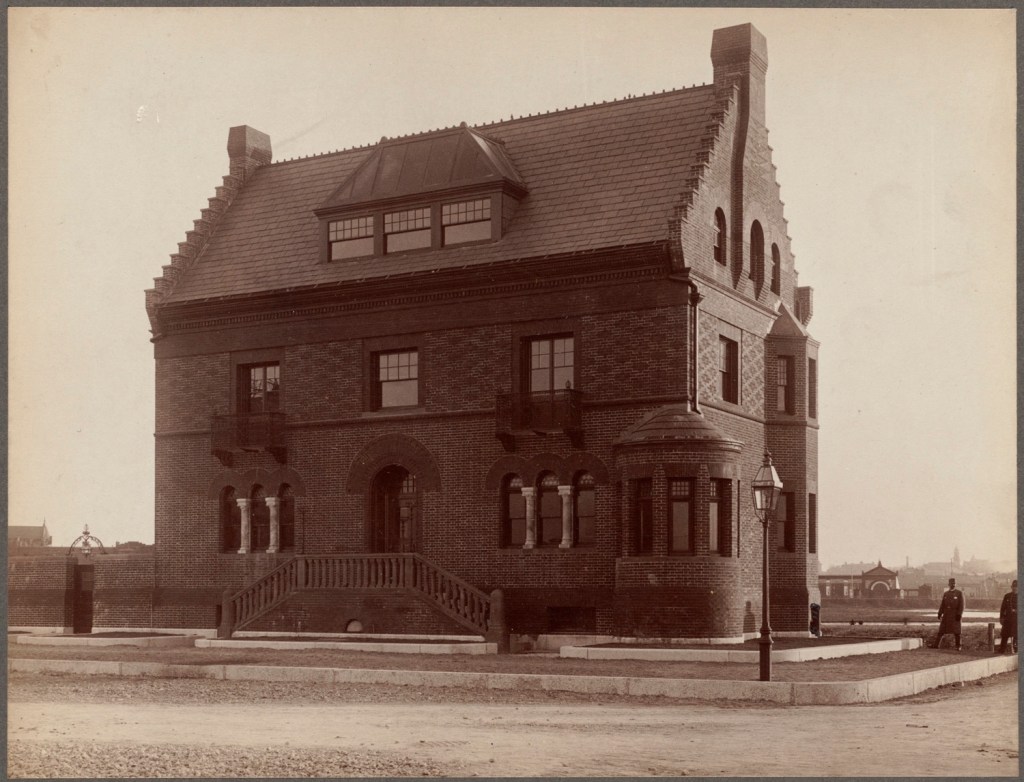
Located to the west of the Old Granite Courthouse on Federal Street in Salem, the Old Essex County Superior Courthouse is a visual depiction of the emergence of the Victorian styles from the more Classical Greek mode. Originally built in 1861 from plans by Salem architect, Enoch Fuller, the building was distinctly Italianate in style and built of brick until a major renovation in 1889 gave the building its present Richardsonian Romanesque appearance. The building was enlarged and renovated by architects Holman K. Wheeler and W. Wheelwright Northend which includes: changes to the roof line, creation of dormers, alterations to the window surrounds to create Romanesque arches and more. A three-story projecting pavilion, whose first floor is finished with rusticated brownstone, contains a recessed entry with a large semicircular arch supported on three columns with carved capitals at each end. The central pavilion resolves into a gable with corner pilasters with carved finials centering a blind arch containing the full date span of the complex, “1861-1891” in a field of square rusticated brownstone blocks. The courthouse remained in use until the J Michael Ruane Judicial Center at the end of the block was completed in 2012. The Old Granite Courthouse and adjacent Old Superior Courthouse were both vacated and have been essentially mothballed ever-since under the ownership of the Division of Capital Asset Management and Maintenance as surplus. The fate of the two buildings remains undetermined.

Alvord School // 1894

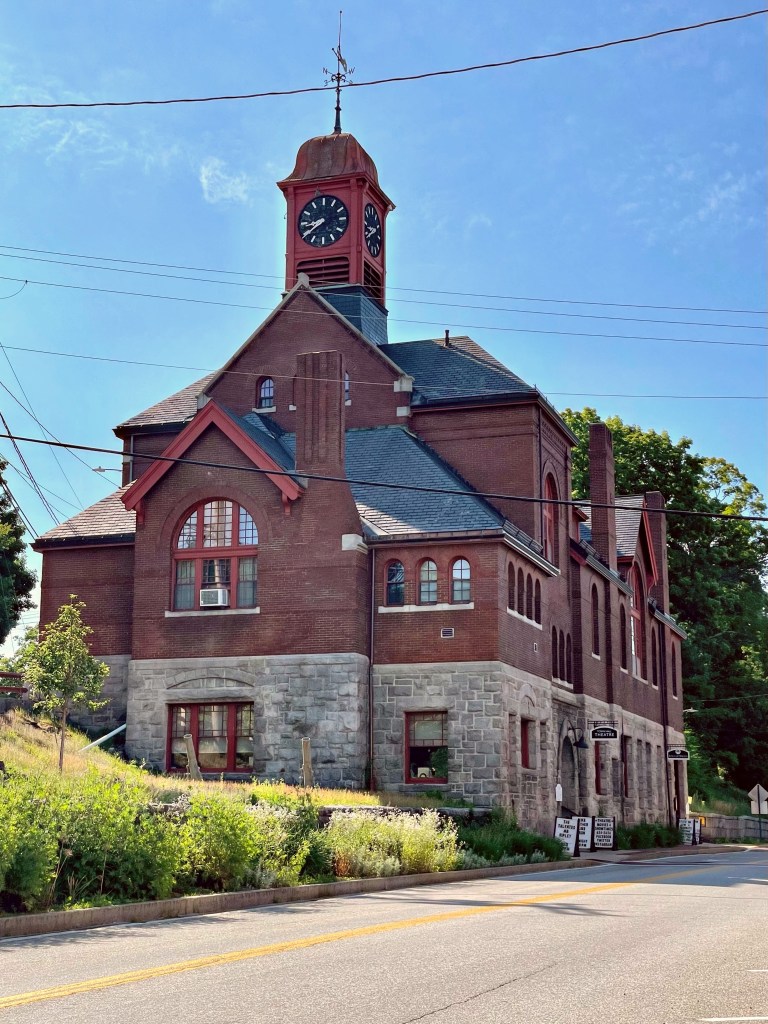
When the old Broadway school in Chicopee Falls became neighbors with the Overman Wheel Company, an early bicycle manufacturing company, there was so much noise and distraction that the Chicopee School Committee voted to sell the school and build a new school building down the street. A triangular lot on Broadway was purchased and Springfield architect, Francis R. Richmond, was chosen to design the new building in 1894. The school was dedicated to Dr. Samuel Alvord, a Chicopee Falls resident who was first principal of the local high school and local doctor that died in 1892. The Alvord School is a great example of a Richardsonian Romanesque school building of brick and brownstone, with recessed entry within a Syrian arch and decorative terracotta tiles. The school would close in the second half of the 20th century, and today is known as the Helen A. O’Connell Administration Building, a municipal office building.

Former Newton Centre Methodist Episcopal Church // 1899

This building, the former Newton Centre Methodist Episcopal Church, is Romanesque in style, and is one of the more notable adaptive reuse projects in Newton. The church was designed by the esteemed architectural firm of Andrews, Jacques & Rantoul and completed in 1899 for the local Methodist Episcopal congregation. The edifice is built of locally quarried rubblestone, often called Roxbury Puddingstone, and trimmed with rough cut Milford granite. The granite is used at the windows, forming the arches and heads, and most strikingly in the large arched entrance. The church eventually closed and was renovated with modern windows, additions, and more, and currently houses a restaurant, bank, book store, and professional offices.

Newton Centre Railroad Station // 1890

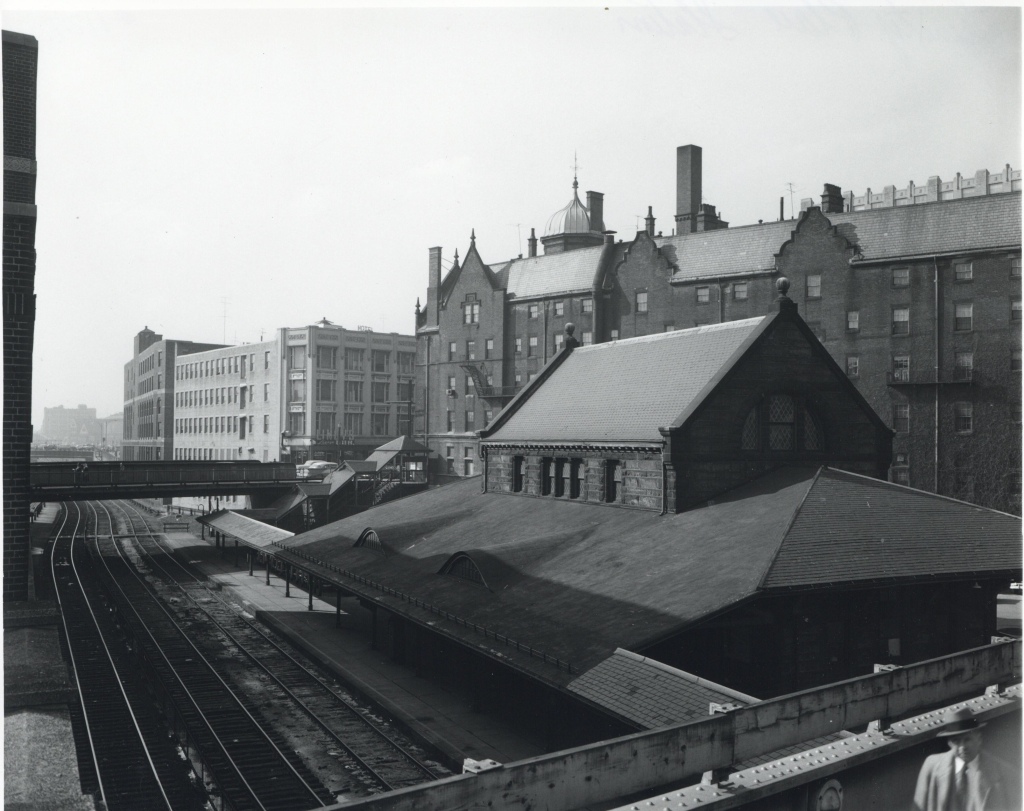
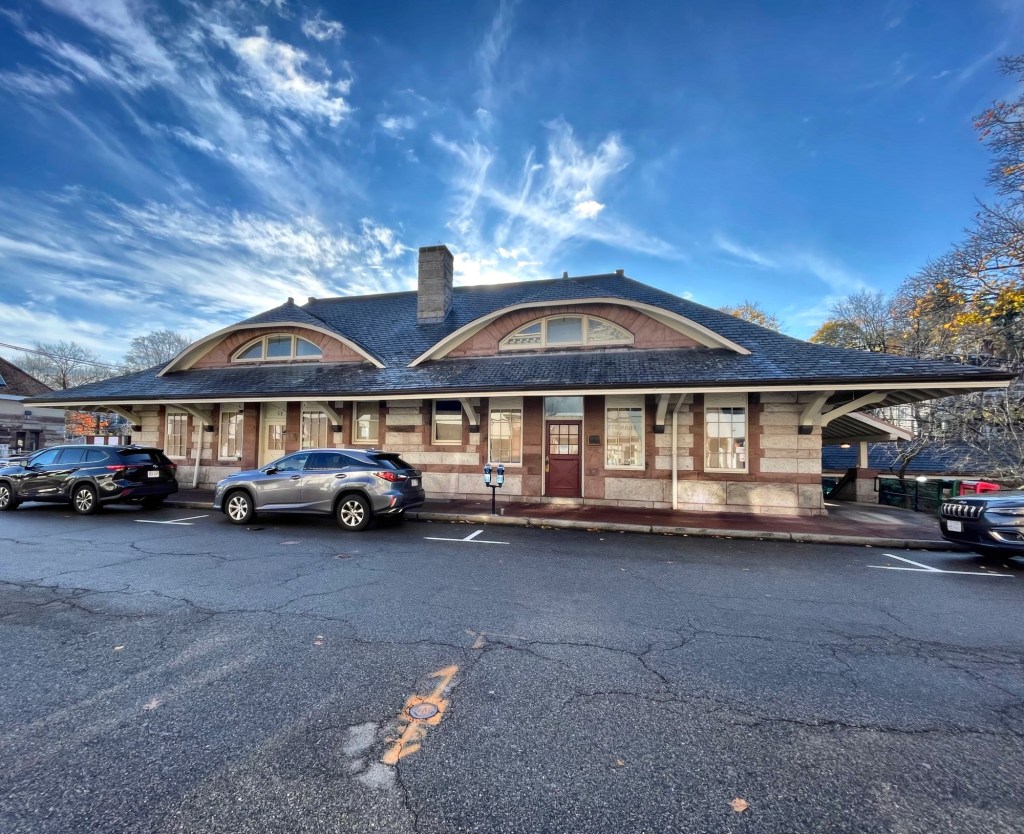
All aboard! Next Stop… Newton Centre! The Newton Centre station was originally commissioned by the Boston and Albany Railroad in 1884 as one of a series of new, highly designed stations in the Boston suburbs. Architect, H. H. Richardson designed five passenger stations for the Boston & Albany Railroad in Newton, and of which, only one survives. After his death in 1886, Richardson’s successor firm, Shepley, Rutan and Coolidge, followed the design vocabulary of Richardson for the remainder of the stations outstanding. The new station, built by the Norcross Brothers firm of Worcester, opened in 1891. The station was heavily modified in 1905–07 when the line was lowered below grade to eliminate street crossings. The Highland branch was closed in 1958 and quickly converted for streetcar use; streetcar service began in July 1959, with this station being located on the MBTA Green Line D. The station has long been leased to commercial stores and coffee shops but has been unused since 2022. Here’s to hoping the building can be used again in the future!
Peter Bent Brigham Building // 1888

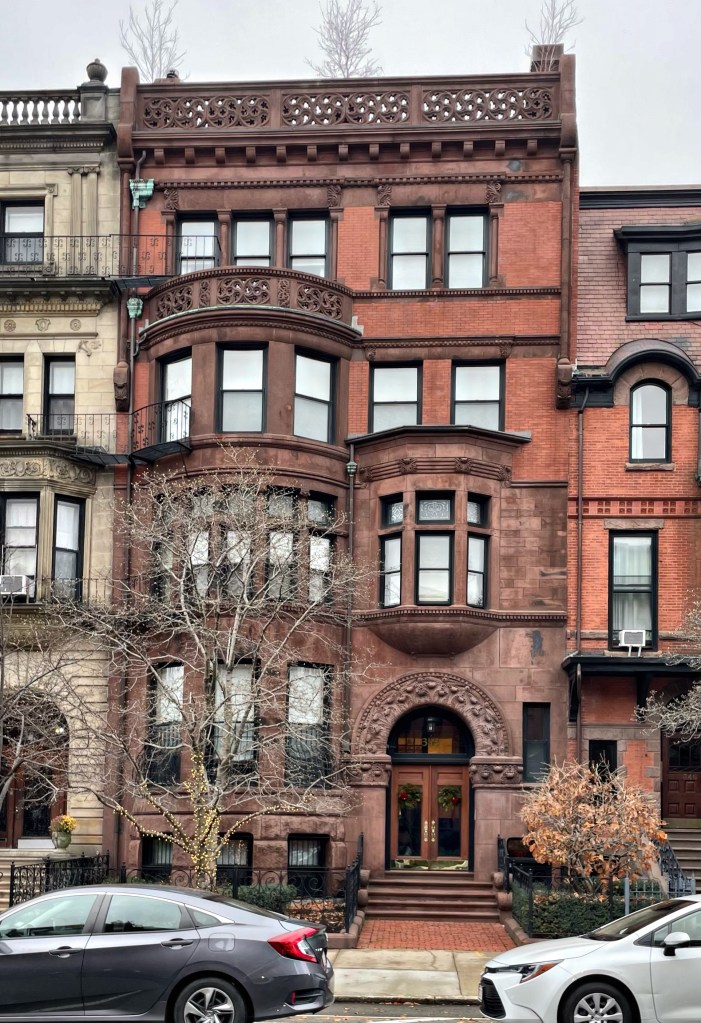
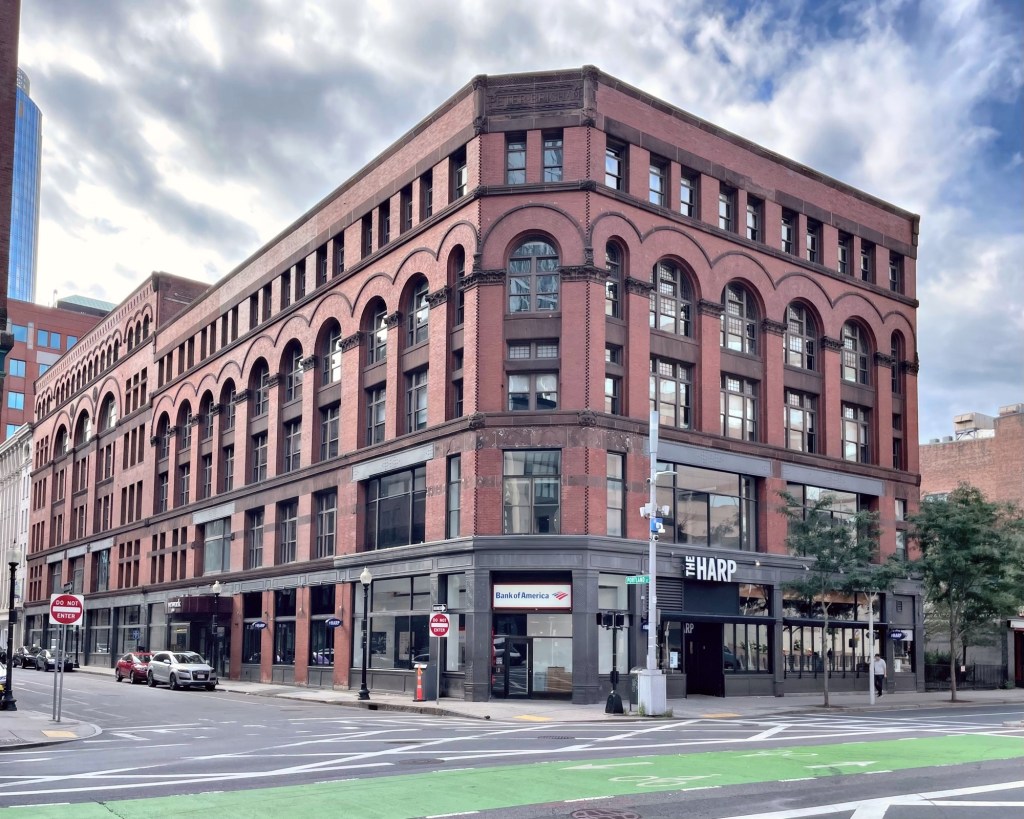
Located at the corner of Causeway and Portland streets in the Bulfinch Triangle Historic District of Boston, you will find the Peter Bent Brigham Building, one of the best examples of the Richardsonian Romanesque architecture style in the city. The building was built by the estate of Peter Bent Brigham (1807-1877), an interesting character in Boston’s history. Peter B. Brigham was born in Vermont and eventually moved to Boston and began his career selling fish and oysters in Boston. A self-made, hardworking man, Peter would eventually own a restaurant in the city and began making connections with the movers and shakers of town. With his success, he began investing in real estate and would become a founding director of the Fitchburg Railroad. Peter died in 1877, he never married nor had children. His estate valued in the millions and was to be spent 25 years after his death, for a hospital “for the care of sick persons in indigent circumstances”. The money appreciated to $2,000,000 by 1902 and was used to establish the Peter Bent Brigham Hospital, now Brigham and Women’s Hospital. His family, who also received a substantial amount of money in the will, built this building, hiring the firm of Hartwell & Richardson to design the 1888 corner and the later, larger 1891 addition. The commercial building was rented to stores and professionals and even retains Peter B. Brigham’s name in the facade carved in terra cotta.

Morrill Memorial Library // 1896

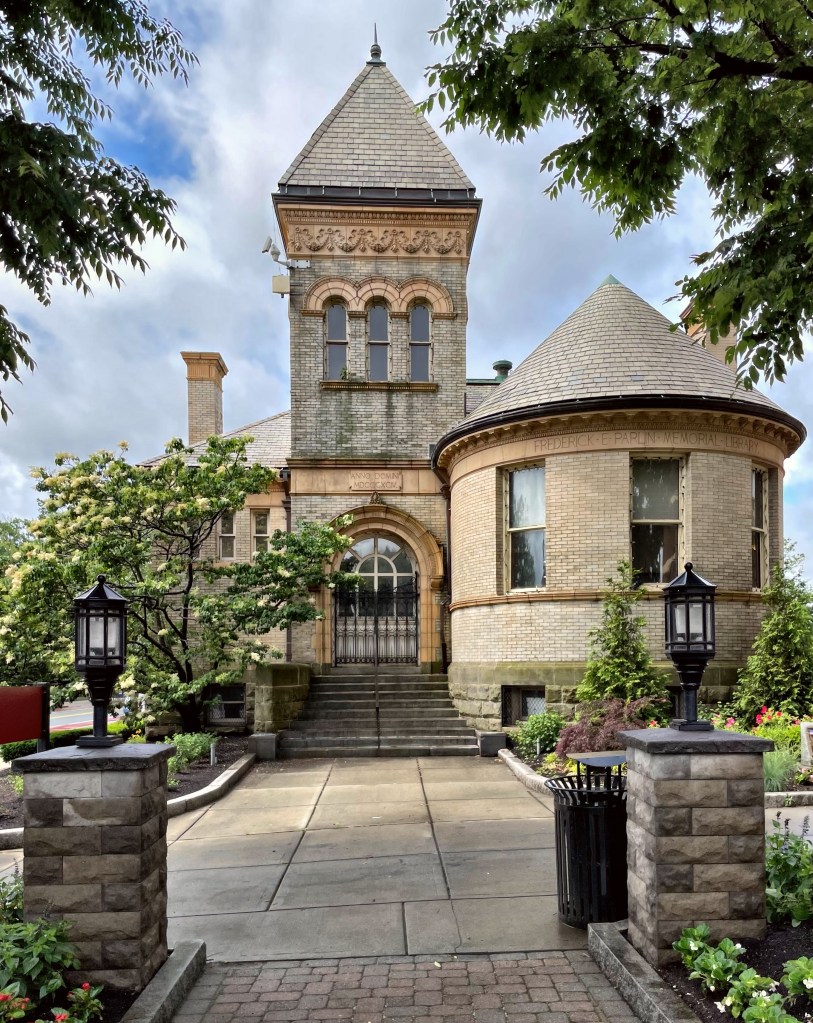
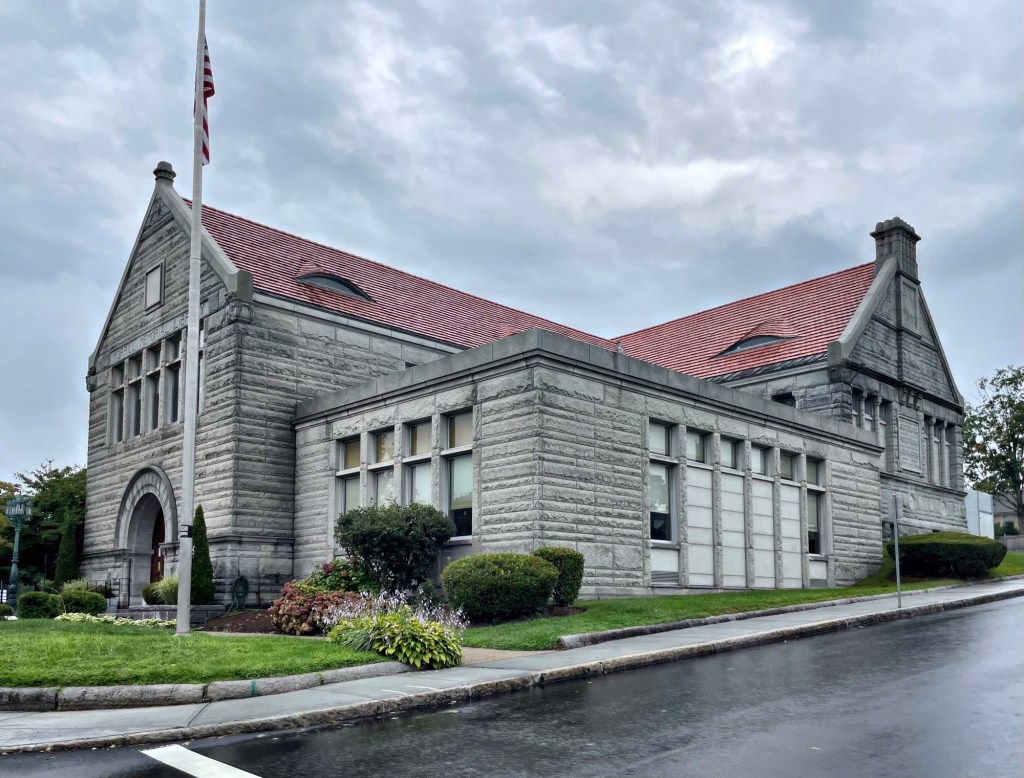
One of the best parts about New England is the diversity of the architecture and history of local public libraries. The Morrill Memorial Library in Norwood, Massachusetts, was erected by George H. Morrill in memory of his daughter Sarah Bond Morrill, who apparently died in 1895 of Typhoid Fever at the age of 22. George Morrill made his fortune as one of the largest producers of printing inks in America. The business was founded by Samuel Morrill, father of George H. Morrill in 1845 in Andover, but in 1856, he moved the works to South Dedham (present-day Norwood). The company grew rapidly and factories were built in Norwood and expanded to meet increasing operations. Mr. Morrill built a massive estate in Norwood (no longer extant) and also houses for his family members nearby to create a small enclave for the family. One of the lots on Walpole Street was utilized for a memorial library in honor of his late daughter. Architect Joseph Neal, who originally worked for Shepley, Rutan & Coolidge in Boston, designed the Richardsonian Romanesque library constructed of rough-faced granite blocks with a red terracotta tile roof above. The main entrance was deeply recessed within a great Assyrian arch typical of an arch-type that was a hallmark of the public and ecclesiastical buildings of Boston architect Henry Hobson Richardson during the 1870’s and 1880’s, but has since been enclosed by a vestibule, somewhat diminishing the original entry. The library was originally cruciform in plan but one-story additions constructed in the 1960s, on either side of the original facade have altered its original volume, but at least they are of a similar material. The library is one of the more unique in the Boston area and a testament to a father’s love to their children.

First Baptist Church in Newton // 1888

The Boston area has an embarrassment of riches when it comes to Richardsonian Romanesque style buildings, due in part to its namesake, Henry Hobson Richardson lived and worked locally. One of my all-time favorites is the First Baptist Church in Newton Centre. The church was designed by architect John Lyman Faxon, who was clearly influenced by Richardson. The First Baptist Church in Newton is among the oldest Baptist congregations in the state. Baptists were recorded as living in Newton as early as the 1720’s, but growth was slow and marked by persecution. In 1780, a congregation was assembled and the next year a rough, unplastered barn like meeting house was begun alongside Baptist Pond (now Crystal Lake). Fifteen years later, the congregation was finally able to afford a stove; twenty one years later, in 1802, the structure was enlarged. In 1836, the congregation constructed a larger meeting house in a more convenient location, the corner of Beacon and Center Streets. The second building was remodelled in 1856 and 1869 and finally was moved from the site to make way for the present church, the third meeting house, dedicated in November 1888. The First Baptist Church is undergoing some work at the exterior at the time of the photo, but the amazing brownstone trim and the winged creatures on four sides of the octagonal tower still shine!

Yale University – Alpha Delta Phi Hall // 1895

Completed in 1895 for the Alpha Delta Phi fraternity at Yale, this stunning example of the Richardsonian Romanesque style on Hillhouse Avenue was such a treat to see in person. This building was designed by local architect William H. Allen who designed the building to provide student members dining and socialization space, but no dormitories. The group was active as a Junior Society, but disbanded by 1930, and the building was sold to Yale University. Yale has since occupied the building with the Morris Steinert Collection of Musical Instruments and it recently underwent a restoration. The longer I look at the building, the more amazing details I can find. The proportion of the Syrian arch with squat engaged columns is really remarkable.

Yale University – Osborn Hall // 1888-1926

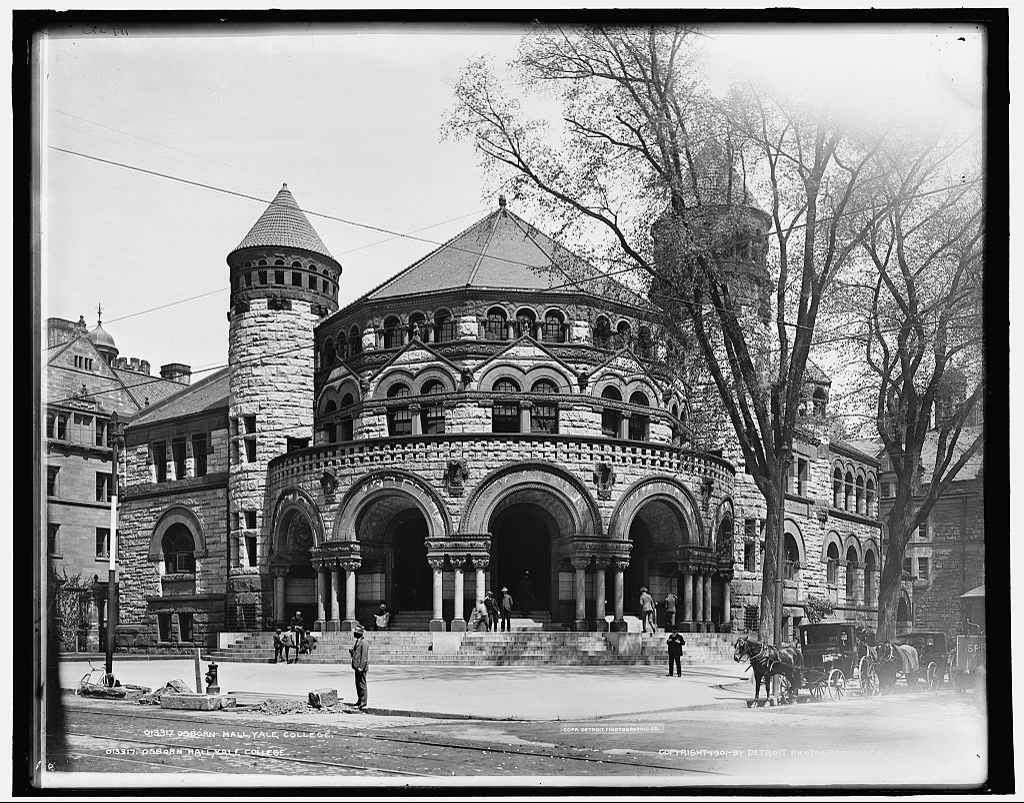
One of the biggest architectural losses at Yale was the demolition of the grandiose Osborn Hall in 1926, after standing less than 38 years! The building was constructed in 1888 at the southeast corner of the Old Yard at Yale, at the corner of College and Chapel streets, and was a landmark example of the Richardsonian Romanesque style of architecture. Designed by architect Bruce Price, the building was designed to face outward and was said to resemble a “squating toad with an open lip”. While architecturally stunning, the building was immediately met with criticism. Its construction necessitated the removal of the cherished Yale fence and the outward-facing design made it hard for students to focus on lectures while the sounds of horses and carriages on the cobblestone streets just outside. The short-lived Osborn Hall was razed in 1926 for Bingham Hall (next post), a prominently designed, but inward-facing building.

Yale University – Chittenden Hall // 1889

As Yale’s 1842 Old Library was outgrown by larger class sizes and a growing college library collection, overseers began planning for a new library annex which could support the programming. Architect J. Cleaveland Cady was commissioned to design the Chittenden Memorial Library, this underappreciated structure, which is today hemmed into a cramped space in the yard between a later addition (Linsly Hall) and McClennan Hall. The Chittenden Memorial Library was a gift to the college by U.S. Representative Simeon Baldwin Chittenden in memory of his only daughter, Mary Chittenden Lusk (1840-1871) nearly two decades following her untimely death. The handsome Richardsonian Romanesque style library building also retains its original stained glass window titled, “Education” by Louis Tiffany which today is in the building’s former reading room, now a large classroom. When the library moved to a new building in the 1930s, Chittenden Memorial Library became Chittenden Hall and is classroom space.