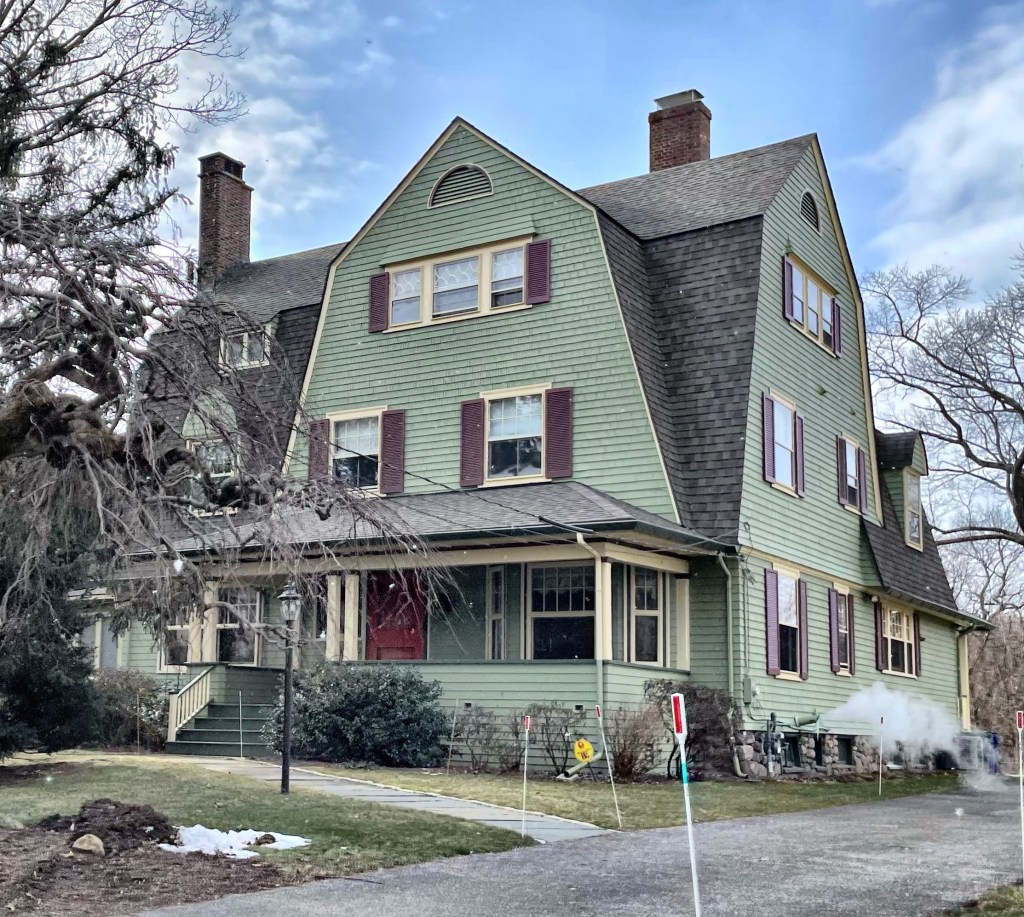
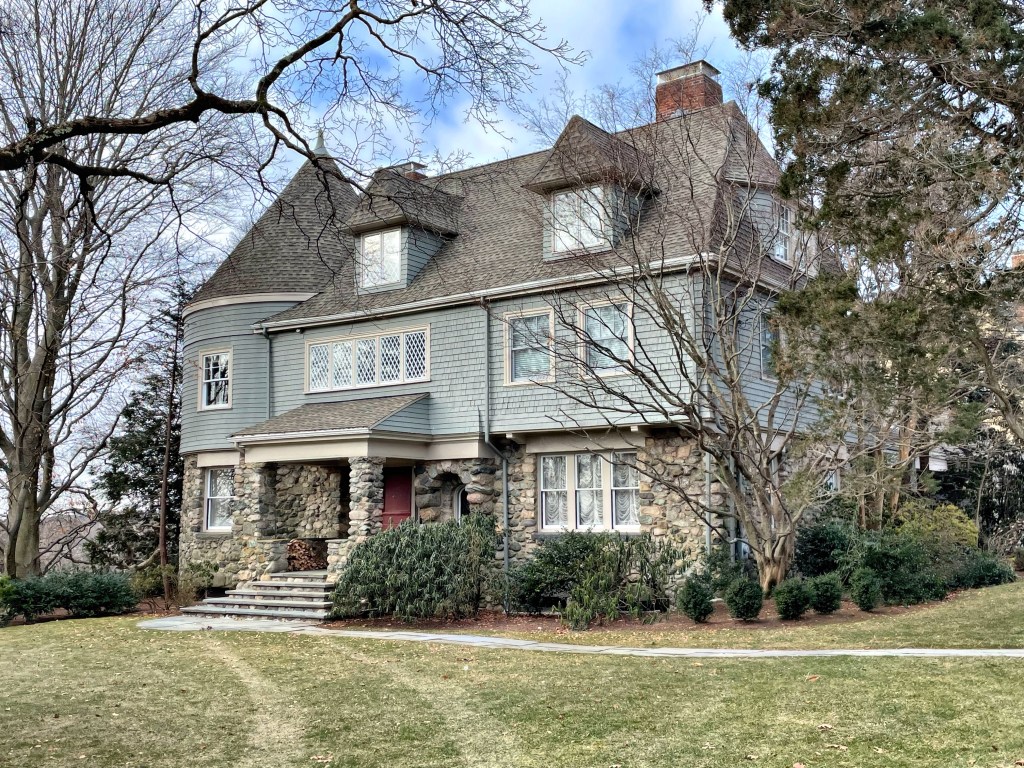
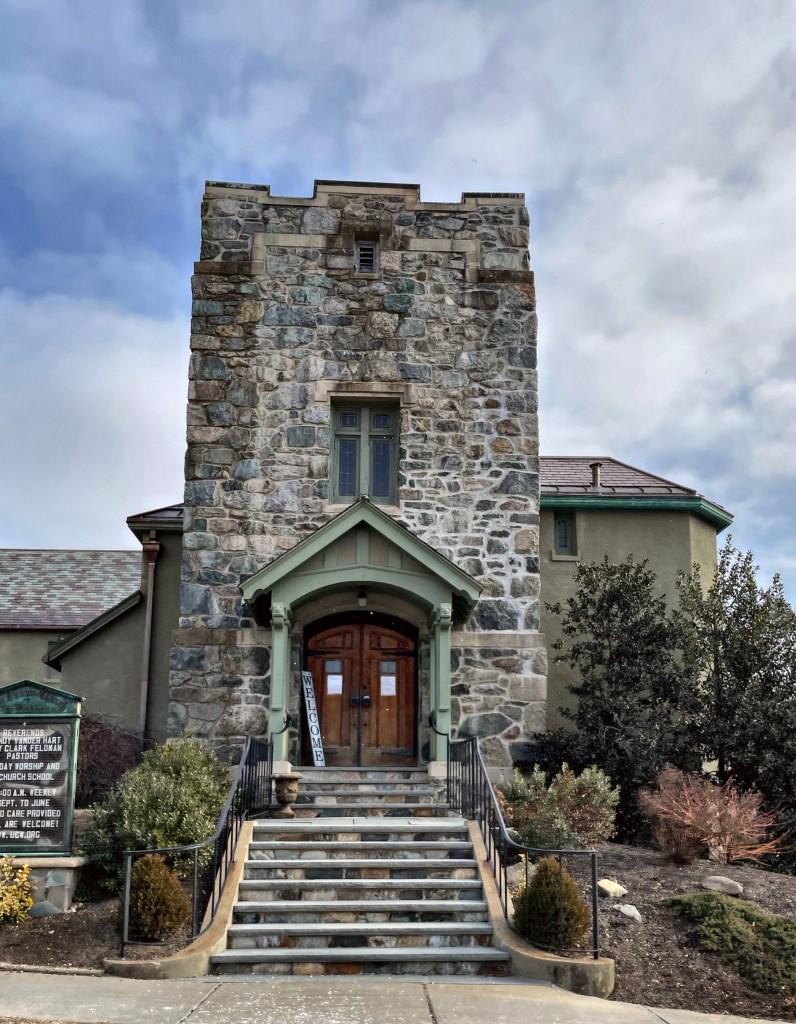
Tourists Hotel // 2018

This past weekend, I had the absolute pleasure to stay at one of New England’s coolest new hotels, Tourists Hotel! Located in the industrial-turned-artistic town of North Adams in the Berkshires of Massachusetts this elevated, 48-room hotel modernises the aesthetic of a classic American motor lodge with contemporary design that feels cozy and inviting. The site was originally home to the Redwood Motel, a prototypical 1960s motel on the Mohawk Trail, a designated scenic tourist route which became popular in the automobile era of the 20th century. The reimagined motel was developed by Broder a Boston-based developer who worked with architect Hank Scollard and landscape architecture firm Reed Hilderbrand to design the new hotel. U-shaped in plan, the main part of the hotel surrounds a central courtyard with native flora. Facades are wrapped in white oak planks with the intention to blend the architecture with the surrounding woods. My favorite part was that the rooms have sliding glass doors which open to private decks which make rooms feel more personable. On the crisp fall day, the lounge was an amazing space to cozy up with some spiked cider and chat with other guests. An unexpected treat was to learn that the grounds include dozens of walking trails running along the Hoosac River with a suspension bridge that stretches 220 feet across. Pictures do not effectively showcase how special Tourists is, both in the design details and the attention to detail the staff had during my stay. If you are ever in the Berkshires for a weekend trip, I highly recommend you check them out!

Broad Street Association Building // 1805

One of the few remaining Federal period buildings in Downtown Boston is this survivor located on Broad Street, one of the best streets in the city! The building was constructed for the Broad Street Association, which was made up of members: Uriah Cotting, Harrison Gray Otis, Francis Cabot Lowell and other prominent Boston entrepreneurs with the goal to upgrade Boston’s waterfront south of Long Wharf which comprised of an outdated system of individual wharves. The organization hired the esteemed Boston architect, Charles Bulfinch to furnish plans for the building, of which they paid him $100. While this modest example of the Federal style is not Bulfinch’s best work, is is notable as he was largely responsible for changing the architectural face of Boston, not only through own designs, but also through influence on other architects and builders of the time. This building was long owned by Francis Cabot Lowell and was rented out to commercial ventures, including some of the later decades of the 1800s when it was occupied by C. D. Brooks, a maker of pickles and preserves. The building was restored by CBT Architects in 2005 as part of a larger redevelopment of the block which includes a mid-rise apartment building, Folio.

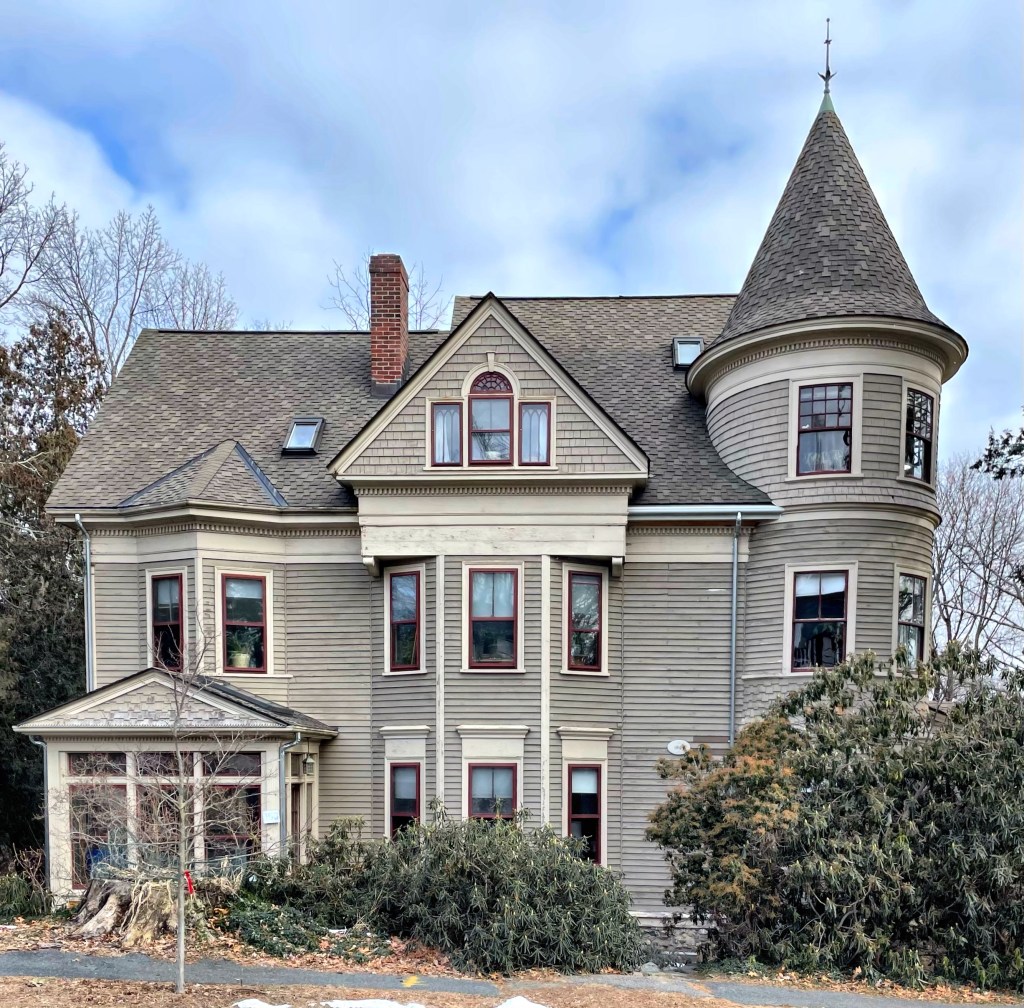
Merrill Whitney Tenements // 1897

In the late 19th century, Merrill Whitney, a former stone mason, and his wife Harriett, built a dozen multi-family housing units or “tenements” for the surge of working-class residents moving into the City of North Adams, Massachusetts. As the factories and mills were overrun with immigrant workers, rental units were built to provide housing for them and also lined the pockets of established residents of the city who could supply the much needed housing there. Some landowners like the Whitney’s built high-style housing that rivaled some of the single-family homes there. This was a two-family home that was rented through the early 20th century, and still features front porches, a tower, and Victorian-era detailing.

Long Wharf Hotel // 1982

In the second half of the 20th century, much of Downtown Boston and the Waterfront areas were blighted with decaying buildings. Seeing tax dollars flee to the suburbs, the City of Boston used Urban Renewal to demolish large areas to erect new neighborhoods and blocks to revitalize the city. Much of it was done with a heavy hand, evicting largely minority and immigrant residents and razing of traditionally walkable neighborhoods for more car-centric districts. The Waterfront was traditionally the economic hub of Boston, with large commercial wharf buildings jutting out into the harbor symbolizing the economy’s strong ties to maritime trade for centuries. Boston Properties was an early developer who saw the potential of the revitalized waterfront, and developed this hotel off Long Wharf. Architect, Araldo Cossutta, (who was originally picked 8th of 8 submissions in a design competition) was ultimately selected to design the hotel, which at first glance may look out of place. However, the building draws cues from the area, evoking the Quincy Market warehouses as well as the attributes of a modern ocean liner on its head. Relatively simple massing with rectilinear and semi-circular fenestration at the lower level rises to a complex series of stepped back balconies, which form a steep gabled roof. To me, its the right amount of recessiveness and boldness in Postmodernism.

Clements Apartment Building // c.1885

Brookline is pretty great as you can find unique and well-preserved examples of nearly every type of building in almost every architectural style! Staying in Brookline Village, this apartment building stands out as one of the best panel-brick apartments I have seen. The property was developed in the mid-1880s by Thomas W. Clements, who served in the Army during the American Civil War and later settled in the Boston area working as a dentist. Thomas married Lydia R. Clements, who is much more interesting than her husband! She was a graduate of the Boston University School of Medicine and worked locally for years, but wanted more. In the spring of 1898, she set out with a party of men and women, determined to make their fortune in the gold fields of the Klondike. During the months long trek, all of the other women and some of the men in her party left the expedition before reaching their goal, but Lydia Clements persevered and became one of the first white women — possibly the first from the East — to cross the Chilkoot Pass into the Klondike region. She never made a fortune, but upon returning, she was more spiritual, and got involved in the occult philosophy of Prof. Charles H. Mackay and his West Gate School of Philosophy in Boston. She used her new learnings to go back to Alaska to make her fortune, but there is no indication that Clements ever did make her fortune. She did however, remain in Nome and elsewhere in Alaska for more than a decade, hiring men and mining tin and gold. She retained her Brookline residence here on Davis Avenue and travelled back and forth across the continent many times before returning to Brookline, before dying there in February 1927.

Arthur Jones Double House // 1896

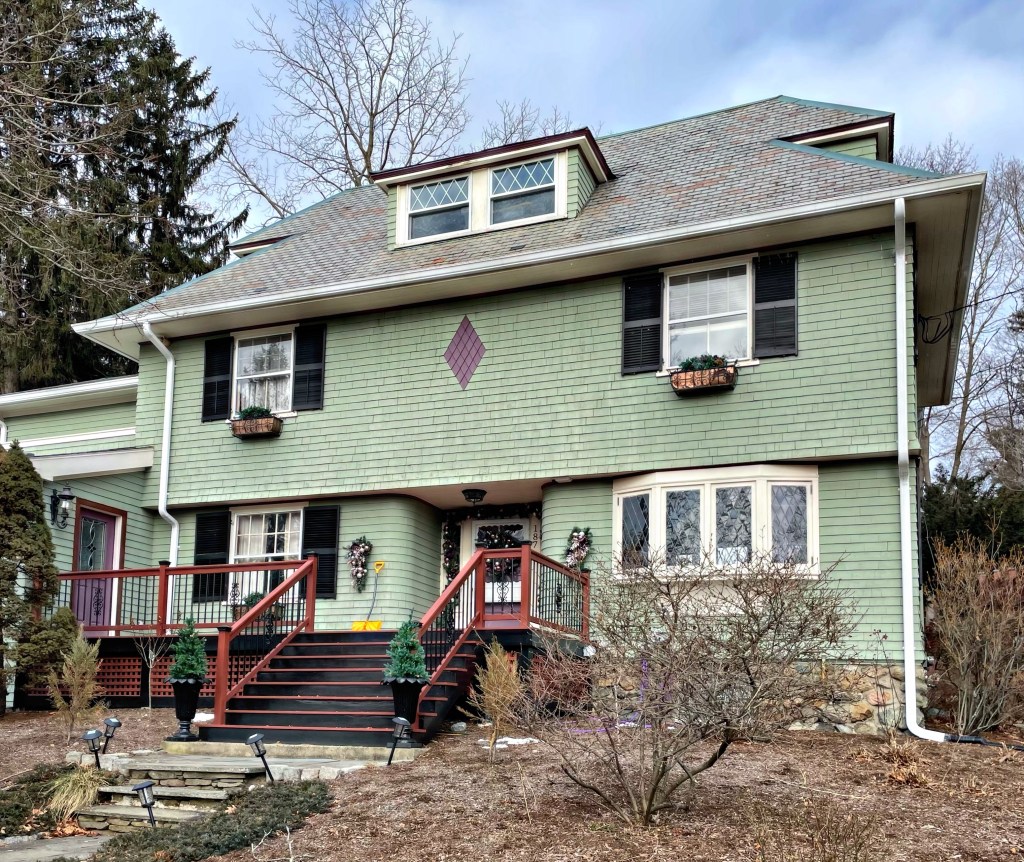
As Brookline Village developed in the mid-late 19th century, house lots were scarce. Demand for housing saw the demolition of a number of older 1840s Greek and Gothic Revival style cottages for multi-unit dwellings as duplexes and three-deckers which surged in popularity in the Village from the late 1890s to the 1910s when three-deckers were effectively banned in Brookline. In 1896-1897, Arthur R. Jones had large double houses built here and nextdoor, which were rented out to families. Newton architect Henry McLean designed these double houses as pairs of attached single-family dwellings separated by a brick party wall blending both Queen Anne and Colonial Revival styles under one roof. The homes show what housing was available to middle-class residents of the Boston area, a price-point that is unattainable to most in the area today. Though, it is great to see these old homes lovingly preserved so well by their owners!

Elijah Emerson Double House // 1884

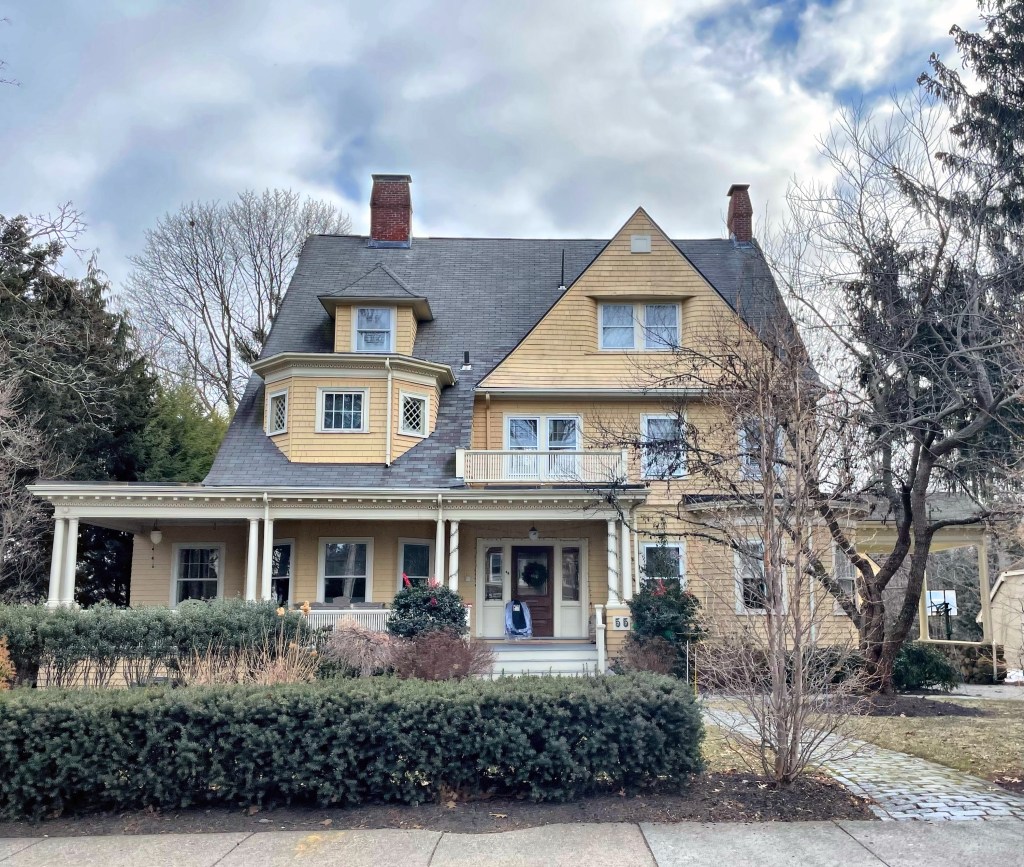
Brookline Village is full of amazing double houses (or duplexes) built in the late 19th century. Many feature Queen Anne detailing and are architecturally striking with porches, complex rooflines, and trim details. This example was built in 1884 by Elijah Emerson, who had an estate nearby. His house was originally located where the park, Emerson Garden is located, but it was moved across the street. He had this double house built and rented it out to middle-class families who flocked to the neighborhood for the ease of access to Downtown Boston, while maintaining a bucolic feel (why many still today move to Brookline). Even though it is covered in aluminum siding today, the original wood clapboards and trim likely are waiting underneath to be revealed someday. But for today, we can gawk at the original details that are visible, including the semi-circular window, recessed porch with decorative balustrade, and porch with original entry doors.

George Carpenter House // 1885

While many lots in Brookline village in the final decades of the 19th century were being redeveloped as duplexes, three-deckers, and apartment houses, some property owners still wanted single-family living. In 1885, George Carpenter had this home in the village built from plans by well-known architect Obed F. Smith, who designed many Victorian-era homes in Boston’s Back Bay and around the region. George Carpenter worked in Downtown Boston as an agent for the Massachusetts Mutual Life Insurance Company. The house features some Stick style elements seen in the porch spindles and carved brackets.

Former West Acton Universalist Church // 1868

This beautiful church in Acton, Massachusetts was built in 1868 by the Universalists of West Acton who sought a house of worship closer to their homes, rather than taking horses to the other part of town every week. The building exemplifies the influence of both Gothic Revival and Italianate styles on rural churches of the time. Gothic elements include the double pointed lancet windows with quatrefoil ornament, buttresses, and pointed lancet panels on the tower and belfry. Italianate elements include the rusticated base and the corbel table at the eaves. Religious services ceased in 1925. At that time, the church building was bought by leading men in the village who gave the building to the West Acton Women’s Club, which began in 1890 by Lucy Mead (the wife of Oliver Mead, who built the Mansard home nearby). In the 1950’s, the church was used as a community center. It is now home to a local performing arts center, Theatre III Box Office.

West Acton Citizens Library // c.1845

Old houses adapted for other uses always deserves a highlight! The West Acton Citizens Library was originally constructed in 1840 as a small, one-story Greek Revival style cape house either for or purchased by Phineas Wetherbee, a farmer and early landowner in the village. The modest house features little detailing besides the recessed entrance composed of wide, flat pilasters and a lintel decorated with square corner blocks and a central keystone. In 1883, Phineas Wetherbee met with thirty-nine others to form the Citizens Library in West Acton. The organization accessioned the collection of the former Farmers Club Library. When Mr. Wetherbee died in 1895, he bequeathed his house to the library, who later moved into the house by 1900. Today, the house remains a library space for the West Acton village.