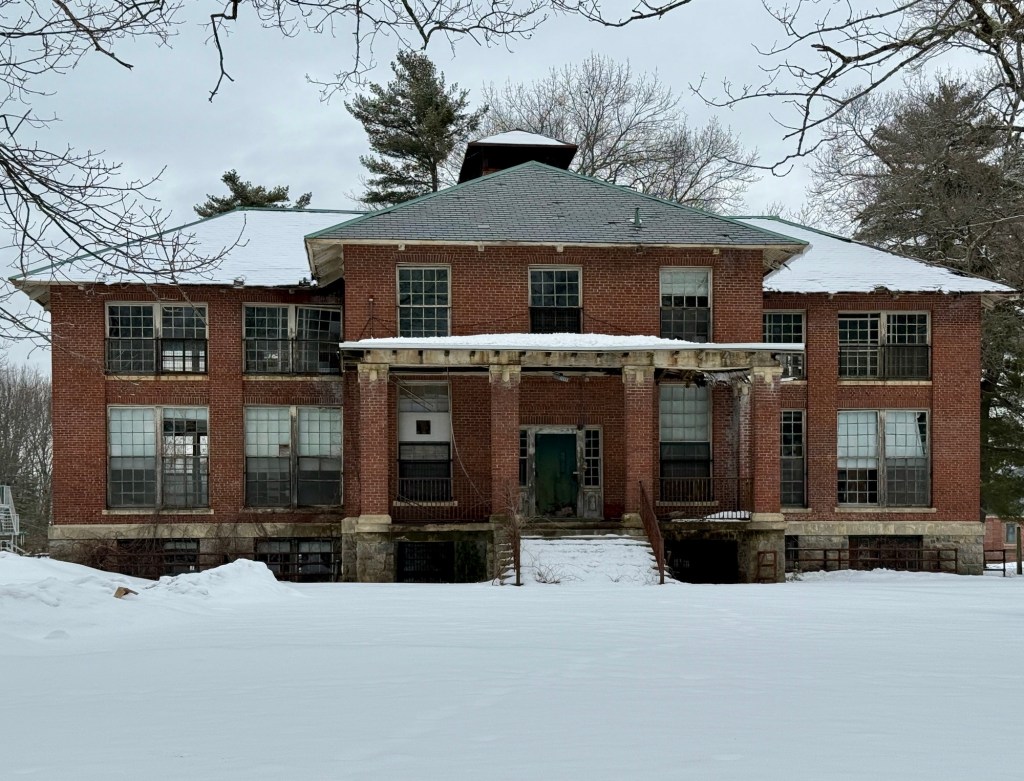
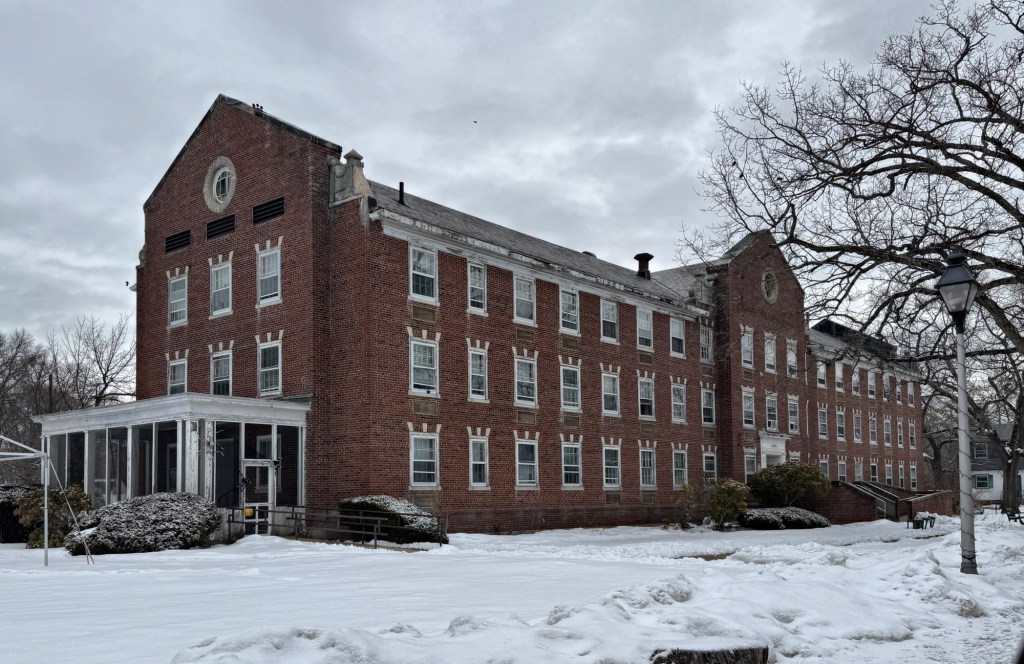
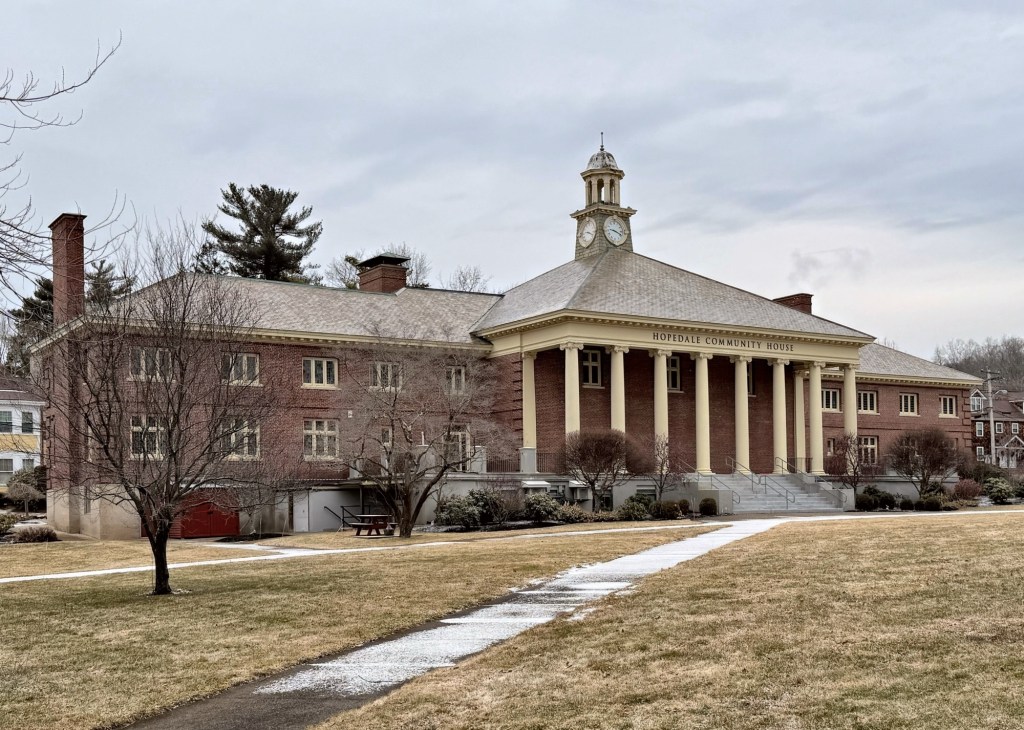
The Wrentham State School (also known as the Wrentham State Hospital) was authorized in 1906 as a school for the “feeble-minded”, and the campus is comprised of a few dozen buildings largely from the early to mid 20th century. The school was founded to house and treat developmentally disabled children and was the first in the state of Massachusetts to employ a standardized plan for wards and employee housing. A site occupied by farmhouses just north of Wrentham Center was selected and purchased by the Commonwealth of Massachusetts. The school officially opened in 1910 and brick structures were built to house students and workers. In its first year, 217 pupils were admitted to the facility, roughly half boys and girls. A majority of the early ward buildings were constructed in the early years of the school, with most designed by the Boston architectural firm of Kendall, Taylor & Stevens, who also designed many other similar facilities around the country in the early 20th century. Most buildings are examples of the Arts & Crafts and Colonial Revival styles built of brick. Today, the campus is comprised of roughly half, deteriorating historic buildings and half are used as part of the Wrentham Developmental Center, which continues the important (and under-funded) work of treating psychiatric and developmental disorders of patients.

 Buildings of New England