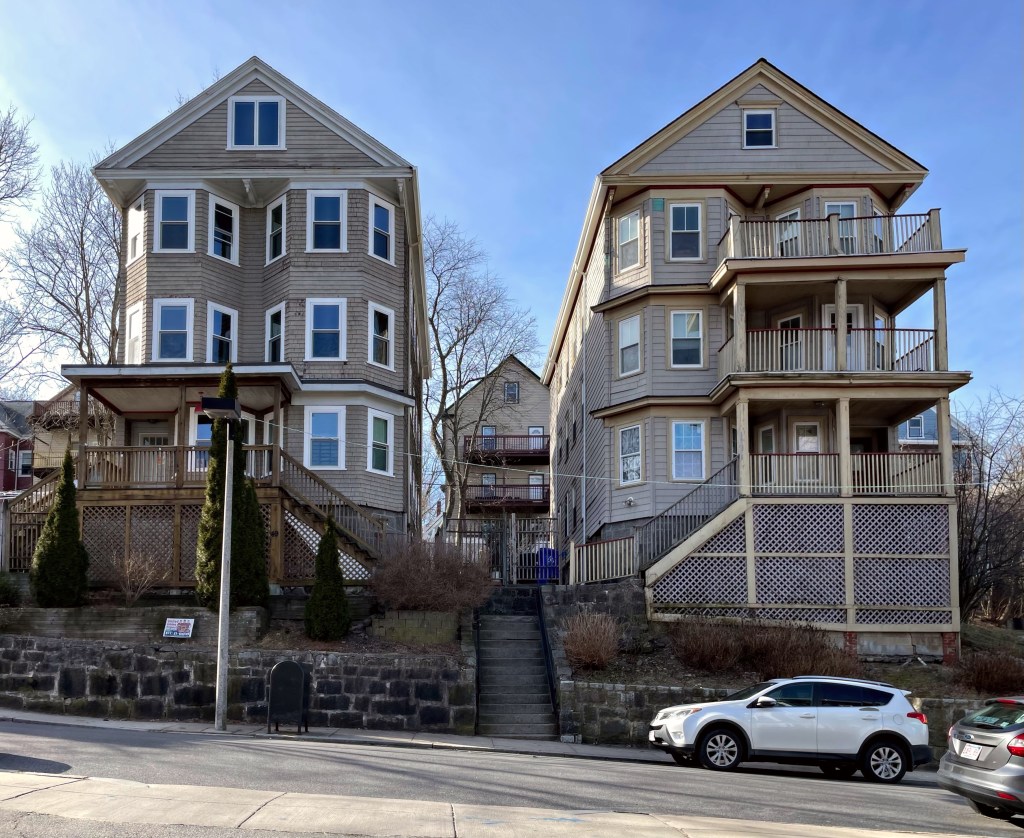
Joseph J. Lannin Triple Deckers // c.1910

In 1892, Thomas Minton who lived nearby Forest Hills Cemetery in the Jamaica Plain neighborhood of Boston, was hired by landowners Brown and Weld to subdivide their land for house lots near the Forest Hills station. Three residential streets were laid out, terminating at the edge of Forest Hills Cemetery for residential lots. Much of the parcels were developed within ten years of the platting of the site, with some vacant lots of more difficult land to develop. Some parcels included massive outcroppings of stone which made building difficult and thus, more expensive to develop. Savvy developer Joseph John Lannin (1866-1928) purchased these lots from Edwin Weld and hired a local architect to design matching triple-deckers on the ledge. Lannin was orphaned at the age of 14, and migrated from Quebec to Boston, where he found work as a hotel bellboy. He soon learned about real estate and the commodities market by listening to conversations of the wealthy patrons at his hotel and solicited advice from those who were willing to share their insights with him. He began investing in real estate and made a small fortune in Boston and New York City. In 1913, Lannin and a group of investors purchased 50% of the Boston Red Sox baseball team and a year later, he became the sole owner of the Red Sox. In 1914, he purchased the rights to bring Babe Ruth to Boston. The team went on to win the World Series in 1915 and 1916.
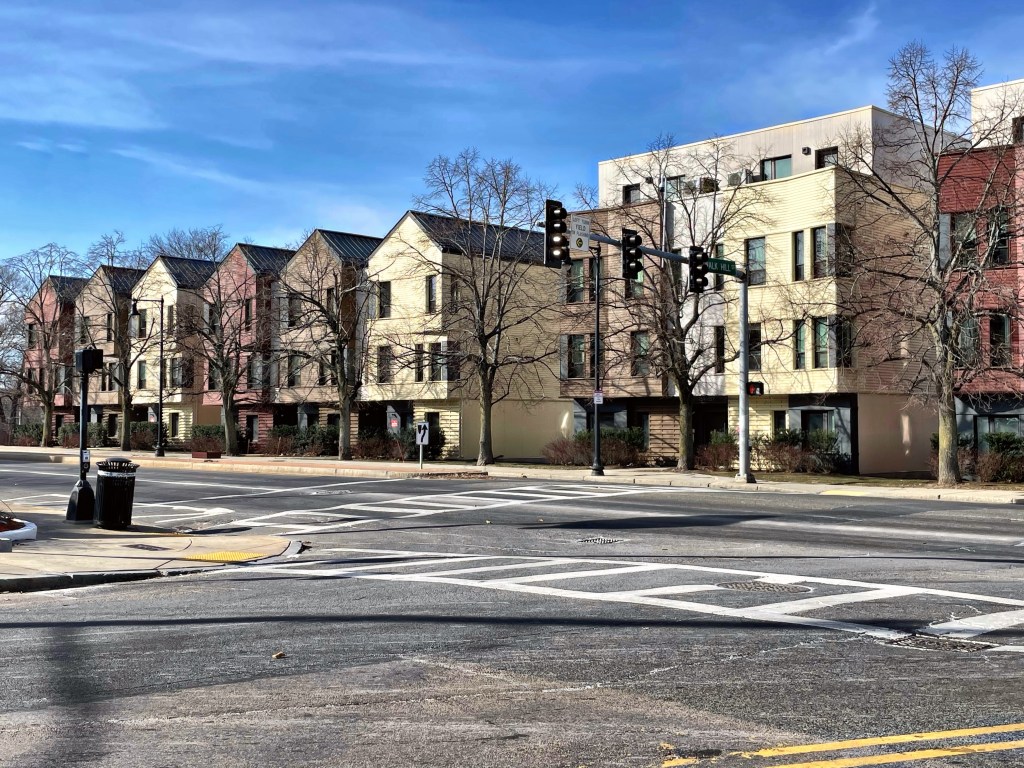
Tilia Jamaica Plain // 2020

As many of you likely agree with me, most contemporary architecture and buildings in Boston (and in many U.S. cities) is bland and mundane, but there are some projects that really stand out for creative and contextual designs. Tilia in Jamaica Plain is one of the latter! When the Massachusetts Bay Transportation Authority (MBTA) began accepting bids for the development of an undeveloped linear parcel along Washington Street just south of the Forest Hills T-stop, developers jumped at the opportunity. Urbanica Inc., a local design/development group had the winning proposal which consists of approximately 110‐120 residential units in buildings of varied density ranging from a larger apartment building to more human-scaled townhouses. Led by architect Stephen Chung with Kamran Zahedi as developer, the design for the townhouses specifically is a contemporary nod to the triple-decker form we see so much in the surrounding area. The varied color and recessed sections provide a lot of depth and character to the development along the streetwall.

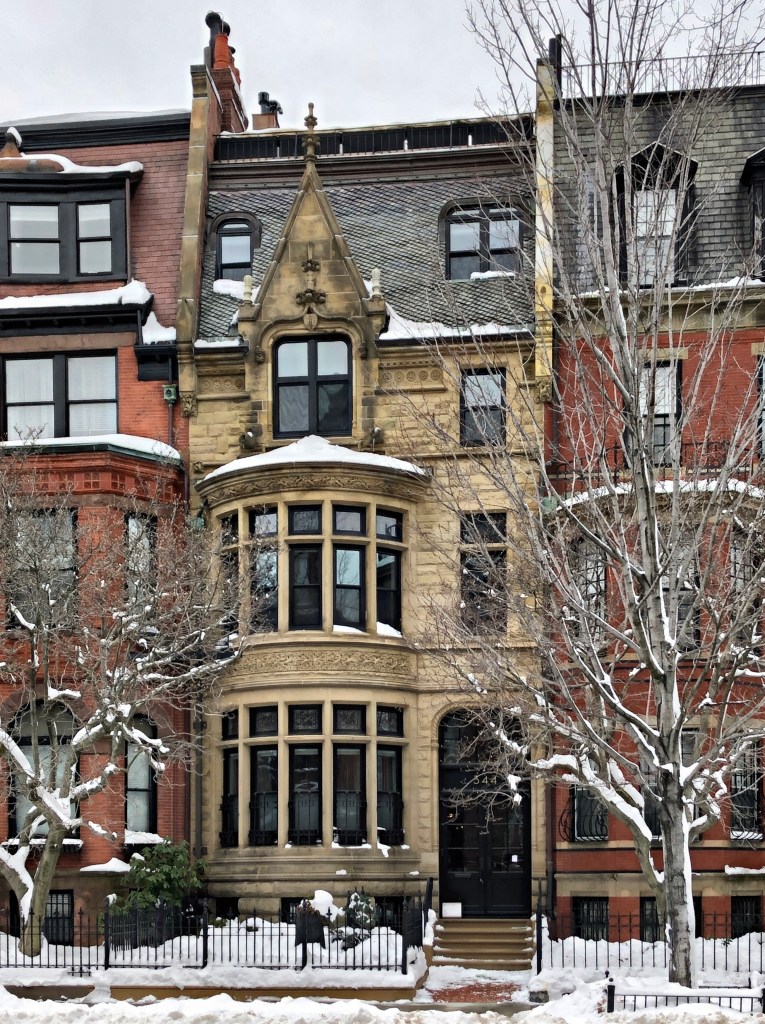
Daniel and Mary Knowlton House // 1880

Another of my favorite townhouses in the Back Bay neighborhood of Boston is this Victorian Gothic mansion on Beacon Street, built for Daniel and Mary Knowlton. The residence was designed by the firm of Allen and Kenway and built in 1880 and stands out architecturally for its use of style and use of material amongst a sea of brick. A former cotton merchant, Daniel Knowlton was treasurer of the Flexible Shoe Nail Company and later worked as a stockbroker. The large single-family dwelling was converted into four condominium units in 1989, but has since been switched back to a single-family residence. It sold for $11.2 million dollars as a five bedroom, six full and two half bath home in 2017. Yikes!

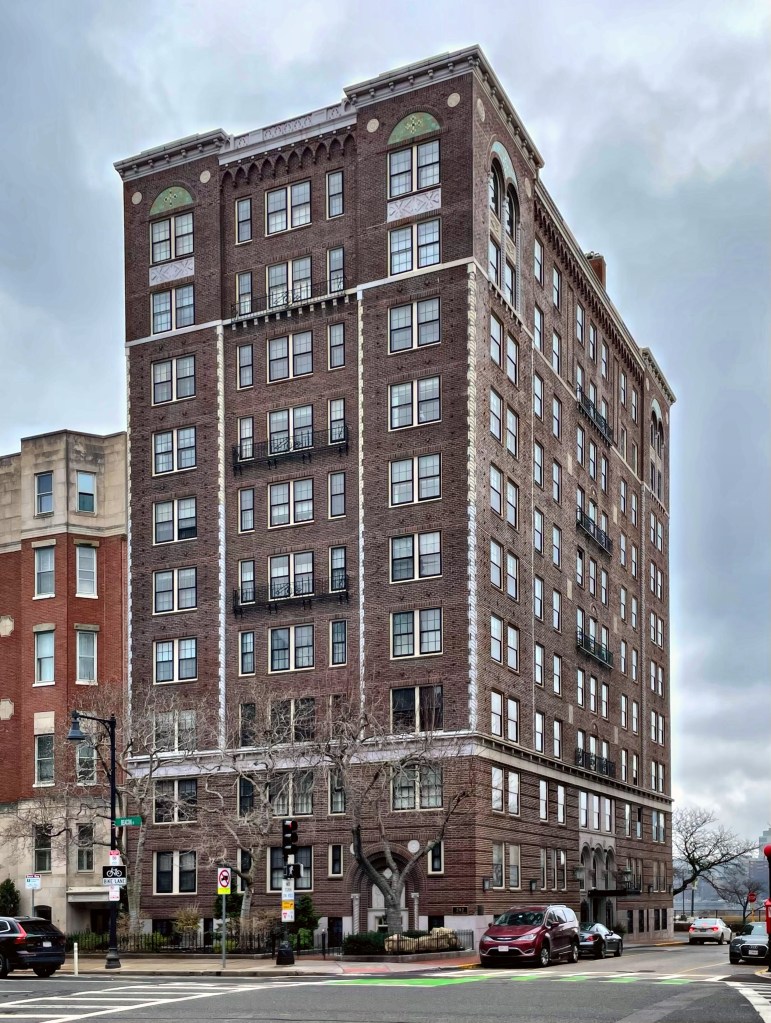
282 Beacon Street // 1927

One of the finest apartment-houses in Boston is this towering building at the corner of Beacon and Exeter streets in the Back Bay neighborhood. In 1926, real estate dealers Elliott Henderson and Roger B. Tyler purchased two townhouses on small lots and demolished them for the present structure. They hired the architectural firm of Blackall and Elwell furnished the plans for the 11-story Renaissance Revival style residence which included ten large apartments. The design is unique to the Back Bay with amazing cast stone details at the entries with rounded arch windows, fanciful brickwork, and spiral columns!

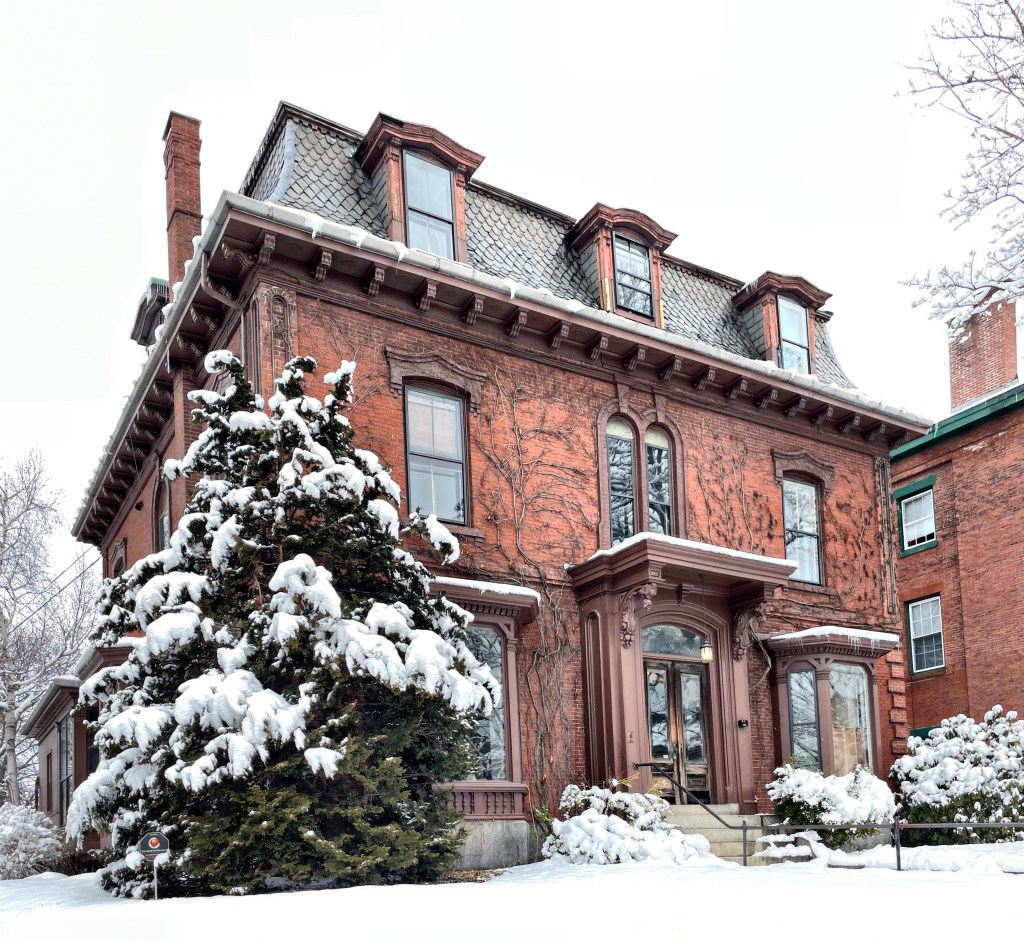
William Allen Jr. House // 1866

Italianate style houses dominate the Deering Street area of Portland architecturally, but there are definitely some great Second Empire residences and other styles seen here. This house (like seemingly every building in Portland in the 1860s) was designed by architect George M. Harding for William Allen Jr. The house would soon be Harding’s neighbor, so he made an effort to site and design this residence with care. The brick building is capped by a slate mansard roof and it has a beautiful projecting door hood with pendants carved of grapes. Sadly, like some others on the street, the belvedere was removed in the mid-20th century.

George M. Harding House // 1868

Architect George M. Harding built this boxy Italianate style house as his personal residence on Deering Street in Portland, Maine. Harding was very busy in the late 1860s after the destructive Great Fire of Portland in 1866. He designed some of the finest commercial blocks Downtown, including the Rackleff Block and Woodman Block, both excellently preserved landmarks in town today. For his own residence, he pulled out all the stops, with bold proportions, carved trim details, and a center tower capped with a mansard roof. The tower was removed in 1956, but the rest of the house is just stunning. Architect-designed houses for their own residency are always fun to find!

Francis Waldron House // 1867

Francis Ashby Waldron (1816-1898) was born in Buckfield, Maine to an old New England family. He moved to Portland for job opportunities and worked as a merchant, eventually establishing Waldron and True with business partner Samuel True. The firm was engaged in dealing grain, salt, corn, and more. After a few years of profits, Francis had this Italianate style mansion built on the fashionable Deering Street just west of Downtown. The property was passed down to his children after his death in 1898, and it remained in the family until 1950. The house originally had a prominent belvedere at the roof, but it was eventually removed. The former Waldron House is now maintained as a law office.

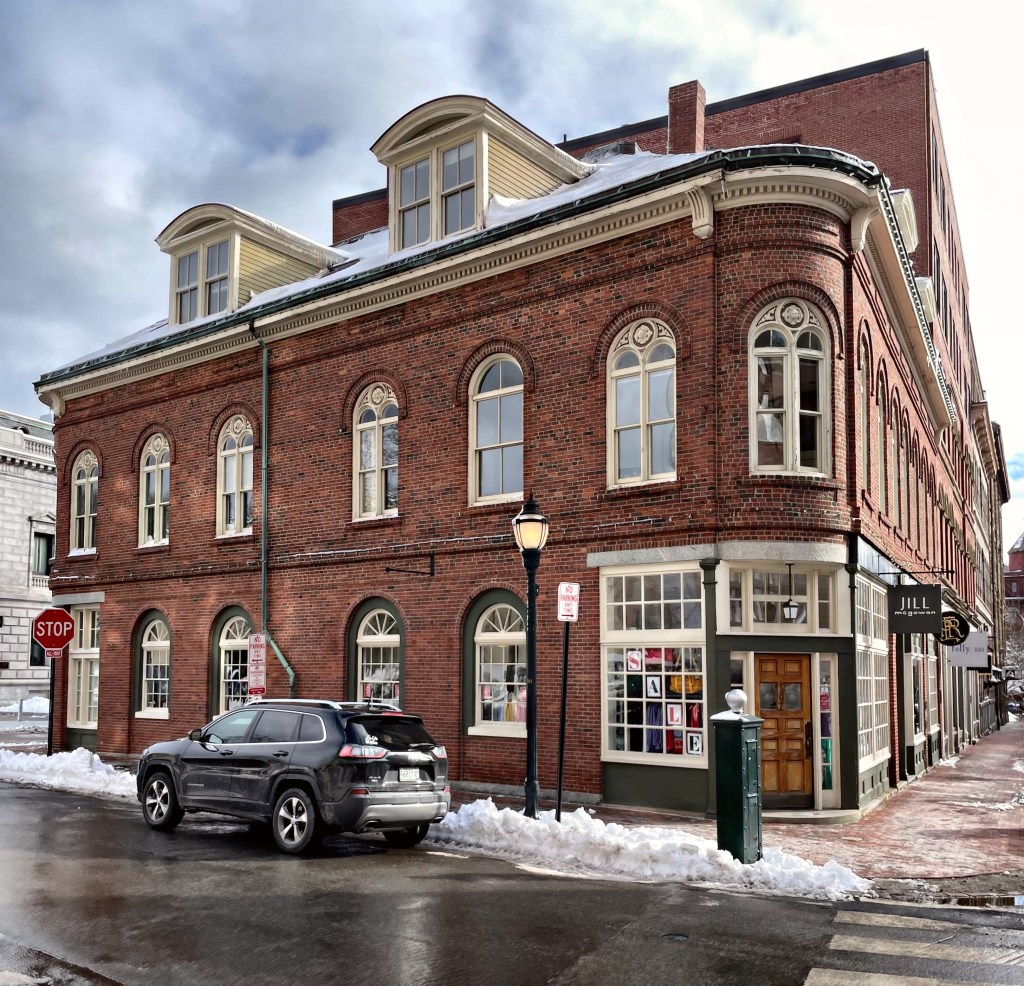
Printer’s Exchange Building // 1866

Why is commercial architecture from the second half of the 19th century so perfect? This structure in Downtown Portland is known as the Printer’s Exchange Building and was built in 1866, amongst the ashes of the buildings lost in the Great Fire of 1866. Charles Quincy Clapp is credited as the designer of the structure, which is Italianate in style with the paired round arched windows set into larger openings. The rounded corners are a really subtle but splendid touch in the design. The building got its name as it was home to the Eastern Argus and the Portland Daily Press, among other newspapers who rented the space from owner, Horatio Nelson Jose. I really like this one!

Thompson Block // 1868

Another of Portland’s stunning mid-19th century commercial blocks is the Thompson Block, built in 1868. The structure is one of the most high-style commercial buildings in Maine and is in a great state of preservation. The building was designed by George M. Harding, a VERY busy architect after the disastrous Great Fire of 1866, which destroyed much of Downtown Portland. The building stands three-stories tall with a polychrome slate mansard roof providing a full fourth floor, a subtle and great way to get extra height without making a building too overbearing. The mansard is broken up at the facade by dormers with round-arch windows and keystoned and eared hoods. If only all cities held off urban renewal, we would have so many more structures like this!

Portland Mariner’s Church // 1828

Talk about a unique church! The Mariner’s Church in Downtown Portland was built in 1828 and is modeled after Faneuil Hall in Boston and East India Hall, Salem, Massachusetts; and was the first Greek Revival building in Portland (with some lingering Federal flair). It also for many years was Portland’s largest building! Its concept was that of a place of worship and education center for seamen of the port city between their voyages on the open sea. The ground floor was designed to house shops for merchants whose rent would support and maintain the building. The structure is virtually unchanged from how it looked nearly 200 years ago and showcases the importance of the sea to the port towns and cities of New England!