Dimock Center – Sewall Maternity Building // 1892

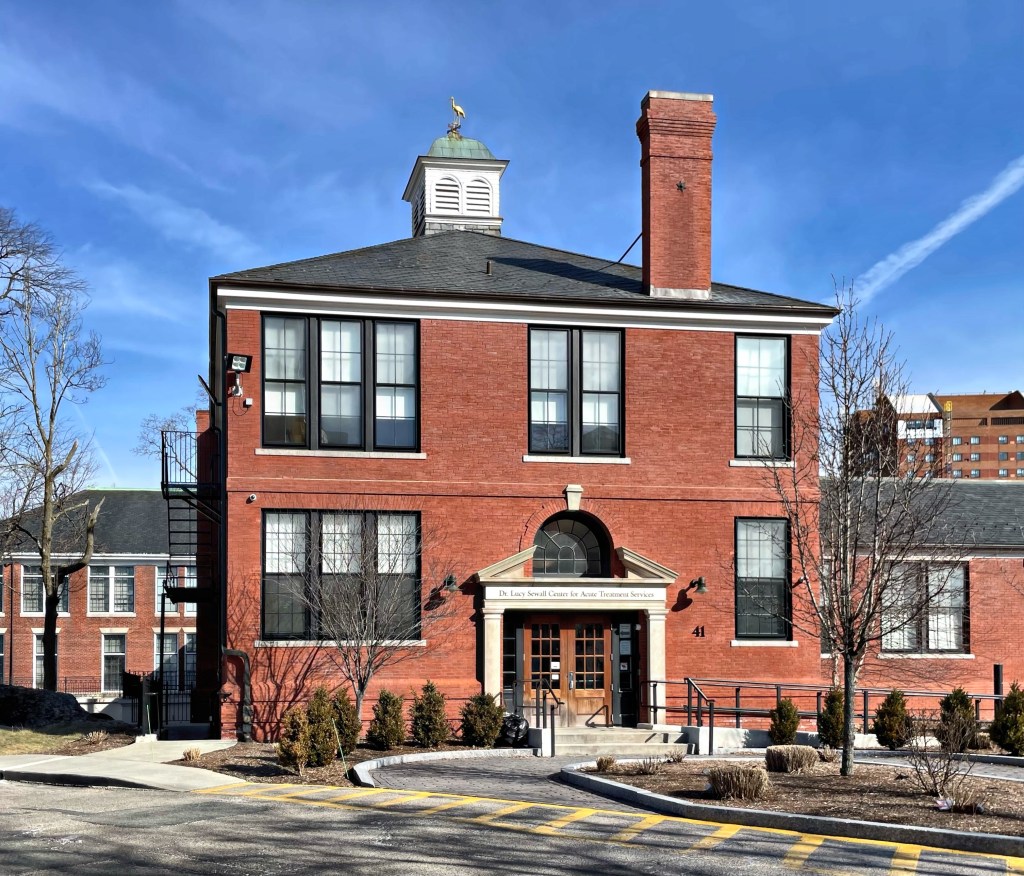
As the New England Hospital for Women and Children continued to grow in the decades following its founding in 1862, expanded facilities were needed to deal with increased patients along with new nurses and doctors to treat them. Land was acquired across from the Cary Cottage and Zakrzewska Building, and a second building campaign began to expand the facilities and grow the women’s hospital. The management of the hospital did not hire Cummings and Sears, but went with architect John A. Fox to furnish plans for a new maternity building. The Sewall Maternity Building was designed in the Colonial Revival style, a relatively modest example that features a unique broken pediment over the door housing a large window. In 1916, the building was expanded by an addition at the rear which enclosed a central courtyard, it was also designed by John Fox.
Dimock Center – Zakrzewska Building // 1873

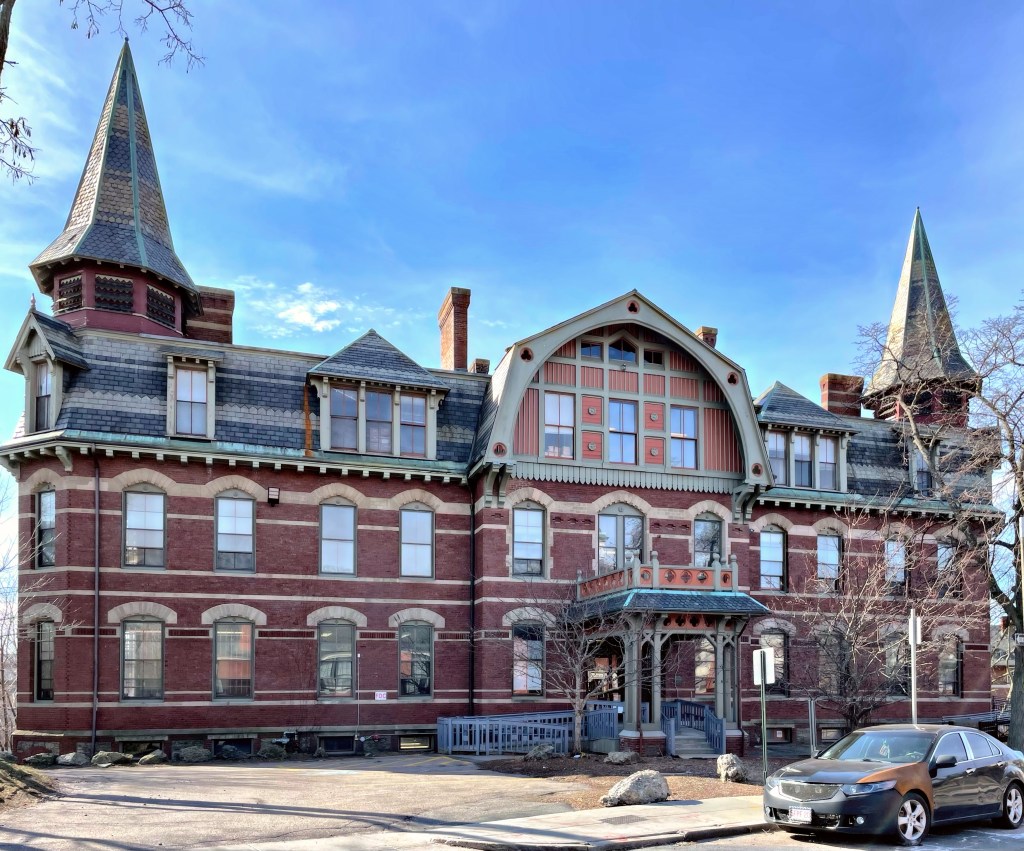
Following the construction of Cary Cottage at the New England Hospital for Women and Children in Roxbury (last post), architects Cummings and Sears turned their attention to designing the most important facility in the complex, the large two-story Zakrzewska Building built in 1873. It is a fine example of polychromatic High Victorian Gothic style with Stick detailing. The building is characterized by its decorative stone and brick string courses, arched window heads, polychrome slate roof, end towers, and a gambrel dormer. The building was named after Dr. Maria Zakrzewska (1829-1902), a Polish-American doctor who moved to the United States in 1853, eventually settling in Boston in 1859, working as a professor of obstetrics at the New England Female Medical College. There, she realized that women in medicine did not have the same opportunity to advance in their field and left, launching her own hospital, the New England Hospital for Women and Children. It was the first in Boston, and the second hospital in America, to be run by women physicians and surgeons. Dr. Zakrzewska knew that the opportunity to work with large numbers of patients was vital if women physicians were to achieve the same levels of training and standards of practice as male physicians. The hospital became a primary training hospital for several generations of women physicians, and also trained nurses. The hospital was extremely successful and remains a medical institution to this day, as the Dimock Health Center.

Dimock Center – Cary Cottage // 1872

The New England Hospital for Women and Children (known today as the Dimock Community Health Center), is comprised of eight major buildings on a nine acre site located on a small hill in the Roxbury neighborhood of Boston, close to the border with Jamaica Plain. The complex is significant for its role in the history of women in medicine as both a teaching and a practicing hospital, as well as for its architecture. The facility was incorporated as the New England Hospital for Women and Children in 1863, almost five years before Roxbury was annexed to Boston. The Hospital was founded by Dr. Marie E. Zakrzewska together with Lucy Goddard and Edna Dow Cheney in order to provide women with medical care by competent physicians of their own sex and to educate women in the study and practice of medicine. As such, it was one of the first hospitals of its kind in America. The oldest building in the complex is the Cary Cottage, pictured here. The charming building was constructed in 1872 by the architecture firm of Cummings & Sears. The Cary Cottage served as the hospital’s original maternity cottage, and is also important as an almost intact example of Stick Style architecture. The building was intentionally detached from the general surgical facilities to minimize the dangers of infection during childbirth.

Howard House – St. Mary of the Angels Rectory // c.1867

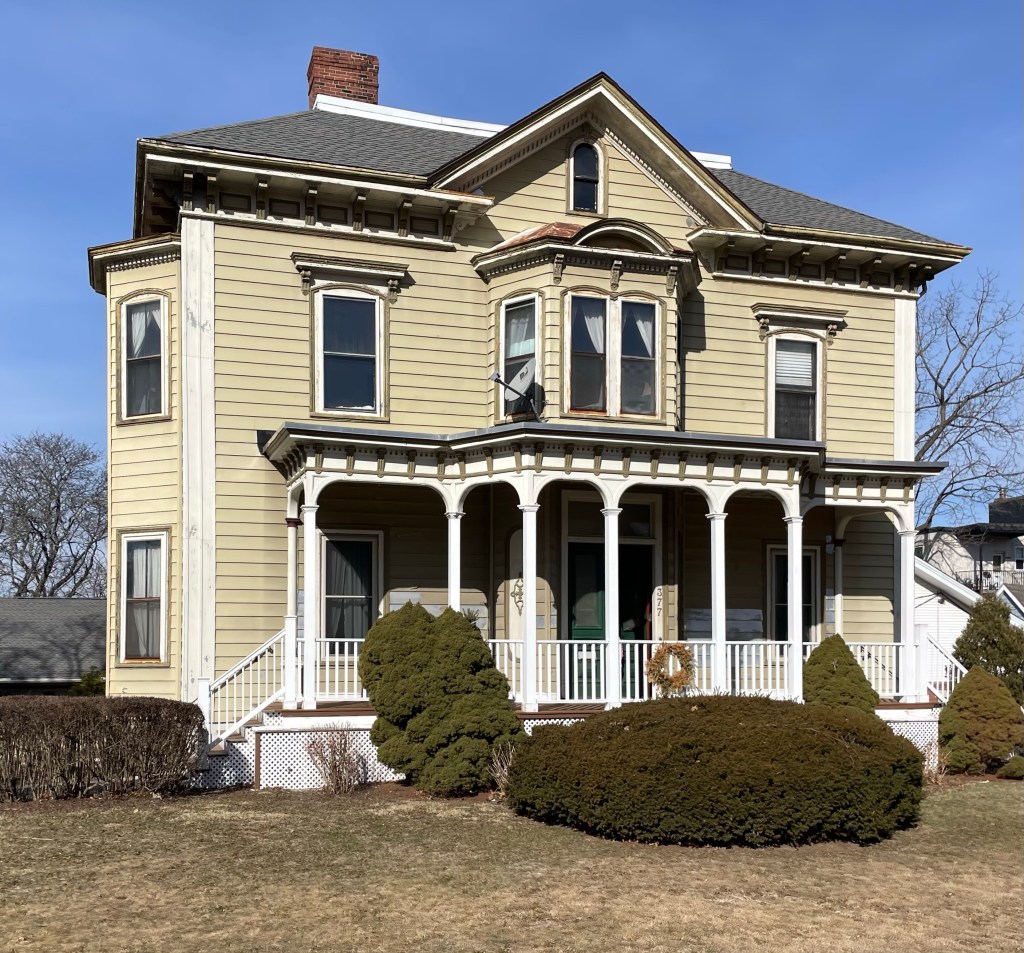
Moving north from the Stonybrook section of Jamaica Plain, Boston, I explored around Roxbury, an area often overlooked by tourists, but has a lot of history and great buildings with rich stories! This old Victorian-era house was built around 1867 for Joseph W. Howard and his wife Lillie about the time of their wedding. The large Italianate style mansion was built in a period and location where wealthier Boston merchants could build large mansions with space in the inner suburbs of the city. The area remained fairly bucolic until the turn of the 20th century when housing development really picked up in Boston’s neighborhoods. By this time, owner Samuel Shuman sold his property on the busy corner lot to the Roman Catholic Archdiocese of Boston. In 1907, construction of the basement church on the site of the former Shuman Estate began. The original plans called for building a larger, upper church at a later date. However, due to a number of factors over the years, the upper church was never built. After WWII, Roxbury saw a demographic change and the church is largely home to a Black and Hispanic congregation to this day. The former Howard House is still owned by the Archdiocese as the rectory.

Dadmund-Glennon House // 1875

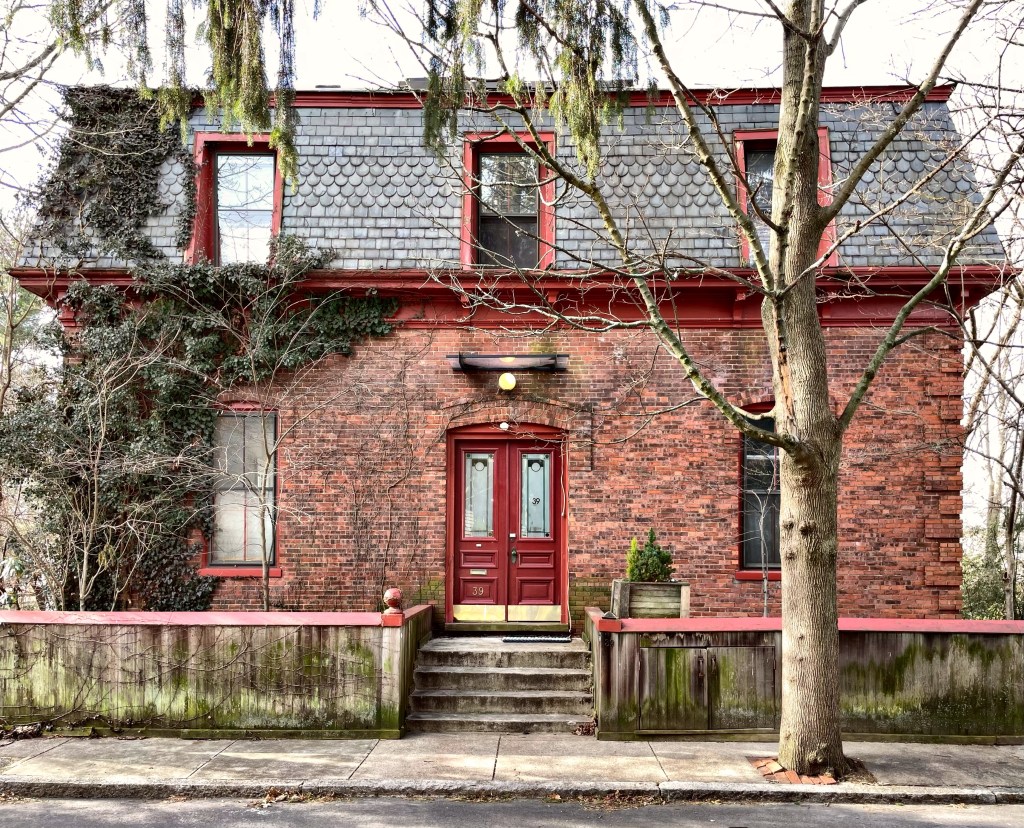
Boston’s many unique neighborhoods have some amazing hidden architectural gems. It always helps to get out and explore by walking or biking your city to see things from a different perspective than a car or bus. This brick mansard house sits on a quiet dead-end street in the Stonybrook section of Jamaica Plain and was built in the mid-1870s for Joseph A. Dadmund, a coppersmith. From the 1880s-1920s, the house was occupied by the Glennon Family, who built two large wooden stables in the rear yard, both of which remain to this day.

Margaret Fuller Primary School // 1891

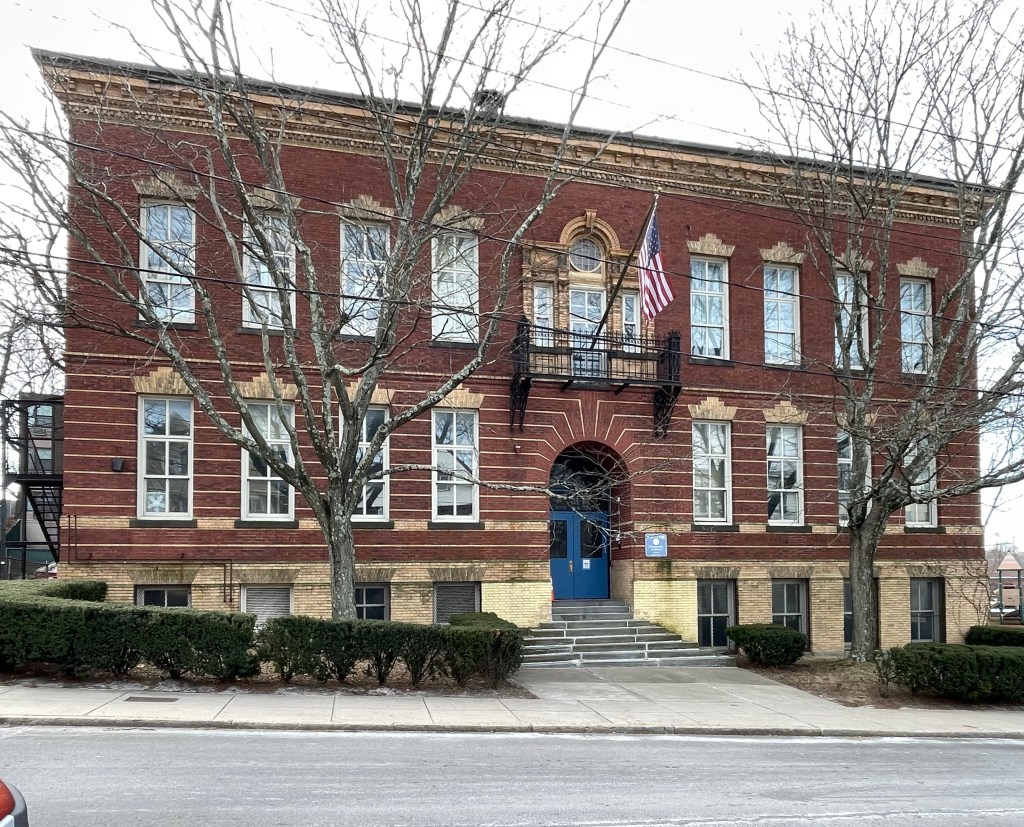
The Margaret Fuller Primary School (now Community Academy) is a public school in Boston that shows how much attention to detail the school department and the city architect paid when designing these structures in the late 19th and early 20th centuries. The Fuller School was constructed in 1892 to alleviate an overcrowded school district resulting from rapid urbanization. Jamaica Plain was one of Boston’s first streetcar suburbs largely spurred by the growth of the Boston and Providence Company Railroad between 1860 and 1890, when the area saw a shift from large bucolic estates to subdivided urban housing (largely triple-deckers and apartment buildings along major routes). With the surge in population, many new schools were built city-wide, including this primary school which was designed by Edmund March Wheelwright (1854–1912), a prominent Boston-based architect who served as City Architect for Boston from 1891 to 1895. Architecturally, the building is a stunning example of the Colonial Revival style with red and buff brick walls which are laid in a Flemish bond and rusticated at the first story with single recessed courses of buff brick. An arched entrance and Palladian window with iron false balcony sit at the central bay. The school was named after Margaret Fuller Ossoli (1810-1850) an early transcendentalist and writer advocating for women’s rights born in Cambridge.

Isaac Cary Estate // 1850

Isaac Harris Cary was born in the North End neighborhood of Boston, Massachusetts on November 3, 1803, the seventh child of Jonathan and Mary Cary. In 1824, Isaac and his brother William formed a partnership and ran a fancy goods imports business, Isaac H. Cary & Co. on Washington Street in Boston. The brothers opened a store in New York and William moved there full-time. In 1831, Isaac married Phebe P. Pratt of Roxbury and they would have three children, two of them living to adulthood. After doing business in New York City and later in New Orleans, Isaac and his family settled in the Jamaica Plain section of Boston, purchasing large land holdings and developing real estate. One of the finest lots he owned was developed for his country estate in 1850, an Italianate/Second Empire-style mansion perched atop an outcropping of Roxbury puddingstone. The large home with a rear three-story tower remained in the Cary family under his single daughter Susanna’s ownership until her death in 1913.

Talitha Cumi Home // 1912

One thing I love about Boston is that nearly every old building has such a rich history that takes so much time to compile and write up (this account keeps me busy)! Located on Forest Hills Street in Jamaica Plain, this stucco building caught my attention when driving by, so much so, that I had to stop and go back. The building was constructed in 1912 as a home for unwed mothers called Talitha Cumi Home (a phrase from the Bible meaning “Arise, young woman”). The charitable organization outgrew their space in the South End and sought greener pastures and open space in Jamaica Plain. The group had been organized in 1836 by “earnest Christian women” who longed to open a “door of hope” to “those hopeless and helpless girls who found themselves facing the sadness and shame and wrong of unwed motherhood.” The Talitha Cumi Home allowed pregnant women to reside and birth their children before their pregnancy began to show. The site originally included an administration building and a hospital with both structures connected by a covered breezeway. The home closed in the 1950s and the former home for unwed mothers has since been converted to a middle school.

West Roxbury District Courthouse // 1922

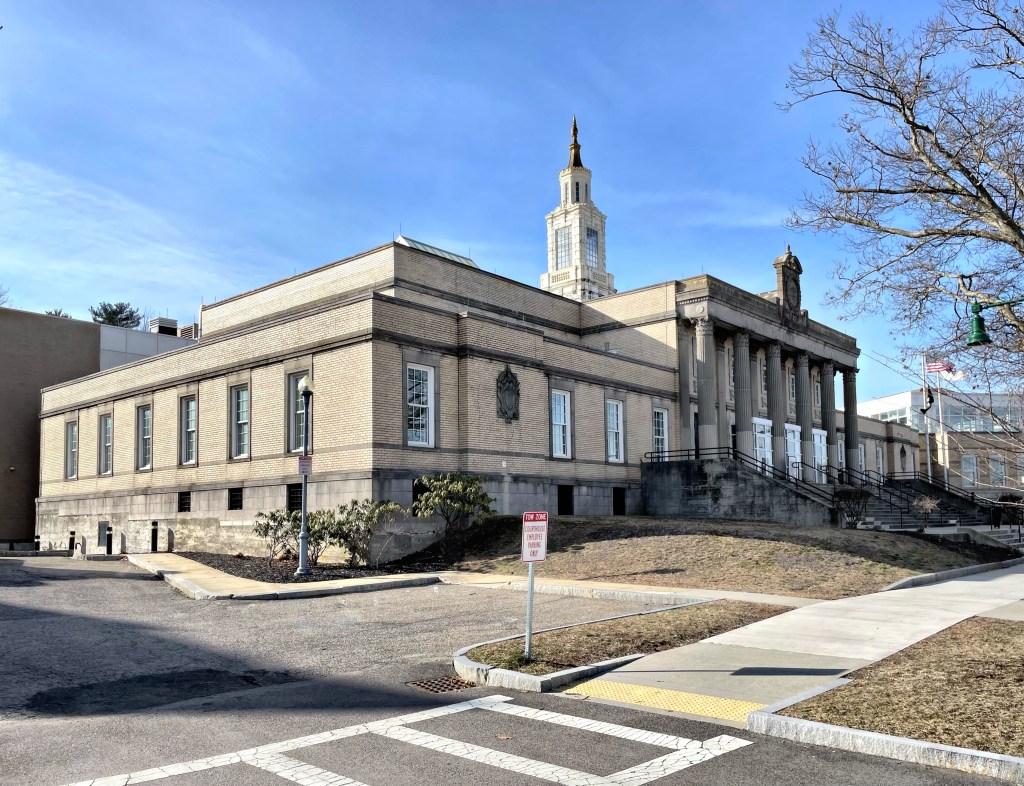
Boston neighborhoods are very confusing, and how the West Roxbury District Courthouse came to be located in Jamaica Plain is just one example. The independent Town of West Roxbury was in existence from 1851 until 1874, a mere 23 years, bookended by its time as a section of the Town of Roxbury and being annexed into the City of Boston. West Roxbury originally included parts of the Jamaica Plain and Roslindale neighborhoods. Ultimately, West Roxbury became one of the city’s eight large districts and its municipal court division is served by this Neo-Classical style building. Built in 1922, the current West Roxbury Courthouse building on Arborway, was and still is, from a municipal court perspective as well as an historical perspective, in West Roxbury. The West Roxbury District Courthouse was designed by Timothy G. O’Connell and Richard Shaw of the firm O’Connell and Shaw who were best known for their ecclesiastical designs in New England, largely specializing in the Gothic and Arts and Crafts styles. Their design for the West Roxbury Courthouse remains one of their finest non-religious buildings and a departure from their traditional styles.

J. B. Mulvey Triple Decker // 1904

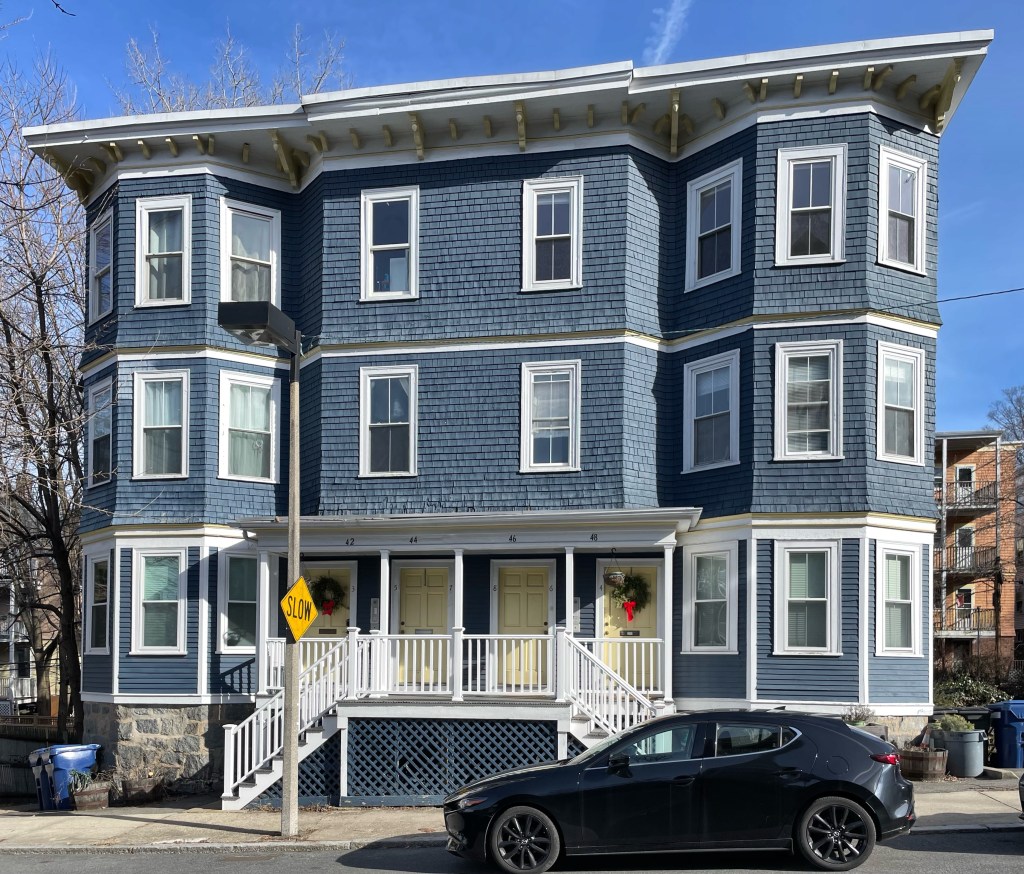
Across the street from the Lannin Triple Deckers (last post) this large triple decker (and the others in the row) was built in 1904 for developer John B. Mulvey. Mr. Mulvey was born in Ireland and migrated to Boston at the age of 16. He climbed his way up the ladder and worked as a builder and developer, largely in Boston-area suburbs and neighborhoods. At the turn of the century, these triple deckers (also known as three deckers) proliferated throughout the Boston suburbs around train stations providing affordable flats to residents. Many were built and rented out by developers, but eventually, owners would live in one unit and rent the other flats for additional income, providing upward mobility and equity, largely benefiting immigrant communities. This high-style example is very well maintained and is a more uncommon double-three decker.