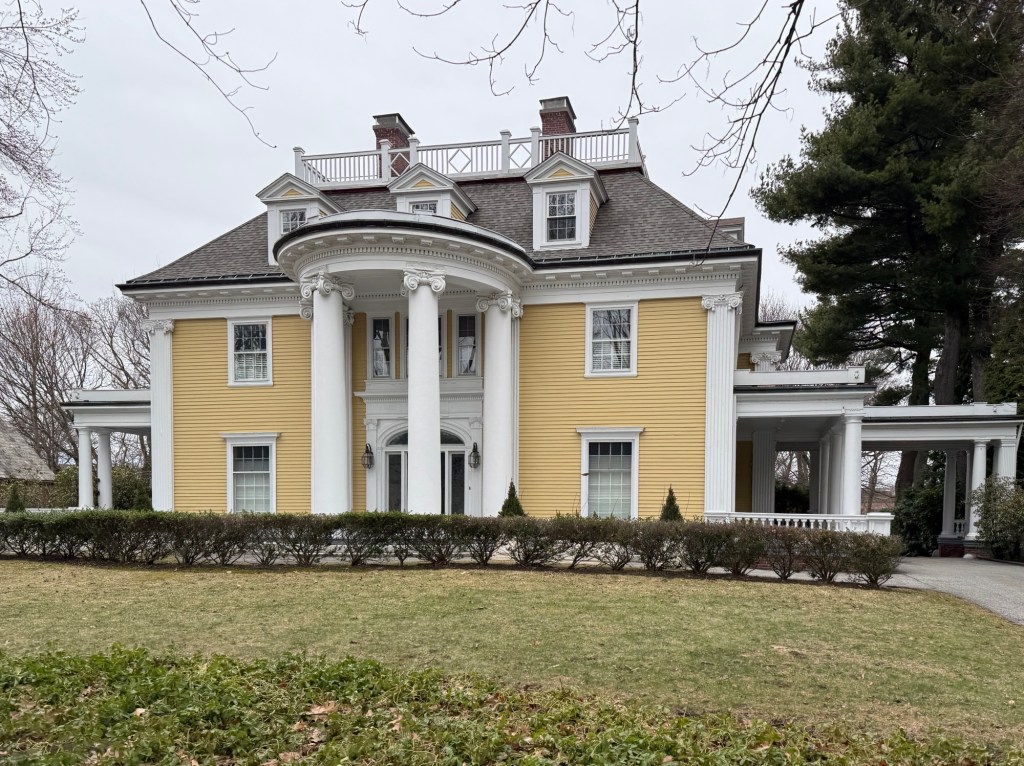
Silas Peavy House // 1905

Silas Peavy (1858-1939) was born in Waterville, Maine, and with his brothers, Gustavus and Leopold, worked at his father’s clothing and merchandise store. The family moved to the Boston area and established J. Peavy and Brothers, continuing the family business in Boston with locations in New York. In 1904, Silas Peavy purchased a house lot on Kent Street and hired the architectural firm of Hartwell & Richardson to design a house there for his family. Peavy likely moved to this neighborhood as it became a Jewish enclave around the turn of the 20th century. The Silas Peavy House is an excellent example of the Neo-Classical style with symmetrical facade, porte cochere on the side, and monumental elliptical portico supported by two-story Ionic columns.
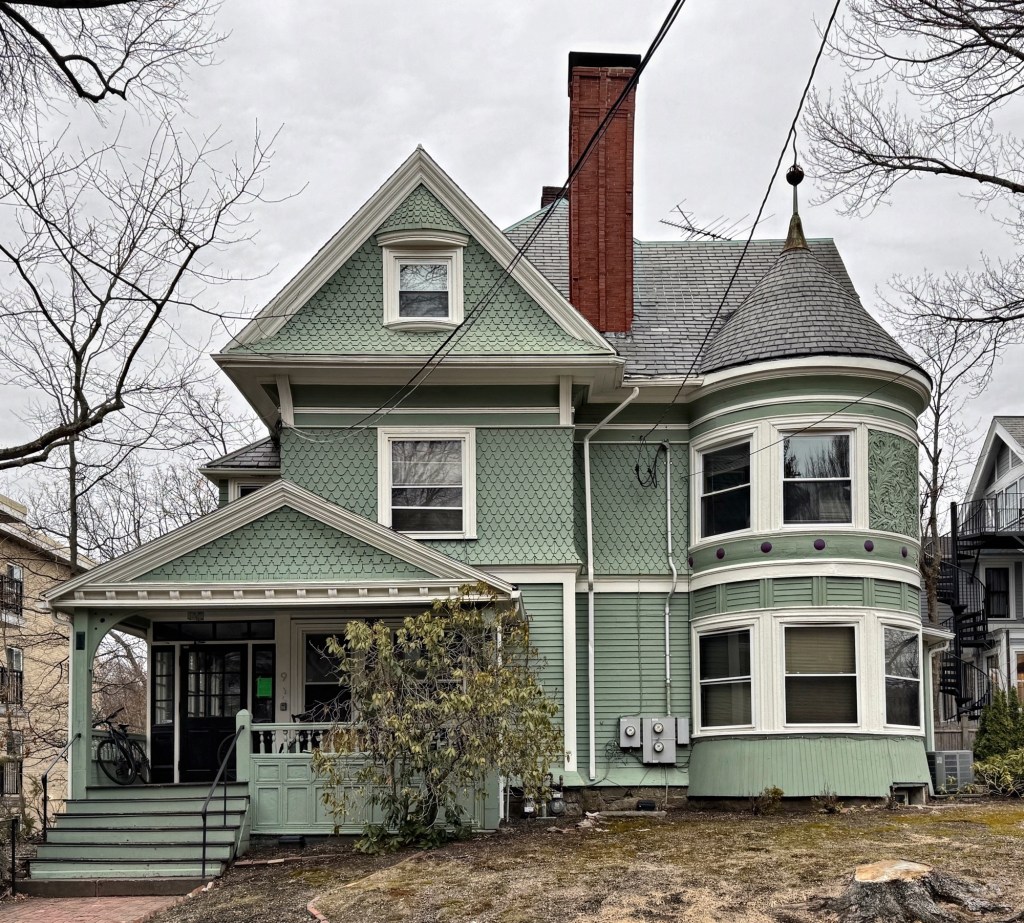
George and Alice May House // 1883

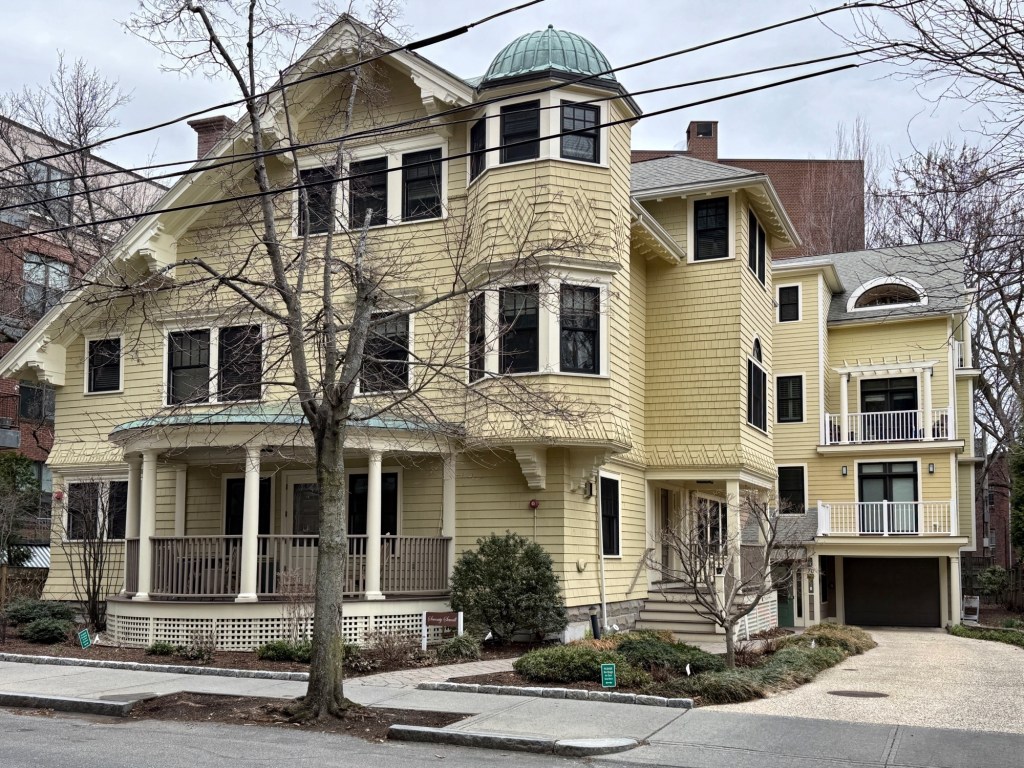
Built in 1883 for George Putnam May and his wife, Alice (Walworth) May, this Queen Anne style residence on Francis Street in Brookline, Massachusetts, contains all of the traits of the architectural style. George P. May was employed at the Walworth Manufacturing Company a plumbing pipes and equipment manufacturer founded by James J. Walworth, who was Alice May’s uncle. The property was subdivided on Alice’s fathers estate which fronts Kent Street nextdoor. I wonder if George wanted to live in the rear yard of his father-in-law! For their Brookline residence, the couple hired architect, S. Edwin Tobey, who paid great attention to detail. The May House features an asymmetrical plan, varied siding types, complex rooflines, and a corner tower with conical roof.

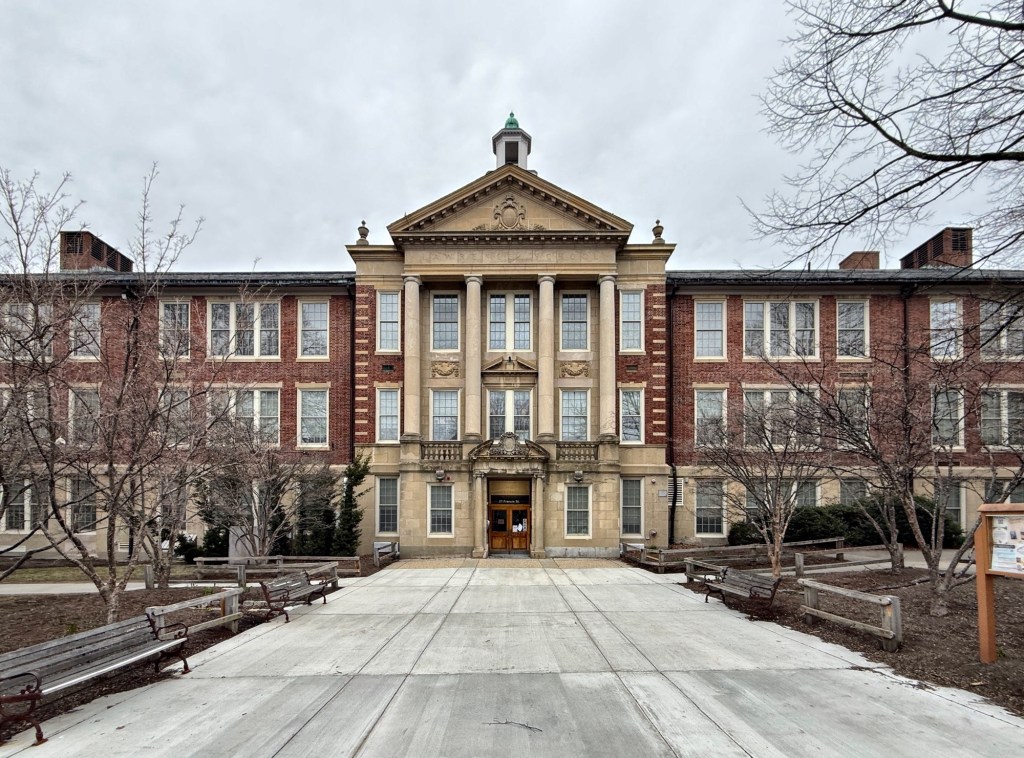
Lawrence School // 1929

The Lawrence School in Brookline, Massachusetts, is a stunning example of a public school building built in the interwar period in the Colonial Revival architectural style. Constructed in 1929, the building replaced an earlier, Stick/Queen Anne style school designed by the firm of Peabody & Stearns. The school is named after Amos A. Lawrence (1814-1886) a prominent local landowner in Brookline. When the earlier school building was outgrown and deemed obsolete, planning began for a new, modern school building for the community. The new Lawrence School was designed by R. Clipston Sturgis a notable local architect who specialized in the Colonial Revival style, and opened in September 1930. The handsome brick building is in the form of a long rectangular block with two perpendicular wings at each end. At the center of the main block is the principal entrance with its columned portico on a projecting pavilion all in cast stone, a cheaper alternative that resembles limestone.

Blenheim Apartments // 1898

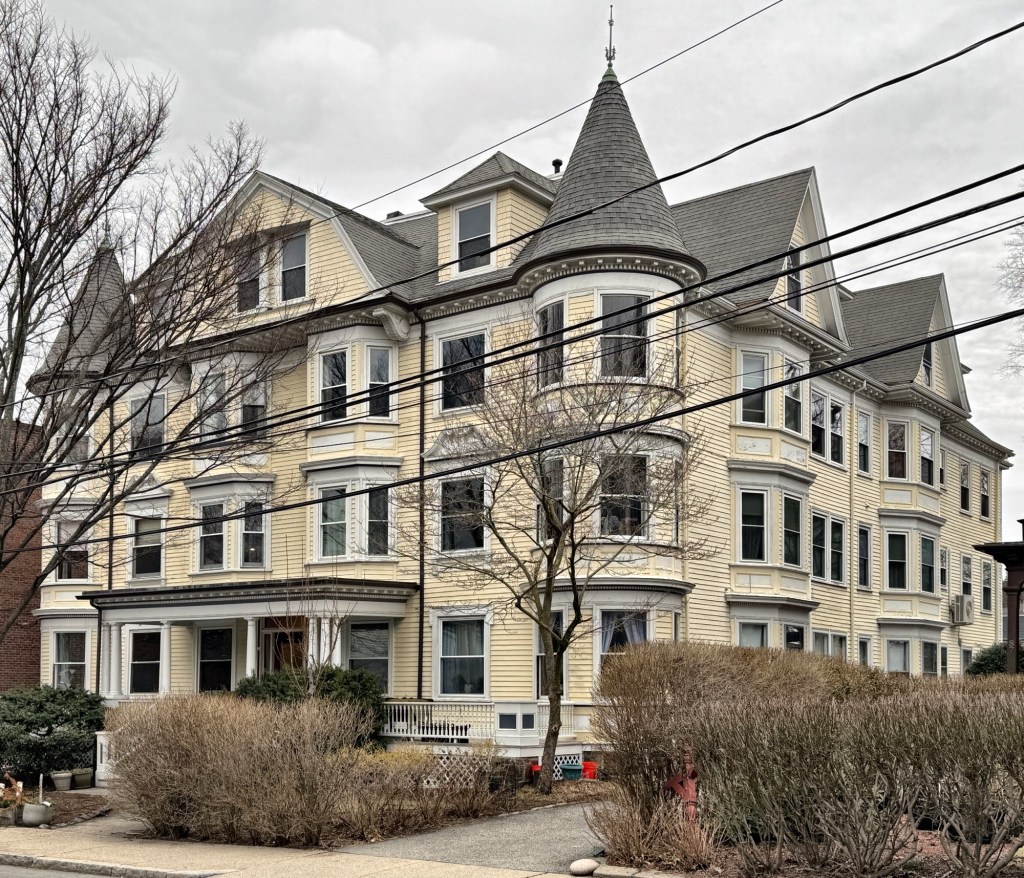
As Brookline, Massachusetts, saw rapid development in the late 19th and early 20th centuries, developers redeveloped lots formerly occupied by single-family residences and built large, multi-family triple-deckers and apartments, specifically in neighborhoods in close proximity to train stations into Boston. This building, constructed in 1898 by local builder, John H. Pineo, for owner, Walter H. Whittemore as an investment property. The building contained six apartments as a double triple-decker with two units on each floors accessed by a central entry and stairwell. The building has been known as the Blenheim Apartments and blends Queen Anne and Colonial Revival styles into a single, eclectic composition. The large massing is broken up by both the undulating facades and roof with projecting bays, dormers and corner towers, along with the applied ornament of panels, dentils, corbels and broken pediment motifs. If all multi-family housing looked like this, people would not complain about density as much!

Potter-Leland House // c.1888

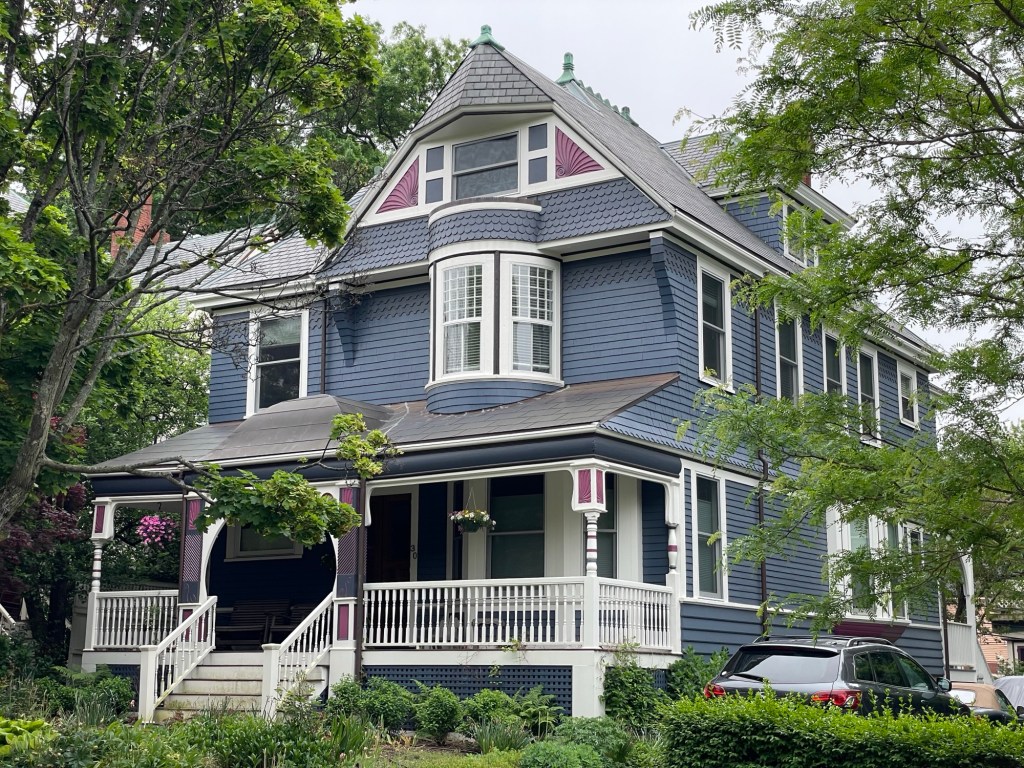
Francis Street in Brookline, Massachusetts, has some of the finest Queen Anne Victorian residences in the Boston area. This is the Potter-Leland House, built by 1888 by William Potter, a wealthy shoe manufacturer and businessman who developed rental housing in the neighborhood not far from his house on Kent Street. Various exterior wall textures, irregular massing, and turned posts on the front porch contribute to the Queen Anne character of this house, but the real showstopper is the rounded bay projection with three, 25-over-2 (yes you heard that right) curved sash windows! The property was later purchased by Herbert M. Leland, a broker.

Mary E. Paul Triple Decker // 1898

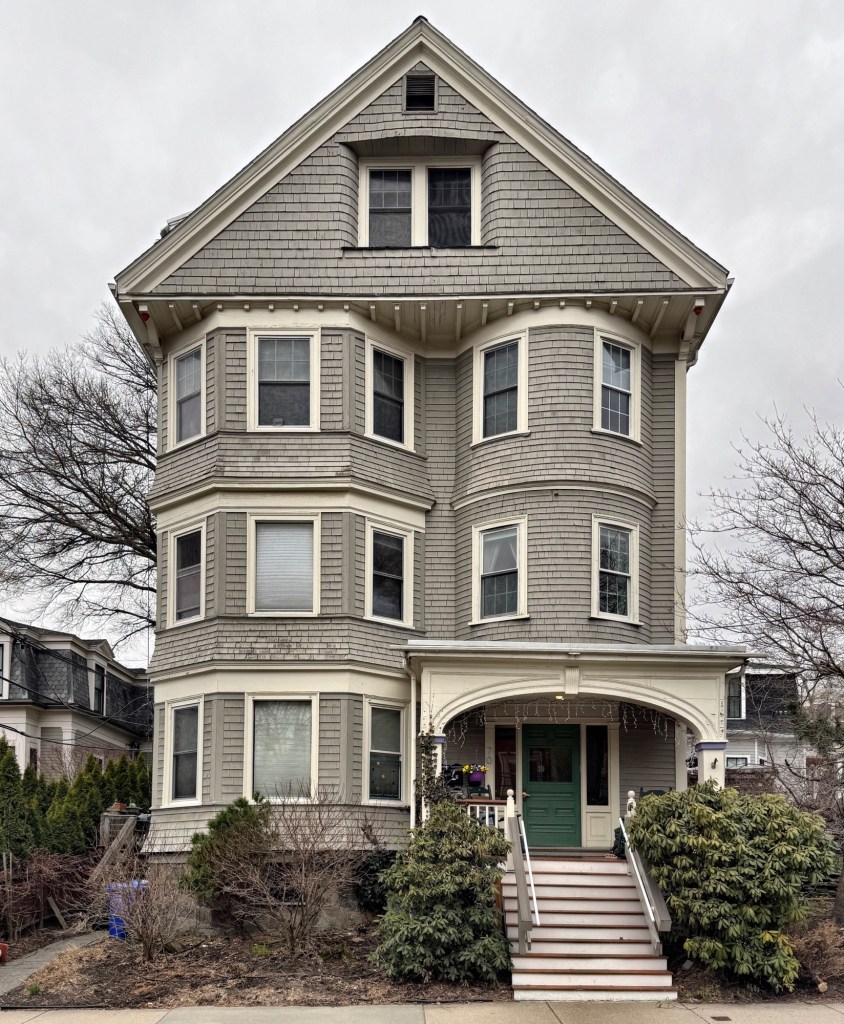
The Triple Decker is a popular housing form that between 1880 and 1930, saw an estimated 15,000 examples built in Boston and surrounding cities. The unique construction of three flats stacked on top of eachother provided density and lowered housing costs for three families and supplying the housing needs of huge numbers of new immigrants and working class families, providing an important path to homeownership. Often, a family could purchase a property, building a triple decker and could live in one unit while renting the others to pay for the mortgage and taxes, providing upward mobility for those who so long were priced out of owning their own home. By the late 19th century however, strong and organized pushback against the housing type occurred, led by groups like the Immigration Restriction League, who were “convinced that Anglo-Saxon traditions, peoples, and culture were being drowned in a flood of racially inferior foreigners from Southern and Eastern Europe,” sound familiar? Led by Prescott Farnsworth Hall, a Brookline resident, the group advocated to limit immigration from areas they deemed “lesser” and locally, fought to ban the construction of triple deckers in Massachusetts, ultimately succeeding in part when in 1912, Massachusetts passed a law allowing cities and towns to ban triple deckers by preventing construction of any ‘wooden tenement’ in which ‘cooking shall be done above the second floor. While major catastrophic fires like the Great Chelsea Fire of 1908 were fresh in people’s minds, a leading cause for the legislation was likely to limit upward mobility of groups of people from owning real estate. The Mary E. Paul Triple Decker, pictured here, was built in 1898 in the Shingle style, contributing to the rich architectural and social character of the surrounding neighborhood.

Gibson-Dukakis Double-House // 1881

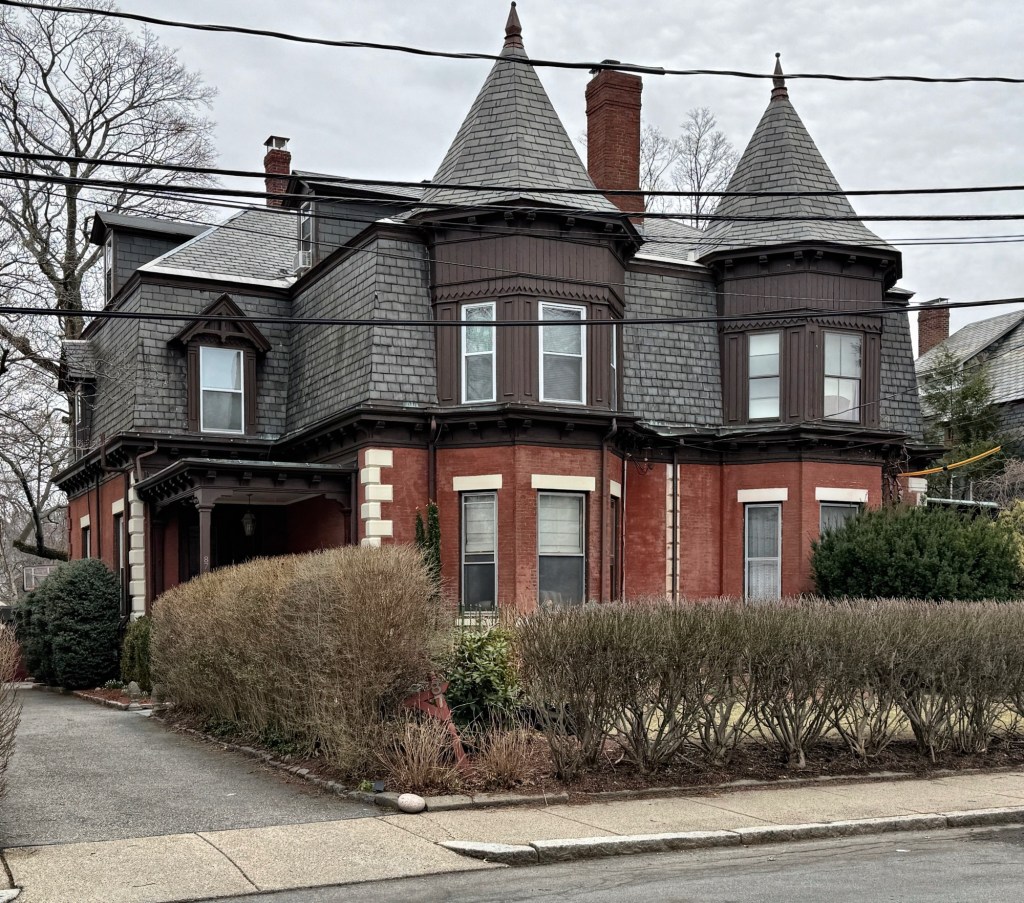
Built in 1881 as an eclectic example of a Second Empire and Queen Anne style Victorian double-house, this charming residence on quiet Perry Street in Brookline, Massachusetts, shows that gentle density like double-houses and three-deckers provides needed housing without disrupting neighborhood character. The property was built for George Gibson and subsequently rented to two families as an investment. In the mid-20th century, half of the double-house was purchased by Michael Dukakis and his wife, Katharine “Kitty” (Dickson) Dukakis. Michael Dukakis would become a prominent politician, first being elected as a Member of the Massachusetts House of Representatives in 1963 later serving two terms as Massachusetts Governor. He was later nominated by the Democratic Party for president in the 1988 election, but ultimately lost to the Republican nominee, George H. W. Bush.

Sewall Apartments // 1938

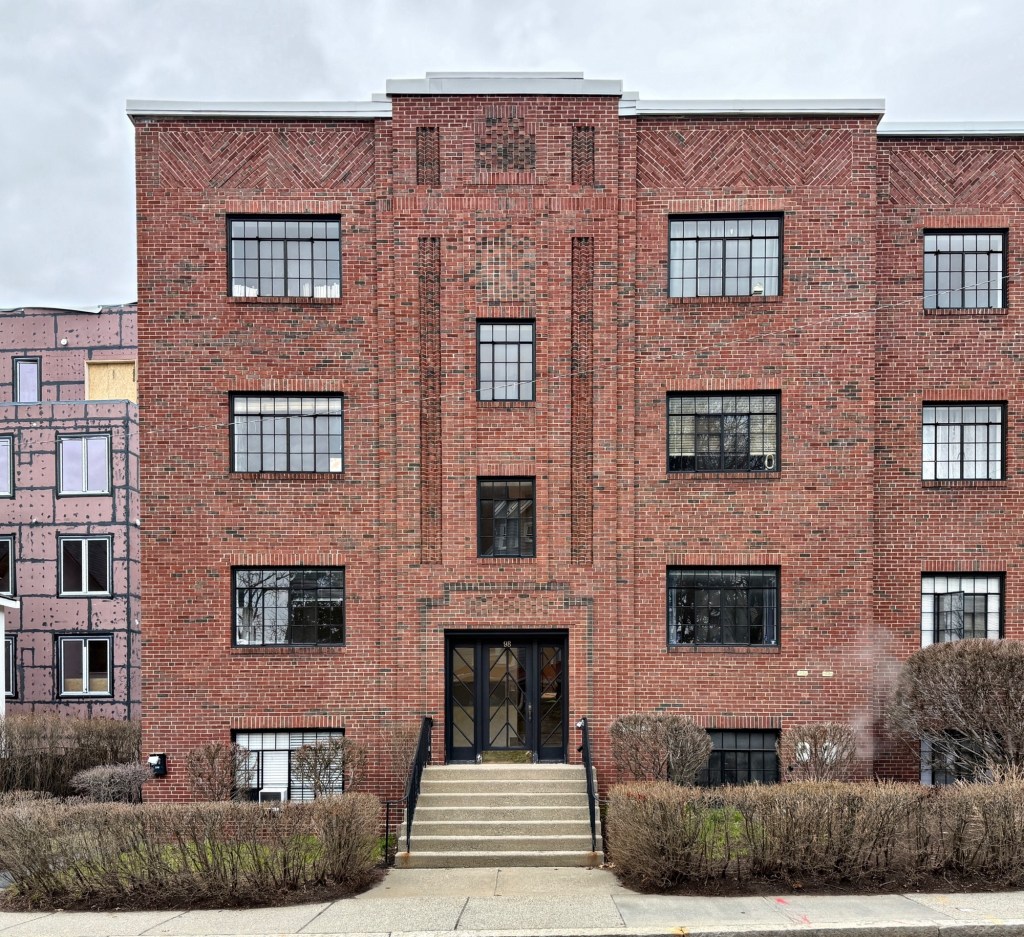
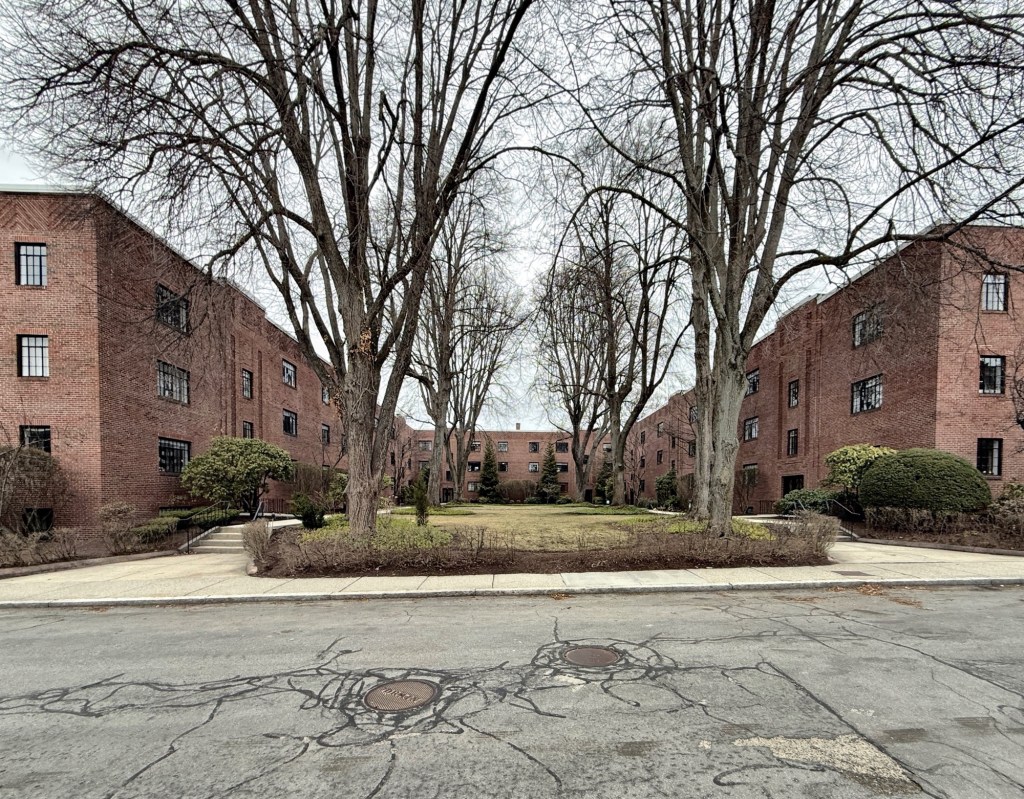
This garden apartment complex at 98-116 Sewall Avenue in Brookline is an excellent example of the Art Deco style which reached its height in popularity in the midst of the Great Depression, so fewer examples of the style are typically found. Here in Brookline, the city was seeing rapid development in the early decades of the 20th century, where large estates were subdivided and commercial areas expanded into once residential neighborhoods. U-shaped in plan and standing three-stories, this complex replaced a large property owned by the Stearns Family, a prominent local family with many properties around present-day Coolidge Corner. The apartments were developed by the G & S Investment Company, a real estate development firm, who hired architect, Saul Moffie, to design the building. Completed in 1938, the complex has richly articulated facades with a variety of geometric brick patterns, including chevrons, diapering, header courses and soldier courses with each entryway identified by a projecting pavilion with a stepped stone parapet above. The doors and sidelights are wood with glass panels in a chevron motif similar to the brickwork and all residential units have steel multi-pane windows. What a gem!

Charles P. Flagg House // 1899

Located on Sewall Avenue in Brookline, Massachusetts, the Charles P. Flagg House exemplifies upper-class single-family housing built in the late 19th century that has been added onto and converted into multi-family housing to serve a growing city. Charles Partridge Flagg (1851-1911) was a real estate developer and head of the D. F. Flagg & Co., a wholesale liquor company his father started in Boston. He purchased the former Dexter property, subdivided the estate, and hired architect Julius A. Schweinfurth to design a home for his family. “Jule” Schweinfurth was long-associated with the firm of Peabody & Stearns of Boston, which in the late 19th century, was one of the premier architectural offices in the United States, but when he was not offered a partnership offer by his bosses, he established a new firm under his name. For the Flagg House, Schweinfurth blended the Shingle, Queen Anne, and Arts and Crafts architectural styles with a unique asymmetrical roofline, wide overhanging eaves with cross brackets and exposed rafter tails, consistent shingle siding, and a two-story polygonal oriel with domed roof at the corner. The Flagg House was moved forward on the lot to facilitate a rear addition and completely renovated in 2011, transforming it into a seven-unit condominium building with garage and elevator. This example of “gentle density” is exactly what communities should allow for, to preserve the character at the streetscape but provide additional housing.

Steuer Apartments // 1913

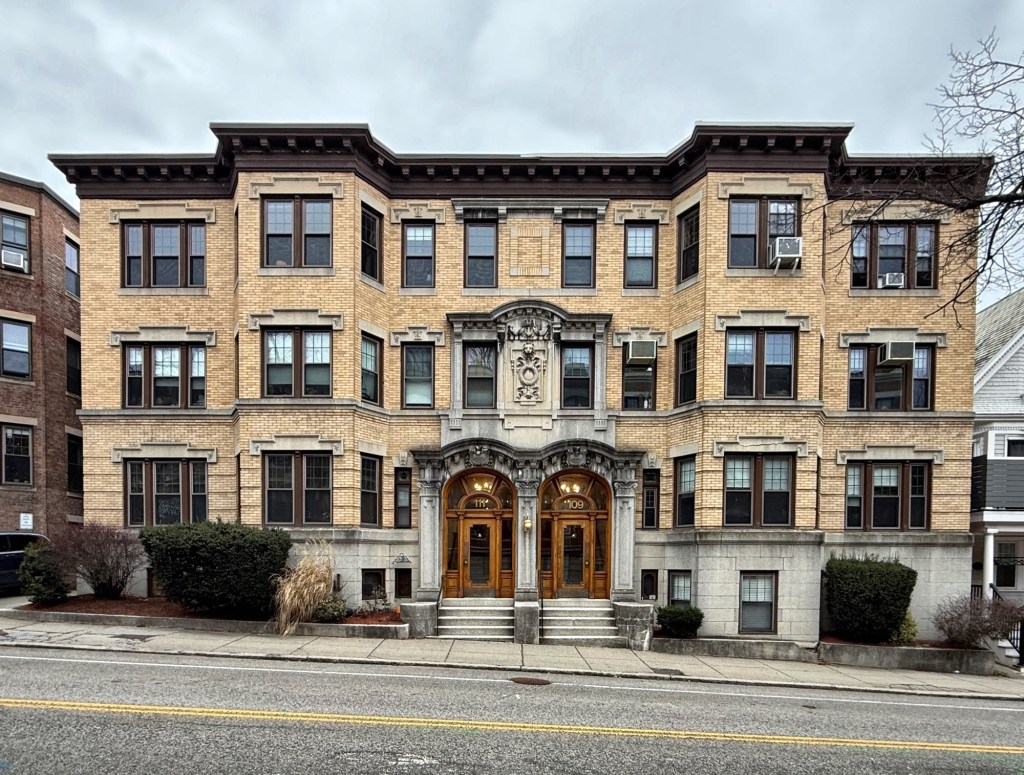
In the early 20th century Brookline, Massachusetts, saw an immense increase to its population, spurred by the streetcar system and a suburbanization of greater Boston. As land is finite, developers eyed the large estates near commuter lines and built apartment buildings to supply housing to middle-income residents. Not all residents welcomed the change as density and the destruction of old estates caused concerns for many wealthy and older residents in Brookline who enjoyed the bucolic suburbs to dense city life. As a result, many Brookline developers hired known architects to design apartment buildings with high-quality materials and finishes to contribute to the rich architectural streetscapes and established neighborhoods. This apartment building, one of two at the corner of Longwood Avenue and St. Paul Street, was built in 1913 from plans by Gay & Proctor, an established local architectural firm. The developer, Bernard Steuer (1859-1921), was an Austrian-Jew that emigrated to the United States and worked in real estate and building in Brookline and Boston. The building features a heavy cornice with modillons, three-story polygonal bays that break up the massing, and cast stone detailing with Beaux Arts style entries.