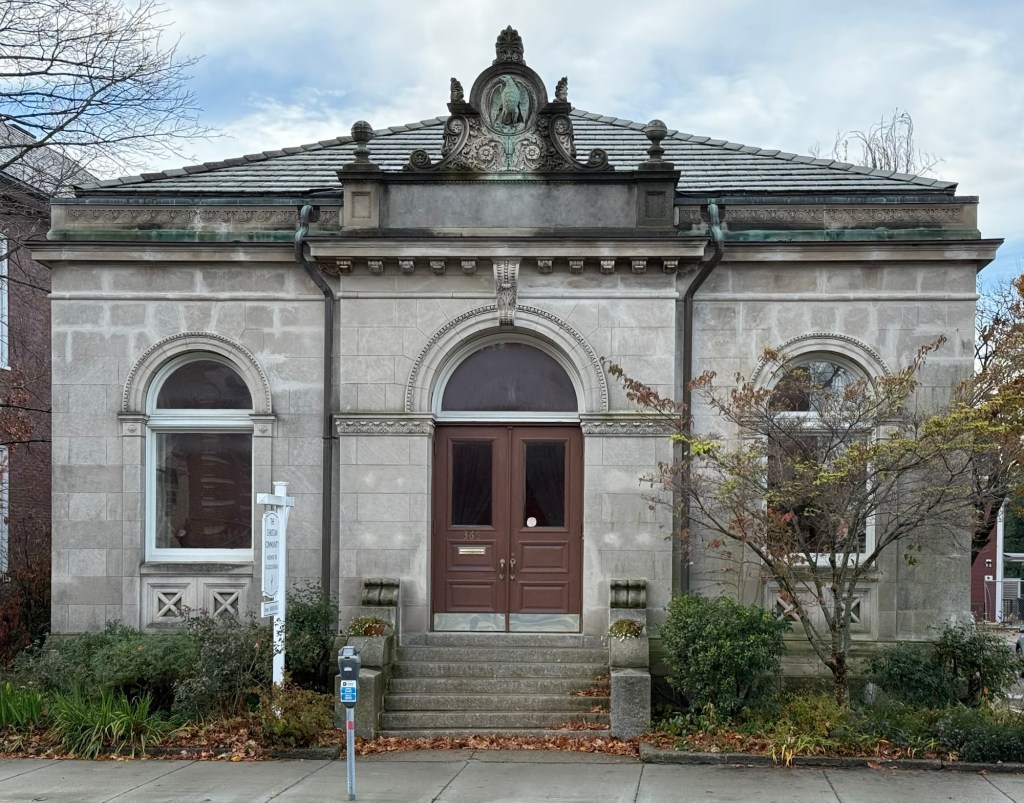
Former Brookline Savings Bank // 1898

The diminutive former Brookline Savings Bank building on Washington Street in Brookline Village is in stark contrast in scale and design from the 1965 Brookline Town Hall down the street. The building committee hired Franz Joseph Untersee, a Swiss-born architect who settled in Brookline, to furnish designs for their new bank, which opened in November 1898. Covered in Indiana limestone, the Beaux Arts style bank building features a modest, three-bay facade that is adorned by large round arched windows surrounded by an egg-and-dart motif, and an elaborate pediment with acanthus leaf and a central eagle in copper. Like many local banks, the Brookline Savings Bank saw a series of acquisitions and mergers throughout the 20th century, and this small bank building was sold. Today, the former Brookline Savings Bank on Washington Street is occupied by a church.
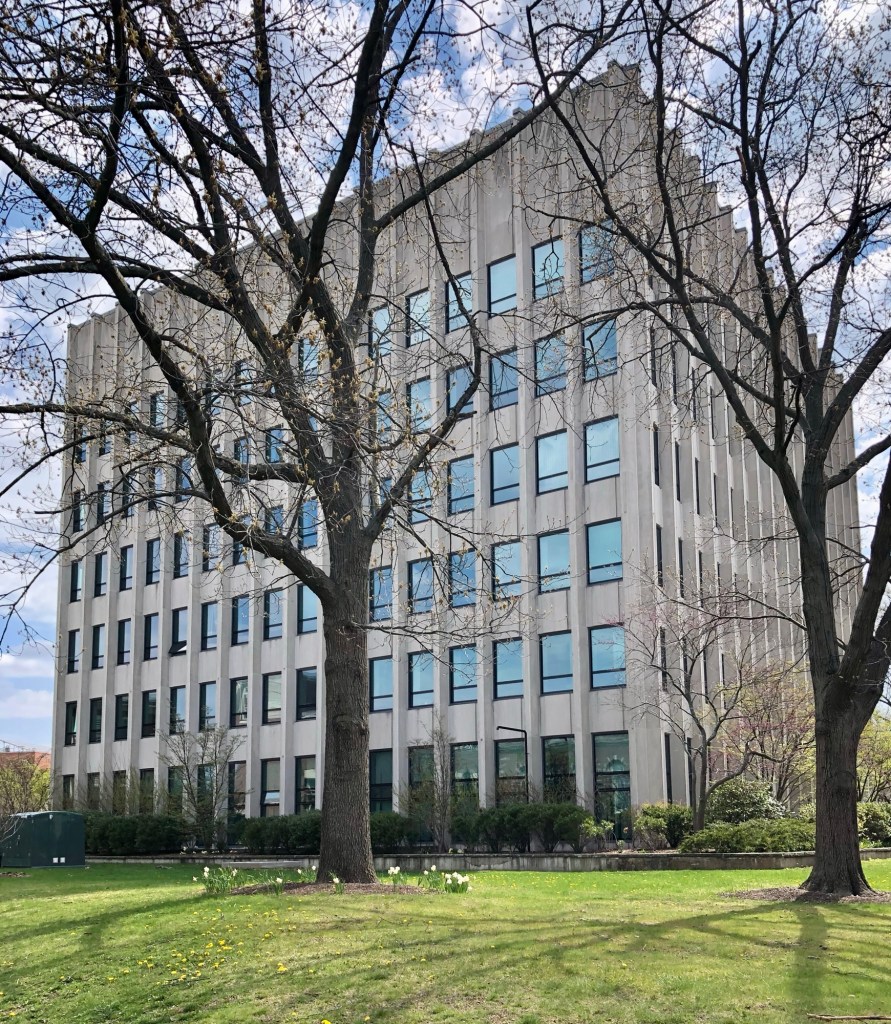
Brookline Town Hall // 1965

The modernist Brookline Town Hall building stands in stark contrast to the many historic buildings in Brookline Village, and even more-so from the town’s third Town Hall, a Victorian Gothic design by architect Samuel J. F. Thayer. Completed in 1965 as a six-story municipal “skyscraper”, the structure was designed by Anderson, Beckwith, and Haible, architects who specialized in sleek, clean, Modernist designs, primarily in office parks and college campuses. The unadorned box is broken up only by the rows of identical windows and slightly projecting fins, which break up the bays in their own monotony. Like many such municipal and office buildings of the time, the structure is set back from the street and surrounded by landscaping, with surface parking behind. While the building was lauded when it opened in 1965, tastes shifted and like in many communities, a majority of the public (and likely the employees who work here) would have preferred its predecessor.

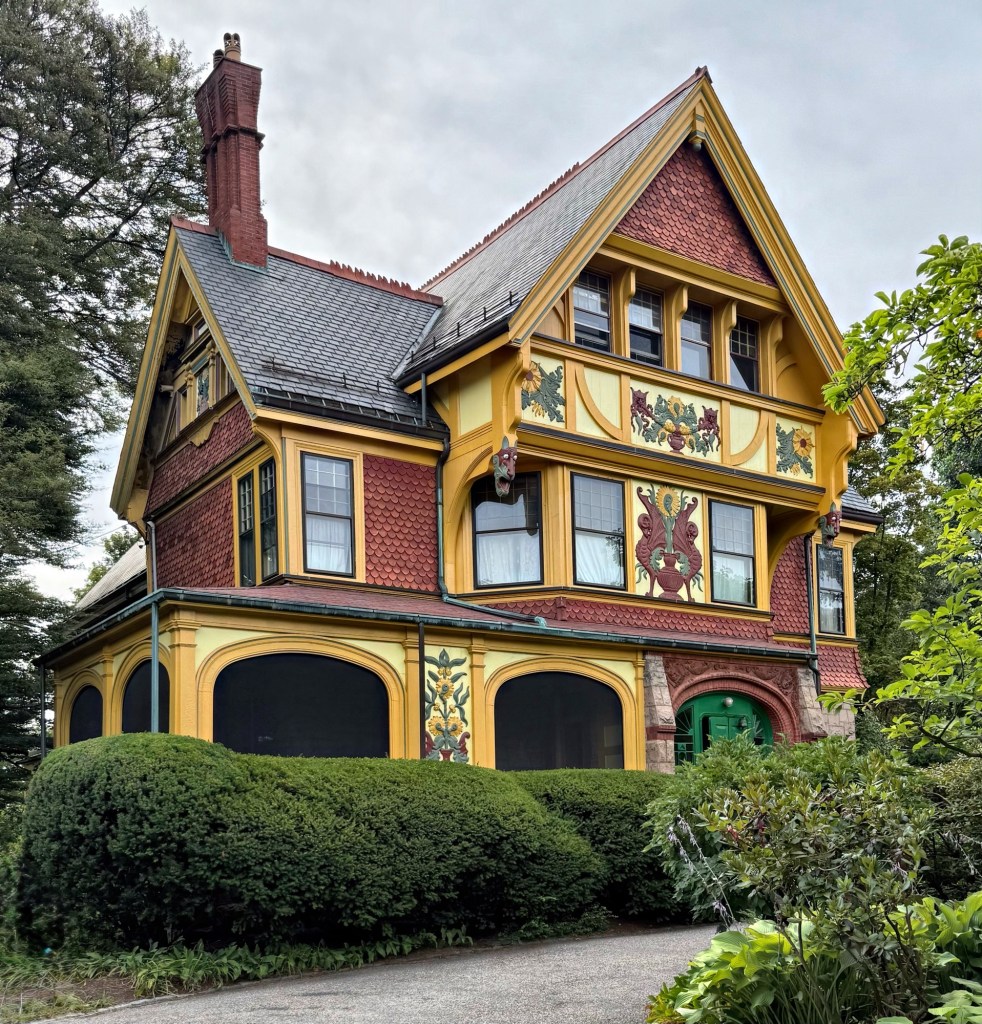
Edward Stanwood House // 1880

The Edward Stanwood House at 76 High Street in Brookline, Massachusetts, is one of the finest and exuberant examples of the English Victorian Queen Anne style, notable for its varied wall textures and materials, unique form, and applied ornament. The house was built in 1879-1880 for Edward Stanwood, who was for many years the editor of the Boston Daily Advertiser, and a children’s magazine, The Youth’s Companion. The ornate residence was designed by Clarence Sumner Luce, with interiors by Thomas Dewing. The Stanwood House features a well-preserved exterior and period-appropriate paint scheme, highlighting the bas-relief sunflower ornament and gargoyles. Of particular note is the use of hung tile siding, overlaid to give the appearance of fish scales and the roof cresting.

Charles Storrow Rental House // c.1884

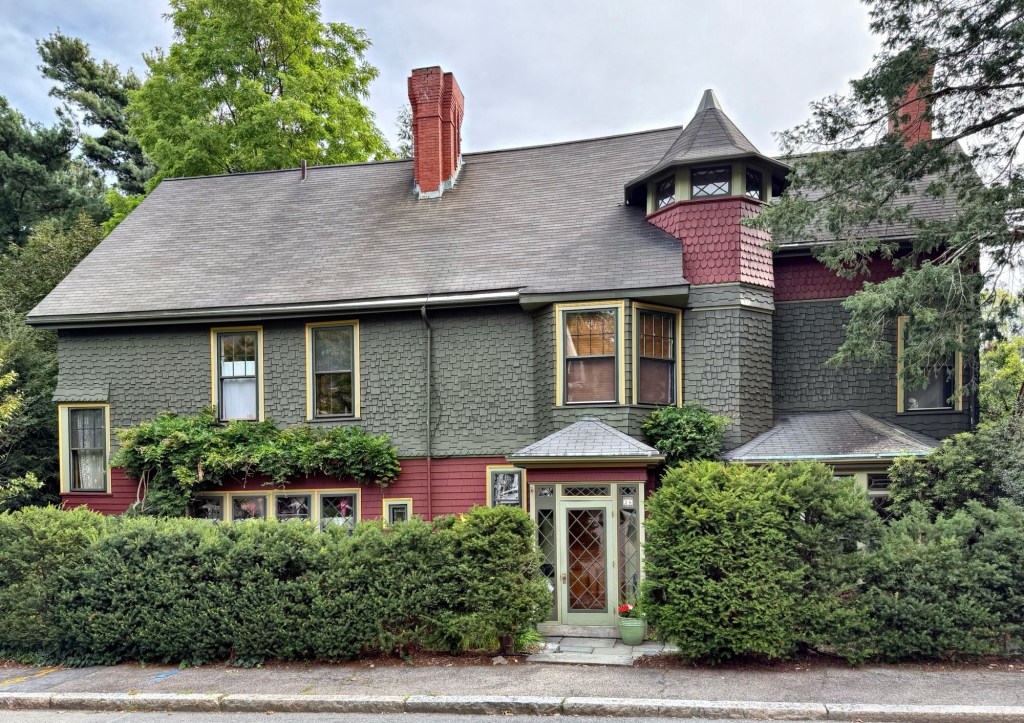
This charming and quirky Queen Anne style house on Edgehill Road in Brookline was built as a rental property on the estate of Charles Storrow (1841-1927), a wealthy businessman who lived in his home next door (see last post). Like his own home, the residence was designed by Edward Clarke Cabot, his wife, Martha’s father, who utilized varied materials, forms, and roof shapes to create a unique composition unlike anything else in the neighborhood. The bulbous central tower and eyebrow and wall dormers also add intrigue to the design.

Charles Storrow House // 1884

Facade

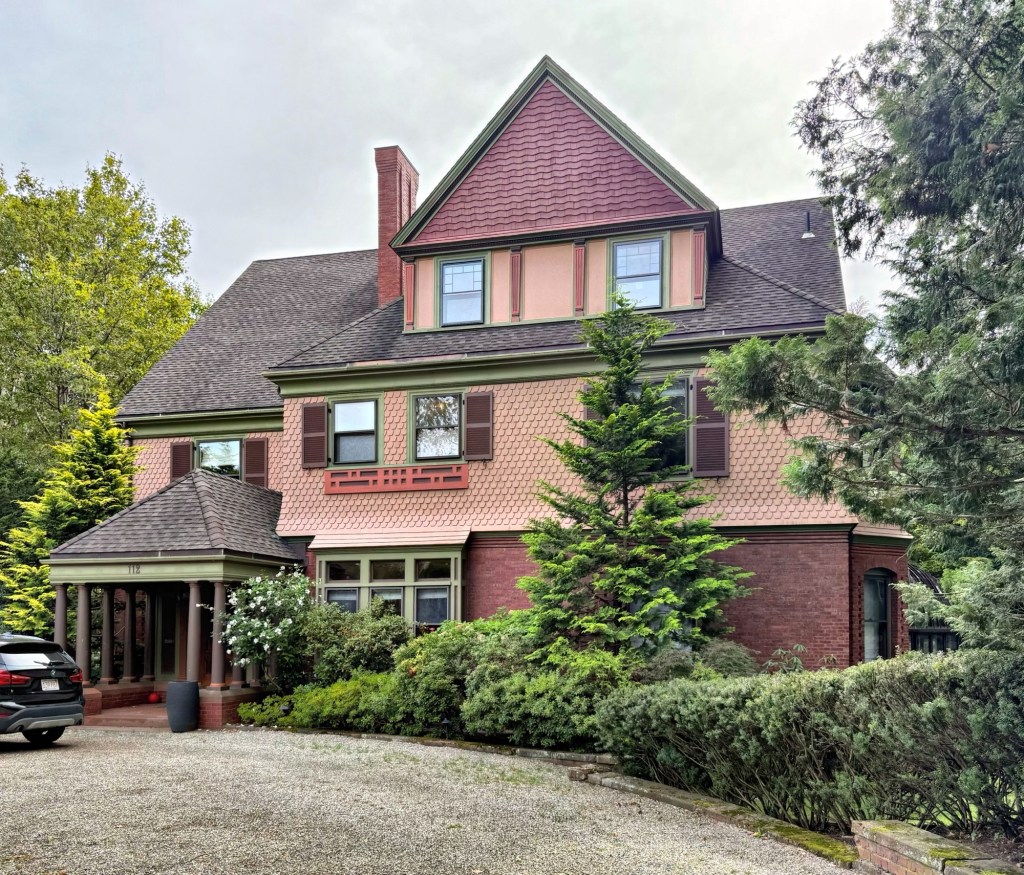
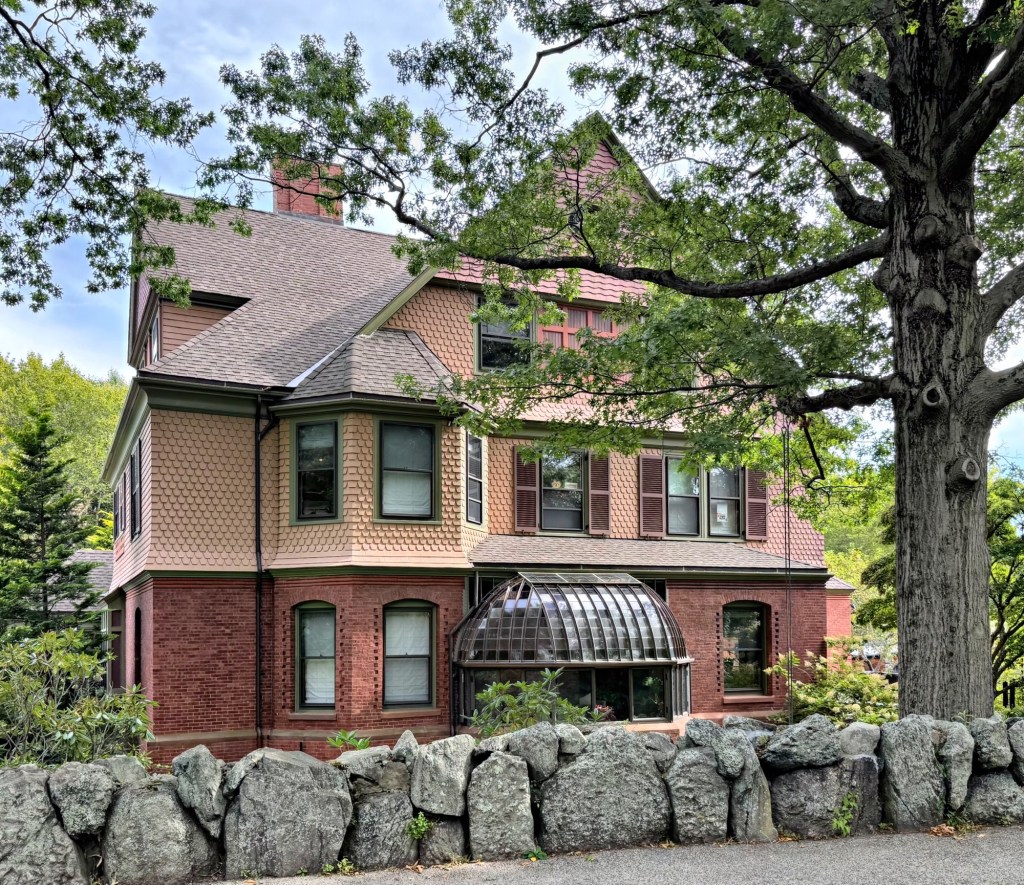
This shingle and brick Queen Anne style house at 112 High Street in Brookline, Massachusetts, was built in 1884 for Charles Storrow and his wife, Martha Cabot Storrow from plans by architect, Edward C. Cabot, Martha’s father. The lot here is said to have been gifted to Charles from his father, Charles Storer Storrow, a prominent civil engineer and industrialist, who is known for designing and building the dam and textile mill complex in Lawrence, Massachusetts. Besides the Victorian main house, the property included a historic stable and a detached house on an adjacent lot, which appears to have been rented by Mr. and Mrs. Storrow. The property was designed by Frederick Law Olmsted’s firm, with rustic rock walls, natural topography, and large, mature plantings. The Storrow House originally had stained glass windows designed by John LaFarge, which were sold in the 1970s. 

Side elevation.

Moorfield Storey House // 1875

The house at 44 Edgehill Road in Brookline, is a brick Queen Anne style residence built for Moorfield Storey (1845-1929) by architect and neighbor, Robert Swain Peabody, who was Moorfield’s friend and college roommate. Both Peabody and Storey would later move in the early 20th century to the Fenway in neighboring houses, also designed by Robert S. Peabody. Moorfield Storey was a president of the American Bar Association and the president, for most of its existence, of the Anti-Imperialist League, an organization founded to oppose the annexation of the Philippines as a colony and to support free trade and the gold standard. Storey consistently and aggressively championed civil rights, not only for African Americans, but also for Native Americans and immigrants. He opposed immigration restrictions, and supported racial equality and self-determination. He would become the first president of the National Association for the Advancement of Colored People (NAACP), from its founding in 1909 until his death in 1929. The Storey House in Brookline is a well-preserved and early example of the Queen Anne style, that would dominate architectural tastes for the following decades.

Samuel Cabot Jr. House // c.1886

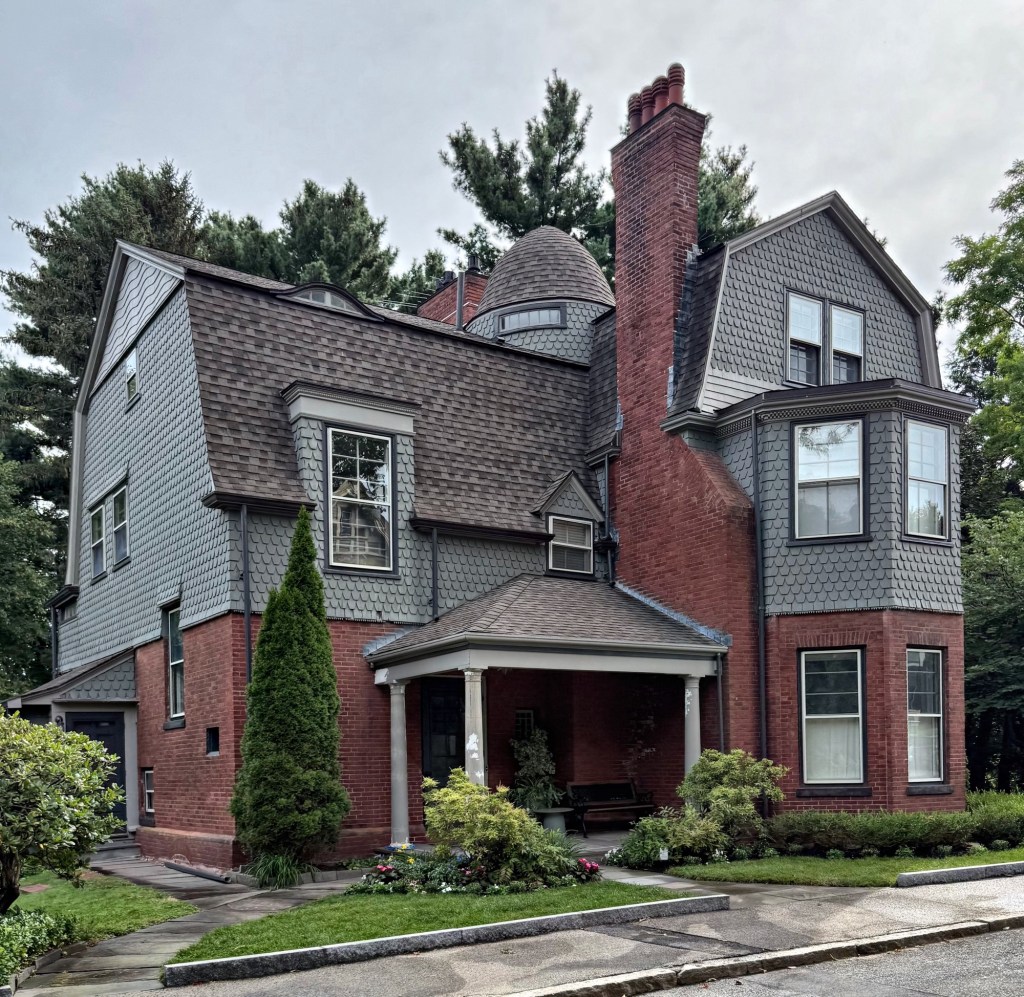
This altered Queen Anne/Shingle style residence on Edgehill Road in Brookline, Massachusetts, was built around 1886 as a suburban retreat for Samuel Cabot Jr. (1850-1906) and his wife, Helen (Nichols) Cabot. Samuel Cabot, a member of the affluent and well-connected Cabot family of Boston, was a chemist who worked alongside his uncle, Godfrey Lowell Cabot, to produce household disinfectant, sheep dipwood preservatives, and shingle stain using coal tar that was a by-product of the gas works in Boston. Their companies would split, with Samuel’s part of the company continuing as Samuel Cabot Incorporated, and Godfrey’s became Cabot Corporation. To showcase his company’s amazing wood stains, Samuel Cabot had this house built in Brookline, from plans by his uncle, Edward Clarke Cabot, of the firm Cabot & Chandler. In the 20th century, the house was somewhat streamlined with some dormers removed and the main entry relocated to the present location.

Boston Free Hospital for Women, Nurse’s Residence // 1908

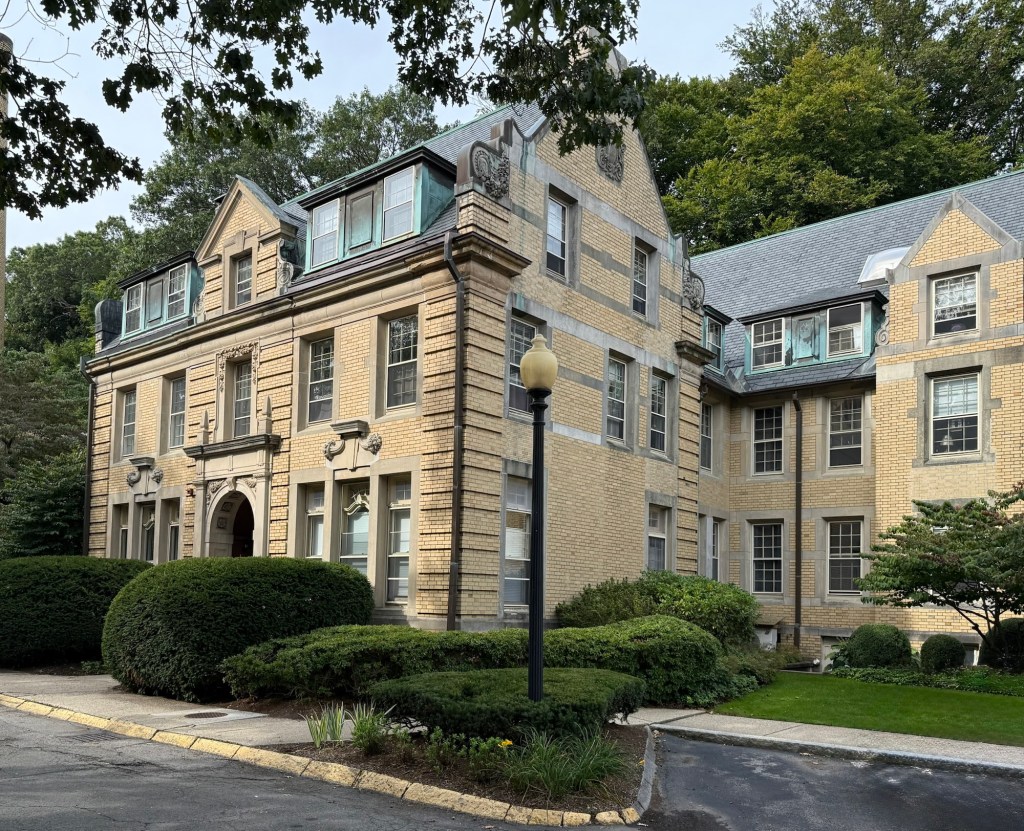
Located behind the former Boston Free Hospital for Women in Brookline, this charming yellow brick building employs materials and design elements of its neighbor, but was designed and built by different architects nearly a decade later. Built in 1908 as a nurse’s residence this handsome building was crucial to the expansion and growth of the women’s hospital here, providing much-needed living space for employees of the hospital who worked around the clock to provide some of the highest-quality medical care in the Boston area. Designed by the firm of Coolidge & Carlson, the nurse’s residence employs intricate limestone detail

Boston Free Hospital for Women // 1895

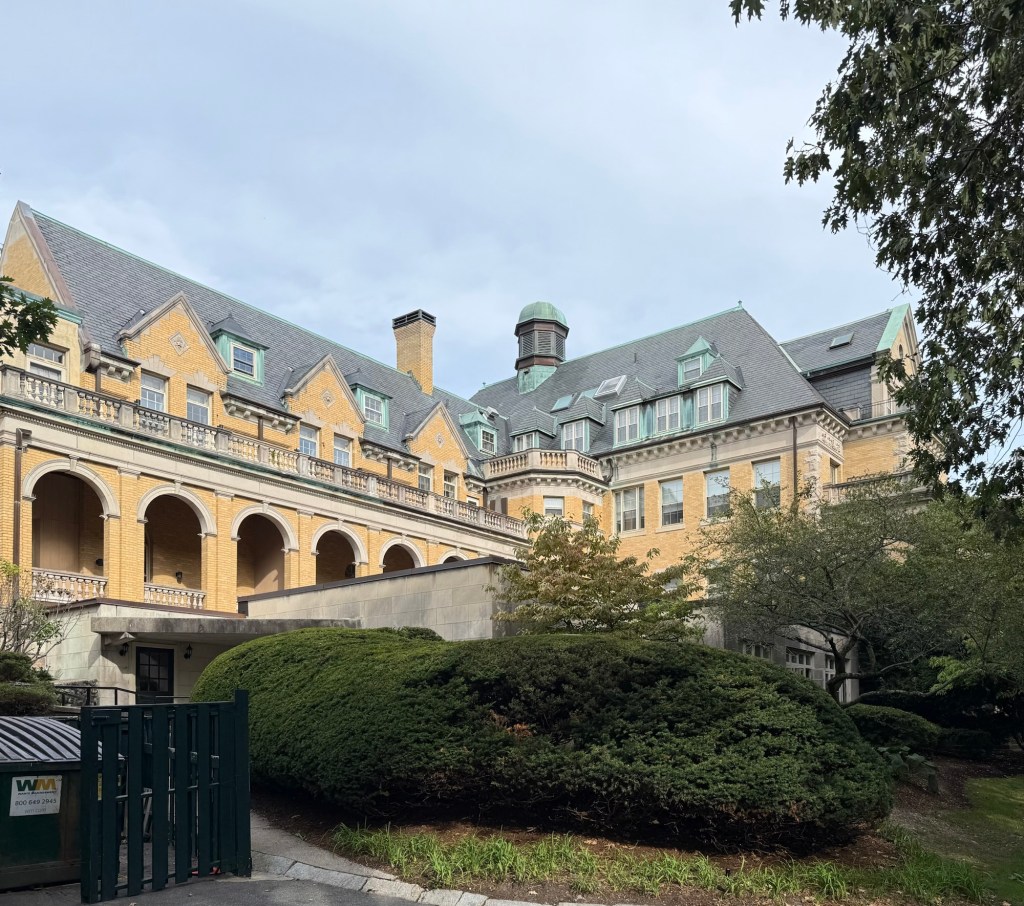
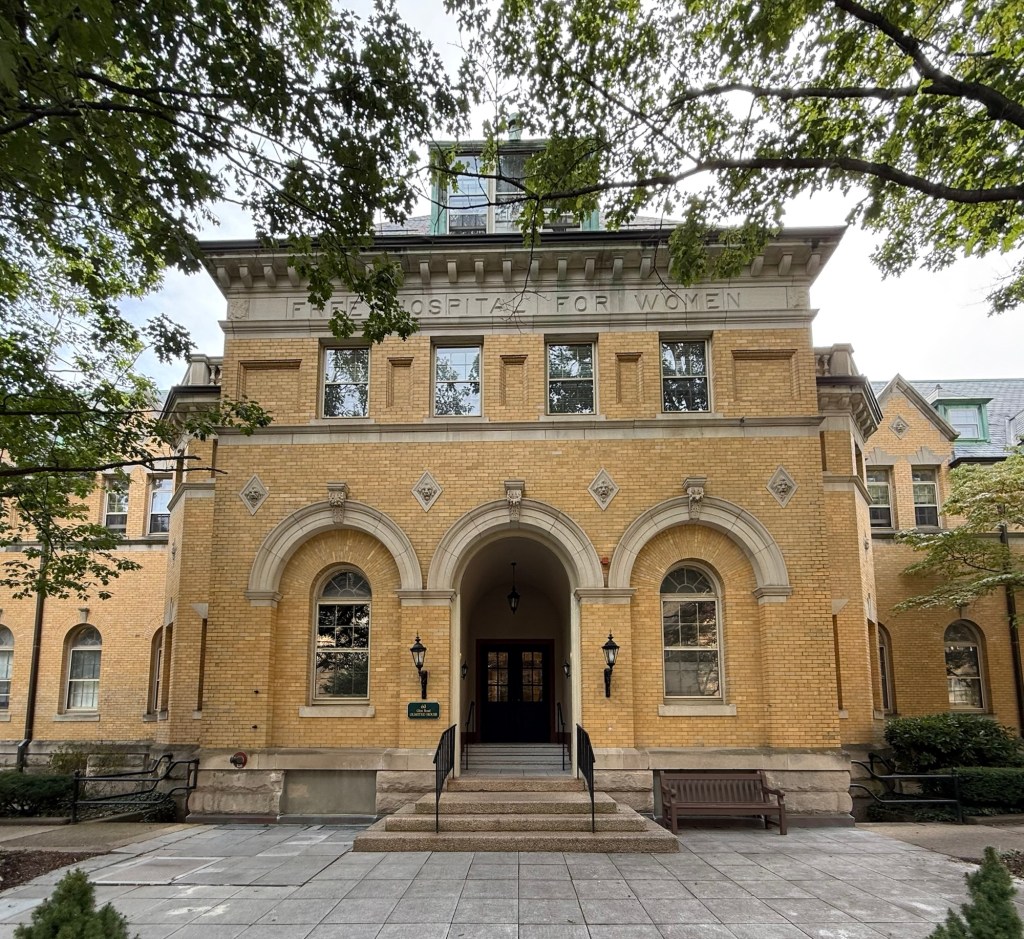
This handsome yellow brick building, designed by architects, Shaw and Hunnewell, was completed in 1895 as the Boston Free Hospital for Women. The hospital was organized in 1875 in a converted rowhouse in Boston’s South End, and after relocating once, it was decided that a purpose-built hospital was needed for the growing demands of the institution. A site in Brookline on the Muddy River, overlooking Frederick Law Olmsted’s Riverway and Olmsted Park, was purchased and the hospital was opened in 1895. The brick and limestone hospital building is somewhat Chateauesque in style and when opened, had no electricity and no telephone. The hospital is historically significant as the first teaching hospital for Harvard and as the first hospital in the country to apply radiation treatment for cancer, along with being a major research facility in fertility, especially the work of Dr. John Rock (who lived nearby) on the development of the birth control pill and research on in-vitro fertilization. The Free Hospital for Women merged with the Boston Lying In
Hospital (now part of Brigham & Women’s), which closed its Brookline Campus in the 1960s. In 1984, the firm of Childs, Bertman and Tseckares oversaw the conversion of the buildings to condominiums, called The Park, with sympathetic new construction.

John D. Runkle House // 1875

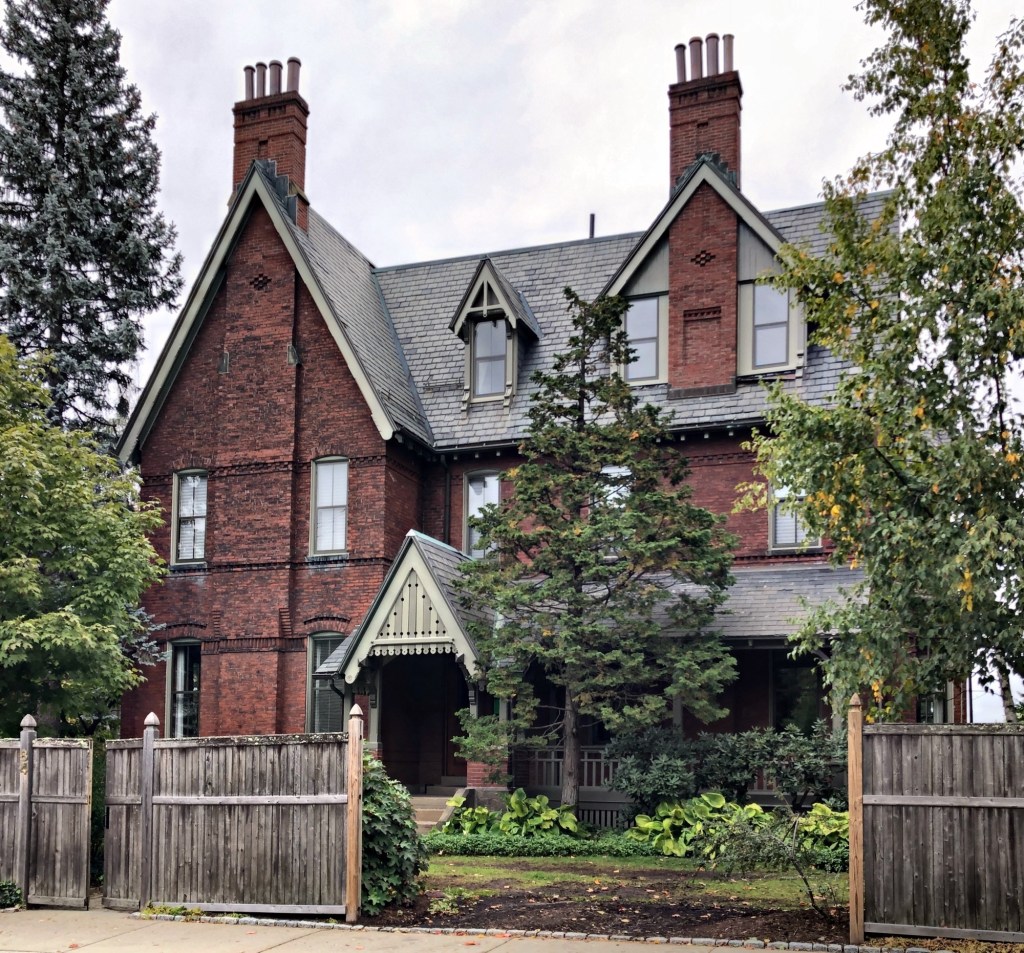
The John Runkle House on High Street, is one of the most interesting houses in Brookline. Built in 1875 for educator John Daniel Runkle (1822-1902), the brick residence excellently blends early Queen Anne form and flourish with Victorian Gothic design elements all with Stick style entry porches and dormers. John D. Runkle was a noted mathematician who later became the second President of the Massachusetts Institute of Technology from 1868 until 1878. This occurred before MIT moved over the Charles to Cambridge, so President Runkle would not have traveled far to the Institute when located in the Back Bay. The Runkle House was designed by the architectural firm of Weston & Rand with an irregular plan of elaborate belt courses in the brickwork that is set against the extremely steep slate roof with tall prominent chimneys and corner turret. Sadly, the residence is largely obscured by a tall wooden fence, but I caught it on a good day that a panel was down.