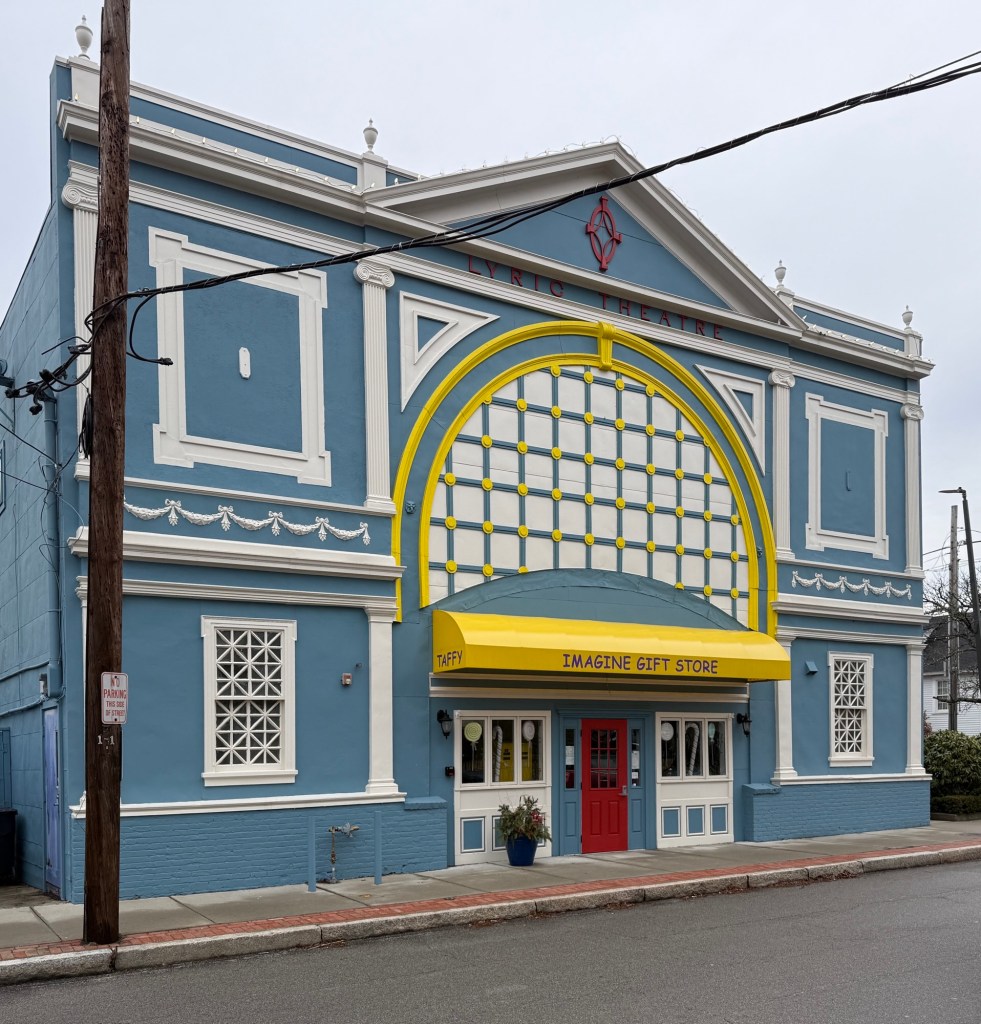
The most whimsical and unique building in Warren, Rhode Island, is this architectural landmark, the former Lyric Theater on Miller Street. Built in 1914, the building historically had a large projecting marquee, and today retains the large blind arch with applied ornament in the form of Ionic pilasters, panels, frets, and swags to decorate the facade. The Lyric remained active as a motion-picture theatre until 1967 and was converted to retail use in the 1980s, becoming an antique store in 1992.
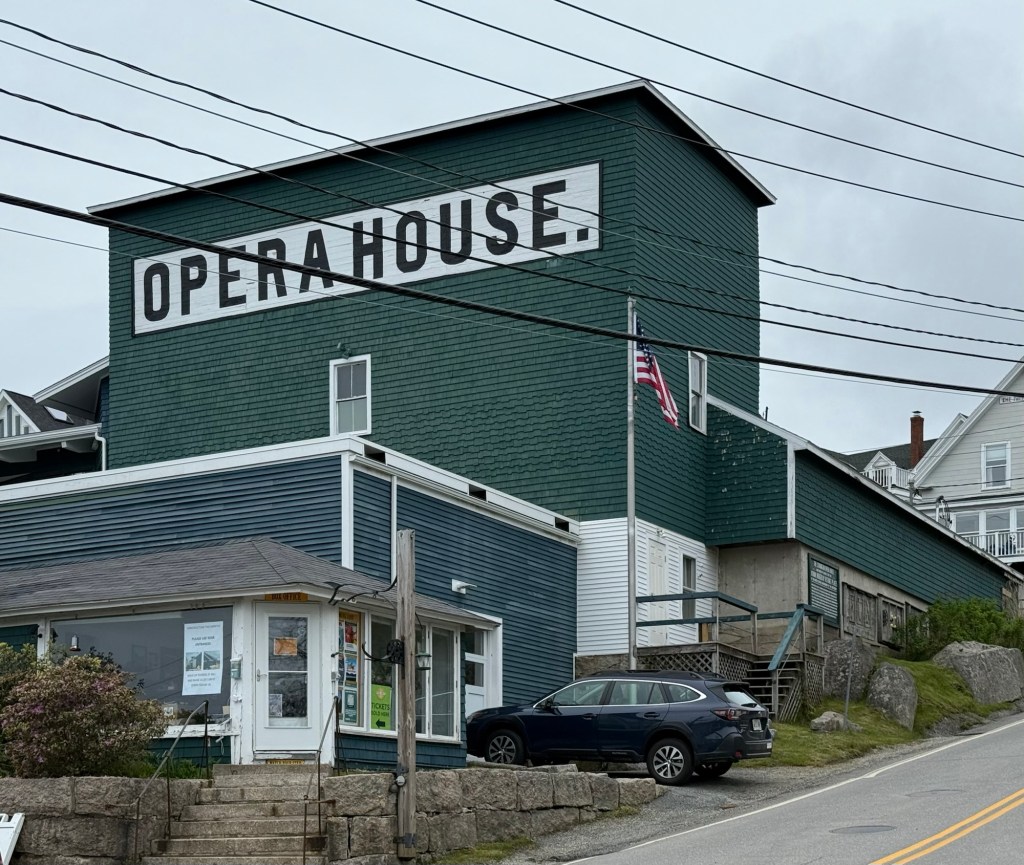
The Stonington Opera House in Stonington, Maine, is a historic early 20th century community center and theater in a vernacular style. The theater was built in 1912, on the site of an earlier hall built in 1886, that seated more than 1,000 people and hosted national touring shows that arrive via steamboat from Rockland. The original theater was destroyed by fire in 1910 and was soon-after rebuilt. It continued the practice of the earlier facility, hosting theatrical productions, lectures, and community events. Its floor was covered with removable folding chairs, so that the space could be used for dances and other social events. It was fitted for screening films around 1918, which came to dominate its uses in the mid-20th century. Unlike other early theaters, which were generally incorporated into municipal buildings, this one was specifically built as a profit-making venture, and was designed to accommodate elaborate theatrical productions, and is probably the oldest of this type in the state. After being vacated for much of the later half of the 20th century, the Stonington Opera House was restored and reopened by Opera House Arts, a local nonprofit, in 2000, and is once again used primarily for film screenings and theatrical productions.
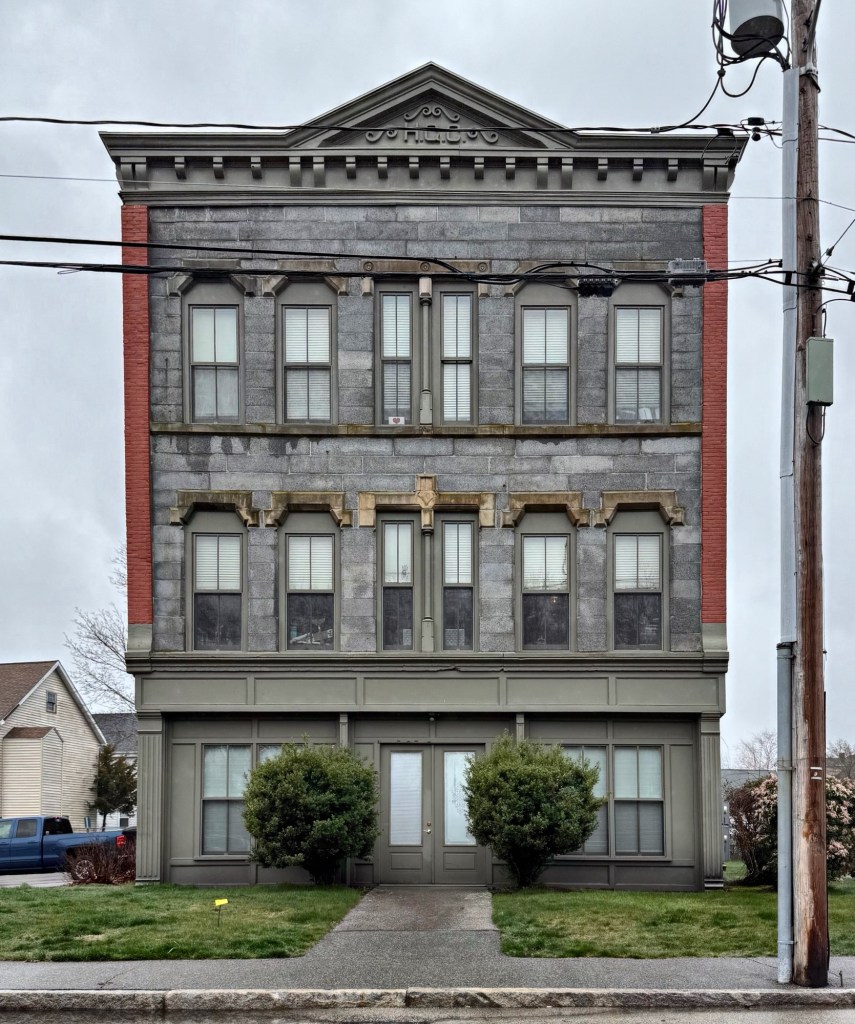
Located across from the North Abington Depot, this structure was constructed in 1894 as a leather harness and saddle shop by local businessman, Henry Crossley. The expensive building of cut granite and brick seemed to have overextended Mr. Crossley’s means, as he would soon-after file for bankruptcy. The building would remain as commercial use until 1915, when the property was purchased by the Peerless Amusement Company for use as a 300-seat theater. By the 1930s, the building became known as the Capitol Theater, and was listed to seat 230 customers on the main floor and 70 in the balcony. Due to the more rural nature of the cinema, it closed in the mid-20th century, and suffered from neglect for decades until it was restored and is currently housing apartments.
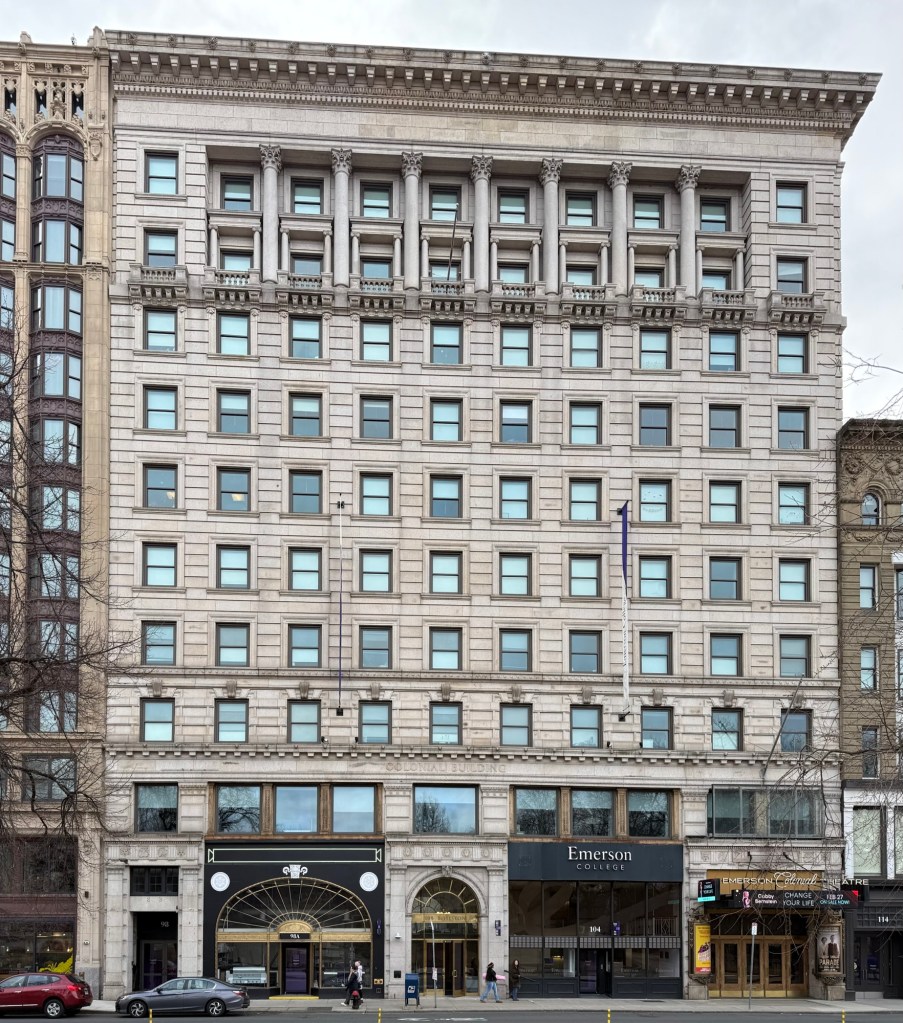
One of my favorite buildings on Boylston Street in Boston is the ten-story Colonial Theater Building, a landmark Classical Revival style structure of stone. Built in 1899, the Colonial Theater replaced the original Boston Public Library building (1855) which was demolished by 1898, and relocated to Copley Square. The Colonial Theater was designed by famed theater architect, Clarence Blackall and is said to be the oldest, intact theater in Boston. The theatre first opened its doors for a performance of Ben-Hur on December 20, 1900 with a sold out show. Ben-Hur operated with a cast and crew of 350 people and featured eight live horses on stage in full gallop during the chariot race scene, with the play being so mechanically and technically extraordinary it was featured on the cover of Scientific American. While cheekily named the Colonial Theater, the interior theater spaces were anything but. The spaces originally contained murals and Baroque style finishes, many of which remain today. Beyond the 1,700-seat theater, the building contained between 250-300 professional offices. The building is owned by Emerson College, who underwent a massive restoration project of the building with Elkus Manfredi architects. Allowing the oldest Boston theater to shine again!
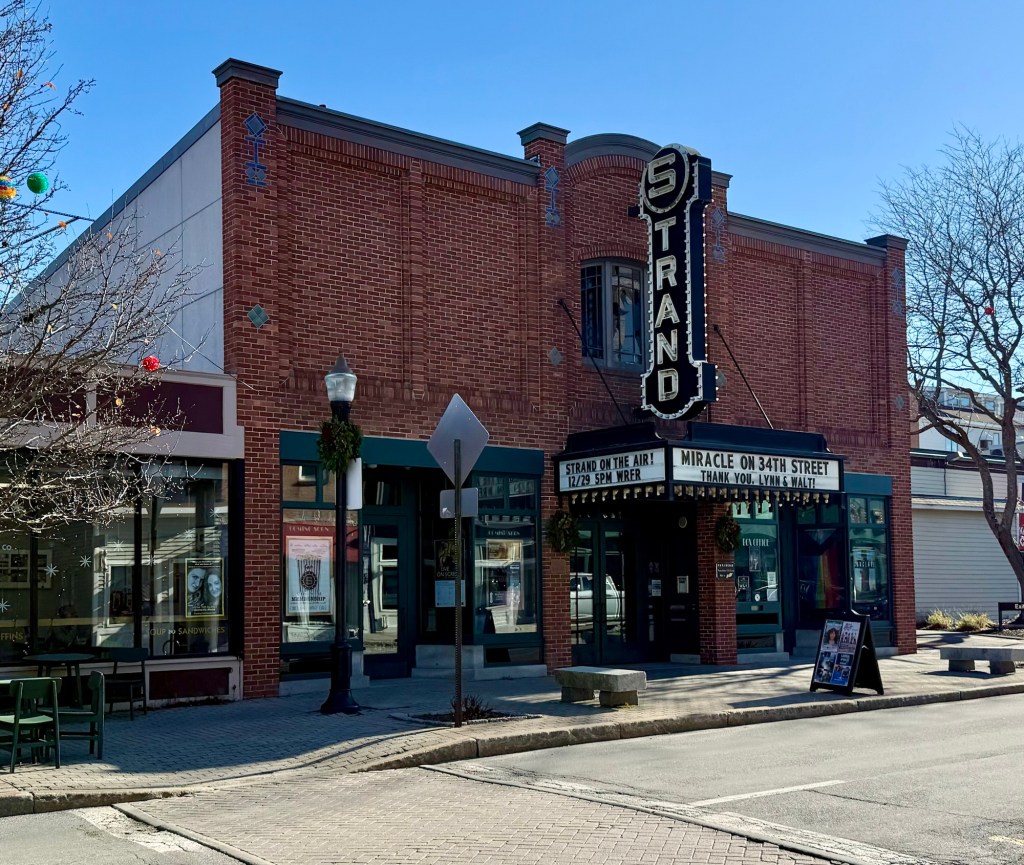
The Strand Theater on Main Street in Rockland, Maine, is a great example of the inter-war theaters that sprouted up in towns all across the country following WWI. The theater was built in 1922-23, on the site of a building destroyed in a 1922 fire that swept through the southern part of Rockland’s downtown. The steel-framed theater, with its terracotta tile walls and ornamental brick facade is fairly unadorned, besides the blade sign marquee reading “STRAND”. Two storefronts, a cigar store and a flower shop, were also incorporated into the theater, framing the entrance. The theater stayed open until the early 2000s when the local multiplex bought it and closed it. In February, 2004, the theatre was purchased by a long-time summer resident who restored the building and opened it back up. The Strand remains a vital economic and cultural center for the town, and its preservation is an important piece of Rockland’s charming Main Street.
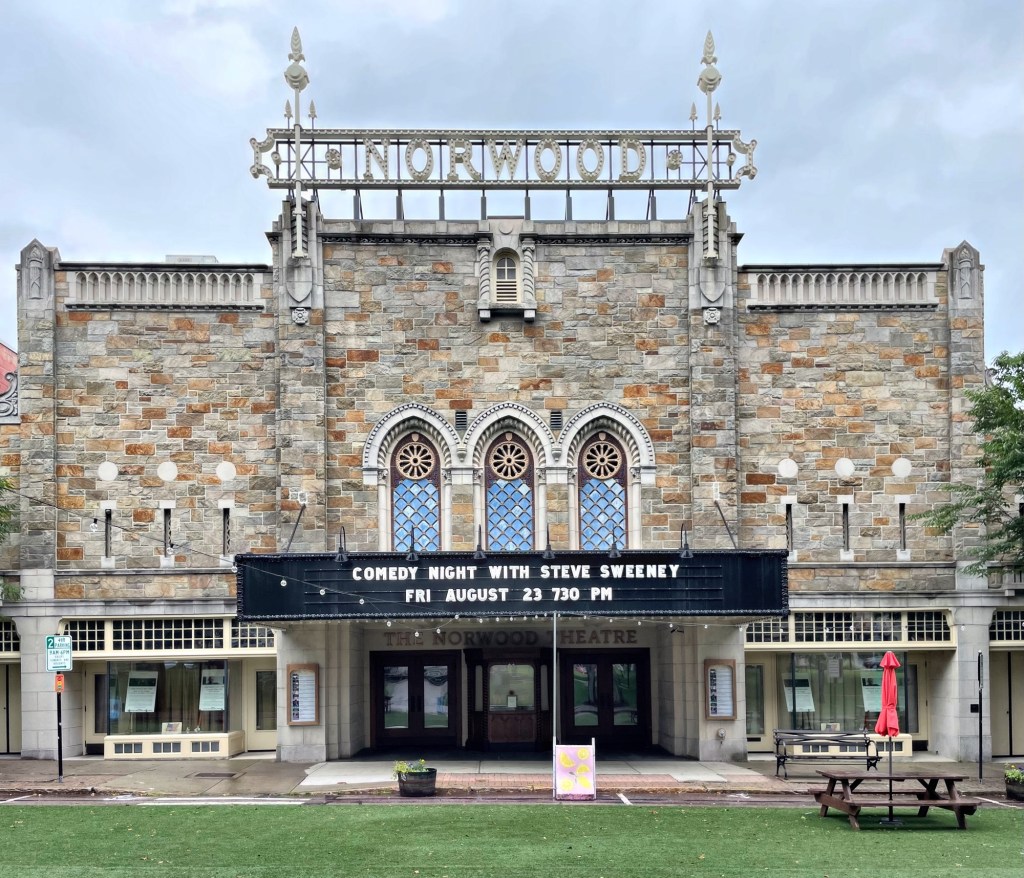
The Norwood Theatre was built in 1927 as a high-style showpiece for the re-invigorated downtown of Norwood, Massachusetts. Built at the same time as the Norwood Town Hall building, the building was constructed at a time of great development in the town, as local entrepreneur and philanthropist, George Willet and landscape architect Arthur A. Shurcliff, created a plan to evolve Norwood from a sleepy rural town to a commercial center. Architect William G. Upham is credited with designing the theatre and he enjoyed a prolific career which encompassed the design of masonic temples, commercial blocks, theatres, homes, and of course, the Norwood Town Hall. The Norwood Theatre was designed in a high-style Spanish Renaissance Revival style and was designed for motion pictures but also included a stage for possible vaudeville and theatrical productions. By the mid-20th century, a Modern sign covered much of the original facade, and lasted until the building came under its current ownership in 2010. A careful two-year restoration brought the theatre back to its former glory.
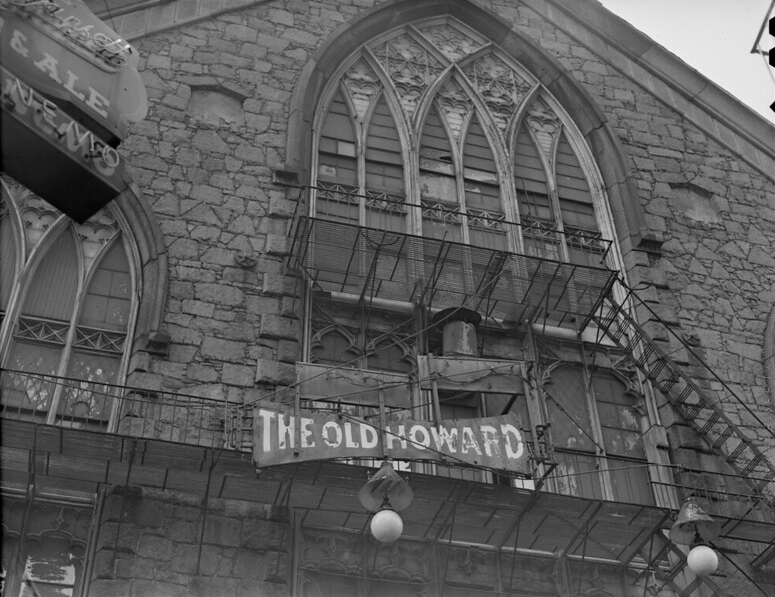
One of the more iconic theater buildings to ever stand in Boston was the Howard Athenaeum, later the Old Howard, which stood on the former Howard Street in Downtown Boston. The origins of the building begin in 1843, when a flimsy, tent was built to serve as a church for the small Millerite sect. The small but loyal congregation eventually abandoned the site following disappointment with the minister’s promise that the world would end in 1844. After Armageddon failed to materialize, the founder of the sect, William Miller, an ex-Deputy Sheriff from Poultney, Vermont, was discredited and the Millerites moved on. After running their former minister out of town, several church members (who had given up all their worldly possessions in preparation for their trip to heaven,) decided to recoup some of their losses by selling the property to Messers Boyd and Beard, who opened a theater here in 1845. A fire destroyed the structure, and it was replaced by a larger, fireproof building that same year. The new building was constructed in 1845 and was designed by architect Isaiah Rogers in the Gothic Revival style with massive granite blocks from Quincy.
The Howard Athenaeum saw many iconic performers and historical events in its 100 years. A young John Wilkes Booth, played Hamlet at the Howard before becoming famous for a more nefarious deed in Washington in 1865. Also, Sarah Parker Remond, a Black anti-slavery activist and lecturer with the American Anti-Slavery Society (and later a medical doctor), had bought a ticket through the mail for the Donizetti opera, Don Pasquale, but, upon arriving, refused to sit in a segregated section for the show. She was forcibly removed and pushed down a flight of stairs. She eventually won a desegregation lawsuit against the managers of the Howard Athenaeum and received $500 in a settlement.
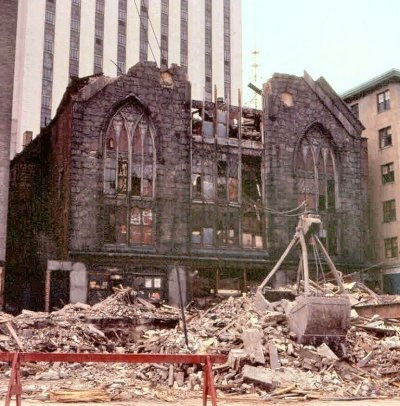
The theater was quickly deemed obsolete and second-tier compared to more modern theatres built nearby. By the mid-20th century, the Old Howard was largely featuring burlesque shows. To keep bringing in audiences, the burlesque performances got more risqué with each year. As a result, the Boston vice squad made the Old Howard the object of their attention. The Boston Vice squad made a 16 mm film during one of their raids in 1953 and captured on film the performance by “Irma the Body”. This film footage resulted in an indecency hearing which eventually led to the closing of the Old Howard in 1953. A fire a few years later along with Urban Renewal led to the demolition of the Old Howard by 1962. Like the former Suffolk Savings Bank (featured previously), the present Center Plaza Building is on the site.
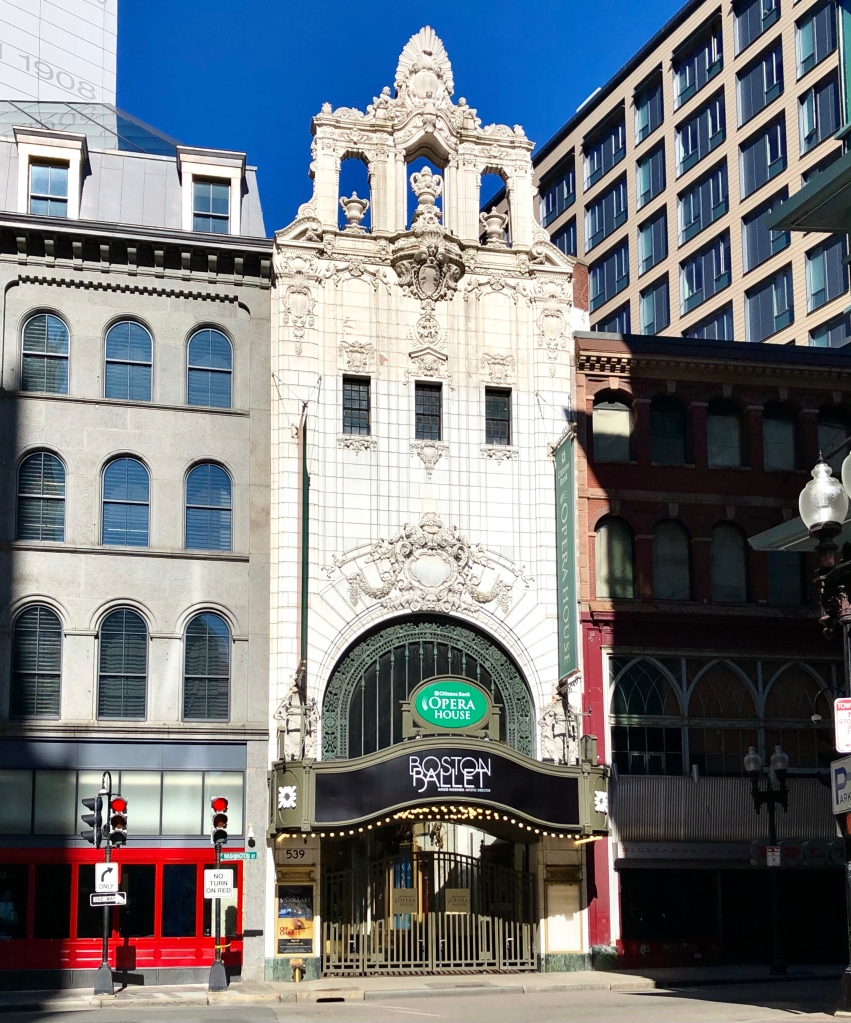
Not to be confused with the former B.F. Keith’s Boston Theatre (last post), the B.F. Keith Memorial Theater on Washington Street, remains as one of the most sophisticated architectural compositions found in Boston. The Keith’s Memorial was one of his most elaborate designs of the prominent theater architect Thomas W. Lamb. The B. F. Keith Memorial Theatre was erected under the close personal supervision of Edward Franklin Albee as Albee’s tribute to the memory of his late partner and friend, Benjamin Franklin Keith. For that reason, it was built with a degree of luxury in its details and design that is almost unrivaled. On October 23, 1928, just before the theater opened, the Radio-Keith-Orpheum (RKO) company was formed and became the owner of the theater after consolidations and mergers. The Keith Memorial theater opened on October 29, 1928, presenting first-run films along with live vaudeville. By 1929, the theater had converted to showing only films and remained a leading Boston movie showcase through the 1950s. In 1965, the theatre was purchased from RKO by Sack Theatres, and the new owners refurbished the building, and renamed it the Savoy Theatre. The theater used the frontage, formerly used by the B.F. Keith’s Boston Theatre on Tremont Street to showcase a large marquee. In the early 1970s the massive arch framing the opening between the stage and the auditorium was bricked up, and a second auditorium was installed within the stage. The theatre was then named the Savoy 1 & 2. The twinned theatre continued to operate as a pair of film houses until 1978, when it was bought by the Opera Company of Boston, who renamed the building the Boston Opera House. After a decade, the group could not maintain the ornate building and The Opera Company closed the theatre in 1991, and the building began a period of rapid deterioration. In the early 2000s, the gorgeous building was restored and re-opened as the Citizens Bank Opera House, which (pre-Covid) runs a steady rotation of touring Broadway productions, Boston Ballet Nutcracker holiday shows and more. Also, if you havent been inside the building for a tour, you are missing out!
Local theaters once dominated the urban landscape, providing flashing neon lights and marquees on Main Street USA. After WWII, many downtowns saw populations move to the suburbs and through the advancement in technology, many of these historic movie houses were demolished. Large cineplexes with 10+ screens were built, and the death of the small movie theater coincided with the death of many Main Streets in the mid and late 20th century. Fast forward to today, we see many Main Streets thriving (before the COVID crisis) thanks to women and minority-owned businesses investing in their communities.
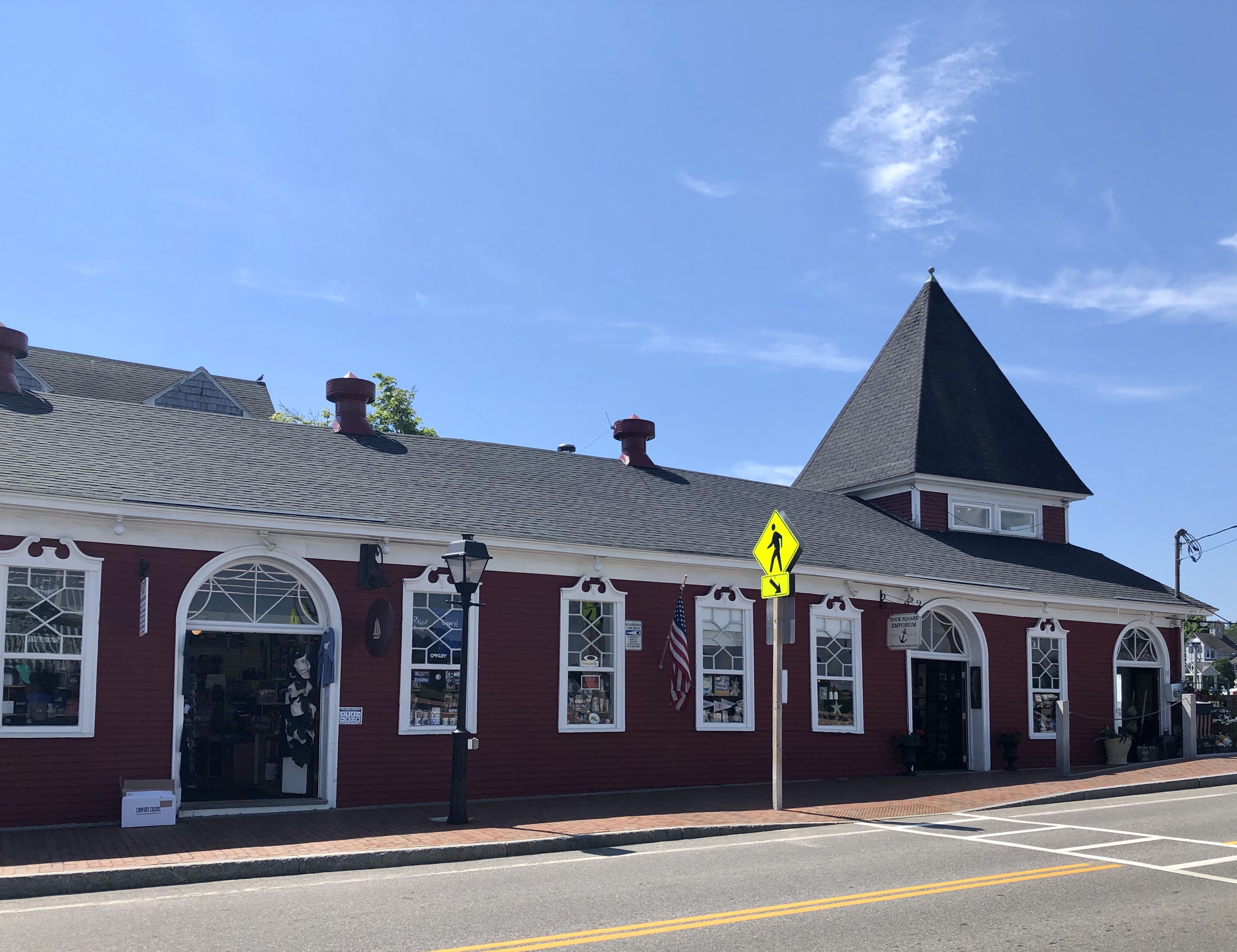
One of the more identifiable buildings in Dock Square in Kennebunkport Village is one of the first you typically see when arriving from neighboring Kennebunk. The wood-frame building perched on stilts at the edge of the Kennebunk River features a prominent pyramidal roof and stunning windows. Through some digging, it appears the building was built in 1919 as the Lyric Theater, a 350-seat motion-picture cinema, that catered to the summer residents. Sometime after the 1970s, the theater was converted to retail use and now is home to Saxony Imports a place where you can pick up some presidential swag, gag gifts, or touristy clothing.
 Buildings of New England