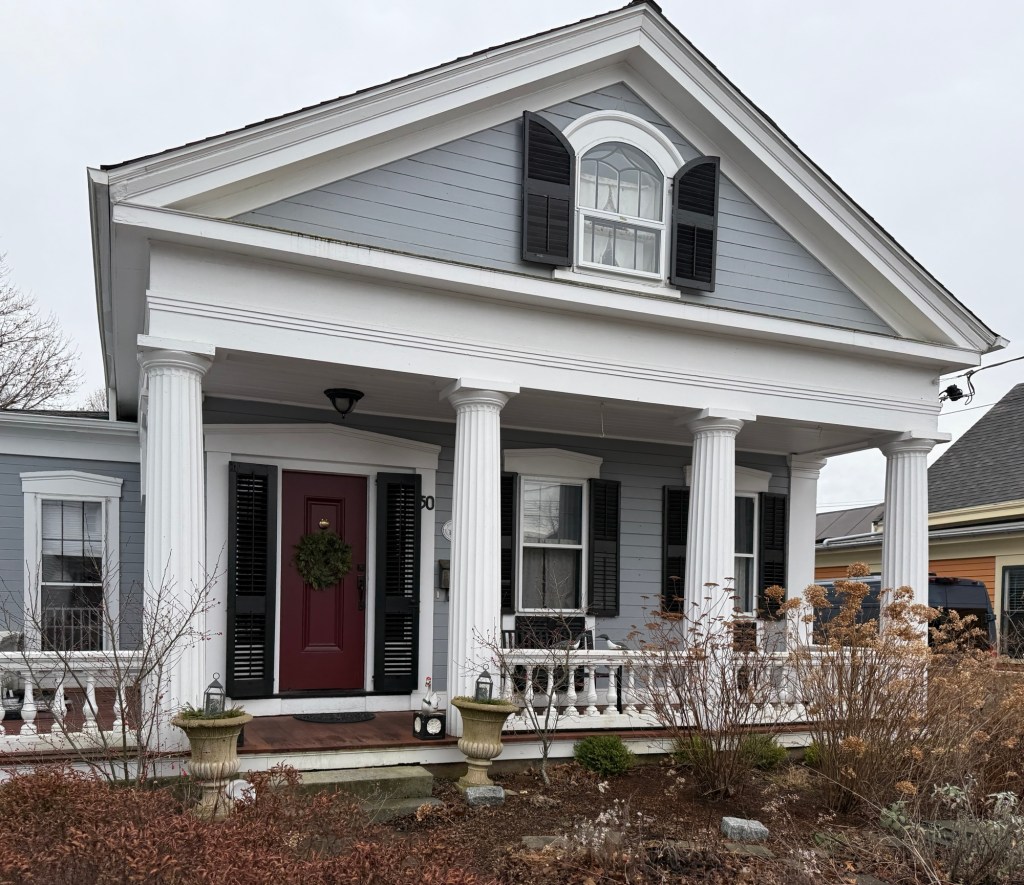
The J. R. Hoar House on Washington Street in Warren, Rhode Island, is one of the best examples of a 1-1/2-story Greek Revival cottage in the town. The house has a full Doric portico in front, an arched second-story bedroom window in the pediment and pedimented lintels over the windows. Built in the 1841 for John Rodgers Hoar, the house has been lovingly preserved and restored by later owners.
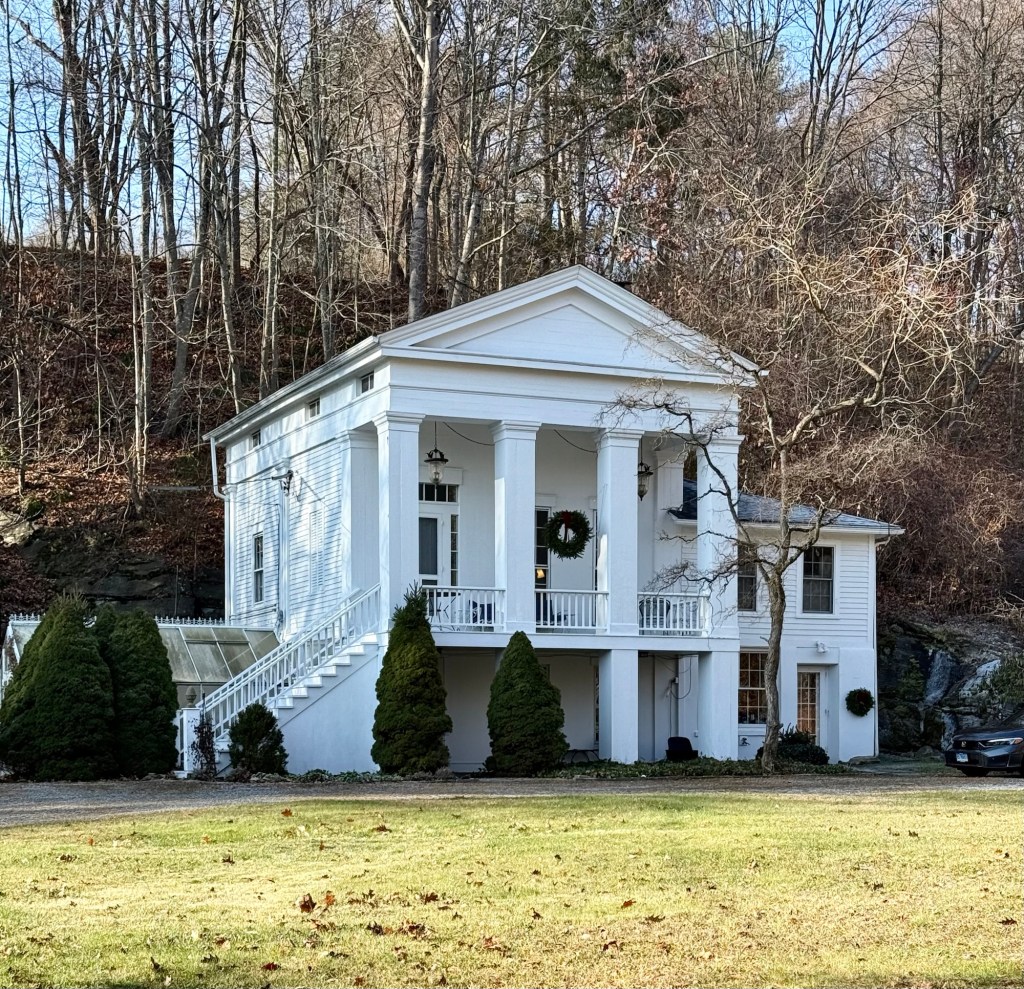
This unique Greek Revival style house is located on North Main Street in Chester, Connecticut, and was built around 1830 for John Gilbert. Johnʼs sister (Abby Gilbert Daniels) lived in a Greek Revival house on Liberty Street that had been built a few years earlier and was said to have been designed by Ithiel Town, a renowned Connecticut architect who specialized in Greek Revival style designs. It is thought that Town may also be the architect of John Gilbert’s residence seen here. The temple-front facade of the residence sits on a raised basement with the side-hall entrance and full-height hung windows on the facade sheltered under a portico supported by four square Doric columns. In the early 20th century, the property was purchased by Antonio Zanardi, who immigrated to Chester from Italy and worked as a watchman in a local factory. Antonio and his wife, Claudina, had a large family and expanded the house with a side wing in the early 1900s, also adding greenhouses and growing grapes on the terraced rear yard.
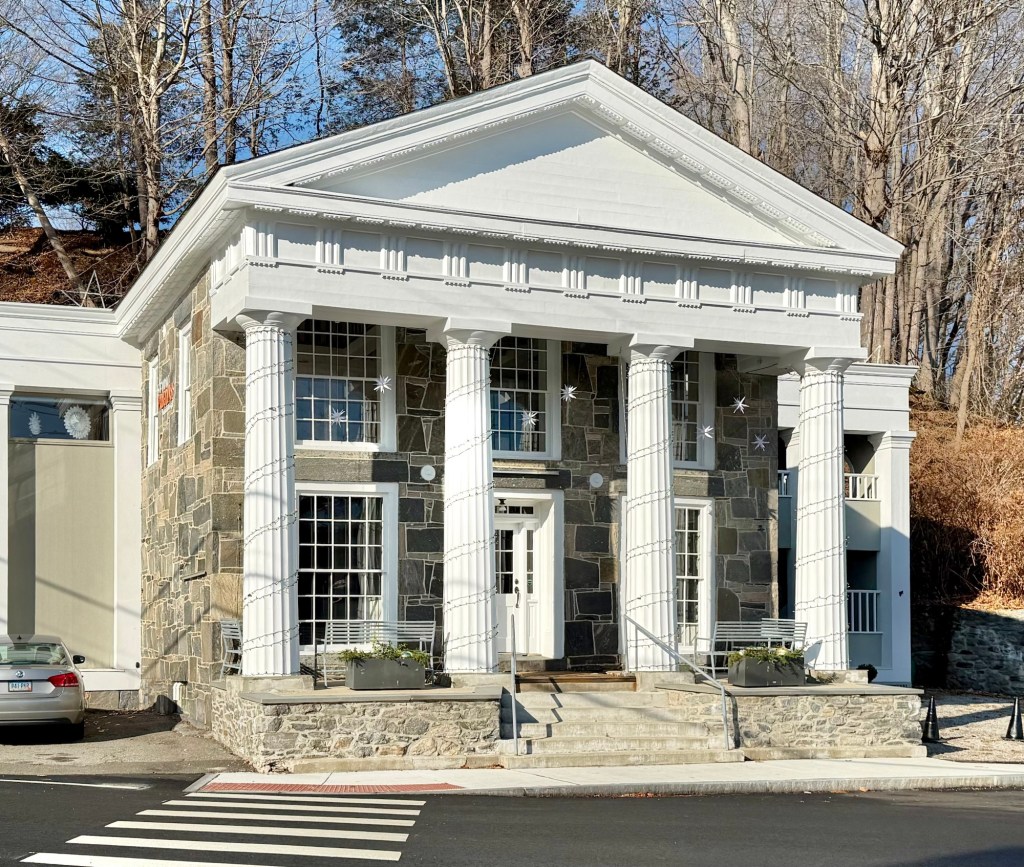
Colloquially known as the “Stone Store,” this handsome stone structure in Chester Village, Connecticut, was built by William Buck in 1809, a merchant involved in the West Indies trade. The stone for the building is believed to have come from the Chester quarry in town and was likely more vernacular without the columned portico. The four-columned Doric portico was likely added in the 1830s or 1840s as the Greek Revival style surged in popularity. The two side wings were added in the 20th century. The Old Stone Store has held various uses from a store, tavern, post office and liquor store, while the upper floor has served as a private school, the town’s library and an apartment. The Old Stone Store today acts as the western terminus of the town’s Main Street commercial district.
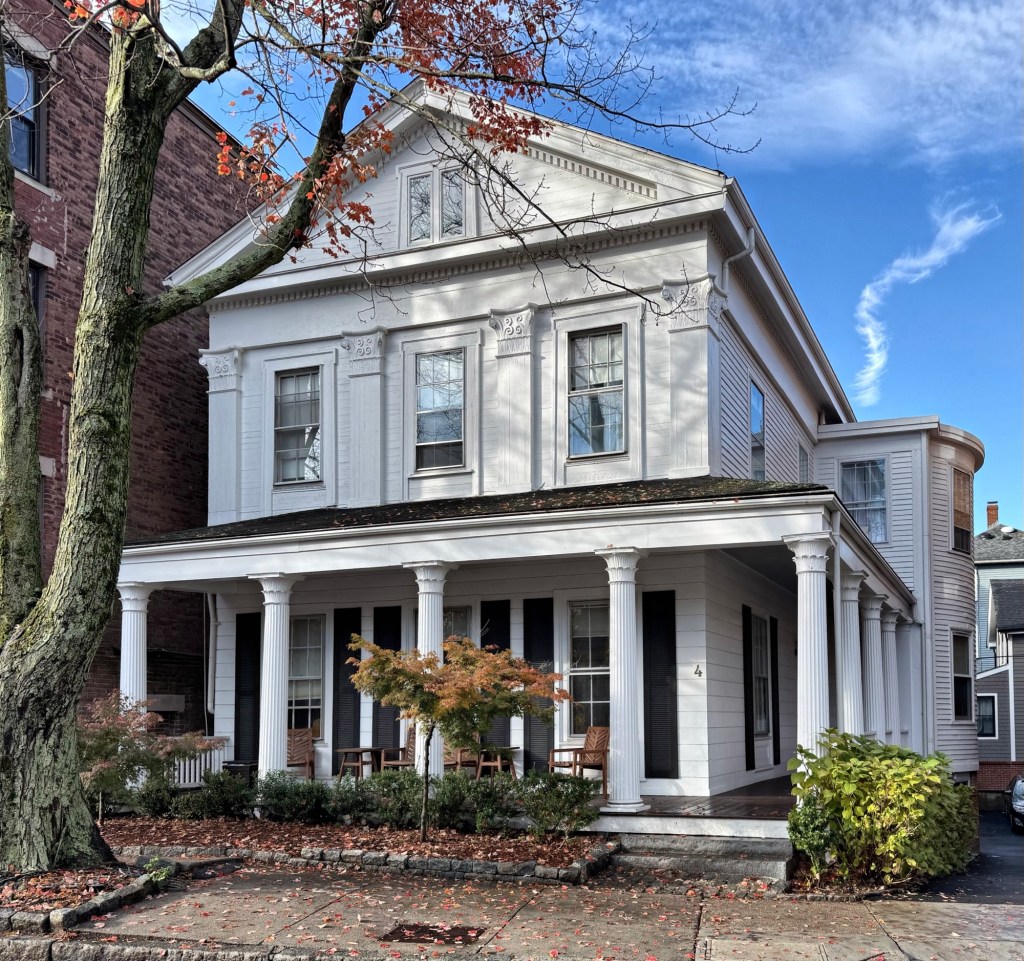
The Lindens neighborhood, located just east of the civic and commercial core of Brookline Village, was long an apple and cherry orchard known as Holden Farm. Beginning in 1843, the area became the earliest planned development in the town and was laid out as a “garden suburb” for those wishing to escape the growing congestion of Boston. As originally conceived in 1843, it reflected the latest ideals of planned residential development for a semi-rural setting on land owned by Thomas Aspinwall Davis. The streets, parks, and house lots here were laid out by civil engineer, Alexander Wadsworth, who two years earlier, laid out plans for Mount Auburn Cemetery in Cambridge, the first “Rural Cemetery” in America. Early homes were built on speculation by John F. Edwards, an architect-builder, for Davis, who was strict about high-quality designs in the Greek and Gothic revival styles in his newly laid out neighborhood. This Greek Revival style house was built in 1844 and sold in 1849 to William A. Wellman (1805-1878), the assistant collector at the United States Custom House in Boston. Wellman’s family held this property through the end of the 19th century. In 1903, as the neighborhood developed further, the property was purchased and re-oriented to face Linden Square, making room for a brick apartment building. Architecturally, the Wellman House stands out for its flushboard facade with bays divided by pilasters with elaborate capitals, and an L-shaped porch with columns capped by acanthus capitals.
As the town of Westborough emerged from rural agricultural community to commercial center, connections to Worcester and Boston via rail service opened the town to prosperity. As businessmen accumulated wealth, these merchants built stately homes to showcase their position in the community. Before the Civil War, the Greek Revival style was ever-popular in Westborough, even though the style was already waning in popularity in larger cities. The Gilmore-Mason House on Church Street, is an excellent example of the Greek Revival style in a temple form. The form is seen in this house at the facade, with a portico of four two-story Corinthian columns supporting the pediment above. The house was built for George A. Gilmore and later sold to Alonzo W. Porter, an inventor, who would later move to New York. By the early 20th century, the residence was the home to Joseph S. Mason, a manufacturer who operated a weaving mill in Westborough.
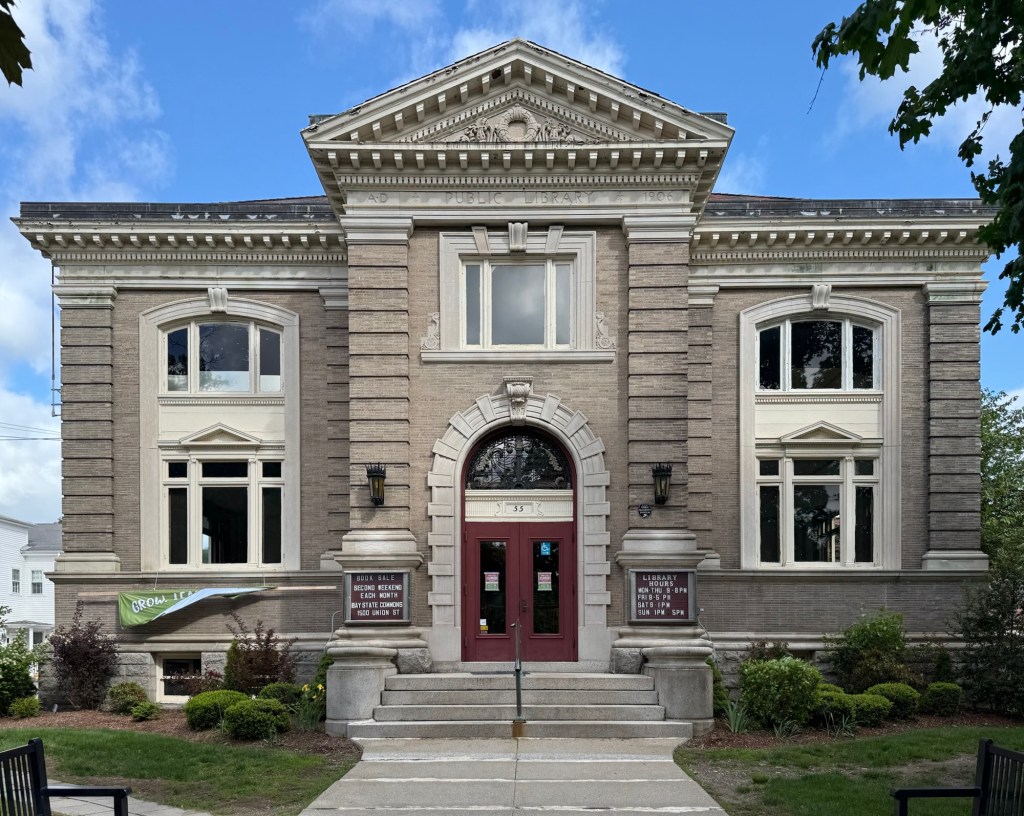
The Westborough Public Library is a handsome, two-story, masonry building with additions to showcase the growth and importance of the library to the community. This building was constructed in 1908, replacing a small space in the first floor of the old Town Hall (since demolished) as the community’s first purpose-built library. The structure was designed by architect Penn Varney, who specialized in civic buildings in New England. The Classical Revival style building is constructed of buff brick with stone trimmings. Of particular note, the quoined arched entry and pediment with central wreath motif, add much to the design. The library was eventually outgrown, and in 1980, an addition was added to the rear, in a style taking cues from the main building, but clearly of its time. The Town of Westborough about to undergo a restoration and renovation to the library, including a new roof, HVAC systems, interior renovations and the restoration of the 1908 windows.
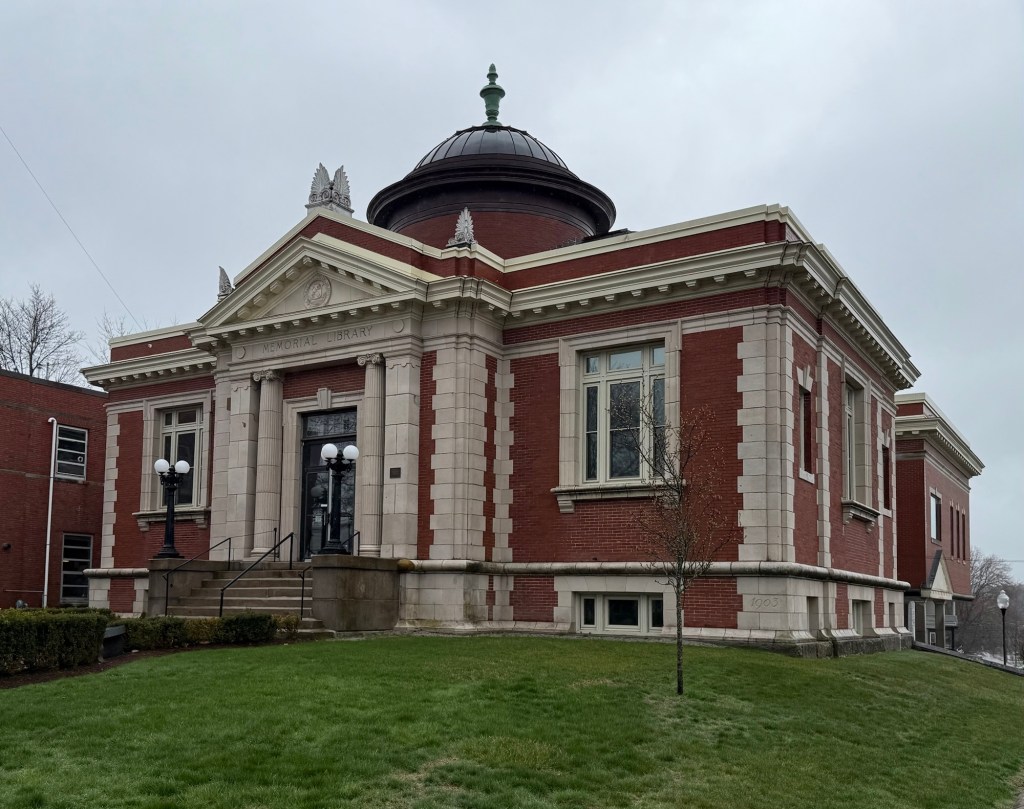
The Rockland Memorial Library in Rockland, Massachusetts is one of the most architecturally and historically significant buildings in the town. The Classical Revival style library was built in 1903 and is the Town of Rockland’s first purpose-built library structure. When Rockland separated from adjacent Abington in 1874, much of the collection became housed in a commercial building, which was consumed by fire in 1890, taking much of the collections with it. Although funds were raised soon after the fire for a permanent home for the library, its construction was made possible by a grant of $12,500 from Andrew Carnegie in 1902, as part of his nationwide gift to cities and towns for libraries. The handsome structure is constructed of brick, granite, and terra cotta, and was designed by the Boston-based architectural firm of McLean & Wright. The most interesting features of the building include the rooftop dome containing skylights and capped by a finial and the projecting entrance with pediment, quoins, and engaged Ionic columns.
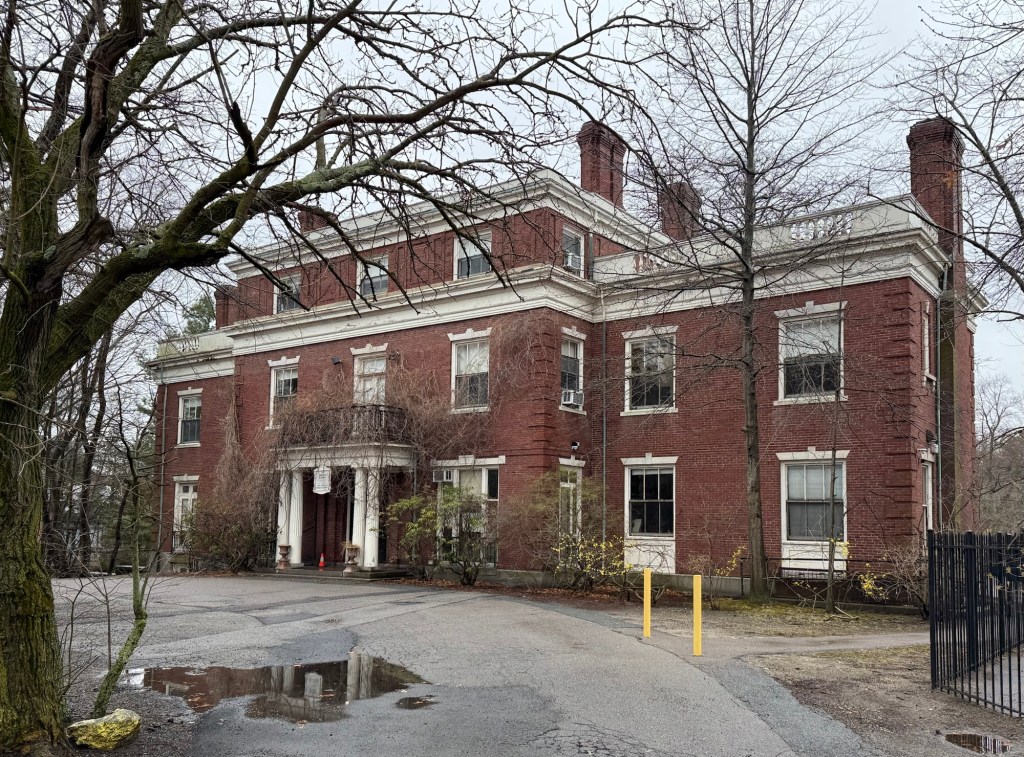
One of the finest estates in Brookline can be found here in the Cottage Farm neighborhood, just steps from Boston and the Charles River. This brick mansion was built in 1902 for Frederick Perry Fish (1855-1930), a prominent lawyer who also served as president of American Telephone & Telegraph Corporation from 1901 to 1907. One of the leading patent attorneys of his age, representing such clients as Alexander Graham Bell, Thomas Edison, and The Wright Brothers, by the time of his death he was believed to have appeared in more patent cases at the Supreme Court than any other lawyer. For his Brookline residence, Fish purchased an 1867 brick mansard-roofed home on the lot and hired the architectural firm of Winslow & Bigelow to ether modify the earlier home or demolish it and build entirely new. The result is this stately, three-story Neo-Classical mansion. Fish would die at his home in 1930, and the property would eventually be owned by the New England Hebrew Academy as a Jewish day school. While it is an institutional use, the facade is covered with climbing vines that are bad for the masonry and an asphalt paved front yard which detracts from the beauty of this estate. It appears to be near-original though, which is great to see!
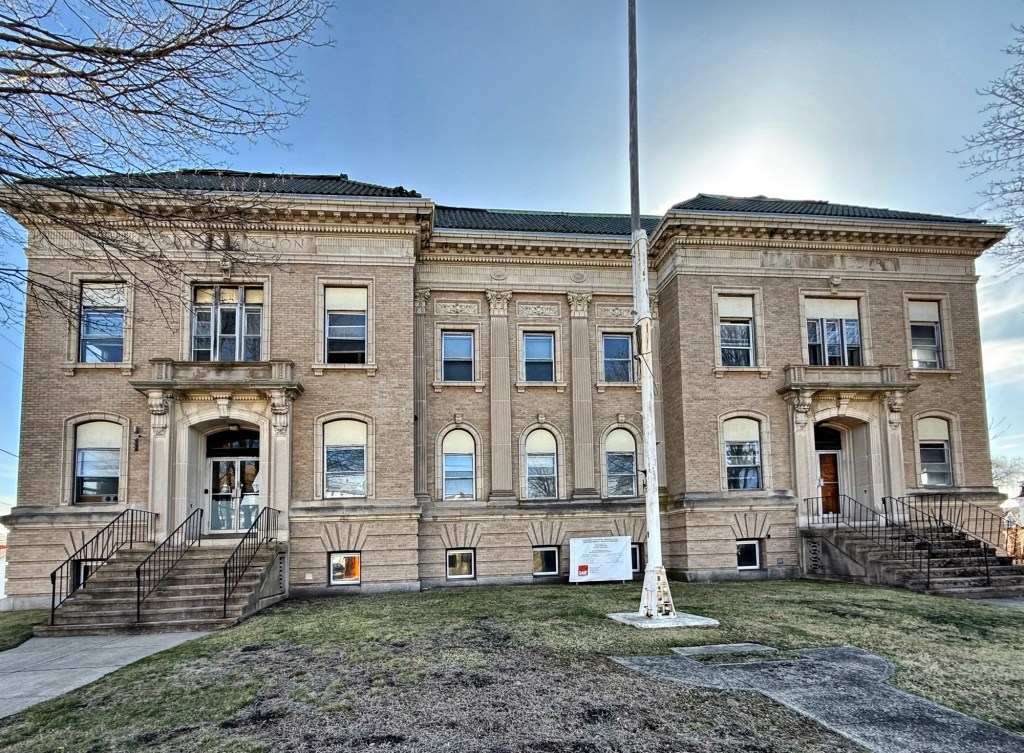
Built jointly by the city of Central Falls and the state of Rhode Island, this Classical Revival style building originally contained both the local police station and a district court house. The symmetrical building was designed by William R. Walker and Son, a Providence design firm, who specialized in large, civic and commercial buildings. The gray brick building is trimmed with limestone and stands three-stories under a hipped tile roof capped by decorative cresting. In the 1970s, the courthouse moved out and the entire building came into the ownership of the City of Central Falls and is today owned by the Central Falls Redevelopment Agency, which frankly worries me about the future of this important building. Does anyone know about plans for the building?
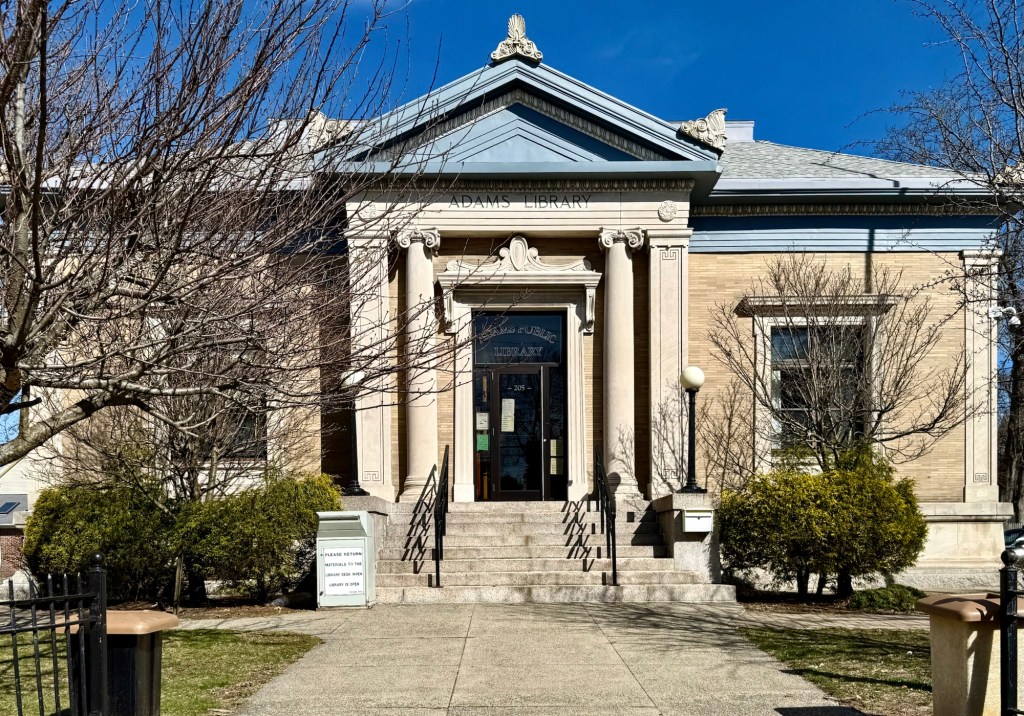
When Stephen L. Adams, a public-spirited citizen and a member of the school committee in Central Falls, Rhode Island, passed away in 1900, he left a bequest to provide for the erection and maintenance of a library building for his community. It would take years until a site in the center of town was acquired and contracts were written for designing and building the city’s first purpose-built library. Architect, William H. McLean of the firm McLean & Wright were hired to furnish plans, which is supposed to have been modified from a number of prototypes for small-town libraries supplied to set standards by the Carnegie Corporation in conjunction with its endowment of such facilities in cities and towns throughout the United States. While this is not a Carnegie Library, it does mimic many design elements found in similar libraries by the corporation. The Adams Library in Central Falls is Classical Revival in style and built of light brick with limestone trim with a symmetrical facade dominated by a columned, pedimented portico.

 Buildings of New England