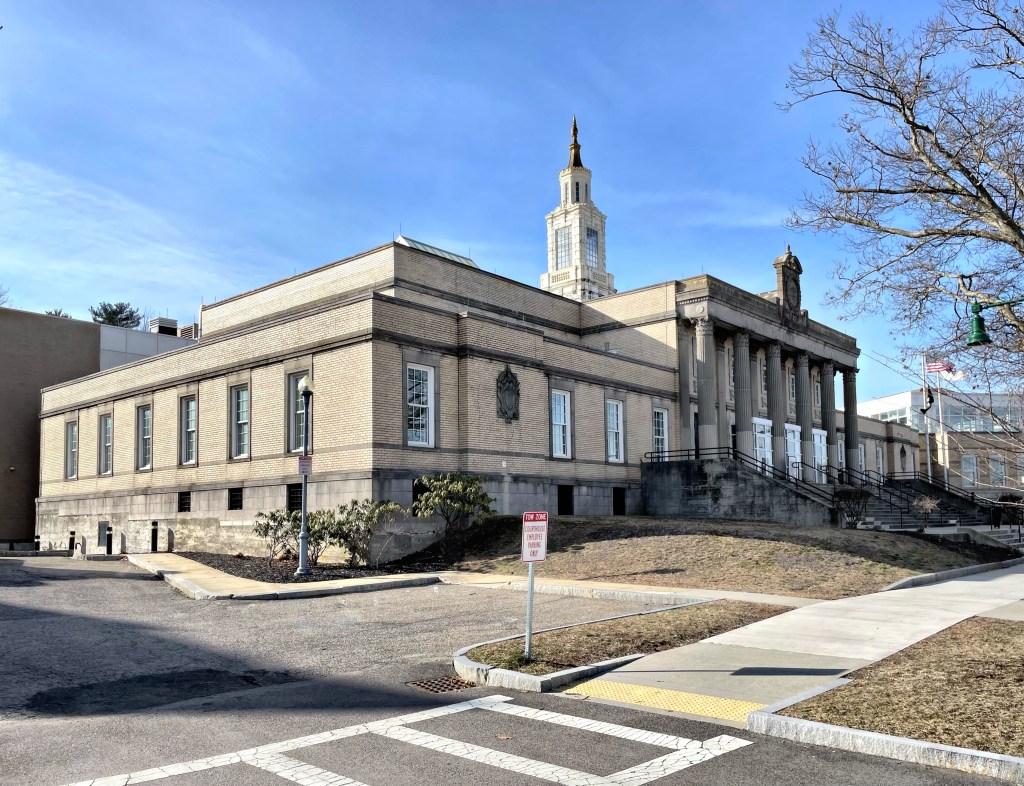
Bugbee Memorial Library // 1901

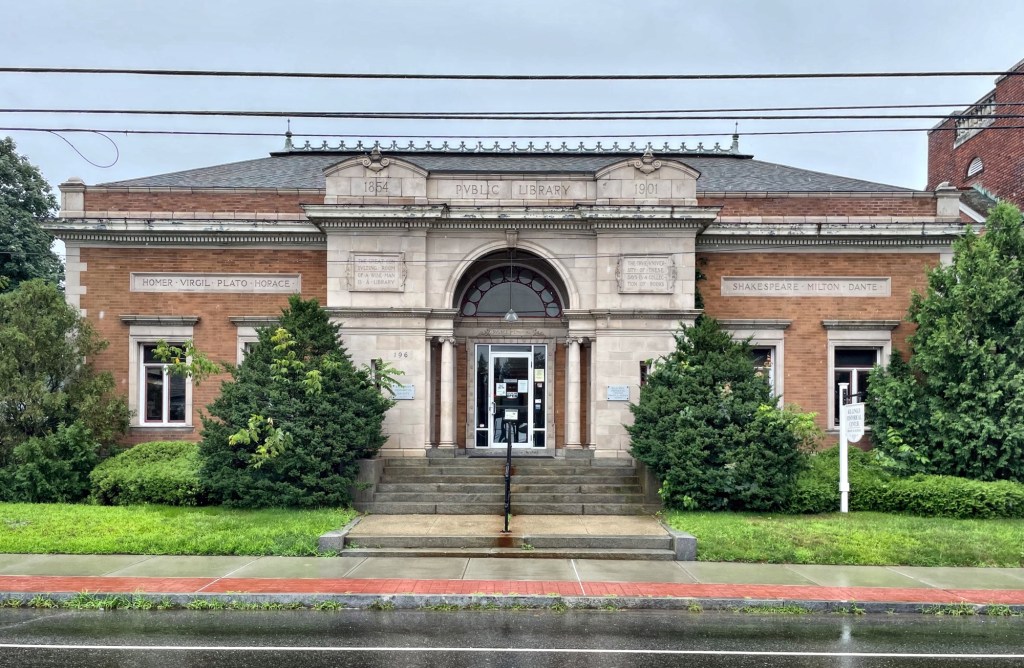
The Bugbee Memorial Library sits on Main Street in Danielson, the main village in the town of Killingly, Connecticut. The library was built in 1901 and financed by a bequest from Edwin Holmes Bugbee, who made his fortune at local mills. When Bugbee died in 1900, his estate left his entire collection of books along with funds for a new library for Danielson. Boston architect Walter Jefferson Paine designed the library building in the Classical Revival style with buff brick and stone construction. The names of Homer, Virgil, Plato and Horace, along with Shakespeare, Milton and Dante, are boldly emblazoned across the facade denoting the building as a house of learning. The library was outgrown, and a new library was built nearby in 1994. The old Bugbee Memorial Library has since been occupied by the Killingly Historical Society.

Dillingham House // c.1845

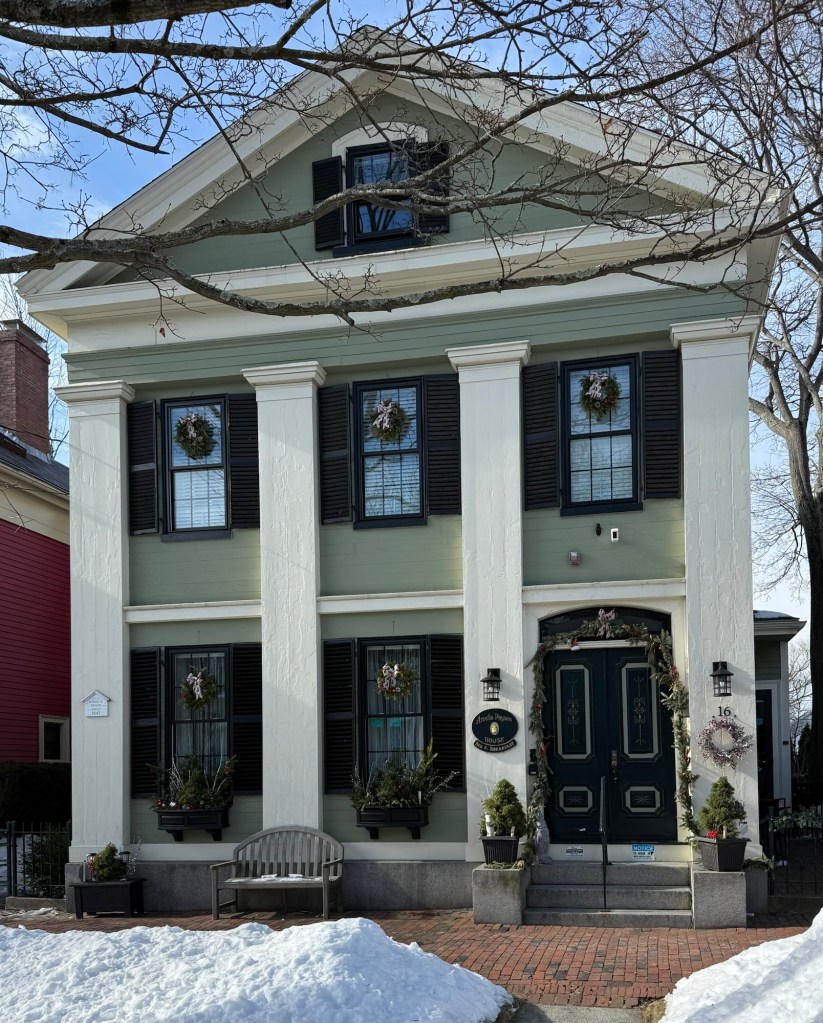
This perfect Greek Revival cape house sits on Pascal Avenue, the main street that cuts through the center of Rockport, Maine. The house dates to the 1840s or early 1850s and was owned by the Dillingham Family for a few generations. The original owner may have been Josiah Dillingham (1796-1861), a mariner and sea captain. Josiah died in 1861, and the property was inherited by his eldest son, Josiah Winslow Dillingham (1829-1895) who went by Winslow, seemingly to differentiate himself from his father of the same name and same profession. The Dillingham family home is a quintessential Greek Revival cape with central portico with Ionic columns and corner pilasters with full length entablature at the facade. In true Maine fashion, the side elevations are covered in weathered shingle siding.

Smith-Pierce House // c.1829

This transitional Federal-Greek Revival style house sits on the main street in South Britain, Southbury, Connecticut. The based on the style, the house was likely built around 1829 for Samuel Smith (1804-1856) who married Caroline Curtiss that year. Federal elements include the entry at the gable end, a pedimented facade embellished with modillions, and a doorway with sidelights and a leaded transom. Some moldings, the six-over-six windows and the simplicity of design are Greek Revival. It is one of the best preserved old houses in this part of Southbury.

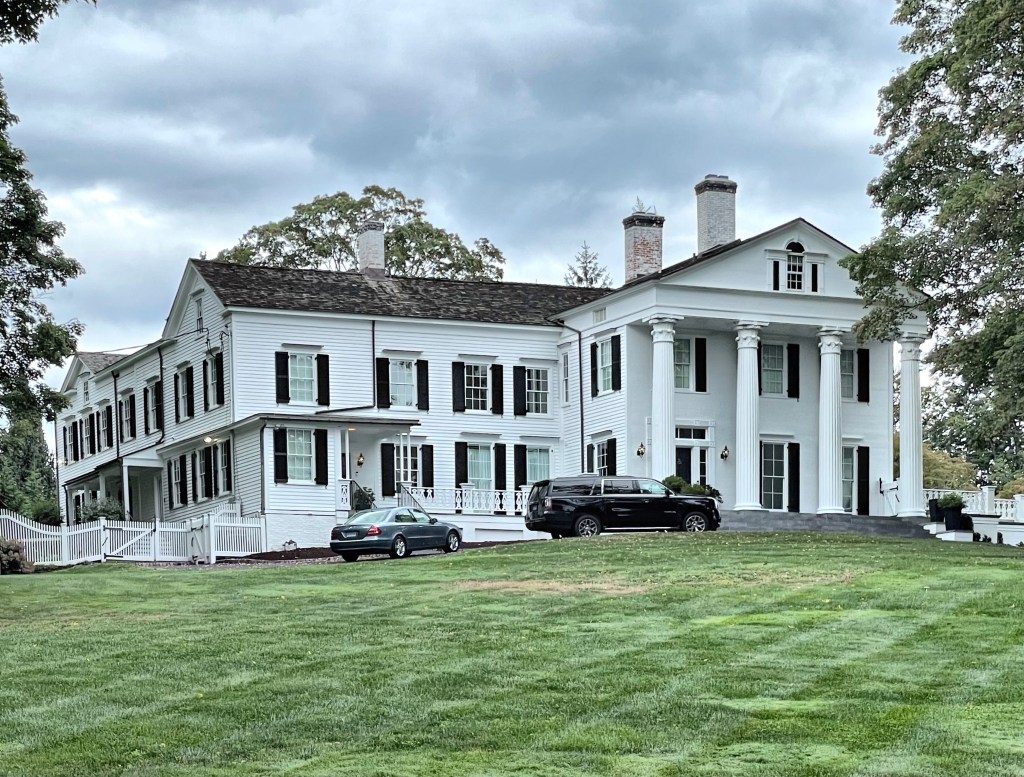
William W. Wakeman Mansion // c.1833

William Webb Wakeman was born in Southport, Connecticut on June 19, 1799, the son of Jesup Wakeman, an eminent citizen of the community. As a young man, William worked with his father in his commercial and trade enterprises. He acquired his own vessel early in his career, and gradually accumulated a line of trade vessels, sailing to New York, Savannah, Georgia and Galveston, Texas. By mid-century he was involved in the East Indian and China trade under the firm name of Wakeman, Dimon & Co. He built and owned a line of steamships during the late 50s, and was commissioned by the Federal government during the Civil War to transport troops and equipment. His massive Greek Revival mansion was built around 1833 on one of the largest house lots in the village, perched high on a hill overlooking the harbor. The three-bayed facade is framed by a two-story portico. Supported by four fluted columns, the capitals and entablature are similar to the “composed” order of Minard Lafever and the “composite” order of Asher Benjamin, popularized in the 1830s and 40s in their pattern books for architects and builders. After William died in 1869, it was likely his widow, Mary Catherine (who lived to be 99 years old, outliving all of her six children) who enlarged the home with massive two-story ells.

Litchfield Old Town Hall // 1851

The town of Litchfield, New Hampshire is located at the southern section of the state across the Merrimack River from the town that carries its name. Land which is now known as Litchfield, was once populated by the Abenaki people. The New Hampshire Archaeological Society has located over 30 Native American sites along the shore of the Merrimack River in Litchfield, with artifacts several thousands of years old being uncovered. European influences started in the 1650’s with early records showing that Litchfield was then a part of Dunstable, Massachusetts. Both sides of the Merrimack River were granted in 1656, to William Brenton, colonial governor of Rhode Island. The name was changed to “Brenton’s Farm” in 1729. Chief Passaconaway of the Penacook lived in a Litchfield settlement at least part of the year around this era. In 1728, sixteen proprietors divided up the Brenton Farm Land. In 1749, the land was granted to another group of settlers and named “Litchfield” after George Henry Lee, Earl of Lichfield. The town has historically been comprised of farmland without a true town common or center. A small enclave of buildings did center in town, where the town hall was built. This building, the Old Town Hall of Litchfield, was built in 1851 from parts of an older meetinghouse, which was built across the road from where the building now stands. A shift in the course of the Merrimack River during the early 1800s forced the dismantling of the original Meeting House and a new structure to be built. It is a modest Greek Revival structure with corner pilasters, entablature, and gable end facing the street which reads as a pediment. It is very well maintained to this day as the home to the Litchfield Historical Society.

Robert Palmer Jr. House // 1907

Robert Palmer Jr. (1856-1914) was born in Groton, Connecticut as the son of Robert Sr., a prominent businessman and Deacon in Noank’s seaside village (his house was featured previously). Robert Sr. established the Palmer shipyard, which became the largest business enterprise in Noank. Jr. would later join his father’s business and did well for himself financially, eventually marrying and building this Neo-Classical mansion on Church Street in town. The company, under Sr. and Jr.’s leadership, built many seafaring vessels that were internationally renowned until the company closed in 1914 after the death of Robert Jr. This house is unique in town for the monumental two-story portico, Palladian windows at the first floor, and a projecting entry vestibule.

First Church of Christ Scientist, Providence // 1906

One of the most stunning and monumental buildings in Providence is this building, a church which pretty closely resembles the Rhode Island State House! Christian Scientists in Providence began to hold informal services in 1889 and received a charter from the state legislature in 1895. Construction started on this church, the First Church of Christ, Scientist in 1906 from plans by local architect Howard Hoppin who roughly modeled the building after the congregation’s Mother Church in Boston. The Classical Revival building is capped by a copper hemispherical dome supported by a colonnade of Corinthian columns. The main block of the structure at the street is fairly modest, possibly due to the residential character of its surroundings.

West Roxbury District Courthouse // 1922

Boston neighborhoods are very confusing, and how the West Roxbury District Courthouse came to be located in Jamaica Plain is just one example. The independent Town of West Roxbury was in existence from 1851 until 1874, a mere 23 years, bookended by its time as a section of the Town of Roxbury and being annexed into the City of Boston. West Roxbury originally included parts of the Jamaica Plain and Roslindale neighborhoods. Ultimately, West Roxbury became one of the city’s eight large districts and its municipal court division is served by this Neo-Classical style building. Built in 1922, the current West Roxbury Courthouse building on Arborway, was and still is, from a municipal court perspective as well as an historical perspective, in West Roxbury. The West Roxbury District Courthouse was designed by Timothy G. O’Connell and Richard Shaw of the firm O’Connell and Shaw who were best known for their ecclesiastical designs in New England, largely specializing in the Gothic and Arts and Crafts styles. Their design for the West Roxbury Courthouse remains one of their finest non-religious buildings and a departure from their traditional styles.

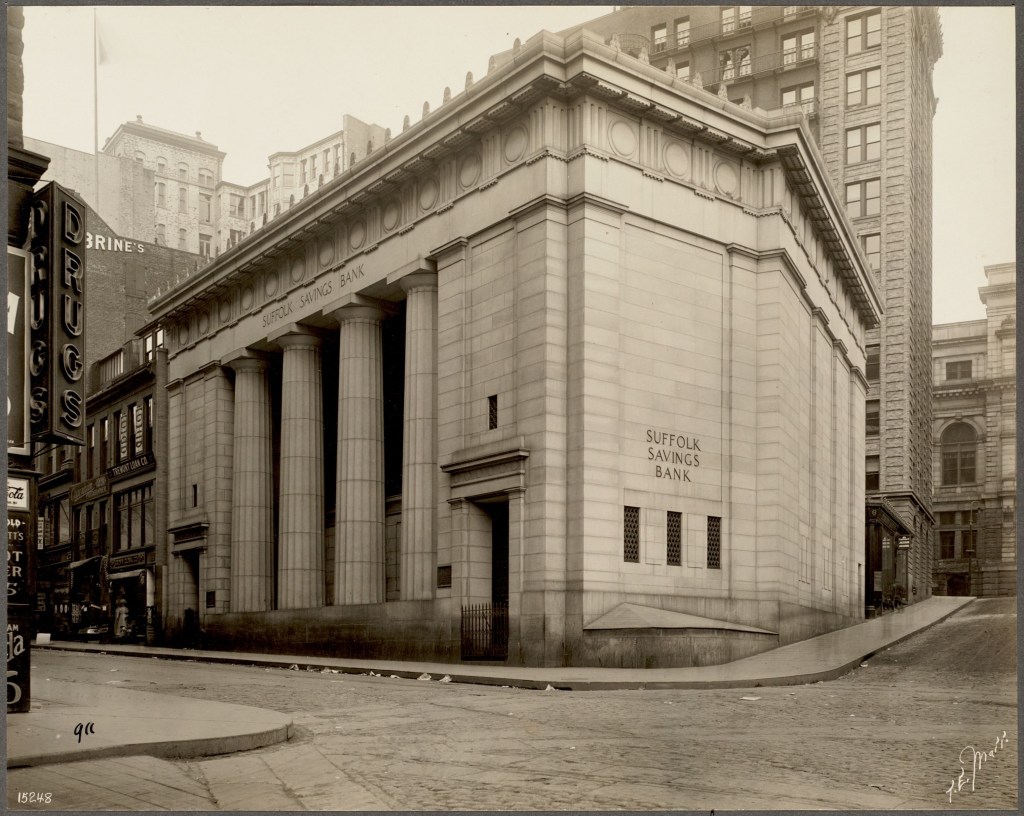
Suffolk Savings Bank // 1906-1967

The Suffolk Savings Bank for Seamen and Others was incorporated in 1833 as a banking institution catered to seamen and merchants who received their earnings after a trip in cash, and wanted a secure place to store their funds. At the time, these men were among the richest in the city, and the bank did very well. It later became a national bank in 1865 and membership boomed. The bank grew and grew until the early 20th century, and it needed a new banking house that showcased their stability, but also provide a visual embodiment of the security their institution provides. The bank’s board hired world-renowned architect Cass Gilbert to design a new building, which would be located on one of the busiest corners in Downtown Boston at the corner of Tremont Street and Pemberton Square. The Classical Revival building was constructed of Hallowell Granite and featured four monumental columns recessed into the Tremont Street facade. Minimal windows allowed for security, while a domed skylight covered in a cap provided light into the rounded banking room below. Inside, the walls and floors were of marble with a tile coffered ceiling. The building lasted until 1965 when Urban Renewal brought the wrecking ball. The bank was demolished by 1967 for the present Center Plaza building in Government Center.

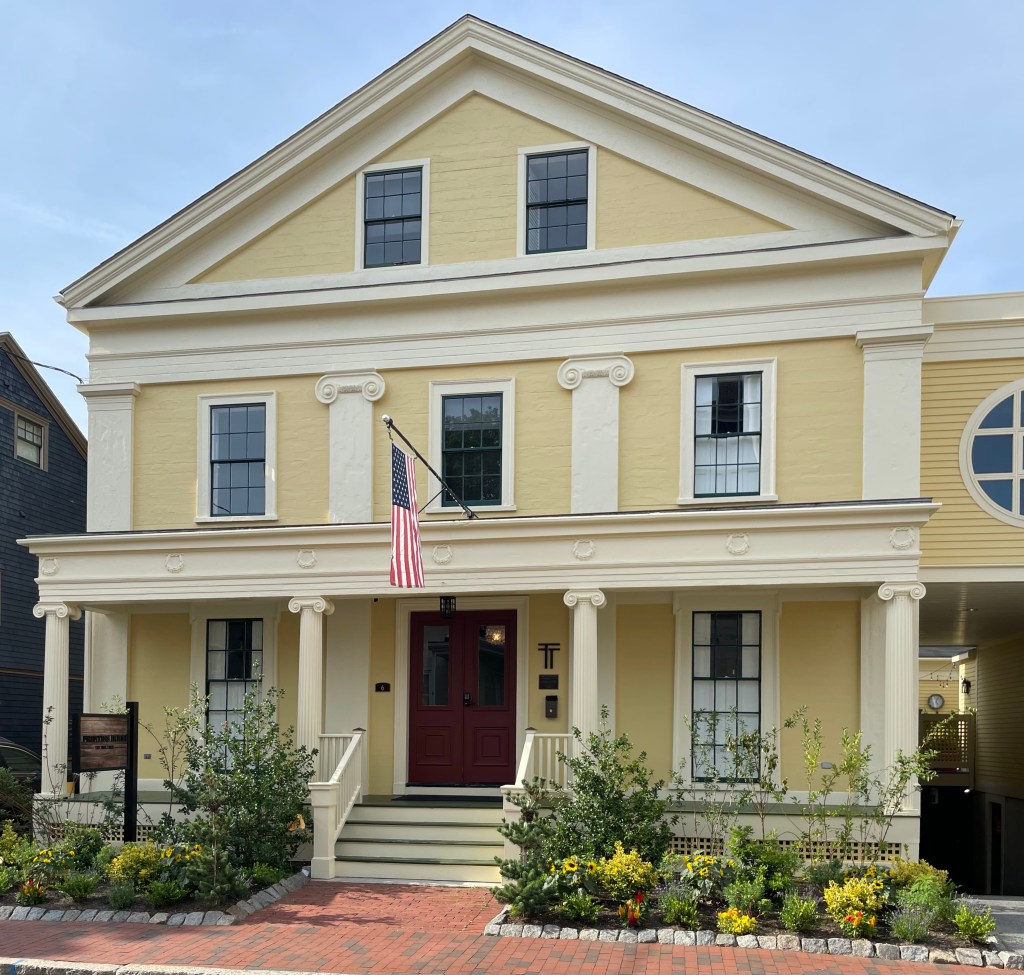
Prentiss House // 1843

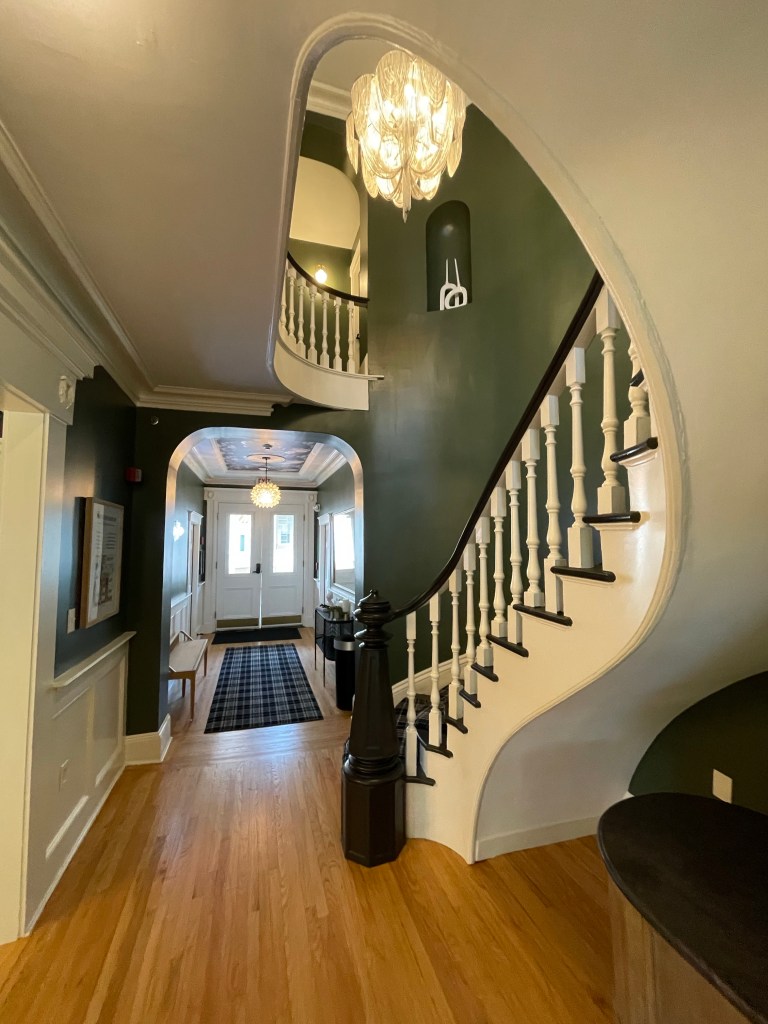
This past weekend, I took a little “stay-cation” in Cambridge, and I am so glad I did! I stayed at the Prentiss House, a highly significant Greek Revival house near Porter Square. The Inn is operated by Thatch, a company that offers short-term hotel stays, long-term apartments, and co-living arrangements in the Boston area. They recently acquired and renovated this amazing old house and its a great place to stay!

The home was built in 1843 by William Saunders a well-known housewright for his son, William Augustus Saunders about the same time as his first child, Mary was born. Sadly, Mary died at just six years old and was buried at Mount Auburn Cemetery with her grave guarded by a tiny stone dog. The Saunders Family resided at the home for over 50 years until William and his wife’s death at the end of the 19th century. The original location of the mansion on Massachusetts Avenue necessitated its move to the newly laid out Prentiss Street to save it from commercial development pressure and the wrecking ball. The home was moved to its present site in 1925 for the erection of a one-story block of stores on Mass. Ave. In 1992, the home was purchased by local artist, Charlotte Forsythe and she began the journey of transforming the home into the Mary Prentiss Inn. An addition by Bell/Fandetti added rooms and subterranean parking to the building at that time. The Inn was purchased by Thatch in 2021, who modernized the rooms.

The house reads like a Greek Temple, not with a full portico, but by using colossal applied pilasters and an entablature carried across the gable, suggesting a classical pediment. Ornamental wreaths adorn the full-length porch and interior mouldings.

Baylies Mansion // 1903

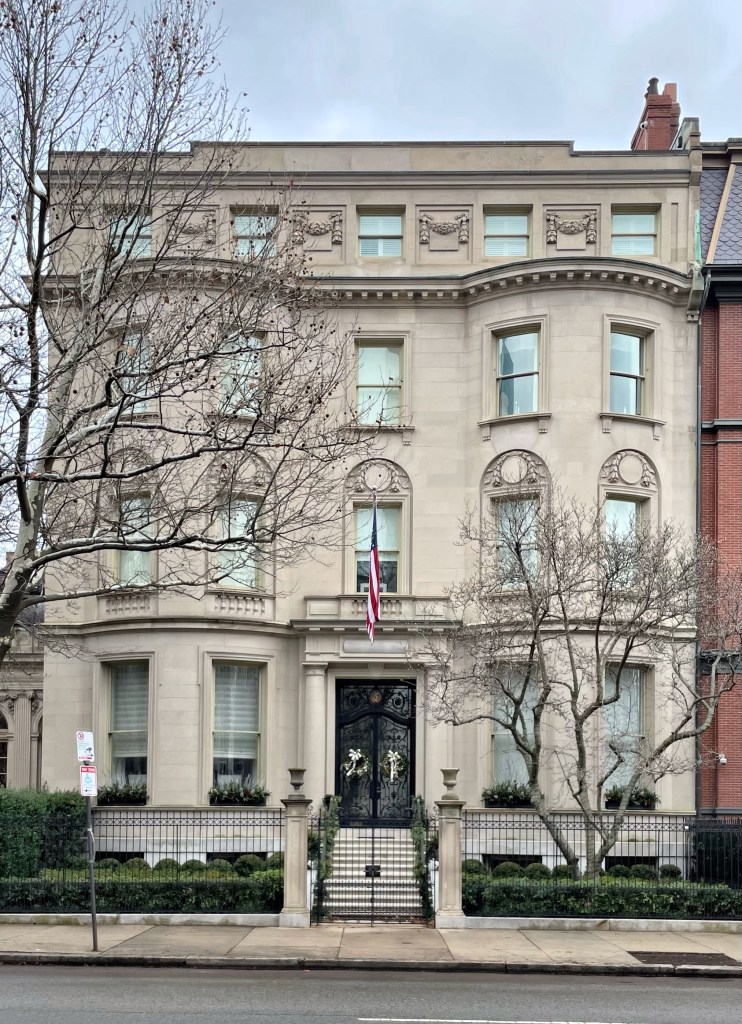
Commonwealth Avenue in Boston’s Back Bay neighborhood is a dream, no matter what time of year, though I am a huge fan of it in the winter so the leaves don’t obscure the architectural details! This home just steps from the Public Garden was built in 1903 for Walter Baylies (1862-1936) and his wife, Charlotte. The couple had purchased a c.1860 Second Empire mansion (basically a sister house or twin to the adjacent at 3 Commonwealth Ave), and demolished it for a more “modern” residence. Baylies was extremely wealthy with investments in nearly everything, and he wanted his city residence to stand out amongst the earlier, brick and brownstone townhouses on the eastern edge of the neighborhood. Architect Arthur Rice designed the house in the Renaissance Revival style, and it is finished with Indiana Limestone. Of particular note is the one-story ballroom, which was built to the side of the home, set back behind a small garden. An empty house lot, formerly occupied by a stable, was used simply for the Baylies’ ballroom, constructed in 1909 for their daughter. Talk about a status symbol! The home was purchased by Walter’s heirs in 1941 by the Boston Center for Adult Education. The home was again purchased in 2020, and is back to a single-family home! I can’t even imagine how stunning the interior is!

“Beachmound” Mansion // 1897

Beachmound, a unique summer residence in Newport, was built in 1897 by architect Henry Ives Cobb for Benjamin Thaw Sr., (1859-1933) a Pittsburgh banker and philanthropist. The mansion is Neo-Classical in style, taking cues from Classical architecture, specifically Greek Revival, with the monumental columns, pediments, and pilasters. Benjamin Thaw was the half-brother of Harry Kendall Thaw (known for the 1906 murder of architect Stanford White). The murder took over the press as one of the more salacious scandals of the gilded era. Harry Thaw’s wife, the actress/model Evelyn Nesbit was said to have been raped by Stanford White while 16 year old (White was 47). She later married Harry K. Thaw. Thaw shot and killed White, the internationally famous architect, in front of hundreds of witnesses in a theater during a performance in New York. Following two trials, he was acquitted based on the insanity defense, a stint in an asylum from which he escaped, and eventual court-ordered freedom, Thaw was a celebrity. A comical piece of the story is that when Thaw later visited “Mar-a-Lago”, the Post Mansion in Palm Beach, Florida (now best known as Donald Trump’s home), he gasped, “My God, I shot the wrong architect!” Beachmound remains as a stunning, refined summer estate in Newport, and is comprised of condo units.

South Canton Center School // 1848

Located across the street from the Canton Congregational Church (last post) you can find the cutest one room schoolhouse in central Connecticut. The schoolhouse, built in 1848, was one of nine one-room schoolhouses in Canton at the time. The perfectly proportioned classically designed school features two front doors, one on each side of the recessed entry, with the right door for girls and the left for boys. There were also two outhouses behind the building for students and the teacher. This building served the community as a school until 1942. In the years following, the building was used as a meeting place for women from the congregational church, a community library, and a small public space for members of town. It is owned by the Congregational Church, who maintain it to this day.

Schenectady City Hall // 1931

Buildings of New England travels! Welcome to Schenectady, a great city in upstate New York, with an hard to spell and pronounce name! The name “Schenectady” is derived from the Mohawk word skahnéhtati, meaning “beyond the pines”. Schenectady was founded on the south side of the Mohawk River by Dutch colonists in the 17th century, many of whom were from the Albany area. In 1664 the English seized the Dutch New Netherland colony and renamed it New York. They established a monopoly on the fur trade around Albany, and issued orders to prohibit Schenectady from the trade through 1670 and later. The town grew mostly as an inland agricultural town until the Erie Canal was built in 1825, creating a navigable water route from New York City and the Atlantic Ocean to the Great Lakes, cutting through Schenectady. The town grew and became an industrial center, attracting a very diverse population of immigrants in the 19th century and African Americans as part of the Great Migration out of the rural South to northern cities for work. The community struggled (like many) in the mid 19th century but has seen a large resurgence as of late!

This building is the Schenectady City Hall, a massive architectural landmark which made my jaw drop when I saw it! The City of Schenectedy outgrew their old City Hall, and in the late 1920s, held a nationwide contest to select designs for a new City Hall. The contest was won by the prominent architectural firm McKim, Mead, and White. It appears that the designs were furnished by James Kellum Smith of the firm, the often overlooked genius of the MMW practice. The exorbitant cost of the project, which was undertaken during the Great Depression, caused the building to be dubbed “Fagal’s Folly” after Mayor Henry C. Fagal, who allowed all the cost increases while the city’s future was uncertain. He was not re-elected after this building was completed. The building is a pleasing mixture of Colonial and Classical Revival styles and features bold pilasters and a towering cupola

Susan Lord House // 1913

This home was built in 1913 and is a high-style Neo-Classical example of a “beach cottage”. The home is located in the fashionable Rye Beach colony in New Hampshire, which developed in the mid 19th century through the first half of the 20th century as an exclusive enclave for vacationing elite. The home was purchased by Susan Bailey Lord just years after its completion as a summer retreat from her home in Malden, MA, just outside Boston. She purchased the home just years after the death of her husband, who was thirty years her senior. It’s safe to say that Susan let loose up on the beach and had a “hot girl summer”.