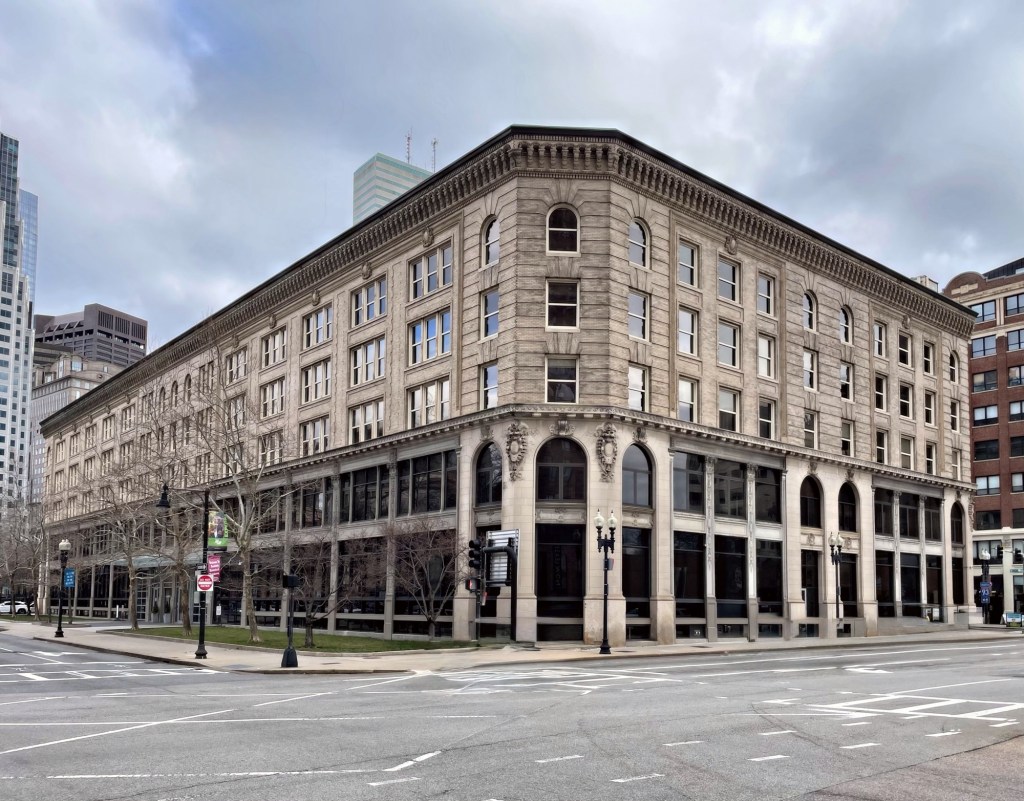
Albany Building // 1899

One of the last major 19th century buildings erected in Boston’s Leather District is also one of the finest examples of Beaux Arts architecture in the city. This is the Albany Building, built in 1899, and fills an entire city block. The Albany Building was designed by Peabody and Stearns and built by Norcross Brothers as the offices for the United Shoe Machinery Corporation. Its two-story base is adorned with swags and cartouches and its fifth floor is topped with a complex cornice. The use of beveled corners and ornate detailing break up the massing of the building which otherwise, would read like a box. The building today serves as an important visual gateway into the Leather District and its context of late 19th century commercial blocks centered around the leather and shoe manufacturing businesses.

Lincoln Building // 1894

Designed by a prominent architect, Willard T. Sears, the Lincoln Building at Lincoln and Essex streets, is a handsome example of a late 19th century mercantile structure consisting of stores, office & loft space, serving as an important visual anchor the almost uninterrupted neighborhood of the Leather District of Boston. The building is the second of its name, with the first Lincoln Building succumbing to the Lincoln Street Fire of 1893, which started as a small fire in a restroom of a toy wholesaler, eventually spreading to a storage room full of fireworks, which exploded, eventually killing at least five, and forced many others to jump from buildings to seek safety. The replacement building is Renaissance Revival in style with a stone base and classically decorated facades. The recessed entrances set within arches and the series of columned bays at the ground floor are truly special. The building was long-occupied by leather dealers and companies, but was converted to residential use in 2006 with condos on the upper floors and retail spaces on the street.

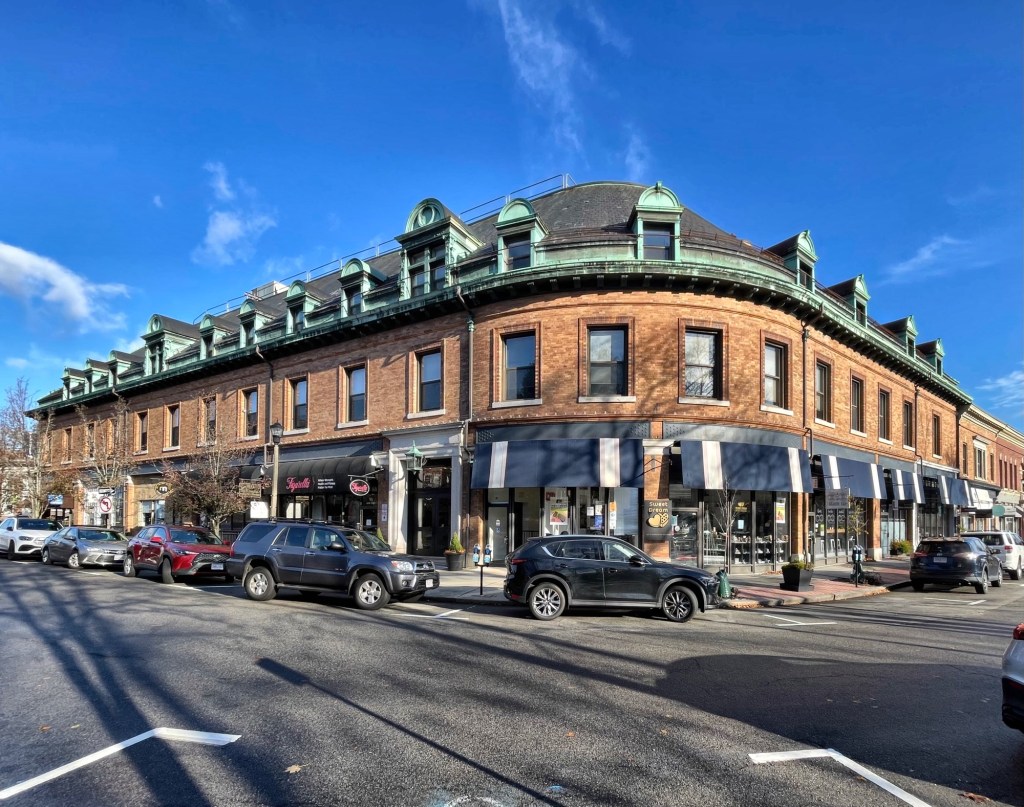
Bray’s Hall // 1893

As Newton Centre’s new railroad station and following development boom transformed the once sleepy village into the main commercial center for the city, landowners capitalized on the opportunity by developing commercial blocks to serve the community and line their own pockets. Mellen Newton Bray (1856-1946) became a major landholder in Newton Centre and would develop the areas directly surrounding the new train station there. On a curving site, he built Bray’s Hall, this three-story commercial block renting out spaces to local banks and stores with a large assembly hall and bowling alley in the building as well. Initially, Bray planned for an eight-story structure, having contracted a solid foundation that could support such a structure, pending the success of the initial construction. That is mixed use before it was “cool”. The building was designed by the firm of Kendall & Stevens, likely led by Henry H. Kendall, who resided in Newton Centre. Kendall would also design the apartment block across the street for Mr. Bray. The building is constructed of light Tuscan bricks and is notable for the bracketed cornice and dormers all in copper. The building was restored in the 1970s by owner David Zussman, and rebranded as Piccadilly Square, following his recent trip to London being impressed with by the atmosphere of Piccadilly Circus.

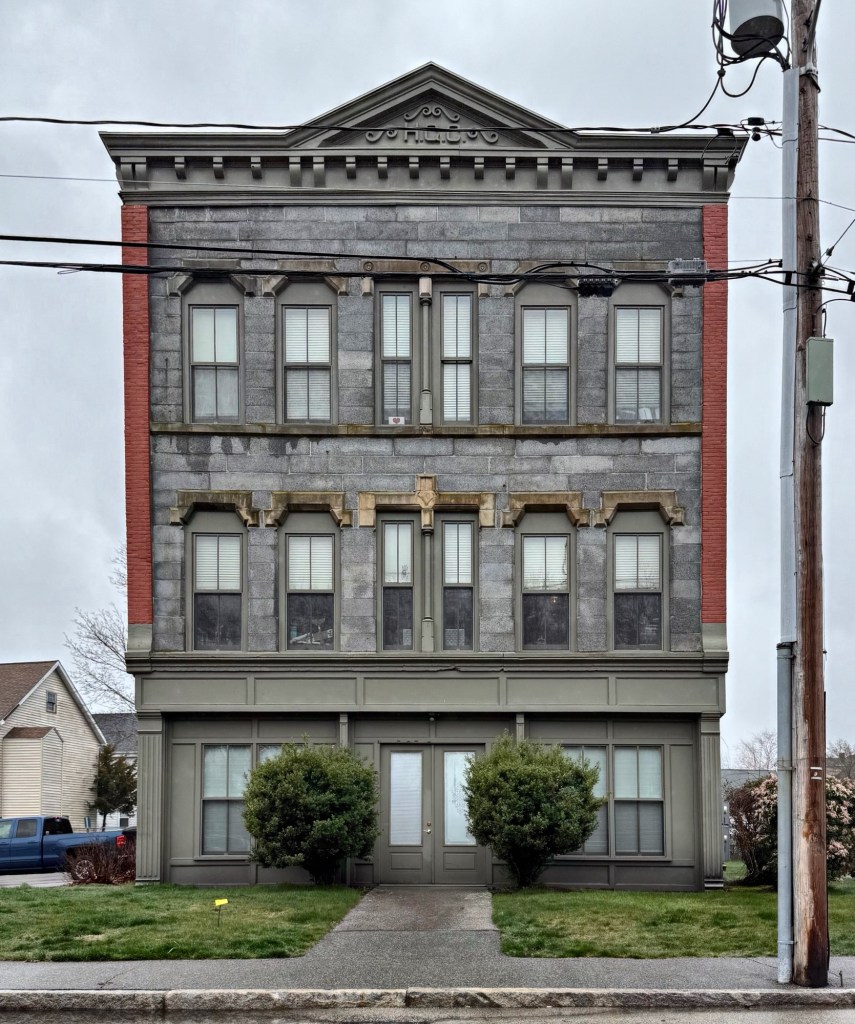
Norwood Odd Fellows Building // 1912

In the early 20th century, Norwood, Massachusetts, shifted from sleepy rural town to a commercial and population center with a population tripling in size between 1900 and 1930. Located on Washington Street, the town’s main commercial street, the Odd Fellows Building stands as a reminder of the historical importance to charitable and social organizations. Designed by Boston architect Clarence Blackall, the three story building is characterized by a boxy rectangular form, yellow and tan masonry with limestone and granite trimmings, and its somewhat minimal detailing. Built in 1912, the building’s first floor was designed to contain two stores, the second floor housed the club rooms and meeting hall, and third-story containing restrooms and a kitchen. The Classical Revival style building is one of the larger and more significant commercial structures in the town center.

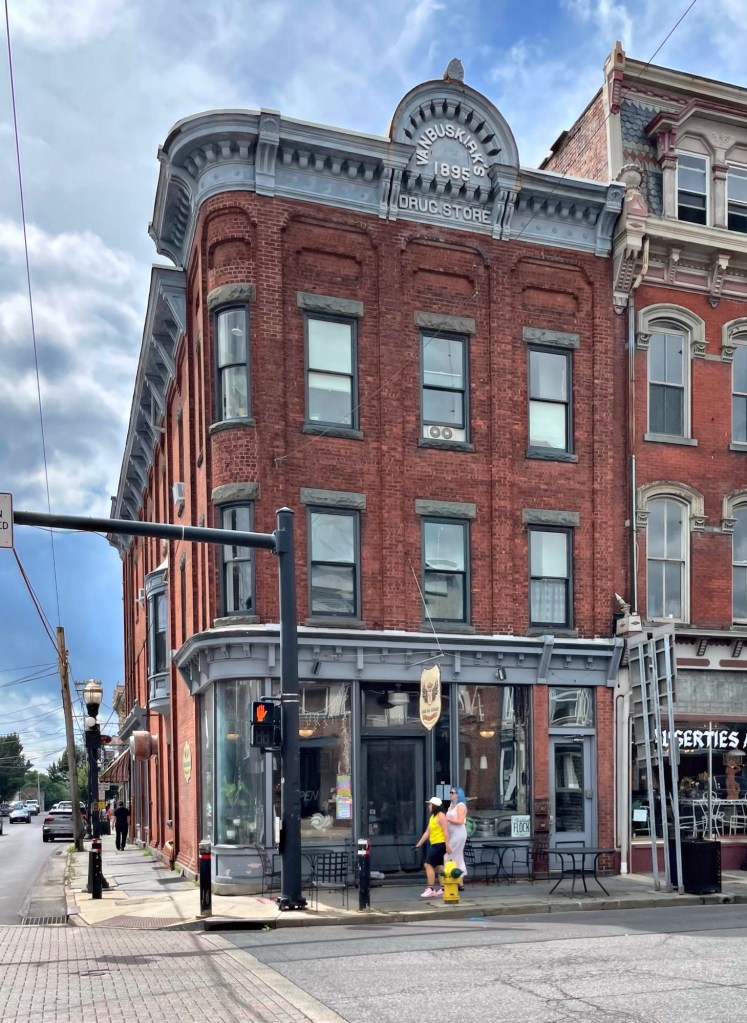
Van Buskirk Block // 1895

Built at the corner of Main and Partition streets in Saugerties, New York, this handsome 19th century commercial building is located next door to the Whitaker Block – featured previously. The Van Buskirk Block was built in 1895 for the Van Buskirk Brothers, who were pharmacists in town. The building has a unique rounded corner, inset brick paneling, and a bold metal cornice at the roof.

Whitaker Block // c.1870

One of the finest commercial buildings in downtown Saugerties, New York, is the Whitaker Block, a landmark Second Empire style structure from the years following the American Civil War. The structure dates to around 1870 and was first owned by an E. Whitaker and was mixed use with retail at the street and offices above. Additionally, the building was home to the local chapter of the Independent Order of Odd Fellows (IOOF) a fraternal social organization. The three-story with mansard roof building stands out for its architectural details and integrity which largely remain intact to this day.

Warren Industrial Trust Building // 1906

This monumental Georgian Revival bank building sits on Main Street in Warren, Rhode Island, and is one of the finest buildings of the style in the entire state. The Warren Industrial Trust in 1906 hired Edmund R. Willson of the Providence architectural firm of Stone, Carpenter & Willson to design the bank for the town after it had absorbed the town’s multiple banks, under one roof. Four Corinthian columns support a robust pediment over the entrance with the red brick elevations enlivened with arched windows, oversized keystones, and pilasters with contrasting capitals and bases. The building shows that Colonial Revival architecture, while often seen as a refined, classical style, can be festive and ornate.

Knoll International Furniture Showroom // 1980

An exemplar of late International Style, this stucco-clad concrete building stands apart from its traditional Back Bay neighbors and is located on one of the city’s most busy streets, Newbury Street. Built as the showroom and offices for Knoll International furniture, its crisp design is an elegant statement in form and details of Bauhaus- and Le Corbusier–inspired architecture, including its asymmetrical composition, curvilinear lower facade, horizontal window bands, and stairwell located behind a glass brick wall. The building was designed by Gwathmey, Siegel and Associates who have a great diversity of commissions, all with thoughtful site-specific designs. The building reinforced the positive qualities of modernist architecture at a time when some architects were advocating for historic revivals and Post-Modernism. The building was later occupied by DKNY and is presently rented out by Lenscrafters.