Benjamin Franklin College & Pauli Murray College, Yale University // 2017

Opened in 2017, the two newest residential colleges at Yale University, Benjamin Franklin College and Pauli Murray College, became a case study in how contemporary buildings can honor traditional design while introducing 21st-century amenities. Designed by Robert A. M. Stern Architects (RAMSA), the two large dormitories reinforce Yale’s legacy of collegiate Gothic architecture while reading as new construction to the trained eye. The two buildings feature unique layouts to create enclosed courtyards and are stylistically designed as fraternal twins, similar in size and palette but each enjoying its own identity and organization. RAMSA architects were inspired by James Gamble Rogers’ 1930s Colleges at Yale, which (like at Harvard) were inspired by the college systems at Cambridge and Oxford in England which create enclosed quads or courtyards for students in self-contained housing. Like Rogers’ Neo-Gothic Yale buildings, the Franklin and Murray Colleges feature battlements, stained and leaded glass windows, iron gateways, towers, and hidden stone gargoyles. The two buildings are a tour de force of Traditional Architecture that blends new and old in all the best ways.

Becton Engineering and Science Center, Yale // 1968

The Becton Engineering and Science Center at Yale is a behemoth academic building on Prospect Street containing offices, laboratories, a library, and an auditorium for the world-renowned institution. Discussions about a new engineering and science center began in 1965 after a generous donation by Yale alumni, Henry Prentiss Becton, and the University hired famous Modernist architect, Marcel Breuer to design the new building opposite the city’s Grove Street cemetery. For the design, Breuer used precast concrete panels and logical planning, to maximize interior space through the building which required less vertical columns in the floorplates. At the street, an elongated arcade provides views into the interior spaces and serves as a shelter from the weather. The arcade and facade above is supported by stunning buttress-like columns, a Modernist nod to the predominant Gothic buildings and character of Yale’s campus. A landmark example of the Brutalist style, the Becton Center serves as a great, and well-preserved example of an often maligned period of American architecture.

Yale Tsai Center for Innovative Thinking // 2020

The Tsai Center for Innovative Thinking at Yale University is a contemporary, 12,200-square-foot center tucked away behind larger buildings that serves as an important nucleus for research-based programs within Yale’s School of Engineering and Applied Science. The center brings together students from diverse disciplines to the new building where collaboration to solve real-world issues can be done. Designed by Weiss/Manfredi, the innovative building’s elliptical form is centrally positioned in a courtyard surrounded by taller, boxy structures, creating a unique juxtaposition. Lined by undulating, transparent glass walls, the design allows visibility inside to see and participate in the work inside. The Tsai Center is one of my favorite new buildings in New England and showcases how high-quality and innovative design can make a big architectural statement, even if the building is just a small pavillion-like structure.

Old Wolf’s Head Society Building // 1884

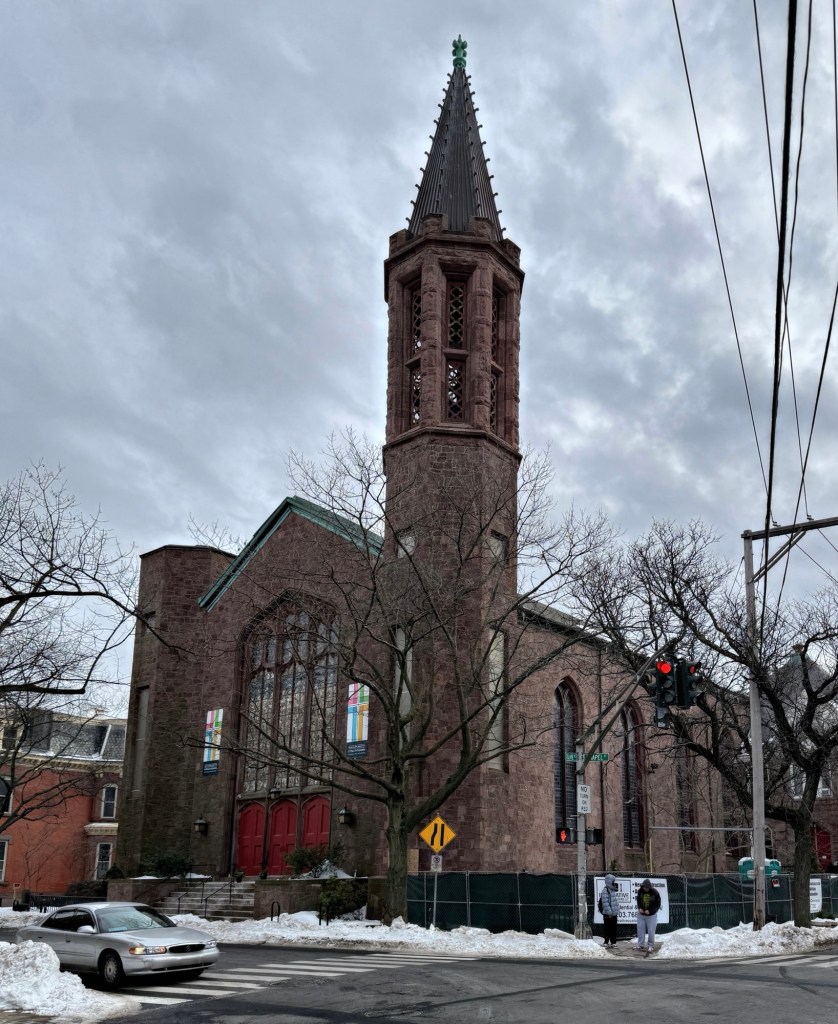
The Wolf’s Head was established in 1883 as one of Yale’s secret societies. It was intended as an alternative to the more established Skull and Bones and Scroll and Key societies, and it made a statement when it completed this clubhouse in 1884. The handsome Richardsonian Romanesque clubhouse at the corner of Prospect and Trumbull streets in New Haven was designed by the firm of McKim, Mead and White, which would go on to become one of the leading architectural firms in the country during the late 19th and early 20th centuries. The rough-faced brownstone structure was historically covered in climbing ivy, adding to the building’s mysterious nature. Wolf’s Head made it their home from 1884 until 1924 when the building was sold to the University and Wolf’s Head moved to new quarters on York Street. The building was rented to clubs for years until the early 1960s, when it started to be used for faculty offices, staff and classrooms. The building was added onto and today, the old Wolf’s Head is used by the Institution for Social and Policy Studies.

James Dwight Dana House // 1849

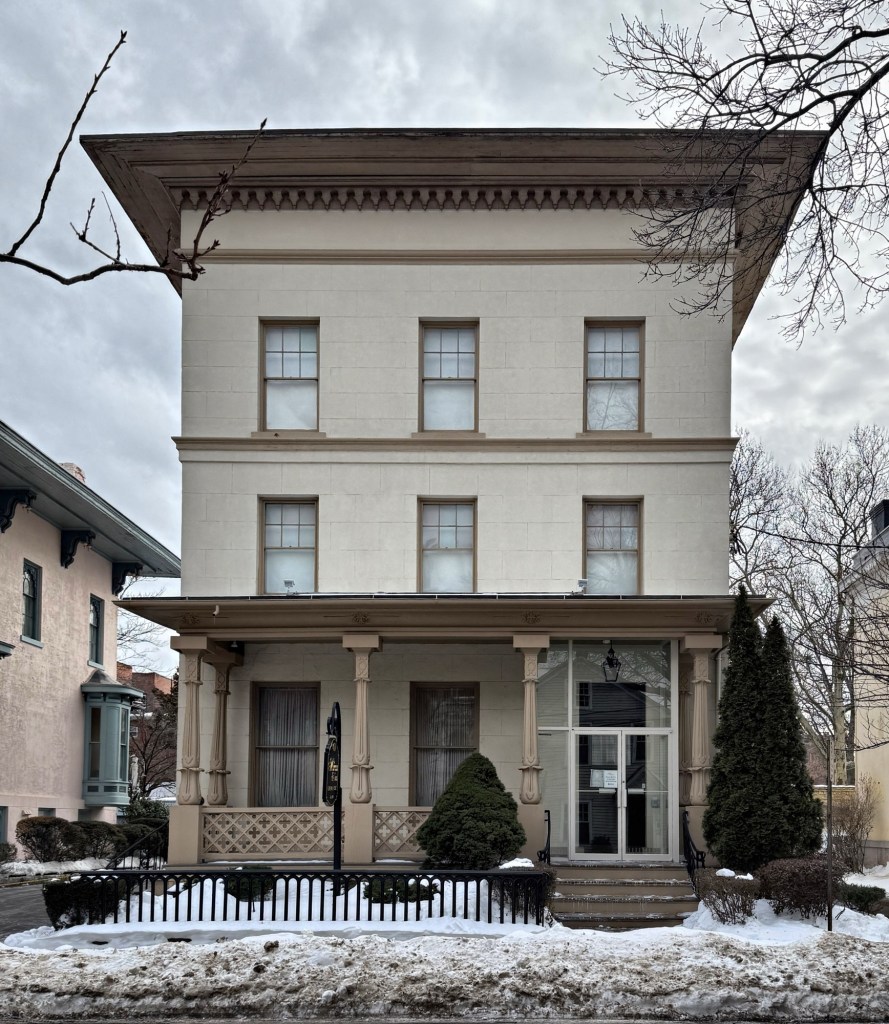
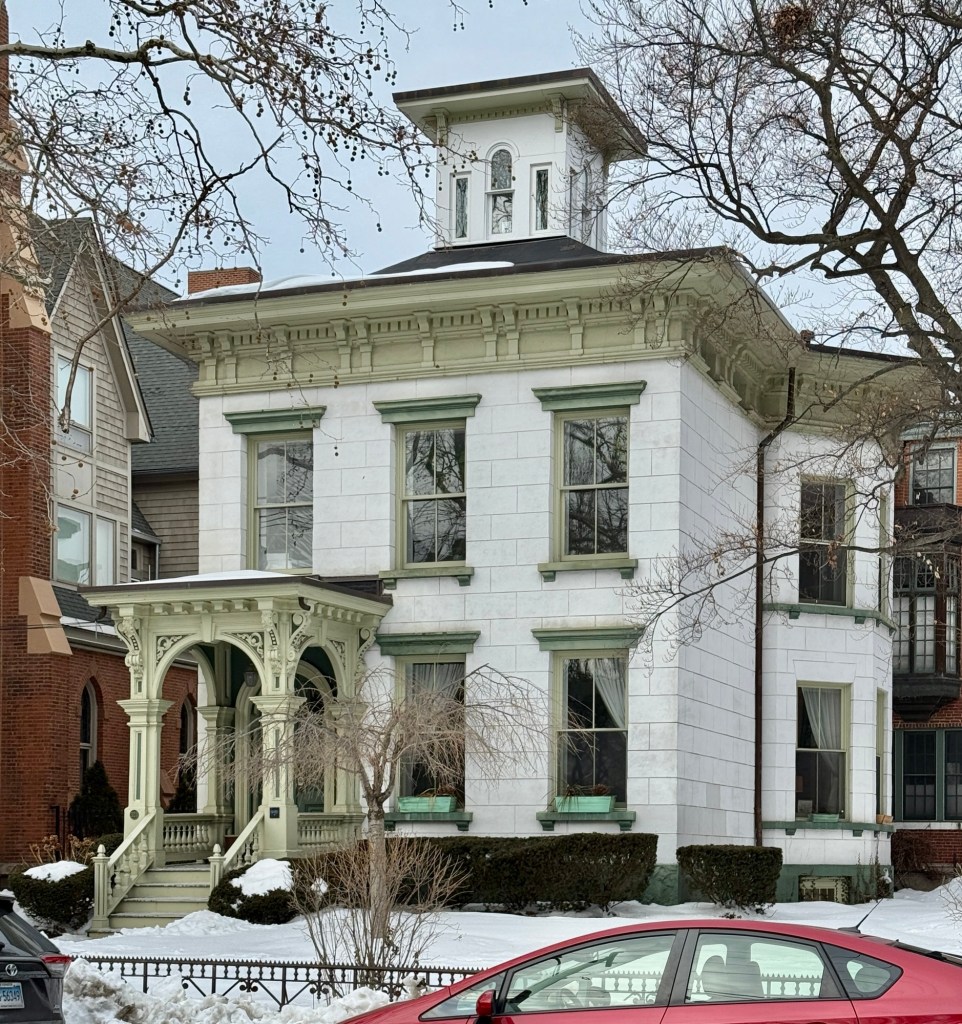
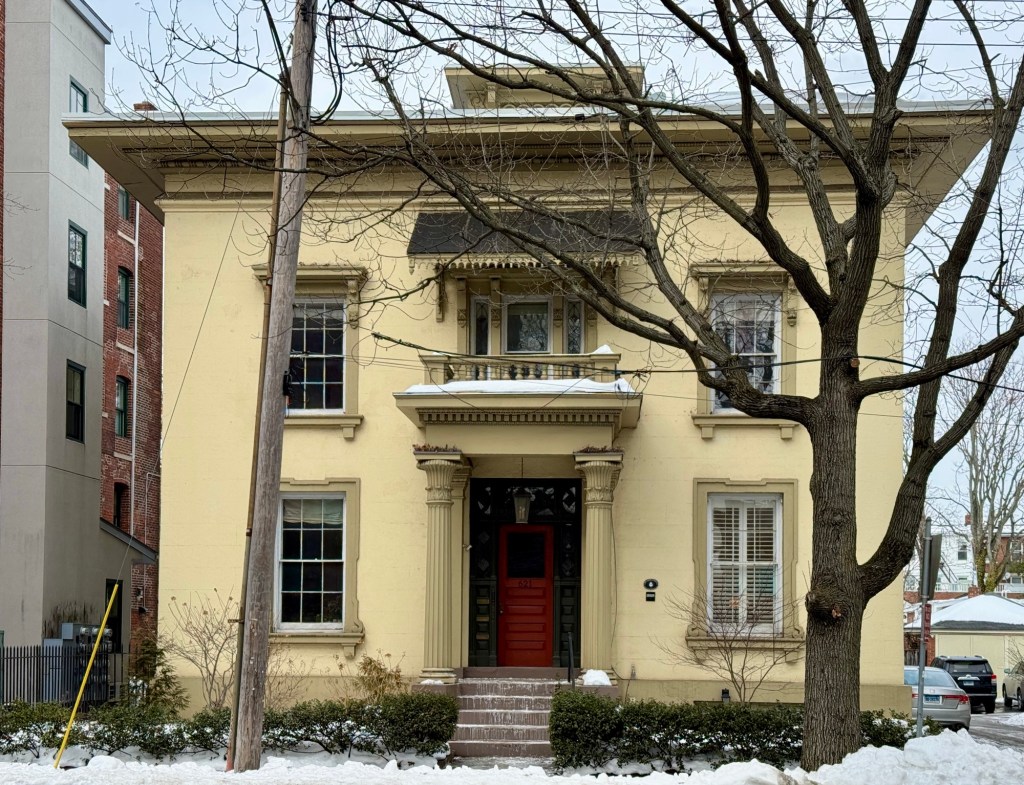
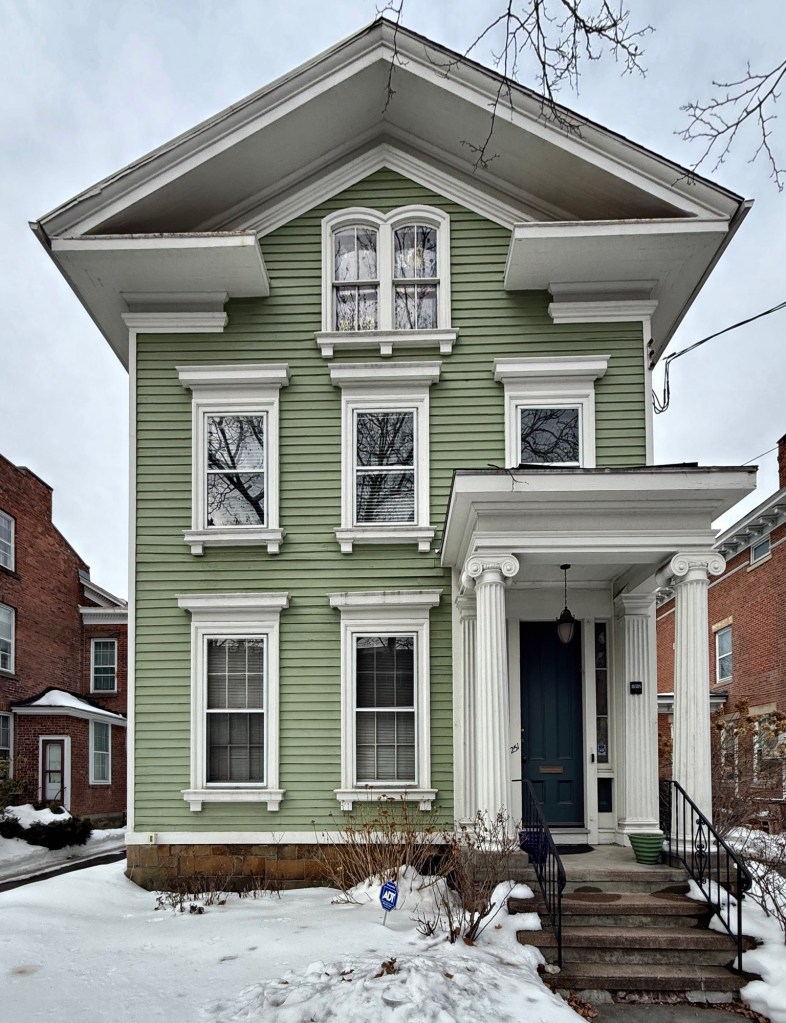
The James Dwight Dana House at 24 Hillhouse Avenue in New Haven, Connecticut, is a landmark early example of an Italianate style residence designed by a famed 19th century architect. Built in 1849 from plans by architect Henry Austin, the house was constructed for owner, James Dwight Dana (1813-1895) and his new wife, Henrietta Silliman and possibly funded by her father, Benjamin Silliman, a Yale professor who was considered “The Father of Science in America”. James Dwight Dana’s education in geology, in addition to his studies with his father-in-law, Professor Silliman, extended to the four-year United States Exploring Expedition between 1838–1842), in which Dana served as the staff geologist and mineralogist, exposing him to a wide-ranging variety of geological formations and minerals. Upon his return to New Haven, he married Silliman’s daughter and then moved into this stately home. Later in his career, Dana was responsible for developing much of the early knowledge on Hawaiian volcanism. In 1880 and 1881 he led the first geological study of Hawaii. The James Dwight Dana House has a three-bay front facade, with a single-story porch extending across its width, supported by wooden columns with unique capitals. The shallow roof has broad, overhanging eaves sheltering a unique corbelled brick cornice. The building was added onto in 1905 with similar architecture and was purchased by Yale in 1962. Today, the building is preserved by the University and houses the Institution for Social & Policy Studies (ISPS).

Villa Bella Vista // 1908

Villa Bella Vista in Chester, Connecticut, stands as a striking and deeply personal interpretation of an Italian Villa, designed not by a professional architect, but by its remarkable owner, Eila Pierre. Known even among friends as Madame Pierre, she was a turn-of-the-century feminist of independent means who defied convention at nearly every turn. Drawing inspiration from the indigenous farmhouse architecture of northern Italy, Pierre personally designed the well-preserved stuccoed stone house, which was later constructed by local Italian immigrant masons who settled in Chester. Born Ila Rowland Stone (1870–1931), she was newly married to Reverend Dwight Stone, a Yale-educated minister of the town’s Congregational Church. Within just two years of marriage, it unraveled. Reverend Stone resigned his post, and by 1906, the couple’s uncontested divorce, scandalous for the time, was finalized. Casting off both marriage and social expectations, Ila reinvented herself as Eila Pierre. Despite the scandalous divorce and cheating rumors, she chose to remain in Chester and build a summer home that reflected her independence and worldview. Plans for Bella Vista were underway as early as 1904, when she purchased land on Old Depot Road. To prepare for the design, Pierre embarked on an extended tour of northern Italy, studying villas firsthand and bringing along a young local stone mason, Martin Lanzi, who later built his home across from Madame Pierre’s mansion. Villa Bella Vista, completed in 1908, includes common architectural details in the Italian Villa style with the campanile, or tower, the colonnaded piazza, and stone masonry that define the Latin prototype, all unique to Connecticut, which makes this home so special.

Mitchell-Pratt House // 1820

This architecturally unique and stunning Federal­ style house in Chester, Connecticut, was built in 1820 on the Middlesex Turnpike by Abram Mitchell for $10,000, double what he originally hoped to pay for the residence. The principal builder was Samuel Silliman, a locally well-known master carver, who clearly showcased his skill inside and out, much of which has been preserved by two centuries of owners. In 1845, the property was purchased by George Spencer, and presented as a wedding gift for his daughter, Julia, who married Dr. Ambrose Pratt (1814-1891). Dr. Pratt became well-known for his practice of hydropathology and temporarily used his house as a sanitarium known as the Chester Water Cure. The house was acquired by the local Roman Catholic Church and became the parish center until the residence was purchased and moved away from the busy street to its current location in 1966. In the 1980s, the house was purchased by famed artist, Sol Lewitt. The house has a large spider web window, still containing the original glass over the door and full-height pilasters dividing bays and inside, many stunning carved mantles and woodwork.

Jonathan Warner House // 1798

The Jonathan Warner House in Chester, Connecticut, is one of the finest Federal style houses in the state and has been meticulously preserved for over two centuries. The house was built in 1798 by Jonathan Warner (1756-1828), a wealthy farmer who invested in merchant shipping ventures and also operated the nearby Chester–Hadlyme ferry transporting people across the Connecticut River for a fee. When he built his house Jonathan Warner used local workmen and timber, importing glass and paint from New York, wallpaper from Hartford, and stone and hardware were brought from Connecticut and New York. The farmhouse remained in the Warner family until 1922 when it was purchased by Malcolm Brooks, who retained all of the receipts and correspondence on the house’s construction and maintenance. Architecturally, the house stands out for its proportions and detailing, specifically at the front door with fanlight and sidelights, which are framed by fluted pilasters, pediment and dentil molding. There is a Palladian-esque window above the entry which is framed by two free standing Ionic columns on brownstone pedestals. What is your favorite detail of this house?

Gilbert-Zanardi House // 1830

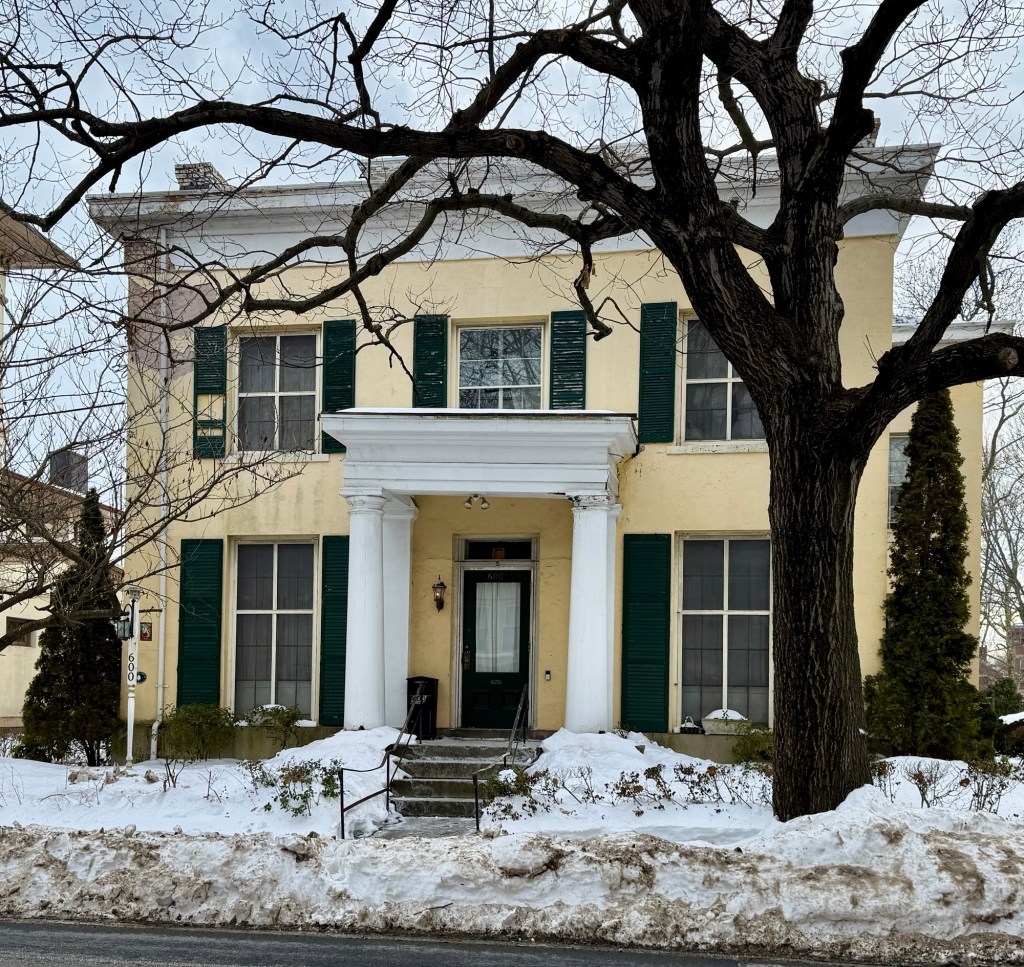
This unique Greek Revival style house is located on North Main Street in Chester, Connecticut, and was built around 1830 for John Gilbert. Johnʼs sister (Abby Gilbert Daniels) lived in a Greek Revival house on Liberty Street that had been built a few years earlier and was said to have been designed by Ithiel Town, a renowned Connecticut architect who specialized in Greek Revival style designs. It is thought that Town may also be the architect of John Gilbert’s residence seen here. The temple-front facade of the residence sits on a raised basement with the side-hall entrance and full-height hung windows on the facade sheltered under a portico supported by four square Doric columns. In the early 20th century, the property was purchased by Antonio Zanardi, who immigrated to Chester from Italy and worked as a watchman in a local factory. Antonio and his wife, Claudina, had a large family and expanded the house with a side wing in the early 1900s, also adding greenhouses and growing grapes on the terraced rear yard.


Chester Public Library // 1907

The Chester Public Library in Chester, Connecticut, was formed from a private library when in 1875, a Library Association was formed with members paying fees to take out books. The library grew throughout the 19th century and was housed in rented spaces, including in the Old Stone Store, until the early 20th century, when the collection grew to a point a purpose-built library was needed. A generous donor stepped forward, Mr. Samuel Mills Ely (1837-1909), who grew up in Chester, but made his fortunes in Binghamton, New York. Samuel Ely donated funds to his hometown as a memorial to his parents, Richard and Mary Caroline Ely. The library opened in 1907 and is built of native granite and trimmed with Indiana limestone and resembles many of the Carnegie libraries built at the time with a central, pedimented entry pavilion and recessed side wings, but no Carnegie funds were allocated for this project. The architect is also not known at this time.