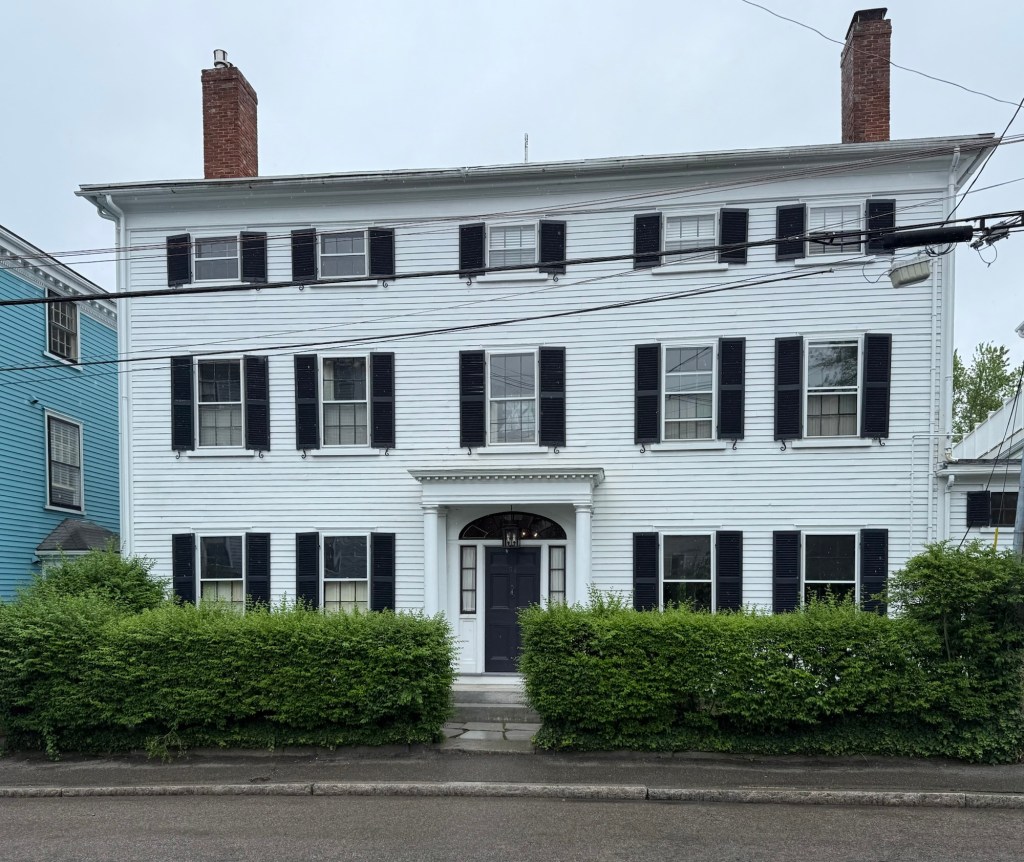
Rice-Harrington House // c.1731

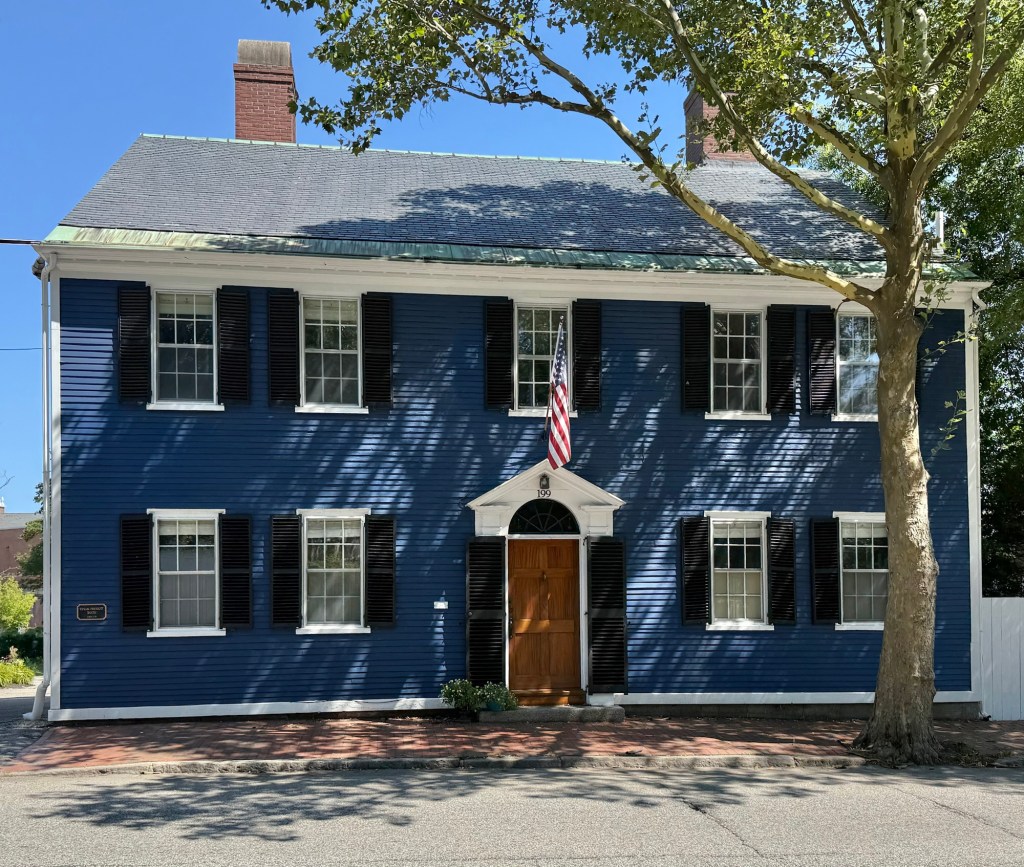
This charming Federal style house sits on Maynard Street in Westborough, Massachusetts, and according to local records, dates to the early-mid 1700s. The property was originally owned by Eliezer Rice (1703-1767), a farmer and town constable, and likely built around the time of his marriage to Persis Newton, who died in 1746 during childbirth. After Eliezer’s death, the property was owned by an E. Harrington, who likely rotated the earlier structure 90 degrees and built the Federal style residence facing the street, utilizing the 100-year old house as a rear kitchen ell, or completely modernized the old residence, retaining the central chimney. The Federal house features a symmetrical facade, pilastered entry with fanlight transom window, and a large central chimney.

Ludo Poole House // 1829

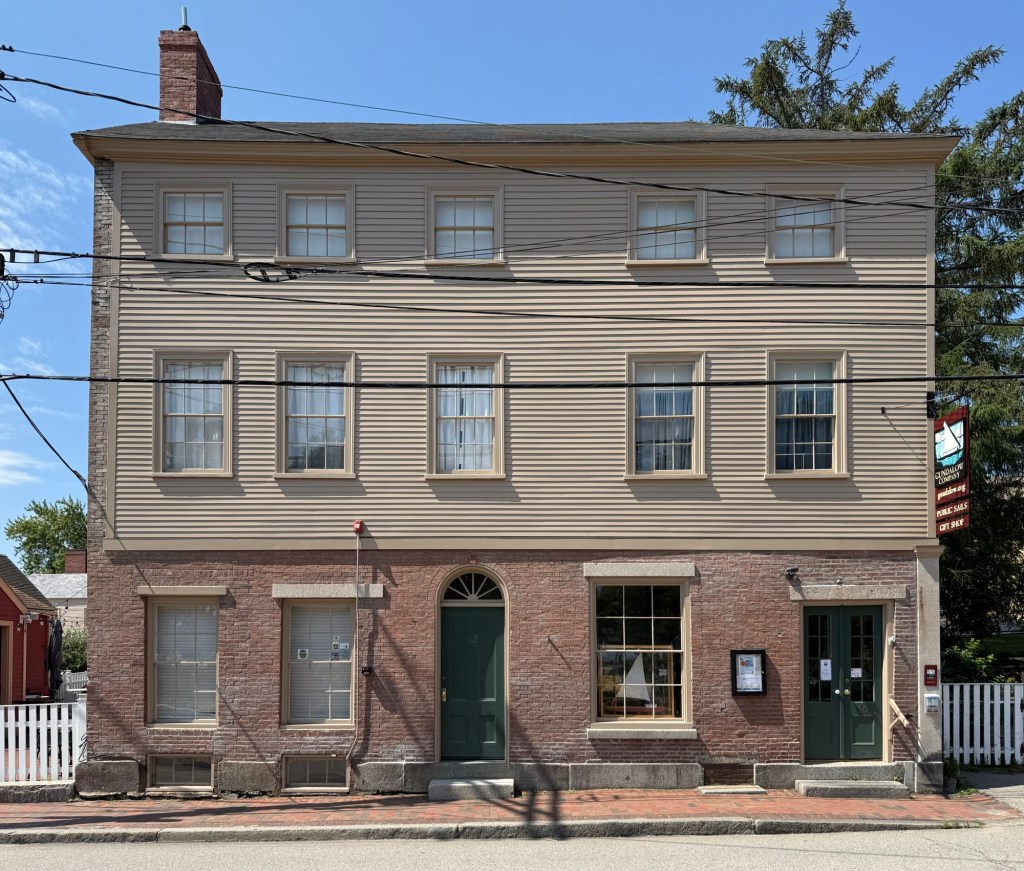
Rockland, Massachusetts, was first populated by European settlers in 1673 as the northeastern region of the town of Abington. The town separated and incorporated as Rockland in 1874, due, in part, to issues on how the town spent its tax dollars on schools. The town name was likely selected due to the rocky soil found there, which was better-suited for mulls and industry than for farming. The Ludo Poole House, seen here, was built in 1829 at the corner of Union and Exchange streets, at an intersection which became known as ‘Poole’s Corner’. The house was built for Mr. Ludo Poole (1803-1870) and his new wife, Mary Josselyn Poole, who would raise eight children here. The property was inherited by the couple’s eldest son, Ludo Augustus Poole, who worked at a local shoe manufacturer and served in the American Civil War. The property remained in the Poole family until 1951. The property was owned in the late 20th century by John Burrows, who renovated the interior thoughtfully to blend original Federal-period elements with English Arts and Crafts style.

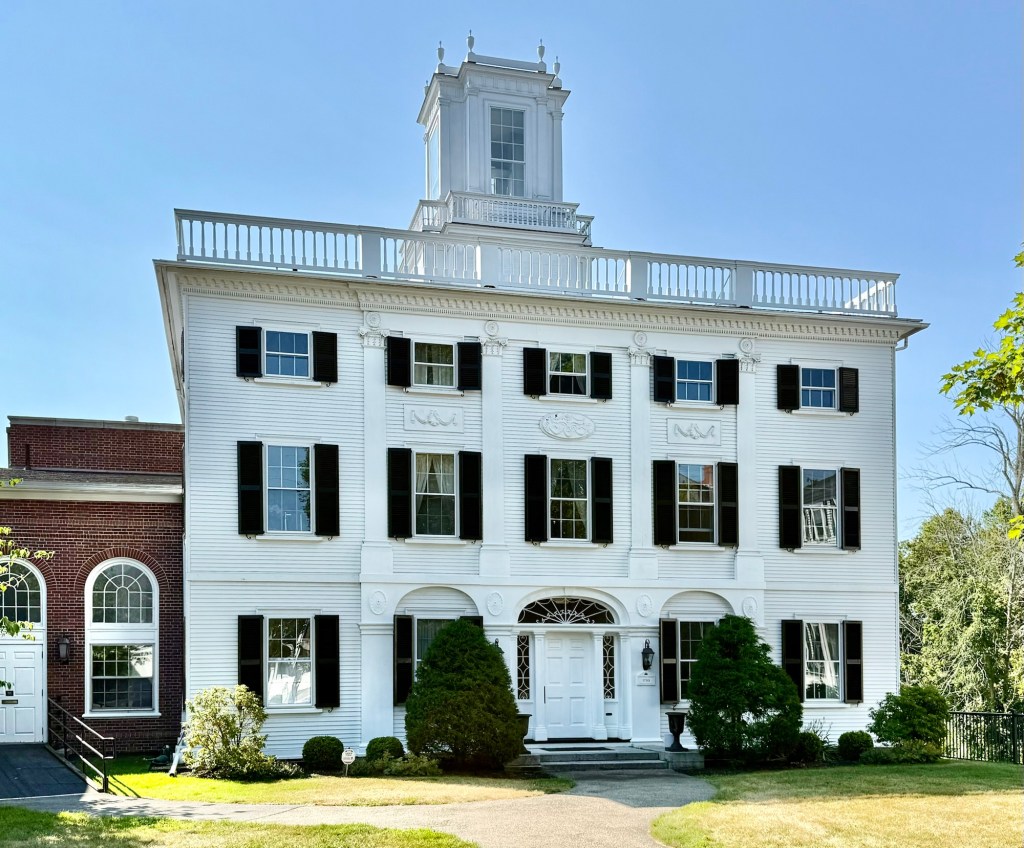
Highfields Estate // 1821

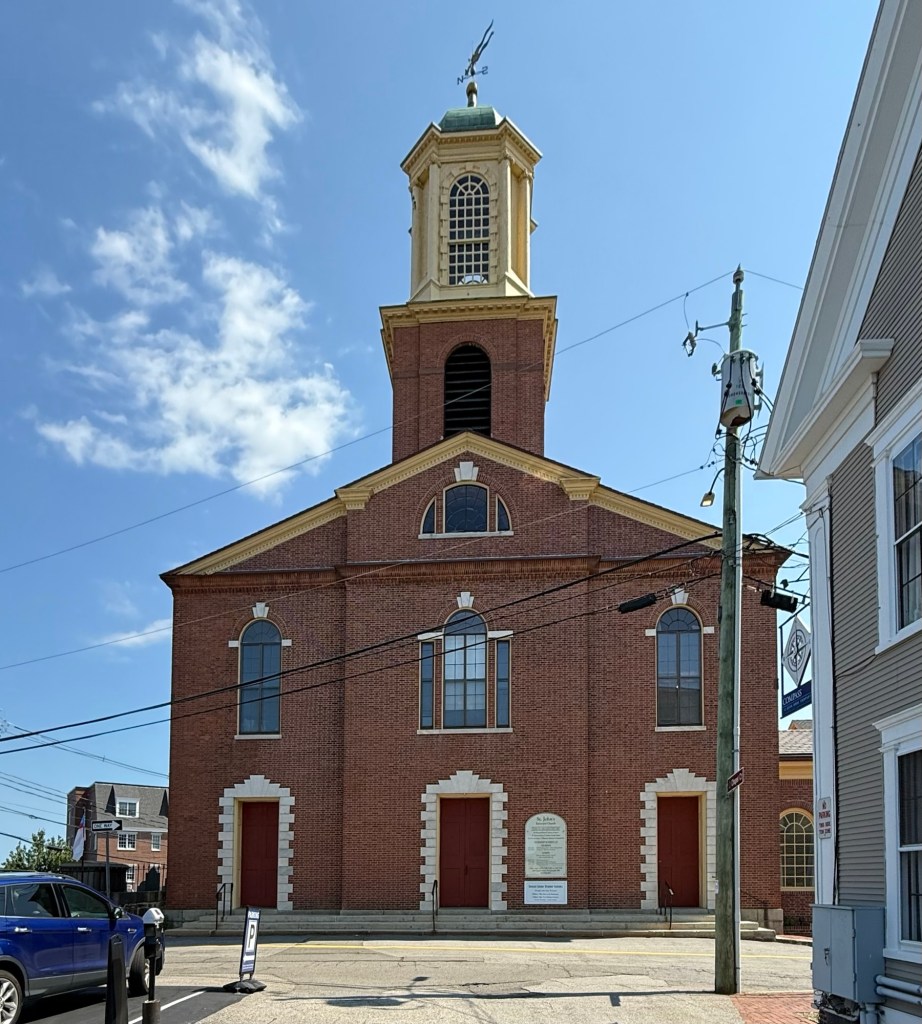
Constructed in 1821 for Joshua King (1783-1849), this Federal style mansion is one of the last country estates in Abington, Massachusetts. Joshua King was a Deacon of a local church and a well-to-do citizen in town, living nearby until a hurricane blew the roof off of his former house. Seeking to rebuilt a new, more substantial family home, it is said that Joshua required that this house would be built to last centuries, with some residents stating that the roof structure itself had enough timber to build a second home. The Federal style mansion has three chimneys with 12 fireplaces inside, and is set amongst rolling fields bounded by old stone walls, likely giving the property its name, “Highfields”. The property was later converted to a duplex, but retains much of its original design at the exterior. 

Joseph Cleverly House and Shop // 1832

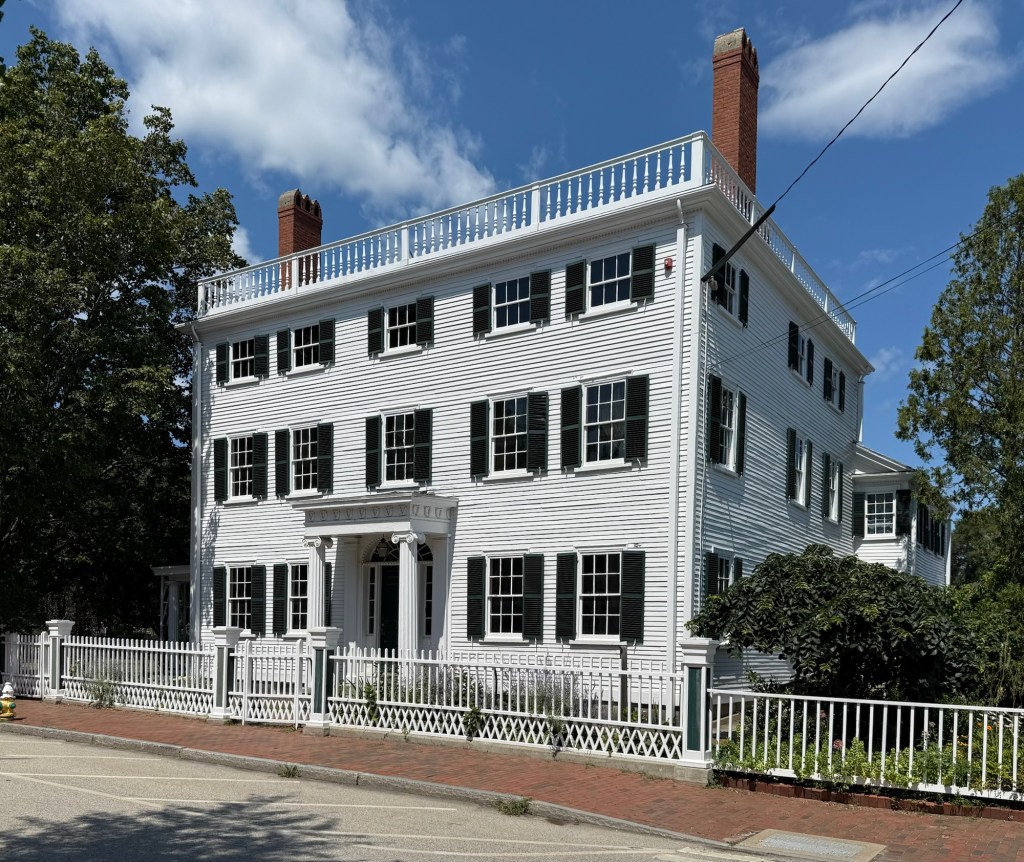
This late example of a Federal style five-bay house is located at 78 Adams Street in Abington, Massachusetts. The house was constructed in 1832 for Joseph Cleverly (1797-1888), a shoe manufacturer who married Sally Gloyd, the daughter of a wealthy shoe manufacturer in town. Mr. Cleverly built the adjacent stable and shop where he held his horses and manufactured his products. The vernacular barn/shop is a rare survivor of the type and is a visual representation as to the importance of shoe manufacturing for the town of Abington.

Captain John Clark House // 1802

The Captain John Clark House in Canterbury, Connecticut, is one of the finest examples of the Federal style of architecture in New England, and has remained in a fine state of preservation since its construction in the early 19th century. The house was built by 1802 for John Clark (1731-1834), who purchased an earlier home on the site from and had it either taken down or enlarged to its present appearance. The mansion is symmetrical with five bays, central entry and twin chimneys projecting through the hipped roof. The central bay is a showstopper with its triangular pediment at the roofline containing a fanlight, Palladian window at the second floor, and main entrance with its own pediment, sidelights, fanlight transom, all framed by two-story columns. The house’s south facade is equally beautiful with its own Palladian window and entrance.

Turnpike House // c.1810

This house in Canterbury, Connecticut, is known as the Turnpike House and dates to the early 19th century. A great example of a Federal style residence, the symmetrical, five-bay home exhibits pair chimneys, multi-light double-hung windows, and an elaborate center entry with sidelights and fanlight transom. The house was built along the Windham Turnpike (now Connecticut Route 14), which was an early toll road established in 1795. Behind the main block of the house is a squat gambrel-roofed ell, that is believed to be made from an older house that previously stood on this site, perhaps dating as early as 1745. According to tradition, this early house, which was also at one time supposedly used as a jail, was the home of Rev. Dr. James Coggswell when he ran a school for boys in Canterbury. One of his pupils at that school was Benedict Arnold, the infamous turncoat.

Perkins-Monroe House // 1811

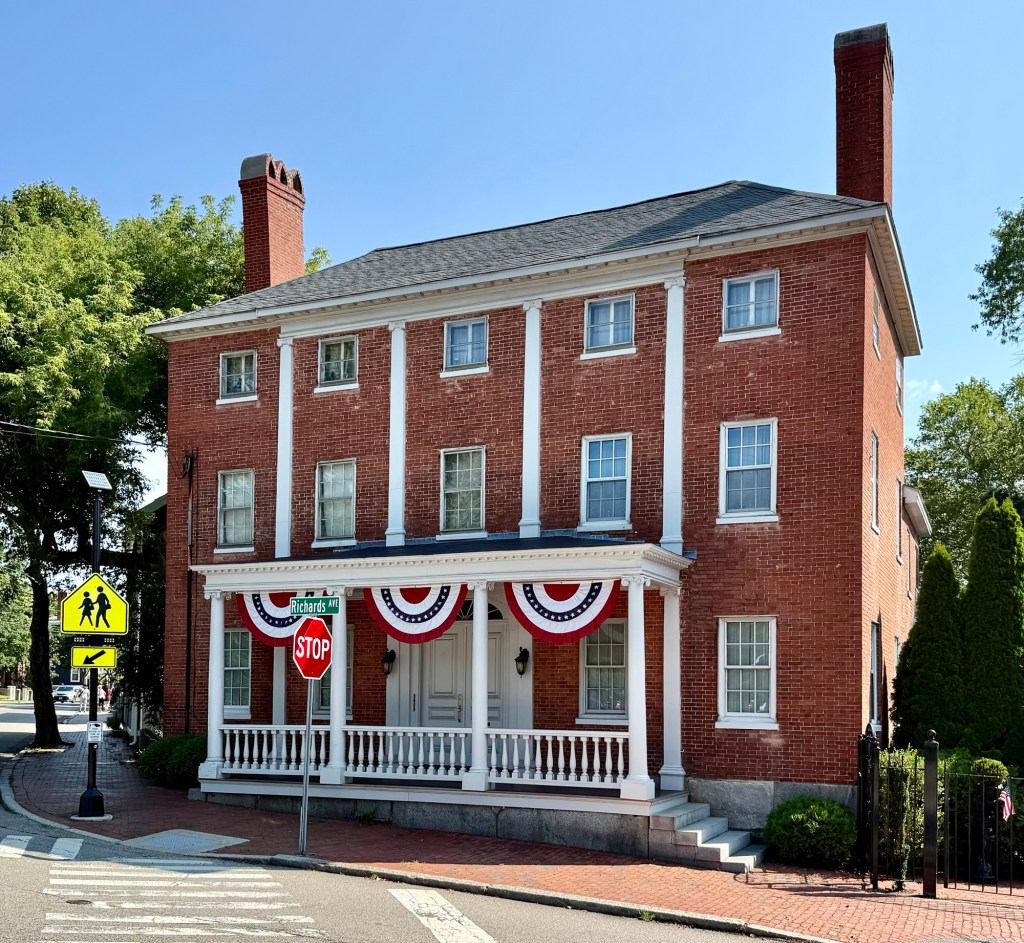
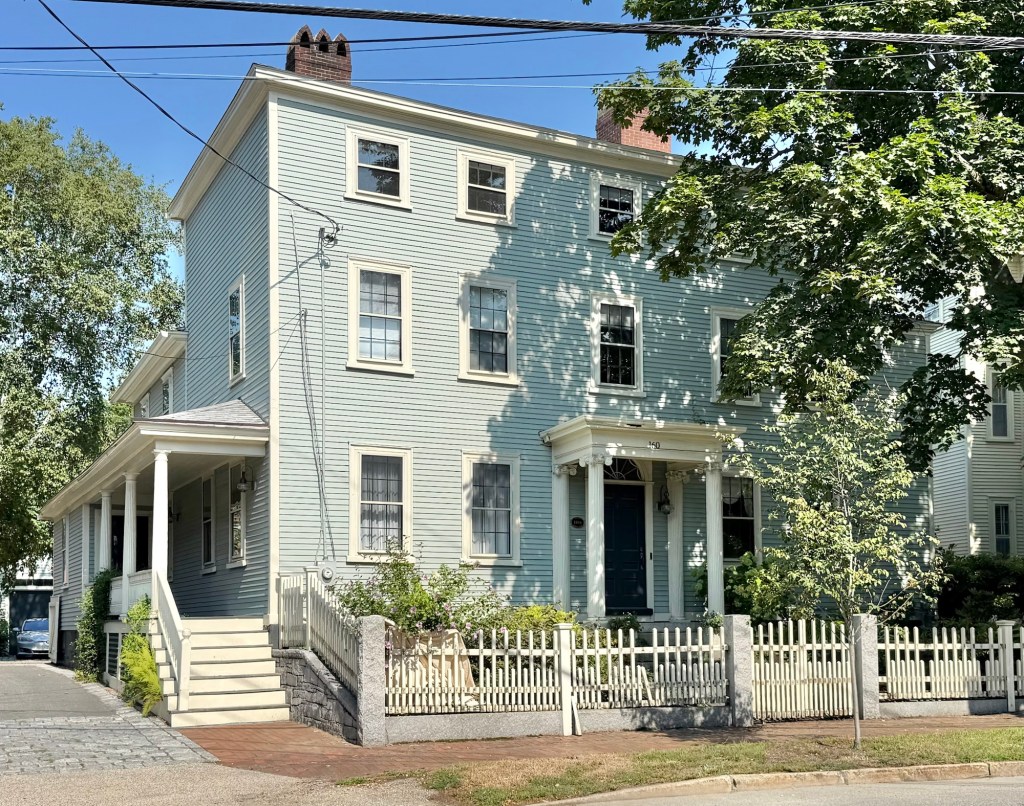
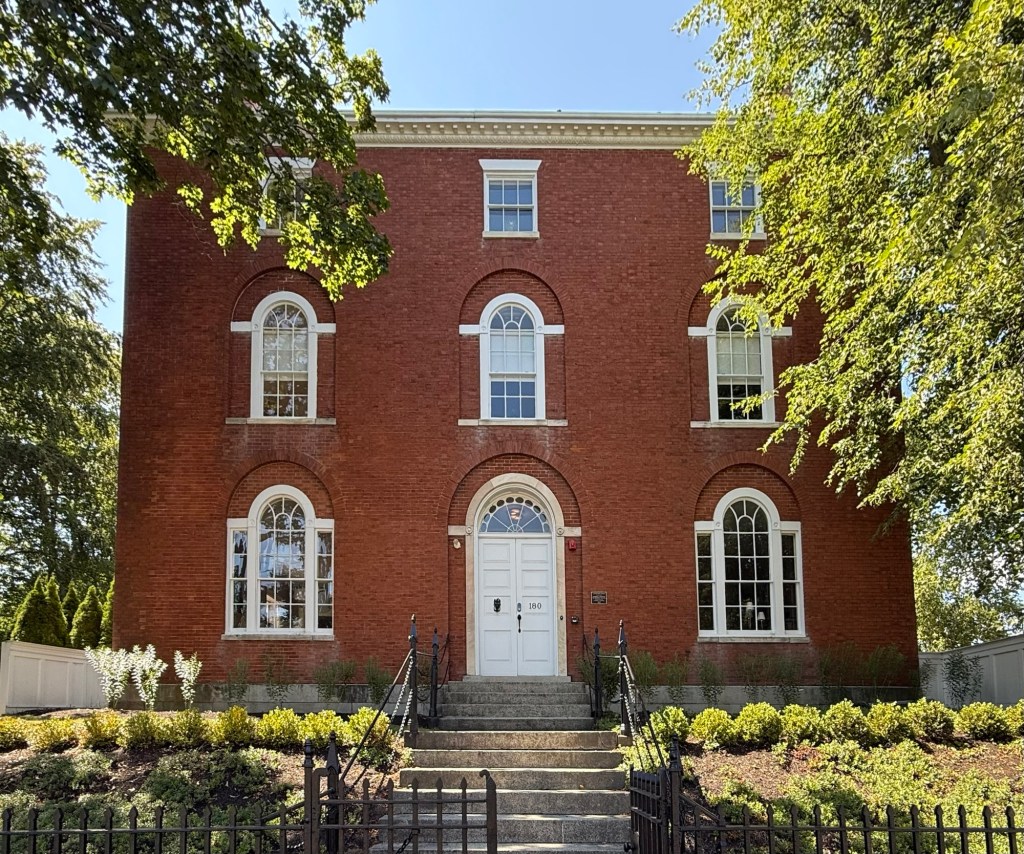
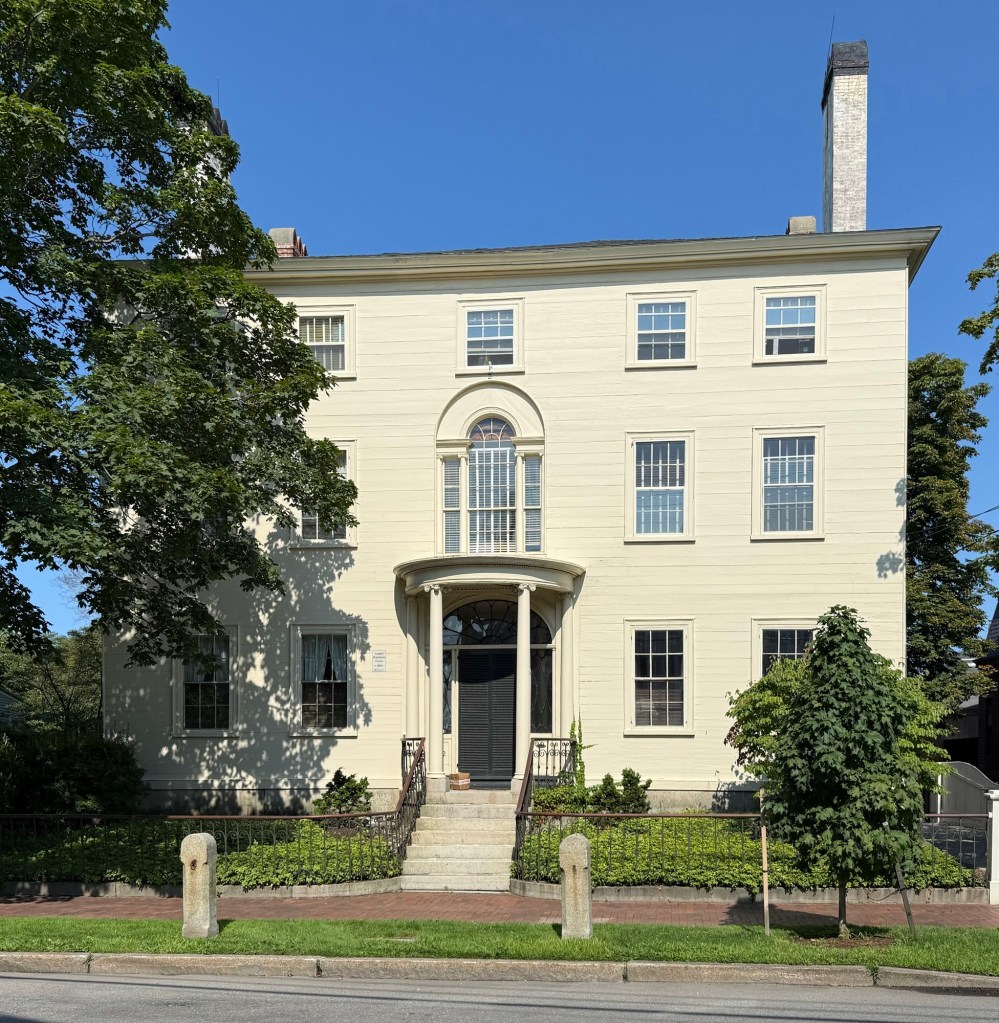
This brick, Federal style house, is located adjacent to the First Universalist Church of Salem amongst a sea of urban renewal-period housing, and is a reminder for Planners to think about the long-term implications in their work. This house was built in 1811 for Thomas Perkins, a local merchant whose brother was its first occupant. After successive ownership throughout the 19th and early 20th centuries, in 1950, Bessie E. Monroe purchased the premises and moved into the home. When the city began urban renewal planning for the area in the 1960s, the building was occupied by Bessie Monroe, who at the time was an elderly woman. The Salem Redevelopment Authority acquired the house through eminent domain and the house was targeted for demolition. The Redevelopment Authority, concerned with how relocation would affect Bessie Monroe’s health, decided to take the property but allow Mrs. Monroe to live there until her death. This decision delayed the planned demolition of the building, even though all other targeted properties were demolished. Luckily, the renewal plan changed its focus from new construction to restoration of existing buildings between the time of the taking and Bessie Monroe’s death. The building was then sold to an owner interested in restoring the structure, now the building is listed on the National Register of Historic Places and is a testament to the benefits of preservation over short-sighted planning policy. 

First Universalist Church of Salem // 1808

The First Universalist Church of Salem, Massachusetts, is a landmark example of a brick, Federal style church in New England. Tucked away within a network of Urban Renewal-era townhomes and backing up into a busy thoroughfare, the church is overlooked by many who pass behind its rear elevation, not knowing how special the building’s primary facade truly is! The church was constructed between 1808-1809 with early Church records showing that the interior carvings were done by Samuel McIntire, a Salem native, who was trained as a wood carver and later became an architect. It is unclear if any of McIntire’s work remains as numerous building modifications were completed throughout the 1800s; including a major exterior remodel in 1855 by architect Enoch Fullerchanging the appearance from Federal to Italianate. The church would again fall back to changing tastes in 1924, when they restored to an approximation of its original appearance by the office of R. Clipston Sturgis, a prominent Boston architect who specialized in Colonial Revival architecture. While the building’s significance is lessened by the urban renewal infill and streets surrounding it, the building remains one of the oldest in Salem and a significant architectural landmark in the city. 

White-Lord House // 1811

The White-Lord House at 31 North Washington Square in Salem, Massachusetts, is one of a row of stately brick, Federal style mansions built for wealthy 19th century merchants overlooking the bucolic Salem Common. This house was built in 1811 for merchant Stephen White by master mason Joshua Upham (1784-1858), adjacent to his brother’s mansion across the street. It was later the home of merchant John W. Rogers from 1831 to 1844 and merchant Thomas P. Pingree from 1844 to 1858 before it was acquired by Nathaniel Lord in 1858 and members of the family continued to occupy the house for the next ninety years. George R. Lord (1817-1891) was a lawyer and assistant Clerk of the Courts. The exterior of the White-Lord House has changed little beyond the switch to the two-over-two sash windows sometime in the latter half of the 19th century.

White-Silsbee House // 1811

The White-Silsbee House is a stately, Federal period, brick mansion built in Salem, Massachusetts for wealthy merchant, Joseph White. Constructed in 1811 for Joseph White, Jr., the house uniquely faces Oliver Street and not the Salem Common, like that of his brother’s home nextdoor. Joseph White (1780-1816) was bred to the sea, and grew up at the time of Salem’s commercial expansion into the markets of India, China, and Sumatra in the far reaches of the Indian Ocean. Captain White evidently had command of an East India vessel on at least one voyage. After Joseph White’s untimely death in 1816, at the age of 36, his widow Eliza continued to live here until 1831 when the property was sold to William Silsbee (1779-1833), a merchant, and his wife, Mary. The three-story, hipped-roof, dwelling featuring a fan light transom and Ionic portico. Most of the windows contain 6/6 sash with exterior storm windows, capped by splayed stone lintels with molded and beaded keystones. A full-length window is centered above the entrance porch; the third story windows are shortened.