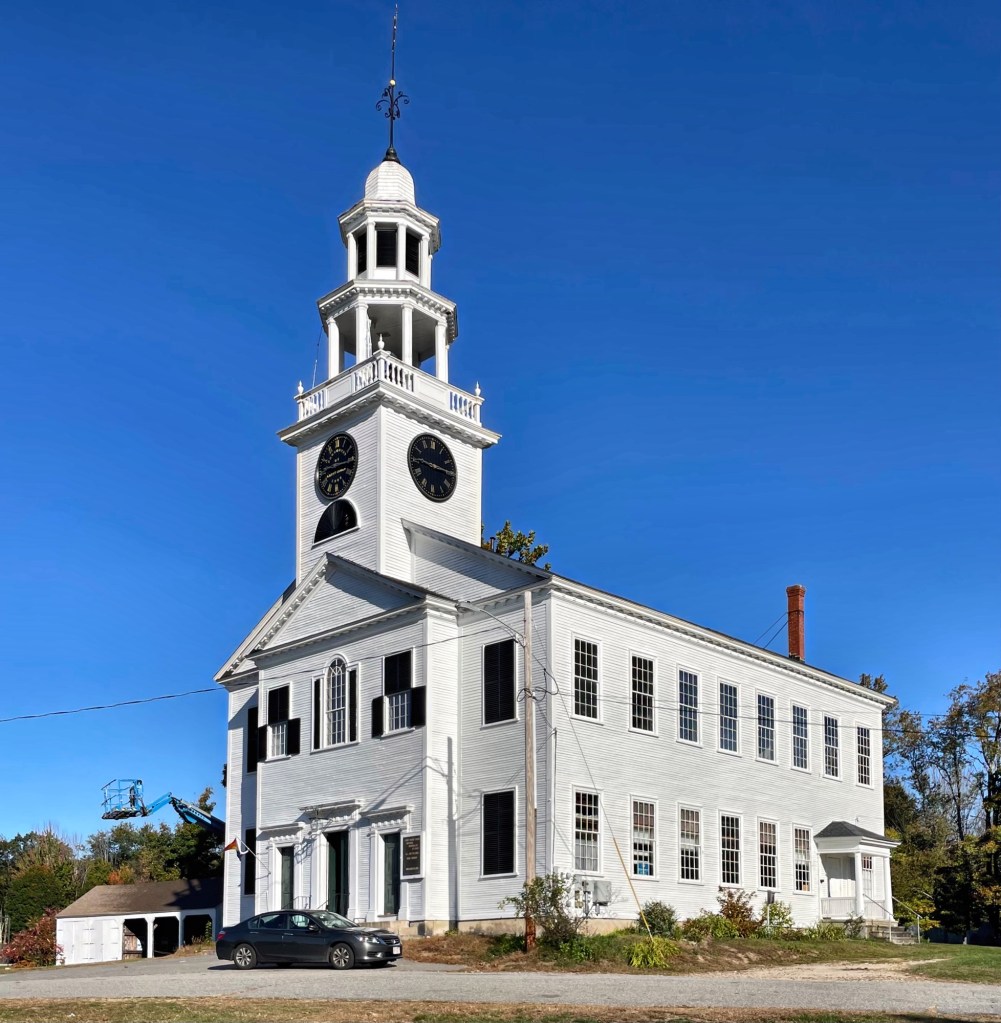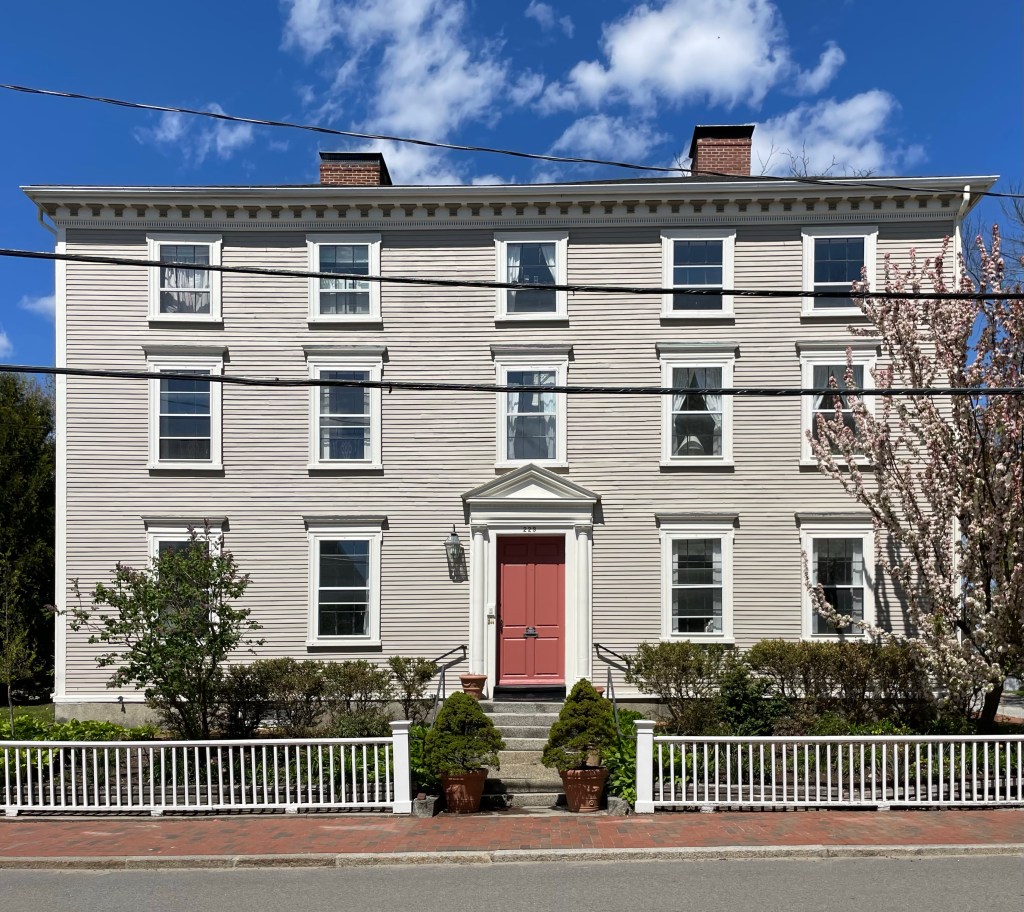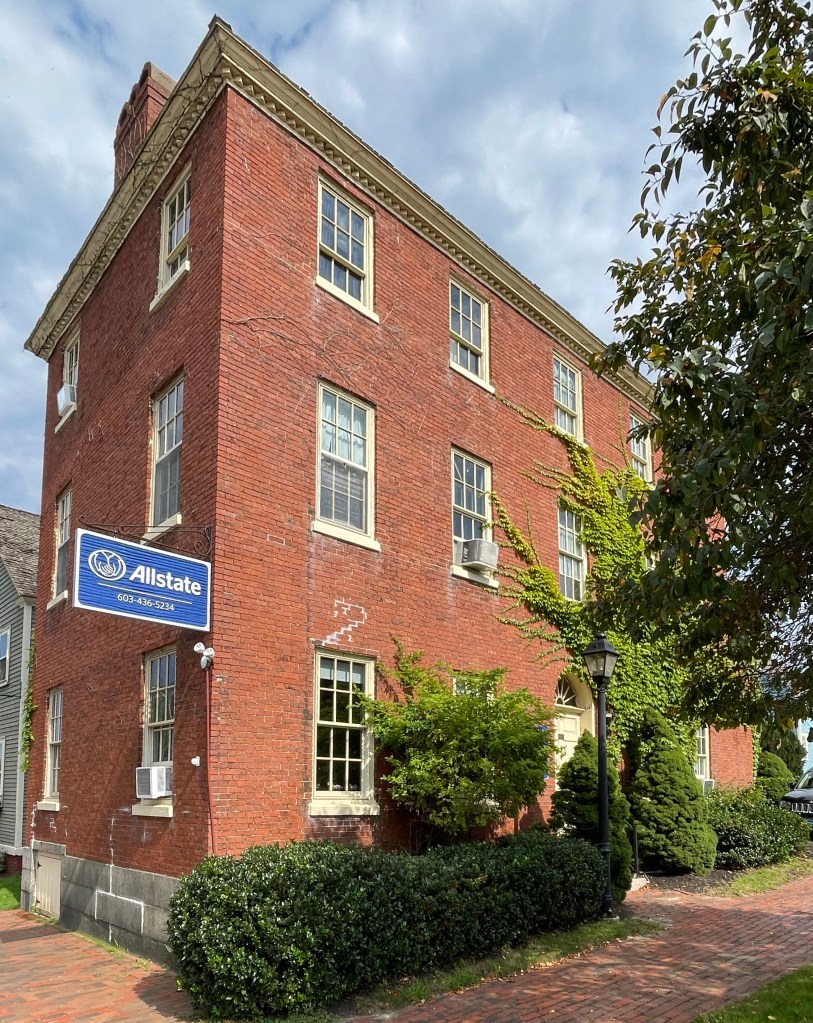
Nathan Parker House // 1815

Many may not know this fact about Portsmouth, which shaped the city’s development for some of the formative years of the coastal town. The 1814 Brick Act was passed by the New Hampshire legislature after three devastating fires wiped out hundreds of closely-packed wooden buildings in the heart of the state’s only seaport. The act prohibited the erection of wooden buildings of more than twelve feet high in the downtown area which was the densest, it was effectively an early building code. The regulation helped change the look of the city, creating the red brick image Downtown that many identify today as Portsmouth. As a result, nearly all homes and buildings in the downtown area of Portsmouth were constructed of brick, largely in the Federal style, popular at the time. This home was constructed around 1815 as a wedding present for the South Parish’s minister, Reverend Doctor Nathan Parker, upon his marriage to Susan Pickering, the daughter of New Hampshire Chief Justice John Pickering and a descendant of the original John Pickering.

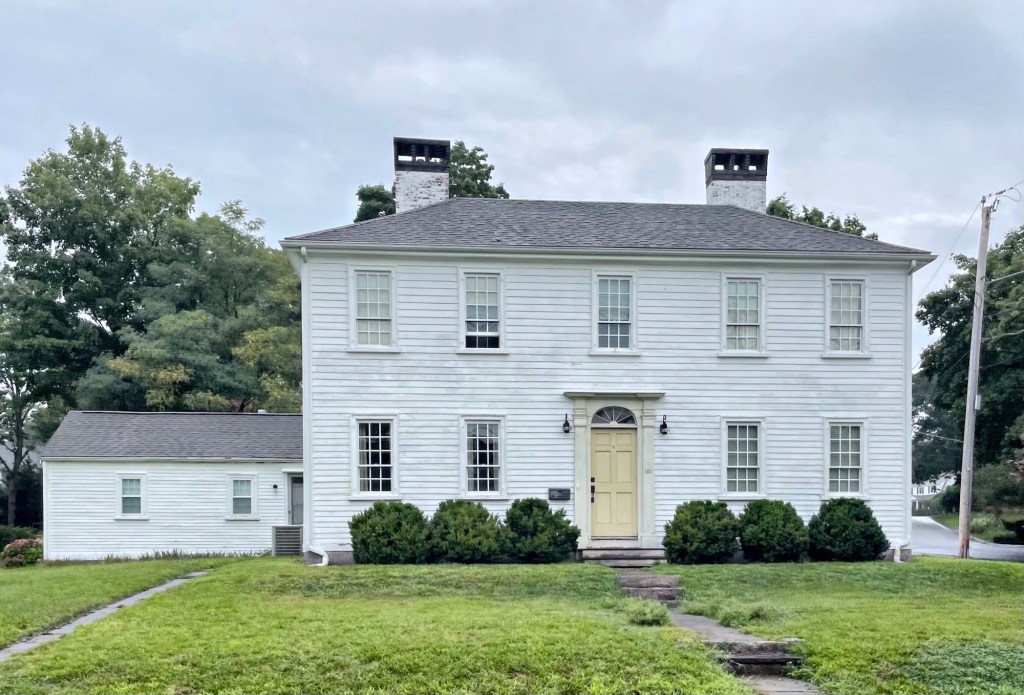
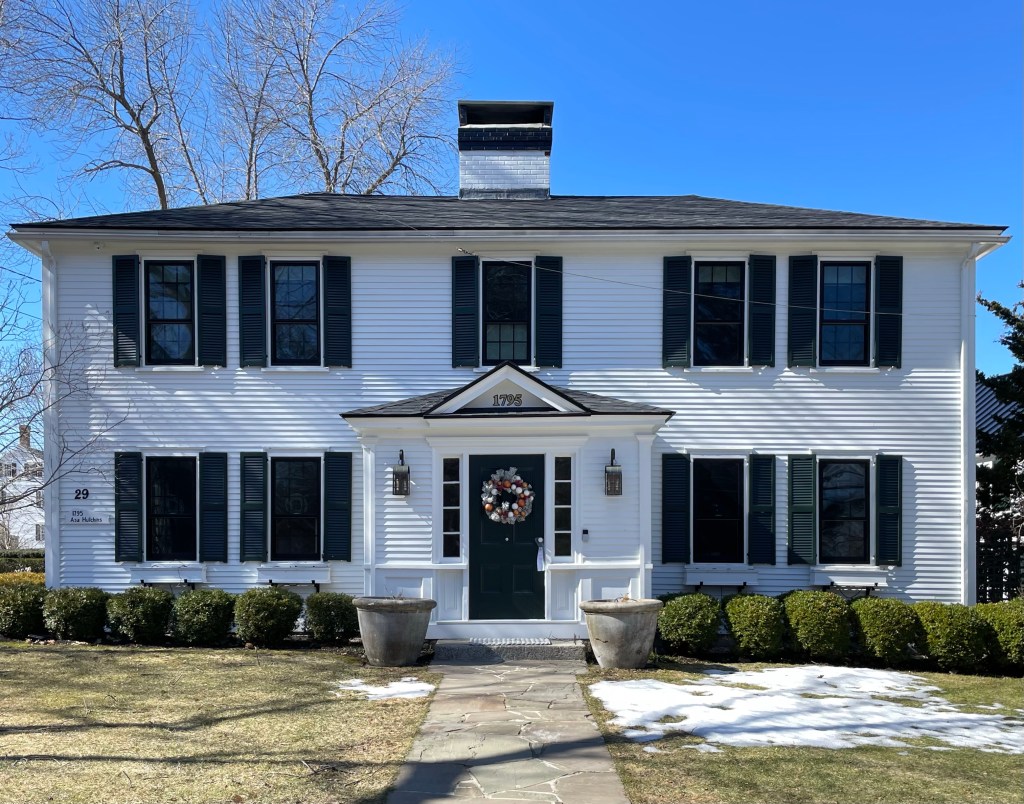
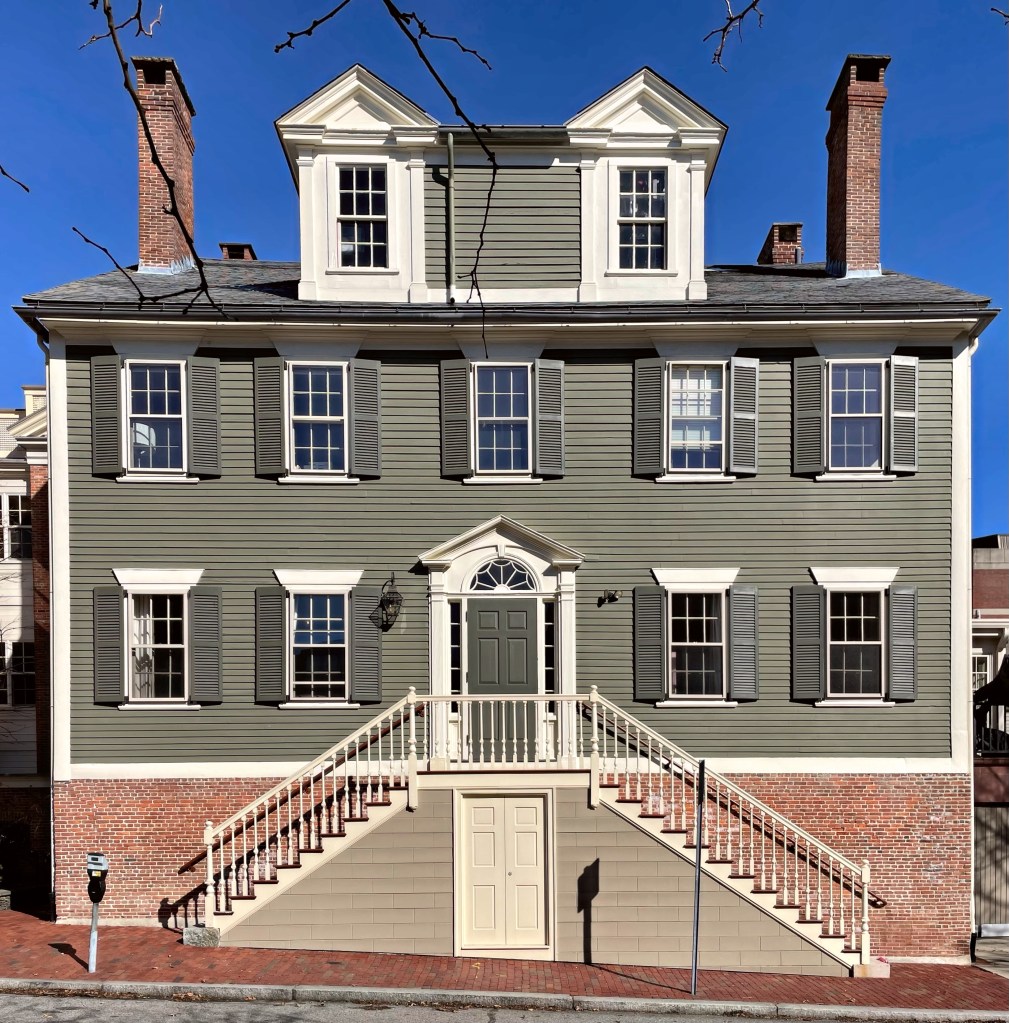
Haven-White House // 1800

Another three-story Federal period house on Pleasant Street in Portsmouth, NH is this wood-frame example, known as the Haven-White House. The property was developed in 1799-1800 by Joseph Haven, a merchant who built the house across the street from his father’s residence. Joseph Haven occupied this house until his death in 1829. After his wife Sarah’s death in 1838, the house remained in the Haven family, though usually occupied by others, until 1898 when it was sold to Mrs. Ella White. The White family, which included a grocer, a City Councilman in the early 1900s; and a chiropractor, with the family occupying the house until 1981. This history of long ownership by only two families for nearly 200 years perhaps accounts for the survival of this important house with so few changes. As a result, the house was listed on the National Register of Historic Places in 1985, marking it as a nationally significant building.

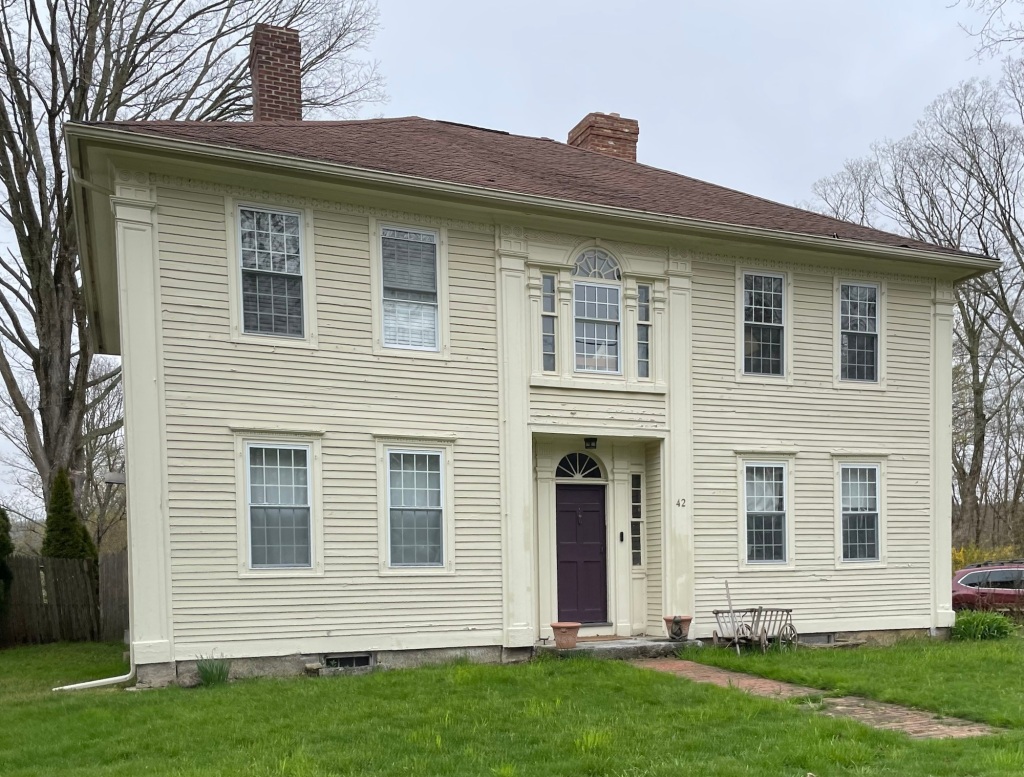
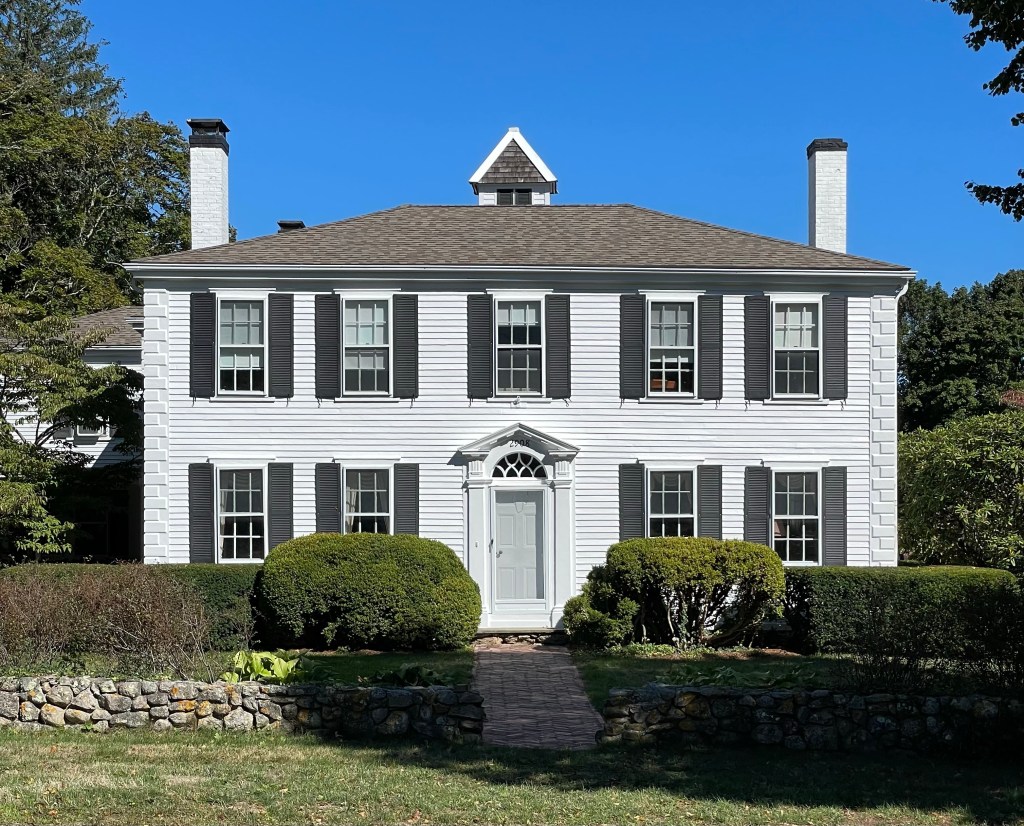
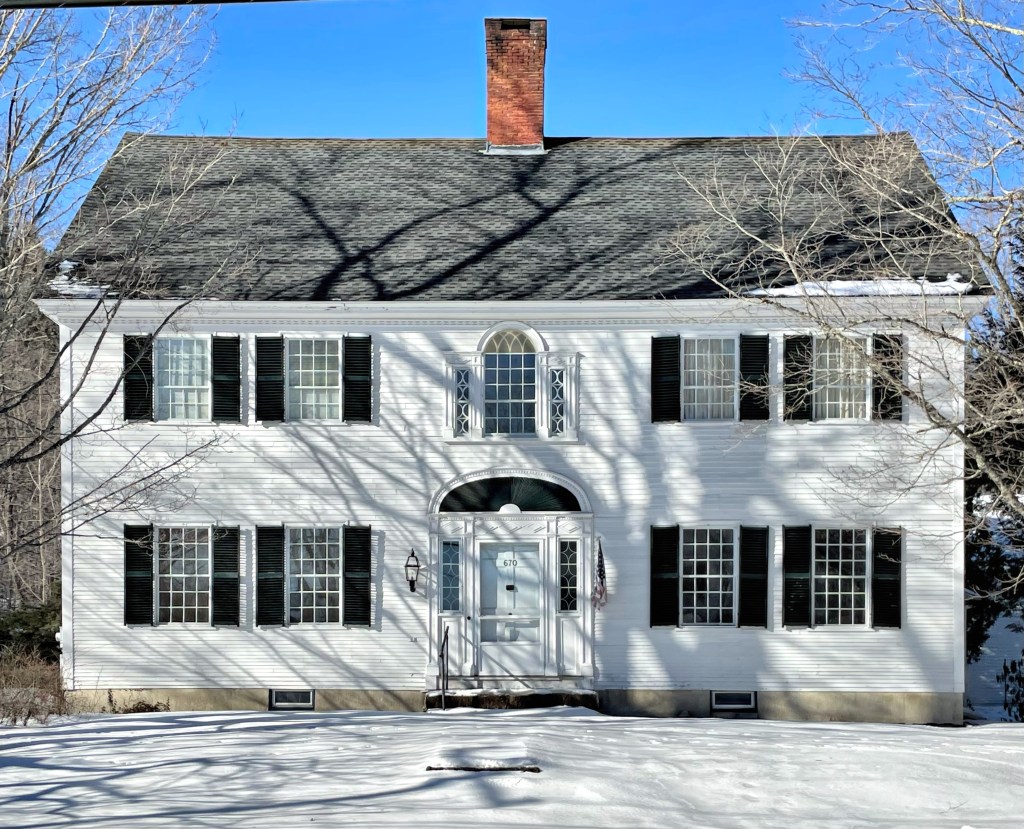
Asa Hutchins House // 1795

The village of Kennebunkport in Maine is a well-preserved enclave of Federal period houses built at the heyday of shipbuilding and maritime trade in the late 18th and early 19th centuries. Many sea captains and shipbuilders erected stately homes in the village, with high-quality design and woodworking inside and out. This Federal period home was built for Asa Hutchins (1769-1860) a blacksmith who was born in Portsmouth, New Hampshire and settled in Kennebunkport in the late 1700s. The house exhibits a central chimney a feature more common in Colonial-era homes, with a five bay facade and projecting entrance.

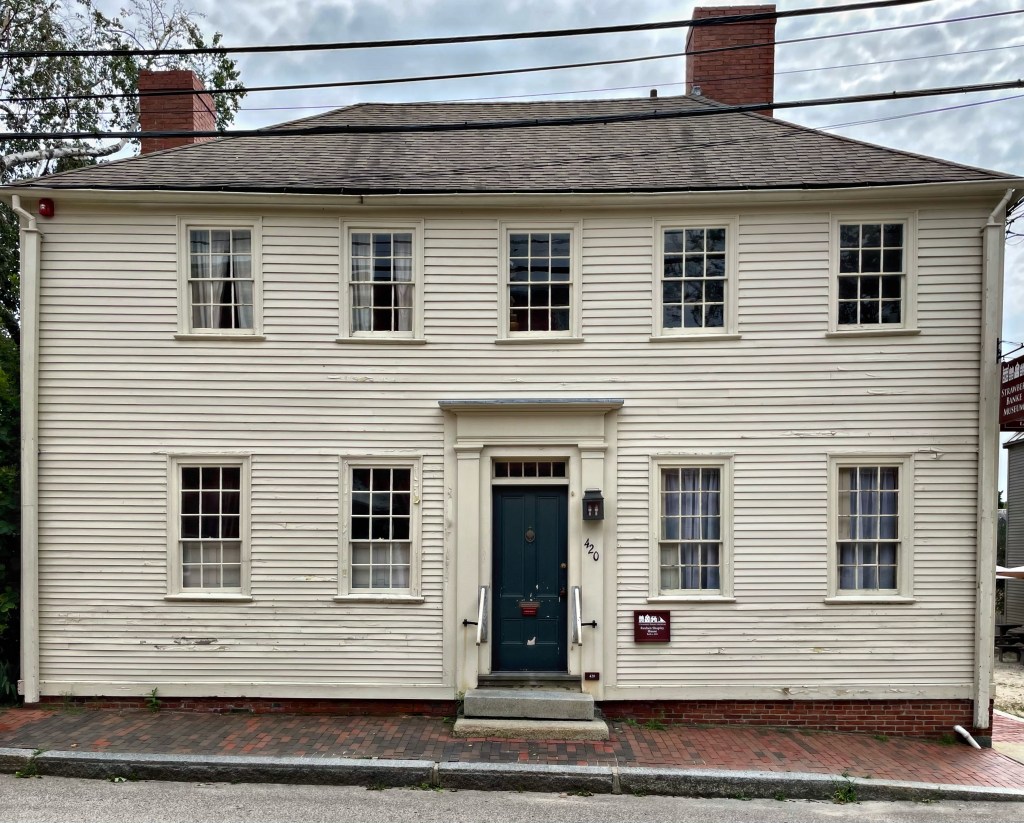
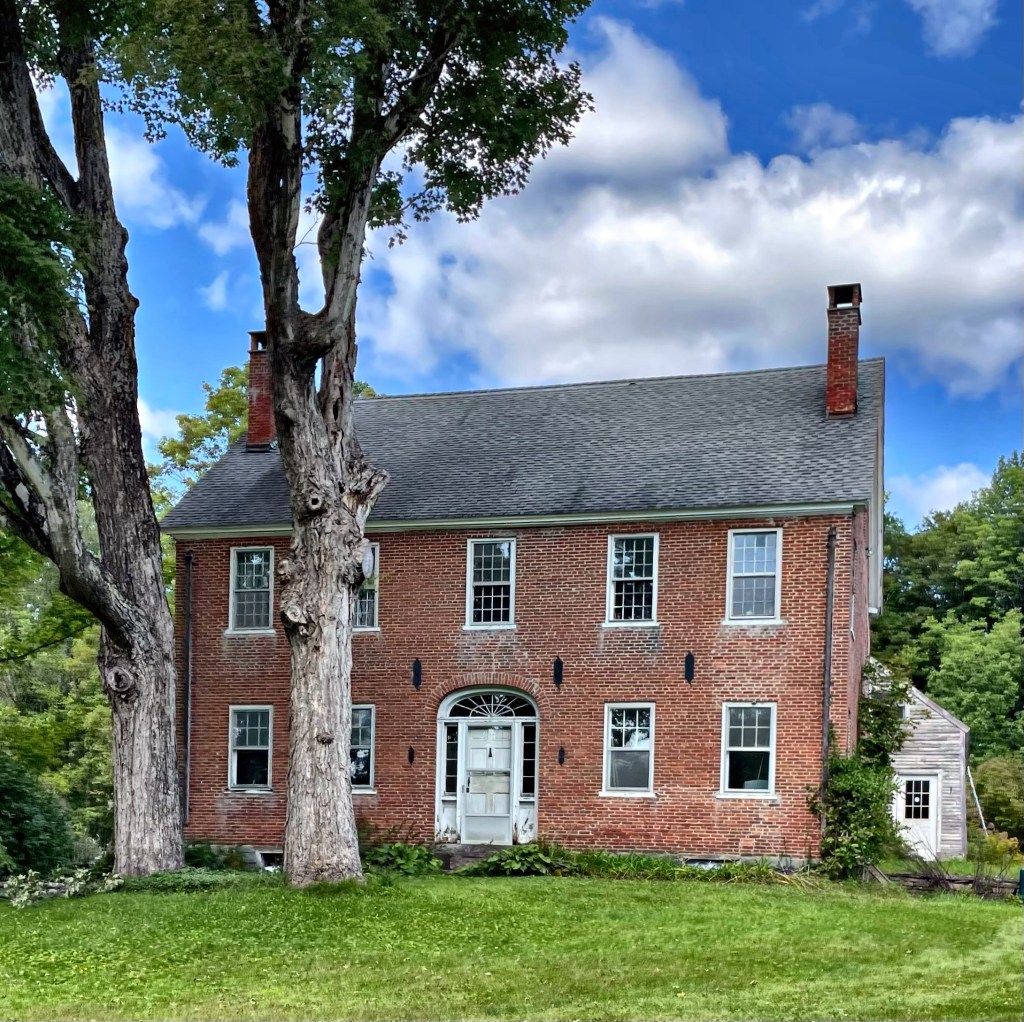
Captain Nathaniel Ward – Abbott Graves House // 1812

In about 1812, Captain Nathaniel Ward Jr. of Kennebunkport purchased this home in the village from housewright and builder Samuel Davis. The Federal style house is five bays with a central entrance with pedimented fan over the door. Two end chimneys would heat the home in the winter months when Nathaniel was out at sea and his wife, Sarah, would be maintaining the home and caring for their six children. The couple’s eldest son Charles Ward, served as the second American Consul to Zanzibar in Africa. In his role, Ward bickered continuously with the Sultan, whose word of law changed with the wind and he eventually left his position and settled in Salem, Massachusetts. This house was later owned by Abbott Fuller Graves (1859–1936), a renowned painter before he built a Prairie Style house in Kennebunkport in 1905.

Mitchell-Beinecke House // c.1821

At the peak of Nantucket’s whaling industry wealth, the island began to see new brick buildings and whaling mansions that symbolized the stability and success of the town. In 1821, Frederick W. Mitchell (1784-1867), acquired this property on Main Street, demolishing the previous wood-frame house on the site, in preparation for his own mansion. Frederick Mitchell was a successful whaling merchant and one-time president of the Pacific National Bank. Mitchell was married twice but left no children from either marriage. The house remained in the Mitchell family until 1889 when it sold it to Caroline Louisa Williams French (1833-1914) of Boston, who summered on Nantucket until her death in 1914. A devout Episcopalian, French gifted this house to St. Paul’s Church in Nantucket for use as a Parish House. The church deaccessioned the house, and it eventually sold in 1962 to Walter Beinecke (1918-2004) acquired the house for his home. A central figure in the preservation and revival of Nantucket in the second half of the 20th century, Beinecke sought to preserve the island and reduce the damage done by tourism by creating a higher-priced resort that would reduce the number of day tourist and aim at increasing the number of wealthy tourists who would come as summer residents or for extended visits. Working towards this goal, Beinecke acquired large numbers of buildings (more than 150) in the commercial core of the town as personal investments through his private company Sherburne Associates, restoring many. The house is one of the finest examples of late-Federal residential architecture on the island with its recessed entry and fanlight transom, symmetrical five bay facade, decorative parapet and belvedere at the roof.

Hinckley-Crocker House // c.1827

In 1827, Isaiah Hinckley (1786-1880), a boatbuilder, purchased a pre-Revolutionary home built by Dr. Abner Hersey on Main Street in Barnstable Village. Hinckley, being a skilled tradesman, completely re-designed the house, creating the stunning Federal style manse we see today. It is likely that Hinckley used an architectural pattern book, like one of the many by Asher Benjamin, which provided plans and drawings for carpenters and other tradesmen to be able to build stunning homes and churches all over the country. In 1861, this estate passed to Captain Elijah Crocker, a sea captain who commanded the ship Akbar.

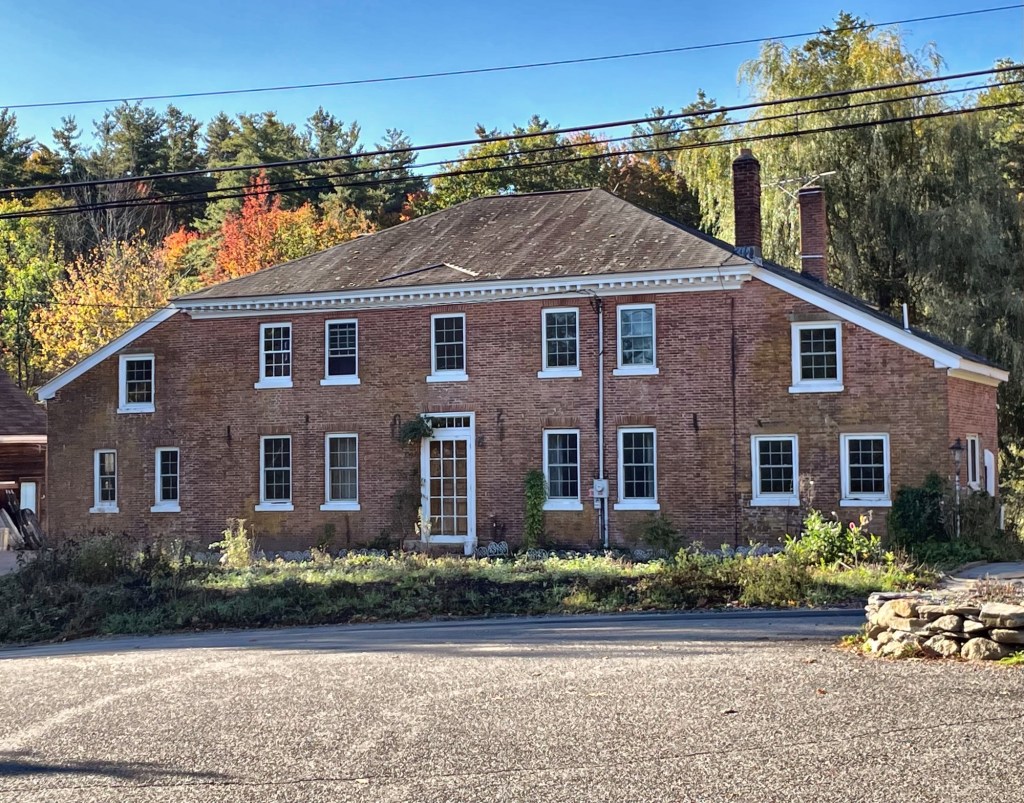
Oliver Tarbell House // c.1830

Oliver Tarbell and his wife Sandy erected this stunning brick Federal farmhouse in Cavendish around 1830 for their ever-growing family. The couple had thirteen children who survived infancy, so even this large home was likely stuffed to the gills and hectic! Oliver appears to have built the home, incorporating his ancestral home onto the rear of this brick house, as a rear ell. The house recently sold in 2022, so of course I had to gawk at the amazing interior photos

James Neal House // 1831

Continuing with my mini-series on The Hill, a neighborhood of 18th and 19th century houses and buildings saved from Urban Renewal in Portsmouth’s North End neighborhood, I present the James Neal House. Built in 1831 and taxed a year later, the house stands out as a late Federal style property, a style that was well on its way out in popularity. Additionally, the home is the only extant brick house in this area of town from the period. James Neal was listed in directories as a merchant, possibly being involved in the shipping of goods from plantations in the Caribbean, which were farmed by enslaved Africans. James died just a few years after his home was built. The brick house is three-stories with a hipped roof. The entry is surmounted by a semi-circular fanlight set within a recessed opening, a modest take on the Federal style.

William Holroyd House // 1798

When visiting Downtown Providence, I couldn’t help myself but to cross the river into College Hill, a neighborhood of such architectural diversity I could run this entire page just featuring that area. This beautiful Federal style home was built onto the downward slope of the hill in 1798 for William Holroyd, a merchant and active Baptist in town. The home sits atop a raised basement with brick end walls and clapboard siding on the front and rear. The property exhibits a symmetrical facade, splayed lintels above the windows, and a perfect center entry with fluted pilasters and pediment containing a fanlight. The building today appears to be a part of the Brown-RISD Hillel.

Ambrose Knight House // c.1810

The most architecturally significant example of the Federal style in Waterford, Maine, is this c.1810 home built for Ambrose Knight, who operated a store in town. The high-style Federal home features a well-proportioned fanlight over the entrance with a Palladian window above, all with geometric moulding. The home was likely built by a housewright who employed designs from Asher Benjamin’s pattern books for builders, as the high-style features and Palladian windows are uncommon in this part of Maine.

Minot-Herter House // c.1825

Set along Beacon Street, one of the finest streets in Boston, this townhouse has uninterrupted views of the Boston Common and Public Garden. The house was built around 1825 after a large fire destroyed nearly all the homes on the block. Build it and they will come, and the upper-class Boston elite did! Attorney William Minot (1783-1873) purchased the land here as early as 1817, and is said to have hired Peter Banner, the English architect who designed Park Street Church, to design the first house on this site, which stood less than 10 years. Minot had a new home built in the 1820s and lived there until his death in 1873. By the late 1920s, Christian Archibald Herter lived here. Herter held a number of important offices in state and national government, serving as the Speaker of the Massachusetts House of Representatives, Governor of Massachusetts, and President Eisenhower’s Secretary of State (1959 to 1961). It was Herter who likely added the Federal Revival features on the house, including the porch, dormers and updated door surround.

Tower-Wyman Farmhouse // pre-1790

One of the oldest extant homes in Waban Village, Newton, is this 18th century farmhouse which is an excellent example a Federal-period home in the Boston area. Dates of construction for this house have ranged from c.1765 to 1790. The earliest recorded ownership of 38 acres of land at this location is attributed to Eleazer Hyde (1664-1731), one of Newton’s earliest citizens and one of a long line of Hydes in Newton. From 1772 to 1791, the house was owned by Josiah Starr. Immediately after, this property was owned by a housewright named Capt. Ebenezer Richardson, who possibly built or re-built this house in the current configuration. Thaddeus Tower owned the land from 1844-1866, when the City of Boston took a portion of it in 1848 for the new Cochituate Aqueduct, which ran right behind his home. Not long after, Thaddeus sold the farm to Edward Wyman, a linen importer from Roxbury. He subsequently
sold it to his brother Dr. Morrill Wyman in 1869. Dr. Morrill Wyman sold 150-acre property to developers, never appearing to have lived in the home, after the railroad came west from Boston in 1886 and increased the value of the surrounding farmland, later known as the village of Waban. All of the land was developed with homes, and all that remains of the old farm is the farmhouse seen here.

Newhall-Lane House // 1809

The Newhall-Lane House (could be the home of many wives) was built in 1809 by Pliny Newhall, a bricklayer. He purchased the land here at a prominent crossroads in Lancaster in 1808 from his employer who owned a brickyard across the street. At a previous home in town, Newhall’s wife Patty died giving birth to their son, at just 23 years old. Their son also died during childbirth. He remarried and had a full family to grow into the couple’s new house. They relocated to Lincoln and the home was sold to Captain Anthony Lane, who was the son of Deacon Jonas Lane, an important figure in Lancaster town history. Jonas had four wives, outliving three of them. Captain Lane himself, was married twice while living in this house; he had no children from either marriage. Although he was a talented craftsman and cabinetmaker, Captain Lane listed his occupation as farmer. The house is significant architecturally, as a fine example of Federal style architecture in Lancaster . Its sophisticated design is reflected in the graceful entrance. One of the unique features of the house is the pedimented gable of the facade which in combination with the narrow plan of the house, creates a delightful massing in this distinctive combination of Greek Revival and Federal styles.

Gardiner Almshouse // 1834

This large brick Federal house was built on the outskirts of Gardiner, Maine, in 1834. Ebenezer Moore, the builder, worked as a carpenter and house-wright in town and showcased his skill on his own brick mansion, selling it to a C.E. Bradstreet. By the late 1840s, the town of Gardiner decided that it would need a new almshouse, city-provided housing for the poor, so they purchased the Bradstreet house and 14-acres of land. In the 1848 town report documents noted, “The establishment is a brick one, of two stories, containing thirty-six fine rooms, including seven fitted for the insane in the most admirable manner, together with a spacious hall. The building is every way a most excellent one for the purpose, and is a monument of the humanity and generosity of the city.” The almshouse served as a working farm where the poor could harvest their own crops and contribute in a small, closed society. The almshouse burned in 1909, and was immediately rebuilt using the outside brick walls. In the Colonial Revival manner, a gambrel roof replaced the former gable roof, which added a third story to the almshouse. The building was eventually sold, as new housing models for low-income residents took off. The former almshouse was converted to an apartment building in 1970, a use that appears to continue to this day.

Linden Place // 1810

For the last post in this series on Bristol, Rhode Island, I am leaving you with a house that is architecturally stunning, but holds a dark history. Linden Place was built in 1810 by slave trader, merchant, privateer and ship owner George DeWolf and was designed by architect, Russell Warren. The DeWolfs of Bristol, who became the biggest slave-trading family in U.S. history, transported well over 11,000 Africans to the Americas between 1769 and 1820. The U.S. banned the slave trade in 1808, but the DeWolfs continued dealing in the slave trade until the 1840s by going through Cuba, where they had numerous plantations. They also got help from a DeWolf brother-in-law, who served as a customs inspector in Bristol — thus ensuring family slave ships continued to come and go. In 1825, George DeWolf suffered major financial hits and he and his family fled to his plantation in Cuba, where they’d be beyond reach of his creditors. Stories explain that with the possibility of legitimate payment out of the question, the townspeople sought compensation for George’s debts where they could, and they broke down the front door of Linden Place, and took everything, even peeling the silk wallpaper off the walls.

Following DeWolf’s bankruptcy, the house was bought by his uncle James DeWolf, who was alleged to have directed the murder of a female African slave in 1789 who was sick with smallpox on the slave ship Polly, which he commanded; she was bound to a chair and lowered overboard. James DeWolf was tried and effectively acquitted; which, sadly, should not surprise anyone based on historical precedent. In fact, James DeWolf financed another 25 slaving voyages, usually with other members of his family and was thought to be the second richest man in the United States upon his death in 1837. In later years the house passed to Samuel Pomeroy Colt, a grandson of George DeWolf (as well as the nephew of the inventor of the Colt revolver). His son Russell married actress Ethel Barrymore, who was the great-aunt of current actress Drew Barrymore, and lived in the home. Today, the grand estate is a house museum and event space.