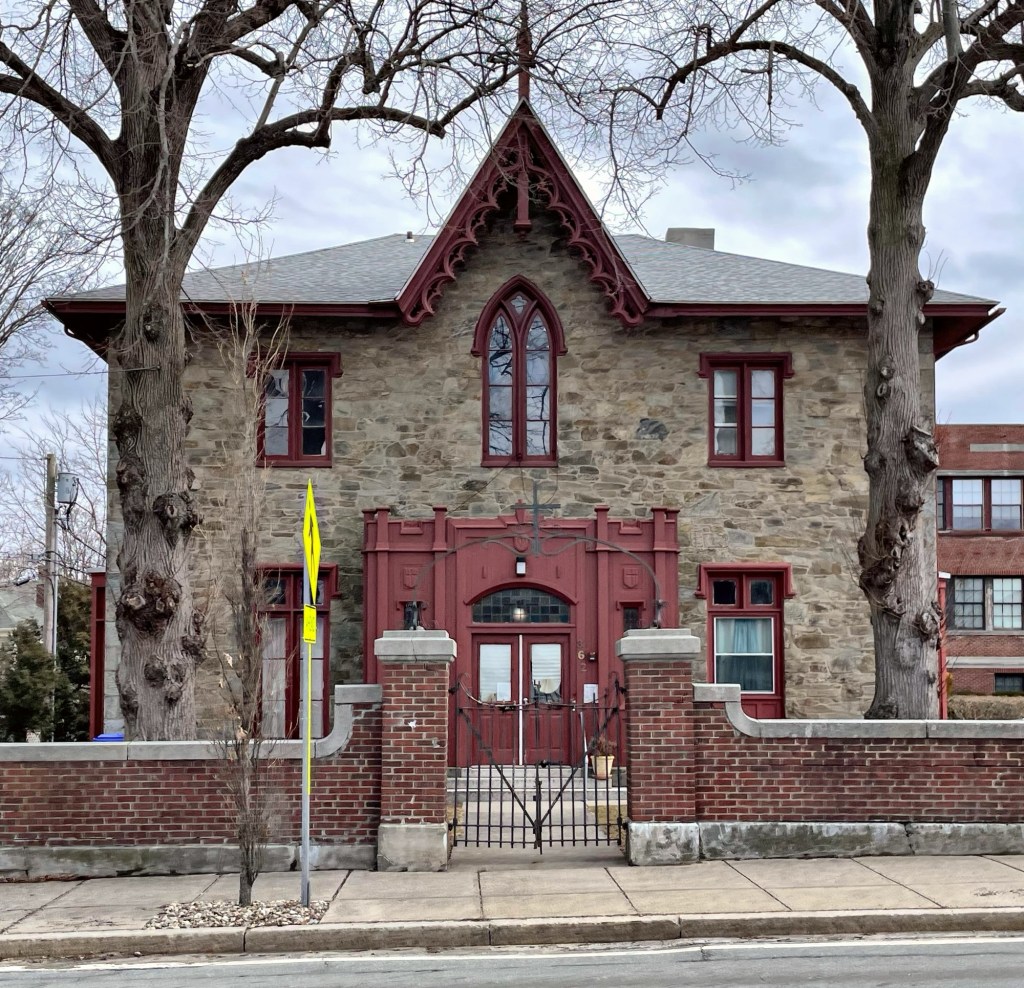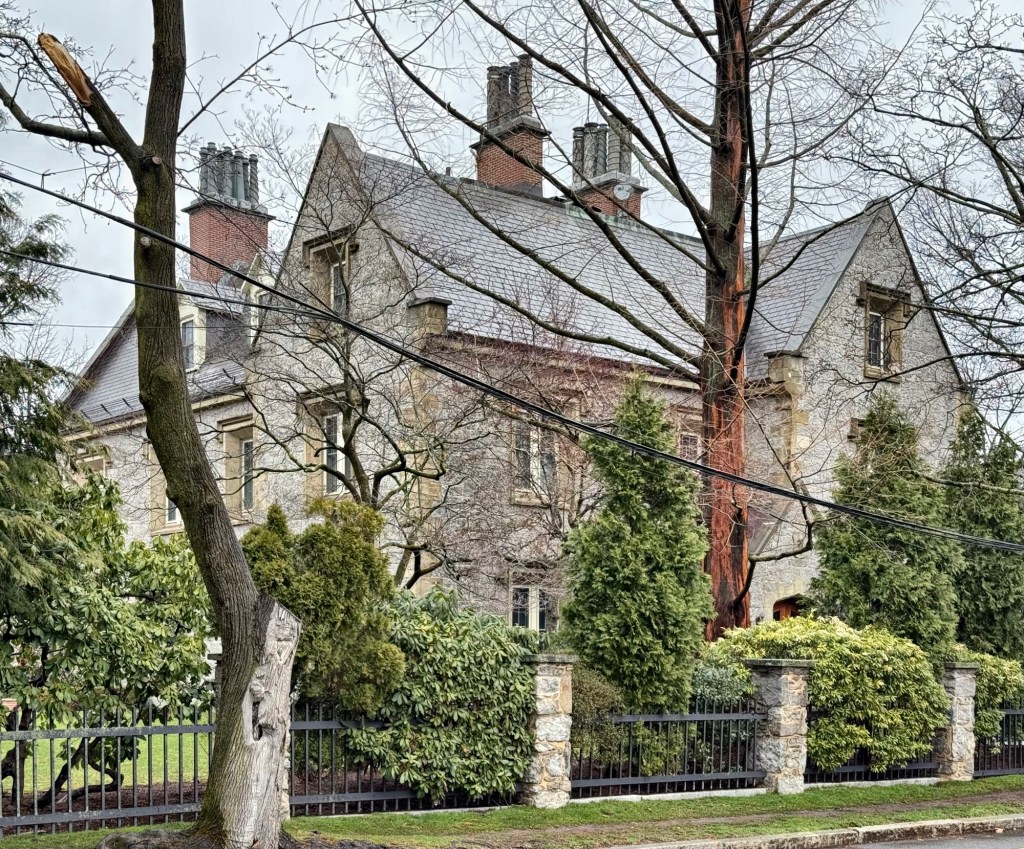
Frederick Sears Cottage // 1851

The Frederick Sears Cottage in the Cottage Farm neighborhood of Brookline, Massachusetts, is significant as one of the major surviving examples of Gothic Revival domestic architecture in the Boston area. In 1849, wealthy Bostonian, David Sears (1787-1871) laid out parks and squares in the Cottage Farm neighborhood, and built houses for himself and his children. His own house, erected in 1843, was the oldest, soon followed by houses for his four daughters, Ellen d’Hautville, Harriet Crowninshield, Anna Amory, Grace Rives, and son, Frederick. The Frederick Sears Cottage is the only surviving Sears residence in the Cottage Farm neighborhood. Frederick Sears‘ cottage was built in 1851, though he did not occupy the house long, as just three years after he and his wife married in 1852 to move into this home, Marian died. The house was inherited by Frederick Sears Jr. , and was acquired by Boston University in 1960, who began to expand into this neighborhood. They maintain the significant property very well. The Sears Cottage is an excellent example of the Gothic Revival style in stone with scalloped vergeboards, quatrefoil motifs, corner quoins, and projecting entry. The house is constructed of Roxbury Puddingstone and is said to have been designed by George Minot Dexter.

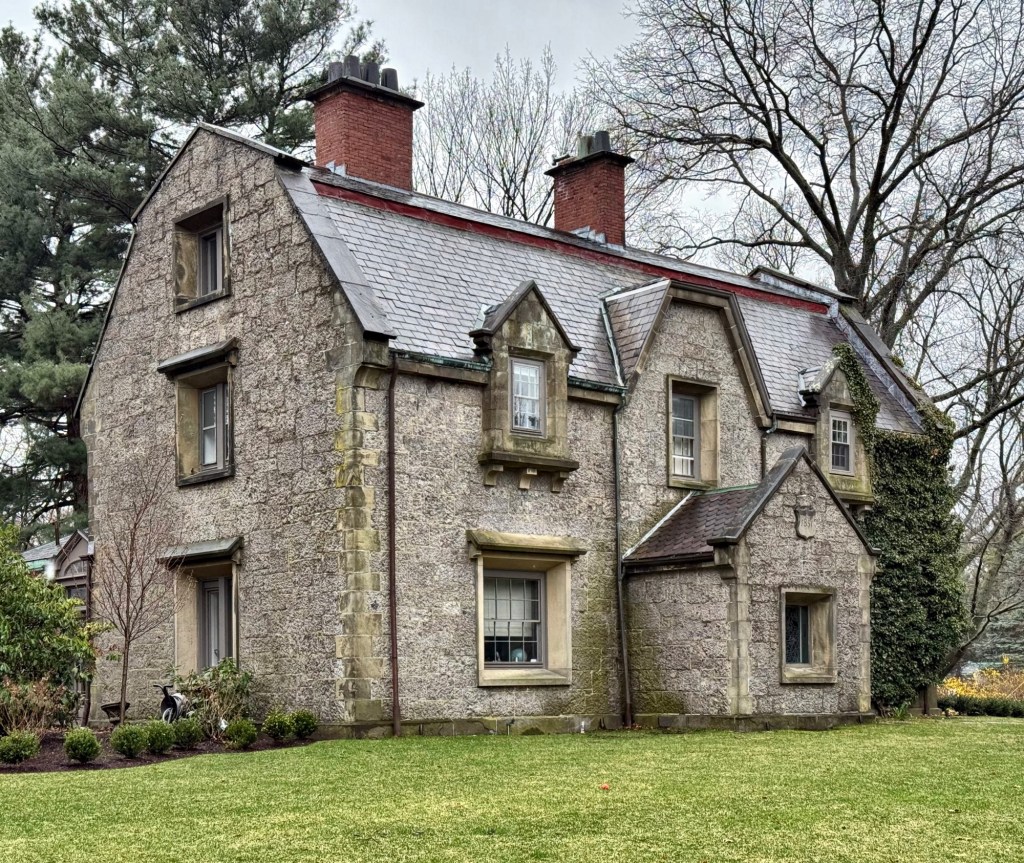
Dexter-Hall Cottage // 1851

Built across the street from the Amos A. Lawrence House in the Cottage Farm neighborhood in Brookline, the Dexter-Hall Cottage is an early Gothic Revival style residence built in the first period of the district’s history. Architect, George Minot Dexter was gifted a desirable house lot in the neighborhood from Amos Lawrence as a reward for his designing his own property, and in turn, designed this cottage in 1851 in the the same mode as the Lawrence House. The stone cottage has a three bay façade with enclosed center entry. On the second floor are wall dormers as well as a central jerkinhead dormer with a gambrel slate roof. The property was later owned by George M. Dexter’s daughter, Emily, and her husband, Thomas Bartlett Hall. The house remained in the Hall family through at least the 1920s.

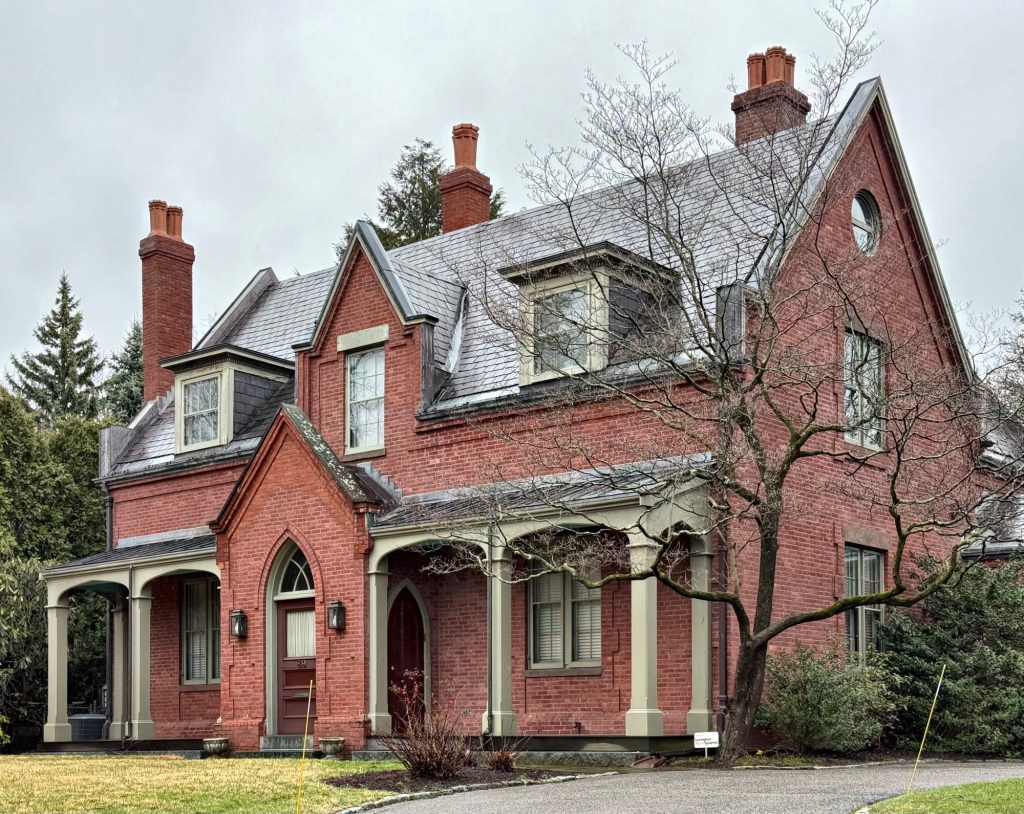
Charles Mason Cottage // 1853

The Charles Mason Cottage at 89 Carlton Street is one of two extant brick cottages built by Amos A. Lawrence as part of his Cottage Farm neighborhood in Brookline, Massachusetts. The Gothic Revival style cottage was built around 1853 and owned by Lawrence for rental purposes. By 1861, this house had been sold to Reverend Charles Mason (1812-1862), who married Amos Lawrence’s late sister, Susanna. The property was inherited by the couple’s daughter, Mary and her husband, Howard Stockton, a lawyer and onetime president of American Bell Telephone Company. The Mason Cottage is unique for its brick construction, projecting entry with porches on either sides, lancet doors and window, wall and shed dormers at the roof, and the original windows with chimney pots.

Bates Cottage // 1853

This Gothic Revival brick cottage is of several houses built by Amos A. Lawrence for his Cottage Farm neighborhood in Brookline, Massachusetts. After he built his own stone residence at the center of the estate, Lawrence erected a series of cottages in the vicinity which were rented or sold to family and friends. This house was listed as the “Bates House” in Amos Lawrence’s papers, likely referring to the renter of the property soon after the cottage was completed by 1853. After Amos Lawrence died in 1886, the estate was inherited by his daughter, Hetty S. Cunningham. The “Bates Cottage” was later acquired by Boston University, who in 1964, received town approval to convert the residence into offices for the Center for the Study of Liberal Arts Education. The cottage was expanded at the rear and is today home to the Boston University African American & Black Diaspora Studies Program.

Amos A. Lawrence House // 1851

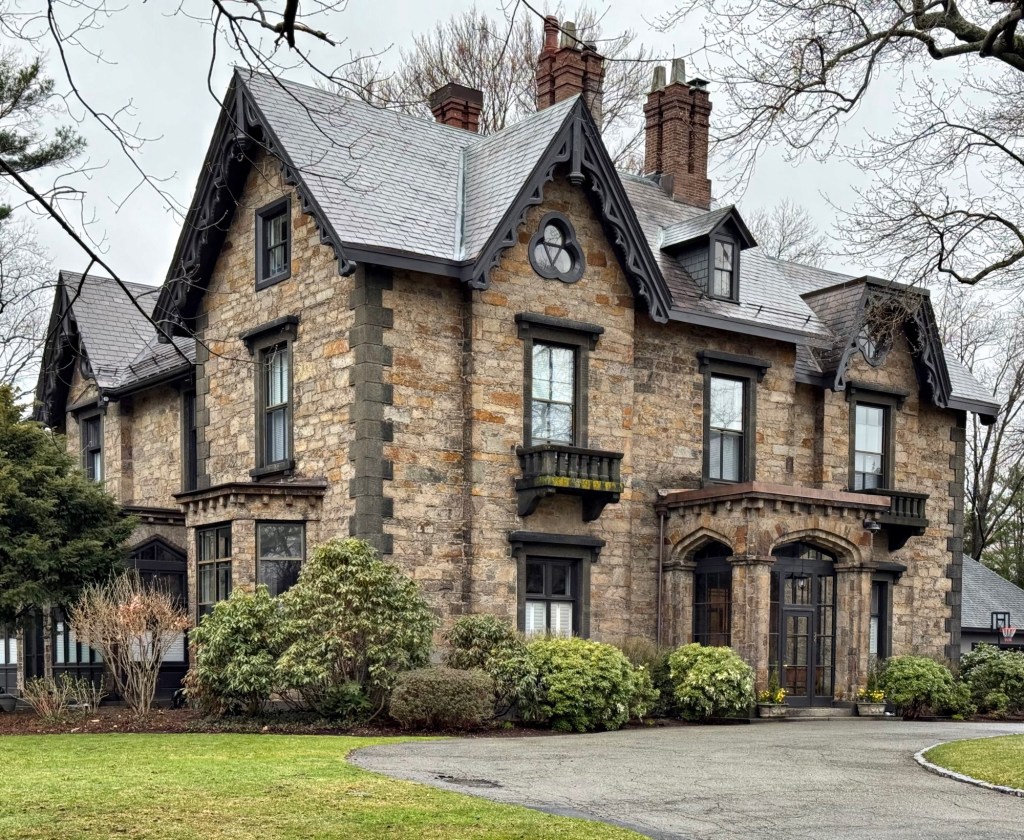
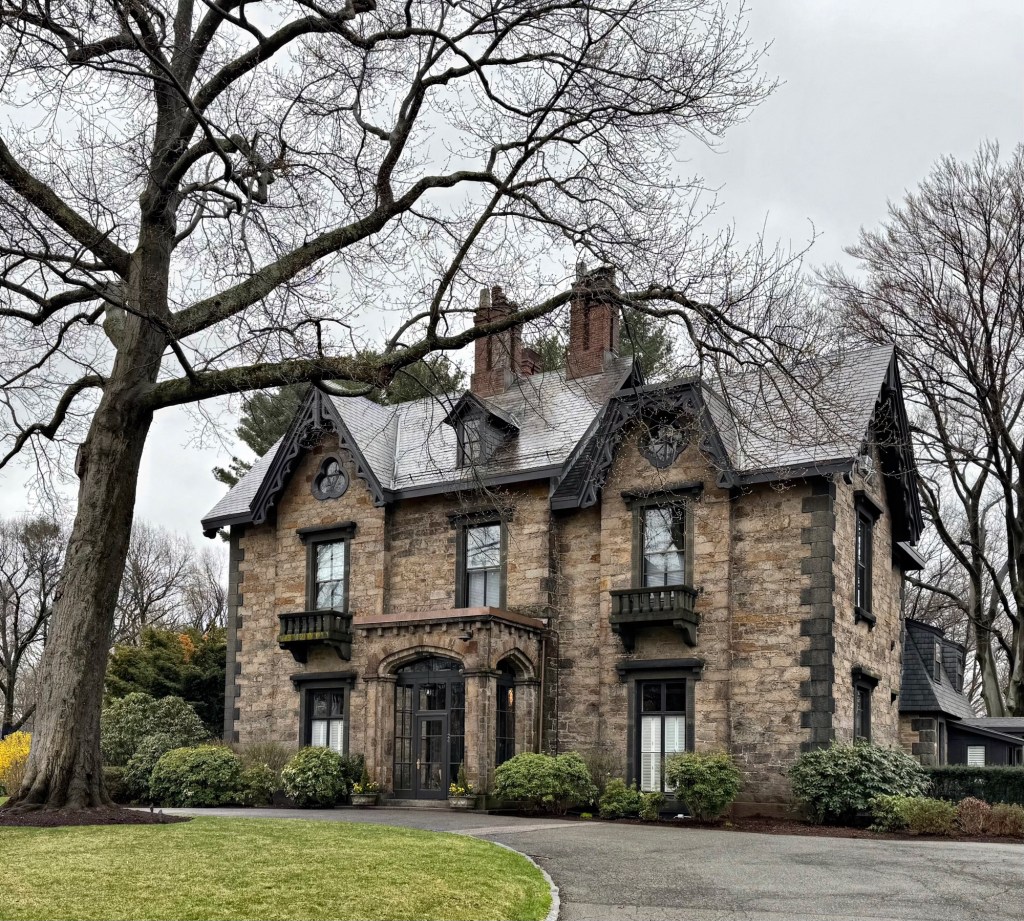
Cottage Farm area of Brookline is one of the finest neighborhoods in all of New England. The area was developed thanks to Amos A. Lawrence (1814-1886), a wealthy second-generation Bostonian, who provided much of the capital and enthusiasm for the growth of the cotton industry in New England prior to the Civil War. Lawrence’s involvement in the industry aided the development of the Massachusetts mill towns of Lowell and Lawrence, whom the city was named after. In 1851, Amos Lawrence purchased 200 acres of land from David Sears, who himself developed the equally beautiful Longwood neighborhood of Brookline on the other side of Beacon Street. Amos began to subdivide the land, working with the architect George Minot Dexter and landscape architect and surveyor, Alexander Wadsworth, who designed Mount Auburn Cemetery in Cambridge, to create an early picturesque residential suburb. With houses designed in the newly popular Gothic Revival and Mansard styles and several small parks, the area became known as Cottage Farm. This stone house was designed by George M. Dexter and was the country residence of Amos Lawrence, who had other homes built nearby and rented out to wealthy friends and family. By 1888, the property was owned by Amos’ daughter, Hettie S. Cunningham, who later, subdivided the estate into five house lots, and moved this stone house to the corner of Ivy and Carleton streets. Expressive of English architectural traditions over the more ornate Gothic Revival popularized by Andrew Jackson Downing, the Lawrence House is one of the finest residences in the Boston area. Built of granite with limestone trim and set behind landscaping and a perimeter fence, the mansion is surprisingly hard to get decent photos of, but it is a stunner. Today, the house is owned by Boston University and is known as Sloane House.

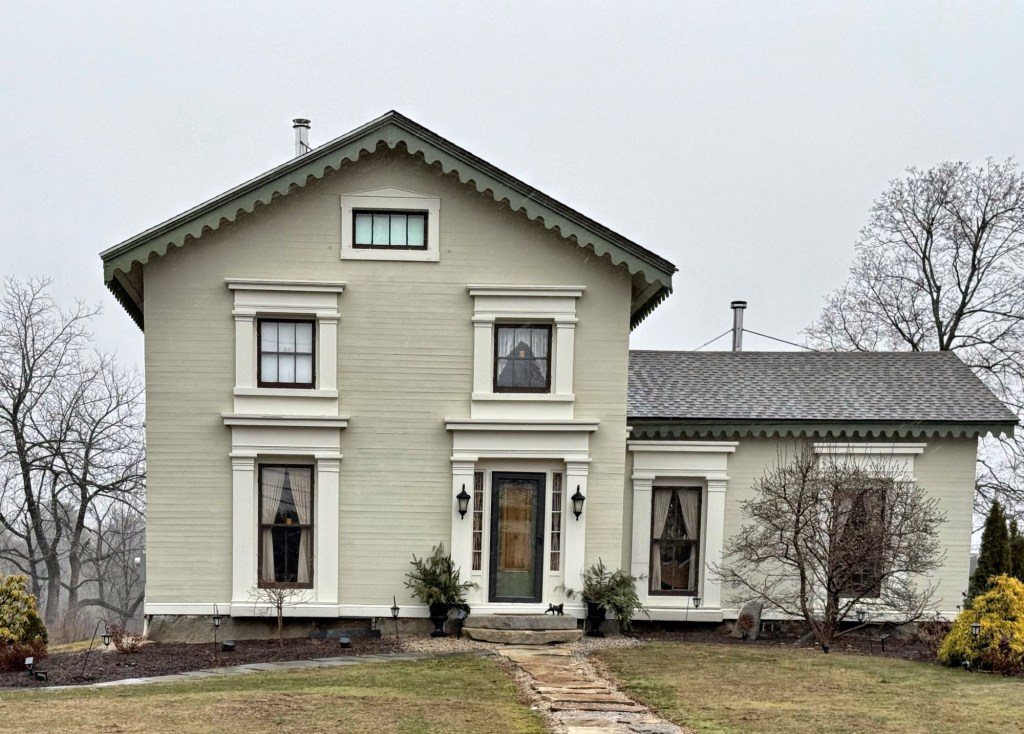
Lavalette Perrin House // c.1844

The perfect whimsical blending of the Classical Greek Revival and the intricate details of the Carpenter Gothic styles can be found under one roof in Goshen, Connecticut; this is the Lavalette Perrin House. Built c.1844 for Lavalette Perrin (1816-1889), who graduated from Yale in 1840, and became licensed to preach in 1843. Reverend Perrin was in his late 20s when he accepted the call to become the pastor of Goshen’s Congregational Church in 1843. Upon arriving to town, he had this residence built soon after, blending two differing styles in a blissful composition. Perrin remained in Goshen until he was called to New Britain in 1858, where he remained until his death. Unique architectural features of the home include the flushboard siding, pilaster-and-lintel framed doors and windows (very rare in this form), and wave-like bargeboards. What a special home!

Derby Cottage // c.1848

Located off Touro Park in Newport, you may be surprised to find an early Gothic Revival style cottage obscured from view by the towering stone Channing Memorial Church. Newport has so many hidden treasures! Very little is written about this cottage, but it appears to have been built c.1848 for Richard Crowninshield Derby (1777-1854) of the famous Derby Family of Salem, Massachusetts. Richard Derby would move to Philadelphia and split his time between there, Boston, and his newly built summer cottage in Newport, Rhode Island. He did not get to fully appreciate the home as he died in 1854. The Gothic Revival cottage was inherited by his widow, Louisa S. Bomford Derby until her death and later by the couple’s two children (from both of their first marriages), Richard Catton Derby and Louisa Lincoln Lear Eyre, the mother of famed architect Wilson Eyre. The property was eventually sold by the half-siblings and the site became home to the 1880 Channing Memorial Church, which now dominates the site. Luckily for us, the cottage was spared and moved to the extreme rear of the lot and converted to the parish hall for the church.

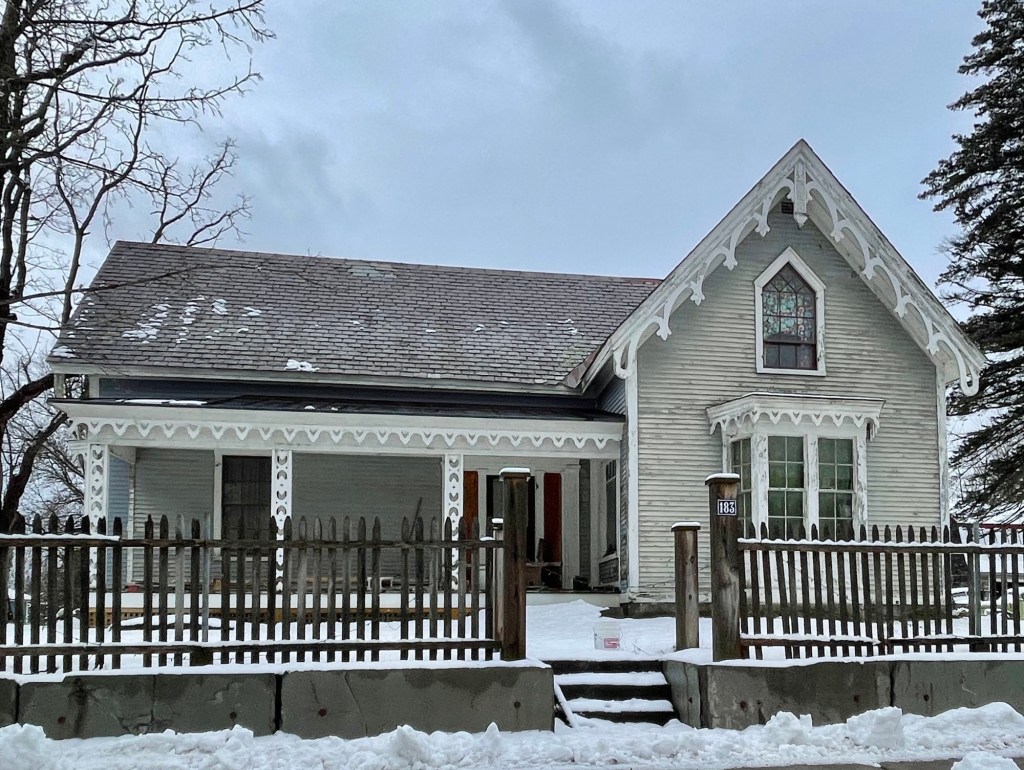
Dow-Starr House // c.1858

A big departure from the plain, yet classically proportioned Federal period homes in Warren, this Gothic Revival on Main Street turns heads when people pass by. A quintessential Gothic “cottage,” the facade of the Dow-Starr House in Warren has also been graced by a three-sectioned Gothic Revival porch as illustrated in Alexander Jackson Downing’s plan books from the 1840s. As completed, this house followed almost exactly Andrew Jackson Downing’s Design II as illustrated in Cottage Residences 1842 ; it differed only in its use of speckled fieldstone over coursed ashlar. The house was later acquired by and used as a convent for the St. Jean Baptiste Church in Warren, who also built a school building behind. The house has seen some alterations, but remains an important architectural landmark of the town.