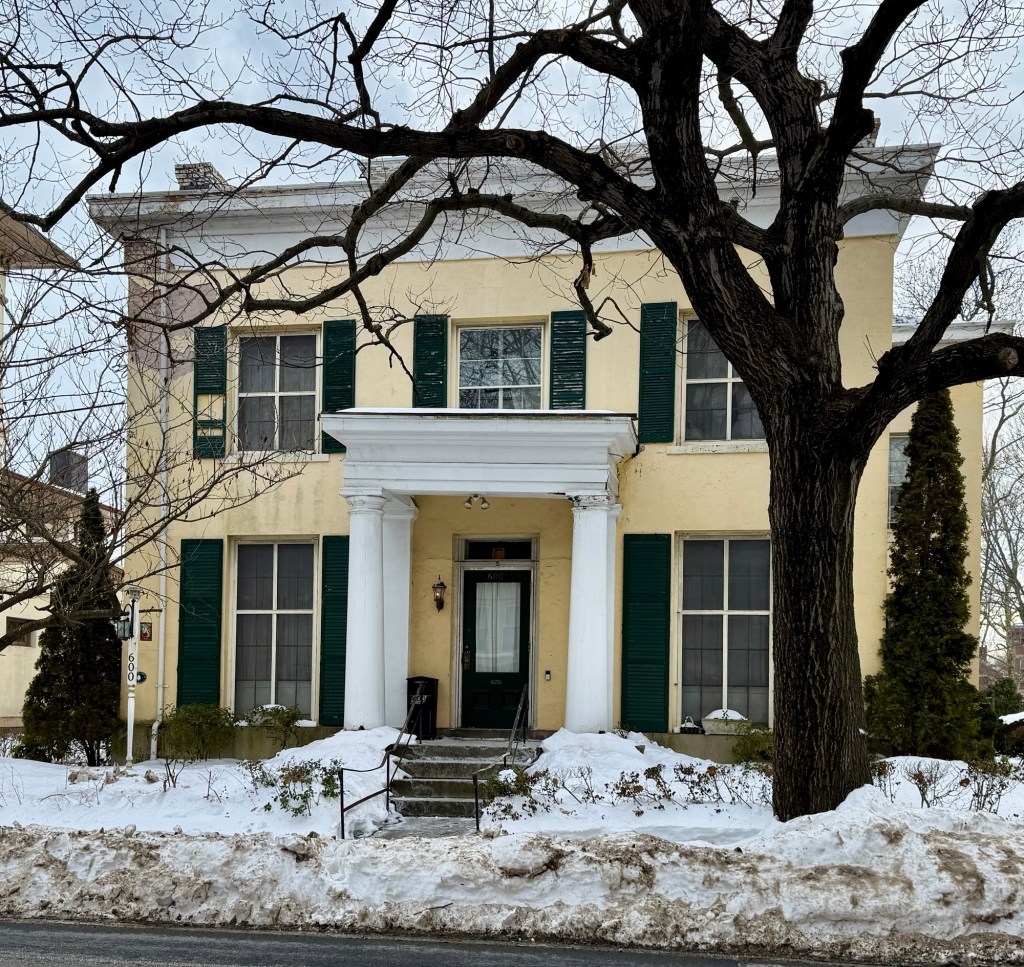
Soule-Parmelee House // 1844

The Soule-Parmelee House on Chapel Street in New Haven’s Wooster Square neighborhood is an excellent example of a mid-19th century Greek Revival style residence though with some deferred maintenance. The stately home was built in 1844 for Henchman Sylvester Soule (1800-1860) a merchant and trader who also partook in the California Gold Rush. After Soule’s death, the stucco Greek Revival style house was purchased by Henry S. Parmelee a piano maker, founder of the New Haven Trolley line and inventor of the first practical automatic sprinkler system, which he is said to have had installed in both his factory and his home here. Today, the Soule-Parmelee House operates as a bed & breakfast as the New Haven Historic Mansion.
Elliott-Russo House // c.1835

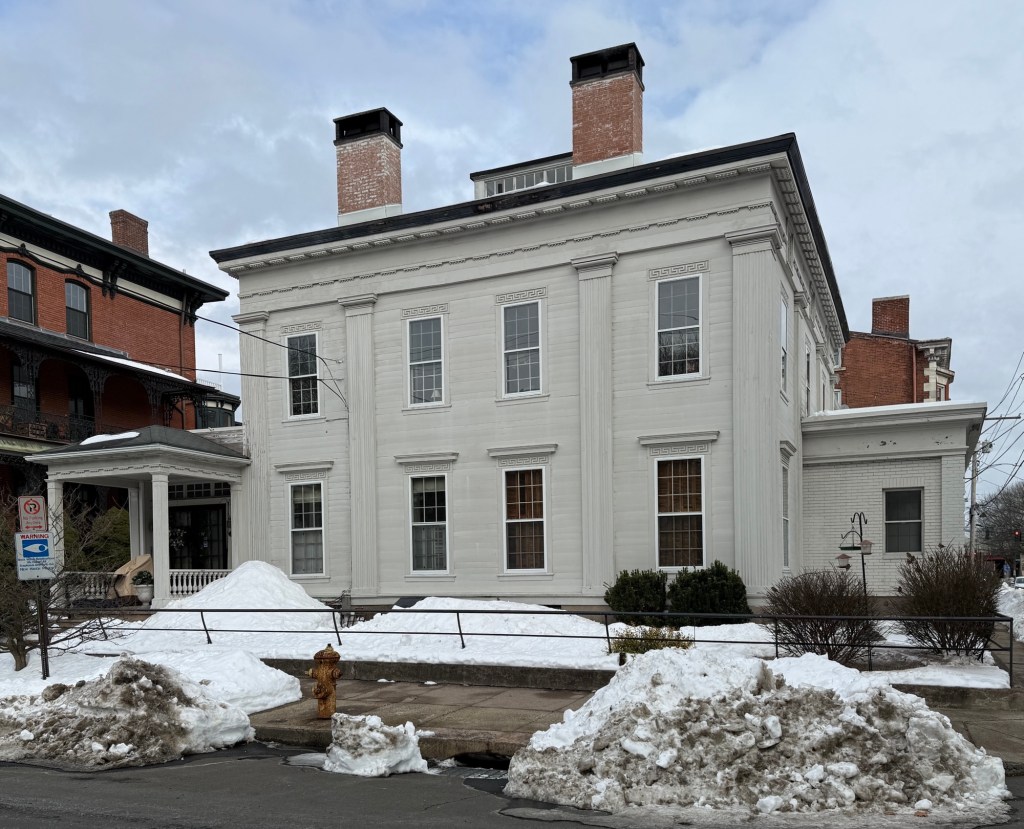
Located at the corner of Wooster Place and Chapel Street in the iconic Wooster Square neighborhood of New Haven, this early Greek Revival style house is a physical landmark showcasing the evolution of the neighborhood in the 19th and 20th centuries. The residence was built around 1835 either for or purchased early on by Matthew Griswold Elliott (1805-1892), a businessman who later engaged in politics and became Vice President of the New Haven Savings Bank and a director of the New York and Hartford Railroad. In 1890, the property was purchased by Paulo “Paul” Russo, an Italian immigrant who was born in 1859, in Viggiano, Italy. His family moved to New York in 1869 and then New Haven in 1872. Paulo opened a small market in New Haven which became the first Italian-owned business in the state of Connecticut. In 1893, Russo became the first Italian to graduate from Yale Law School and he helped foster and grow the local Italian-American community around Wooster Square. After Paul Russo, Michael D’Onofrio, also of Italian descent, purchased the home and along with his wife, brothers, and friends, D’Onofrio transformed the building into a funeral home for over a decade before the house was converted to condominiums. The Elliott-Russo House is a landmark example of a hipped-roof, Greek Revival style residence with smooth flushboard siding, pilasters dividing the bays, and unique Greek meander motifs in the window lintels.

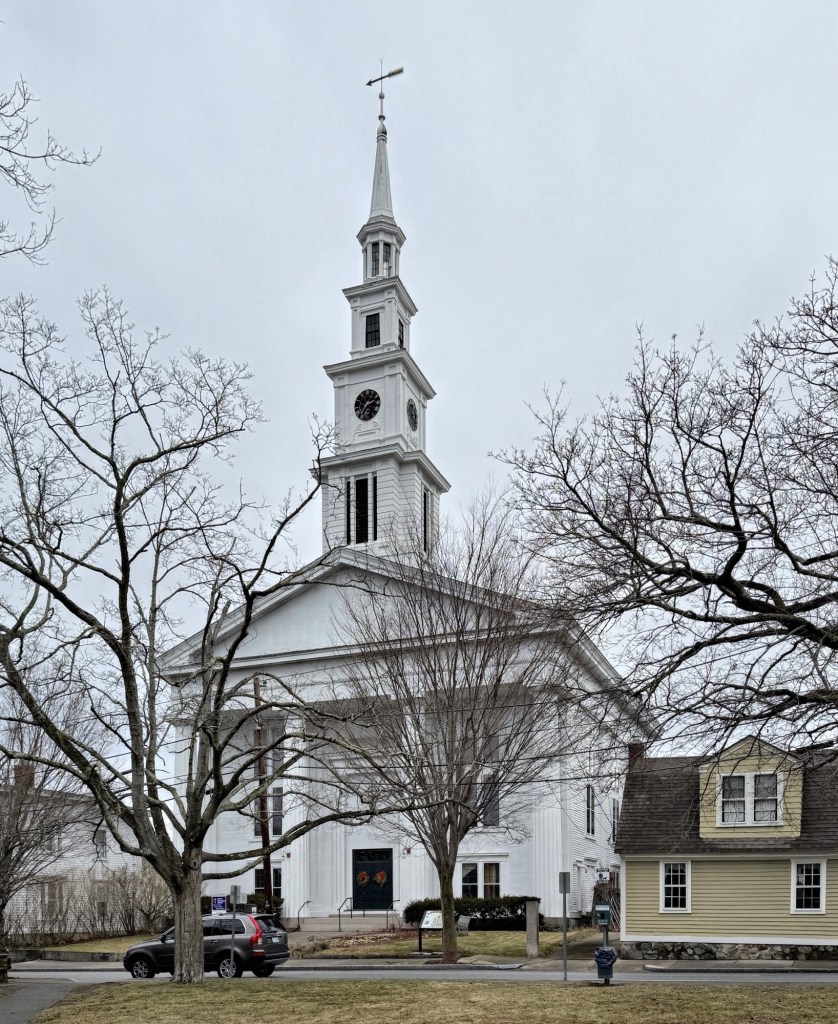
Wrentham Congregational Church // 1834

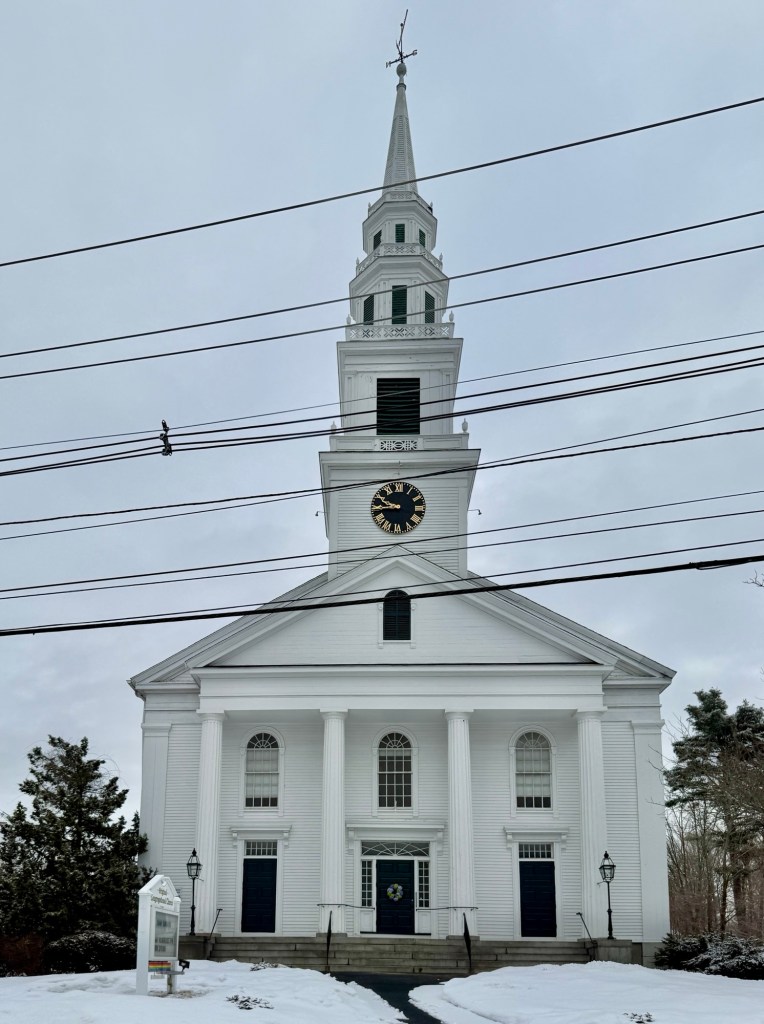
The Wrentham Congregational Church is the oldest house of worship in the suburban community, and the fourth consecutive meetinghouse for the congregation at the town center that was originally established in 1692. The frontier town grew slowly as a largely agricultural community and three houses of worship were built nearby the town common until 1833, when it was decided that a church worthy of its historic congregation be built. It is not clear who designed the Greek Revival church, but timbers were transported to town in 1834 for the new edifice which was completed that year. Over the following century, the church was expanded and modernized, all-the-while retaining its historic character. The four-stage steeple toppled during the New England Hurricane of 1938, and was rebuilt. The congregation remains active in the community and is a visual landmark at the town center.

John R. Hoar House // 1841

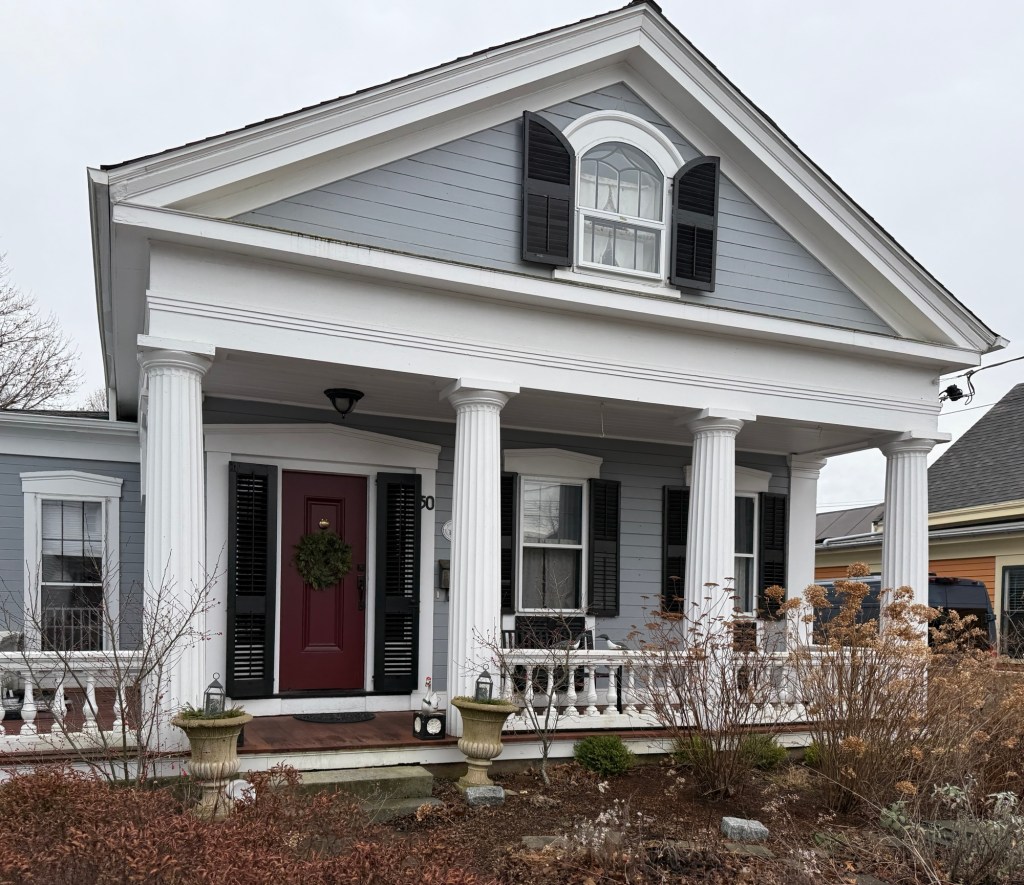
The J. R. Hoar House on Washington Street in Warren, Rhode Island, is one of the best examples of a 1-1/2-story Greek Revival cottage in the town. The house has a full Doric portico in front, an arched second-story bedroom window in the pediment and pedimented lintels over the windows. Built in the 1841 for John Rodgers Hoar, the house has been lovingly preserved and restored by later owners.

Judge Alfred Bosworth House // c.1849

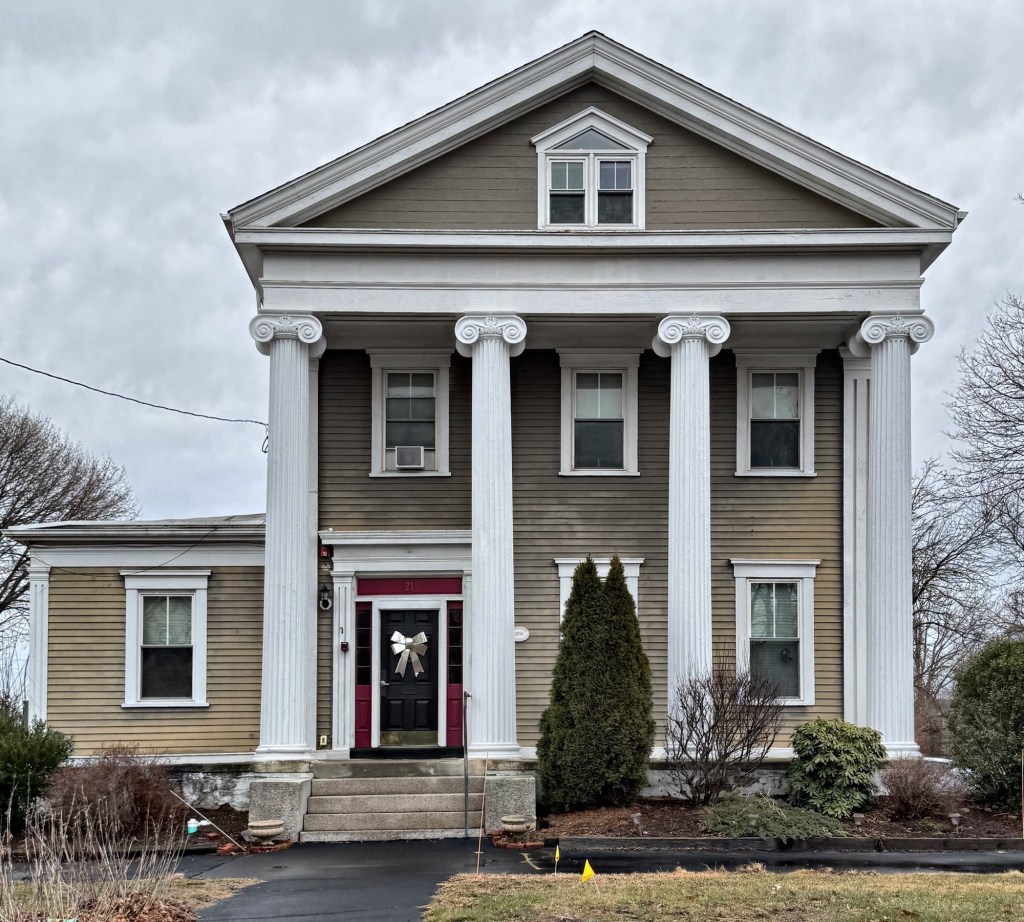
The only two-story temple-front Greek Revival style house in Warren, Rhode Island, the Judge Alfred Bosworth House on Federal Street, is believed to be the work of great architect Russell Warren. Alfred Bosworth (1812-1862) ran a law office in Warren and Providence and represented Warren in the General Assembly from 1839 until 1854 and then served as a justice on the Rhode Island Supreme Court. Bosworth was of counsel for Rhode Island in suits growing out of the boundary question between Rhode Island and Massachusetts, specifically around Fall River. Judge Bosworth died at home in 1862 and his widow, Anne, lived here afterwards. At the end of the century the Bosworth House was converted to an ice cream parlor, named Maxfield’s, which became a very popular attraction in town. The company, owned by Nathaniel and Julia Maxfield, attracted throngs of local residents every summer who would eat ice cream on the front yard of the house. Maxfield’s was even frequented by Providence writer, H. P. Lovecraft, when he was a young man. During the mid-1900s, the house served as a nursing home until 1988, when owners restored the house back to a residence and removed the asphalt siding that was added to the exterior around the time of the Great Depression.

Old Cooper Shop // c.1800

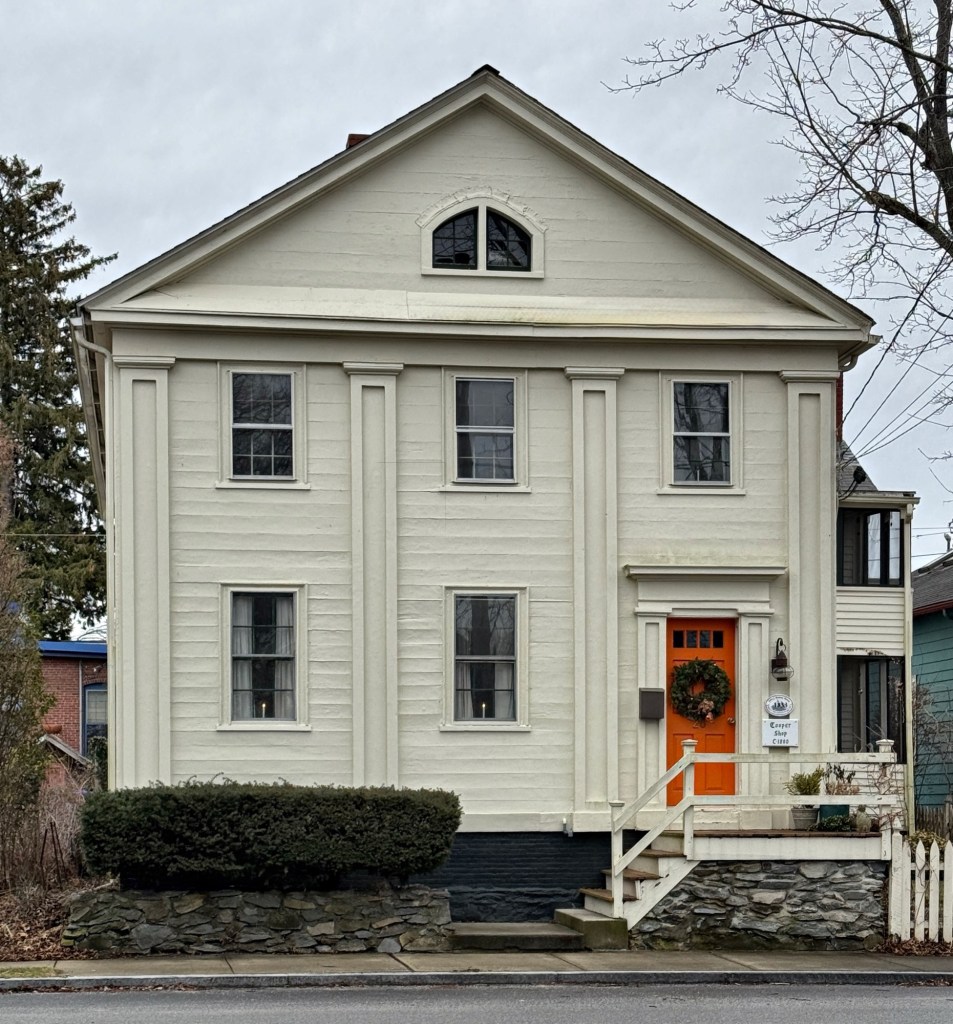
This stunning Greek Revival house on Lyndon Street in Warren, Rhode Island, was according to historians, built around the turn of the 19th century as a cooper shop! A cooper as a professional, would make wooden barrels, tubs, and casks from wooden staves, which were all made in this building before it was converted and renovated around 1830 in the Greek Revival style for Deacon John J. Bickner, who was likely affiliated with the Episcopal Church across the street, which was designed by architect, Russell Warren. Due to the connection, it is possible that the renovation for Bickner was undertaken by Russell Warren as well. On its facade, the house has two-story applied pilasters which break up the bays and smooth flushboard siding which makes the house even more stately!

St. Mark’s Episcopal Church // 1829

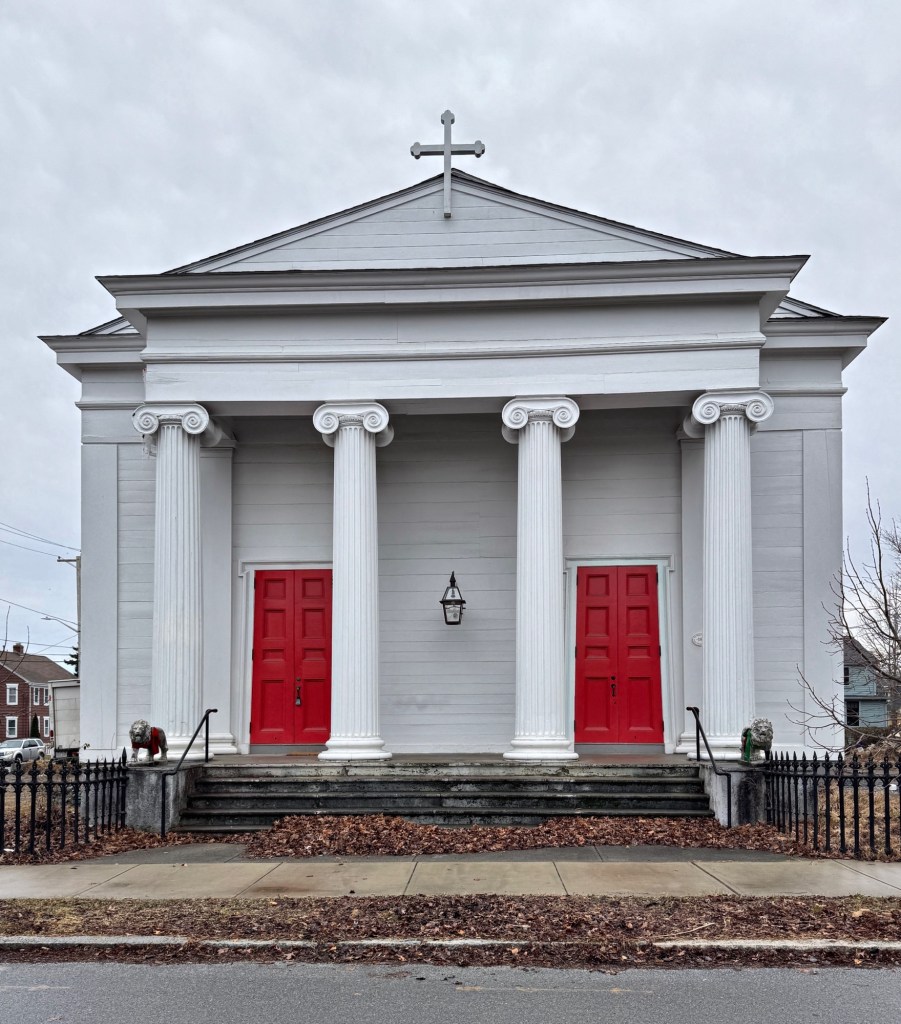
St. Mark’s Episcopal Church in Warren, Rhode Island, is a small, yet architecturally significant building that was one of the first examples of the Greek Revival style in the community. The episcopal church was formed in Warren in 1828, with members originally meeting in Cole’s Hotel while this site and construction completed on their new house of worship. The well-connected congregation hired architect, Russell Warren, who had just completed the Westminster Arcade, a landmark in the Greek Revival style, in Downtown Providence. Distinguished by its beautiful four columned Ionic portico and canted door frames, the church also originally had a square tower and parapet, which were removed following the 1938 hurricane, and replaced with a simple pediment. The parish closed in 2010 and the diocese sold the building in 2012 to private owners, who converted it about ten years ago into a residence, but retained the historic stained glass windows and character of the building. The entire site today (2026) is being renovated with what appears to be a modern addition on the side (not pictured). Hopefully the architecture of this landmark will be preserved.

First Methodist Church of Warren // 1844

Located next door to the diminutive Easterbrooks Cottage on Church Street, the First Methodist Church of Warren, Rhode Island, stands as one of the community’s great 19th century buildings. Constructed in 1844 with its iconic steeple completed a year later, the Methodist Church is a great example of a vernacular, Greek Revival style with prominent, south-facing portico with four two-story Doric columns supporting the entablature and pediment above. Built by Perez Mason (1802-1881), a carpenter and later amateur architect, the church stands out for its iconic five-stage steeple, which has long served as a sort of landmark for sailors arriving into the harbor nearby.

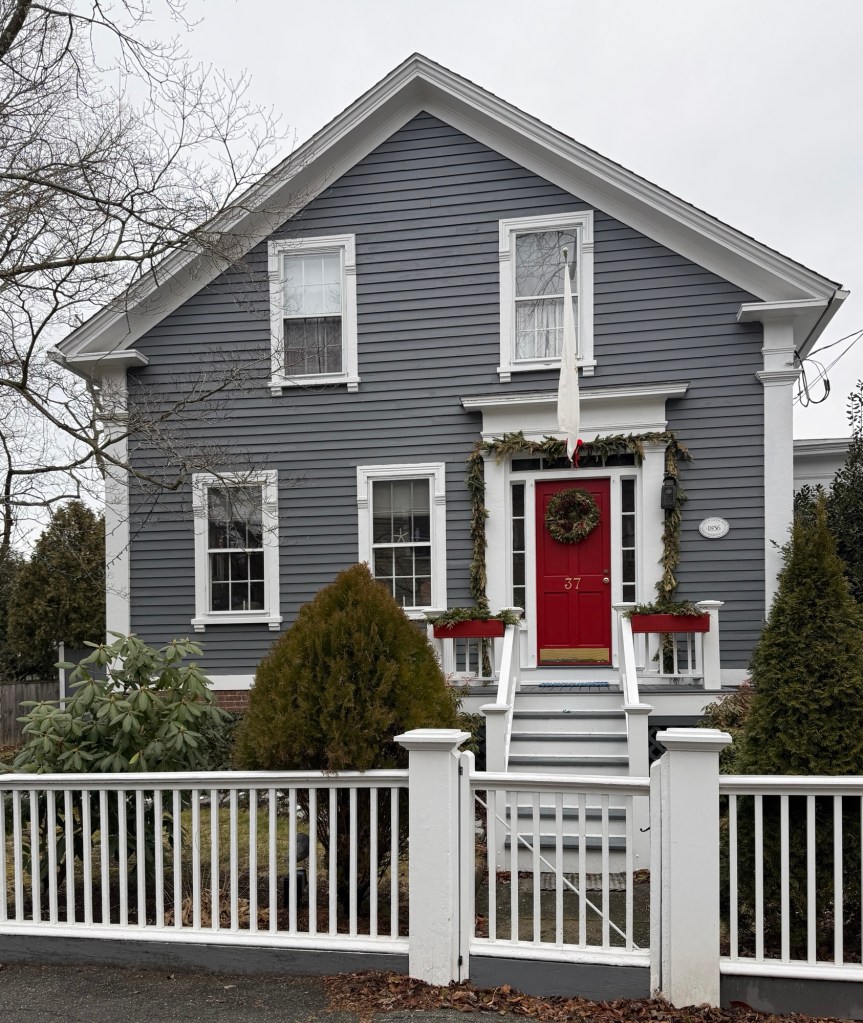
Capt. James W. Barton House // c.1842

One of four seafaring brothers who lived in Warren, Rhode Island, this charming cottage was built after Captain James Barton purchased a house lot at the northwest corner of Liberty and Union streets in 1841, likely building the home within a year. Captain James Barton (1790-1877) commanded a two-and-a-half year long whaling voyage to the Indian Ocean and undertook three subsequent trips to the Pacific. Upon retiring from the sea in 1867, Captain Barton established the Warren Gazette, where he worked as both owner and publisher. Before his time as a sea captain, James Barton had experience working in a printing office in Providence. Upon the Captain’s death in 1877, his wife Mary, continued to reside here with their daughter Nora B. Easterbrooks and her husband. Built as a modest Greek Revival style cottage for Barton’s wife while he was away at sea, the residence features a touch of the romantic Gothic Revival style in its window trim and the stable behind.

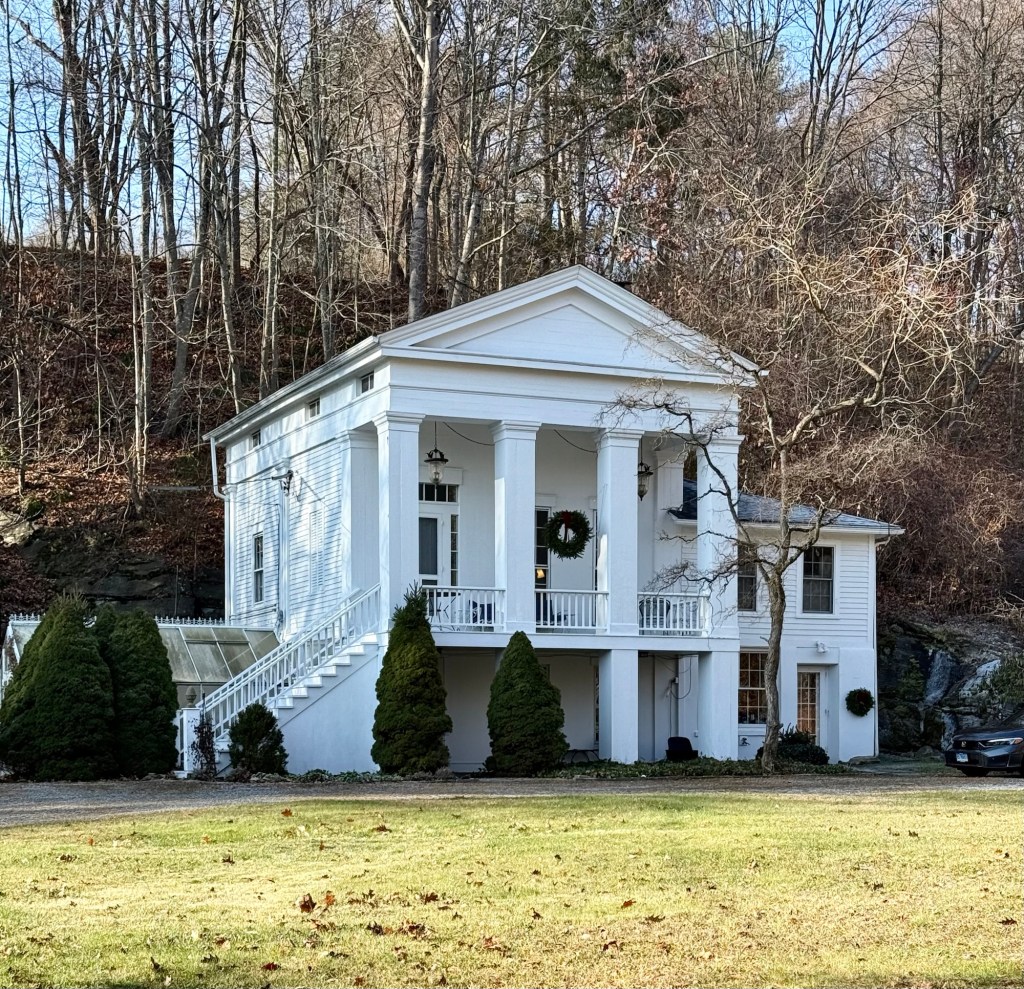
Gilbert-Zanardi House // 1830

This unique Greek Revival style house is located on North Main Street in Chester, Connecticut, and was built around 1830 for John Gilbert. Johnʼs sister (Abby Gilbert Daniels) lived in a Greek Revival house on Liberty Street that had been built a few years earlier and was said to have been designed by Ithiel Town, a renowned Connecticut architect who specialized in Greek Revival style designs. It is thought that Town may also be the architect of John Gilbert’s residence seen here. The temple-front facade of the residence sits on a raised basement with the side-hall entrance and full-height hung windows on the facade sheltered under a portico supported by four square Doric columns. In the early 20th century, the property was purchased by Antonio Zanardi, who immigrated to Chester from Italy and worked as a watchman in a local factory. Antonio and his wife, Claudina, had a large family and expanded the house with a side wing in the early 1900s, also adding greenhouses and growing grapes on the terraced rear yard.