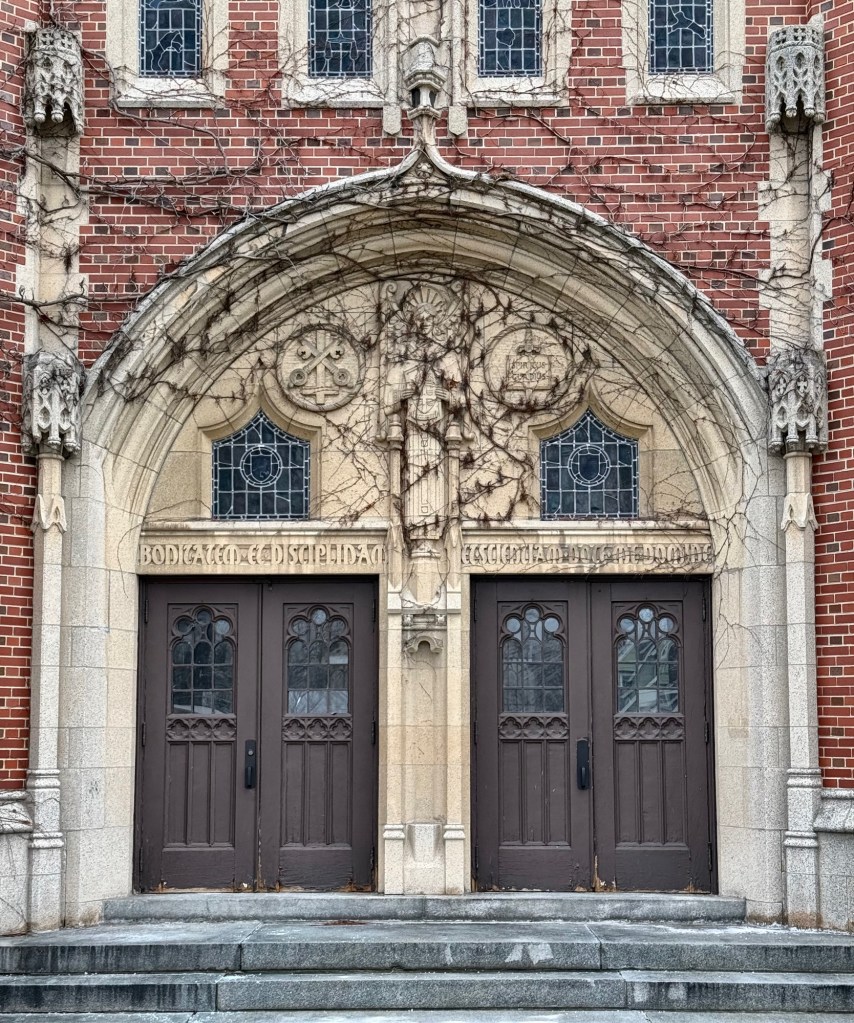
Church of the Holy Name of Jesus, Chicopee // 1857

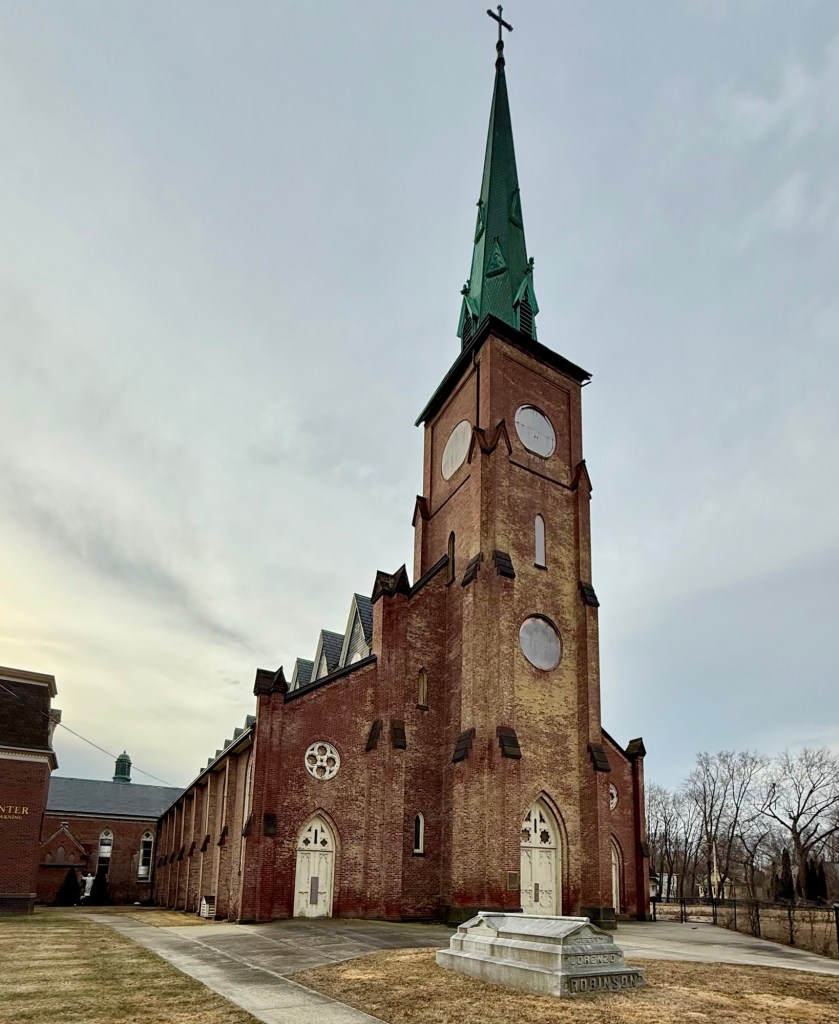
With crop failure a common occurrence in 1830s Ireland, immigration from Irish to New England surged with workers and families looking for a better life. Labor opportunities were abundant in the newly established mill town of Chicopee, with the Irish flocking here to dig canals, build dams and mills and later work in those same buildings. Their wives and daughters would work as cooks and maids, but later as operatives in those same mills. As many Irish were Catholic, it became apparent that a Catholic congregation should be established, St. Matthew’s was first organized in Chicopee in 1838. An earlier wood-frame church was built and used for a number of years until a large site on South Street was purchased by the Diocese for a new campus. Irish-born ecclesiastical architect Patrick Keely designed the church building which was constructed between 1857-1859 in the Gothic Revival style. The church was dedicated the “Holy Name of Jesus” church and exhibited sandstone-topped buttresses, rows of pointed dormers running down the clerestory on the sides, and a prominent central steeple. In 1910, the present copper spire replaced the original steeple which was damaged and burned in a lightning strike. The complex grew throughout the 19th and 20th centuries, with a rectory, schools, convent and monastery built on the site. Sadly, due to dwindling membership and fiscal considerations, many of these buildings were demolished in the past decades. The church appears now to be closed and is still owned by the Archdiocese of Springfield. I hope something can be done to preserve this landmark structure and the remaining buildings on the site.

Alumnae Memorial Library – Elms College // 1973

Located just north of and in stark contrast to the ornate Neo-Gothic 1932 Administration Building of Elms College, the school’s main library building showcases how much architecture styles changed in just 40 years. The college’s library was long in the main Administration building, but was outgrown in the latter half of the 20th century. The two-story steel and cast-concrete library building was built in 1973 with exterior details in red brick and concrete, a nod to the historic materials of the older campus buildings. Unapologetically Modern, and somewhat Brutalist, the building has complex geometry of sunken voids and solid sections, broken up by a horizontal band of windows with concrete fins to mitigate sunlight. The building was designed by Boston architects, Carroll & Greenfield, and recently celebrated its 50th anniversary.

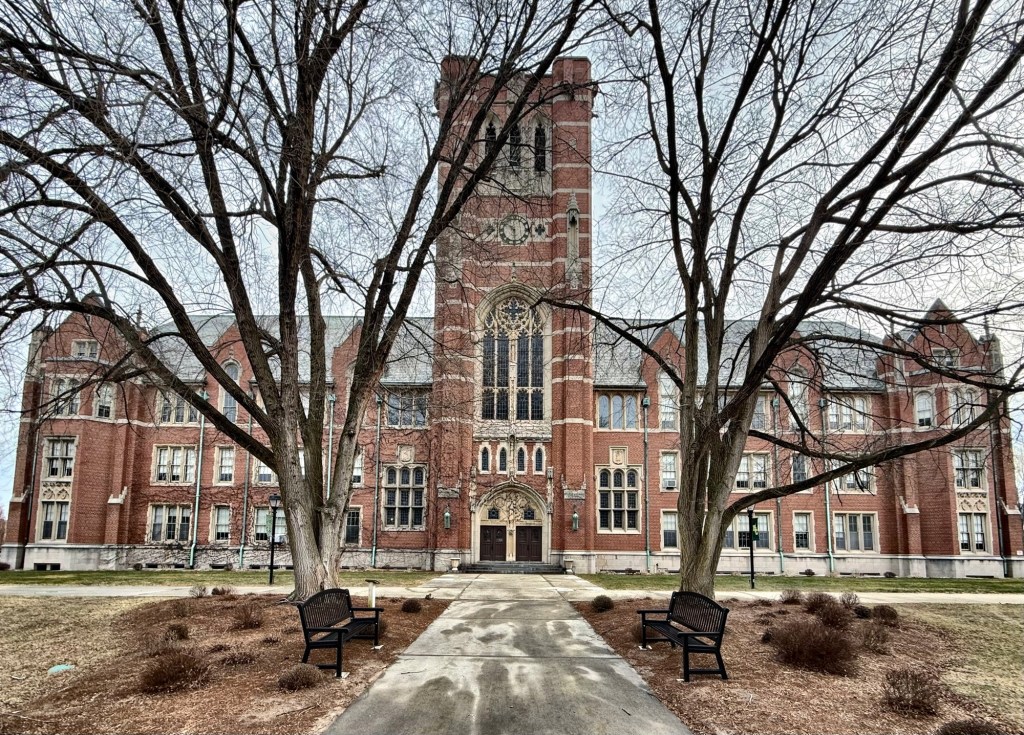
Administration Building – Elms College // 1932

Elms College in Chicopee, Massachusetts began as the Academy of Our Lady of the Elms, a Catholic boarding school for girls established in Pittsfield by the Sisters of Saint Joseph in 1897. The academy was relocated to Springfield Street in Chicopee through the efforts of Bishop Thomas D. Beaven in 1899. The Academy provided elementary and secondary education with a Normal School component that prepared young women for careers in teaching. In 1924, Bishop O’Leary announced the intention to expand the school into higher education, creating a women’s college. The college charter was approved in 1928 and the Academy became the College of Our Lady of the Elms. Planning and construction of the Administration Building (later renamed Berchmans Hall in 1983) began immediately after the incorporation of the College in 1928. Designed by John W. Donahue, the official architect of the Diocese of Springfield at the time, Berchmans Hall is a landmark example of the Collegiate Gothic/Neo-Gothic style that proliferated higher education and ecclesiastical buildings in the early decades of the 20th century. Completed in 1932, the new building included offices, modern classrooms and laboratories. The back section contained a gymnasium in the basement and an auditorium on the main floor. The building remains the main building on the Elms College campus and serves as an important visual anchor to the school.

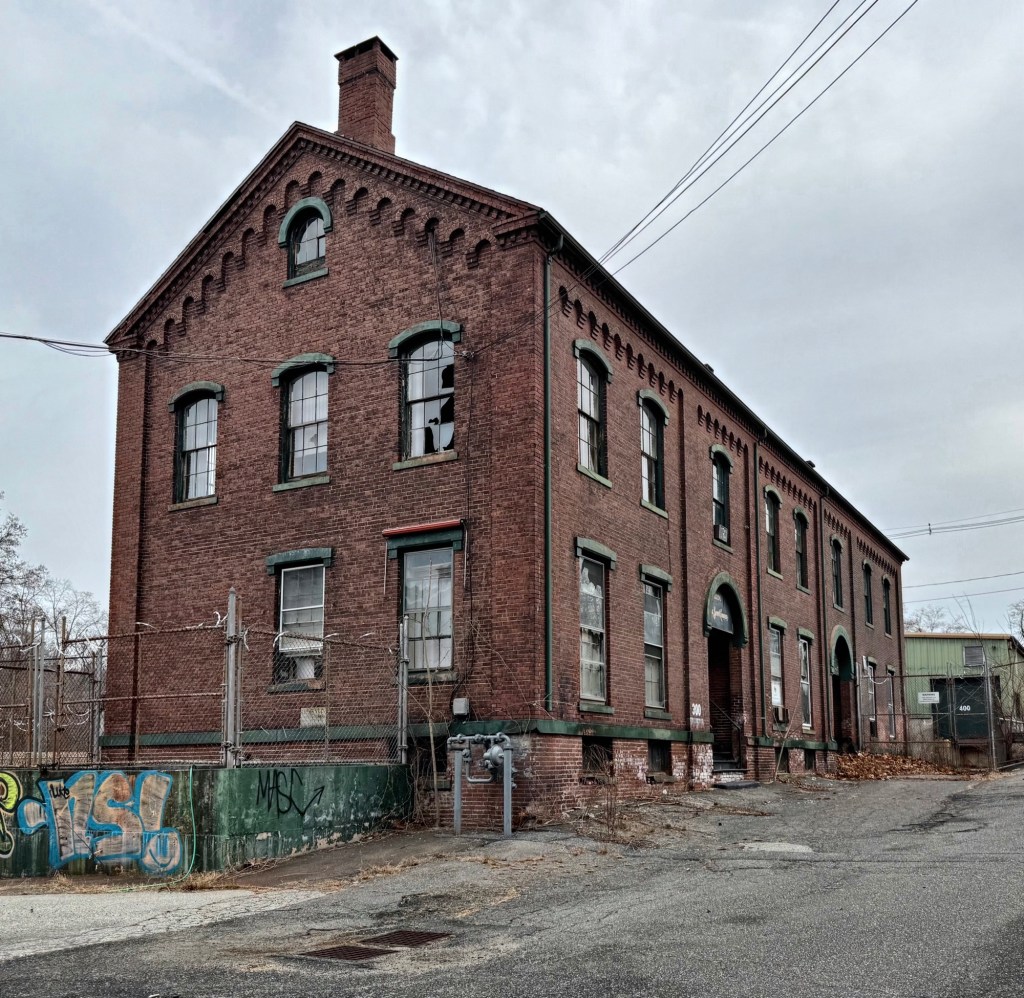
Ames Sword Company Offices // c.1865

Adjacent to the main Ames Manufacturing Company mills in Chicopee, Massachusetts, this handsome brick structure has ties to industry and the economic growth of the city in the 19th and early 20th centuries. Tucked away on Grape Street, at the edge of the Chicopee River, this building was built following the American Civil War as the offices of the Gaylord Manufacturing Company, a later subsidiary of the Ames Manufacturing Company. The company was run by Emerson Gaylord, a manufacturer, who produced leather belting and swords for the military just before and during the War. After the Civil War, the Gaylord company manufactured cabinet locks and society swords. In 1881, the adjacent Ames Manufacturing Company consolidated its own sword department with the Gaylord Manufacturing Company, forming the Ames Sword Company. The company would close in the 1930s, and today, this handsome brick building with corbelled cornice and segmental arches, sits vacant, awaiting preservation and a new life.

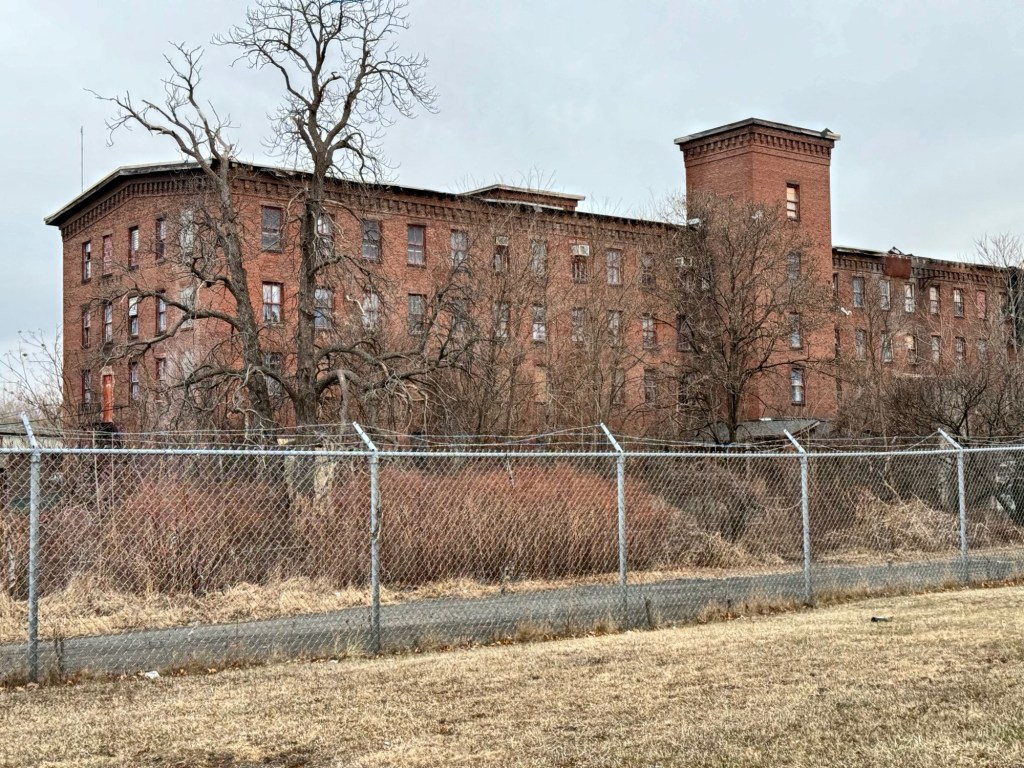
Ames Manufacturing Company Complex // 1847+

Until the early 19th century, Chicopee, Massachusetts, was little more than an agricultural district of Springfield (from which it separated in 1848). Several early mills began to harness the power of a 50-foot drop-off in the Chicopee River, but it was not until the introduction of outside capital from Boston-based industrialists, that Chicopee became an industrial powerhouse. The Dwight textile mills which quickly developed required a wide variety of related manufactures. Edmund Dwight, owner of the Dwight Mills procured brothers Nathan Peabody Ames and James Tyler Ames to relocate their edge tool business from Chelmsford to Chicopee, they did. In 1834, the Ames Manufacturing Company was incorporated with a capital of $30,000 and buildings were erected along the Chicopee River, just east of the Dwight Mills. By 1835, the company was creating works in brass and bronze, and in 1845, an iron foundry was added. The company used the foundries for casting statuary and producing cannons and cannonballs for the US Military. Additionally, the bronze doors of the East Wing of the United States CapitolDaniel Chester French‘s Minuteman statue at the Lexington-Concord bridge and the large equestrian statue of George Washington at the Boston Public Garden were cast at the Ames Factory. After a period of decay in the latter half of the 20th century, the largest buildings of the complex were restored and converted to housing, today known as Ames Privilege.

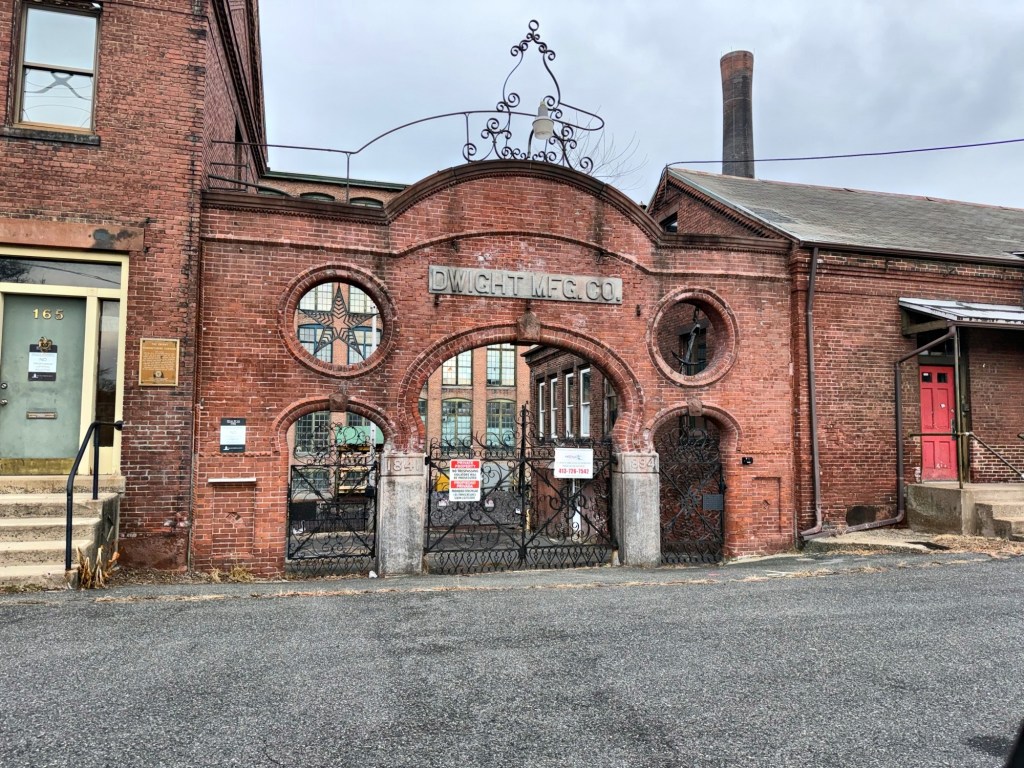
Dwight Manufacturing Company Complex // 1841+

The Dwight Manufacturing Company is named for Edmund Dwight (1780-1849) of Boston, an industrialist who envisioned an industrial town on the Chicopee River. Dwight, having a country home in Chicopee, had begun a venture with his brother, Jonathan, at Chicopee Falls creating the Chicopee Manufacturing Company, to produce cotton cloth. Due to the company’s immediate success, the Dwights along with other investors formed the Springfield Canal Company in 1831, with the goal to create the “new Lowell”, an industrial community in what is now Chicopee Center. In 1856, the Dwight Mills purchased some earlier mill complexes, creating the Dwight Manufacturing Company and consolidating all their cotton cloth manufacturing into one organization. In addition to the mills, the Company also built employee housing
along Depot and Dwight Streets, a stone’s throw from the mills. The creation of employee housing allowed the Company to attract new employees in particular women and children, nearly all immigrants, who could be housed together. My favorite part of the complex is the entrance gate, built in 1894, connecting the Office and Cloth Building. It is amazing to think of all of the people who passed through this portal, working long hours for a better life. Overtime as production methods changed and technology evolved, nearly all the original mills would be replaced or retrofitted. Despite the changes, the Company could not remain profitable and shut down production in 1927 and ultimately selling the land and equipment in 1930. Some smaller manufacturing has since occupied some of these buildings, but they remain largely (if not entirely) vacant, awaiting a new life.

Blaisdell-Carter House // 1890

The Blaisdell-Carter House is a great example of a Queen Anne style home in Chicopee, Massachusetts. The house was built in 1890 for Harriet P. Blaisdell following the death of her husband, Samuel Blaisdell, a cotton broker, in 1888. Mrs. Blaisdell hired David B. Griggs, a builder in Chicopee under the firm D. B. Griggs & Sons, to design and build the residence, which sat across the street from Griggs’ own home. Harriet would pass away just three years after her home was built, and the property would eventually be sold to Nathan P. Ames Carter (1864-1959). The residence sits on a large lot and exhibits varied siding, asymmetrical plan with porches, additions, and steep gable roofs, and the use of irregular windows of varied sizing and locations. While the second floor porch has been enclosed, the house retains much of its original fabric and has not been covered by vinyl or aluminum siding, a rarity in Chicopee.

Griggs House // 1891

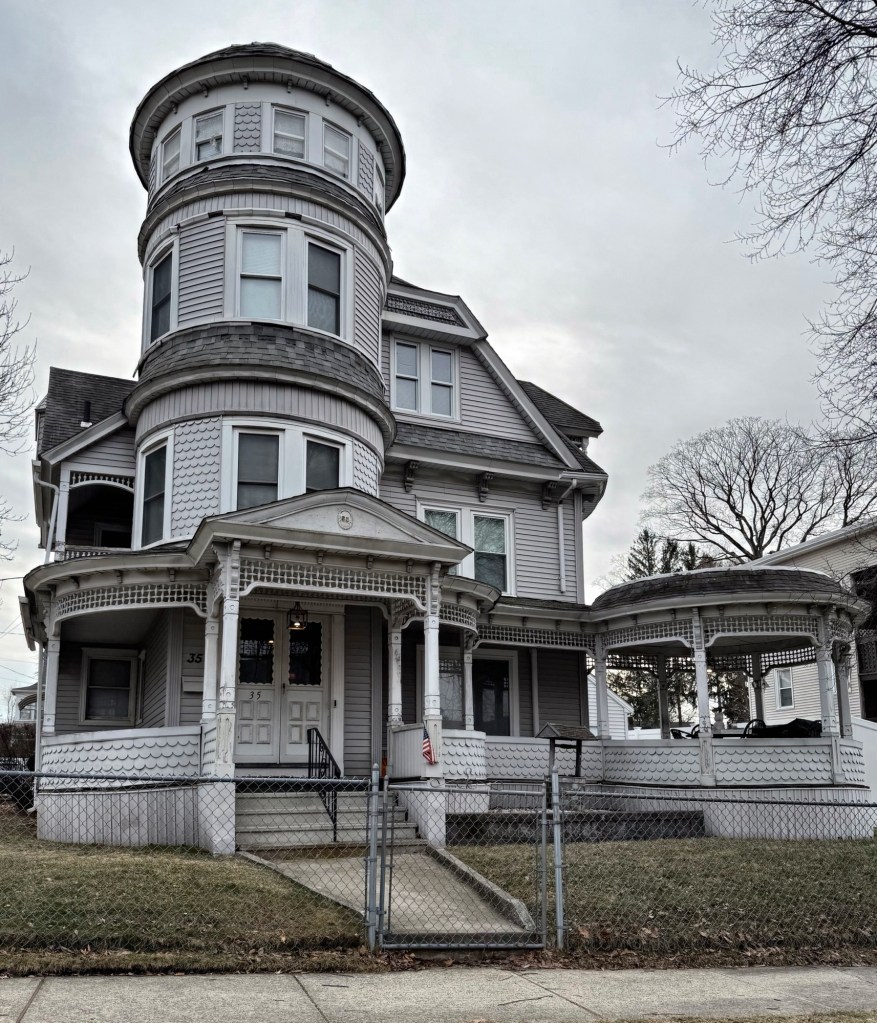
This fancy Queen Anne Victorian residence can be found in Chicopee Falls, Massachusetts, and is one of the most unique houses in the industrial city. This property was built and occupied by David B. Griggs, a builder in Chicopee under the firm D. B. Griggs & Sons. The firm was very busy in the late 19th and early 20th centuries, as Chicopee saw rapid industrial prosperity followed by a population boom, growing in population from over 9,000 residents in 1870 to 36,000 in 1920. Builders like David Griggs were able to grow to upper-middle class and buy property on desirable house lots and build large homes for their family, as was the case here. David Griggs died in 1896, five years after his home was built, and the property was inherited by his son, Millard Griggs. While the residence is covered in vinyl siding (original siding and trim is likely underneath the present siding), the house retains much of its original fabric including the brackets, delicate open friezes at the porches, and four-story tower.

Alvord School // 1894

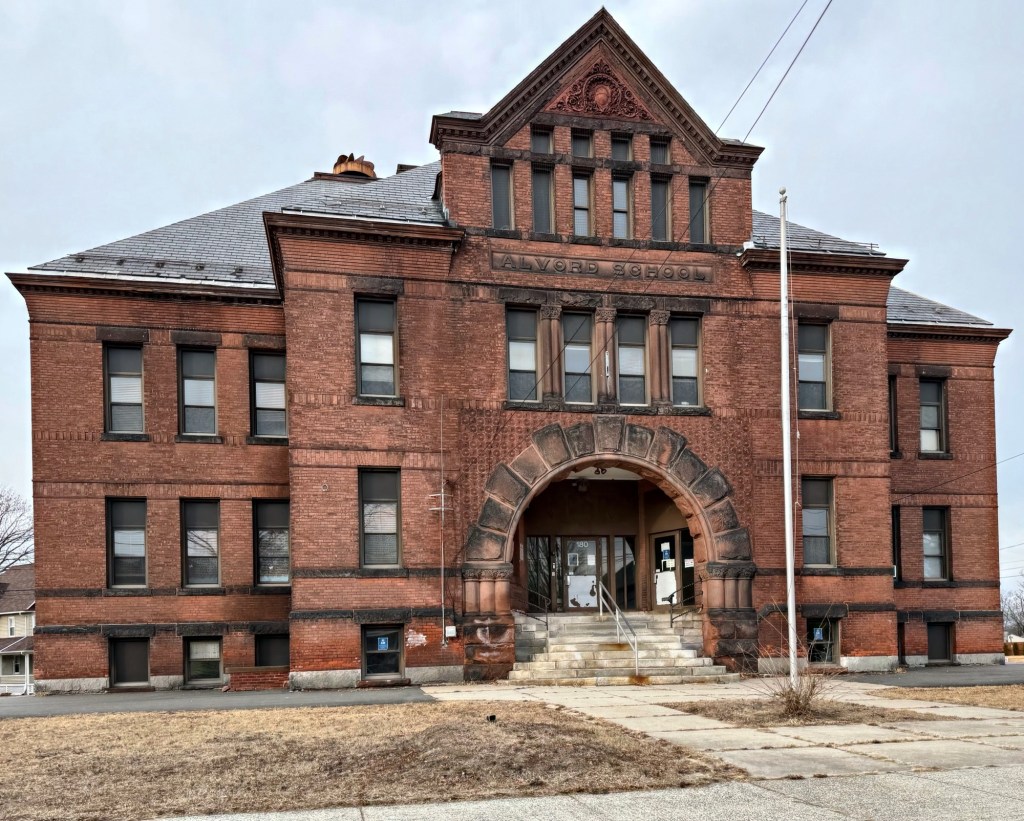
When the old Broadway school in Chicopee Falls became neighbors with the Overman Wheel Company, an early bicycle manufacturing company, there was so much noise and distraction that the Chicopee School Committee voted to sell the school and build a new school building down the street. A triangular lot on Broadway was purchased and Springfield architect, Francis R. Richmond, was chosen to design the new building in 1894. The school was dedicated to Dr. Samuel Alvord, a Chicopee Falls resident who was first principal of the local high school and local doctor that died in 1892. The Alvord School is a great example of a Richardsonian Romanesque school building of brick and brownstone, with recessed entry within a Syrian arch and decorative terracotta tiles. The school would close in the second half of the 20th century, and today is known as the Helen A. O’Connell Administration Building, a municipal office building.

Spaulding Memorial Chapel // 1910

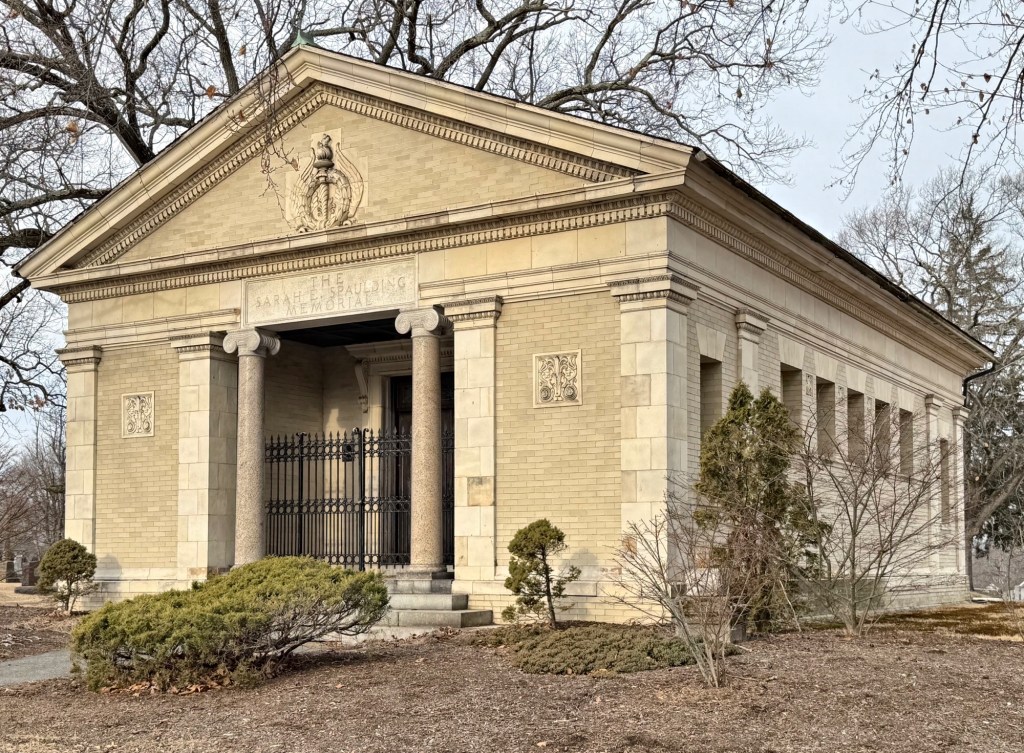
Located within the Fairview Cemetery in Chicopee, Massachusetts, this lovely memorial chapel serves as an everlasting love letter from one spouse to another. Justin Spaulding (1838-1906) was a wealthy grocer who operated stores locally and amassed quite a sizable fortune. He and his wife, Sarah Elizabeth (Cooley) Spaulding, lived in a large Queen Anne home and would bequeath substantial funds to the City in their will. Justin died in 1906, and Sarah would die a year later, and as they do not appear to have had any children, they became benefactors to the town, partially funding the construction of the town’s first purpose-built library and this memorial chapel in the Fairview Cemetery. Over $6,000 was spent on this chapel, with plans drawn by architects Eugene Clarence Gardner and his son, George C. Gardner. The Classical Revival building is constructed of yellow brick with stone trim and ornament, with a notable eternal flame motif in the gable.